
 Worksheets
A&P EOC REVIEW
Total questions: 120
Worksheet time: 2hrs 6mins
Name
Class
Date
1.

Mature bone cells that live in tiny cavities within the bone are called?
a)
osteocytes
b)
osteoblasts
c)
osteoclasts
d)
osteons
2.

Structure #2 is the
a)
medullary cavity
b)
periosteum
c)
epiphysis
d)
diaphysis
3.

a)
long bone
b)
short bone
c)
irregular bone
d)
flat bone
4.

a)
long bone
b)
short bone
c)
irregular bone
d)
flat bone
5.
Special bone cells, called ___, are responsible for destroying and remodeling old bone.
a)
osteoclasts
b)
osteoblasts
c)
osteocytes
d)
Haversian canals
6.
The process by which oxygen and carbon dioxide are exchanged between cells, the blood, and air in the lungs is called
a)
emphysema
b)
cellular respiration
c)
systemic circulation
d)
respiration
7.
a dome shaped sheet of muscle, the _________, separates the chest from the abdomen
a)
diaphragm
b)
epiglottis
c)
alveoli
d)
bronchial tubes
8.
an inflammation in the bronchial tubes that causes a person to have a nagging cough
a)
bronchitis
b)
emphysema
c)
pneumonia
d)
cystic fibrous
9.

Within the lungs, the exchange of oxygen and carbon dioxide occurs between the ___ and the capillaries.
a)
trachea
b)
bronchi
c)
alveoli
d)
diaphragm
10.

The air sacs that are covered with capillaries where gas exchange takes place
a)
bronchi
b)
lungs
c)
oxygen
d)
alveoli
11.

When you breathe, your lungs take in ___ and remove ___.
a)
air/oxygen
b)
oxygen/carbon dioxide
c)
carbon dioxide/waste
d)
waste/air
12.
The movement of oxygen from the alveoli to the blood and from the blood to the tissues is due to the process of...
a)
osmosis
b)
diffusion
c)
cytokinesis
d)
phagocytosis
13.
Which of the following is NOT a function of the respiratory system
a)
transport of oxygenated blood throughout the body
b)
discharge of carbon dioxide to the environment
c)
uptake of oxygen from the environment
d)
diffusion of oxygen and carbon dioxide across the alveoli membrane
14.
During inhalation, air flows into the lungs because ___
a)
air pressure is greater outside the body than in the lungs and naturally flows inside once the chest has expanded.
b)
the strong chest muscles are sucking in air.
c)
air moves passively in and out of the lungs through time
d)
the surfactant in the lungs "draws" in air because of its adhesive properties.
15.
When the diaphragm contracts, the volume of the thoracic cavity ___
a)
increases
b)
decreases
c)
remains the same
16.
How is carbon dioxide released from the body?
a)
When we exhale
b)
When we urinate
c)
When we sweat
d)
When we inhale
17.
The passageway that is shared by both the digestive and respiratory system is the....
a)
larynx
b)
pharynx
c)
trachea
d)
nose
18.
What is the main function of the respiratory system?
a)
to provide oxygen and remove carbon dioxide from the body
b)
to bring oxygen to the body
c)
to make red blood cells
d)
to remove oxygen from the body and deliver carbon dioxide
19.
Choose the flowchart with the proper order of airflow into the body.
a)
nose->pharynx->larynx->trachea->bronchi-> bronchioles->alveoli
b)
nose->larynx->pharynx->trachea->bronchi-> bronchioles->alveoli
c)
nose->pharynx->larynx->trachea->bronchioles-> bronchi->alveoli
d)
nose->bronchi->pharynx->larynx->trachea->bronchioles->alveoli
20.
The small tree-like branches coming of the bronchi are the___
a)
trachea
b)
branches
c)
bronchioles
d)
pharynx
21.
Inflammation of the bronchial lining that leads to an overproduction of mucus is:
a)
pneumonia
b)
emphysema
c)
bronchitis
d)
tonsilitis
22.
Another name for inhalation is:
a)
expiration
b)
exhalation
c)
inspiration
d)
eupnea
23.
What is the wave like smooth muscle contraction that helps to move things along in the digestive tract?
a)
Defecation
b)
Peristalsis
c)
Peritoneum
d)
Deglutition
24.
What is it called after food is chopped, ground and mixed with saliva?
a)
Bolus
b)
Chyme
c)
A ball of food
d)
Gum
25.
Where does the digestion of carbohydrates begin?
a)
The stomach
b)
The duodenum
c)
The mouth
26.
The first part of the small intestines is the:
a)
The duodenum
b)
The ileum
c)
The Jejunum
27.
This is what the bolus is called after it is mixed with gastric juices
a)
Chyme
b)
Bolus
28.
Which part of the small intestines connects with the large intestines?
a)
the duodenum
b)
the jejunum
c)
the ileum
29.
Bile is important in the digestion of:
a)
Carbs
b)
Fats
c)
Proteins
30.
The actual digestion of proteins starts in the:
a)
mouth
b)
stomach
c)
duodenum
31.

3
a)
Esophagus
b)
Salivary Glands
c)
Stomach
d)
Pancreas
32.
4
a)
Gallbladder
b)
Liver
c)
Stomach
d)
Pancreas
33.
What does mucus do?
a)
Digests food in the mouth.
b)
Digests food in the stomach
c)
Protects the stomach from digesting iteself
d)
Absorbs nutrients from food so the body has energy.
34.
What does saliva do?
a)
Chemically digests food in the mouth.
b)
Chemically digests food in the stomach
c)
Protects the stomach from digesting iteself
d)
Absorbs nutrients from food so the body has energy.
35.
What do the villi do?
a)
Digests food in the mouth.
b)
Digests food in the stomach
c)
Protects the stomach from digesting iteself
d)
Absorbs nutrients from food so the body has energy.
36.
What is the correct order of digestion?
a)
Mouth - pharynx - stomach - esophagus - L.I. - S.I. - anus - rectum
b)
Pharynx - mouth - esophagus - stomach - gall bladder - S.I. - rectum - anus - L.I.
c)
Mouth - pharynx - pancreas - stomach - rectum - gall bladder - S.I. - rectum - anus
d)
Mouth - pharynx - esophagus - stomach - S.I. - L.I. - rectum - anus
37.
Colored part of the eye that surrounds the pupil. It acts like a diaphragm that opens and closes the pupil.
a)
Anterior Chamber
b)
Pupil
c)
Iris
d)
Lens
38.
Responsible for bright light and color
a)
cones
b)
rods
c)
cornea
39.
Medical term for taste buds
a)
cilia
b)
papilla
c)
alveoli
40.
tiny bones found in the middle ear
a)
ossicles
b)
vestibule
c)
femur
d)
accomodation
41.
These help us perceive things in the natural world. They help us see, hear, smell, taste, and feel.
a)
Seeing Organs
b)
Sensory Organs
c)
Processing Organs
d)
Five Organs
42.
Colored part of the eye that surrounds the pupil. It acts like a diaphragm that opens and closes the pupil.
a)
Anterior Chamber
b)
Pupil
c)
Iris
d)
Lens
43.
Spherical structure behind the cornea. It focuses light onto the retina.
a)
Retina
b)
Lens
c)
Pupil
d)
Sclera
44.
Sensory membrane that lines the inside of the eye. It receives and processes light information.
a)
Pupil
b)
Lens
c)
Cornea
d)
Retina
45.
The outer white part of the eyeball.
a)
Sclera
b)
Vitreous Body
c)
Anterior Chamber
d)
Lens
46.
Where does sensory processing take place?
a)
Eye
b)
Nose
c)
Brain
d)
Mouth
47.
What is sensory processing?
a)
Combining information from senses to respond to change in the environment
b)
Ability to taste a substance
c)
Combining viual and auditory information
d)
Light reflecting off an object
48.
The purpose of the ossicle bones is to transmit sound vibrations to the cochlea.
a)
True
b)
False
49.
When sound vibration hit it, the eardrum ____.
a)
breaks
b)
vibrates
c)
shrinks
50.

What are 4 basic tastes that different areas on the tongue react to?
a)
spicy, sweet, bitter, and sour
b)
sour, bitter, tangy, and spicy
c)
sweet, salty, sour, and bitter
51.
The ear has 2 main functions. They are hearing and:
a)
Equilibrium (balance)
b)
Draining excess fluid
c)
Managing pressure when in elevated areas
d)
Creating cerumen
52.
Your eardrum is also known as the:
a)
Tympanic Membrane
b)
Tempanic Membrane
c)
Timpanic Membrane
d)
Tompanic Membrane
53.
The cells in your tongue that process taste are called...
a)
Olfactory bulbs
b)
Gustatory cells
c)
Nerves
d)
Papillae
54.
Your cells in your nose that can pick up smell are known as..
a)
Papillae
b)
Nose buds
c)
Olfactory cells
d)
Plutonic cells
55.

The process of organizing and interpreting sensory information, enabling us to recognize meaningful objects and events.
a)
perception
b)
sensation
c)
bottom-up processing
d)
sensory adaptation
56.
Hormone that stimulates uterine contractions and milk "let down" reflex
a)
oxytocin
b)
estrogen
c)
prolactin
d)
progesterone
57.
Hormone that controls the metabolism
a)
Thyroid Hormone
b)
Parathyroid Hormone
c)
Insulin
d)
Glucagon
58.
Hormone that develops male sex characteristics
a)
Follicle Stimulating Hormone
b)
Testosterone
c)
Estrogen
d)
Glucagon
59.
Hormone that stimulates the bones to store excess calcium
a)
Calcitonin
b)
Parathyroid Hormone
c)
Insulin
d)
Glucagon
60.
Hormone that stimulates the bones to break down to increase blood calcium levels
a)
Parathyroid Hormone
b)
Thyroid Hormone
c)
Calcitonin
d)
Insulin
61.
this gland controls your metabolism. If too active, symptoms include underweight or excess sweat (Grave's disease). If too sluggish, gain weight or heart arrhythmias. The gland that produces this metabolism hormone is
a)
thryoid gland
b)
thymus gland
c)
pancreas
d)
pituitary gland
62.
gland responsible for activating your lymphocytes (type of WBC) and then atrophies (shrinks) after this is accomplished
a)
thyroid gland
b)
parathyroid gland
c)
pineal gland
d)
thymus gland
63.
what hormone is responsible for decreasing blood glucose? If not working correctly, blood glucose levels rise and you could develop diabetes
a)
glucagon
b)
insulin
c)
melatonin
d)
glycogen
64.
The pancreas produces __ to raise the blood glucose levels
a)
insulin
b)
glycogen
c)
glucagon
d)
progesterone
65.

What gland is this?
a)
Pituitary
b)
Pancreas
c)
Adrenal
d)
Thyroid
66.
What is the difference between nervous & endocrine communication?
a)
Endocrine takes longer, but lasts longer than nervous
b)
Nervous takes longer, but lasts longer than endocrine
c)
Both nervous & endocrine use neurotransmitter molecules
d)
Neither type use molecules to communicate
67.
Which endocrine gland is referred to as the "master gland" because it controls most of the other glands?
a)
Hypothalamus
b)
Pituitary Gland
c)
Pineal Gland
d)
Thryoid
68.
Chemical messengers produced by endocrine glands are called:
a)
Agonists
b)
Neurotransmitters
c)
Hormones
d)
Enzymes
69.
Unlike endocrine glands, exocrine glands contain a duct that allows these glands to secrete their products directly at the site of action.
a)
True
b)
False
70.
Hormone control happens through a negative feedback where a drop in a hormone levels triggers a chain reaction.
a)
true
b)
false
71.
When glucose levels in the blood rise, your brain sends a signal to your pancreas. The pancreas releases insulin, which opens channels in cell membranes to allow glucose to enter the cell, lowering blood sugar levels.
a)
Positive Feedback Response
b)
Negative Feedback Loop
72.

Letter C is pointing to
a)
Thyroid
b)
Pineal Gland
c)
Adrenal
d)
Parathyroids
73.
How do hormones travel to target cells?
a)
Blood Stream
b)
Ducts
c)
Secretory Vessicles
d)
Goblet Cells
74.
Hypertension is when the force of the blood pushing against the walls of arteries as it flows through them is too strong
a)
True
b)
False
75.

Normal blood pressure is...
a)
120/80 mmHg
b)
80/120 mmHg
c)
140/90 mmHg
d)
80/140 mmHg
76.
Roy has a strong family history of heart disease, what can Roy do to decrease his risk of developing heart disease?
a)
weight control
b)
diet low in fat
c)
exercise
d)
all of the choices
77.
High blood pressure is often an indicator of ________Disease
a)
Cancer
b)
Heart Disease
c)
Lung
d)
Braint
78.
What causes blood pressure?
a)
cholesterol in the blood
b)
stress that exercise puts on heart muscle
c)
contraction of the ventricles in the heart
d)
removal of oxygen from the blood
79.
The rate at which blood flows through the human body changes in response to many factors. Which statement describes one of these factors and its effect on blood flow?
a)
A high viscosity of blood causes an increased resistance in the blood vessels and leads to slow blood flow.
b)
A low blood pH decreases the rate of diffusion through the blood vessels and leads to slow blood flow.
c)
The changing of the shape of red blood cells to a crescent shape decreases resistance and lead to a faster blood flow.
d)
The narrowing of blood vessels increases pressure and leads to a faster blood flow.
80.

Which line in the graph above best illustrates an effect of the carbon dioxide level in the blood on breathing rate before, during and after a period of exercise?
a)
A
b)
B
c)
C
d)
D
81.
Which of the following factors would most directly affect blood flow through the circulatory system?
a)
blood pressure
b)
blood sugar
c)
respiratory rate
d)
outside temperature
82.
Which of the following best describes the connection between cardiovascular disease and age?
a)
As people age, their blood vessels become more elastic leading to less cardiovascular disease.
b)
As people age, the heart becomes more efficient with each pump, increasing cardiac output.
c)
As people age, blood pressure decreases leading to more cardiovascular disease.
d)
As people age, plaque builds up in the arteries increasing vessel resistance, which leads to disease.
83.
The condition in which artery walls thicken due to a build-up of fatty materials is called _____________.
a)
atherosclerosis
b)
heart attack
c)
hypertension
d)
"silent killer"
84.
When you measure the movement caused by the pressure of your heart beat, by feeling an artery in your wrist or neck, you are taking your...
a)
temperature
b)
nap
c)
pulse
d)
workout
85.
As blood pressure increases so does:
a)
blood flow
b)
blood volume
c)
blood viscosity
d)
the brain system
86.
If blood viscosity increases, then ____________ decreases
a)
blood flow
b)
blood pressure
c)
two on the above
d)
none of the above
87.

In this picture, the red line represents a(n)
a)
motor neuron
b)
sensory neuron
c)
receptor
d)
interneuron
88.

In this picture, the blue line represents a(n)
a)
interneuron
b)
motor neuron
c)
sensory neuron
d)
effector
89.

This picture is an example of a
a)
Nerve Impulse
b)
Reflex Arc
c)
Neural Arc
d)
Cerebral Processing
90.
Neurons that transmit impulses Away from the CNS are called
a)
sensory, ventral
b)
sensory, dorsal
c)
motor, efferent
d)
motor, dorsal
91.
The human nervous system is separated into two major divisions the ____________ and ____________.
a)
Central Nervous System and Autonomic Nervous System
b)
Central Nervous System and the Peripheral Nervous System
c)
Peripheral Nervous System and Autonomic Nervous System
d)
Brain and Spinal Cord
92.
The Central Nervous System are made up of the _________ and __________.
a)
Brain and Meninges
b)
Meninges and Spinal Cord
c)
Brain and Spinal Cord
d)
Brain and Peripheral Nerves
93.
This is the part of the nervous system outside the brain and spinal cord.
a)
Peripheral Nervous System
b)
Central Nervous System
c)
Autonomic Nervous System
d)
None of these
94.
Some boxers have permanent vision damage from their years of fighting, which of the lobes would incur damage to create this result?
a)
Frontal
b)
Parietal
c)
Occipital
d)
Temporal
95.
Some schizophrenics who claim to be experiencing auditory hallucinations have irregular activity where in their brain?
a)
Frontal Lobe
b)
Parietal Lobe
c)
Occipital Lobe
d)
Temporal Lobe
96.
The _____ is the basic building block of the nervous system.
a)
soma
b)
neuron
c)
axon
d)
terminal
97.
Where are the meninges found?
a)
brains and spinal cord
b)
axons
c)
dendrites
d)
nerve cells
98.
The axons of certain neurons are covered by a fatty tissue that helps speed neural transmission, called
a)
dopamine
b)
myelin sheath
c)
acetylcholine
d)
an endorphin
99.
Which is the correct sequence in the transmission of a neural impulse?
a)
axon, dendrite, cell body, synapse
b)
dendrite, axon, cell body, synapse
c)
synapse, axon, dendrite, cell body
d)
dendrite, cell body, axon, synapse
100.
When a neuron is resting, the inside of the axon has a ____________ charge.
a)
positive
b)
negative
101.

X
a)
Axon Terminal Button
b)
Neurotransmitters
c)
Dendrite
d)
Synapse
102.
What is the difference between white and grey matter?
a)
White matter is myelinated axons, gray matter is unmyelinated axons.
b)
White matter is unmyelinated axons, and grey matter is myelinated axons.
c)
White matter is sensory axons, and grey matter is motor axons.
d)
White matter is motor axons, and grey matter is sensory axons.
103.
Depolarization occurs because
a)
more potassium ions diffuse into the cell than sodium ions diffuse out of
b)
more potassium ions diffuse out of the cell than sodium ions diffuse into it
c)
more sodium ions diffuse into the cell than potassium ions diffuse out of it
d)
more sodium ions diffuse out of the cell than potassium ions diffuse into it
104.
Name the ion that is pumped into the axon to maintain resting potential.
a)
Calcium
b)
Hydrogen
c)
Potassium
d)
Sodium
105.
When a cell is at rest, the inside is more _____ and the outside is more ______.
a)
negative; positive
b)
positive; negative
106.
The operation of the sodium-potassium "pump" moves:
a)
sodium & potassium ions into the cell
b)
sodium & potassium ions out of the cell
c)
sodium ions into the cell & potassium ions out of the cell
d)
sodium ions into the cell & potassium ions out of the cell
107.
What is known as a quick, automatic response to a stimulus?
a)
Reaction
b)
Reflex
c)
Procedural Memory
d)
After-image
108.
moving a part away from the midline
a)
abduction
b)
adduction
c)
inversion
d)
pronation
109.
What muscle is located front of upper leg?
a)
Quadriceps
b)
Hamstrings
c)
Sartorius
d)
Gluteus Maximus
110.
refers to the middle
a)
lateral
b)
medial
c)
caudal
d)
proximal
111.

What is the PRIMARY role of the cerebellum?
a)
Language
b)
Attention
c)
Mental imagery
d)
Motor control
112.

Which lobe of the brain is highlighted?
a)
Frontal lobe
b)
Parietal lobe
c)
Occipital lobe
d)
Temporal lobe
113.
Homeostasis in the human body is often maintained by a:
a)
neutral feedback loop
b)
solar feedback loop
c)
positive feedback loop
d)
negative feedback loop
114.
When you are cold, you shiver and your blood vessels contract, which warms you up. When you are hot, you sweat and your blood vessels expand, which cools you down.
a)
Positive Feedback Response
b)
Negative Feedback Loop
115.
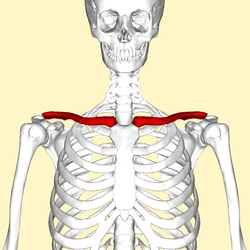
What bones are these?
a)
Sternums
b)
Scapulae
c)
Clavicles
d)
Hyoids
116.

What bones are these?
a)
Carpals
b)
Metacarpals
c)
Phalanges
d)
Metatarsals
117.

Doing push-ups requires the use of several muscles, including:
a)
triceps brachii and pectoralis major
b)
gastrocnemius and hamstring
c)
gluteous maximus
d)
Soleus
118.

1
a)
dendrites
b)
synapse
c)
axon
d)
soma
119.
Sarcomeres are the repeating contractile units that make up
a)
myofibrils
b)
muscle fibers
c)
fascicles
d)
muscles
120.

a)
Occipital
b)
Parietal
c)
Temporal
d)
Sphenoid
100 %

