
 Worksheets
Unit 9 Physical Science - Matter
Total questions: 80
Worksheet time: 45mins
Name
Class
Date
1.
What determines the speed of the atoms and molecules of a particular substance?
a)
size of the atoms and molecules
b)
temperature of the substance
c)
A and B
d)
None of the above
2.
Which state of matter will hold its shape without a container?
a)
Solid
b)
Liquid
c)
Gas
d)
Plasma
3.
The kinetic theory states that the higher the temperature, the faster the
a)
particles that make up a substance move
b)
bonds between atoms break down
c)
molecules of gas rush together
d)
lighter particles within a substance clump together
4.
The change of a substance from a solid directly to a gas is called
a)
condensation
b)
evaporation
c)
melting
d)
sublimation
5.
Evaporation refers to the change of state from a
a)
liquid to a gas
b)
gas to a liquid
c)
solid to a liquid
d)
liquid to a solid
6.
The law of conservation of mass states that mass cannot be
a)
burned
b)
changed in form
c)
created or destroyed
d)
heated or cooled
7.
The measure of the average kinetic energy of the particles in an object is called
a)
plasma
b)
kinetic temperature
c)
thermal energy
d)
particle energy
8.
All matter is made of atoms and molecules that are
a)
always fixed in position
b)
always in motion
c)
moving in the same direction
d)
moving slowly
9.
The temperature at which a substance changes from a liquid to a solid is the
a)
freezing point
b)
saturation point
c)
boiling point
d)
condensation point
10.
Which of these properties is shared by solids, liquids, and gases?
a)
They expand to fill their containers
b)
Their particles are in constant motion
c)
They are easily compressible
d)
They are fluids
11.
Which state of matter has a definite volume, but not a definite shape?
a)
plasma
b)
gas
c)
liquid
d)
solid
12.
Unlike a gas, a plasma
a)
has no mass
b)
has no definite shape
c)
has no definite volume
d)
conducts electric current because it is charged
13.
A gas becomes a liquid through a process called
a)
melting
b)
freeing
c)
evaporation
d)
condensation
14.
____ have a definite shape and volume
a)
solids
b)
liquids
c)
gases
d)
plasma
15.
____ have a definite volume but not a definite shape
a)
solids
b)
liquids
c)
gases
d)
plasma
16.
____ do not have a definite shape or a definite volume
a)
solids
b)
liquids
c)
gases
d)
plasma
17.
A ____ is a change that involves a transformation into a new substance.
a)
physical change
b)
chemical change
18.
Examples of ____ include rusting iron, baking a cake, digesting your lunch and tarnishing silver.
a)
physical changes
b)
chemical changes
19.
A ____ does not affect the composition of a substance.
a)
physical change
b)
chemical change
20.
____ can be either changes of state (changing among liquids, solids and gases) or changes in form (like cutting, smashing or bending).
a)
physical changes
b)
chemical changes
21.
Matter is anything that has _____ and takes up space.
a)
temperature
b)
mass
c)
density
d)
weight
22.
A ____ is a characteristic that can be observed or measured without changing the composition.
a)
physical property
b)
chemical property
23.
Which is NOT an example of a physical property?
a)
color
b)
mass
c)
smell
d)
flammability
24.
A ____ is a characteristic that can only be determined by changing the chemical identity of a substance.
a)
physical property
b)
chemical property
25.
Which is NOT an example of a chemical property?
a)
reactivity with water
b)
reactivity with acid
c)
flamability
d)
malleability
26.
A ____ is a material made up of two or more substances that are physically mixed but not chemically combined.
a)
atom
b)
element
c)
mixture
d)
compound
27.
A(n) ____ is a pure substance made up of only one type of atom.
a)
element
b)
compound
28.
A(n) ____ is a pure substance that is made up of two or more different elements that are chemically combined.
a)
element
b)
compound
29.
Mixtures can be easily separated without changing what the substance is made of.
a)
True
b)
False
30.
Solid to Liquid
a)
Freezing
b)
Melting
c)
Vaporization
d)
Sublimation
31.
Liquid to Gas
a)
Vaporaization
b)
Freezing
c)
Melting
d)
Deposition
32.
Gas to Liquid
a)
Condensation
b)
Vaporization
c)
Melting
d)
Freezing
33.
Liquid to Solid
a)
Melting
b)
Vaporization
c)
Freezing
d)
Deposition
34.
Gas to Solid
a)
Sublimation
b)
Freezing
c)
Condensation
d)
Deposition
35.

City Air
a)
Homogeneous
b)
Heterogeneous
36.

Flat soda pop
a)
Homogeneous
b)
Heterogeneous
37.

Salad dressing
a)
Homogeneous
b)
Heterogeneous
38.

Sugar
a)
Homogeneous
b)
Heterogeneous
39.

Aluminum foil
a)
Homogeneous
b)
Heterogeneous
40.

Sugar water
a)
Homogeneous
b)
Heterogeneous
41.

Paint
a)
Homogeneous
b)
Heterogeneous
42.

Rubbing Alcohol
a)
Homogeneous
b)
Heterogeneous
43.

Iron
a)
Homogeneous
b)
Heterogeneous
44.

Beach sand
a)
Homogeneous
b)
Heterogeneous
45.

Spaghetti sauce
a)
Homogeneous
b)
Heterogeneous
46.
A combination of substances that are not chemically combined is called a(n)____________.
a)
mixture
b)
compound
c)
physical
47.
Which of the following represents an element?
a)
H2O
b)
H2
c)
NaCl
d)
CaCO3
48.
Which of the following is not a compound?
a)
HCl
b)
Cl
c)
NaCl
d)
CO2
49.

What is salad?
a)
element
b)
compound
c)
mixture
50.

What happens when you mix dirt and water?
a)
The dirt will float on top of the water.
b)
The dirt will settle to the bottom.
c)
The dirt will dissolve.
d)
The water will begin to bubble.
51.

Which mixture separation method would use to sort trail mix?
a)
filtration
b)
magnet
c)
boiling/evaporation
d)
sorting physically
52.

What is the measure of how much a substance dissolves in a given volume?
a)
atom
b)
element
c)
solububble
d)
solubility
53.

What type of mixture is this?
a)
heterogeneous
b)
homogeneous
54.

What does it mean if a mixture is homogeneous?
a)
you can see the different parts
b)
cannot tell one part from another
c)
chunks of particles
d)
made of elements
55.
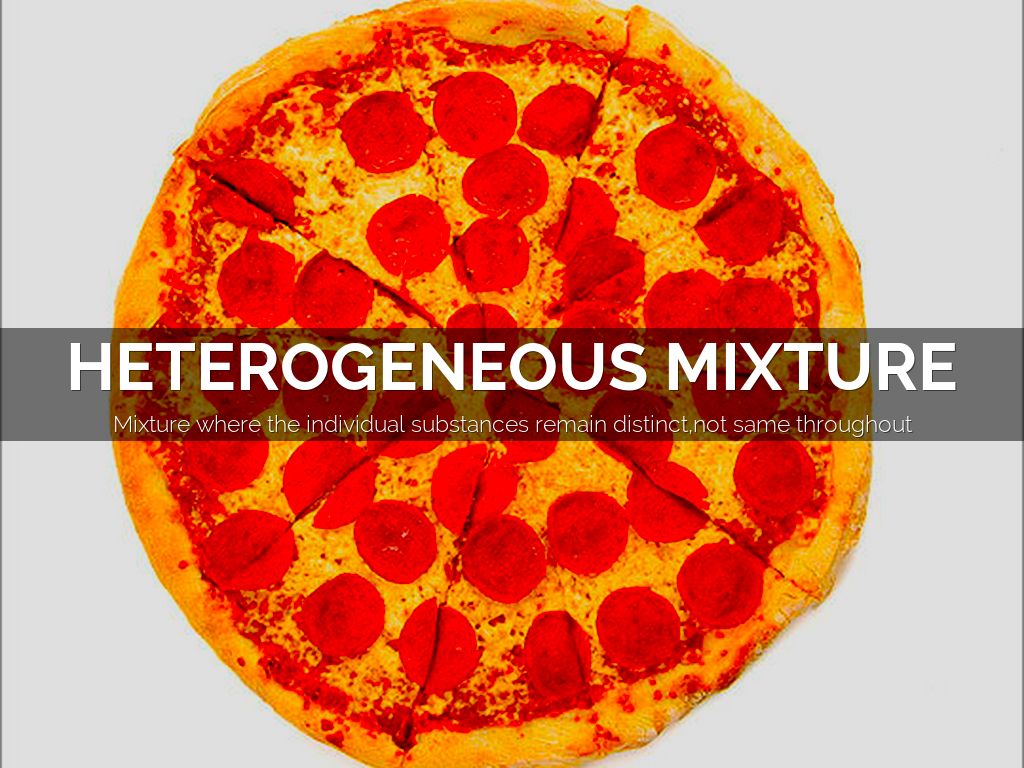
What does it mean if a mixture is heterogeneous?
a)
you can see the different parts
b)
cannot tell one part from another
c)
very well blended
d)
made of elements
56.
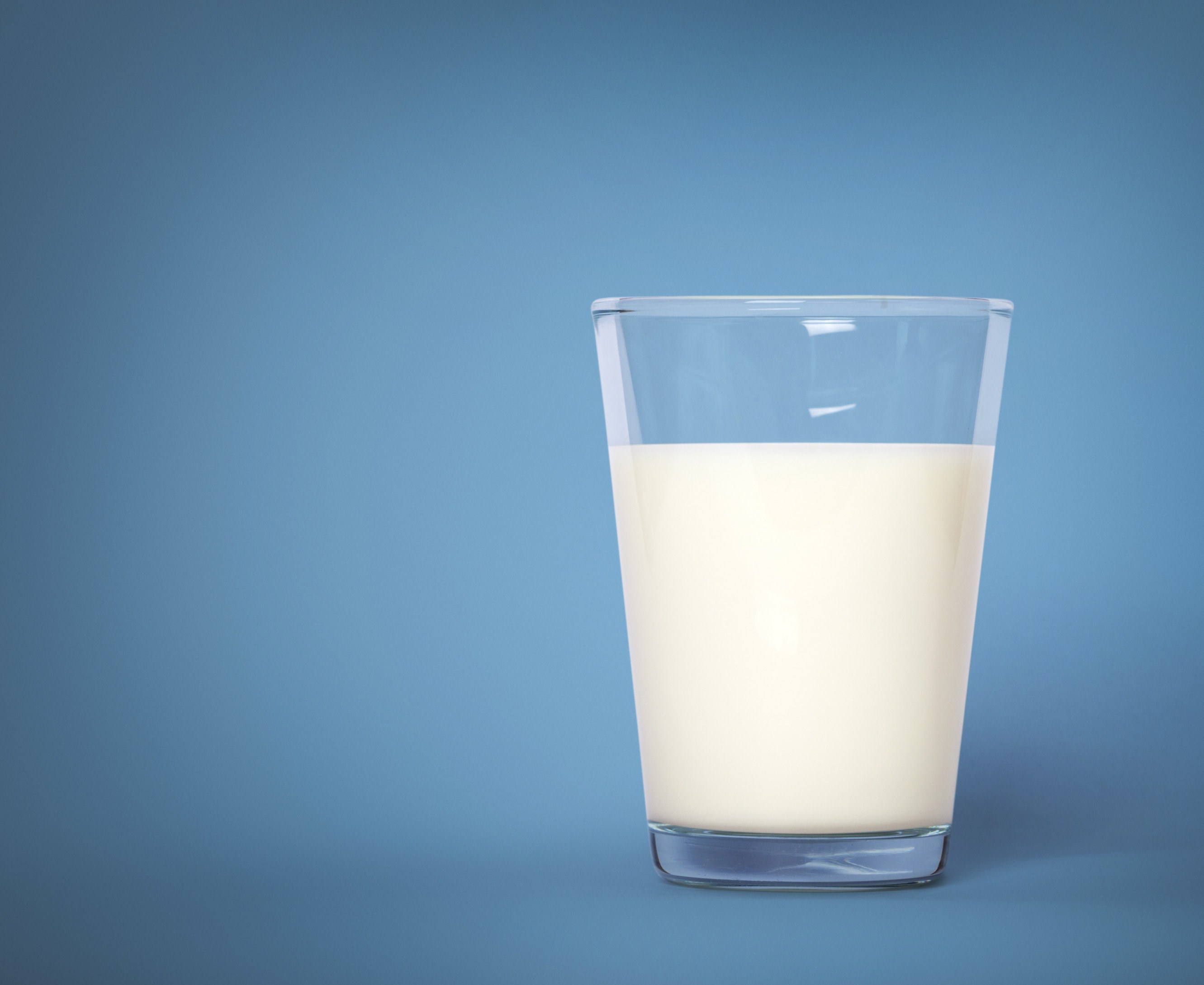
What is milk?
a)
suspension
b)
colloid
c)
solution
d)
irregular mixture
57.
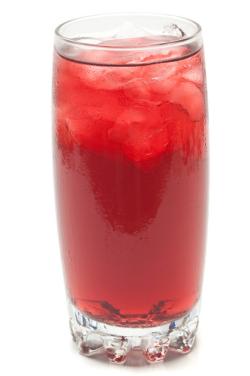
What is Kool-aid?
a)
suspension
b)
colloid
c)
solution (alloy)
d)
irregular mixture
58.
Which of the following is not a homogeneous mixture?
a)
orange juice
b)
vinegar
c)
soft drinks
d)
pool water
59.
This is a type of heterogeneous mixture in which the particles are dispersed and do not settle out.
a)
alloy
b)
solution
c)
suspension
d)
colloid
60.
What is the only type of mixture that has particles that dissolve and are transparent.
a)
Solutions
b)
Suspensions
c)
Colloids
61.
The amount of matter in an object
a)
Weight
b)
Mass
c)
Density
d)
Volume
62.
Refers to the amount of space an object takes up
a)
Volume
b)
Mass
c)
Weight
d)
Buoyancy
63.
Fluids would not include:
a)
Ocean water
b)
Diet Mt. Dew
c)
Air
d)
Diamond
64.
"Anything that can flow" is a:
a)
Liquid
b)
Gas
c)
Fluid
65.
Archimedes' discovered the weight of displaced fluid is always equal to the ______________________ acting on the object.
a)
Buoyant force
b)
Water pressure
c)
Air pressure
d)
Atmospheric pressure
66.
If the buoyant force acting on an object is less than the object's weight, the object...
a)
Sinks
b)
Rises
c)
Remains at the same level
67.
Objects in water feel lighter because of the ________.
a)
buoyant force
b)
air pressure
c)
temperature
68.
Archimedes' Principle explains how an airplane flies.
a)
True
b)
False
69.
What is the SI unit for pressure?
a)
pascal (Pa)
b)
newton (N)
c)
kilogram (kg)
70.
Compared to a man standing on a tall mountain, a man standing at sea level
a)
has less atmospheric pressure on him
b)
has more atmospheric pressure on him
c)
weighs less
d)
has more mass
71.
Density is what kind of property?
a)
Physical property
b)
Chemical property
c)
Atomic property
72.
Force that works against the forward motion of a plane.
a)
drag
b)
thrust
c)
lift
73.
The pressure in a fluid decreases as the fluid's velocity increases.
a)
Archimedes' Principle
b)
Bernoulli's Principle
c)
Pascal's Principle
74.
The faster the speed, the lower the pressure, according to ________.
a)
Pascal's Principle
b)
Bernoulli's Principle
c)
drag
75.
Why doesn't ice float in air?
a)
water is denser than air
b)
ice is denser than air
c)
air is denser than ice
76.
Of the following, where would atmospheric pressure be the greatest?
a)
at sea level
b)
on a mountaintop
c)
at the altitude at which planes fly
77.
Which of the following would NOT affect the level at which a canoe floats in a body of water?
a)
shape of the canoe
b)
depth of water
c)
number of people in the canoe
78.
What is used to determine buoyant force
a)
Archimedes' Principle
b)
Bernoulli's Principle
c)
Pascal's Principle
79.
The relationship of which two variables are compared in Boyle's Law?
a)
pressure & volume
b)
volume & temperature
c)
temperature & pressure
d)
volume & moles (amount of gas)
80.
Which two variables must be held constant for Boyle’s Law to apply?
a)
pressure & volume
b)
volume & temperature
c)
temperature & moles (amount of gas)
d)
volume & moles (amount of gas)
100 %

