
 Worksheets
Review
Total questions: 76
Worksheet time: 50mins
Name
Class
Date
1.
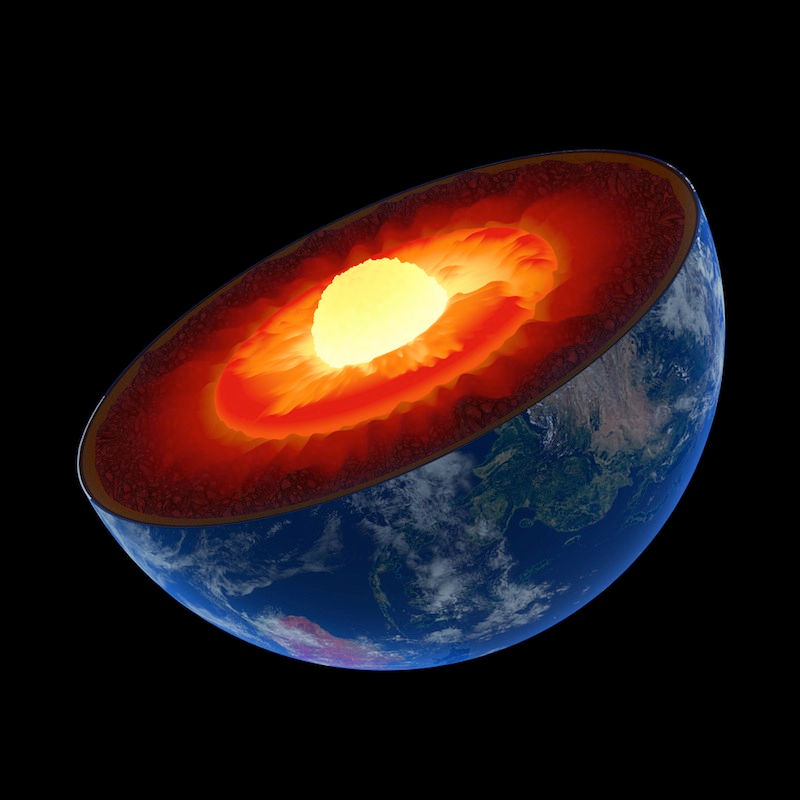
This layer contains the upper mantle and the crust.
a)
Mesosphere
b)
Asthenosphere
c)
Lithosphere
d)
Core
2.
You live, breathe, and eat on this layer.
a)
Outer Core
b)
Inner Core
c)
Mantle
d)
Crust
3.
The core is mostly made up mostly of which elements?
a)
Oxygen and Silicon
b)
Silicon and Magnesium
c)
Nickel and Iron
d)
Iron and Magnesium
4.

Which layer is the OUTER CORE?
a)
1
b)
2
c)
3
d)
4
5.

Which layer is the CRUST?
a)
1
b)
2
c)
3
d)
4
6.

Which layer is the MANTLE?
a)
1
b)
2
c)
3
d)
4
7.

Which layer is the INNER CORE?
a)
1
b)
2
c)
3
d)
4
8.
Which type of plate boundary would cause mountains to form
a)
Transform
b)
Convergent
c)
Divergent
d)
Reform
9.
What is the name of the layer that contains the uppermost mantle and crust
a)
Asthenosphere
b)
Mesosphere
c)
Lithosphere
d)
Transosphere
10.

4. This image is of...
a)
Transform Boundary
b)
Convergent Boundary
c)
Divergent Boundary
11.

Sea floor spreading happens at what type of boundary
a)
Divergent
b)
Convergent
c)
Transform
d)
Mountainous
12.
What process causes new oceanic crust?
a)
Continental drift
b)
Sea floor spreading
c)
Earthquakes
d)
Radiation
13.
Come together
a)
convergent
b)
divergent
c)
transform
14.
divide
a)
convergent
b)
divergent
c)
transform
15.
A collection of organisms that belong to different populations but all live in the same area and interact with one another.
a)
Population
b)
Ecosystem
c)
Community
d)
Ecosphere
16.
A collection of organisms that make up a community as well as all of the nonliving aspects of the environment.
a)
Population
b)
Community
c)
Habitat
d)
Ecosystem
17.
Nonliving factor that affects an ecosystem...
a)
biotic factor
b)
abiotic factor
c)
food chain
d)
biome
18.
Living factors or organisms that affect an ecosystem
a)
abiotic factors
b)
species
c)
trophic level
d)
biotic factors
19.

What are the biotic factors in this image?
a)
sunlight, elephants, and grasses
b)
sunlight, water, and air
c)
elephants, plants, trees
20.

What are the abiotic factors in this image?
a)
water, sunlight, dirt, air
b)
birds and plants
c)
water, plants, and birds
21.
An ecosystem contains living and nonliving things.
a)
True
b)
False
22.
Which of the following is a population?
a)
hawks, barred owls, and eagles on NC coast
b)
mountain stream
c)
all the frogs in a pond
d)
blue-tailed skinks (lizards) around a barn
23.
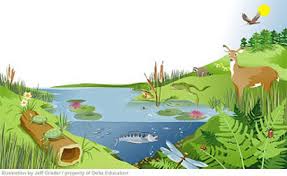
All living things
a)
biotic
b)
abiotic
c)
biosphere
d)
biome
24.

Any of the non-living factors that make up the environment in which living organisms occur.
a)
abiotic
b)
biotic
c)
abiology
d)
antibiotic
25.

A (or more than one) biotic community plus the abiotic features.
a)
Population
b)
Community
c)
Ecosystem
d)
Biome
26.
Which is an example of an organism?
a)
a beetle
b)
a lake
c)
a rock
d)
a shell
27.
Multiple organisms of the same species describes a
a)
organism
b)
population
c)
community
d)
ecosystem
28.

What level of organization can be seen here?
a)
Species
b)
Population
c)
Community
d)
Ecosystem
29.

What level of organization can be observed in the image?
a)
Species
b)
Population
c)
Community
d)
Ecosystem
30.
Which is an example of a biotic factor?
a)
The sun
b)
Water
c)
Grass
d)
Rocks
31.
Which is an example of an abiotic factor?
a)
Grass
b)
Trees
c)
Rain
d)
Birds
32.
Made of a single cell.
a)
Unicellular
b)
Multicellular
c)
Unicycle
d)
Eukaryote
33.
Multi-cellular organisms are made of _________ cells.
a)
One
b)
Two
c)
Many
d)
Soft
34.
An organism is...
a)
all the members of one species living in the same area
b)
made of a single cell
c)
an alien species
d)
a living thing
35.
An organism that is able to capture energy from sunlight or chemicals and use it to PRODUCE ITS OWN FOOD.
a)
Heterotroph
b)
Autobot
c)
Autotroph
d)
Decomposer
36.
A one celled organism that lacks a nucleus.
a)
Prokaryote
b)
Eukaryote
c)
Heterotroph
d)
Decepticon
37.
An organism that cannot make its own food and gets food by consuming other living things.
a)
Autotroph
b)
Prokaryote
c)
Heterotroph
d)
Producer
38.
A eukaryote has a nucleus and...
a)
many cells
b)
one cell
c)
plant cells
d)
no cells
39.
A nonliving part of an organism's habitat.
a)
Biotic factor
b)
Prokaryote
c)
Decomposer
d)
Abiotic factor
40.
An organism has the following characteristics.
-Eukaryotic
-Multicellular
-Does not carry out photosynthesis
-No cell walls
-Reproduces sexually
Which of the following classifications most correctly describes this organism?
-Eukaryotic
-Multicellular
-Does not carry out photosynthesis
-No cell walls
-Reproduces sexually
Which of the following classifications most correctly describes this organism?
a)
Domain Eukarya – Kingdom Animalia
b)
Domain Eukarya – Kingdom Fungi
c)
Domain Bacteria – Kingdom Eubacteria
d)
Domain Archaea – Kingdom Archaebacteria
41.

1. What kind of cell is shown below?
a)
Prokaryotic
b)
Eukaryotic
c)
Plant
d)
Autortrophic
42.
Bacteria are unicellular
a)
True
b)
False
43.

What type of cells are humans made up of?
a)
Prokaryotic
b)
Eukaryotic
c)
Plant
44.
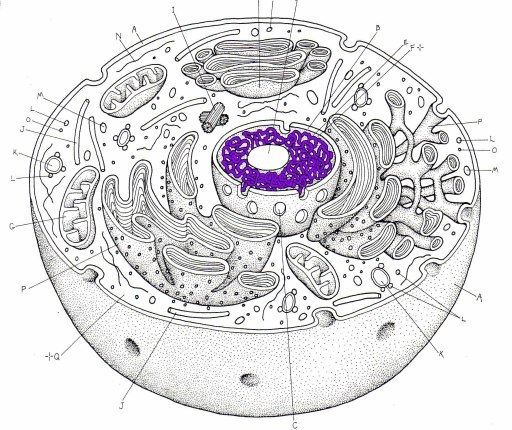
What kind of cell is this?
a)
Eukaryotic
b)
Prokaryotic
45.

a)
fungi
b)
eubacteria
c)
plantae
d)
animalia
46.
How many Kingdoms are under Domain Eukarya?
a)
one
b)
two
c)
three
d)
four
47.
All the members of one species living in the same area.
a)
Community
b)
Family
c)
Population
d)
Heterotroph
48.
All the different populations living together in a particular area.
a)
Population
b)
Hangout
c)
Autotroph
d)
Community
49.
The community of organisms that live in a particular area, along with their non-living environment.
a)
Habitat
b)
Ecosystem
c)
Community
d)
Population
50.
This domain is characterized by ancient bacteria that can live in extreme environments, such as volcanoes.
a)
Archaea
b)
Bacteria
c)
Eukarya
d)
Prokarya
51.
Which kingdom is part of the domain Archaea?
a)
Animalia
b)
Archaebacteria
c)
Eubacteria
d)
Plantae
52.
Organisms that are classified as autotrophic are able to-
a)
be seen with the human eye
b)
move
c)
reproduce
d)
make their own food
53.

Which kingdom would this organism belong to?
a)
Protista
b)
Plantae
c)
Animalia
d)
Fungi
54.

What type of organism makes its own food internally?
a)
heterotroph
b)
autotroph
c)
carnivore
d)
omnivore
55.

Which kingdom would this organism be considered?
a)
Plantae
b)
Protista
c)
Archaebacteria
d)
Fungi
56.

Which kingdoms are prokaryotic?
a)
Archaebacteria and Animalia
b)
Eubacteria and Archaebacteria
c)
Fungi and Protista
d)
None of them are
57.

What do we call an organism that must eat other organisms in order to obtain energy?
a)
Photosynthesis
b)
Autotroph
c)
Heterotroph
d)
Producer
58.
I am made of many cells. My cells have an organized nucleus. I have two parents and eat food.
a)
Protista
b)
Fungi
c)
Bacteria
d)
Animalia
59.
What is unicellular?
a)
When the organism is made up of more than 1 cell
b)
When the organism is made up of 1 cell
c)
When the organism isn't a cell
d)
When the organism is made up of 2 cells
60.
Which of the words below describe mud, sand, and tiny bits of rocks that cement together to form a type of rock?
a)
stalactites
b)
magmas
c)
metamorphs
d)
sediments
61.
What process is used to form metamorphic rocks?
a)
Lava cools and hardens to form a rock.
b)
Bits of sand and gravel form layers that turn into rock from pressure.
c)
Extreme heat and pressure from inside the Earth turn rocks into new rocks.
62.

This rock was another type of rock that was heated and compressed over time. What type of rock is this?
a)
Sedimentary
b)
Igneous
c)
Metamorphic
63.
In order for a metamorphic rock to form, _______ is needed.
a)
Pressure
b)
Heat
c)
Heat and Pressure
d)
Weathering
64.
What is sedimentary?
a)
Formed by heat and pressure
b)
Formed by heat and cooling
c)
Layered rock formed by compaction
d)
All of the above
65.
What is Igneous?
a)
Formed from heat and cooling
b)
Layered rocks formed by compaction
c)
Magma
d)
All of the above
66.

This rock formed when bits of other rocks became pressed into a solid. What type of rock is it?
a)
Sedimentary Rock
b)
Metamorphic Rock
c)
Igneous Rock
67.
This rock was formed when molten rock cooled into a solid. What type of rock is it?
a)
Igneous Rock
b)
Metamorphic Rock
c)
Sedimentary Rock
68.
What does Mohs Chart measure?
a)
The Density of Liquid
b)
The Density of Air
c)
The Hardness of Minerals
d)
The Hardness of Atoms
69.
What mineral is the highest on the Mohs Scale?
a)
Topaz
b)
Feldspar
c)
Diamond
d)
Granite
70.
What are the 3 major types of rocks?
a)
Igneous, Metamorphic, Sedimentary
b)
Metamorphic, Igneous, Cementation
c)
Brown, Red, Gray
d)
Streak, Hardness, Breakage
71.
Plants are....
a)
Autotrophic and Multicellular
b)
Heterotrophic and Acellular
c)
Autotrophic and Unicellular
d)
Heterotrophic and Unicellular
72.

What is a Cell Wall?
a)
Made up of a liquid structure
b)
A rigid structure that surrounds the cell/ gives it protection
73.

Directs all cell activities "Brain or Control Center of cell"
a)
Lysosomes
b)
Nucleus
c)
ribosomes
d)
Mitochondria
74.

Which part of the cell is often called "the brain of the cell"?
a)
nuclear membrane
b)
endoplasmic reticulum
c)
nucleus
d)
mitochondria
75.

What type of cell is pictured?
a)
Prokaryotic
b)
Eukaryotic
c)
Plant
d)
Animal
76.

Type of cell shown?
a)
Bacterial
b)
Prokaryotic
c)
Eukaryotic
d)
Red blood
100 %

