
 Worksheets
Science 7/8 - All Year Review
Total questions: 125
Worksheet time: 2hrs 25mins
Name
Class
Date
1.
What is an example of conduction?
a)
Stove heating a pan
b)
sunlight
c)
wind patterns
2.
What is temperature?
a)
How fast an object moves
b)
What the weatherman tells us
c)
Heat
d)
The average kinetic energy of the particles of an object.
3.
What are the freezing and boiling points of water in Fahrenheit?
a)
freezing = 0, boiling = 100
b)
freezing = 32, boiling = 212
c)
freezing = 32, boiling = 212
d)
freezing = 273, boiling = 373
4.
What are the freezing and boiling points of water in Kelvin?
a)
freezing = 0, boiling = 100
b)
freezing = 32, boiling = 212
c)
freezing = 32, boiling = 100
d)
freezing = 273, boiling = 373
5.
What is the value of absolute zero?
a)
0 degrees Celsius
b)
0 degrees Fahrenheit
c)
0 Kelvin
d)
0 q
6.
What happens to the particles in a substance when absolute zero is acheived?
a)
volume disappears
b)
the apocalypse
c)
a nuclear reaction
d)
all motion stops
7.
What is thermal energy?
a)
The amount of heat an object contains.
b)
The sum of the kinetic and potential energy of the particles of a substance.
c)
Something we can measure easily.
d)
Something that does not exist.
8.
Which of the following is NOT a state of matter.
a)
solid
b)
water
c)
liquid
d)
gas
9.
When I put water in the freezer, what temperature must it reach to become a solid?
a)
0 degrees Celcius
b)
50 degrees Celcius
c)
100 degrees Celcius
d)
150 degrees Celcius
10.
Which of the following is NOT a common state of matter?
a)
solid
b)
liquid
c)
gas
d)
superfluid
11.
When I grab my coffee cup and I feel the cup is hot.....This is an example of....
a)
Conduction
b)
Convection
c)
Radiation
12.
If I hold my hand above my coffee cup and feel the warm air rising, this is an example of....
a)
Conduction
b)
Convection
c)
Radiation
13.
If I put my coffee cup in the microwave to heat it up, I am using....
a)
Conduction
b)
Convection
c)
Radiation
14.
What happens to particles as they cool down?
a)
They slow down
b)
Nothing
c)
They don't move
d)
They speed up
15.
The only state of matter that has a fixed shape is ____.
a)
gas
b)
liquid
c)
solid
d)
plasma
16.
The movement of thermal energy from a warmer object to a cooler object is called:
a)
heat
b)
temperature
c)
motion
d)
momentum
17.
An ice cube in the room will...
a)
absorb the heat from the room
b)
release cold into the room
c)
rise the temperature of the room
d)
All the above
18.
Does ice have thermal energy?
a)
Yes
b)
No
c)
IDK
d)
I was sleeping
19.
Temperature and heat are the same thing.
a)
False
b)
True
20.

Heat turns water into what?
a)
liquid
b)
solid
c)
Europe
d)
steam
21.

The slower the molecules are moving, the _______ the substance.
a)
warmer
b)
slower
c)
colder
d)
faster
22.
_________________________ occurs when water gets warm and changes from a liquid into a gas.
a)
Liquification
b)
Precipation
c)
Elimination
d)
Evaporation
23.

__________________________ is water that collects as droplets on bottles, glasses, or windows.
a)
Teardrops
b)
Liquid pellets
c)
Precipitation
d)
Condensation
24.
Which of the following is equivalent to 32 degrees Fahrenheit?
a)
0 Celcius
b)
100 Celcius
c)
212 Celcuis
d)
180 Celsius
25.
What is the term for changing from a gas to a liquid?
a)
Melting
b)
Evaporation
c)
Condensation
d)
Freezing
26.
What happens to particles as they heat up?
a)
They slow down
b)
Nothing
c)
They don't move
d)
They speed up
27.
Energy is transferred as heat between two objects of ___________ temperatures.
a)
differing
b)
same
28.
As the kinetic energy of the molecules in a substance increases, the temperature of the substance __________.
a)
increases
b)
decreases
29.
A(n) _____________ is a device for measuring temperature.
a)
thermometer
b)
barometer
c)
anemometer
d)
psychrometer
30.
Insulation is used in the walls of a building to ____.
a)
trap solar energy
b)
keep thermal energy from moving through the walls
c)
conduct thermal energy
d)
keep cold air from moving through the walls
31.
What is Thermal Contraction
a)
A Potato
b)
A decrease in a materials volume when its temperature decreases
c)
The movement of fluids in a cycle because of convection
d)
A material through which thermal energy does not flow easily.
32.
Many objects, such as train tracks and road joints, are specifically designed to allow extra space for ...
a)
thermal energy
b)
specific heat
c)
thermal expansion
d)
conductors
33.
A bimetallic strip is made up of _____________________ welded together.
a)
two metals of the same kind
b)
two different metals that expand and contract unequally
c)
two different metals that expand and contract equally
34.
heat always travels from _____ to ______ objects
a)
hot to cold
b)
cold to hot
c)
cold to cold
d)
hot to hot
35.
you get sunburned because of _______
a)
conduction
b)
convection
c)
radiation
36.
heat energy traveling through space is an example of _____
a)
convection
b)
density
c)
radiation
d)
conduction
37.

This is a lava lamp. When the light bulb heats the wax, the wax rises. When the wax cools, it falls. This cycle of rising/falling is an example of:
a)
Conduction.
b)
Convection.
c)
Radiation.
38.

The baby chickens are kept warm from the heat lamps demonstrates this type of heat transfer.
a)
conduction
b)
convection
c)
radiation
39.
Ironing a shirt is an example of...
a)
condensation
b)
conduction
c)
convection
d)
radiation
40.
A chair is placed several feet from a fireplace. The fireplace has a glass screen. The side of the chair facing the fireplace gets warm because of
a)
conduction
b)
convection
c)
radiation
41.

The heat from a hot burner to a pot is transferred by ______.
a)
convection
b)
insulation
c)
radiation
d)
conduction
42.

Walking on the warm sand sand with your bare feet demonstrates this type of heat transfer.
a)
conduction
b)
convection
c)
radiation
43.
Phase change from a solid to a liquid.
a)
melting
b)
sublimation
c)
boiling
d)
condensation
44.
When the temperature of matter decreases the particles ...
a)
speed up and move farther apart
b)
speed up and move closer together
c)
slow down and move farther apart
d)
slow down and move closer together
45.
When air in a hot air balloon is heated the air inside the baloon...
a)
expands
b)
contracts
c)
evaporates
d)
condenses
46.
__________________ turns into gasses when they are heated to the boiling point.
a)
solids
b)
liquids
47.
Some unusual gasses turn into solids when cooled down. This is called _____________
a)
condensation
b)
deposition
c)
sublimation
48.
What is the boiling point of water?
a)
80 degrees celcius
b)
100 degrees celcius
c)
0 degrees celcius
49.
We can change a solid into a liquid , or a gas by changing its _____
a)
temperature
b)
size
c)
mass
50.
When a solid turns into a gas, witjout first turning into a liquid, it is called...
a)
Condensation
b)
Sublimation
c)
Deposition
51.
A great conductor of energy is:
a)
wood
b)
plastic
c)
metal
d)
cloth
52.
Mittens help keep your hands warm in winter because:
a)
They are conductors of heat.
b)
They are fuzzy.
c)
They are conductors of electrical energy.
d)
They are insulators.
53.

Hydroelectric power produces electricity using.....
a)
Wind
b)
Sunlight
c)
Moving water
d)
Dung
54.

Energy from the sun is known as.........
a)
hydroelectric energy
b)
geothermal energy
c)
solar energy
d)
wind energy
55.

Fossil fuels are classified as nonrenewable because they.......
a)
require expensive equipment
b)
take millions of years to replace
c)
can be found all over
d)
provide all the energy we use
56.
formed from the heat of the earth
a)
petroleum
b)
hydropower
c)
geothermal
d)
radiation
57.
Heat transfer always goes from-
a)
Cold to Hot
b)
Hot to Cold
c)
Heat doesn't transfer
d)
Freezing to Cold
58.

This picture is an example of :
a)
this shows the particles in a solid
b)
this shows the particles in a liquid
c)
this shows the particles in a gas
d)
this shows the particles in plasma
59.

This picture is an example of:
a)
the particles in a solid
b)
the particles in a liquid
c)
the particles in a gas
d)
the particles in plasma
60.

This picture is an example of:
a)
the particles in a solid
b)
the particles in a liquid
c)
the particles in a gas
d)
the particles in plasma
61.

Mistletoe extracts water and nutrients from the spruce tree to the detriment (ill effect) of the spruce.
This is an example of which type of symbiosis?
This is an example of which type of symbiosis?
a)
Commensalism
b)
Mutualism
c)
Parasitism
d)
IDK
62.

Oxpecker birds feed on the ticks found on a rhinoceros. Both species benefit since the oxpecker gets food and the rhino gets rid of a parasite.
This is an example of which type of symbiosis?
This is an example of which type of symbiosis?
a)
Commensalism
b)
Mutualism
c)
Parasitism
d)
IDK
63.

A flea feeds on the blood of a rat. This harms the rat.
This is an example of which type of symbiosis?
This is an example of which type of symbiosis?
a)
Commensalism
b)
Mutualism
c)
Parasitism
d)
IDK
64.

Tapeworms reside in human intestines and take nutrients from the human.
This is an example of which type of symbiosis?
This is an example of which type of symbiosis?
a)
Commensalism
b)
Mutualism
c)
Parasitism
d)
IDK
65.

Hermit crabs will move into an old abandoned shell when their shell is no longer big enough to contain them. As the shell is inanimate (not living) it is not affected by this relationship.
This is an example of which type of symbiosis?
This is an example of which type of symbiosis?
a)
Commensalism
b)
Mutualism
c)
Parasitism
d)
IDK
66.
1. What is an adaptation?
a)
A feature or behavior that helps an animal survie.
b)
The food that an animal eats.
c)
How energy moves in a food web.
67.
How do adaptations help animals?
a)
To hide from predators
b)
to hunt for food
c)
to survive in their habitats
d)
All of these are correct
68.
An example of a physical adaptation is...
a)
a turtle hiding inside its shell
b)
The spikes on a porcupine fish
c)
a rabbit burrowing underground
d)
a viper biting when threatened
69.
What eats both plants and animals?
a)
Carnivore
b)
Omnivore
c)
Herbivore
d)
Producer
70.
An ecosystem is a place where living and nonliving things _____________ on each other.
a)
depend
b)
feed
c)
eat
d)
community
71.
Any living thing is called a _____________________
a)
animal
b)
organism
c)
atom
d)
Producer
72.

A feeding relationship where one organism hunts and one is hunted.
a)
Commensalism
b)
Decomposistion
c)
Mutualism
d)
Predator-Prey
73.

An animal that hunts and consumes other organisms is known as a:
a)
Prey
b)
Decomposer
c)
Predator
d)
Commensalist
74.

The organism that is hunted and eaten in a particular feeding relationship is known as:
a)
Predator
b)
Decomposer
c)
Prey
d)
Autotroph
75.
What is a example of a abiotic factor?
a)
Panda
b)
Turtle
c)
Butterfly
d)
weather
76.
What are some examples of biotic?
a)
Plants
b)
Air
c)
Sun
d)
Water
77.

What is the definition of Biotic Factors?
a)
Living things
b)
Non-living things
78.
What are some examples of Abiotic?
a)
Sun
b)
Tigers
c)
Fish
d)
Cats
79.
Is a sun flower Biotic Factors or Abiotic Factors?
a)
Abiotic Factors
b)
Biotic Factors
c)
Sun
d)
Plants
80.
Are humans Biotic factors?
a)
True
b)
False
81.
Could we survive with out Abiotic Factors?
a)
Yes
b)
No
c)
Maybe
82.

Barnacles create home sites by attaching themselves to whales. Since the barnacle is a filter feeder, it also gets access to more water (and food) due to the relationship. The whale is unaffected.
This is an example of which type of symbiosis?
This is an example of which type of symbiosis?
a)
Commensalism
b)
Mutualism
c)
Parasitism
d)
IDK
83.

Wrasse fish feed on the parasites found on the black sea bass's body (usually in the mouth). This is like dental floss for the fish and both species benefit.
This is an example of which type of symbiosis?
This is an example of which type of symbiosis?
a)
Commensalism
b)
Mutualism
c)
Parasitism
d)
IDK
84.

Ostriches and gazelles feed next to each other. They both watch for predators. Because the visual abilities of the two species are different, they can each identify threats that the other animal may not see as readily. Both species benefit.
This is an example of which type of symbiosis?
This is an example of which type of symbiosis?
a)
Commensalism
b)
Mutualism
c)
Parasitism
d)
IDK
85.
What type of adaptation is Wings?
a)
Behavioral
b)
Physical
86.
What type of adaptation is Webbed Feet?
a)
Behavioral
b)
Physical
87.
What type of adaptation is Migration?
a)
Behavioral
b)
Physical
88.
What type of adaptation is a spider spinning a web.
a)
Behavioral
b)
Physical
89.
What type of adaptation is Communication between animals?
a)
Behavioral
b)
Physical
90.
What type of adaptation is a beavers sharp teeth?
a)
Physical
b)
Behavorial
91.
Which symbols best describe mutualism?
a)
+,+
b)
+,-
c)
+,0
d)
-,0
92.
What is predation?
a)
long lasting and physically close relationship in which at least 1 organism benefits
b)
Relationship in which 1 organism depends on another
c)
When organisms produce their own food
d)
An individual of one species hunts captures kills and consumes an individual of another species
93.
Are Birds abiotic and biotic factor?
a)
Abiotic Factor
b)
Biotic Factor
94.

What would be a correct way to describe this structure?
a)
Natural, Frame
b)
Natural, Shell
c)
Manufactured, Frame
d)
Manufactured, Combination
95.
Which of the following is a natural structure?
a)
A dinner table
b)
A fishing net
c)
A leaf
d)
A balloon
96.
Which of the following is NOT a shell structure?
a)
bike helmet
b)
egg
c)
tent
d)
a sea shell
97.

Which of the following descriptions of these structures is accurate?
a)
It is a natural, mass structure.
b)
It is a manufactured, shell structure.
c)
They are manufactured, mass structures.
d)
They are manufactured, shell structures.
98.

What type of structure is this brick wall?
a)
Mass
b)
Shell
c)
Frame
d)
Natural
99.

A tree trunk is an example of a _______________________ structure.
a)
mass
b)
frame
c)
shell
d)
combination
100.

A bike tire is an example of what type of structure?
a)
Mass
b)
Frame
c)
Shell
d)
Fixed
101.

What natural structure is this barbed wire fence likely inspired by?
a)
Rose Thorns
b)
Wooden Fence
c)
Trees
d)
Bushes
102.

What natural structure are flippers likely based on?
a)
Duck Feet
b)
Bird Wings
c)
Spider Web
d)
Honey Comb
103.

This vase is an example of a _____________ structure
a)
Shell
b)
Frame
c)
Mass
d)
Natural
104.
Brightly colored parts of flowers that attract insects.
a)
petals
b)
pistils
c)
stamen
d)
filaments
105.
The transfer of pollen, containing the sperm cells, to the female part of the flower.
a)
seed disperal
b)
pollination
c)
germination
d)
fertilization
106.

When a seed sprouts and begins the early growth of a young plant.
a)
germination
b)
pollination
c)
seed dispersal
d)
fertilization
107.
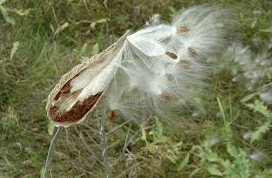
All of the following are examples of seed disbursement except:
a)
wind
b)
volcanic eruptions
c)
physical movement (rolling)
d)
animals feces
108.
Small grains that contain a plant's male reproductive cells.
a)
stamen
b)
pollen
c)
anther
d)
stigma
109.

Small leaf-like structures forming an outer circle at the base of a flower.
a)
petals
b)
sepal
c)
anthers
d)
dicots
110.
Where does water enter the plant?
a)
stem
b)
leaves
c)
roots
d)
flower
111.
What does the chlorophyll do?
a)
let in carbon dioxide
b)
absorb sunlight
c)
soak up water
112.
Which of the following does NOT come out of photosynthesis?
a)
sugar
b)
water
c)
oxygen
113.
Where are the stomata located on the leaf?
a)
on top
b)
on bottom
c)
Uh...They're not on the leaf. They're in the roots.
114.
Which gas leaves a stoma during photosynthesis?
a)
Oxygen
b)
Nitrogen
c)
Helium
d)
Carbon Dioxide
115.
Which gas enters a stomata?
a)
Oxygen
b)
Nitrogen
c)
Helium
d)
Carbon Dioxide
116.

Which part of a plant is responsible for the majority of photosynthesis?
a)
leaves
b)
stem
c)
roots
d)
stomata
117.
Carbon dioxide and oxygen both enter and leave the leaf at the
a)
pore
b)
spongy measophyll
c)
guard cells
d)
stomata
118.
Growing different crops in succession in the same field. This helps replenish soil nutrients.
a)
clear cutting
b)crop rotation
c)
monoculture
d)
tillage
119.
I have hooks to cling to animal fur. What is likely my dispersal method?
a)
wind
b)
water
c)
animals
d)
explosive action
120.
Animals disperse seeds by _________.
a)
eating seeds and dropping waste later on
b)
hiding seeds for late and not coming back for them
c)
catching seeds on their fur and carrying them to different places
d)
all of the above
121.
The movement of pollen from one plant to another is called _________.
a)
dispersion
b)
pollination
c)
fruits
d)
seedlings
122.
A seed can grow in water instead of soil as long as they have ________. This is using ____________________.
a)
nutrients, Germination
b)
Nutrients, hydroponic technology
c)
Soil, hydroponic technology
d)
Humus, hydroponic technology
123.
What plant part definition is this?: Supports the leaves and conducts water minerals to them, and other parts of the plant, including the roots.
a)
Roots
b)
Stem
c)
Leaf
124.
Leaves look green because.....
a)
they eat their vegetables
b)
to blend into their environment
c)
they contain a molecule named chlorophyll
d)
they are sick
125.
The part of a flower that is essential for the attraction of animal pollinators is/are the ___.
a)
pistil
b)
petals
c)
sepals
d)
stament
100 %

