
 Worksheets
Plants Unit Review
Total questions: 100
Worksheet time: 1hrs 5mins
Name
Class
Date
1.

What type of tropism is response to touch?
a)
Gravitropism
b)
Phototropism
c)
Thigmotropism
d)
Hydrotropism
2.

This picture would represent which type of tropism?
a)
Phototropism
b)
Geotropism
c)
Hydrotropism
d)
Thigmotropism
3.
Changes in an organism's environment that cause a response
a)
Tropism
b)
Hormone
c)
Stimuli
d)
Response
4.
When the plant grows toward the stimuli
a)
Positive
b)
Negative
5.
When the plant grows away from the stimuli
a)
Positive
b)
Negative
6.

What type of tropism response to water?
a)
Hydrotropism
b)
Gravitropism
c)
Thigmotropism
d)
Phototropism
7.

A vine plant brushes against a fence and wraps itself around the fence. To what stimulus is the plant responding?
a)
phototropism
b)
hydrotropism
c)
thigmotropism
d)
gravitropism
8.
Which of the following would be the appropriate stimulus and response for geotropism?
a)
Stimulus= Touch; Response= Close leaves
b)
Stimulus= Gravity; Response= roots grow down, stem grows up
c)
Stimulus= gravity; Response= grows toward the light
d)
Stimulus= Light; Response= roots grow toward water
9.
Which hormone promotes seed germination?
a)
abscisic acid
b)
ethylene
c)
gibberellin
d)
auxin
10.
Substances that act as chemical messengers within plants controlling functions
a)
Chemicals
b)
Plant Hormones
c)
Adrenaline
d)
Photosynthesis
11.
Which hormone promotes seed germination?
a)
abscisic acid
b)
ethylene
c)
gibberellin
d)
auxin
12.
Which extreme environmental condition would cause plants to release abscisic acid (dormant hormone) so stomata close?
a)
drought
b)
heat
c)
cold
d)
salt
13.
What is one reason why some plants have scents?
a)
to shed extra water off the plant
b)
to take in nutrients from the soil
c)
to attract animals to spread its pollen
d)
to conserve water during dry periods
14.

Why might some plants that grow on the shady rain forest floor have large leaves?
a)
to stay safe from predators
b)
to attract different animals
c)
to survive harsh winters with heavy snowfall
d)
to take in as much sunlight as possible
15.

Some trees shed their leaves in time for winter. Why is this adaptation useful?
a)
The trees save energy during the darker, colder months.
b)
The trees take in more sunlight through their branches.
c)
The trees attract animals to spread their seeds.
d)
The trees blend into their environment and hide.
16.

What is one possible reason for seeds to have hooks of barbs?
a)
to stay warm during the winter
b)
to protect themselves from sunlight
c)
to get attached to passing animals and get carried away
d)
to stick to animals and steal nutrients from them
17.
Some grasses grow in hot dry areas. Why might they grow deep roots?
a)
to protect the plant from sun damage
b)
to take in as much light as possible
c)
to spread seeds to new places
d)
to reach water down below
18.
What is an adaptation?
a)
A feature that helps a plant grow.
b)
A feature that helps a living thing survive.
c)
A feature that helps a living thing walk.
d)
A feature that that helps only animals survive.
19.
The roots absorb what for the plant?
a)
Water and Nutrients
b)
Soil and Sun
c)
Warmth and Water
d)
Tap and Fibrous
20.
The rain forest is very thick so not much sunlight reaches plants on the forest floor. So some plants will...
a)
have spikes to discourage animals from eating them
b)
climb on other plants to reach sunlight
c)
flexible stems to allow them to move easily with currents
d)
be covered in hair to keep them warm
21.
Animals disperse seeds by _________.
a)
eating seeds and dropping waste later on
b)
hiding seeds for late and not coming back for them
c)
catching seeds on their fur and carrying them to different places
d)
all of the above
22.
What part of the plant absorbs oxygen?
a)
stem
b)
roots
c)
leaves
d)
flower
23.
Plants produce what, that animals need to survive?
a)
Oxygen
b)
Carbon Dioxide
c)
Helium
24.
The outside of the seed is called what?
a)
seed coat
b)
root
c)
embryo
25.
Where does the fruit come from?
a)
Flower
b)
Roots
c)
Leaves
d)
stem
26.
What is the purpose of plants' roots?
a)
Roots are underground.
b)
Roots run through the ground.
c)
Roots take in water and nutrients from the soil and holds the plants in place.
d)
Roots do not have a purpose.
27.
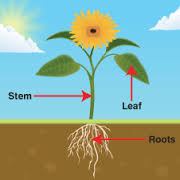
Plants that have true roots, stems and leaves are called ____.
a)
nonvascular plants
b)
vascular plants
c)
seed plants
d)
spore plants
28.
The two groups of seed plants are....
a)
angiosperms and gymnosperms
b)
vascular and nonvascular
c)
spores and seeds
d)
short and tall
29.
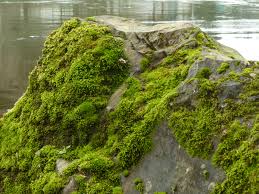
This is a ____ plant.
a)
gymnosperm
b)
angiosperm
c)
vascular
d)
nonvascular
30.
Seedless plants reproduce with ___.
a)
spores
b)
seeds
c)
binary fission
d)
flowers
31.
What substance is transported in the xylem?
a)
Carbon dioxide and oxygen
b)
Sugars made in the leaves
c)
Hormones
d)
Water
32.
Water moves in bryophytes by means of
a)
diffusion
b)
phloem
c)
xylem
d)
active transport
33.
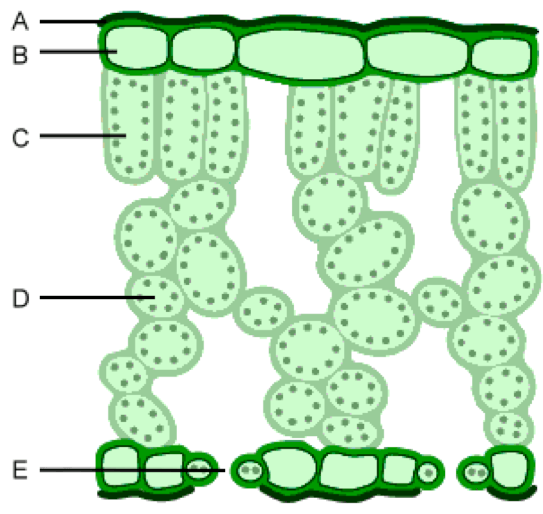
What is A pointing to?
a)
lower epidermis
b)
waxy cuticle
c)
guard cell
d)
stomata
34.
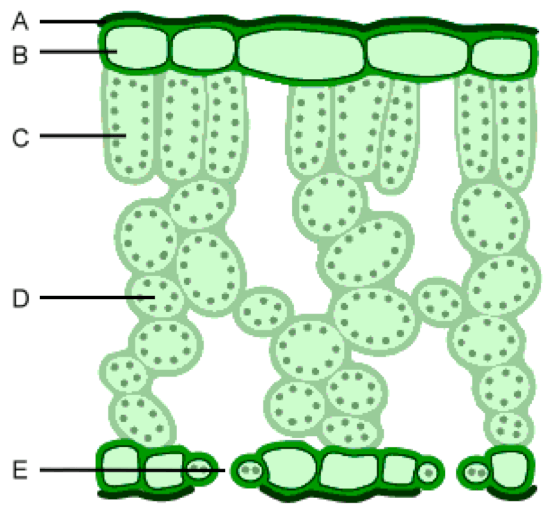
What is E pointing to?
a)
waxy cuticle
b)
stomata
c)
upper epidermis
35.

What is D? (pg.134)
a)
Anther
b)
Ovules
c)
Pollen Tube
d)
Stigma
36.

What does an ovule become when it is pollinated?
a)
a seed
b)
a sprout
c)
a fruit
d)
it stays an ovule
37.
What type of vascular tissue is responsible for transporting the sugars made in photosynthesis from the leaves to the roots?
a)
Cuticle
b)
Phloem
c)
Stomata
d)
Xylem
38.
Which of the following structures allows for gas exchange between a leaf and the atmosphere?
a)
Cuticle
b)
Phloem
c)
Stomata
d)
Xylem
39.
Which group of plants include evergreen cone-bearing trees?
a)
Bryophytes
b)
Pteridophytes
c)
Gymnosperms
d)
Angiosperms
40.
To which of the following groups do flowering plants that produce fruit belong?
a)
Bryophytes
b)
Pteridophytes
c)
Gymnosperms
d)
Angiosperms
41.
The tiny granules that contain the male gametophyte of seed plants
a)
Rhizoid
b)
Phloem
c)
Pollen
d)
Angiosperm
42.
Where is the site of photosynthesis in plant leaves?
a)
stomata
b)
guard cells
c)
mesophyll
d)
waxy cuticle
43.
The male reproductive structure of a flower that produces pollen and consists of an anther at the tip of a filament
a)
Carpel
b)
Pistil
c)
Stamen
d)
Xylem
44.
The transfer of pollen from the the male reproductive structures to the female structures of seed plants
a)
Pollen
b)
Pollination
c)
Vascular Plant
d)
Stamen
45.
Which two groups of plants depend on water for reproduction?
a)
Bryophytes and Angiosperms
b)
Ferns and Gymnosperms
c)
Bryophytes and Ferns
d)
Angiosperms and Gymnosperms
46.
Which of the following groups of plants lacks the vascular tissues xylem and phloem?
a)
Bryophytes
b)
Ferns
c)
Gymnosperms
d)
Angiosperms
47.

Seed production, sexual or asexual?
a)
sexual
b)
asexual
c)
neither
d)
both
48.
This part of the plant is the central structure of the plant and flowers, leaves and roots are all attached to it.
a)
Stems
b)
Roots
c)
Leaves
d)
Flower
49.
Phloem and Xylem are types of
a)
vascular tissue
b)
roots hairs
c)
cells
d)
surface cells
50.
Which part of the plant provides a large surface area to increase the absorption of sunlight which is essential for photosynthesis?
a)
Stem
b)
Roots
c)
Leaves
d)
Flower
51.
This part of the plant has color and fragrances which have evolved to attract pollinators.
a)
Fruit
b)
Seeds
c)
Flowers
d)
Stems
52.

Which plant part takes in carbon dioxide and releases oxygen?
a)
2 leaves
b)
3 stem
c)
4 roots
d)
1 flower
53.
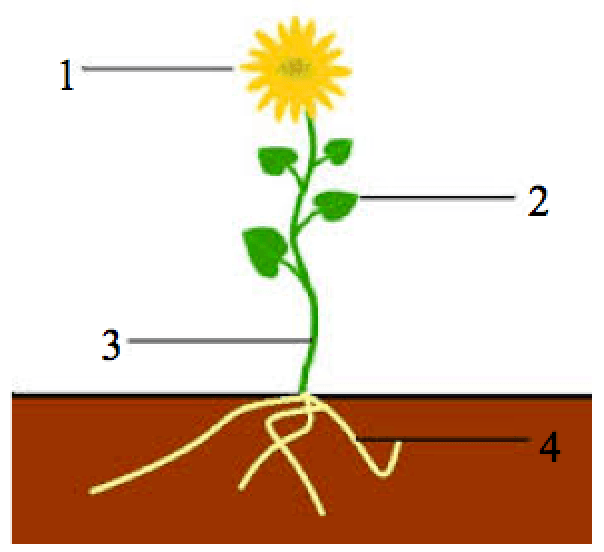
Which plant part absorbs water from the soil?
a)
4 roots
b)
3 stem
c)
2 leaves
d)
1 flower
54.

Where does photosynthesis take place in a plant?
a)
2 leaves
b)
4 roots
c)
3 stem
d)
1 flower
55.

Which plant part supports the plant?
a)
3 stem
b)
4 roots
c)
2 leaves
d)
1 flower
56.
The supporting column of inactive (dead) gap-wood which gives the trunk strength and stiffness.
a)
Heartwood
b)
Sapwood
c)
Cambium
d)
Inner Bark
57.

What type of root system is this?
a)
Fibrous
b)
Taproot
58.

What type of root system is this?
a)
Fibrous
b)
Taproot
59.
The products of photosynthesis are...
a)
oxygen & glucose
b)
oxygen & carbon dioxide
c)
glucose & water
d)
oxygen & water
60.
The reactants for photosynthesis are carbon dioxide, water, and ________
a)
oxygen
b)
light energy
c)
chlorophyll
d)
glucose
61.
Which flower part does the pollen stick to when being pollinated?
a)
stigma
b)
anther
c)
ovary
d)
petal
62.
What flower part makes the pollen?
a)
anther
b)
filament
c)
ovary
d)
peduncle
63.
The movement of water through a plant from the roots to the leaves as water evaporates from the leaves is called...
a)
inspiration
b)
cohesion
c)
transpiration
d)
adhesion
64.
What cells open and close the stomata as needed?
a)
guard cells
b)
epidermis
c)
cuticle
d)
stem
65.
Pores on the under side of the leaf are called...
a)
epidermis
b)
chlorophyll
c)
guard cells
d)
stomata
66.
Xylem at the center of the tree that can no longer transport fluids is called...
a)
sapwood
b)
heartwood
c)
bark
d)
epidermis
67.

How would you classify the stem in the picture?
a)
non-vascular
b)
monocot
c)
mono-vascular
d)
dicot
68.
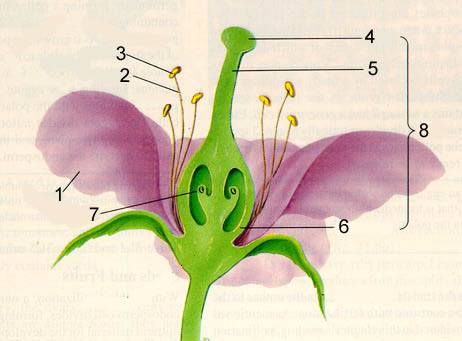
What is #2 pointing to?
a)
Anther
b)
Filament
c)
Ovary
d)
Style
69.

What is #3 pointing to?
a)
Stigma
b)
Filament
c)
Ovary
d)
Anther
70.
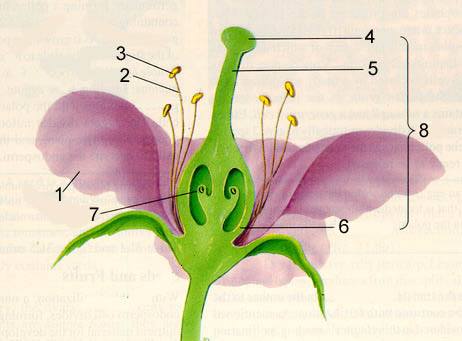
What is #4 pointing to?
a)
Anther
b)
Style
c)
Stigma
d)
Ovary
71.

What is #5 pointing to?
a)
Anther
b)
Filament
c)
Stigma
d)
Style
72.

What is #6 pointing to?
a)
Stigma
b)
Style
c)
Ovary
d)
Petal
73.

What is #7 pointing to?
a)
Anther
b)
Ovary
c)
Ovule
d)
Petal
74.

What is #8 pointing to?
a)
Petal
b)
Stamen
c)
Pistil
d)
Ovary
75.

What cell structure is letter A?
a)
cell wall
b)
cell membrane
c)
nucleus
nucleus
nucleus
d)
cytoplasm
76.

What cell structure is letter B?
a)
cell wall
b)
cell membrane
c)
nucleus
d)
cytoplasm
77.

What cell structure is letter C?
a)
mitochondrion
b)
chloroplast
c)
nucleus
d)
cell membrane
78.

What cell structure is letter E?
a)
mitochondrion
b)
nucleus
c)
cytoplasm
d)
cell wall
79.

What cell structure is letter D?
a)
cytoplasm
b)
nucleus
c)
chloroplast
d)
mitochondrion
80.

What cell structure is letter F?
a)
cell wall
b)
cell membrane
c)
chloroplast
d)
nucleus
81.
The cell organelle that converts the sun's energy into food (sugar) is the?
a)
mitochondrion
b)
chloroplast
c)
cell wall
d)
cell membrane
82.
The leaf has a shiny, waxy cuticle around it to
a)
increase the rate of photosynthesis
b)
attract more light
c)
control water loss
d)
stop carbon dioxide and oxygen gases escaping
83.

Most of the chloroplast cells are found in the
a)
upper epidermis (B)
b)
pallisade mesophyll layer (C)
c)
lower epidermis
d)
stomata (E)
84.

Light energy for photosynthesis is captured by the chloroplast-rich cells of the _______.
a)
cuticle (A)
b)
upper epidermis (B)
c)
palisade mesophyll (C)
d)
spongy mesophyll (D)
85.
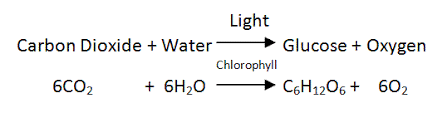
The reactants needed for photosynthesis to occur are:
a)
carbon dioxide & water
b)
carbon dioxide & oxygen
c)
oxygen & water
d)
carbon dioxide, oxygen & water
86.
A series of chemical reactions that convert light energy, water, and carbon dioxide into the food-energy molecule glucose and give off oxygen.
a)
photosynthesis
b)
cellular respiration
c)
calvin cycle
d)
fertilization
87.
Epidermal cells are found
a)
on the tops of leaves
b)
on the bottoms of leaves
c)
in the middle of leaves
d)
on the tops and bottoms of leaves
88.

Which type of mesophyll cells have open spaces between them to allow for gases to flow through?
a)
palisade mesophyll cells (C)
b)
spongy mesophyll cells (D)
89.
Light energy is captured in
a)
mitochondria
b)
cytoplasm
c)
nucleus
d)
chloroplasts
90.
What is the most common pigment that captures and reflects light energy in plants?
a)
mesophyll
b)
glucophyll
c)
photophyll
d)
chlorophyll
91.

The offspring from asexually reproduced organisms are?
a)
Different than their parents
b)
Identical to parents
c)
Like a combination from both parents
d)
A different species
92.

All of the offspring of an organism have the same genetic material, which is identical to the parent organism. From this, we can conclude that this organism -
a)
makes its own food
b)
is unicellular
c)
live in a marine habitat
d)
reproduces asexually
93.
The saguaro is a tree-like cactus that grows over 50 feet tall in desert areas of North America. The cactus flowers in the spring and relies mainly on bats for pollination. The flowers produce fleshy fruit filled with thousands of seeds, each one genetically unique.
a)
Asexual reproduction
b)
Sexual reproduction
c)
Mitosis
d)
Meiosis
94.
Asexual reproduction like mitosis produces
a)
Two offspring cells with the same genetic material as the parent cell.
b)
Two offspring cells with half genetic material as the parent cell.
c)
Four offspring cells with the same genetic material as the parent cell.
d)
Four offspring cells with half the genetic material as the parent cell.
95.

When comparing the offspring of sexually and asexually reproducing organisms, we would expect the genetic material (DNA) of the sexually reproducing organism to -
a)
contain fewer mutations
b)
be lesser in quantity
c)
be simpler overall
d)
show more variation
96.
What is an advantage of sexual reproduction?
a)
Allows genetic variation
b)
Only needs one parent
c)
Happens very quickly
d)
Offspring are exact copies of parent
97.
What is one disadvantage of sexual reproduction?
a)
Only one parent needed
b)
Off spring are exact copies of parents
c)
Happens very quickly
d)
Needs two parents
98.

Prokaryotes (bacteria) reproduce asexually via -
a)
spore formation
b)
bud creation
c)
vegetative propagation
d)
binary fission
99.
Which of the following is a disadvantage for sexual reproduction?
a)
a lot of time and energy is required for making gametes and finding mates
b)
offspring can be produced more quickly than by asexual means
c)
the genetic diversity makes organisms respond differently to environmental changes
d)
the offspring are genetically different
100.
Organisms that reproduce ___________ are most likely to thrive in a dynamic (changing) environment because harmful traits are suppressed and beneficial traits are amplified by natural selection.
a)
asexually
b)
sexually
100 %

