
 Worksheets
SportsMedicine-HeadNeckBonesMusclesEtc
Total questions: 99
Worksheet time: 1hrs 27mins
Name
Class
Date
1.
These muscles around your eye help you bat your eyes~ closes the eyelids
a)
Orbicularis Oculi
b)
Orbicularis Oris
c)
Frontals
d)
Corrugator
2.
These muscles around your eye help you bat your eyes~ closes the eyelids
a)
Orbicularis Oculi
b)
Orbicularis Oris
c)
Frontals
d)
Corrugator
3.
This muscle encircles your mouth and enables your lips to pucker for a kiss~ purses the lips
a)
Orbicularis Oris
b)
Orbicularis Oculi
c)
Zygomaticus Major
d)
Zygomaticus Minor
4.
This muscle closes the mouth by raising your jawbone~ elevates the mandible (also used in chewing)
a)
Masseter
b)
Temporalis
c)
Auricular
d)
Buccinator
5.
This muscle closes the mouth by raising your jawbone~ elevates the mandible (also used in chewing)
a)
Masseter
b)
Temporalis
c)
Auricular
d)
Buccinator
6.
This large neck muscle helps rotate the head to the opposite side and flex the neck
a)
Sternoclidomastoid
b)
Platysma
c)
Mentalis
d)
Masseter
7.
The origin of the SCM is the
a)
sternum and clavicle.
b)
manubrium and medial 1/3 of the clavicle.
c)
mastoid process of the temporal bone.
d)
first rib.
8.

The origin of this muscle is
a)
The clavicle
b)
The Sternum
c)
The Clavicle and Sternum
d)
The mastoid process of the Temporal Bone
9.
Name of the bone of the jaw
a)
Maxilla
b)
Mandible
c)
Zygomatic
10.
Name of the bone of the upper lip, below the nose
a)
Maxilla
b)
Mandible
c)
Orbital
11.
What makes up the central nervous system?
a)
brain/spinal cord
b)
Brain, eyes
c)
spinal cord, eyes
d)
brain, neck
12.
How many cervical vertebrae are there?
a)
7
b)
3
c)
12
d)
14
13.
How many teeth do we have?
a)
32
b)
22
c)
25
d)
30
14.
Structure that separates the nostrils
a)
septum
b)
epistaxis
c)
maxilla
d)
nasal
15.
What are the names of the joints of the skull?
a)
Sutures
b)
Bones
c)
Vertebra
d)
Ligaments
16.

What bone is this?
a)
temporal
b)
frontal
c)
nasal
d)
occipital
17.

What bone is this?
a)
temporal
b)
maxilla
c)
mandible
d)
nasal
18.

What bone is this?
a)
maxilla
b)
zygomatic
c)
mandible
d)
occipital
19.

What bone is this?
a)
nasal
b)
mandible
c)
maxilla
d)
lacrimal
20.

What bone is this?
a)
maxilla
b)
mandible
c)
frontal
d)
parietal
21.
The dens (a tooth like projection) is found on this cervical vertebra.
a)
Axis
b)
Body
c)
Vertebra prominens
d)
Atlas
22.
Atlas articulates with condyles on the ___ bone of the skull
a)
temporal
b)
sphenoid
c)
occipital
d)
parietal
23.
What is the name of the first Cervical Vertebrae?
a)
Compass
b)
Telamon
c)
Atlas
d)
Axis
24.

What type of vertebrae is this?
a)
Cervical
b)
Thoracic
c)
Lumbar
d)
Sacral
25.

Identify "A"
a)
Spinous process
b)
Lamina
c)
Pedicle
d)
Transverse process
26.

Which letter represents the vertebral foramen?
a)
A
b)
B
c)
C
d)
D
27.

What type of vertebrae is this?
a)
Cervical
b)
Thoracic
c)
Lumbar
d)
Sacral
28.

Which is the vertebral body?
a)
B
b)
H
c)
G
d)
F
29.

Which is the spinous process?
a)
H
b)
C
c)
G
d)
F
30.

What is the specific and special name of this cervical vertebrae?
a)
Atlas
b)
Axis
c)
Dens
d)
Odontoid
31.

WHAT IS #1
a)
DENS ( ODONTOID PROCESS)
b)
SPINOUS PROCESS
c)
BODY
d)
LAMINA
32.

WHAT IS #2
a)
ATLAS
b)
AXIS
c)
LUMBAR
d)
THORACIC
33.
WHAT IS #3
a)
ATLAS
b)
AXIS
c)
LUMBAR
d)
THORACIC
34.
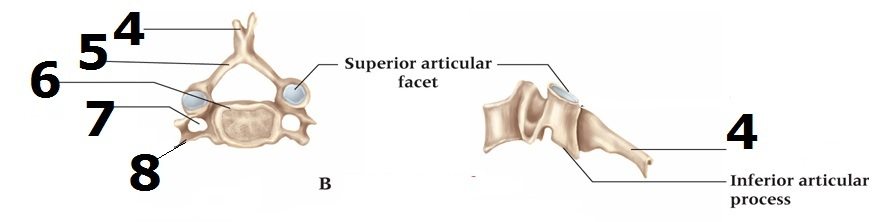
WHAT IS #6
a)
SPINOUS PROCESS
b)
BODY
c)
TRANSVERSE PROCESS
d)
LAMINA
35.
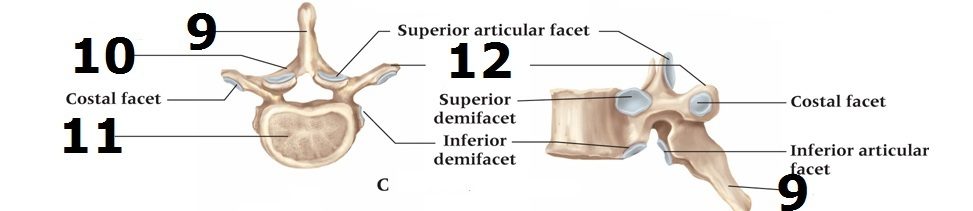
WHAT IS #9
a)
SPINOUS PROCESS
b)
BODY
c)
TRANSVERSE PROCESS
d)
LAMINA
36.

The section of the spinal column connected to the skull.
a)
lumbar vertebrae
b)
thoracic vertebrae
c)
sternal vertebrae
d)
cervical vertebrae
37.

This cervical vertebrae known as C1 is called
a)
axis
b)
atlas
c)
zygomatic vertebrae
d)
styloid process
38.
What muscle allows you to bow your head?
a)
sternocleidomastoideus
b)
splenius capitis
c)
platysma
d)
trapezius
39.
What muscle allows you to kiss?
a)
orbicularis oris
b)
orbicularis oculi
c)
buccinator
d)
triangularis
40.
What muscle is the agonist (prime mover) for mastication?
a)
temporalis
b)
internal pterygoid
c)
masseter
d)
buccinator
41.
What muscle allows you to wink or squint?
a)
orbicularis oris
b)
frontalis
c)
orbicularis oculi
d)
triangularis
42.

What is the muscle that allows you to do a top view duck face?
a)
temporalis
b)
orbicularis oris
c)
orbicularis oculi
d)
buccinator
43.
What is the insertion of the sternocleidomastoid?
a)
sternum
b)
clavicle
c)
mastoid process
d)
mandible
44.

a)
Orbicularis Oris
b)
Orbicularis Oculi
c)
Corrugator
d)
Occipitals
45.

a)
Orbicularis Oris
b)
Orbicularis Oculi
c)
Corrugator
d)
Frontalis
46.
Joints between skull bones
a)
diarthrotic/synovial
b)
fibrous/suture
c)
amphiarthrotic/epiphyseal disk
47.
Name the only movable bone of the skull
a)
coronoid process
b)
maxilla
c)
mandible
d)
glenoid process
48.
Which two bones connect to form the TMJ
a)
temporal and mandible
b)
Mandible and Maxilla
c)
Parietal and Temporal
d)
Mandible and Occipital
49.
How many bones are there in the skull? (crainal bones)
a)
8
b)
14
c)
29
d)
4
50.
How many facial bones are there?
a)
8
b)
14
c)
20
d)
5
51.
Top layer of meninges.
a)
Dura
b)
Pia
c)
Arachnoid
52.
Bottom layer of meninges.
a)
Pia
b)
Dura
c)
Sub-arachnoid
53.
Name of the bone of the jaw
a)
Maxilla
b)
Mandible
c)
Zygomatic
54.
Name of the bone of the upper lip, below the nose
a)
Maxilla
b)
Mandible
c)
Orbital
55.
Name of the cheek bone
a)
Zygomatic
b)
Occipital
c)
mandible
d)
Frontal
56.
What makes up the central nervous system?
a)
brain/spinal cord
b)
Brain, eyes
c)
spinal cord, eyes
d)
brain, neck
57.
Part of the brain that is responsible for motor skills and coordination.
a)
Cerebellum
b)
Cerebrum
c)
Brain stem
58.
Marty's pupil grew larger when someone put a flashlight into it. What is this called?
a)
Pupil dilation
b)
Pupil constriction
59.
Bernice's pupil got smaller as the light was taken away from it. What is this called?
a)
Pupil constriction
b)
Pupil dilation
60.
Means nosebleed
a)
epistaxis
b)
hyphema
c)
diplopia
d)
mandible
61.
Blood in the front of the eye
a)
hyphema
b)
diplopia
c)
dilate
d)
epistaxis
62.
What are the names of the joints of the skull?
a)
Sutures
b)
Bones
c)
Vertebra
d)
Ligaments
63.

What bone is this?
a)
maxilla
b)
occipital
c)
parietal
d)
lacrimal
64.

What part of the brain is this?
a)
Cerebrum
b)
Cerebellum
c)
Brain stem
65.

What part of the brain is this?
a)
Cerebrum
b)
Brain stem
c)
Cerebellum
66.

What part of the brain is this?
a)
Brain stem
b)
Cerebellum
c)
Cerebrum
67.

What part of the skull is this?
a)
Parietal
b)
Occiptal
c)
Frontal
d)
Mandible
68.

What layer of meninges is this?
a)
dura
b)
pia
69.

What part of the meninges is this?
a)
Dura
b)
Sub-arachnoid
70.

What part of the meninges is this?
a)
Sub-arachnoid space
b)
pia
71.

What part of the meninges is this?
a)
Arachnoid
b)
pia
72.

Identify bone
a)
Occipital bone
b)
Parietal bone
c)
Temporal bone
d)
Sphenoid bone
73.

Identify bone
a)
Zygomatic bone
b)
Temporal bone
c)
Parietal bone
d)
Occipital bone
74.

Identify bone.
a)
Zygomatic bone
b)
Nasal bone
c)
Maxillary bone
d)
Lacrimal bone
75.
Which of these is a flat bone?
a)
Vertebra
b)
Ethmoid bone
c)
Sphenoid bone
d)
Frontal bone
76.
‘I am cartilage!’
a)
Chrondro-
b)
Cyte
c)
Costa-
d)
Osteo-
77.
Which type of joints do not have movement once they fuse?
a)
fibrous
b)
cartilaginous
c)
synovial
d)
none - they all have movement
78.
Which of the following is a hole or opening in a bone for the passage of blood vessels and nerves?
a)
foramen
b)
process
c)
condyle
d)
protuberance
79.
Which part of the skull allows the passage of the medulla oblongata?
a)
jugular foramen
b)
carotid canal
c)
foramen magnum
d)
cribriform plate
80.

This is a sphenoid bone, so it is what type of bone?
a)
long
b)
short
c)
irregular
d)
flat
81.
what is a tendon
a)
muscle to bone
b)
bone to muscle
c)
bone to bone
82.
what is the origin of a muscle
a)
fixed point
b)
joint point
c)
leg point
83.
what is the insertion of a muscle ?
a)
muscle to the part that does not move
b)
muscles that contract on their own
c)
muscle to the part that move
d)
where the muscle meet the bone
84.
where is the trapezuis located ?
a)
upper arm
b)
head
c)
tibia
d)
upper back
85.
Force onto the top of the head
a)
Axial loading
b)
lateral flexion
c)
hyperflexion
d)
hyperextension
86.
Damage to the cerebellum would most affect the career of
a)
an architect
b)
a teacher
c)
an athlete
d)
a librarian
87.
The Medulla Obolongata controls our ___.
a)
Blood Pressure
b)
Muscle Memory
c)
Pain reaction
d)
Memory
88.
What is the largest part of the brain?
a)
Thalamus
b)
Cerebellum
c)
Spinal Cord
d)
Cerebrum
89.

What is this?
a)
Cerebrum
b)
Cerebellum
c)
Brain Stem
d)
Diencephalon
90.

The lobe responsible for vision
a)
Frontal Lobe
b)
Temporal Lobe
c)
Parietal Lobe
d)
Occipital Lobe
91.
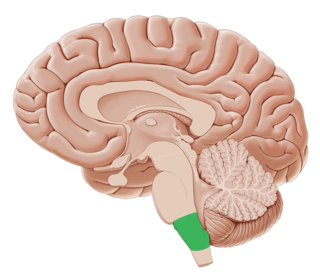
What is this?
a)
Corpus callosum
b)
Medulla Oblongata
c)
Cerebellum
d)
Hypothalamus
92.
The lobe responsible for making plans and evaluating consequences
a)
Frontal Lobe
b)
Temporal Lobe
c)
Parietal Lobe
d)
Occipital Lobe
93.
Controls hearing and smell
a)
Frontal Lobe
b)
Temporal Lobe
c)
Occipital Lobe
d)
Parietal Lobe
94.

The parietal lobe controls __________.
a)
Vision
b)
Problem Solving
c)
Memory
d)
Sense of touch, pain, pressure
95.

This structure is involved in fear/panic response
a)
Cerebellum
b)
Hippocampus
c)
Amygdala
d)
Parietal Lobe
96.
Controls behaviors (hunger, thirst, sleep, body temperature) through the release of hormones.
a)
hypothalamus
b)
thalamus
c)
adrenal glands
d)
pineal gland
97.
Hemisphere that is associated with Verbal and Mathematical abilities
a)
Left Hemisphere
b)
Right Hemisphere
98.

Who has a bigger frontal lobe?
a)
b)
99.
If there are 3 apples and you take away 2, how many do you have ?
a)
2
b)
3
c)
1
100 %

