
 Worksheets
BioQuiz12/8
Total questions: 50
Worksheet time: 2hrs 10mins
Name
Class
Date
1.
Plants and animals living in the desert must be able to adapt to extreme heat and _______________.
a)
winds
b)
chia
c)
dryness
d)
evaporation
2.
The desert is the ___________ of the biomes.
a)
driest
b)
succulents
c)
dryness
d)
nocturnal
3.

Which biome is pictured above?
a)
wetland
b)
coral reef
c)
ocean
d)
freshwater
4.
Which biome is this: canopy of trees, average rainfall of 155 inches, and is biologically diverse?
a)
tropical rainforest
b)
coniferous forest
c)
grassland
d)
deciduous forest
5.
This biome has trees with leaves that change color and fall off each year during fall.
a)
taiga
b)
tundra
c)
rain forest
d)
deciduous forest
6.
This biome has very high amounts of precipitation.
a)
desert
b)
rain forest
c)
taiga
7.
Abiotic factors are parts of the environment that are...
a)
Nonliving
b)
Living
c)
Populations
d)
Vegetation
8.
Ponds, rivers, lakes, and streams are all
a)
fresh water
b)
salt water
9.

This forest is split into "layers" where organisms live.
a)
Deciduous Forest
b)
Tropical Rain Forest
c)
Coniferous Forest
d)
None of these
10.
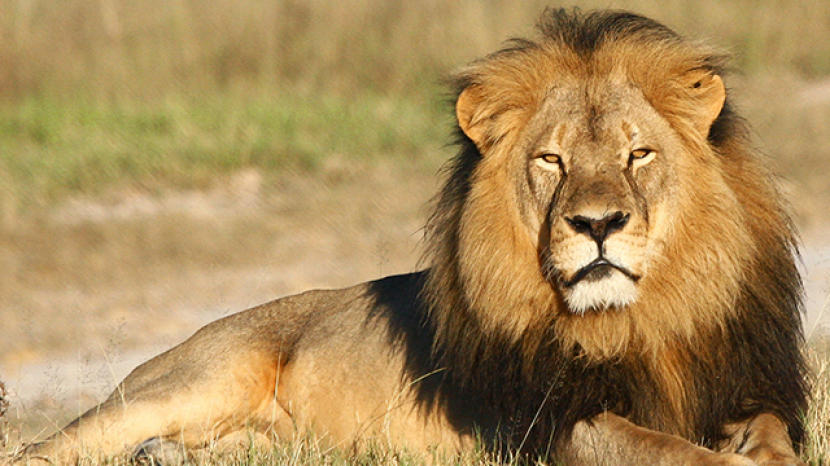
What animals are in the savanna
a)
Zebra
b)
bears
c)
turtles
d)
none of the above
11.
This biome is mostly found near the equator:
a)
Temperate Forest
b)
Tropical Rainforest
c)
Alpine Tundra
d)
Taiga
12.

What type of growth is represented behind?
a)
exponential
b)
logistics
c)
a good kind
d)
representative
13.

What type of growth is represented behind?
a)
exponential
b)
logistics
c)
a good kind
d)
representative
14.

Will competition increase/decrease the carrying capacity of an ecosystem for the animal in competition?
a)
Decrease
b)
Increase
15.
An environmental factor such as predation, disease, and competition that depends on the number of members in a population per unit
a)
dispersion
b)
density- independent factor
c)
density- dependent factor
d)
population growth rate
16.
An environmental factor such as storms and extreme heat or cold that affects population regardless of their density
a)
density- dependent factor
b)
population density
c)
dispersion
d)
density- independent factor
17.
What two factors are attributed to population decline?
a)
increase Birth rate & increase Death rate
b)
increase Death rate & increase Emigration rate
c)
Emigration & Immigration
d)
Immigration & increase Birth rate
18.
What two factors influence population growth?
a)
increase Emigration & Immigration
b)
increase Immigration rate & increase Birth rate
c)
increase Birth rate & increase Death rate
d)
Death rate & Emigration rate
19.
Temperature, light, air, water, and soil are all _____ parts of the environment
a)
alive
b)
biotic
c)
abiotic
d)
living
20.
Is a deer an abiotic or biotic factor?
a)
abiotic
b)
biotic
21.
Is a fern an abiotic or biotic factor?
a)
abiotic
b)
biotic
22.
Is sunlight an abiotic or biotic factor?
a)
abiotic
b)
biotic
23.
Is a weather an abiotic or biotic factor?
a)
abiotic
b)
biotic
24.
Which of the following is not an abiotic factor?
a)
sun
b)
temperature
c)
soil
d)
grass
25.

A system made up of organisms interacting with one another
a)
biology
b)
abiotic
c)
biotic
d)
ecosystem
26.

A group of the same type of organisms living in the same place at the same time.
a)
threatened species
b)
populations
c)
community
d)
limiting factor
27.
Which of the following includes only biotic factors?
a)
ecosystem
b)
habitat
c)
biosphere
d)
population
28.

What is an example of a renewable resource?
a)
hydroelectric
b)
oil
c)
coal
d)
fossil fuel
29.

Do Renewable energy sources run out?
a)
Yes
b)
No
30.
What is a renewable resource?
a)
An object you can reuse
b)
An object you cannot reuse
c)
Fossil fuels
d)
Oil
31.
What is a non-renewable resource?
a)
Paper
b)
You can`t reuse them
c)
A plastic bottle
d)
You can reuse
32.
what is a non renewable resource?
a)
water
b)
wind
c)
coal
d)
biomass
33.
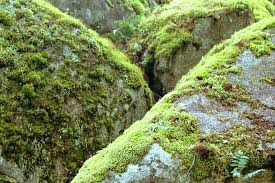
What are examples of pioneer species in a primary succession?
a)
Bushes and Shrubs
b)
Oak trees
c)
Mossess and Lichens
d)
A rose Bush
34.
After a volcanic eruption, lava covers the land. What is the order that plants grow to repopulate the area?
a)
Lichens → Shrubs → Grasses → Trees
b)
Lichens → tree → shrubs→Grasses
c)
Grasses → Lichens → Shrubs → Trees
d)
Lichens → Grasses → Shrubs → Trees
35.
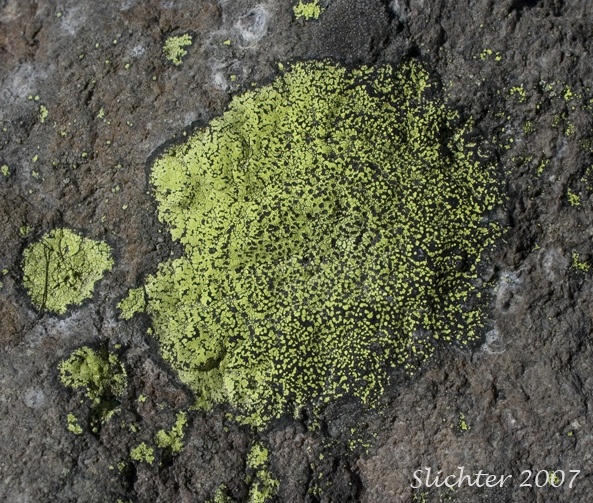
What is the first species you will see after a primary succession? (in picture)
a)
lichens
b)
grasses
c)
small plants
36.

What is the order of succession shown in this figure?
a)
A, B, C, D
b)
B, A, D, C
c)
C, D, A, B
d)
D, A, B, C
37.

Final illustration (#8) shows
a)
pioneer species
b)
climax community
c)
only biotic factors
d)
only abiotic factors
38.

What succession type is shown in the picture?
a)
primary succession
b)
secondary succession
c)
tertiary succession
d)
variable succession
39.

What succession type is shown in the picture?
a)
primary succession
b)
secondary succession
c)
tertiary succession
d)
variable succession
40.

Identify the cycle pictured.
a)
The Water cycle
b)
The Carbon cycle
c)
The Nitrogen cycle
d)
The Phosphorus cycle
41.

Identify the cycle pictured.
a)
The Water cycle
b)
The Carbon cycle
c)
The Nitrogen cycle
d)
The Phosphorus cycle
42.

Identify the cycle pictured.
a)
The Water cycle
b)
The Carbon cycle
c)
The Nitrogen cycle
d)
The Phosphorus cycle.
43.
This is released by the weathering of rocks.
a)
Carbon
b)
Oxygen
c)
Phosphorus
d)
Nitrogen
44.
What role do decomposers play in the phosphorous cycle?
a)
absorb phosphorous
b)
release phosphorous into atmosphere
c)
return phosphorous into the soil
d)
combustion
45.
How do animals get the phosphorous they need?
a)
decomposing
b)
combustion
c)
eating plants
d)
breathing it in
46.
The greenhouse effect traps ________________
a)
carbon
b)
gas
c)
heat
d)
Ms. Chomic in the classroom
47.
What gas is increasing in large amounts due to human activities?
a)
BP
b)
carbon dioxide
c)
oxygen
d)
diesel
48.

Most of the energy that supports life on Earth comes from
a)
animals
b)
protein
c)
chemicals
d)
sunlight
49.
The efficiency of energy transfer from a lower trophic level to the next highest level is roughly
a)
1%
b)
10%
c)
100%
d)
1000%
50.

Which animal is not the apex predator but, a predator to a mouse?
a)
hawk
b)
rabbit
c)
snake
d)
grass
100 %

