
 Worksheets
Dylan's Science Study Review
Total questions: 131
Worksheet time: 2hrs 57mins
Name
Class
Date
1.
When should you tie back long hair or baggy clothing?
a)
When working with chemicals
b)
When working with a Bunsen burner
c)
When doing dissections.
d)
Any time you are working in the lab.
2.
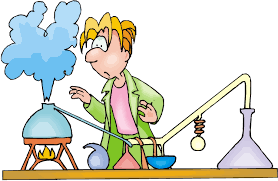
When is it OK to eat or drink in the lab?
a)
Always
b)
Never
3.
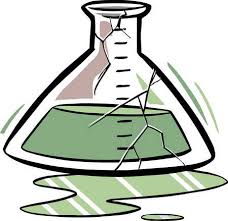
If you break glassware in the lab, you should...
a)
Tell the teacher
b)
Clean it up quickly before the teacher notices
c)
Scream at the top of your lungs
4.
Before leaving the lab you should always wash your hands.
a)
True
b)
False
5.
If you get something in your eyes, how long do you need to use the eyewash station?
a)
15 - 20 seconds
b)
5 minutes
c)
15 - 20 minutes
d)
Don't use the eyewash.
6.
If you do not understand a direction or part of a lab procedure, you should
a)
skip it and go on to the next part.
b)
ask the instructor before proceeding
c)
try several methods until something works
d)
figure it out as you do the lab
7.
Read all procedures thoroughly before entering the laboratory
a)
True
b)
False
8.
Chipped or cracked glassware is okay to use.
a)
True
b)
False
9.
Never leave a lit burner unattended.
a)
True
b)
False
10.

a)
test tube clamp
b)
tongs
c)
ring stand
d)
buret clamp
11.

a)
test tube clamp
b)
tongs
c)
ring stand
d)
buret clamp
12.

a)
test tube clamp
b)
tongs
c)
ring stand
d)
buret clamp
13.

a)
beaker
b)
graduated cylinder
c)
erlenmeyer flask
d)
test tube
14.

a)
beaker
b)
erlenmeyer flask
c)
graduated cylinder
d)
test tube
15.

a)
beaker
b)
graduated cylinder
c)
test tube
d)
erlenmeyer flask
16.
a)
beaker
b)
graduated cylinder
c)
test tube
d)
erlenmeyer flask
17.

a)
beaker
b)
graduated cylinder
c)
erlenmeyer flask
d)
test tube
18.

What is used to protect your eyes from chemicals, broken glass, and fire?
a)
Fire blanket
b)
Eye wash
c)
Goggles
d)
Flask
19.

What is measured with a graduated cylinder?
a)
Passage of time
b)
Distance from one thing to another
c)
Weight of an object
d)
Volume of liquid
20.

Name the lab equipment.
a)
Ring Stand
b)
Flask
c)
Beaker
d)
Bunsen Burner
21.

identify the following lab equipment
a)
glass triangle
b)
funnel
c)
stirring rod
d)
buret
22.
The measuring system we use in science is:
a)
the SI system
b)
scientific system
c)
english system
d)
none of the above
23.
the measure of the amount of matter in an object is called
a)
length
b)
height
c)
mass
d)
volume
24.
The unit "gram" measures what?
a)
volume
b)
mass
c)
length
d)
speed
25.
A graduated cylinder measures
a)
length
b)
height
c)
mass
d)
volume
26.
The base unit for length in SI units is the
a)
gram
b)
liter
c)
meter
d)
milliliter
27.
680 mL=_____ L
a)
0.680
b)
6.80
c)
68.0
d)
6800
28.
2.5 cm=_____ mm
a)
0.25
b)
25
c)
250
d)
0.025
29.
10 cups=____ pints
a)
20
b)
15
c)
5
d)
2.5
30.
2 ft=_____ inches
a)
12
b)
24
c)
26
d)
20
31.
7254 g=_____kg
a)
725.4
b)
72.54
c)
7.254
d)
0.7254
32.

What is the name of this instrument?
a)
Graduated Cylinder
b)
Pipet
c)
Triple Beam Balance
d)
Beaker
33.

Read this instrument to the nearest tenth
a)
613.37 g
b)
163.7 g
c)
163.5 g
d)
163 g
34.

What type of measurement is used with this instrument?
a)
volume
b)
length
c)
mass
d)
weight
35.

Read this scientific tool to the nearest millimeter.
a)
7.1 mm
b)
7.0 cm
c)
71 mm
d)
71 cm
36.
What is the SI unit for temperature?
a)
kelvin
b)
celsius
c)
fahrenheit
d)
hottness
37.
How do you calculate the volume of a rectangular solid?
a)
length x width x height
b)
mass divided by volume
c)
with a triple beam balance
d)
it's impossible
38.
What is mass?
a)
a measure of the amount of matter an object contains
b)
a measure of the force of gravity acting on an object
c)
the amount of space an object takes up
d)
a temperature scale
39.
How would you write 4.3756 x 10⁴ in standard form?
a)
437,560,000
b)
0.00043756
c)
43,756
d)
4,3756
40.
How would you write 0.0005 in scientific notation?
a)
50 x 105
b)
5 x 10⁻⁴
c)
5 x 10³
d)
.5 x 10-3
41.
UNDERSTANDING:
The first number in scientific notation must be...
The first number in scientific notation must be...
a)
between and including 0 and 10
b)
between and including 1 and 9.9999
c)
between and including 0 and 9.999
d)
between and including 1 and 10
42.
UNDERSTANDING
If the exponent is a negative number...
If the exponent is a negative number...
a)
you will get a large number
b)
you will get a small number
43.
Which of the following is correct scientific notation?
a)
20.35 x 10⁴
b)
.2035 x 104
c)
2035 4
d)
2.035 x10⁴
44.
How would you write 564,000,000 in scientific notation?
a)
5.64 x 10⁻⁷
b)
5.64 x 10⁶
c)
5.64 x 10⁸
d)
56.4 x 10⁷
45.
Water boils at 212 degrees on which scale?
a)
Farenheit
b)
Celsius
c)
Kelvin
46.
Water boils at 100 degrees on which scale?
a)
Farenheit
b)
Celsius
c)
Kelvin
47.
Which tool is used to measure thermal energy?
a)
oven
b)
scale
c)
thermometer
48.
Molecules move _______ when thermal energy is added to a solid, liquid, or gas.
a)
freely
b)
quickly
c)
in slow motion
49.
___________________ is the measure of kinetic energy of particles.
a)
A thermometer
b)
Expansion
c)
Farenheit
d)
Temperature
50.
A scientist hypothesizes the the temperature at which an alligator's egg is incubated will determine whether the alligator will be male or female. The independent variable is
a)
the male alligators
b)
the incubator
c)
the gender of the alligator
d)
the temperature
51.
A scientist hypothesizes the the temperature at which an alligator's egg is incubated will determine whether the alligator will be male or female. The dependent variable is
a)
the size of the baby alligators
b)
the gender of the baby alligators
c)
the incubator
d)
the temperature
52.

In this graph, what is the independent variable?
a)
Population
b)
Day
c)
Species 5
53.

In this graph, what is the dependent variable?
a)
Walla Walla Island
b)
Time
c)
Number of Deer
54.
What is the part of the experiment that is left alone or “natural", and is used to compare back to?
a)
Independent Variable
b)
Dependent Variable
c)
Control Group
d)
Experimental Group
55.
A series of steps used by scientists to solve a problem or answer a question.
a)
scientific method
b)
recipe
c)
data collection
d)
metric system
56.
A testable explanation to a problem that has not yet been tested.
a)
data
b)
theory
c)
hypothesis
d)
fact
57.
Which is an example of a mixture?
a)
iron filings
b)
copper wire
c)
bronze pipe
d)
titanium plate
58.
Which substance is most likely classified as a colloid?
a)
soft drink
b)
oxygen gas
c)
fog
d)
water
59.
Rank the states of matter from slowest to fastest particle speed.
a)
solid, liquid, gas
b)
liquid, solid, gas
c)
gas, liquid, solid
d)
solid, gas, liquid
60.
Anything that has mass and takes up space is _________.
a)
solid
b)
liquid
c)
gas
d)
matter
61.
Where could I look to determine if something is a pure substance?
a)
dictionary
b)
periodic table
c)
ingredient list
d)
nature
62.
Are made from a combination of 2 or more elements...
a)
Molecules
b)
Pure Substances
c)
Compounds
d)
Elements
63.
A combination that can be separated by physical processes is a .....
a)
Pure Substance
b)
Glucose
c)
Element
d)
Mixture
64.
A mixture that is NOT evenly distributed is called ....
a)
Compounded
b)
Homogenous
c)
Heterogenous
d)
Salty
65.
Changing the phase, size or shape of something....
a)
Chemical change
b)
Physical Change
c)
Suspension
d)
Colloid
66.
Which is NOT a chemical change?
a)
Leaves changing colors in the fall
b)
Iron rusting
c)
Digesting Lunch
d)
Ice Melting
67.
Any characteristic of a material, such as shape or size, that you can observe or attempt to observe without changing the identity of the material.
a)
physical change
b)
chemical change
c)
physical property
d)
chemical property
68.
Mixture, such as mixed nuts or dry soup mix, in which different materials are unevenly distributed and are easily identified.
a)
suspension
b)
homogeneous mixture
c)
heterogeneous mixture
d)
colloid
69.
Substance with atoms that are all alike.
a)
element
b)
compound
c)
homogeneous mixture
d)
heterogeneous mixture
70.
Which of the following is not a clue that a chemical change is taking place?
a)
rapid release of energy (heat, light, or sound)
b)
phase change
c)
formation of bubbles
d)
formation of a precipitate from solution
71.

This picture represents:
a)
Element
b)
Compound
c)
Mixture of Elements
d)
Mixture of Compounds
72.
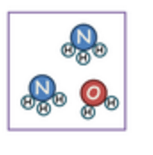
This picture represents:
a)
Element
b)
Compound
c)
Mixture of Elements
d)
Mixture of Compounds
73.
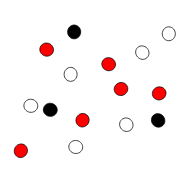
This picture represents:
a)
Element
b)
Compound
c)
Mixture of Elements
d)
Mixture of Compounds
74.
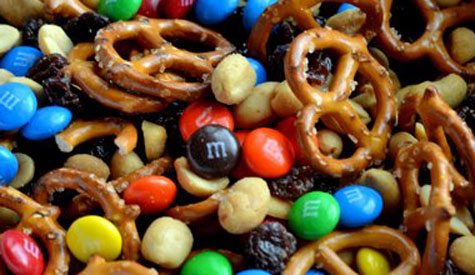
What type of mixture is this?
a)
homogenous mixture
b)
chemical
c)
heterogeneous mixture
d)
solid mix
75.
All matter is made up of .....
a)
Compounds
b)
Atoms
c)
Molecules
d)
Sunshine
76.
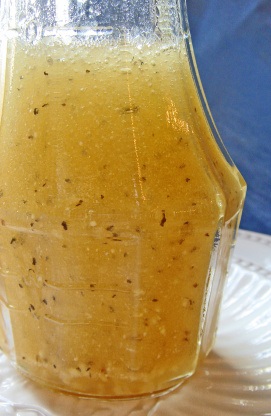
Italian Salad Dressing is a . . .
a)
heterogeneous mixture
b)
homogeneous mixture
c)
Pure Substance
d)
Compound
77.
Which of the following is an element?
a)
Sugar
b)
Salt
c)
Water
d)
Oxygen
78.
Is hammering wood together to build a house a chemical or physical change?
a)
chemical
b)
physical
79.
What kind of properties can only be observed when a substance changes into a different substance?
a)
physical properties
b)
chemical properties
c)
liquid properties
d)
real properties
80.
Is melting butter for popcorn a chemical or physical change?
a)
chemical
b)
physical
81.

Photosynthesis is an example of a
a)
physical change
b)
chemical change
82.
When you break a cracker into pieces it is a
a)
Chemical change
b)
Physical change
c)
Chemical Weathering
d)
Physical Weathering
83.
Adding baking soda and vinegar together and it fizzes and creates carbon dioxide.
a)
Chemical
b)
Physical
84.
What is an example of a Chemical change?
a)
Ripped paper
b)
boiled egg
c)
cracked egg
d)
sugar in water
85.
Which is a physical change?
a)
burning match
b)
vinegar in baking soda
c)
melting butter
d)
cooking an egg
86.
Which is a Chemical property?
a)
Thermal Conductivity
b)
Density
c)
Malleability
d)
Flammability
87.

What does this picture represent?
a)
solid
b)
liquid
c)
gas
d)
plasma
88.

Which state of matter do the particles in this picture represent?
a)
solid
b)
liquid
c)
gas
d)
plasma
89.
Particles closest together
a)
solid
b)
liquid
c)
gas
d)
solid, liquid and gas
90.
Particles move quickest
a)
solid
b)
liquid
c)
gas
d)
solid, liquid and gas
91.
Particles slide past each other
a)
solid
b)
liquid
c)
gas
d)
solid, liquid and gas
92.
What is the phase change of a solid to a liquid?
a)
freezing
b)
melting
c)
boiling
d)
condensation
93.
2. A change of state from a liquid to a solid is called....
a)
Melting
b)
Freezing
c)
Evaporation
94.
5. What is it called when a solid turns directly into a gas?
a)
Sublimation
b)
Condensation
c)
Liquid
95.
Change from Gas to Solid is called........
a)
Sublimation
b)
Deposition
c)
Fusion
d)
condensation
96.
Change from gas to liquid...
a)
condensation
b)
evaporation
c)
expansion
d)
movement
97.
Change from Liquid to Solid is call......
a)
fusion
b)
Freezing
c)
sublimation
d)
evaporation
98.
change from liquid to gas is called....
a)
expansion
b)
evaporation
c)
condensation
d)
sublimation
99.
All changes in the state of matter of a substance requires
a)
vibration
b)
water
c)
permission
d)
energy
100.
Boiling is ...
a)
liquid to gas
b)
gas to solid
c)
gas to liquid
d)
solid to liquid
101.
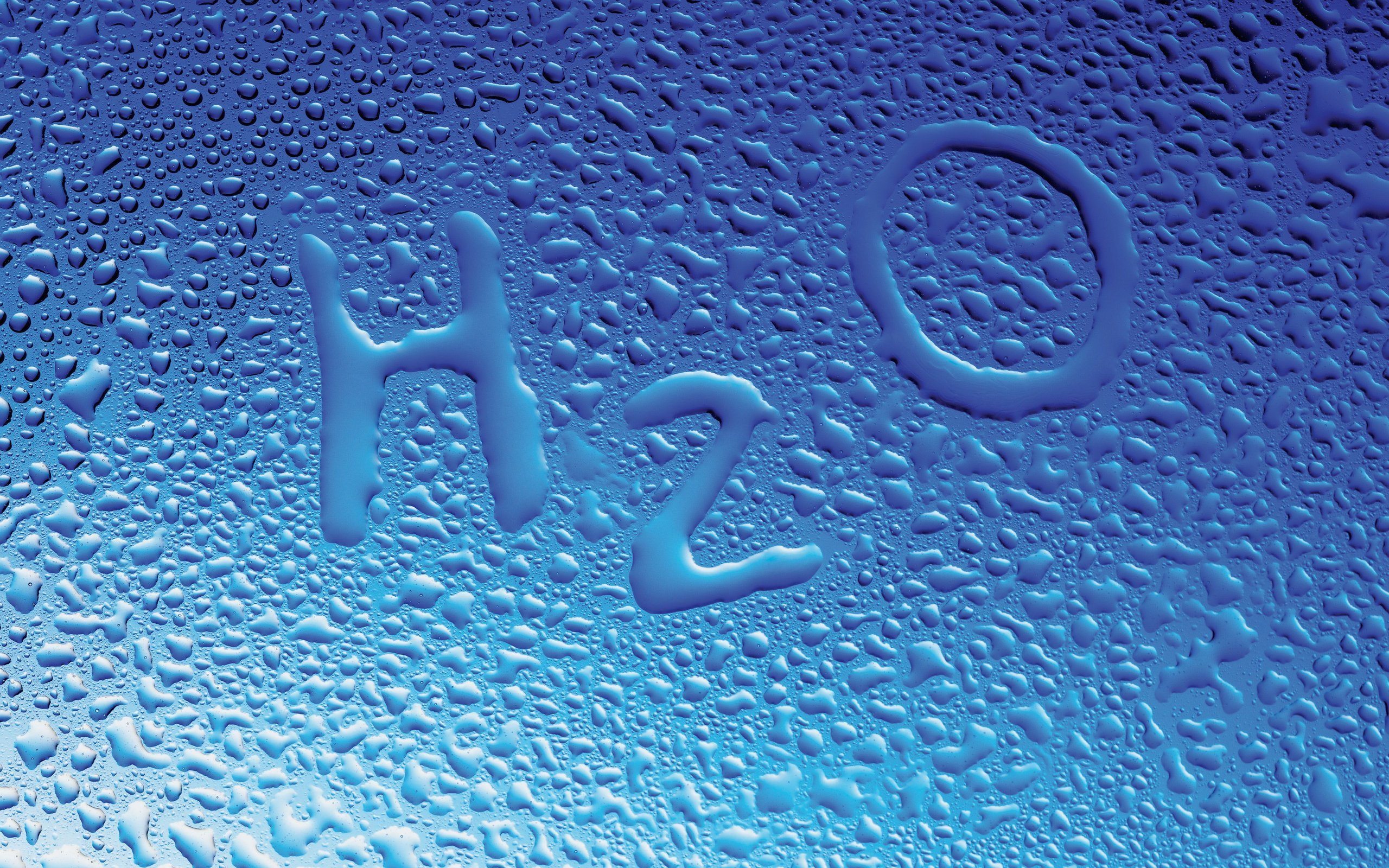
The phase change from water vapor to liquid water is known as...
a)
evaporation
b)
precipitation
c)
condensation
d)
sublimation
102.
Melting is ...
a)
liquid to solid
b)
solid to liquid
c)
solid to gas
d)
gas to liquid
103.
Bernoulli’s principle states that the pressure in a fluid decreases as its velocity increases.
a)
True
b)
False
104.
Pascal's Principle states that the pressure at a point in a fluid at rest is the same in all directions.
a)
True
b)
False
105.
According to Pascal’s principle, in a hydraulic system a pressure exerted on a piston produces an equal increase in pressure on another piston in the system. If the second piston has an area 10 times that of the first, the force on the second piston is 10 times greater, though the pressure is the same as that on the first piston.
a)
True
b)
False
106.
Archimedes Principle explains how hydraulic brake systems work.
a)
True
b)
False
107.
Which of the following has the greatest amount of movement at a given temperature?
a)
Gas
b)
Liquid
c)
Solid
d)
They all have the same movement
108.
What does Boyle's law relate to?
a)
Temperature and Volume
b)
Volume and Pressure
c)
Temperature and Pressure
109.
What law combines all 3 factors (pressure, temperature, and volume)
a)
Combined Gas Law
b)
Charle's Law
c)
Boyle's Law
d)
Avagadros Ideal Gas Law
110.

What is the correct formula for Boyle's Law?
a)
V1/T1=V2/T2
b)
P1V1=P2V2
c)
P1/T1=P2/T2
d)
PV=nRT
111.
What is the formula Charles' Law?
a)
V = T
b)
VT = VT
c)
T1 / V1 = T2 / V2
d)
V1 / T1 = V2 / T2
112.
The positive particles of an atom are
a)
electrons
b)
positrons
c)
neutrons
d)
protons
113.
the central region of an atom where its neutrons and protons are is its
a)
nucleus
b)
electron cloud
c)
core
d)
center
114.

How many protons does this atom have?
a)
2.5
b)
6
c)
5
d)
10.811
115.

What part of the atom is the arrow pointing to?
a)
nucleus
b)
proton
c)
electron shell
d)
electron
116.
Particles in an atom that are neutral and have no charge are
a)
negatrons
b)
electrons
c)
neutrons
d)
protons
117.

A section of the Periodic Table of Elements is provided. What is the chemical symbol for magnesium?
a)
12
b)
Mg
c)
24.31
d)
Magnesium
118.

B and C are found in the ______ of an atom.
a)
Energy levels
b)
Space
c)
Nucleus
d)
Outside
119.

Which of these is the electron?
a)
A
b)
B
c)
C
d)
D
120.
Describe an Electron Cloud?
a)
the mist outside of an atom
b)
home of the protons
c)
where electrons are located
d)
nucleus
121.
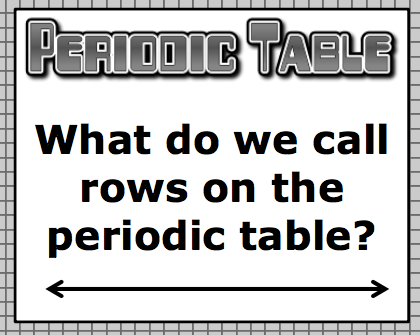
a)
Periods
b)
Groups
122.
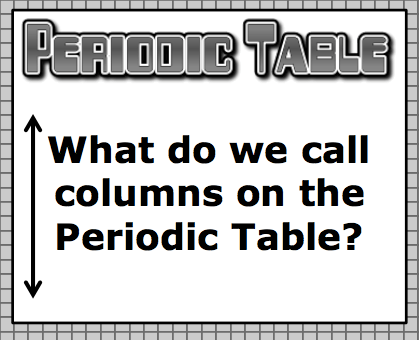
a)
Periods
b)
Groups
123.
Atoms are uncuttable/indivisible
a)
Dalton
b)
Rutherford
c)
Thomson
d)
Democritus
124.
The Gold Foil Experiment was conducted by:
a)
Rutherford
b)
Thomson
c)
Bohr
d)
Dalton
125.
Atoms of the same element are the same, atoms of different elements are different. Who stated this?
a)
Leucippus
b)
Aristotle
c)
Thomson
d)
Dalton
126.

What contribution did John Dalton make to atomic theory?
a)
He discovered that every atom was positively charged.
b)
He discovered that every element consisted of one type of atom.
c)
He discovered that atoms had nuclei.
d)
He discovered that atoms could be divided into smaller parts.
127.

What scientist is best known for his "Plum Pudding" model of the atom?
a)
J.J. Tomson
b)
Ernest Rutherford
c)
John Dalton
d)
Democritus
128.

According to Chadwick, what does the nucleus of an atom contain?
a)
Electrons and neutrons
b)
Protons and neutrons
c)
Neutrinos and positrons
d)
DNA and RN
129.
How did Rutherford discover the proton?
a)
Cathode tube ray experiment
b)
Gold Foil Experiment
c)
Planetary Model
d)
Plum Pudding Model
130.
7 L = ___ mL
a)
7 mL
b)
70 mL
c)
7,000 mL
d)
700 mL
131.
Convert 0.25 m to mm
a)
25
b)
2.5
c)
250
d)
0.025
100 %

