wayground logo

Free Printable Worksheets

Font size

S
M
L
XL
Worksheets

Honors Midterm Review (4 of 4)

Total questions: 136

Worksheet time: 2hrs 49mins

Name
Class
Date
1.
The tool used to measure the mass of a substance or object is a ______________.
a)
balance
b)
graduated cylinder
c)
ruler
d)
thermometer
2.
Jack has a rock. The rock has a mass of 14g and a volume of 2cm3. What is the density of the rock?
a)
7 mL
b)
7 g/cm3
c)
28 g/cm3
d)
1/7 g/cm3
3.
Which units of measurement are used for volume?
a)
grams
b)
centimeters
c)
grams/milliliter
d)
milliliter
4.
Which lab tool might you use to measure the volume of a liquid?
a)
electric scale
b)
bunsen burner
c)
test tube
d)
graduated cylinder
5.
What is the volume of Object X?
a)
10.0 cm3
b)
15.0 cm3
c)
20.0 cm3
d)
25.0 cm3
6.
True or False:  The density of a specific type of material never changes.  
a)
True
b)
False
7.
I have two objects with the same volume but different masses.  Which object will be more dense?
a)
The object with less weight.
b)
The object with more weight.
c)
The object with more mass.
d)
The object with less mass.
8.
What is the formula for density?
a)
density = mass x volume
b)
density = mass / volume
c)
density = mass + volume
d)
density = mass - volume
9.
Frank has an eraser. It has a mass of 4g, and a volume of 2cm3. What is its density?
a)
8 g/cm3
b)
2 g/cm3
c)
1/2 g/cm3
d)
24 g/cm3
10.
Frank has a paper clip. It has a mass of 9g and a volume of 3cm3. What is its density?
a)
3 g/cm3
b)
1/3 g/cm3
c)
27 g/cm3
d)
39 g/cm3
11.

The density of aluminum is 2.70 g/cm3. The volume of a solid piece of aluminum is 1.50 cm3. Find its mass.

a)

a. 1.50 g

b)

b. 1.80 g

c)

c. 2.70 g

d)

d. 4.05 g

12.

The mass of a 5.00 cm3 sample of gold is 96.5 g. The density of gold is

a)

a. 0.0518 g/cm3

b)

b. 19.3 g/cm3

c)

c. 101.5 g/cm3

d)

d. 483 g/cm3

13.

The density of pure diamond is 3.5 g/cm3. The mass of a diamond is 0.25 g. Find its volume.

a)

a. 0.071 cm3

b)

b. 0.875 cm3

c)

c. 3.5 cm3

d)

d. 14 cm3

14.

What is the density of 37.72 g of matter whose volume is 6.80 cm3?

a)

a. 0.18 g/cm3

b)

b. 5.55 g/cm3

c)

c. 30.92 g/cm3

d)

d. 256.4 g/cm3

15.

The density of sugar is 1.59 g/cm3. The mass of a sample is 4.0 g. Find the volume of the sample.

a)

a. 2.5 cm3

b)

b. 6.36 cm3

c)

c. 0.39 cm3

d)

d. 2.5 g/cm3

16.

The mass of a 5.00 cm3 sample of clay is 11 g. What is the density of the clay?

a)

a. 0.45 g/cm3

b)

b. 2.2 g/cm3

c)

c. 6 g/cm3

d)

d. 55 g/cm3

17.

The mass of a 6.0 mL sample of kerosene is 4.92 g. The density of kerosene is

a)

a. 0.82 g/mL

b)

b. 0.92 g/cm3

c)

c. 1.2 g/mL

d)

d. 1.5 g/cm3

18.

100 milliliters is equivalent to

a)

a. 1 hectoliter

b)

b. 1 microliter

c)

c. 1 centiliter

d)

d. 1 deciliter

19.

10–2 meter is the same as

a)

a. 1 hectometer

b)

b. 10 millimeters

c)

c. 0.1 centimeter

d)

d. 1000 micrometers

20.

0.25 g is equivalent to

a)

a. 250 kg

b)

b. 250 mg

c)

c. 0.025 mg

d)

d. 0.025 kg

21.

0.05 cm is the same as

a)

a. 0.00005 m

b)

b. 0.005 mm

c)

c. 0.05 m

d)

d. 0.5 mm

22.

1.06 L of water is equivalent to

a)

a. 0.001 06 mL

b)

b. 10.6 mL

c)

c. 106 mL

d)

d. 1060 mL

23.

The number of grams equal to 0.5 kg is

a)

a. 0.0005

b)

b. 0.005

c)

c. 500

d)

d. 5000

24.

What is a qualitative observation?

a)

Qualitative- data, descriptive, non-numerical

b)

Qualitative- numerical

25.

What is a quantitative observation?

a)

Quantitative- data descriptive, non-numerical

b)

Quantitative- numerical

26.

Which best describes mass?

a)

an amount of matter

b)

depends on Earth's gravitational attraction

27.

Which best describes weight?

a)

an amount of matter

b)

depends on Earth's gravitational attraction

28.

Which accurately defines precision?

a)

how close a set of measurements of the same quantity

b)

how close a measurement to the true value

29.

Which best describes accuracy?

a)

how close a measurement is to true value

b)

how close a set of measurements of the same quantity

30.

What are the SI units for length, time, mass, volume, etc.?

a)

length- second, time-kilogram, mass- m^3, volume- K, temp.- meter

b)

length- meter, time- second, mass- kilogram, volume- m^3, temp.- K

c)

length- K, time- m^3, mass- second, volume- meter, temp.- kilogram

31.

What are all the possible derived SI units for density?

a)

kg/m^3

b)

g/cm^3

c)

g/mL

d)

all of the above

32.

When are two variables considered directly proportional?

a)

when they are together

b)

when they are divided

33.

What type of graph will a direct proportion yield?

a)

curve

b)

scattered

c)

diagonal

d)

straight line

34.

When are two variables considered inversely proportional?

a)

when multiplied

b)

when divided

c)

when added

d)

when subtracted

35.

What type of graph will an inverse relationship yield?

a)

straight line

b)

hyperbola

36.

While doing a density lab, you calculated the density of your substance to be 1.24 g/mL. The known value for your substance was 1.30 g/mL. What is your percent error?

a)

6.4%

b)

5.7%

c)

4.6%

d)

8.3%

37.

While in the lab, Group A found the mass of an object to be 1.24 X 10⁻² g. The actual mass of the object was 9.98 X 10⁻³ g. What is Group A's percent error?

a)

45%

b)

24%

c)

16%

d)

37%

38.
Which is an example of a mixture?
a)
iron filings
b)
copper wire
c)
bronze pipe
d)
titanium plate
39.
Anything that has mass and takes up space is _________.
a)
solid
b)
liquid
c)
gas
d)
matter
40.
What phase of matter has a definite shape and definite volume?
a)
solid
b)
liquid
c)
gas
d)
plasma
41.
What kind of properties can only be observed when a substance changes into a different substance?
a)
physical properties
b)
chemical properties
42.
Which type of property is the ability to conduct electricity?
a)
physical property
b)
chemical property
43.
Example of a physical property
a)
magnetism
b)
reactivity with oxygen
c)
flammability
d)
non-reactive
44.
Properties that can be observed without changing the identity of the substance.
a)
Physical
b)
Chemical
45.
Example for physical property
a)
odor
b)
burns in air
c)
reacts with water to create hydrogen gas
d)
rust
46.
Example for chemical property
a)
color
b)
hardness
c)
toxicity
d)
solubility
47.
Example for physical property
a)
reacts with an acid
b)
explodes
c)
flammibility
d)
taste
48.
Example for chemical property
a)
malleability
b)
texture
c)
combustion
d)
sour taste
49.
Flammability is an example of what property?
a)
Chemical property
b)
Physical property
50.
if it reacts with acid what property is it
a)
intensive
b)
extensive
51.
Change from gas to liquid...
a)
condensation
b)
evaporation
c)
expansion
d)
movement
52.
Change from Gas to Solid is called........
a)
Sublimation
b)
Deposition
c)
Fusion
d)
condensation
53.
Change from Liquid to Solid is call......
a)
fusion
b)
Freezing
c)
sublimation
d)
evaporation
54.
7. All phase changes (changing states) requires energy to be added or taken away.
a)
True
b)
False
55.
5. What is it called when a solid turns directly into a gas?
a)
Sublimation
b)
Condensation
c)
Liquid
56.
2. A change of state from a liquid to a solid is called....
a)
Melting
b)
Freezing
c)
Evaporation
57.
How are solids different from liquids?
a)
particles in solids are moving freely around each other.
b)
particles in solids have no motion.
c)
particles in solids are vibrating in place.
d)
particles in solids have more motion than in liquids
58.
change from liquid to gas is called....
a)
expansion
b)
evaporation
c)
condensation
d)
sublimation
59.
What is deposition?
a)
Phase change from gas to solid
b)
phase change from liquid to solid
c)
Phase change from solid to gas
d)
Phase change from liquid to gas
60.
What is sublimation?
a)
phase change between solid and liquid
b)
pahse change from gas to solid
c)
phase change from solid to gas
d)
phase change from solid to solid
61.
Melting is ...
a)
liquid to solid
b)
solid to liquid
c)
solid to gas
d)
gas to liquid
62.
Boiling is ...
a)
liquid to gas
b)
gas to solid
c)
gas to liquid
d)
solid to liquid
63.
Intensive property is dependent on the amount of a substance. 
a)
True
b)
False
64.
Freezing point is an example of extensive property.
a)
True
b)
False
65.
Density is an...
a)
Extensive Property
b)
Intensive Property
66.
Intensive property is based on...
a)
Particle arrangement and compositions
b)
Number of particles present in the sample
67.
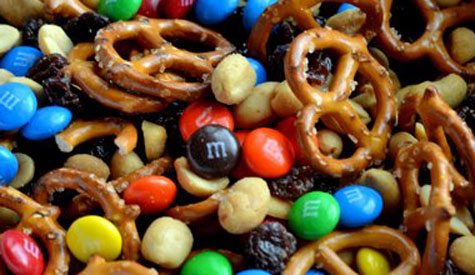
What type of mixture is this?
a)
homogenous mixture
b)
chemical
c)
heterogeneous mixture 
d)
solid mix
68.
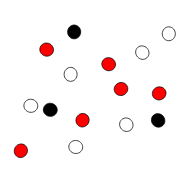
This picture represents: 
a)
Element
b)
Compound
c)
Mixture of Elements
d)
Mixture of Compounds
69.
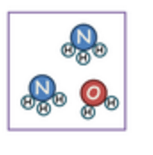
This picture represents: 
a)
Element
b)
Compound
c)
Mixture of Elements
d)
Mixture of Compounds
70.
A mixture that is NOT evenly distributed is called ....
a)
Compounded
b)
Homogenous
c)
Heterogenous
d)
Salty
71.
Which of the following are made from a combination of 2 or more elements?
a)
Molecules
b)
Pure Substances
c)
Compounds
d)
Elements
72.
What do you call a mixture that is so evenly mixed you can't see the parts, such as Kool-Aid or Lemonade?
a)
Homogeneous Mixture
b)
Heterogeneous Mixture
c)
Pure Substance
73.
Properties that can be measured or observed only when matter undergoes a change to become an entirely different kind of matter.
a)
Evaporation
b)
Density
c)
Physical Properties Of Matter
d)
Chemical Properties of Matter
74.
Properties that can be measured or observed without matter changing to an entirely different substance.
a)
Chemical Properties of Matter
b)
Physical Properties of Matter
c)
Physical Change
d)
Chemical Change
75.

Hydrogen has an electronegativity of 2.20, fluorine an electronegativity of 3.98. What sort of bond do they form?

0-0.5 = nonpolar; 0.51-1.7 = polar covalent; 1.71+ = ionic

a)

mostly ionic

b)

polar covalent

c)

mostly covalent

d)

nonpolar covalent

76.

Large differences in electronegativity result in __________ bonding between atoms.

a)

Covalent

b)

Mettalic

c)

Ionic

d)

Hydrogen

77.
In this Lewis structure, the symbol above F means...
a)
electrons are being transferred to Fluorine
b)
electrons are less attracted to F than H
c)
electrons are more attracted to F than H
d)
Fluorine has formed a cation
78.

what causes a partial charge on a molecule with 2 atoms? (dipoles)

a)

unequal sharing of electrons

b)

an electronegativity difference between 0.3 and <1.7

c)

electron spends more time around one of the atoms

d)

all of the above

79.

Which has the greater Electronegativity:

N or C?

a)

C

b)

N

80.

Which has the greater electronegativity:

Cl or Al?

a)

Cl

b)

Al

81.

Put these in increasing order of electronegativity:

C, H, and O (smallest on left; largest on right)

a)

H < C < O

b)

H < O < C

c)

O < C < H

d)

C < H < O

82.

What shape is this molecule?

a)

linear

b)

bent

c)

tetrahedral

d)

trigonal planar

e)

trigonal pyramidal

83.

What shape is this molecule?

a)

linear

b)

bent

c)

tetrahedral

d)

trigonal planar

e)

trigonal pyramidal

84.

What shape is this molecule?

a)

linear

b)

bent

c)

tetrahedral

d)

trigonal planar

e)

trigonal pyramidal

85.

What shape is this molecule?

a)

linear

b)

bent

c)

tetrahedral

d)

trigonal planar

e)

trigonal pyramidal

86.

How many bonds does chlorine typically make?

a)

1

b)

2

c)

3

d)

4

e)

7

87.

How many bonds does oxygen typically make?

a)

1

b)

2

c)

3

d)

4

e)

6

88.

How many bonds does nitrogen typically make?

a)

1

b)

2

c)

3

d)

4

e)

5

89.

How many valence electrons does nitrogen have?

a)

1

b)

2

c)

3

d)

4

e)

5

90.

How many valence electrons does sulfur have?

a)

6

b)

2

c)

4

d)

7

e)

8

91.

Which atom would likely be the central atom if H, C, and O are in a molecule? (choose the one that makes the most bonds)

a)

H

b)

C

c)

O

d)

all of these

92.
Carbon dioxide
a)
C2O2
b)
C20
c)
CO
d)
CO2
93.
Phosphorous trichloride
a)
PCl3
b)
P3Cl
c)
P3Cl3
d)
PCL
94.
Name the following compound:
  BF3
a)
boron fluoride
b)
boron difluoride
c)
monoboron trifluoride
d)
boron trifluoride
95.

Hydrogen has an electronegativity of 2.20, fluorine an electronegativity of 3.98. What sort of bond do they form?

0-0.5 = nonpolar; 0.51-1.7 = polar covalent; 1.71+ = ionic

a)

mostly ionic

b)

polar covalent

c)

mostly covalent

d)

nonpolar covalent

96.

Use your electronegativity chart to determine if the type of bond the following elements would form.

C- H

a)

Ionic

b)

non-polar covalent

c)

polar covalent

97.

Use your electronegativity chart to determine if the bond between these two elements is Ionic or non-polar covalent or polar covalent?

K -Br

a)

Ionic

b)

non-polar covalent

c)

polar covalent

d)

they would never bond

98.
Atoms create bonds to _______ their potential energy, therefore becoming _______ stable.
a)
lower ; less
b)
lower ; more
c)
increase ; less
d)
increase ; more
99.
An uneven sharing of electrons in a covalent bond due to differences in electronegativity is a:
a)
Polar
b)
Non-Polar
c)
Ionic
d)
NA
100.
An ionic bond has an electronegativity difference of
a)
> 1.7
b)
< 1.7
c)
= 1.7
d)
0
101.
A covalent bond has an electronegativity difference of 
a)
= 1.7
b)
< 1.7
c)
> 1.7
d)
3.4
102.
Molten compound does NOT conduct electricity.
a)
ionic compound
b)
covalent compound
103.
When dissolved in water, the solution is a good conductor of electricity.
a)
ionic compounds
b)
covalent compounds
104.
forms ions in solution
a)
ionic compounds
b)
covalent compounds
105.
When two atoms share electrons, a chemical bond is formed.  This type of bond is called:
a)
covalent bond
b)
ionic bond
c)
crystal bond
d)
polyatomic bond
106.

A substance that conducts electricity when molten but not solid

a)

Giant ionic

b)

Giant covalent

c)

Simple molecular (covalent)

d)

Giant metallic

107.
Which of the following is NOT a property of ionic compounds? 
a)
High melting point
b)
low melting point
c)
conduct electricity in water
d)
crystal lattice 
108.
What two types of atoms make a covalent bond?
a)
two metals
b)
two nonmetals
c)
metal and nonmetal
d)
metal and a gas
109.
What is a chemical bond  that is formed when two atoms share one or more pairs of electrons?
a)
compound
b)
covalent bond
c)
ionic bond
d)
molecule
110.
What is the VSEPR shape of H2S?
a)
linear
b)
trigonal planar
c)
bent
d)
tetrahedral
111.
How many electrons are shared in a double bond?
a)
1
b)
2
c)
4
d)
6
112.
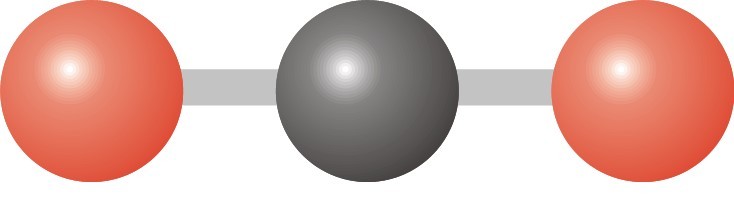
Which molecule would have this shape?
a)
BF3
b)
CH4
c)
PCl5
d)
CO2
113.

Which structure corresponds to H2O?

a)
b)
c)
d)
e)

All of these

114.
Which of the following is the correct Lewis structure for the compound PBr3?
a)
structure A
b)
structure B
c)
structure C
d)
structure D
115.
Which is a particle of electromagnetic radiation with no mass that carries a quantum of energy?
a)
electron 
b)
neutron 
c)
microwave
d)
photon 
116.
What are patterns made when excited electrons emit light of certain wavelengths?
a)
electromagnetic spectra
b)
atomic emission spectra
c)
spectroscopes
d)
prisms
117.
Lowest energy state of an atom
a)
Ground
b)
Excited
118.
Minimum energy that can be gained or lost by an atom. ( 1 photon) 
a)
1000 KJ
b)
1KJ
c)
coulomb 
d)
quantum 
119.
The energy of an electron __________ as it moves further away from the nucleus
a)
increases
b)
decreases
120.
When an atom has all of its electrons in the lowest energy orbitals available, the atom is  
a)
in ground state
b)
in excited state
c)
giving off light energy
d)
unstable
121.
For an electron to change from ground state to an excited stated it must...
a)
Absorb energy
b)
Release energy
122.
Which element did Bohr start his work with? 
a)
Uranium
b)
Helium
c)
Hydrogen
d)
Kiragium
123.
Light is emitted when an electron moves from the ________ state to the _________ state
a)
excited, ground
b)
ground, excited
124.
The blue section of the wave is measuring _________________.
a)
wavelength
b)
crest
c)
trough
d)
amplitude 
125.
What is a photon?
a)
When radiation burst through electric waves
b)
The emission of electrons from a metal caused by light striking the metal
c)
The rate at which a waves energy flows through a given unit of area.
d)
packets of electromagnetic energy
126.
In the Bohr model, the orbit closest to the nucleus is
a)
called the ground state and is lowest in energy
b)
called the ground state and is highest in energy
c)
called the excited state and is lowest in energy
d)
called the excited state and is highest in energy
127.
Quantized means that only certain values are allowed.
a)
True
b)
False
128.
"Electrons have particle and wave-like properties."
a)
Planck
b)
Heisenberg
c)
de Broglie
d)
Schrodinger
129.
created an equation to treat the electron as a wave and described orbitals
a)
Planck
b)
Heisenberg
c)
de Broglie
d)
Schrodinger
130.
"Electrons in the same orbital have opposite spin."
a)
Aufbau principle
b)
Hund's Rule
c)
Pauli Exclusion Principle
d)
Uncertainty Principle
131.
"Electrons fill equal energy orbitals singly before pairing."
a)
Aufbau principle
b)
Hund's Rule
c)
Pauli Exclusion Principle
d)
Uncertainty Principle
132.
"Electrons fill lower energy orbitals before filling higher energy orbitals." 
a)
Aufbau principle
b)
Hund's Rule
c)
Pauli Exclusion Principle
d)
Uncertainty Principle
133.
When an electron gains a quantum of energy, what does it do?
a)
transition to a higher energy level
b)
transition to a lower ground state
134.
Bohr's model of the atom proposed that ___.
a)
electrons move around the nucleus in fixed orbits
b)
neutrons move around the nucleus
c)
neutrons do not exist, but are just paired protons and electrons
d)
the nucleus spins
135.
What did the uncertainty principle state was unknown?
a)
Position of electron
b)
Energy level of electron
c)
Speed of electron
d)
Orange and Blue
136.
The impossibility to know simultaneously the exact position and momentum of a particle is called the:
a)
Einstein Uncertainty Principle
b)
Moseley Uncertainty Principle
c)
Heisenburg Uncertainty Principle
d)
Bohr Uncertainty Principle