
 Worksheets
Astronomy Test One Review
Total questions: 88
Worksheet time: 1hrs 29mins
Name
Class
Date
1.
Planets orbit the Sun in a shape called a(n)
a)
circle
b)
ellipse
c)
focus
d)
perihelion
2.
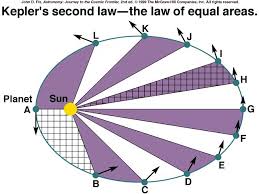
Where is the planet moving faster
a)
Position A to B
b)
Position B to C
c)
Position H to I
d)
Position I to J
3.

What is true about the area between points A, B and the Sun, and the area between points H, I and the Sun?
a)
The area between A, B and the Sun is the largest.
b)
The area between H, I and the Sun is the largest
c)
Both areas are equal in size
d)
There is not enough information to determine the areas
4.
Kepler's 2nd Law deals with
a)
the shape of the planets' orbits
b)
the speed/area the planet travels
c)
the length of time it takes the planet to orbit the sun
5.
A planet moves __________ when it is farthest from the sun.
a)
faster
b)
slower
6.
Two factors effecting the magnitude of the force of gravity between 2 objects are...
a)
mass and distance
b)
mass and matter
c)
distance and weight
d)
weight and mass
7.
The path a planet travels around the sun is called its
a)
orbit
b)
ellipse
c)
barycenter
d)
precession
8.

This arc of plasma being emitted by the Sun is known as a ____________.
a)
Prominence
b)
Solar Flare
c)
Coronal Mass Ejection
d)
Sun Spot
9.

These "cool" areas of increased magnetic activity on the surface of the Sun are known as _______.
a)
Prominences
b)
Coronal Mass Ejections
c)
Solar Flares
d)
Sun Spots
10.
What is one effect that solar flares and coronal mass ejections can have on the Earth (if they are very powerful)?
a)
They can disrupt satellite and radio communications
b)
They can take over human brains and create zombies
c)
They can cause the Hydrogen on Earth to undergo fusion
d)
They can cause the Helium on Earth to turn into Hydrogen
11.

When solar winds enter the Earth's atmosphere at the poles, what is created?
a)
auroras
b)
solar flares
c)
sunspots
d)
warmer temperatures
12.

What protects us from most of the Sun's damaging radiation (solar wind)?
a)
Earth's atmosphere
b)
Earth's magnetic field
c)
Earth's gravity
d)
Earth's ozone layer
13.
How do magnetic storms affect Earth?
a)
increase radio signals
b)
make it warmer on Earth
c)
interrupt TV and cell signals
d)
cause more thunderstorms
14.

What is the outer layer of the sun that looks like a white halo and can only be seen during a total solar eclipse.
a)
photosphere
b)
corona
c)
sunspot
d)
prominence
15.
Which layer of the sun's atmosphere gives off the visible light we can see?
a)
Corona
b)
Chromosphere
c)
Photosphere
d)
Convection zone
16.
Energy is created in the sun's core when two _____________ atoms join together to form a ______________ atom.
a)
helium, hydrogen
b)
carbon, hydrogen
c)
nitrogen, helium
d)
hydrogen, helium
17.
The corona extends into space for millions of kilometers and spreads into streams of electrically charged particles called...
a)
coronal discharge
b)
solar flares
c)
coronal ejection
d)
solar winds
18.
Huge loops of reddish gas that connect sunspots are called...
a)
prominences
b)
solar flares
c)
coronal loops
d)
solar wind
19.
When prominences erupt into space releasing charged particles and energy we call this ____________.
a)
solar winds
b)
a coronal outburst
c)
solar flares
d)
auroras
20.

Very few moons
a)
Inner planets
b)
Outer planets
c)
Both
d)
Mercury
21.

Gas giants
a)
Inner planets
b)
Outer planets
c)
Both
d)
Venus
22.

Mercury, Venus, Earth, & Mars
a)
Inner planets
b)
Outer planets
c)
Both
d)
Pluto
23.

Jupiter, Saturn, Uranus, & Neptune
a)
Inner planets
b)
Outer planets
c)
Both
d)
Earth
24.

Close to the sun
a)
Inner planets
b)
Outer planets
c)
Both
d)
Kuiper Belt
25.

Shorter revolutions
a)
Inner planets
b)
Outer planets
c)
Both
d)
Neptune
26.

Located between the inner and outer planets.
a)
Sun
b)
Asteroid belt
c)
Uranus
d)
Moons
27.

Part of the Milky Way
a)
Inner planets
b)
Outer planets
c)
Both
28.

Terrestrial planets
a)
Inner planets
b)
Outer planets
c)
Both
d)
Asteroid belt
29.
Galaxies are composed of (best answer)
a)
stars
b)
stars and gas
c)
stars, dust, and gas
d)
stars, dust, and gas held together by gravity
30.
Our galaxy is called the
a)
Earth Nebula
b)
The Hubble Galaxy
c)
The Milky Way
d)
The Snickers
31.
The Milky Way Galaxy is a
a)
spiral
b)
lenticular
c)
elliptical
d)
irregular
32.

What type of galaxy is this?
a)
Spiral
b)
Elliptical
c)
Irregular
d)
Irrational
33.

What type of galaxy is this?
a)
Spiral
b)
Elliptical
c)
Irregular
d)
Irrational
34.
What is not a galaxy?
a)
Optical Galaxy
b)
Spiral Galaxy
c)
Elliptical Galaxy
d)
Irregular Galaxy
35.
Distance measurement used by astronomers for distant objects.
a)
Kilometers
b)
Light Years
c)
Miles
d)
Light Seconds
36.
How many stars are in a galaxy.
a)
millions or billions
b)
thousands
c)
hundreds
d)
Ten
37.

What type of galaxy is this?
a)
Spiral
b)
Elliptical
c)
Irregular
d)
Irrational
38.
Place these objects in order from smallest to largest.
a)
Planets, solar system, universe, galaxy
b)
Solar system, planets, galaxy, universe
c)
Planets, solar system, galaxy, universe
d)
Galaxy, solar system, planets, universe
39.
Our sun is located on one of the Spiral Galaxy arms.
a)
True
b)
False
40.
The most abundant type of galaxy in the universe is an...
a)
Spiral Galaxy
b)
Elliptical Galaxy
c)
Irregular Galaxy
41.

What type of galaxy is this?
a)
Spiral
b)
Elliptical
c)
Irregular
d)
Irrational
42.
The type of galaxy that is the leftovers of two colliding galaxies is called the...
a)
Spiral Galaxy
b)
Elliptical Galaxy
c)
Irregular Galaxy
d)
Constellation Galaxy
43.
The type of galaxy that is composed of the older stars and low-mass stars.
a)
Spiral
b)
Elliptical
c)
Irregular
d)
Constellation
44.
What type of galaxy has no defined pattern or shape?
a)
Spiral
b)
Elliptical
c)
Irregular
d)
Constellation
45.
All existing matter and space considered as a whole is called what?
a)
Galaxy
b)
Planet
c)
Universe
d)
Milky Way
46.
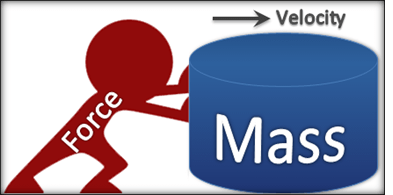
a)
1st
b)
2nd
c)
3rd
47.
What law is best described by inertia?
a)
1st
b)
2nd
c)
3rd
48.

a)
1st
b)
2nd
c)
3rd
49.

a)
1st
b)
2nd
c)
3rd
50.

a)
1st
b)
2nd
c)
3rd
51.

a)
1st
b)
2nd
c)
3rd
52.
Object at rest stays at rest.
a)
1st
b)
2nd
c)
3rd
53.
F = MxA
a)
1st
b)
2nd
c)
3rd
54.
Force exerted between the surfaces of two objects.
a)
Friction
b)
Inertia
c)
Force
d)
Gravity
55.
Objects tendency to resist change
a)
Friction
b)
Inertia
c)
Force
d)
Gravity
56.
Is the sun a star?
a)
yes
b)
no
57.
The color of the star tells us its
a)
composition
b)
Temperature
c)
Luminosity
d)
Mass
58.
The hottest color star is
a)
Blue
b)
White
c)
Yellow
d)
Red
59.
Our star is a
a)
yellow/ large star
b)
yellow/ small star
c)
yellow/ medium star
60.
The only objects in our Universe that produces and emits its own light is
a)
Nebulas
b)
Comets
c)
Planets
d)
Stars
61.
Because the Earth is 93 million mies from the Sun, the light from this star takes_____ to reach us.
a)
8 hours
b)
1 hour
c)
8 minutes
62.
A light year is...
a)
The speed light travels
b)
How long it takes light to get to you from the sun
c)
The distance light can travel in a year
d)
How many years it takes light to be emitted
63.
An apparent shift in the position of an object when viewed from different locations.
a)
Parallax
b)
Perihelion
c)
Solar Nebula
d)
Prominence
64.
What is the next phase for our sun in its life cycle?
a)
supernova
b)
red giant
c)
white dwarf
d)
neutron star
65.
Scientist use Light years to measure objects in space rather than units such as Miles or Kilometers because of how massive the Galaxy and Universe is.
a)
True
b)
False
66.
what is the comets tail made out of?
a)
gases
b)
dust
c)
all of the above ^
d)
ice
67.
What do comets orbit
a)
The Stars
b)
The Planets
c)
The Sun
d)
Cupcakes
68.
Where do comets originate from?
a)
our imagination
b)
the sun
c)
The Oort Cloud and Kuiper belt
d)
unicorn landia
69.
Burns and vaporizes as it nears the sun.
a)
asteroid
b)
meteoroid
c)
comet
d)
meteorite
70.
Sometimes called "dirty snowballs".
a)
asteoids
b)
meteoroids
c)
comets
d)
meteors
71.
What is the very core of a comet called?
a)
Coma
b)
Comet
c)
Nucleus
d)
Hydrogen Cloud
72.
An asteroid is...
a)
A dirty/icy snowball
b)
Circumstellar disc in the Solar System
c)
Rocky objects that are too small/numerous
d)
A light phenomena
73.
Most of the asteroids are located between the orbits of
a)
Venus and Earth
b)
Earth and Mars
c)
Mars and Jupiter
d)
Jupiter and Saturn
74.
Ceres is BEST classified as a(n)__________________.
a)
dwarf planet
b)
asteroid
c)
meteoroid
d)
Kuiper Belt object
75.
What are meteors sometimes called?
a)
shooting stars
b)
moons
c)
cows
d)
frorgs
76.
When a meteor hits Earth, what is it called?
a)
meteorite
b)
meteroid
c)
meteor
77.
What are meteors made of?
a)
chunks of rocks and minerals
b)
fish
c)
butterfly wings
d)
chewing gum
78.
What is a meteor called when it's in space?
a)
meteroid
b)
meteor
c)
meteorite
79.
When objects strike the surface of a planet or moon, they leave a deep impression on the surface called a:
a)
Pothole
b)
Crater
c)
Canyon
d)
Plateau
80.
What is one difference between an asteroid and comet?
a)
A comet orbits the sun and an asteroid does not
b)
An asteroid is formed from leftovers from the formation of the solar system and a comet is not
c)
When a comet comes near the sun it loses material while an asteroid typically remains solid
d)
An asteroid orbits the sun in the oort cloud while a comet orbits the sun between Mars and Jupiter
81.

Objects made of ice, gas and dust and orbit our sun are called:
a)
Asteroids
b)
Comets
c)
Meteroids
d)
Meteors
82.
Asteroids "hang out" in our solar system in a place called:
a)
The Kupier Belt
b)
The Oort Cloud
c)
The Planetary Rings
d)
The Asteroid Belt
83.
One similarity between asteroids, comets and meteoroids is that they all:
a)
are made of rock
b)
come from the Asteroid Belt
c)
come from the Oort Cloud
d)
orbit the sun
84.

When objects strike the surface of a planet or moon, they leave a deep impression on the surface called a:
a)
Pothole
b)
Crater
c)
Canyon
d)
Plateau
85.

What causes meteors to burn up in our atmosphere?
a)
Heat from the Sun
b)
Heat from Earth's atmosphere
c)
They are already so hot that our atmosphere can't handle it
d)
Friction from the Earth's atmosphere
86.
One theory about how the dinosaurs went extinct is...
a)
They caught the flu.
b)
That a meteorite came and hit our Earth causing their extinction.
c)
They ate each other until they all went extinct.
d)
An Astroid hit the Earth
87.
How does a meteor compare to a meteorite?
a)
A meteor is moving through the Earth's atmosphere and the meteorite actually lands on Earth
b)
A meteorite is moving through Earth's atmosphere and the meteor actually lands on Earth
c)
Meteors are made up of Carbon and meteorites are made of ice
d)
They are the same thing
88.
What is the composition of most comets?
a)
rock, ice, salt, carbon
b)
rock, ice, magma, frozen gases
c)
ice, dust, rock, frozen gases
d)
ice, dust, rock, soil
100 %

