
 Worksheets
Last bioquiz 2017
Total questions: 137
Worksheet time: 2hrs 10mins
Name
Class
Date
1.
_________ are composed out of carbon (C), hydrogen (H), oxygen (O), nitrogen (N), and phosphorus (P)
a)
Carbohydrates
b)
Lipids
c)
Proteins
d)
Nucleic Acids
2.
Nucleotides are monomers of
a)
Carbohydrates
b)
Lipids
c)
Proteins
d)
Nucleic Acids
3.
Monosaccharides are monomers of
a)
Carbohydrates
b)
Lipids
c)
Proteins
d)
Nucleic Acids
4.
Waxes, oils and fats are examples of
a)
Carbohydrates
b)
Lipids
c)
Proteins
d)
Nucleic Acids
5.

Which macromolecule is shown?
View Figure 1 (if not visible)
View Figure 1 (if not visible)
a)
lipid
b)
protein
c)
nucleic acid
d)
carbohydrate
6.

Which macromolecule is shown?
View Figure 2 (if not visible)
View Figure 2 (if not visible)
a)
lipid
b)
protein
c)
nucleic acid
d)
carbohydrate
7.

Which macromolecule is shown?
View Figure 3 (if not visible)
View Figure 3 (if not visible)
a)
lipid
b)
protein
c)
nucleic acid
d)
carbohydrate
8.

Which macromolecule is shown?
View Figure 4 (if not visible)
View Figure 4 (if not visible)
a)
lipid
b)
protein
c)
nucleic acid
d)
carbohydrate
9.
This is one job proteins do NOT have in the body
a)
insulation
b)
structure for tissues and organs
c)
speed up chemical reactions
d)
transport things through cell membrane
10.
All of the following are examples of lipids except:
a)
oil
b)
wax
c)
fatty acid
d)
cellulose
11.
Subunit is to Macrocolecule like ___ is to ____
a)
Building is to Bricks.
b)
Brick is to Building.
c)
Carpenter is to Building.
d)
Building is to Carpenter.
12.

Which macromolecule is this?
a)
carbohydrates
b)
lipids
c)
proteins
d)
nucleic acids
13.
This organelle takes food and turns it into ENERGY for plant and animal cells.
a)
Chloroplast
b)
Mitochondria
c)
Lysosome
d)
Ribosome
14.
Which of the following is directly involved in the transportation of materials inside/within the cell?
a)
Endoplasmic Reticulum
b)
Vacuole
c)
Lysosome
d)
Mitochondria
15.
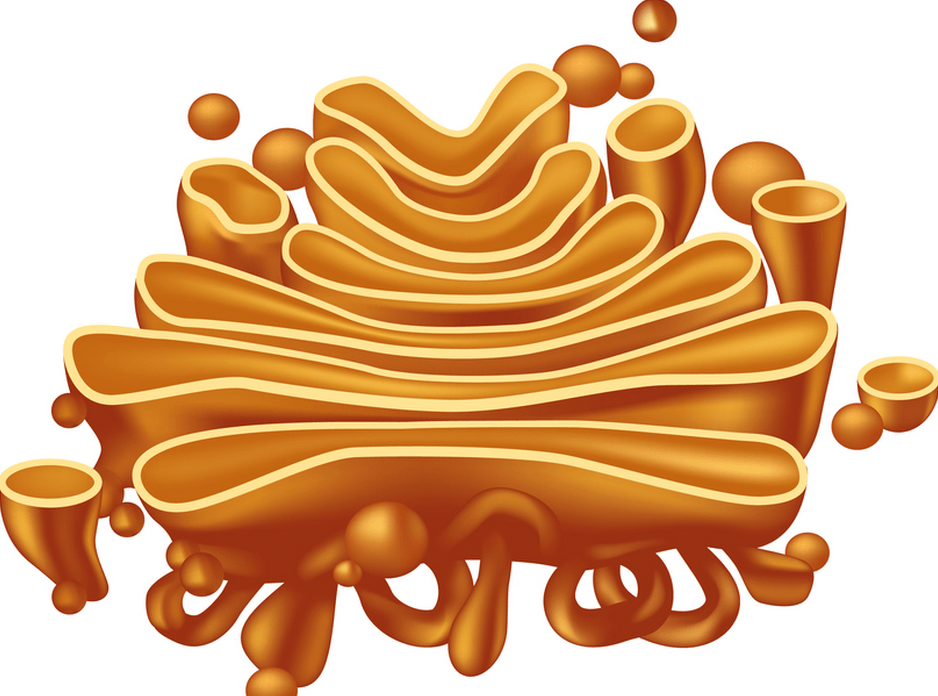
I am a protein packaging and shipping machine! Who am I?
a)
vacuole
b)
ribosome
c)
mitochondrion
d)
golgi apparatus
16.
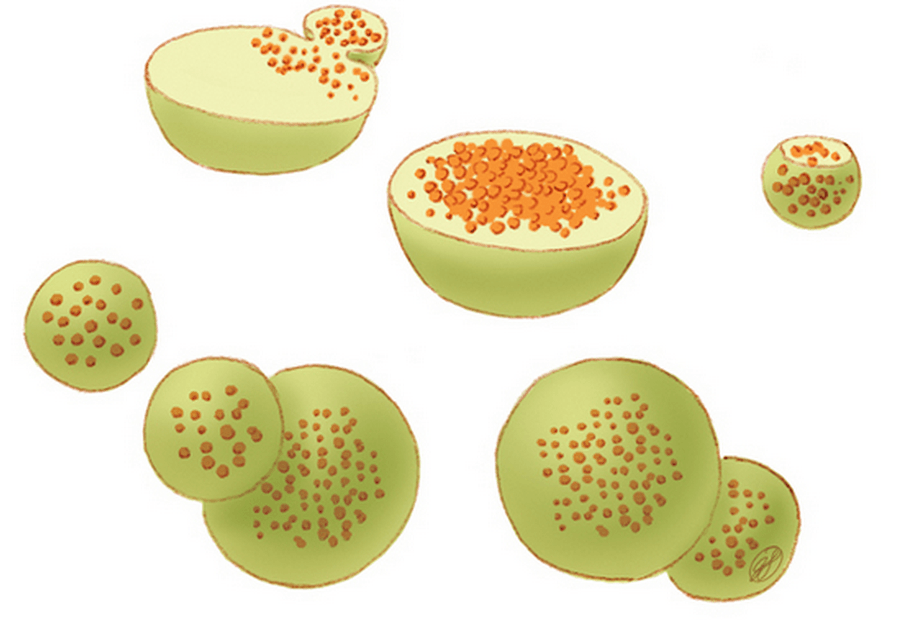
You might think of me as the trash collector, but recycler is maybe more accurate. What am I?
a)
mitochondria
b)
lysosome
c)
vacuole
d)
ribosome
17.
Where are proteins made?
a)
Golgi body
b)
Mitoichondria
c)
Chromosomes
d)
Ribosomes
18.
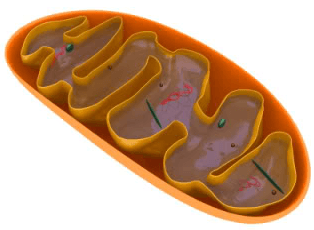
What are tiny organelles that convert glucose into ATP?
a)
Ribosomes
b)
Vesicles
c)
Cytoskeleton
d)
Mitochondria
19.
What organelle helps with cell digestion?
a)
Lysosomes
b)
Ribosomes
c)
Golgi Complex
d)
ER
20.
This is a double layer of phospholipids that creates a barrier between the cells internal and external environments; it controls what comes in or out of the cell (selective permeable)
a)
Nucleus
b)
Cilia
c)
Cell membrane
d)
Flagella
21.
The diffusion of WATER across a semi-permeable membrane is
a)
osmosis
b)
diffusion
c)
endocytosis
d)
exocytosis
22.
What is diffusion
a)
active transport
b)
passive transport
c)
cell division
d)
cell mutation
23.
The movement of molecules from higher concentration to lower concentration is
a)
diffusion
b)
cell division
active transport
active transport
c)
active transport
d)
tonicity
24.
Active transport requires
a)
energy
b)
the nucleus
c)
chloroplasts
d)
lysosomes
25.
What organelles is NOT found in a PROkaryote
a)
nucleus
b)
cell membrane
c)
Chromosomes (DNA)
DNA
DNA
d)
ribosomes
26.
water moves from
a)
higher conc. H20 => lower conc H20
b)
lower conc. H20 => higher conc. H20
27.
If there is too much salt in your cells...
a)
you need more water
b)
you need to lose water
28.
how are chloroplasts and mitochondria similar? They both...
a)
produce energy products
b)
are found in animal cells
c)
are found in prokaryotes
d)
destroy cell products
29.
Which structures are found in every living cell?
a)
cell membrane and cytoplasm
b)
chloroplasts and mitochondria
c)
a cell wall and nucleus
d)
chloroplasts and cell wall
30.
Starch and water molecules in potato cells are stored in what organelle?
a)
mitochondria
b)
nucleus
c)
cell wall
d)
vacuole
31.
Cells with a nucleus and membrane-bound organelles are called ____________________.
a)
prokaryotes
b)
eukaryotes
c)
bacteria
d)
protists
32.
Which of the following is not part of the cell theory?
a)
cells must contain DNA
b)
all living things are made from cells
c)
cells can only come from other cells
d)
cells are the basic unit of life
33.
Who was the first person to see cells under the microscope and give them their name?
a)
Mattias Schleiden
b)
Robert Hooke
c)
Theordor Schwann
d)
Anton van Leeuwenhoek
34.
Chloroplasts are organelles that convert light energy to sugars. These organelles are found only in plants. Which organelles are found only in animals?
a)
Golgi apparatus
b)
lysosomes
c)
mitochondria
d)
ribosomes
35.

The chromosomes line up across the middle of the cell
a)
Anaphase
b)
Interphase
c)
Prophase
d)
Methaphase
36.

What phase is this?
a)
prophase
b)
metaphase
c)
anaphase
d)
telephase
37.

This picture represents what type of cell transport?
a)
endocytosis
b)
exocytosis
c)
osmosis
d)
passive transport
38.
Which is true about active transport?
a)
It requires energy
b)
it does not require energy
c)
It moves substances down the concentration gradient
d)
it moves material from high to low concentration
39.
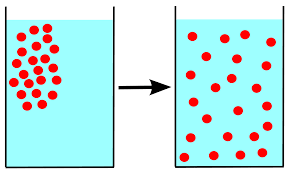
The picture below is an example of _________________.
a)
osmosis
b)
isotonic
c)
diffusion
d)
active transport
40.
When both inside and outside of a cell have the same amount of water it is said that the cell has reached a state of
a)
Osmosis
b)
Diffusion
c)
Equilibrium
41.
A person should never drink salty water because their cells would
a)
shrink
b)
expand
42.
A person would never have pure water put into their veins in a hospital because their cells would...
a)
Shrink/Dehydrate
b)
Expand
43.
The movement of molecules against a concentration gradient
a)
simple diffusion
b)
facilitated diffusion
c)
active transport
d)
osmosis
44.

The picture is an example of...
a)
active tranport
b)
passive transport
c)
diffusion
d)
osmosis
45.
Sometimes, energy is required for ____ molecules to go in or out of the cell because they cannot fit into the membrane.
a)
big
b)
small
c)
crunchy
d)
water
46.
What is diffusion?
a)
when molecules move
b)
when molecules move from a high concentration to a low.
c)
no movement
d)
molecules move everywhere
47.

If green is dominant over purple, then what is the genotype for this individual?
a)
Purple
b)
Green
c)
GG
d)
gg
48.

What is the genotype for this organism?
(E= 3 eyes, e= 1 eye)
(E= 3 eyes, e= 1 eye)
a)
EE
b)
Ee
c)
ee
d)
EE or Ee
49.
B - black, b - brown. Two black mice mate and have some black and some brown mice. What is the genotype of the parents?
a)
BB x Bb
b)
BB x bb
c)
Bb x Bb
d)
Bb x bb
50.
Which of the following terms refers to the different possibilities of a gene?
a)
chromosome
b)
DNA
c)
Punnett Squares
d)
allele
51.
Another word for homozygous is...
a)
purebred
b)
hybrid
c)
heterozygous
d)
dominant
52.
Purple is dominant to white. A heterozygous purple flower is crossed with a white flower. What are the genotypes and phenotypes of the offspring?
a)
100% Pp (purple)
b)
50% Pp (purple); 50% pp (white)
c)
75% Pp (purple); 25% pp (white)
d)
25% PP, 50% Pp, 25% pp
75% purple, 25% white
75% purple, 25% white
53.
One reason for Mendel's success with genetic studies of peas was that he
a)
used only hybrid pea plants
b)
used peas with large chromosomes
c)
studied large numbers of offspring
d)
discovered the sources of variation in peas
54.
A cross of a red cow with a white bull produces all road offspring. This type of inheritance is known as
a)
codominance
b)
incomplete dominance
c)
multiple alleles
d)
"breed time:
55.
A woman with blood genotype I(A)i marries a man with blood genotype I(B)i. What is the probability that they would have a child with type O blood?
a)
1/1
b)
1/2
c)
1/3
d)
1/4
56.
A cross between two tall garden pea plants produced 314 tall plants and 98 short plants. What genotypes are the parents?
a)
TT and tt
b)
TT and Tt
c)
Tt and Tt
d)
TT and TT
57.
If the four existing children in a family are all sons, what chance would there be that the next child would also be a son?
a)
75%
b)
50%
c)
25%
d)
20%
58.
A person with type O blood marries a person with type AB blood. Possible blood genotypes of their children are
a)
I(A)i and I(B)I(B)
b)
I(B)I(B) and I(A)I(A)
c)
I(A)i and I(B)i
d)
I(A)I(B) and ii
59.

In certain rats, black fur is dominant over white fur. If two rats, both heterozygous for fur color are mated, their offspring would be expected to have
a)
four different genotypes and two different colors
b)
two different genotypes and three different colors
c)
three different genotypes and two different colors
d)
three different genotypes and three different colors
60.
What gender has an X and a Y chromosome?
a)
male
b)
female
c)
transgender
d)
all of the above
61.

What type of heredity is shown in the pedigree?
(hint: check your notes - "modes of inheritance")
(hint: check your notes - "modes of inheritance")
a)
Sex-Linked Dominant
b)
Sex-Linked Recessive
c)
Autosomal Dominant
d)
Autosomal Recessive
62.
How many alleles (letters) do each person carry for a trait?
a)
1
b)
2
c)
3
d)
4
63.

T - tall and t = short
In the punnett square below, what belongs in the missing square
In the punnett square below, what belongs in the missing square
a)
tt
b)
Tt
c)
Bb
d)
TT
64.

Term for homozygous organisms that display two dominant phenotypes at the same time
a)
codominance
b)
incomplete dominance
c)
multiple alleles
d)
linked genes
65.

Red/green color blindness is a recessive trait. A woman who is a carrier for this allele marries a normal-vision male. What is the probability that they will have a child who is color blind?
a)
1/4
b)
1/2
c)
3/4
d)
1
66.
A chart or “family tree” that tracks which members of a family have a particular trait
a)
Gene
b)
Pedigree
c)
Punnett Square
d)
Dominant
67.
A person who has one recessive allele for a trait, but does not have the trait
a)
Homozygous
b)
Selective Breeding
c)
Mutation
d)
Carrier
68.
Process by which humans cross organisms to produce offspring with certain desirable traits
a)
Homozygous
b)
Selective Breeding
c)
Mutation
d)
Carrier
69.
Genetic variation increases an offsprings chance of survival in ________ reproduction.
a)
asexual
b)
sexual
c)
spontaneous
d)
artificial
70.
An analysis of chromosomes may show the loss of a portion of a chromosome. This type of chromosomal change is known as
a)
nondisjunction
b)
addition
c)
translocation
d)
deletion
71.
The failure of homologous chromosomes to separate from each other is known as
a)
crossing over
b)
disjunction
c)
nondisjunction
d)
synapsis
72.
Photograph of chromosomes grouped in ordered pairs
a)
pedigree
b)
Punnett Square
c)
Venn Diagram
d)
Karyotype
73.

Which genetic abnormality is shown in this karyotype?
a)
Partial Addition
b)
Partial Deletion
c)
Trisonomy 21
d)
Monosomy
74.
What mutation has occurred here?
T-G-A-C-C-A
T-G-A-G-C-A
T-G-A-C-C-A
T-G-A-G-C-A
a)
Substitution
b)
Deletion
c)
Insertion
d)
Frameshift
75.
DNA molecule segment is : TTACGCAAG
The mutated DNA segment is TTCGCAAG. This is an example of ___ mutation.
The mutated DNA segment is TTCGCAAG. This is an example of ___ mutation.
a)
Substitution
b)
Deletion
c)
Insertion
d)
Inversion
76.
the creation of genetically identical organisms
a)
Bioremediation
b)
Cloning
c)
Gene Therapy
d)
Tissue Culturing
77.
Using biotechnology to change the genetic makeup of an organism is called
a)
Tissue Culturing
b)
Biotechnology
c)
Cloning
d)
Genetic Engineering
78.
Examples of environmental mutagens include:
a)
Chemicals
b)
Radiation
c)
Viruses
d)
All of these
79.
Bacteria containing DNA from a foreign donor
a)
plasmid
b)
restriction enzymes
c)
recombinant DNA
d)
transgenic bacteria
80.
molecular scissors that "cut' DNA
a)
plasmid
b)
restriction enzymes
c)
recombinant DNA
d)
gene
81.
simple ring of DNA from prokaryotes
a)
plasmid
b)
restriction enzymes
c)
recombinant DNA
d)
gene
82.
Genetic engineering has been used to produce
a)
medicines.
b)
food animals.
c)
improved crops.
d)
all of these.
83.
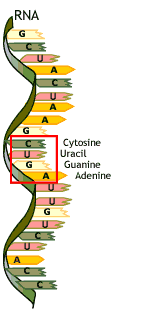
In RNA, Uracil pairs with ______.
a)
cytosine
b)
adenine
c)
guanine
d)
thymine
84.
The process to go from DNA to mRNA is _______
a)
translation
b)
transcription
c)
replication
85.
The process to go from mRNA to a protein is called ____
a)
transcription
b)
rRNA
c)
replication
d)
translation
86.
Choose the nucleotide sequence of the RNA strand that would be complementary to the following strand:
GTAGTCA
GTAGTCA
a)
UATUAGA
b)
ACGACTG
c)
CAUCAGU
d)
CATCAGT
87.
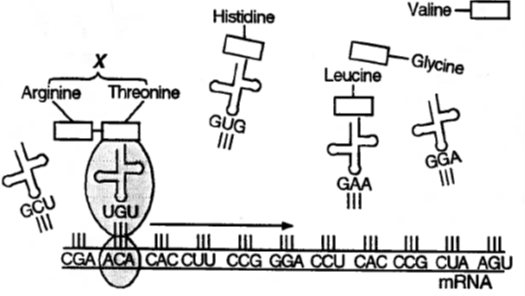
What process is going on in this photo?
a)
Transcription
b)
Translation
c)
Replication
d)
All the above
88.
What are the backbones (sides) of the DNA structure made up of?
a)
repeating phosphates and sugars
b)
nitrogen bases
c)
nucleotides
d)
adenine and thymine
89.
Translation is the process where
a)
mRNA is created in the Nucleus
b)
mRNA is decoded to form a protein
c)
glucose molecules are made
d)
is where lipids are synthesised
90.
Does the order of amino acids in a protein matter?
a)
YES!
b)
NO!
91.
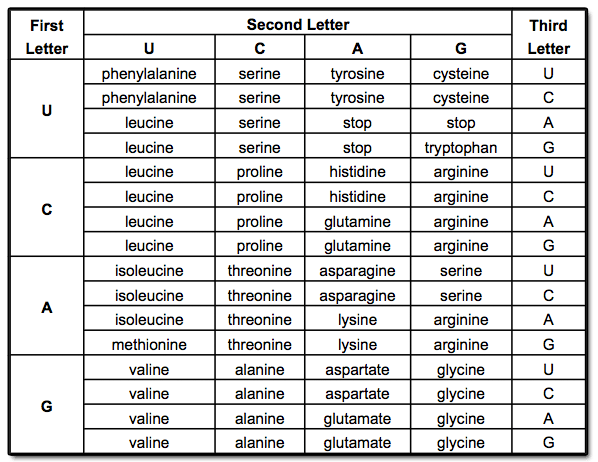
What is the correct amino acid sequence for the mRNA code AUGCCAGUAUGA
a)
Met-Pro-Ala-Val
b)
Met-Pro-Val
c)
Tyr-Gly-His
d)
Tyr-Gly-Arg-His
92.

Transcription is a process that in eukaryotic cells takes place in the:
a)
Nucleus
b)
Cytoplasm
c)
Golgi Apparatus
d)
Rough E.R.
93.
RNA is read in sections called:
a)
Triplets
b)
Genes
c)
Codons
d)
Genes
94.
Before cells can divide, what must be copied?
a)
mitochondria
b)
cytoplasm
c)
DNA
d)
Cell Wall
95.
The division of the nucleus is known as:
a)
Synthesis
b)
Mitosis
c)
G1
d)
G2
96.
The individual strands on duplicated chromosomes are called_____________
a)
Centromeres
b)
daughters
c)
Chromatids
d)
Karyotypes
97.
The ___________ holds the replicated sister chromatids together.
a)
centriole
b)
chromosomes
c)
centromere
d)
cycles
98.
The cell spends most of it's life in ________________.
a)
mitosis
b)
cytokinesis
c)
Interphase
d)
None of the above
99.

The structure labeled A is a(n)
a)
chromatid
b)
centriole
c)
centromere
d)
chromophere
100.

The chromosome in the diagram
a)
has been replilcated
b)
consists of 2 copies of 1 chromosome
c)
is about to go through cell division
d)
all of the above.
101.
Uncontrollable cell growth is known as _____
a)
obesity
b)
cancer
c)
diabetes
d)
hepatitis
102.
Put the following stages of mitosis in order: anaphase, prophase, metaphase, and telophase.
a)
prophase, metaphase, telophase, anaphase
b)
prophase, anaphase, metaphase, telophase
c)
prophase, metaphase, anaphase, telophase
d)
prophase, telophase, metaphase, anaphase
103.
Put the following stages of the cell cycle in order: G2, S, G1, M.
a)
G1, S, G2, M
b)
S, G1, G2, M
c)
G1, M, G2, S
d)
M, G1, S, G2
104.
Put the following actions in order: DNA replicates, cell grows, cell divides, cell prepares for mitosis.
a)
DNA replicates, cell grows, cell prepares for mitosis, cell divides
b)
cell grows, cell prepares for mitosis, DNA replicates, cell divides
c)
cell grows, DNA replicates, cell prepares for mitosis, cell divides
d)
DNA replicates, cell prepares for mitosis, cell grows, cell divides
105.

Fruit fly body cells have 8 chromosomes. After mitosis, you would expect a resulting fruit fly daughter cell to have -
a)
16 chromosomes.
b)
46 chromosomes.
c)
8 chromosomes.
d)
4 chromosomes.
106.

Stage of Interphase in which the cell copies its DNA in preparation for cell division
a)
G1
b)
Synthesis
c)
G2
d)
Interphase
107.

This picture represents which type of cellular transport?
a)
passive transport
b)
endocytosis
c)
exocytosis
d)
osmosis
108.
A cell in a hypotonic solution will
a)
swell
b)
shrink
c)
stay the same size
d)
impossible to tell
109.
When a cell is placed in a hypertonic (more concentrated) solution water
a)
moves from the inside of the cell to the solution
b)
moves from the solution to the inside of the cell
c)
moves equally in and out of the cell
d)
none of these
110.
When a cell is placed in a hypotonic solution (less concentrated), water
a)
moves from the inside of the cell to the solution
b)
moves from the solution to the inside of the cell
c)
moves equally in and out of the cell
d)
none of these
111.
Which of the following is the correct equation for PHOTOSYNTHESIS?
a)
CO2 + light + H2O --> O2 + Sugar
b)
CO2 + sugar + H2O --> O2 + light
c)
O2 + light + H2O --> CO2 + Sugar
d)
CO2 + O2 + H2O --> Light+ Sugar
112.
What process occurs when light energy is captured in autotrophs and converted into sugar?
a)
Photosynthesis
b)
Cellular Respiration
113.
What is the ultimate ORIGINAL source of energy for living things
a)
Sugar
b)
Sun
c)
Moon
d)
Carbon Dioxide
114.
What are the products of photosynthesis?
a)
water and carbon dioxide
b)
oxygen and glucose
c)
oxygen and carbon dioxide
d)
oxygen and water
115.

Most plants appear green because chlorophyll
a)
absorbs green light.
b)
absorbs violet light.
c)
reflects green light.
d)
does not absorb violet light.
116.

The reactants of photosynthesis are
a)
sugar and water.
b)
sugar and oxygen.
c)
carbon dioxide and water.
d)
carbon dioxide and oxygen.
117.

What is the function of NADPH and ATP?
a)
They absorb light
b)
They power the light-dependent reactions
c)
They are light-reflecting pigments
d)
They are short term energy carriers
118.

Where do the light-dependent reactions occur?
a)
thylakoid membrane
b)
stroma
c)
mesophyll
d)
mitochondria
119.

Which of the following is NOT a product of the light-dependent reactions?
a)
ATP
b)
NADPH
c)
Oxygen
d)
Glucose
120.

What is the primary function of the light-dependent reactions of photosynthesis?
a)
To produce glucose
b)
To produce NADPH and ATP
c)
To use ATP
d)
To produce RuBP
121.

Use the diagram to answer the question. Between which parts of the molecule must the bonds be broken to form an ADP molecule?
a)
A and B
b)
A and C
c)
B and C
d)
C and D
122.
What is the energy conversion during photosynthesis?
a)
chemical --> chemical
b)
thermal --> electrical
c)
chemical --> electrical
d)
radiant --> chemical
123.
All living things do which of the following?
a)
Chemosynthesis
b)
Respiration
c)
photosynthesis
d)
all of the answers
124.
______________ produces the most ATP.
a)
photosnthesis
b)
aerobic respiration
c)
anaerobic respiration
d)
glycolysis
125.
The mitochondria is responsible for ...
a)
photosynthesis
b)
anaerobic respiration
c)
aerobic respiration
d)
fermentation
126.
How many ATP are produced normally in aerobic respiration?
a)
2
b)
33
c)
4
d)
36
127.
How many ATP are produced in anaerobic respiration?
a)
2
b)
33
c)
4
d)
36
128.

Which of the following structure is where cellular respiration occurs in the cell?
a)
nucleus
b)
cytoplasm
c)
mitochondria
d)
vacuoles
129.
What are the reactants in the equation for cellular respiration?
a)
oxygen and lactic acid
b)
carbon dioxide and water
c)
glucose and oxygen
d)
water and glucose
130.
What is the correct equation for cellular respiration?
a)
6O2 + C6H12O6 -> 6CO2 + 6H2O + Energy
b)
6O2 + C6H12O6 + Energy -> 6CO2 + 6H2O
c)
6CO2 + 6H2O -> 6O2 + C6H12O6 + Energy
d)
6CO2 + 6H2O + Energy -> 6O2 + C6H12O6
131.
Where does the Krebs Cycle take place?
a)
inner mitochondria
b)
inside chloroplast
c)
inner cytoplasm
d)
inner nucleus
132.
An organism that is a heterotrophic unicellular eukaryote that lives in a dark, anaerobic environment would exhibit what characteristics of cellular respiration?
a)
Produce ATP in the mitochondria and cytoplasm
b)
Produce ethyl alcohol, CO2, and ATP
c)
Convert glucose to lactic acid without producing ATP
d)
Produces oxygen and glucose without making ATP
133.

Structures with the same parts have different functions; suggests that organisms share a common ancestry
a)
vestigial structures
b)
homologous structures
c)
adaptive radiation
d)
fossil
134.

If an organism has a vestigial structure, that structure likely once had a function in a(n)
a)
close relative
b)
early ancestor
c)
unrelated organism
d)
embryological stage
135.
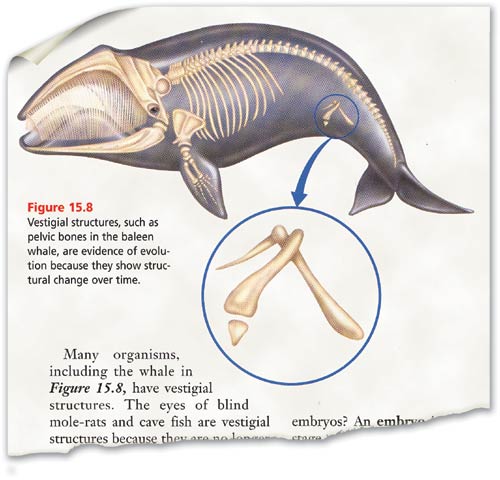
Which of the following is an example of a vestigial structure?
a)
the wings of a red-tailed hawk
b)
the hind limbs of a house cat
c)
the fins of sharks
d)
the tailbone of a human
136.
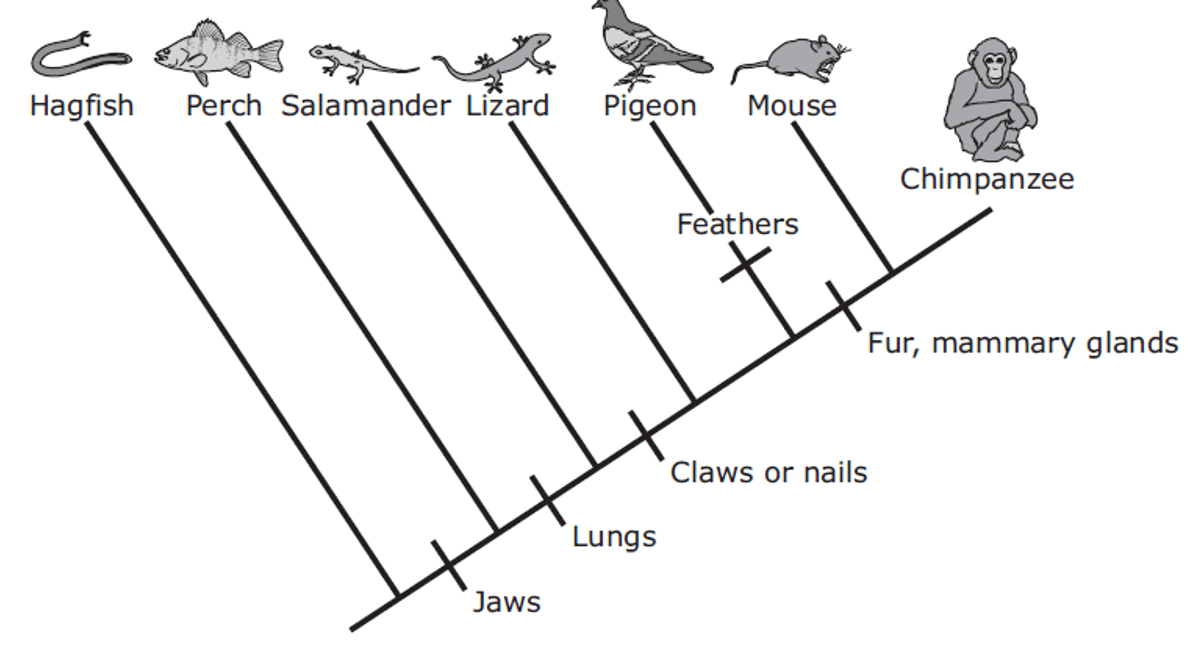
All the animals to the right of the hagfish would have the common characteristic of -
a)
Fur
b)
Claws or nails
c)
Lungs
d)
Jaws
137.
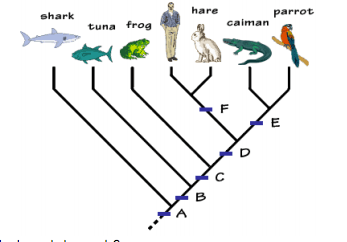
On the cladogram, which organism is the closest relative of the human?
a)
Frog
b)
Hare
c)
Caiman
d)
Parrot
100 %

