
 Worksheets
Biology Exam
Total questions: 140
Worksheet time: 47mins
According to Fire/Heat Safety, which action violates the safety rules?
Knowing where the fire extinguisher and fire blanket are located.
Using tongs to handle hot objects.
Reaching across a flame.
Keeping a clean work area.
If chemicals get on your skin or clothes, what should you do immediately according to Chemical Safety?
Wipe the area with a dry cloth only.
Wait to see if irritation develops.
Continue working and tell the teacher later.
Rinse with water right away and notify your teacher.
According to Electrical Safety, what must you never do with an electrical appliance or outlet?
Unplug it by gripping the plug
Use it with dry hands
Touch it with wet hands
Keep cords untangled
Theodore Schwann discovered that animal tissues are made of cells. Which part of the cell theory is based in part on this?
all organisms are composed of one or more cells
new cells come from preexisting cells
cells produce proteins for the functioning of organisms
all organisms are made up of cells
Which level of organization is formed when similar cells specialized to perform a specific function come together?
organism
tissue
system
organ
Which of the following is an example of homeostasis?
maintaining an appropriate respiration rate
being composed of more than one cell
the sum of all of your chemical reactions
adapting to your environment
Cellular division directly relates to which of the following?
growth and development
evolution
organization
metabolism
Which of the following is a true statement?
All living organisms contain a nucleus.
All living organisms have a cell wall.
All living organisms are multicellular.
Cells are the basic unit of structure and function.
The sum of all the chemical reactions in your body?
evolution
homeostasis
organization
metabolism
Which of the following is NOT an example of an adaptation?
birds migrating during the winter months
the total sum of all the chemical reactions in your body
humans evolving the ability to digest lactose (sugar in milk)
the ability of dolphins to communicate in aquatic environments
A plant growing towards a light source is an example of which of the following?
destroying infectious germs
attracting a mate
obtaining moisture from the air
responding to a stimuli
When you step out into the cold, your body shivers in order to keep its temperature at 98.6F.
All living things grow
All living things contain cells
All living things maintain homeostasis
All living things use energy
YOU are a multi-celled organism but an amoeba is a single celled organism.
All living things have cells
All living things grow
All living things respond to their environment
All living things use energy
The scientific name for something living is a(an)
cell
human
organism
tissue
Over three years, Tim's height has increased from 5'4" to 5'11". Which characteristic of life does this represent?
All living things use energy
All living things contain cells
All living things maintain homeostasis
All living things grow
Which of the following is the correct order of organization in living things from most basic (simple) to most complex?
Organ system, organ, tissue, cell, organism
Organism, cell, tissue, organ, organ system
Cell, organ, tissue, organ, organism, organ system
Cell, tissue, organ, organ system, organism
Green plants produce their own food through the process of photosynthesis. Which characteristic of life does this represent?
All living things use energy
All living things grow
All living things maintain homeostasis
All living things contain cells
A baby song bird hatches from its egg with both parent songbirds watching. Which characteristic of life does this represent?
All living things grow
All living things maintain homeostasis
All living things reproduce
All living things use energy
A camel has eyelashes that work to keep the dust and sand out of its eyes. Which characteristic of life does this represent?
All living things have cells
All living things adapt to their environment
All living things grow
All living things use energy
Living things are based on a universal genetic code. What molecule is responsible for that code?
RNA
Protein
DNA
Lipid
Any living things ...
moves.
meets 7 of the characteristics of life.
contain DNA.
is an abiotic factor.
After eating, the pancreas releases a hormone called insulin to help the cells take in the sugar from the food to keep the blood stream at the appropriate sugar level. This is an example of ...
all living things maintaining homeostasis.
all living things reproducing.
all living things evolving.
all living things containing DNA.
Used to measure specific volume of liquid
erlenmyer flask
graduated cylinder
test tube
beaker
Used to transfer small amount of liquid
scoopula
test tube
pipette
graduated cylinder
The bond that holds the Oxygen and Hydrogen atoms together in a water molecule is a ________ bond.
ionic
Hydrogen
Covalent
Weak
What macromolecule is made up of C,H,O,N?
Carbohydrates
Lipids
Proteins
Nucleic acids

Which of the macromolecules are structured in this way?
Carbohydrates
Lipids
Proteins
Nucleic acids

Which macromolecule is structured in this way?
Carbohydrates
Lipids
Proteins
Nucleic acids

Which macromolecule is structured this way?
Carbohydrates
Lipids
Proteins
Nucleic acids

Which macromolecule has this structure?
Carbohydrate
Lipids
Proteins
Nucleic acids
Which one of our macromolecules would you consume in order to receive long-term energy?
Carbohydrates
Lipids
Proteins
Nucleic acids
What is the function of Carbohydrates?
Long-term energy
Muscle development
Short-term energy
enzyme activity
Amylase helps to speed up the breakdown of carbohydrates. Amylase would be an example of which group of important biological molecules?
lipids
enzymes
carbohydrates
hormones
Amylase is an enzyme found in saliva that helps break down starch in your mouth. In this chemical reaction, starch would be an example of a(n)
substrate
enzyme
active site
product
Lipase is produced by the pancreas to help digest fat. Lipase breaks down the fats into fatty acids.
What role does the lipase play in this reaction?
substrate
enzyme
substrate-enzyme complex
product
Enzymes are an example of
Lipids
Carbohydrate
Protein
Nucleic Acid
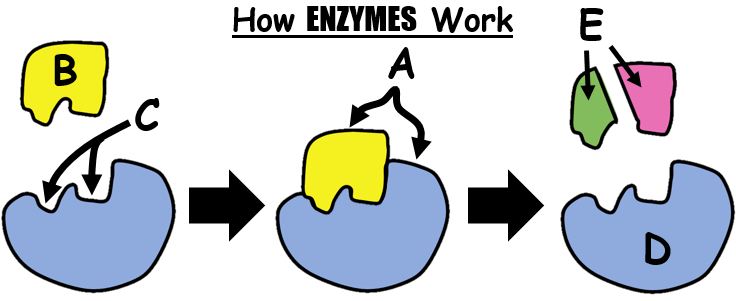
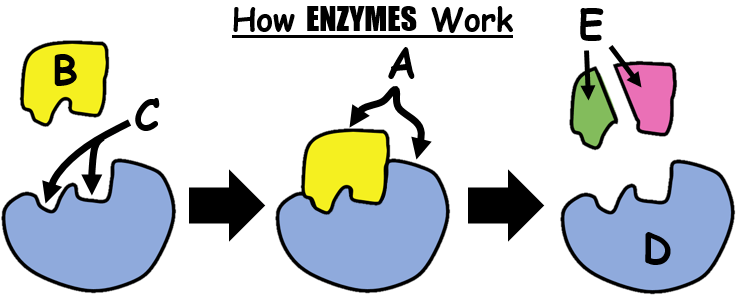
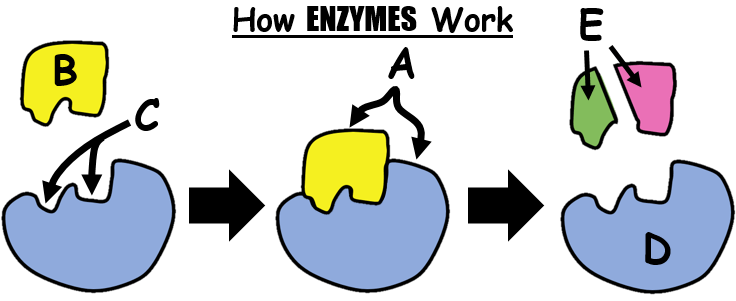
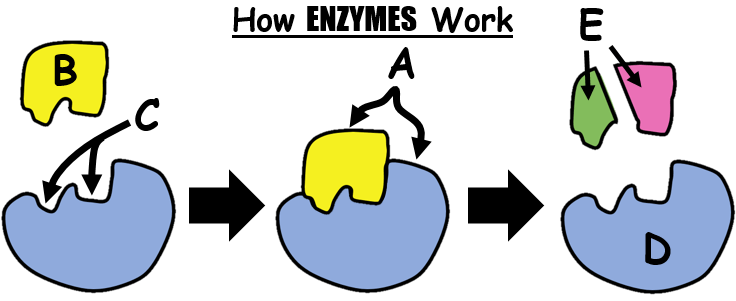
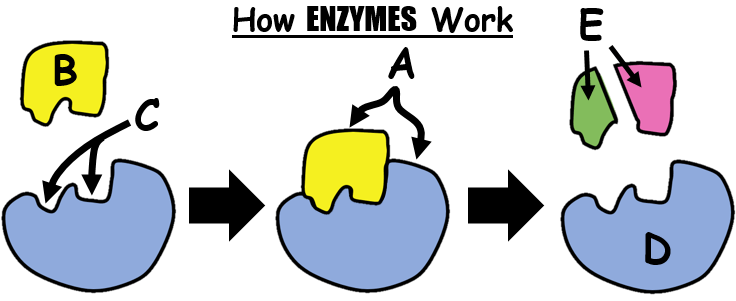
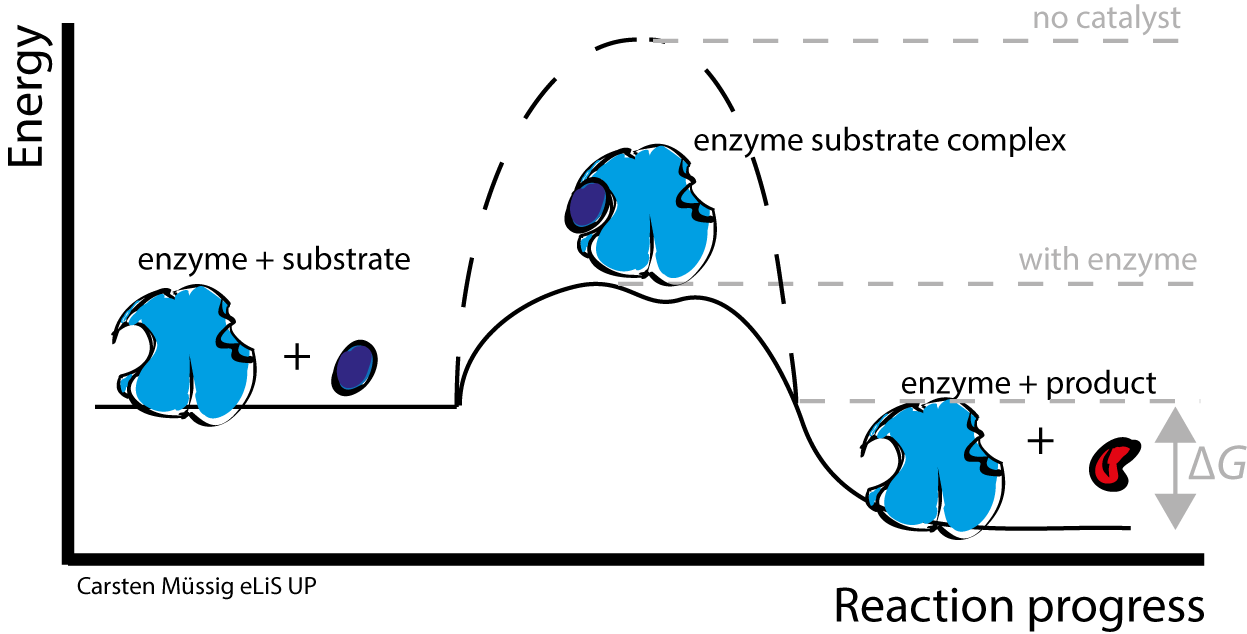
What happens when enzymes are heated to a high temperature?
The enzymes die.
The shape of the enzyme are changed and it denatures
The enzymes' amino acid sequence changes.
The enzymes remain the same

When looking at the enzyme substrate model, the substrate turns into what at the end of the chemical reaction?
Nothing
It does not change
Products
Pieces
What is the monomer for protein?
Polymer
Nucleic Acids
Amino Acids
Fatty Acids
Mitochondria
Which organelle is selectively permeable?
Cell wall
Cell Membrane
nucleus
Cytoplasm
What organelle is used for helping animal cells maintain shape and organization?
Cell membrane
Nucleus
Cytoskeleton
Cell Wall
Which of the following contains unrelated items?
ribosomes- protein
cell wall-animal cell
mitochondria-energy
eukaryotes-have nucleus
Which organelle stores DNA & is the brain of the cell?
Nucleus
Cell Membrane
Cell wall
Ribsome
What is the jelly-like fluid that surrounds all of the organelles and holds them in place?
Cytoplasm
Centrioles
Mitochondria
ER
What is the function of a lysosome?
To get rid of wastes
To store genetic material
To give energy to the cell
To control what enters and leaves the cell
The organelles within a plant cell that contain green pigment are called
Centriole
Chloroplast
Mitochondria
Lysosome
Unlike the cell membrane, the cell wall is
found in all organisms
composed of lipid bilayer
selectively permeable
a rigid structure
What does the rough ER have that the smooth ER does not?
Ribosomes
Lysosomes
Chloroplasts
Mitochondria
The cell membrane is selectively permeable, which means
All materials can enter and leave the cell.
The cell manually sorts through all materials.
Certain things can enter the cell while others cannot.
Only certain cells can interact with the cell.
Which type of cellular transport moves from low concentrations to high?
Active Transport
Osmosis
Passive Transport
Facilitated Diffusion
Cell transport in which waste or hormones are released through the cell membrane using energy.
Endocytosis
Sodium Potassium Pump
Passive Transport
Exocytosis
Large molecules such as glucose move across the cell membrane through protein channels, without the use of energy, during
active transport
osmosis
facilitated diffusion
bulk transport
Diffusion of water across a cell membrane.
Osmosis
Active Transport
Protein Channel
Pinocytosis
Engulfing a large substance and moving it inside the cell using energy
endocytosis
photosynthesis
exocytosis
diffusion
The movement of molecules from an area of high concentration to low concentration without using energy
Facilitated Diffusion
Active Transport
Exocytosis
Passive Transport
The state of maintaining a relatively stable internal balance
homeostasis
hypertonic
hypotonic
semipermeable
Which of the following primarily makes up the cell membrane?
carbohydrates
nucleic acids
proteins
phospholipids
Which of the following BEST illustrates equilibrium?


During diffusion, how do molecules move?
from an area of higher concentration to an area of lower concentration
from an area of lower concentration to an area of higher concentration
across a cell membrane with the use of cellular energy
against a concentration gradient

Match the diagram above with the correct description of what will happen to the cell.
water will move out of the cell, and the cell will shrink.
water will move into the cell, and the cell will swell.
the cell will remain the same size because there will be no net movement of water.

Match the diagram above with the correct description of what will happen to the cell.
water will move out of the cell, and the cell will shrink.
water will move into the cell, and the cell will swell.
the cell will remain the same size because there will be no net movement of water.

Match the diagram above with the correct description of what will happen to the cell.
water will move out of the cell, and the cell will shrink.
water will move into the cell, and the cell will swell.
the cell will remain the same size because there will be no net movement of water.
Why is osmosis a type of passive transport?
it moves materials across a cell membrane.
it continues until equilibrium is reached.
it does not require any of the cell's energy.
it does not need activation by an enzyme.
Osmosis always involves the movement of what?
oxygen molecules
carbon dioxide molecules
water molecules
sugar molecules
What happens to a cell that is placed in an isotonic solution?
more water passes out of the cell than into the cell through the cell membrane.
more water passes into the cell than out of the cell through the cell membrane
solute molecules pass out of the cell through the cell membrane.
there is no net movement of water across the cell membrane.
What happens to a cell that is placed in an hypertonic solution?
more water passes out of the cell than into the cell through the cell membrane.
more water passes into the cell than out of the cell through the cell membrane
solute molecules pass out of the cell through the cell membrane.
there is no net movement of water across the cell membrane.
Billy Bob's grandmother is making pickles. She puts slices of fresh cucumber into a solution of sugar, salt, and vinegar. The cucumber slices get smaller. What type of solution is the sugar, salt, and vinegar?
isotonic
hyoptonic
hypertonic
lipotonic
The cell membrane contains channels and pumps that help move materials from one side to the other. What are these channels and pumps made of?
Carbohydrates
Lipids
Bilipids
Proteins
Which type of transport does NOT require energy?
osmosis
passive transport
diffusion
All are correct
Cell cycle "checkpoints" help to
increase the rate of cell division
prevent cell division unless the cell is ready
decrease cell enzyme activity
Programmed cell death, which can help an organism by killing potential cancer cells, is known as
osmosis
differentiation
diffusion
apoptosis
Cells that are undifferentiated have no specific job, but can potentially become many different types of cells. An example of an undifferentiated cell is a(n)
stem cell
neuron
skin cell
muscle cell
The process by which an unspecialized stem cell becomes a specialized cell is called
diffusion
differentiation
mitosis
cell cycle regulation
Proteins that bind to cells and stimulate cell division are called
enzymes.
kinases
growth factors.
carcinogens.
Which phrase best describes cancer?
absence of cyclins
multiple gene mutations
uncontrolled cell growth
presence of genetic defects
Substances known to produce or promote cancer are called
carcinogens.
kinases
cyclins.
malignancies.
Extra Credit: How is a benign tumor different from a malignant tumor?
Malignant tumors do not spread; cells in a benign tumor break away and spread to other parts of the body
Benign tumors perform the specialized functions needed by the body; malignant tumors do not.
Malignant tumors exert pressure on surrounding tissues; benign tumors do not.
Benign tumors do not spread; cells in a malignant tumor break away and spread to other parts of the body.
What happens in the G0 phase of the cell cycle?
Cells replicate their DNA
Cells go through mitosis
Cells stop diving and are "resting"
Which type of cell would be most likely to re-enter the cell cycle from G0?
Muscle
Skin
Liver
The cell cycle uses the M checkpoint to
Check for errors in DNA
Make sure there is enough raw material to use
Make sure the spindle fibers are attached to the chromosomes
There is enough room in the environment for more cells
Which phase of the cell cycle is primarily responsible for DNA replication?
G1 phase
S phase
G2 phase
M phase


Spinal cord injuries are difficult to treat because damaged nerce cells do not regenerate. Which of the following most accurately explains why damaged nerve cells no longer regenerate?
Mature nerve cells are in a resting state; the no longer divide during mitosis
Nerve damage disrupts the cell cycle at the G1 phase
Nerve damage disrupts the cell cycle at the S phase
Nerve damage prevents centrioles from being synthesized

The cell membrane pinches in, cutting the cytoplasm into 2 daughter cells
Metaphase
Anaphase
Telephase
Cytokinesis



