wayground logo

Free Printable Worksheets

Font size

S
M
L
XL
Worksheets

Thermal energy and heat

Total questions: 97

Worksheet time: 1hrs 4mins

Name
Class
Date
1.
At what temperature does water freeze in degrees Fahrenheit?
a)
212 degrees
b)
100 degrees
c)
32 degrees
d)
0 degrees
2.
As the kinetic energy of the molecules in a substance increases, the temperature of the substance __________.
a)
increases
b)
decreases
3.
The measure of average kinetic energy of all the particles within an object is called ____________. 
a)
temperature
b)
conduction
c)
radiation
d)
heat 
4.
A(n) _____________ is a device for measuring temperature.
a)
thermometer
b)
barometer
c)
anemometer
d)
psychrometer 
5.
Heat transfers from an area of ____temperature to an area of ___ temperature.
a)
high to low
b)
low to high
c)
high to high
d)
It can travel high to low and low to high. 
6.
What happens to particles as they heat up?
a)
They slow down
b)
Nothing
c)
They don't move
d)
They speed up
7.
4. Energy will always flow or move from...
a)
An area of low temperature to an area of high temperature
b)
An area of high temperature to an area of low temperature
c)
atoms to molecules
8.
What is the measurement of the average kinetic energy of a substance?
a)
Kinetic energy
b)
Temperature
c)
Thermal energy
d)
Potential energy
9.
High temperature is connected to:
a)
Low kinetic energy.
b)
High kinetic energy.
c)
Zero net energy.
d)
Equal kinetic energies.
10.
If the atoms of an object are moving slow, the object would feel...
a)
Colder
b)
Hotter 
c)
Unknown
11.
No more energy can be removed from matter at
a)
its freezing point
b)
0ºC
c)
absolute zero
d)
273 K
12.
On this scale there are no negative numbers
a)
Celsius scale
b)
Fahrenheit scale
c)
Kelvin scale
13.
Heat transfer always goes from-
a)
Cold to Hot
b)
Hot to Cold
c)
Heat doesn't transfer
d)
Freezing to Cold
14.
What happens to particles as they heat up?
a)
They slow down
b)
Nothing
c)
They don't move
d)
They speed up
15.
What happens to particles as they cool down?
a)
They slow down
b)
Nothing
c)
They don't move
d)
They speed up
16.
Hot objects begin to cool as-
a)
cooler air is transferred to the hot object.
b)
thermal energy in the object is transferred to the surrounding air.
c)
atoms in the object react with the oxygen in the air.
d)
thermal energy in the object cancels out energy in the air
17.
Which particles are moving fastest?
a)
Particles in ice.
b)
Particles in boiling water.
c)
Particles in water from the sink.
d)
Particles in steam.
18.
Heat is the movement of ______.
a)
radiation
b)
thermal energy
c)
cold
d)
fire
19.
Thermal energy ALWAYS moves from _____ to _____.
a)
solid to liquid
b)
ice to water
c)
hot to cold
d)
solid to gas
20.
All matter is made of _____ that are constanly moving.
a)
insulators
b)
particles
c)
convection
d)
pieces of plastic
21.
If an object has particles that are moving very quickly, the object 's temperature is probably _____.
a)
cold
b)
slow
c)
big
d)
hot
22.
If an object has particles that are moving very slowly, the object's temperature is probably ______.
a)
hot
b)
small
c)
cold
d)
big
23.
The flow of thermal energy from warmer objects to cooler objects is called ______.
a)
heat
b)
movement
c)
friction
d)
energy
24.
The heat from a hot burner to a pot is transferred by ______.
a)
convection
b)
insulation
c)
radiation
d)
conduction
25.
A metal spoon placed in a bowl of hot soup is heated by _____.
a)
radiation
b)
conduction
c)
friction
d)
convection
26.
The way heat moves in liquids and gases is called _______.
a)
convection
b)
radiation
c)
conduction
d)
temperature
27.
The way heat moves in liquids and gases is called _______.
a)
convection
b)
radiation
c)
conduction
d)
temperature
28.

Convection is heat transfer by-

a)

Touch an object

b)

The heating and cooling of a fluid

c)

Electromagnetic Waves

29.

Warm air rises and the cool air sinks demonstrates this type of heat transfer.

a)

conduction

b)

convection

c)

radiation

d)

Insolation

30.

When the 2nd story of a house is warmer than the 1st floor of a house is heat transfer through

a)

conduction

b)

convection

c)

radiation

d)

thermal equilibrium

31.

Walking on the warm sand sand with your bare feet.

a)

conduction

b)

convection

c)

radiation

32.

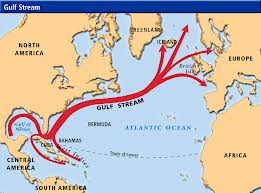
The Gulf Stream is a current that brings warm ocean water from the south to the north.

a)

conduction

b)

convection

c)

radiation

33.

Blow drying your wet hair.

a)

conduction

b)

convection

c)

radiation

34.

Which direction will the heat flow while this person holds a hot cup of tea?

a)

from the cup to her hand

b)

from her hand to the cup

c)

no heat is transferred

35.

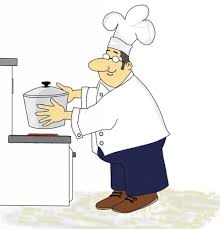
The man goes to take the hot pot off the stove with his bare hands.

a)

conduction

b)

convection

c)

radiation

36.

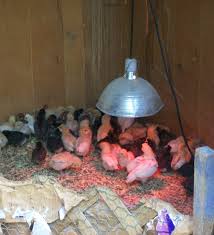
The baby chickens are kept warm from the heat lamps.

a)

conduction

b)

convection

c)

radiation

37.

The chocolate bunny and the lamp.

a)

conduction

b)

convection

c)

radiation

38.

What heat transfer happens when you burn your hand by touching a fire?

a)

Radiation

b)

Conduction

c)

Convectio

d)

I don't know!!!!!!!!!!!

39.

What kind of heat transfer happens when the sun is heating your body?

a)

Conduction

b)

Radiation

c)

Convection

d)

Density

40.
Warm air is __________ dense than cold air and rises creating convection currents.
a)
more
b)
less
41.
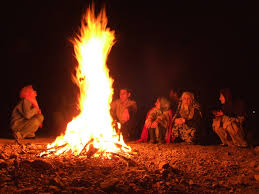
A group of friends gather around a fire to stay warm.
a)
conduction
b)
convection
c)
radiation
42.
Transfer of thermal energy through "space"
a)
conduction
b)
convection
c)
radiation
43.

After cooking an egg in boiling water, you cool the egg by putting it into a bowl of cold water. Which of the following explains the egg's cooling process?

a)

Temperature is transferred from the egg to the water.

b)

Energy is transferred from the water to the egg.

c)

Energy is transferred from the egg to the water.

d)

Cold moves from the water into the egg.

44.

If you put a metal spoon and a wooden spoon into a pot of boiling water, one will become too hot to touch. Why?

a)

Metals conduct heat better than wood.

b)

Wood conducts heat better than metals.

c)

Metals pull in heat because heat is attracted to metals.

d)

Wood isn't as strong as metals.

45.
Molecules in cold things move more _________
than in hot things.
a)
quickly
b)
slowly
c)
happily
d)
merrily
46.

How many kinds of heat transfer are there?

a)

1

b)

2

c)

3

d)

4 or more

47.

A toaster toasting bread is an example of

a)

condensation

b)

conductio

c)

convection

d)

radiation

48.

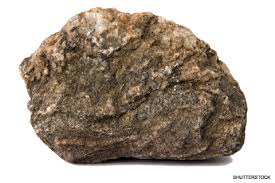
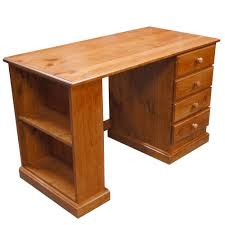
This is an example of a(n)

a)

conductor of heat

b)

insulator

49.
What type of material makes the best insulators?
a)
Aluminum
b)
Copper
c)
Styrofoam
d)
Metal
50.
Which is the most effective thermal conductor?
a)
gas
b)
liquid
c)
plasma
d)
solid
51.
What is a conductor you might find in your kitchen?
a)
Wood cutting boards
b)
Rubber handles
c)
Metal spoons
d)
Wooden spoons
52.

What is Specific Heat?

a)

The amount of thermal energy required to increase the temperature of 1kg of a material by 1°C.

b)

The amount of radiant energy required to increase the temperature of 1kgof a material by 1°C

c)

The amount of energy required to increase the temperature of 1kgof a material by 1°C.

d)

The amount of friction required to increase the temperature of 1kgof a material by 1°C.

53.

The specific heat is the amount of energy needed to raise the temperature one degree Celsius of a substance.

a)

True

b)

False

54.

What would be the effect on the particles if more heat is supplied to the system?

a)

They would slow down

b)

They would stop moving

c)

They would speed up

d)

There would be no effect

55.
How does heat flow?
a)
Always from cold to warm
b)
Always from warm to cold
c)
Both warm to cold & cold to warm
d)
It depends on the temperature
56.
The amount of energy required to raise the temperature 1ºC for every kilogram is called____?
a)
Thermal Energy
b)
Specific Heat
c)
Temperature
d)
Kinetic Energy
57.

A high specific heat means...

a)

It heats up quickly with energy added

b)

It requires more energy to change temperature

58.

What has particularly high specific heat?

a)

Water

b)

Gases

c)

Metals

d)

Poptarts

59.
At higher temperatures
a)
particles in an object have less energy
b)
particles in an object move faster
c)
a gas contracts
60.
A gas
a)
has a definite shape but no definite volume
b)
has a definite volume but no definite shape
c)
has fast-moving particles
61.
Freezing
a)
Solid to gas
b)
Liquid to solid
c)
Gas to solid
d)
Liquid to gas
62.
Which state of matter has tightly packed molecules?
a)
solid
b)
liquid
c)
gas
63.
Which state of matter has a definite shape?
a)
solid
b)
liquid
c)
gas
64.
Define a liquid.
a)
Indefinite shape, indefinite volume
b)
Definite shape, definite volume
c)
Found in stars
d)
Definite volume, indefinite shape
65.
The state of matter that has no definite size or shape is
a)
Solid
b)
Liquid
c)
Gas
66.
Particles (molecules) in a ______________________ have more energy than the other states of matter.
a)
gas
b)
solid
c)
liquid
67.
Particles of a liquid
a)
are tightly packed together and stay in a fixed position.
b)
have no viscosity.
c)
decrease in volume with increasing temperature.
d)
are free to move around one another but still touch.
68.
What term describes a solid changing to a gas?
a)
Deposition
b)
Sublimation
c)
Evaporation
d)
Freezing
69.
Particles (molecules) in a ______________________ have more energy than the other states of matter.
a)
gas
b)
solid
c)
liquid
70.
What is condensation?
a)
gas to solid
b)
gas to liquid
c)
liquid to solid 
d)
solid to liquid 
71.
The speed of the molecules determines the _____.
a)
volume
b)
density
c)
pressure
d)
temperature
72.
Which has a greater distance between particles?
a)
Solid
b)
Liquid
73.
The slower the particles in a substance move,
a)
the colder it is.
b)
the warmer it is.
c)
the more energy it has.
d)
the less energy it has.
74.
Thermal energy is...
a)
heat energy.
b)
the energy of motion
c)
energy of nuclear processes.
d)
an indication of physical change.
75.
What are the states of matter?
a)
solid, liquid, and juice
b)
solid and liquid
c)
solid and gas
d)
solid, liquid, and gas
76.
Which form of matter fills the space like it has in the balloon?
a)
liquid
b)
string
c)
solid
d)
gas
77.
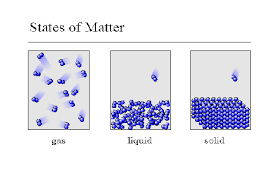
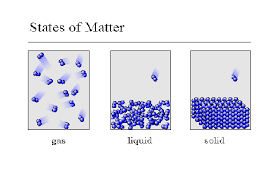
The molecules in the picture are tightly held together with little movement. They have shape and energy.  Therefore, the picture represents _________.
a)
solid
b)
liquid
c)
gas
d)
plasma
78.
When the temperature of matter increases the particles...
a)
speed up and move closer
b)
speed up and move farther apart
c)
slow down and move closer together
d)
slow down and move farther apart
79.
When the temperature of matter decreases the particles ...
a)
speed up and move farther apart
b)
speed up and move closer together
c)
slow down and move farther apart
d)
slow down and move closer together
80.
What does this picture represent? 
a)
solid
b)
liquid
c)
gas
d)
plasma
81.
How do you change a solid chocolate bar to liquid chocolate?
a)
By freezing it
b)
heat energy
c)
light energy
82.
The steam coming off the pot of boiling water is an example of....
a)
a solid becoming a liquid
b)
a liquid becoming a solid
c)
a liquid becoming a gas
d)
a gas becoming a liquid
83.
What happens when my glass of water is sitting in the sun and disappears into a gas?
a)
evaporation
b)
burning
c)
melting
d)
freezing
84.
When does condensation happen?
a)
solid to liquid
b)
liquid to gas
c)
gas to liquid
d)
solid to gas
85.
When does evaporation happen?
a)
gas to liquid
b)
liquid to solid
c)
solid to liquid
d)
liquid to gas
86.
What is happening at water melting point?
a)
liquid to gas
b)
solid to liquid
c)
gas to liquid
d)
liquid to soild
87.
4. If the atoms of an object are moving or vibrating slow, the object would feel...
a)
Cold
b)
Hot
c)
Unknown
88.
3. If the atoms of an object are moving or vibrating fast, the temperature would be...
a)
Hot
b)
Cold
c)
Unknown
89.
What is Thermal expansion?
a)
The transfer of thermal energy between materials by the collisions of particles 
b)
Is a decrease in a materials volume when temperature decreases 
c)
An increase in a materials volume when temperature increases
d)
Chicken fried rice
90.
Many objects, such as train tracks and road joints, are specifically designed to allow extra space for ...
a)
thermal energy
b)
specific heat
c)
thermal expansion
d)
conductors
91.
Objects gain heat and _________. 
a)
expand
b)
contract
92.
The liquid in the thermometer rises when it is placed in the hot water because ___________. 
a)
it gains heat from the hot water and expands.
b)
loses heat from the hot water and contracts. 
c)
the surrounding air is too warm. 
d)
the liquid is boiling. 
93.
When objects contract upon cooling...
a)
volume increases and density increases.
b)
volume increases and density decreases.
c)
volume decreases and density decreases.
d)
volume decreases and density increases.
94.

Which is NOT a way to transfer heat?

a)

Conduction

b)

Convection

c)

Radiation

d)

These are ALL ways to transfer heat

95.

Which of the following is an example of CONDUCTION?

a)

Feeling the heat from the sun

b)

Your hand warming from touching a hot spoon

c)

Different temperatures of air circulating in a current

d)

None of the above

96.

What are the 3 temperature scales?

a)

Kelvin, Pascal, Newton

b)

Celsius, Fahrenheit, Newton

c)

Fahrenheit, Kelvin, Celsius

d)

Pascal, Celsius, Kelvin

97.
State of matter where atoms barely move, but rather vibrate in place
a)
solid
b)
liquid
c)
gas
d)
plasma