
 Worksheets
Human Body Systems
Total questions: 54
Worksheet time: 35mins
Name
Class
Date
1.
The main purpose of the ____________ system is to break food particles into pieces that can be used.
a)
circulatory
b)
respiratory
c)
digestive
d)
skeletal
2.
What is responsible for delivering oxygen and removing carbon dioxide from the body?
a)
cell nucleus
b)
excretory system
c)
nervous tissue
d)
respiratory system
3.
The __________ is the main organ of the nervous system.
a)
heart
b)
lungs
c)
brain
d)
skin
4.
When tissues come together, they form ___________.
a)
cells
b)
atoms
c)
organs
d)
systems
5.
In multicellular organisms, tissues are comprised of _______.
a)
organs
b)
systems
c)
cells
d)
blood
6.
Which of the following body systems work together for support, protection, and movement?
a)
respiratory and cardiovascular
b)
skeletal and muscular
c)
skeletal and integumentary
d)
digestive and respiratory
7.

My spinal cord helps _________ travel between my brain and the nerves in my body.
a)
Memories
b)
Blood
c)
Waste
d)
Messages
8.
What is the body system that sends and recieves electrical signals from the brain?
a)
Skeletal System
b)
Nervous System
c)
Muscular System
d)
Digestive System
9.
What system receives oxygen and gets rid of carbon dioxide?
a)
Heart
b)
Muscular System
c)
Veins
d)
Respiratory System
10.
Digested food is absorbed in the_______.
a)
colon
b)
large intestine
c)
small intestine
d)
stomach
11.
The muscular organ that pumps blood through out your body is your _________
a)
diaphragm
b)
heart
c)
larynx
d)
pharynx
12.
The aorta is the largest artery in the body. The blood leaving the aorta is full of?
a)
Oxygen
b)
Carbon Dioxide
c)
White blood Cells
d)
Potassium
13.
Which is the correct definition of the Circulatory system?
a)
The system fights disease so the body stays healthy.
b)
The system that circulates blood and oxygen through the body, consisting of the heart,blood vessels,and blood.
c)
Breaks down food into smaller pieces and absorbs those nutrients into the body.
d)
Provides shape and structure for the body.
14.
What is the main function of the artery?
a)
It controls your brain and your thought process.
b)
They carry oxygen- poor blood BACK to the heart.
c)
Arteries carry oxygen- rich blood AWAY from the heart.
d)
It receives information (senses) and sends messages to the body about how to react to things.
15.
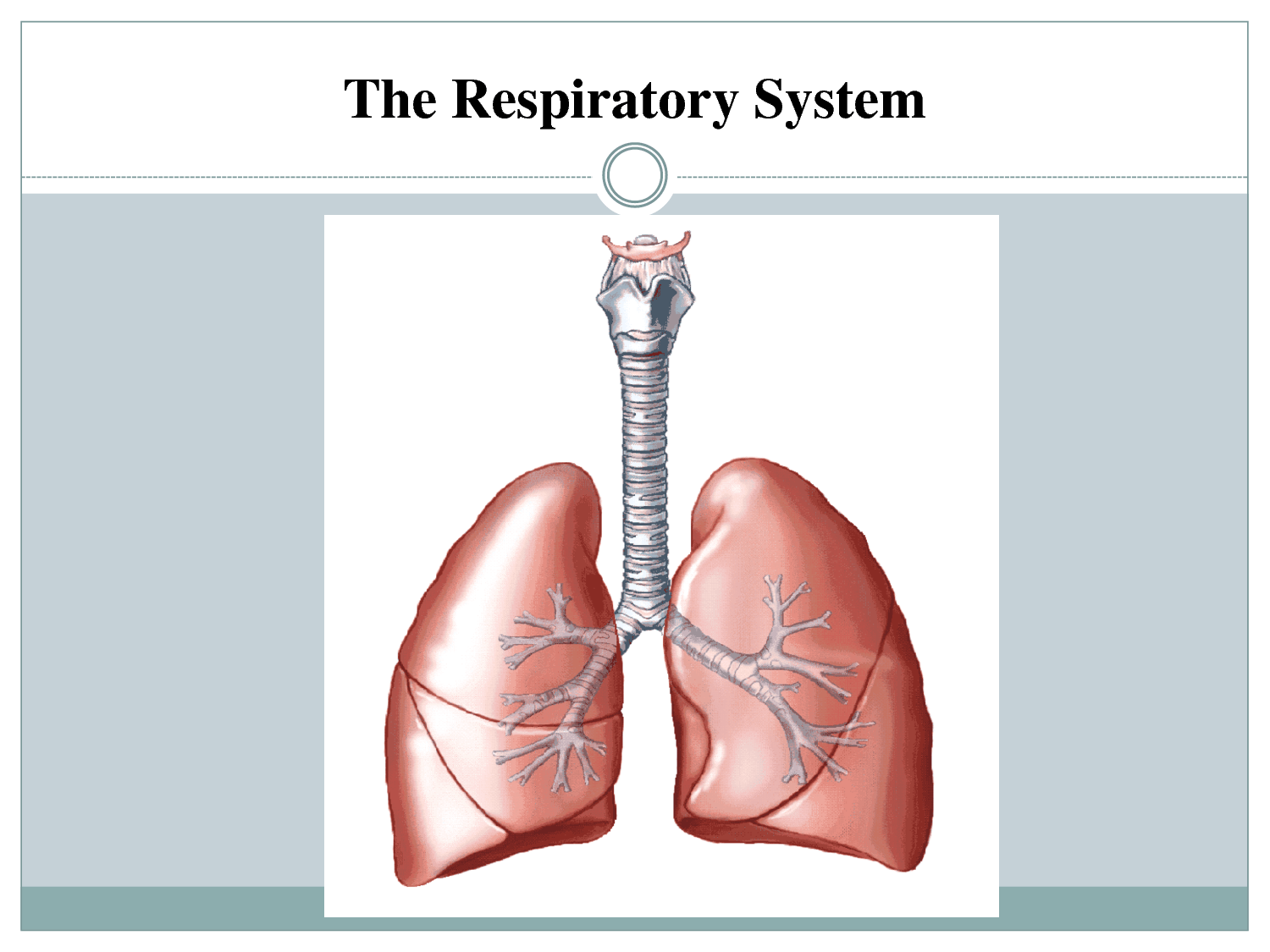
What is the main function of the respiratory system?
a)
to provide oxygen and remove carbon dioxide from the body
b)
to bring oxygen to the body
c)
to break down food and absorb nutrients
d)
to remove oxygen from the body and deliver carbon dioxide
16.
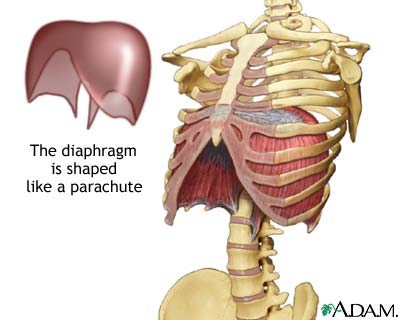
What is function of the dome-shaped diaphragm?
a)
This is where gas exchange happens.
b)
Air passes through the diaphragm on the way to the lungs.
c)
It attaches to the lungs to help in breathing.
d)
It is under the lungs and keeps them from falling down to your stomach.
17.
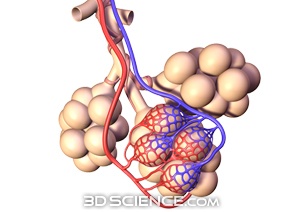
When you breathe, your lungs take in ___ and remove ___.
a)
air/oxygen
b)
oxygen/carbon dioxide
c)
carbon dioxide/waste
d)
waste/air
18.
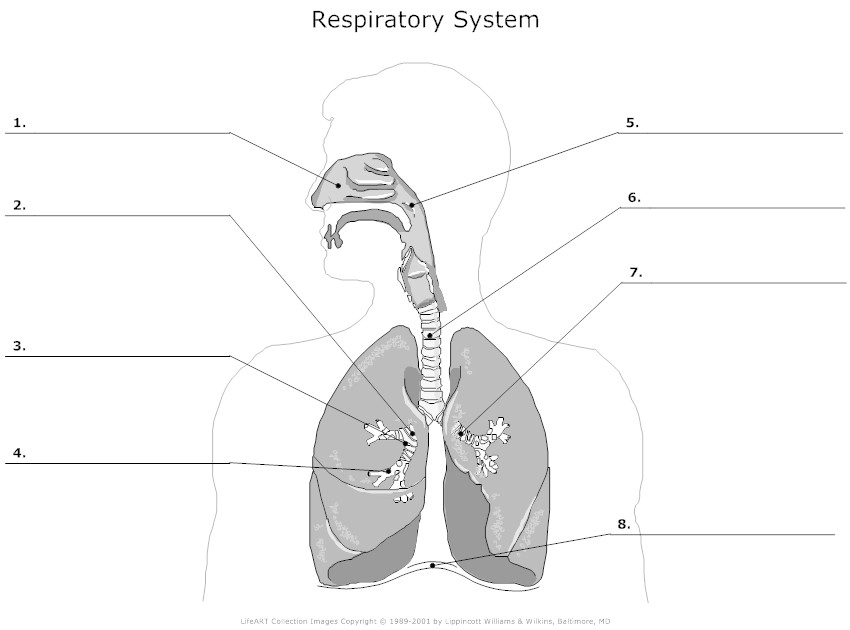
Name the organ label # 6.
a)
alveoli
b)
bronchi
c)
trachea
d)
lungs
19.
What are the 3 types of muscle tissue?
a)
Thigh, Calf, & Shoulder
b)
Traps, Forearm, & Abs
c)
Hamstring, Biceps, & Triceps
d)
Smooth Muscle, Cardiac Muscle, & Skeletal Muscle
20.
Which muscle type is found in your stomach, bladder, and intestines?
a)
Skeletal
b)
Smooth
c)
Cardiac
d)
Straight
21.
Which type of muscle is found in your heart?
a)
Skeletal
b)
Smooth
c)
Cardiac
d)
Straight
22.
Which muscles are involuntary?
a)
skeletal
b)
cardiac
c)
smooth
d)
smooth and cardiac
23.

The chewing and grinding of food into smaller pieces is an example of...
a)
Mechanical Digestion
b)
Chemical Digestion
24.

Nutrients from digested food are absorbed in which digestive organ?
a)
Small Intestine
b)
Stomach
c)
Large Intestine
d)
Gallbladder
25.

Which organ pushes food down to the stomach?
a)
Mouth
b)
Esophagus
c)
Rectum
d)
Large intestine
26.

As waste moves through the digestive system, the ______ absorbs water before storing waste in the rectum.
a)
Small intestine
b)
Stomach
c)
Esophagus
d)
Large intestine
27.
Which is NOT a function of the Digestive System?
a)
To rid the body of solid waste
b)
Absorb nutrients for energy & growth
c)
Break down nutrients from food
d)
Pump blood around the body
28.
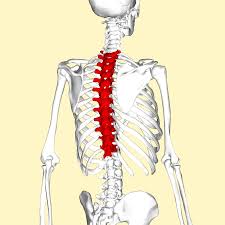
The bones in your back are made up of what?
a)
fingers
b)
phalanges
c)
vertebrate
d)
toes
29.

What is the place where two bones meet?
a)
hinge
b)
bone
c)
spot
d)
joint
30.

What is the name for the connector that attaches muscle to bone?
a)
ligament
b)
tendon
c)
patella
d)
string
31.

What is the name for the connector that attaches bone to bone?
a)
ligament
b)
tendon
c)
patella
d)
string
32.
The adult skeletal system is composed of how many bones?
a)
216
b)
371
c)
206
d)
199
33.
From wrist to fingertip, what is the order of bones?
a)
Carpals, metacarpals, phalanges
b)
Phalanges, metacarpals, carpals
c)
Carpals, phalanges, metacarpals
d)
Metacarpals, carpals, phalanges
34.
What two things are found in the central nervous system?
a)
brain/spinal cord
b)
spinal cord/motor neurons
c)
motor/sensory neurons
d)
only brain
35.
The spinal cord is protected by the _____?
a)
vertebrae
b)
skull
c)
lungs
d)
rib cage
36.
The nervous system is made of these three parts:
a)
Brain, Spinal Cord, and Nerves
b)
Brain,Tendons, and Ligaments
c)
Brain, Heart and Lungs
d)
Spinal Cord, Vertebrae and nerves
37.
Which part of the body is the control center?
a)
brain
b)
spinal cord
c)
nerve endings
d)
vertebrae
38.
Which part of the body is like a highway for sending messages?
a)
Blood
b)
Spinal Cord
c)
Atrium
d)
Ventricle
39.
Which of the following is the smallest unit of life that can carry out all life functions?
a)
the mitochondria
b)
the vacuoles
c)
the nucleus
d)
the cell
40.
Which cell structure is found in plant and animals cells and controls what can come into or leave a cell?
a)
cell membrane
b)
cytoplasm
c)
nucleus
d)
vacuole
41.
What is the function of the cell nucleus found in both plant and animal cells?
a)
to produce energy
b)
to control cell activity
c)
to remove waste products
d)
to allow molecules to enter the cell
42.
What is one basic function of the vacuoles?
a)
circulating oxygen
b)
producing food
c)
controlling cell processes
d)
storing water
43.
What two systems work together to get nutrients out of food and get them to the rest of your body?
a)
Digestive & circulatory
b)
Skeletal & muscular
c)
Integumentary & nervous
d)
Respiratory & circulatory
44.
What two systems work together to allow you to stand and move?
a)
Digestive & circulatory
b)
Skeletal & muscular
c)
Integumentary & nervous
d)
Respiratory & circulatory
45.
What two systems work together to help you take a test by thinking and using your pencil?
a)
Skeletal & muscular
b)
Reproductive & excretory
c)
Nervous & muscular
d)
Respiratory & circulatory
46.
The function of this system is to protect internal organs. The marrow found here produces red blood cells.
a)
Skeletal
b)
Muscular
c)
Circulatory
d)
Respiratory
47.
How do the Nervous and Digestive System work together?
a)
The Nervous System tells the Digestive System what to do.
b)
The Digestive System tells the Nervous System when you are hungry.
c)
The brain controls how fast/slow you digest your food and tells you when you are hungry/full.
d)
The Nervous System is part of the Digestive System.
48.
Which system works with the Skeletal system to give nutrients to the bones?
a)
Nervous System
b)
Digestive System
c)
Muscular System
d)
None of the above
49.
Choose the best example of how the Muscular System and Digestive System work together:
a)
Our muscles need our digestive system to work correctly.
b)
These systems don't work together.
c)
The muscles in the esophagus push the food down and the stomach muscles churn up the food.
d)
The muscles in the stomach send food to our muscles.
50.
How does the muscular system depend on the nervous system?
a)
The nervous system transports blood to the muscles.
b)
The nervous system provides support for the muscles.
c)
The nervous system supplies food and oxygen to the muscles.
d)
The nervous system sends signals to the muscles to cause movement.
51.
How does the circulatory system work with the digestive system?
a)
Blood is used to build muscle strength.
b)
Food is broken down in the bloodstream
c)
Blood carries nutrients throughout the body.
d)
Food waste is filtered by the heart and blood vessels.
52.
Which best compares the respiratory system to the circulatory system?
a)
The respiratory system transports oxygen to cells, while the circulatory system provides oxygen for cells.
b)
The respiratory system provides oxygen for cells, while the circulatory system transports oxygen to cells.
c)
The respiratory system breaks down food for cell energy, while the circulatory system rids the body of waste.
d)
The respiratory system rids the body of waste, while the circulatory system breaks down food for cell energy.
53.
Which best describes the relationship between the cardiovascular system and the muscular system?
a)
The cardiovascular system captures carbon dioxide from the air for muscle energy.
b)
The cardiovascular system produces red blood cells to bring oxygen to muscles.
c)
The cardiovascular system provides a framework for muscle movement.
d)
The cardiovascular system delivers oxygen for muscle energy.
54.
Which best explains how the muscular system relies on the respiratory system?
a)
The respiratory system cools the muscular system.
b)
The respiratory system acts as the support system for the muscular system.
c)
The respiratory system brings oxygen into the body for the muscular system to use.
d)
The respiratory system provides nutrients for the body to use as fuel.
100 %

