Wayground logo

Free Printable Worksheets

Font size

S
M
L
XL
Worksheets

Spring Final Review

Total questions: 123

Worksheet time: 2hrs 56mins
Name
Class
Date
1.
Who is the father of evolution?
a)
Darwin
b)
Mendel
c)
Newton
d)
Einstein
2.
What is another name for natural selection?
a)
survival of the smartest
b)
survival of the fastest
c)
survival of the biggest
d)
survival of the fittest
3.
What is a change in an organism that allows for it to survive in its environment?
a)
homologous
b)
vestigial
c)
variation
d)
adaptation
4.
When all of the organisms of a species have died it is called
a)
evolution
b)
extinction
c)
adaptation
d)
natural selection
5.
What is the study of organisms at the early stages of development?
a)
DNA studies
b)
embryology 
c)
extinction
d)
fossil record
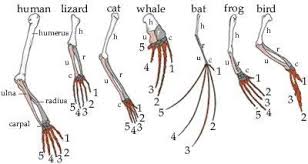
6.
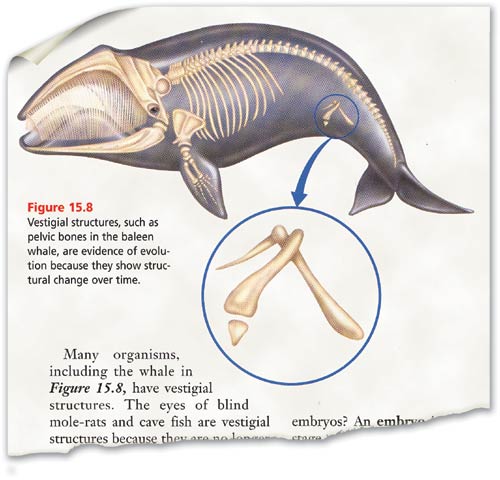
What is this an example of?
a)
vestigial structures
b)
embryology
c)
homologous structures
d)
fossil record
7.
Which layer is the oldest?
a)
1
b)
2
c)
3
d)
4
8.
When the DNA of an organism is altered it is referred to as…
a)
Mutation
b)
Gene Flow
c)
Genetic Drift
d)
Sexual Selection
9.

When individuals choose traits possessed by the opposite sex and increase genetic variation, it is called…

a)

Mutation

b)

Gene Flow

c)

Genetic Drift

d)

Sexual Selection

10.
The cause of artificial selection is…
a)
The environment
b)
Humans
c)
Mutation
d)
Gene Flow
11.

The environment around Manchester, England, changed during the Industrial Revolution. How did this change affect peppered moths living in the area?

a)

Natural selection favored moths with dark wings because predators could not see them on the soot-colored trees.

b)

Natural selection favored moths with white wings that were easy for predators to see.

c)

Natural selection favored moths with white wings because predators could not see them on the soot-colored trees.

d)

Natural selection caused moths with dark wings to become extinct.
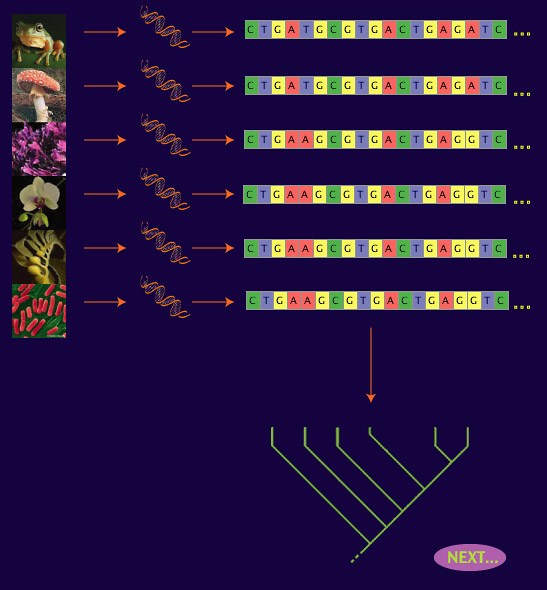
12.
Two organisms that are closely related would have
a)
very similar DNA sequence
b)
exactly the same DNA sequences
c)
no proteins in common
d)
completely different DNA sequence
13.
A remnant or trace of an organism from the past is called a _______.
a)
Ancestor
b)
Skeleton
c)
Fossil
d)
Imprints
14.
Which of the following is an example of a vestigial structure?
a)
the wings of a red-tailed hawk
b)
the hind limbs of a house cat
c)
the fins of sharks
d)
the tailbone of a human
15.
Which of the following is a term for a group of similar organisms that can reproduce fertile offspring?
a)
individual
b)
population
c)
species
d)
fossil
16.
Why are advantageous traits more likely to be passed onto offspring?
a)
Because they are more likely to survive and reproduce.
b)
Because they come from dominant alleles.
c)
Because they come from recessive alleles.
d)
Because the trait is an acquired phenotype.
17.
Genetic differences between organisms of the same species
a)
Variation
b)
Adaptation
c)
Behavior
d)
Environment
18.
The struggle for existence against other members of an organisms species is
a)
Competition
b)
Natural Selection
c)
gene flow
d)
genetic drift
19.
A well-tested concept that explains a wide range of observations is called a(an):
a)
hypothesis
b)
experiment
c)
cause and effect
d)
scientific theory
20.
All rabbits living in a particular area would be an example of a(n)
a)
population
b)
species
c)
fossil
d)
individual organism
21.
In natural selection, the selective agent is the
a)
humans
b)
mutations
c)
breeders
d)
environment
22.

What is suggested by the anatomical similarity of different species of vertebrates?

a)

no evolutionary relationships between the groups

b)

recent common ancestry

c)

similar environments in the past

d)

evolution from a distant common ancestor

23.
what did Charles Darwin observe in finch populations of the Galapagos Islands off the coast of South America?
a)
different species on different islands
b)
all species on one of the islands
c)
identical species on all the islands
d)
the same species as North America
24.

The evolution of two or more species that is due to mutual influence, often in a way that makes the relationship more mutually beneficial.

a)

Adaptation

b)

Biogenesis

c)

Coevolution

d)

Analogous structures

25.

The process by which two or more related but reproductively isolated populations become more and more dissimilar.

a)

Adaptation

b)

Convergent evolution

c)

Coevolution

d)

Divergent evolution

26.

The process by which unrelated species become more similar as they adapt to the same kind of environment.

a)

Coevolution

b)

Convergent evolution

c)

Divergent evolution

d)

Adaptation

27.
What are the main principles to the theory of Natural Selection?
a)
Adaptation, Decent with Modification, Reproduction, Underproduction
b)
Adaptation, Variation, Descent with Modification, Overproduction
c)
Adaptation, Reproduction, Similarities, Overproduction
28.
Genetic drift is change in the allele frequency of a population due to...
a)
random chance
b)
natural selection
c)
non-random mating (sexual selection)
d)
artificial selection
29.
 Genetic Drift is more likely to happen in... 
a)
aquatic populations
b)
small populations
c)
terrestrial populations
d)
older populations
30.
This mechanism of evolution occurs when populations migrate.
a)
Extinction
b)
Gene flow
c)
Genetic drift
d)
Natural Selection
31.

The reduced genetic diversity that results when a population is descended from a small number of colonizing ancestor that interbreed.

a)

Natural selection

b)

Genetic bottleneck

c)

Founder effect

32.

A catastrophe kills many individuals in a population, leaving a small number of individuals to interbreed. These individuals may have different genes than the original population.

a)

Natural selection

b)

Genetic bottleneck

c)

Founder effect

33.
The point in which an area cannot hold any more individuals in an area is called its what?
a)
carrying capacity
b)
capital capacity
c)
carrying capability
d)
limiting point
34.
What type of growth model is this?
a)
exponential growth model
b)
logistic growth model
c)
Type I curve
d)
Type III curve
35.
What is the characteristic shape of a curve illustrating logistic growth?
a)
A. J-shaped
b)
B. U-shaped
c)
C. S-shaped
d)
D. L-shaped
36.
____________ & _________________ are organelles that definitely arose from endosymbiosis.
a)
Rough ER & Smooth ER
b)
Mitochondria & Flagellum
c)
Chloroplast & Mitochondria
d)
Chloroplast and Golgi apparatus
37.

____________________ evolve, not individuals.

a)

People

b)

Ecosystems

c)

Biomes

d)

Population

38.
What do viruses need to reproduce?
a)
they need genetic material
b)
They need a host cell
c)
They need  bacteria
d)
They need insulin
39.
What part of a virus is the protein capsule that houses the genetic material (DNA/RNA)?
a)
tail
b)
nucleus
c)
capsid
d)
glycoprotein
40.
Which viral life cycle allows viral genetic material to lay dormant while the host cell reproduces?
a)
lytic
b)
mitosis
c)
lysogenic
d)
S phase
41.

What do the projections on the outside of a virus do?

a)

Attach to a cell

b)

Push the cell farther away

c)

Explode upon entry to the cell

d)

for decoration

42.
To treat genetic diseases, viruses are used to transport replacement genes to the problematic human tissue. What part of the life cycle of a virus would make them well adapted at the function of entering a cell’s nucleus and replacing genes?
a)
 Viruses contain the genetic code (DNA or RNA) which they are able to insert into a host cell’s genome.
b)
In the lytic cycle, a virus will rapidly destroy the host cell.
c)
Viruses do not have their own machinery to reproduce apart from the host.
d)
Viruses have the ability to escape the human immune system
43.
What is the difference in the function of the glycoprotein structures of an HIV virion and the cilia of an animal cell?
a)
 The glycoprotein structures are used for attachment, and the cilia are used to move fluids surrounding the cell.
b)
The glycoprotein structures are used to obtain nutrition, and the cilia are used to secrete proteins.
c)
The glycoprotein structures are used to provide physical support for the viral envelope, and the cilia strengthen the cell membrane.
d)
The glycoprotein structures are used for defense, and the cilia are used for locomotion.
44.
A person infected with the human immunodeficiency virus (HIV) may not have any symptoms for a period of time. During this period the virus affects the body by doing which of the following?
a)
 The virus produces toxins that weaken immune cells and prevent them from reproducing.
b)
The virus damages immune cells while using their machinery to produce copies of itself.
c)
 The virus uses nutrients meant for immune cells to fuel its own cellular respiration.
d)
The virus changes the identity of the nucleotides of immune cells to prevent the immune system from functioning normally.
45.
Enveloped viruses carry surface receptors called
a)
buds
b)
spikes
c)
fibers
d)
sheaths
46.

A pathogen is an infectious disease-causing agent.

a)

true

b)

false

47.
Small, infectious agent that only can replicate inside the cells of a living organism.
a)
virus
b)
bacteria
48.

Vaccines contain weakened or dead parts of the virus.

a)

True

b)

False

49.

Vaccinations are an example of

a)

Passive immunity

b)

Acquired immunity

c)

Inherited immunity

d)

Resistant Immunity

50.

Vaccinations stimulate the body to produce large amounts of

a)

red blood cells

b)

hemaglobin

c)

phagocytes for that virus

d)

antibodies for that virus

51.

Four ways that bacteria are helpful to people.

a)

Provide oxygen, food products, environmental recycling, medicine.

b)

Provide carbon dioxide, food products, environmental recycling, medicine.

c)

Provide oxygen, waste products, environmental recycling, medicine.

d)

Provide oxygen, food products, environmental recycling.

52.

A process by which bacteria reproduce asexually

a)

binary fission

b)

conjugation

c)

endospore

d)

pasteurization

53.

Organisms that break down large, complex chemicals in dead organisms into small, simple chemicals.

a)

conjugation

b)

endospore

c)

pasteurization

d)

decomposers

54.

A process by which bacteria reproduce asexually

a)

conjugation

b)

endospore

c)

pasteurization

d)

decomposers

55.

Tiny single-celled organisms that live almost everywhere

a)

bacteria

b)

cytoplasm

c)

ribosomes

d)

flagellum

56.

A whip-like structure thet helps a bacterial cell to move

a)

ribosomes

b)

flagellum

c)

cellular respiration

d)

binary fission

57.
What process is this?
a)
phagocytosis
b)
lytic cycle
c)
lysogenic cycle
d)
formation of antibodies
58.
What is this a picture of?
a)
Nitrogen cycle
b)
carbon cycle
c)
water cycle
d)
plant cycle
59.
Which process takes Carbon Dioxide from the air and converts it into a form of carbon used by living things?
a)
Precipitation
b)
Photosynthesis
c)
Respiration
d)
Bioremdiation
60.
When nitrogen gas is turned in to a form that plants and animals can use is called 
a)
Combustion
b)
Photosynthesis
c)
Decomposition
d)
Nitrogen Fixation
61.
The nitrogen found in the atmosphere is not in a form that plants or animals can use.  What converts it into a usable form?
a)
Bacteria
b)
Photosynthesis
c)
Decomposition of organisms
d)
Fungi
62.
Identify the cycle pictured.
a)
The Water cycle
b)
The Carbon cycle
c)
The Nitrogen cycle
d)
This is not a correct diagram of any cycle.
63.
Which process moves carbon stored in fossil fuel into the atmosphere?
a)
When fossil fuels are burned, carbon enters the atmosphere as carbon dioxide.
b)
The denitrifying bacteria turns the fossil fuel into carbon dioxide gas.
c)
Decomposers convert the fossil fuels into greenhouse gases like carbon dioxide.
d)
The fossil fuels react with the soil to produce carbonates and carbon dioxide.
64.
Which of the following shows the levels of organization of an organism from LEAST to MOST complex.
a)
cells-tissues-systems-organs
b)
organs-cells-systems-tissues
c)
systems-organs-tissues-cells
d)
cells-tissues-organs-systems
65.
Homeostasis
a)
allows for a wildly fluctuating internal environment
b)
is impossible in vertebrates
c)
is the maintenance of a relatively stable internal environment and often incorporates a form of feedback regulation
d)
is the maintenance of a relatively stable external environment and often incorporates a form of feedback regulation
66.
Homeostasis in the human body is often maintained by a: 
a)
neutral feedback loop 
b)
solar feedback loop
c)
positive feedback loop
d)
negative feedback loop
67.

Regulation and maintenance of the internal environment

a)

Homeostasis

b)

Determination

c)

Action Potential

d)

Differentiation

68.

What part of the neuron receives incoming messages?

a)

Dendrite

b)

Cell Body

c)

Axon

d)

Axon Terminal

69.
Which of the following is the body’s first line of defense against disease?
a)
vaccines
b)
white blood cells
c)
antibodies
d)
skin
70.
Nutrients from digested food are absorbed in which digestive organ?
a)
Small Intestine
b)
Stomach
c)
Large Intestine
d)
Gallbladder
71.
Which of the following features of the villi increase surface area?
I. Microvilli of the epithelial cells
II. Capillary network inside the villus
III. Coiling of the small intestine inside the body
a)
I only
b)
I and II
c)
I, II and III
d)
I and III
72.

The process of taking up nutrients in your body

a)

digestion

b)

absorption

c)

regulation

d)

excretion

73.
An organism that produces its own food supply from inorganic compounds is called a(an)
a)
heterotroph
b)
consumer
c)
detritivore
d)
autotroph
74.
What is the term for each step in the transfer of energy and matter within a biological community?
a)
energy path
b)
food web
c)
trophic level
d)
food pyramid
75.
symbiotic relationship in which both organisms benefit
a)
competition
b)
Mutualism
c)
nitrogen fixation
d)
energy pyramid
76.
which symbiosis is this 
a)
parasitism 
b)
mutualism
c)
commensalism
d)
nonalism 
77.
What does a food web represent?
a)
All connections of energy flow throughout all organisms in a habitat.
b)
The specific ways that mutualism is carried out.
c)
A single pathway or energy flow between organisms. 
d)
How carnivores get their food. 
78.
The amount of energy that usually transfers from one trophic level to the next...
a)
10%
b)
20%
c)
80%
d)
50%
79.
Which of the following would be the definition of a detritivore?
a)
Animals that eat insects.
b)
Organisms that feed on rocks, recycling the nutrients back into the ground.
c)
Organisms that eat only pants
d)
Things that feed on dead organisms, recycling the nutrients back into the ground.
80.
A collection of organisms that make up a community as well as all of the nonliving aspects of the environment.
a)
Population
b)
Community
c)
Habitat
d)
Ecosystem
81.
The general name for organisms like animals and fungi that get their energy from eating other organisms.
a)
Producers
b)
Consumers
c)
Detritivores
d)
Carnivores
82.
Which of the following organisms are typical decomposers?
a)
grasses and ferns
b)
bacteria and mushrooms
c)
mice and deer
d)
lions and snakes
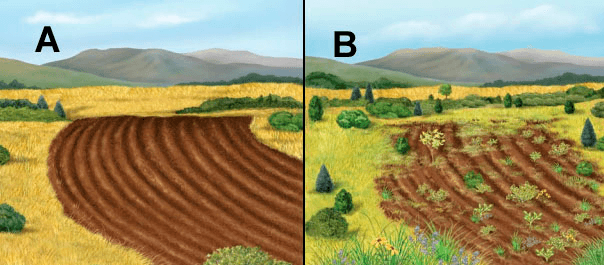
83.
What type of succession is shown going from figure A to figure B?
a)
primary succession
b)
ecological succession
c)
secondary succession
d)
intermediate
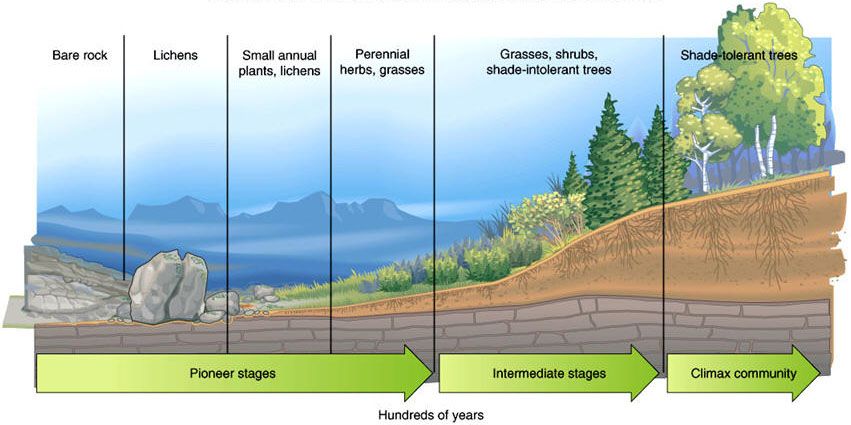
84.
The picture shows what type of succession?
a)
primary
b)
secondary
c)
tertiary
d)
quadanary
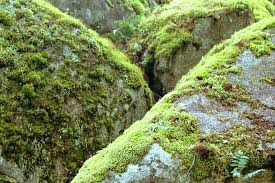
85.
What are examples of pioneer species in a primary succession?
a)
Bushes and Shrubs
b)
Oak trees
c)
Mossess and Lichens 
d)
A rose Bush
86.
the first organisms that appear in an ecological community
a)
ecological succession 
b)
primary succession 
c)
secondary succession
d)
pioneer species
87.
Which biome, because of its climate, has the largest number of species of plants and animals?
a)
tundra
b)
desert
c)
tropical rainforest
d)
pine forest
88.
Which major biome is home to cacti, mesquite, white thorn, pack rats, small reptiles, and coyotes?
a)
desert
b)
taiga
c)
tundra
d)
grassland
89.
Which biome contains large populations of grazing herbivores, few species of birds, and deep, rich soil?
a)
taiga
b)
tundra
c)
deciduous forest
d)
grassland
90.
What  anchor plants to the ground and absorb water and nutrients?
a)
Roots
b)
Stem
c)
Xylem
d)
Leaves
91.
What is the tissue that is used to transport necessary materials throughout the plant?
a)
Circulatory tissue
b)
Transport tissue
c)
Vascular tissue
d)
Pathway tissue
92.
Which of the following statements best describes xylem's function in the plant?
a)
transpports water and minerals up from the roots to the rest of the plant
b)
transports food down from the leaves to the rest of the plant
c)
transports water and minerals down from the roots to the rest of the plant
d)
transports food up from the leaves to the rest of the plant
93.
Which of the following statements best describes phloem's function in the plant?
a)
transpports water and minerals up from the roots to the rest of the plant
b)
transports food down from the leaves to the rest of the plant
c)
transports water and minerals down from the roots to the rest of the plant
d)
transports food up from the leaves to the rest of the plant
94.
What part of the male part of the flower makes pollen?
a)
Ovary
b)
Anther
c)
Filament
d)
Stigma
95.
What is the part of the flower that is brightly colored to attract pollinators?
a)
Petals
b)
Stamen
c)
Pistil
d)
Sepals
96.
What part of the female part of the flower is the place that holds the eggs?
a)
Ovary
b)
Style
c)
Filament
d)
Stigma
97.
What organelle in the leaves of plants capture light energy from the sun to complete photosynthesis?
a)
Chloroplasts
b)
Mitochondria
c)
Nucleus
d)
Ribosomes
98.
What is the waxy layer on leaves?
a)
Chloroplasts
b)
Plastic
c)
Wax
d)
Cuticle
99.
Examine this seed. Would you expect it to produce a dicot or monocot plant?
a)
monocot
b)
dicot
c)
Neither
d)
Cotyledon
100.
Examine this seed. Would you expect it to produce a dicot or monocot plant?
a)
monocot
b)
dicot
c)
Corn
d)
WI Fast Plant
101.
Plants with seeds in cones are called?
a)
gymnosperms
b)
angiosperms
c)
flowers
d)
mosses
102.

What is the largest group of gymnosperms?

a)

conifers

b)

spruce

c)

cedars

d)

deciduous

103.
Where do angiosperms produce their seeds?
a)
pollen
b)
cones
c)
flowers
104.
What word describes when water is attracted to other substances?
a)
cohesion
b)
adhesion
c)
capillary action
d)
surface tension
105.
Water's tendency to stick to itself is called...
a)
cohesion
b)
adhesion
c)
surface tension
d)
capillary action
106.
The scientific name for an organism is made from the:
a)
class and family name
b)
genus and species name
c)
domain and kingdom name
d)
kingdom and phylum name
107.
The 8 levels of classification, most broad to most specific.
a)
Domain, Genus, Family, Order, Class, Phylum, Kingdom, Species
b)
Domain, Species, Kingdom, Genus, Phylum, Family, Class, Order
c)
Domain, Kingdom, Phylum, Class, Order, Family, Genus, Species
d)
Order, Kingdom, Species, Domain, Phylum, Family, Class, Genus
108.
Who first proposed binomial nomenclature as a way of classifying organisms?
a)
Carl Linnaeus
b)
Carl's Jr.
c)
Charles Darwin
d)
Henry Groseclose
109.
Cells that do not have a true nucleus are called....
a)
eukaryote
b)
prokaryote
c)
unicellular
d)
multicellular
110.
Which 2 organisms have the fewest characteristics in common?
a)
2 organisms in the same kingdom
b)
2 organisms in the same genus
c)
2 organisms in the same species
d)
2 organisms in the same family
111.
Members of this kingdom are multicellular and heterotrophic.
a)
Plantae
b)
Protista
c)
Animalia
d)
Achaebacteria
112.
I am prokaryotic and am found everywhere. What kingdom do I belong to?
a)
Eubacteria
b)
Archaebacteria
c)
Fungi
d)
Protista
113.
This organism is multicellular, heterotroph, that has a cell wall made of chitin.  What kingdom does it belong in?
a)
fungi
b)
plantae
c)
animalia
d)
eubacteria
114.
This organism is found in pond water.  It has a nucleus, is microscopic, unicellular and can perform photosynthesis.  What kingdom does it belong in?
a)
protista
b)
eubacteria
c)
archaebacteria
d)
plantae
115.
The taxon with the largest amount of organisms grouped together...
a)
Species
b)
Phylum
c)
Kingdom
d)
Domain
116.
Which scientific name is written correctly?
a)
Okapia Johnstoni
b)
Carcharodon carcharias
c)
balaenoptera Musculus
d)
panthera leo
117.
Name this protist?
a)
Amoeba
b)
Euglena
c)
Paramecium 
d)
Volvox
118.
Fine hairs that allow protist to move is called what? 
a)
Pseudopods 
b)
Euglena 
c)
Flagella 
d)
Cilia 
119.
What type of cells are protists?
a)
Prokaryotic 
b)
Eukaryoitc 
120.
Many protists, particularly flagellates, use a _________ to regulate how much water they have in their cell.
a)
contractile vacuole
b)
food vacuole
c)
gullet
d)
mitochondria
121.
How are prokaryotes and eukaryotes different?
a)
prokaryotes are larger
b)
eukaryotes have a nucleus
c)
eukaryotes are simpler
d)
prokaryotes are more complex
122.
What is a major characteristics of Archaebacteria?
a)
Multicellular, prokaryotic organisms
b)
Unicellular, eukaryotic organisms
c)
Live in extreme environments
d)
Cell walls made of peptidoglycan
123.
Which of the following types of bacteria live in salty environments?
a)
Halophiles
b)
Methanogens
c)
Oceanaophiles
d)
Themoacidophiles