
 Worksheets
Biomolecules and Their Monomers
Total questions: 128
Worksheet time: 3hrs 49mins
A monosaccharide is the monomer for which biomolecule:
Lipid
Carbohydrate
Nucleic Acid
Protein
Which biomolecule has amino acids as their monomer?
Carbohydrate
Nucleic acid
lipid
protein
Select the biomolecules that contain the elements C,H,O
Lipid
Protein
Carbohydrate
Nucleic acid
C,H,O,N,P are the elements in
Nucleic acid
Protein
Carbohydrate
Lipid
Match the following functions to the biomolecule
Act as hormones
Lipid
Build muscle
Protein
Carry genetic information
Nucleic acid
Energy source (cellular respiration)
Carbohydrate
Which among the following correctly describes lipids?
it is soluble with water
it is insoluble with water
all forms of lipids are bad for the health
its monomer is amino acid
What is the monomer of a carbohydrate called?
Fatty Acids & Glycerol
Nucleotides
Amino Acids
Monosaccharides
What are the building blocks of larger molecules called?
Monomers
Legos
Megablocks
Polymers
What are lipids?
Fats
Sugar
Protein
DNA
What are nucleic acids?
Fats
Sugar
Protein
DNA
Tiny membrane-bound structures inside a cell that function like organs of a body are called....
cell wall
cell membrane
organelle
organ

What kind of cell is in the diagram?
Eukaryotic, Animal
Prokaryotic
Eukaryotic, Plant
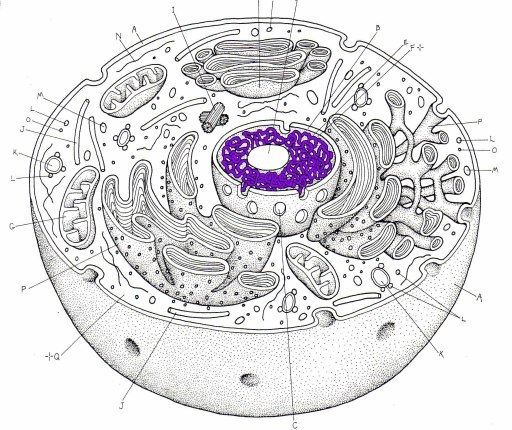
What kind of cell is in the diagram?
Eukaryotic, Animal
Prokaryotic
Eukaryotic, Plant
which statement below about cells is true?
all things are composed of cells
all cells come from other cells
all cells have a cell nucleus
all cells contain organs and tissues
in multicellular organisms, groups of cells that work together are called
cytoplasm
organelles
nuclei
tissues
The densely packed area of a cell that has the DNA and controls the cell's activities.
Chloroplast
Golgi Bodies
Nucleus
Mitochondria

What is the order of organization within living things?
Cells, tissues, organs, organ systems, organism
Tissues, cells, organs, organ systems, organism
Organism, cells, tissues, organs, organ systems
Organism, organ systems, cells, tissues, organs


Both Unicellular and Multicellular organisms...
have chloroplasts.
have nuclei.
have DNA.
reproduce asexually.

The 3 parts of the Cell Theory are...?
All living things are composed of cells
Cells are the basic units of structure and function in living things
All cells are produced from other cells
All living things are composed of cells
Cells are the basic units of dance and vibes in living things
All cells are destroyed from other aliens
All living things are composed of Jell-O
Cells are the basic units of structure and function in living things
All cells are produced from factories in Canada
All living things are composed of cells
Cells do karate and practice eating whole pies in their free time
All cells are produced from other cells
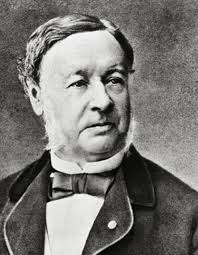



Robert Hooke
Matthias Schleiden

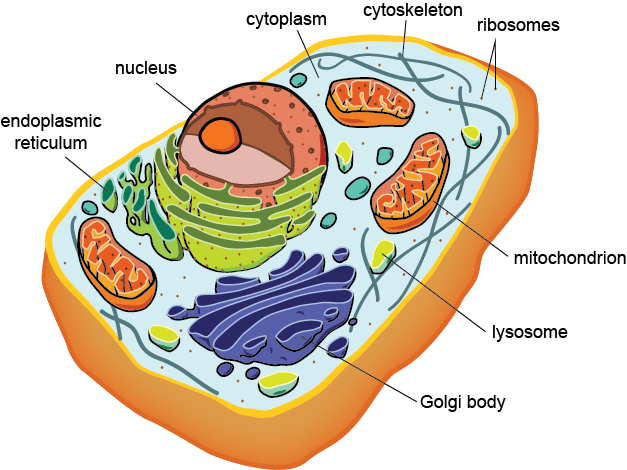
The purple organelle in photo depicts which organelle?
Nucleus
Endoplasmic Reticulum
Lysosome
Ribosome

Identify the structure that is indicated by the arrow in the image.
cell wall
central vacuole
chloroplast
cell membrane
This organelle is responsible for disposing of waste in the cell.
Mitochondria
Nucleus
Cell Wall
Lysosome
Which organelle serves as an internal transport system, and can be either "rough" or "smooth"?
Nucleus
Mitochondria
Cell Wall
Endoplasmic Reticulum
Which organelle makes proteins?
Mitochondria
Chloroplast
Ribosome
Lysosome
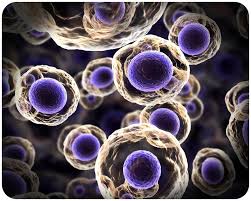

What is the function of the cell membrane?
To control what comes in and out of the cell
To break down food inside the cell
to serve as a barrier
to eat the cells food

Which organelle produces the energy a cell needs to carry out its function
Mitochondria
Golgi Bodies
Cytoplasm
Nucleus

Which organelle receives proteins and materials from the ER, packages them and distributes them
Vacuoles
Golgi Bodies
Nucleus
Chromatin

what is the function of ribosomes
to assemble amino acids to create proteins
to pack proteins
to clean proteins

The control center of cell is
the nucleus
ribosomes
chromatin

E. coli (a bacteria) is an example of a...
Prokaryote
Eukaryote
Both
Neither
PROKARYOTIC cells do NOT have
membrane bound organelles
cell membrane
DNA
ribosomes
The condition where an organism's internal environment is kept stable in spite of the changes in the external environment.
Mitochondria
Metabolism
Cell wall
Homeostasis
The main function of the cell is to...
Give your eyes color
Produce heat
Make proteins
Cells have no function, they are just building blocks
Proteins are important because...
They help build more cells and tissues
They transport nutrients in and out of cells
They act as enzymes to speed up reactions
They send signals as hormones
All of the above AND MORE

Which organelle is NOT paired with the correct number from the picture?
1- Golgi Apparatus
2- Mitochondria
3-Chloroplast
4-Endoplasmic Reticulum

Label organelle 1.
a.
b.
c.
d.
Label organelle 1.
a.
b.
c.
d.

Label organelle 2.
i.
j.
k.
l.

Label organelle 3.
i.
j.
k.
l.

Label organelle 4.
e.
f.
g.
h.

Label organelle 5.
a.
b.
c.
d.

Label organelle 6.
e.
f.
g.
h.

Label organelle 7.
i.
j.
k.
l.

Label organelle 8.
i.
j.
k.
l.

Label organelle 9.
c.
d.
e.
f.

Label organelle 10.
a.
b.
c.
d.

Label organelle 11.
e.
f.
g.
h.

Label organelle 12.
e.
f.
g.
h.
Which of the following organelles are only found in plants. Click all correct answers.
Cytoplasm
Chloroplast
Cell Wall
Large Vacuole
Cell Membrane
What are the small functional parts of the cell called?
Organs
Cellulite
Organelles
Nucleus
True or false. All living things are made of cells.
True
False
Sometimes yes sometimes no

Letter A.
cell wall
Cell membrane
cytoplasm

Letter B.
Cell wall
Cell membrane
Cytoplasm

Letter D.
Cytoplasm
Lysosome
Vacuole

Letter F.
Chloroplast
Mitochondria
Cytoplasm

Letter H.
Chloroplast
Mitochondria
Cytoplasm
What is the substance in plant's leaves that helps with photosynthesis?
sepel
chlorophyll
stomata
stem
What part of the plant is where photosynthesis occurs?
stems
flower
leaves
roots
In addition to light, which of the following do plants need to undergo photosynthesis?
oxygen
dirt
carbon dioxide
nitrogen
One of the products of photosynthesis is?
carbon dioxide
water
minerals
sugar
What are the products in the photosynthesis reaction?
sugar and water
carbon dioxide and sugar
oxygen and carbon dioxide
oxygen and sugar
If plants breathe in carbon dioxide, what do they breathe out?
Nitrogen
Oxygen
Carbon dioxide
Hydrogen
What is the compound that plants use to absorb the energy from light?
Carbon dioxide
Nitrogen
DNA
Chlorophyll
What color is chlorophyll?
Blue
Green
Yellow
Red
Fill in the equation for photosynthesis:
(a) + Water -- (b) --> (c) + Glucose
Match the following parts of the cell to their functions:
Green pigment that absorbs light energy
Chlorophyll
Space in the chloroplast where the Calvin Cycle occurs
Stroma
Membrane in the chloroplast where light reactions occur
Thylakoids
Organelle responsible for photosynthesis in plants
Chloroplast
Photosynthesis is broken down into two parts - first the (a) create ATP and NADPH. Second the (b) uses carbon dioxide to make (c) .
Fill in the chemical equation for photosynthesis:
(a) (b) (c)
What organelle is responsible for photosynthesis?
mitochondria
chloroplast
ribosomes
cytoplasm

Nucleus control center of the cell
Selectively Permeable golgi apparatus
Non Permeable membrane

Simple Diffusion
Facilitated diffusion

A solution is considered hypotonic to the cell if it has....
A lower amount of water compared to the cell.
A higher amount of solute compared to the cell.
A lower amount of solute compared to the cell.
A solution is considered hypertonic to the cell if it has....
A higher amount of water compared to the cell.
A higher amount of solute compared to the cell.
A lower amount of solute compared to the cell.
Simple Diffusion
When molecules passively cross the plasma membrane through the phospholipid bilayer
Facilitated Diffusion
When molecules passively cross the plasma membrane through a channel protein
Osmosis
The movement of water across the cell membrane
Endocytosis
Bringing in large materials through the cell membrane into a vacuole.
Exocytosis
Moving larger amounts or large quantities of materials through the cell membrane
Hypertonic
The solution contains a high concentration of solute an and low concentration of water
Hypotonic
The solution contains a low concentration of solute an and high concentration of water
Isotonic
The solution has an equal concentration of solute and water compared to the inside of the cell
What are the products of cellular respiration? Choose 3.
water
ATP
Oxygen
Sunlight
Carbon Dioxide
The process in which a cell harvests energy from glucose and makes it into usable energy for the body is called-----
cellular fermentation
anaerobic respiration
aerobic fermentaion
cellular respiration
Cellular respiration occurs in
chloroplasts
mitochondria
golgi aparatus
thylakoid
A plant's goal for photosynthesis is to:
make food (glucose)
make carbon dioxide
make oxygen
make water

What are the reactants of cellular respiration? (Mark all of them!)
oxygen
glucose
carbon dioxide
water
energy
What are the products of cellular respiration? (Mark all of them!)
oxygen
glucose
carbon dioxide
water
energy
What is cell differentiation?
Process by which cells produce MORE cells.
Process by which cells become UNSPECIALIZED
Process by with cells become SPECIALIZED
Process by which cells become old and DIE
Stem cells are cells that...
grow uncontrollably
are undifferentiated
never divide

