wayground logo

Free Printable Worksheets

Font size

S
M
L
XL
Worksheets

Spring Final Exam Review

Total questions: 110

Worksheet time: 6hrs 9mins

Name
Class
Date
1.
What is the molar mass of Bromine?
a)
79 g/mol
b)
80 g/mol
c)
79.90 g/mol
d)
79.0 g/mol
2.
Which is the correct molar mass for the compound CaBr2?
a)
120 g/mol
b)
200 moles
c)
240 grams
d)
200 g/mole
3.
What is the mass of 4 moles of calcium chloride?
a)
0.0360 grams
b)
302.1 grams
c)
443.9 grams
d)
0.0530 grams
4.
Which term is used to describe the percent by mass of any element in a compound?
a)
hydrate
b)
molecular formula
c)
percent composition
d)
empirical formula
5.
Which term is used to describe the lowest whole-number ratio of elements in a compound?
a)
hydrate
b)
molecular formula
c)
percent composition
d)
empirical formula
6.
The name of a hydrate is copper (II) chloride hexahydrate. What is the formula?
a)
CuCl2∘6H2O
b)
CuCl∘6H2O
c)
6CuCl2∘H2O
d)
6CuCl∘H2O
7.
What is the percent composition of phosphorous in Zn3(PO4)2?
a)
16.1%
b)
9.66%
c)
50.1%
d)
24.01%
8.
Find the formula for the compound that contains 72.40% iron and 27.60% oxygen.
a)
FeO
b)
Fe2O3
c)
Fe3O4
d)
FeO2
9.
Calculate the number of atoms in 13.2 mol Copper.
a)
2.19 x 10²³ atoms
b)
7.95 x 1024 atoms
c)
7.95 x 10-23 atoms
d)
79.5 x 1023 atoms
10.
Determine the mass in grams of 0.0489 mol Cobalt?
a)
0.00812 g
b)
0.294 g
c)
2.88 g
d)
0.000830 g
11.
How many moles of potassium contain 3.70 x 1023 atoms of potassium?
a)
0.615 x 1024 mol
b)
0.615 x 1023 mol
c)
0.615 mol
d)
22.3 mol
12.
How many molecules are in 3.6 grams of NaCl?
a)
0.06
b)
1.0 x 1021
c)
1.3 x 1026
d)
3.7 x 1022
13.
What is the mass in grams of 1.02 x 1024 atoms of manganese?
a)
0.112 x 101
b)
0.169 x 101
c)
9.30 x 10-1
d)
9.30 x 101
14.
A 60.00g sample of tetraethyl lead, a gasoline additive, is found to contain 38.43g lead, 17.83g carbon, and 3.74g hydrogen.  Find its empirical formula.
a)
PbCH
b)
Pb2C8H10
c)
PbC8H20
d)
PbC4H10
15.
Determine the molecular formula of a compound with an empirical formula of NH2 and a molecular formula mass of 32.06 g/mol.
a)
NH2
b)
N2H4
c)
N3H6
d)
N4H8
16.
You have a gas that has a pressure of 2 ATM and a volume of 10L.  What would be the new volume if the pressure was changed to 1 ATM?
a)
5 L
b)
20 L
c)
It would stay at 10L
d)
1 L
17.
What is 50 C in Kelvin?
a)
223
b)
323
c)
100
d)
50
18.
At room temperature and pressure, what volume would 14g of nitrogen gas occupy?
a)
14 L
b)
24 L
c)
48 L
d)
12 L
19.
At standard temperature and pressure, I have 48L of hydrogen gas. How many moles of gas do I have?
a)
0.5
b)
1
c)
2
d)
4
20.
A sample of an ideal gas containing 0.954 mol is collected at 742 torr pressure and 31°C. Calculate the volume. 
a)
22.4 L
b)
24.4 L
c)
0.224 L
d)
0.222 L
21.
What is the temperature of natural gas in an oil pipeline if we know there are 0.91 moles of the gas in the pipeline and the volume of the pipeline is 5.43 L and the gas is exerting a pressure of 4.21 atm?
R = 
0.082  (L x atm) / (K x mol)
a)
306 °C
b)
579.4 °C
c)
33.4 °C
d)
- 19.3 °C
22.
If 200 mL of a gas at 27°C is cooled to -33°C at a constant pressure, the volume will be
a)
250 mL
b)
204 mL
c)
196 mL
d)
160 mL
23.
A 2.7L sample of nitrogen is collected at 1.19 atm and 288 K. If the volume decreases to 1.70L and the temperature lowers to 197 K, what will the pressure be?
a)
4.3 atm
b)
1.3 atm
c)
131 atm
d)
141 atm
24.
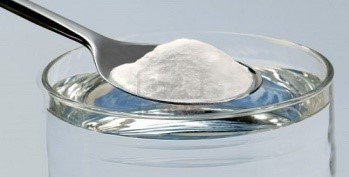
In this mixture, which of the following will be the solute?
a)
The water in the glass
b)
The glass that holds the final mixture
c)
The solution containing both powder and water
d)
The powder on the spoon
25.
If we are making Kool-aid with sugar, Kool-aid powder, and water, which part is the solvent?
a)
water
b)
powder
c)
sugar
d)
powder and sugar
26.
What is the molarity of 4 g of NaCl (MM=58.45) in 3,800 mL of solution?
a)
0.018 M
b)
0.0011 M
c)
1.052 M
d)
0.062 M
27.
How many grams of solute are dissolved in 125.0 mL of 5.00 M NaCl (MM = 58.45)?
a)
0.625 g NaCl
b)
625 g NaCl
c)
36.5 g NaCl
d)
0.04 mol NaCl
28.
Find the molarity of 186.55 g of sucrose, C12H22O11 (MM = 342) in 250 mL of water.
a)
2.18 M
b)
0.746 M
c)
1.18 M
d)
0.545 M
29.
Contains the maximum amount of dissolved solute
a)
unsaturated solution
b)
supersaturated solution
c)
saturated solution
30.
pH less than 7.
a)
Acids
b)
Bases
c)
All
31.
pH greater than 7.
a)
Acids
b)
Bases
c)
All
32.
The pH scale is based off of the concentration of _________ ions.
a)
Oxygen
b)
Hydrogen
c)
Nitrogen
d)
None of the others
33.
What does it mean to be "Soluble" ?
a)
Capable of being a solid.
b)
To have soul.
c)
Capable of being dissolved.
d)
To sink.
34.
What is the hydrogen ion concentration if the [OH-] = 1 x 10⁻⁹ M?
a)
1 x 10⁻⁵ M
b)
1 x10-23 M
c)
100000 M
d)
1 x10⁵ M
35.
What is the pH of a 0.111 M nitric acid solution?
a)
9.01 x 10⁻¹⁴ 
b)
13.0
c)
0.955
d)
0.111
36.
What is the pOH of a 0.956M sodium hydroxide solution?
a)
13.9
b)
1.05 x 10⁻¹⁴
c)
.0195
d)
9.56 x 10¹⁴
37.
What is the hydrogen ion concentration of a solution with a pH of 4.64?
a)
2.16 x 10⁻¹⁵M
b)
4.64 x 10¹⁴M
c)
4.64 x 10⁻¹⁴M
d)
2.29 x 10⁻⁵M
38.
2 liquids that can be mixed together but separate shortly after
a)
immiscible
b)
insoluble
c)
miscible
d)
soluble
39.
A mixture containing particles that settle out if left undisturbed
a)
colloid
b)
solute
c)
solvent
d)
suspension
40.
What is the conjugate acid in the following equation?
a)
PO43- 
b)
HNO3 
c)
NO3- 
d)
HPO42-
41.
What is the conjugate base in the following reaction?
a)
HCO3- 
b)
HCl
c)
 H2CO3 
d)
Cl-
42.
What type of reaction is the equation C + O→ CO2?
a)
Synthesis Reaction
b)
Decomposition Reaction
c)
Single Displacement Reaction
d)
Double Displacement Reaction
43.
Cu + 2Ag(NO3) → 2Ag + Cu(NO3)
a)
Synthesis Reaction
b)
Decomposition Reaction
c)
Single Displacement Reaction
d)
Double Displacement Reaction
44.
What type of reaction is the equation 2NaCl →2Na +Cl2?
a)
Synthesis Reaction
b)
Decomposition Reaction
c)
Single Displacement Reaction
d)
Double Displacement Reaction
45.
Ca3(PO4)2 + 3 H2SO4 + 3 CaSO4 + 2 H3(PO4)
a)
Synthesis Reaction
b)
Decomposition Reaction
c)
Single Displacement Reaction
d)
Double Displacement Reaction
46.
Consider the equation 4 Fe+3 O2 → 2 Fe2O3 . In this equation, 3 O2 is a
a)
product
b)
reactant
c)
compound
47.
The ____________ is the ratio of the actual yield to the theoretical yield that demonstrates the efficiency of the reaction.
a)
theoretical yield
b)
percent yield
c)
actual yield
d)
product
48.
Using the reaction below, determine the percent yield of H2 if you reacted 36.0 g of water with excess iron. The actual yield is 3.60 g H2.
3Fe +  4H2 Fe3O4 + 4 H2
a)
112%
b)
89.1%
c)
49.9%
d)
0.891%
49.
Which is the correct mole ratio of K3PO4 to KNO3 in the chemical reaction:
Mg(NO3)2 + K3PO→ Mg3(PO4)2 + KNO3
a)
1:1
b)
2:3
c)
1:3
d)
1:2
50.
The _____________ limits the amount of product formed in a chemical reaction.
a)
excess reactant
b)
limiting reactant
c)
products
d)
balanced chemical equation
51.
A reaction was predicted to produce 32.4 grams of a compound. When the product was measured, there were only 26.1 grams made. What is the percent yield?
a)
80.6%
b)
6.3%
c)
24.1%
d)
58.5%
52.
How many moles of KBr will be produced from 7 moles of BaBr2?
BaBr2 + K2SO4 → KBr + BaSO4
a)
1 mole KBr
b)
7 moles KBr
c)
14 moles KBr
d)
3.5 moles KBr
53.
The __________ is the measured amount of product obtained from a reaction.
a)
percent yield
b)
theoretical yield
c)
actual yield
d)
product
54.
What conversion factor do you need for the following conversion:
2 H2 + O2 → 2 H2O
2.6 g Hx (1÷2.02 g H2) x (____÷____) = 1.29 moles H2O
a)
2 mol H2 ÷ 2 mol H2O
b)
2 mol H2O ÷ 2 mol H2
c)
1 mol H2O ÷ 2 mol H2
d)
2 mol H2O ÷1 mol H2
55.
How many grams of bromine are required to react completely with 37.4 grams aluminum chloride?
AlCl3 + Br2 → AlBr3 + Cl2
a)
33.6 g
b)
134.5 g
c)
29.9 g
d)
67.2 g
56.
A certain reaction has a 88.6% yield. If 34.6 grams of the product were predicted by stoichiometry to be made, what would the actual yield be?
a)
34.6 g
b)
3066 g
c)
30.6 g
d)
39.1 g
57.
The ____________ is the reactant that is not completely used in a reaction.
a)
excess reactant
b)
limiting reactant
c)
products
d)
balanced chemical equation
58.
How many grams of water are produced when 2.50 mol oxygen reacts with hydrogen?
2 H2 + O2 → 2 H2O
a)
0.277 g
b)
22.5 g
c)
45.0 g
d)
90.0 g
59.
How many grams of Fe3O4 are required to react completely with 300 grams of H2?
Fe3O4 + H2 → Fe +H2O
a)
2096 g
b)
1.54 g
c)
8597 g
d)
37.5 g
60.

Th SI unit of energy

a)

calorie

b)

joule

c)

specific heat

61.

Quantity of heat needed to raise the temperature of 1g of a substance by 1 degree C

a)

a) calorie

b)

b) joule

c)

c) specific heat

62.

The amount of energy that is absorbed or lost by a system as heat during a process at constant pressure

a)

a) enthalpy

b)

b) entropy

c)

c) specific heat

d)

d) energy

63.
What  is the formula to calculate heat energy required to raise the temperature of any substance?
a)
Q=mc∆t
b)
Q=mc
c)
Q= ½mv
d)
m=QC
64.
20 g of water. specific heat of water is 4.18 J/x°C.  temperature changes from 25° C to 20° Chow much heat energy (Q) moves from the water to the surroundings?
a)
418 Joules
b)
209 J
c)
83 J
d)
4.18 J
65.

What makes something a thermochemical equation?

a)

unbalanced equation

b)

an enthalpy change

c)

an entropy change

d)

none of the above

66.

The Greek letter "Δ" stands for

a)

heat stored in

b)

heat of reaction

c)

rate of

d)

change in

67.

In an exothermic process, the system is releasing energy

a)

True

b)

False

68.

In an endothermic reaction, the enthalpy change is

a)

positive

b)

negative

69.
What are properties of acids?
a)
Bitter, slippery, ph above 7
b)
Sour, reacts with metals, ph below 7
c)
Sour, reacts with metals, ph above 7
d)
Bitter, ph of 7, does not react with metals
70.
What are properties of a base?
a)
Slippery, bitter, does not react with metals, pH above 7.
b)
Slippery, bitter, reacts with metals, pH below 7.
c)
Sour, reacts with metals, pH below 7
d)
Sour, reacts with metals, pH above 7.
71.
If an acid is combined with a base of equal strength, the result will most likely be
a)
a neutral solution.
b)
a stronger acid.
c)
impossible to tell without testing the pH.
d)
a stronger base
72.
When dissolved in water, acids produce:
a)
bases
b)
salts
c)
hydrogen ions
d)
hydroxide ions
73.
Explain what happens when a strong acid and a strong base are poured into the same container.
a)
they form separate layers
b)
they mix physically but not chemically
c)
they break apart into separate elements
d)
they react chemically to form a salt
74.
A hydrogen ion, H+, is the same as a(n):
a)
neutron
b)
electron
c)
proton
d)
hydroxide ion
75.
A compound that donates H+ ions is 
a)
A Bronsted-Lowry Acid
b)
An Arrhenius Acid
c)
A Bronsted-Lowry Base
d)
An Arrhenius Base
76.

substances that forms OH- ions when dissolved in water

a)

arrhenius acid

b)

arrhenius base

c)

bronsted lowry acid

d)

bronsted lowry base

77.

substance that accepts H+ ion

a)

arrhenius acid

b)

arrhenius base

c)

bronsted lowry acid

d)

bronsted lowry base

78.

substances that form H+ ions when dissolved in water

a)

arrhenius acid

b)

arrhenius base

c)

bronsted lowry acid

d)

bronsted lowry base

79.
I have 25mL of 1M HCl which neutralises 20mL of NaOH. What is the concentration of the NaOH?
a)
0.8 M
b)
1 M
c)
1.25 M
80.
What is the molarity of a 30 mL HCl which is neutralized by 48 mL of 0.1 M NaOH?
a)
0.16 M
b)
6.25 M
c)
0.063 M
81.

A solution that can donate only 1 proton

a)

monoprotic

b)

diprotic

c)

triprotic

d)

polyprotic

82.
We will always use _________ Temperature scale when working with gases.
a)
Celsius
b)
Fahrenheit
c)
Kelvin
d)
Below Zero
83.
What is standard temperature and pressure?
a)
273 K,
1 atm
b)
0 K,
760 atm
c)
32 K,
101.3 atm
d)
-237 K,
1 atm
84.

Gas particles colliding with each other and the walls of the container they're kept in is called

a)

Pressure

b)

Temperature

c)

Volume

d)

Red Rover 2.0

85.

A 1.50 L balloon is moved from a temperature of 210.0K to a temperature of 400.0K. What is its new volume?

a)

2.86 L

b)

0.788 L

c)

1.27 L

d)

400 K? the balloon definitely already popped

86.

A 4.2 L beach ball at 1 atm is brought to the bottom of a pool where the pressure is 1.75 atm. What is the new volume of the beach ball?

a)

2.4 L

b)

0.42 L

c)

7.35 L

d)

4.2 L

87.
As pressure increases, temperature ____.
a)
Increases
b)
Decreases
c)
Stays the same
d)
Fluctuates
88.
Gases have...
a)
A definite shape and volume
b)
A definite shape but no definite volume
c)
No definite shape but a definite volume
d)
No definite shape or volume
89.
A 1-Liter flask contains He, O2, Ne and Ar gases at a total pressure of 100 atmospheres. Given the partial pressures of three of the gases below, what is the partial pressure for Ar?
•He: 25 atm
•Ne: 10 atm
•O2: 50 atm
•Ar: ??? atm
a)
85 atm
b)
185 atm
c)
40 atm
d)
15 atm
90.

Which gas will diffuse the fastest?

a)

Ar

b)

Cl2

c)

O2

d)

NH3

91.
What is the mass in grams of 5.90 mol C8H18?
a)
.0512 g
b)
19.4 g
c)
673 g
d)
389 g
92.
How many molecules are in 84.0 g of C5H5N?
a)
4.00 x 1027 molecules
b)
6.40 x 10²³ molecules
c)
1.10 x 10⁻²⁰ molecules
d)
5.06 x 1025 molecules
93.
Find the percentage composition of  Mg in Mg3(PO4)2.
   

a)
27.75% Mg
b)
23.57% Mg
c)
48.68% Mg
d)
13.45% Mg
94.
Find the empirical formula for the compound that contains 72.40% iron and 27.60% oxygen.
a)
FeO
b)
Fe2O3
c)
Fe3O4
d)
FeO2
95.
Determine the molecular formula of a compound with an empirical formula of NH2 and a molecular formula mass of 32.06 g/mol.
a)
NH2
b)
N2H4
c)
N3H6
d)
N4H8
96.
Which of the following describes a colloid?
a)
mixture of 2 different phases of matter
b)
mixture of the same phases of matter
c)
acts like a solid and a liquid
d)
none of the above
97.
What is point A?
a)
triple point
b)
critical point
c)
equilibrium point
d)
normal melting point
98.
What state of matter is Z?
a)
solid 
b)
liquid
c)
gas
d)
supercritical fluid
99.
What state of matter is Y?
a)
solid 
b)
liquid
c)
gas
d)
supercritical fluid
100.
What state of matter is X?
a)
solid 
b)
liquid
c)
gas
d)
supercritical fluid
101.
What is point B?
a)
triple point
b)
critical point
c)
equilibrium point
d)
normal melting point
102.
What change occurs from F to E?
a)
sublimation
b)
deposition
c)
melting
d)
condensation
103.
What change occurs from E to C?
a)
sublimation
b)
freezing
c)
melting
d)
boiling
104.
What change occurs from C to D?
a)
condensation
b)
vaporization
c)
melting
d)
sublimation
105.

Which of these changes of state requires energy? (endothermic)

a)

freezing

b)

deposition

c)

condensation

d)

melting

106.

Which of these changes of state will give off energy? (exothermic)

a)

condensation

b)

sublimation

c)

vaporization

d)

melting

107.
What is the molality of a solution containing 1.3 mol in 13.4 kg of solution?
a)
9.7 m
b)
17.42 m
c)
0.097 m
108.
How many moles of NaCl are present in a solution with a molarity of 8.59M and 125 mL of solution?
a)
1.07 gram
b)
62.7 mol
c)
1.07 mol
d)
62.7 grams
109.
Which of the following does not affect solvation?
a)
agitation
b)
surface area
c)
temperature
d)
density
110.
When using "like dissolves like", you are looking at what similarity in solvent and solute?
a)
mass
b)
energy
c)
polarity
d)
state of matter