
 Worksheets
EOY Review
Total questions: 126
Worksheet time: 2hrs 37mins
Name
Class
Date
1.
What is the material that allows light to pass through called?
a)
Refract
b)
Transparent
c)
Opaque
d)
Translucent
2.
When light waves bounce off an object, they _______.
a)
Reflect
b)
Absorb
c)
Refract
d)
Shadow
3.
What is created when an object blocks light?
a)
Reflect
b)
Refract
c)
Absorb
d)
Shadow
4.
To take in light is to ______ it.
a)
Absorb
b)
Refract
c)
Reflect
d)
Shadow
5.
What is an object called when it lets some light through but scatters it in many directions?
a)
Transparent
b)
Translucent
c)
Opaque
d)
Absorb
6.
What is a form of energy that you see?
a)
Light
b)
Shadow
c)
Lens
d)
Prism
7.
Which material best absorbs sound waves in a room?
a)
Heavy curtains
b)
Hardwood floors
c)
Brick walls
d)
Cement floors
8.
How high or low a sound is
a)
volume
b)
pitch
c)
frequency
d)
transparency
9.
The loudness of a sound
a)
pitch
b)
volume
c)
frequency
d)
reflection
10.
Which of the following objects is translucent?
a)
tree limb
b)
wax paper
c)
glass window
11.
What happens to light when it strikes a prism?
a)
It is heated
b)
It is straightened
c)
It is refracted
d)
It is absorbed
12.

The moon is a natural ______ of Earth.
a)
comet
b)
axis
c)
satellite
d)
space probe
13.

Earth and the other planets closest to the Sun are made mostly of _______
a)
gas
b)
metal
c)
water
d)
rock
14.

Earth's ________ on its axis causes day and night.
a)
rotation
b)
revolution
c)
phase
d)
comet
15.

One full orbit of an object around another object is called a ________.
a)
axis
b)
rotation
c)
revolution
d)
satellite
16.

The __________ has planets, moons, comets, and asteroids.
a)
solar system
b)
earth
c)
rotation
d)
United States
17.
One of the main differences between the outer and inner planets is __________.
a)
The inner planets all have water
b)
the inner planets are much bigger than the outer planets
c)
the outer planets are gas planets
d)
the outer planets have rings, and the inner planets don't
18.
Which outer planets have rings?
a)
Just Saturn
b)
Saturn and Jupiter
c)
Jupiter, Neptune, and Saturn
d)
all 4 of them
19.
Which planet has the smallest pull of gravity?
a)
Saturn
b)
Jupiter
c)
Neptune
d)
Mercury
20.
Which is the largest object in our solar system?
a)
Sun
b)
Jupiter
c)
Earth
d)
Pluto
21.
What holds the moon, the planets, and all other objects in orbit around the sun?
a)
ocean tides
b)
magnetism
c)
gravity
d)
the sun's heat and light
22.
which model of the solar system has the sun in the center with all of the planets orbiting it?
a)
heliocentric
b)
geocentric
23.

Which season is taking place in the Northern Hemisphere in Position 3?
a)
Winter
b)
Spring
c)
Summer
d)
Fall
24.

Which season is taking place in the Northern Hemisphere in Position 4?
a)
Winter
b)
Spring
c)
Summer
d)
Fall
25.
The Earth's axis is tilted _____ degrees.
a)
23.5
b)
25.3
c)
30.2
d)
24
26.
The term equinox means....
a)
equal amount of day light and equal amount of night
b)
Equal amount of winter and summer
c)
Equal amounts of hot dogs for everyone
d)
The longest day of the year
27.
What do June 21 and December 21 have in common?
a)
equinox dates
b)
the moon is full
c)
solstice dates
d)
the cold fronts blow in
28.
What is the longest day of the year?
a)
winter solstice
b)
summer solstice
c)
fall equinox
d)
spring equinox
29.
Why do we experience the changing of the season on the earth?
a)
distance from the sun
b)
rotation of the earth
c)
change in solar output
d)
tilt of the earth's axix
30.

Why is the Equator warmest?
a)
Because it is closest to the sun.
b)
Because it receives the most direct sunlight
c)
Because no clouds form here.
d)
Because it is far from the sun
31.

Which season is taking place in the Southern Hemisphere in Position 1?
a)
Winter
b)
Spring
c)
Summer
d)
Fall
32.

Which season is taking place in the Northern Hemisphere in Position 1?
a)
Winter
b)
Spring
c)
Summer
d)
Fall
33.
A[n] ______________ tide occurs when the sun is at right angles to the line between Earth and the moon.
a)
high
b)
neap
c)
low
d)
spring
34.
A[n] ___________ tide occurs when the sun, Earth, and the moon are nearly in a line.
a)
spring
b)
high
c)
low
d)
neap
35.
How many low tides and high tides happen in a day?
a)
1 low tide, 1 high tide
b)
4 low tides, 4 high tides
c)
3 low tides, 3 high tides
d)
2 low tides, 2 high tides
36.
What causes tides?
a)
gravity
b)
wind
c)
spring
d)
neap
37.
One rotation of Earth is equal to
a)
a day.
b)
a year.
38.
Energy of motion is which type of energy?
a)
Potential
b)
Kinetic
c)
Sound
d)
Gravitational
39.
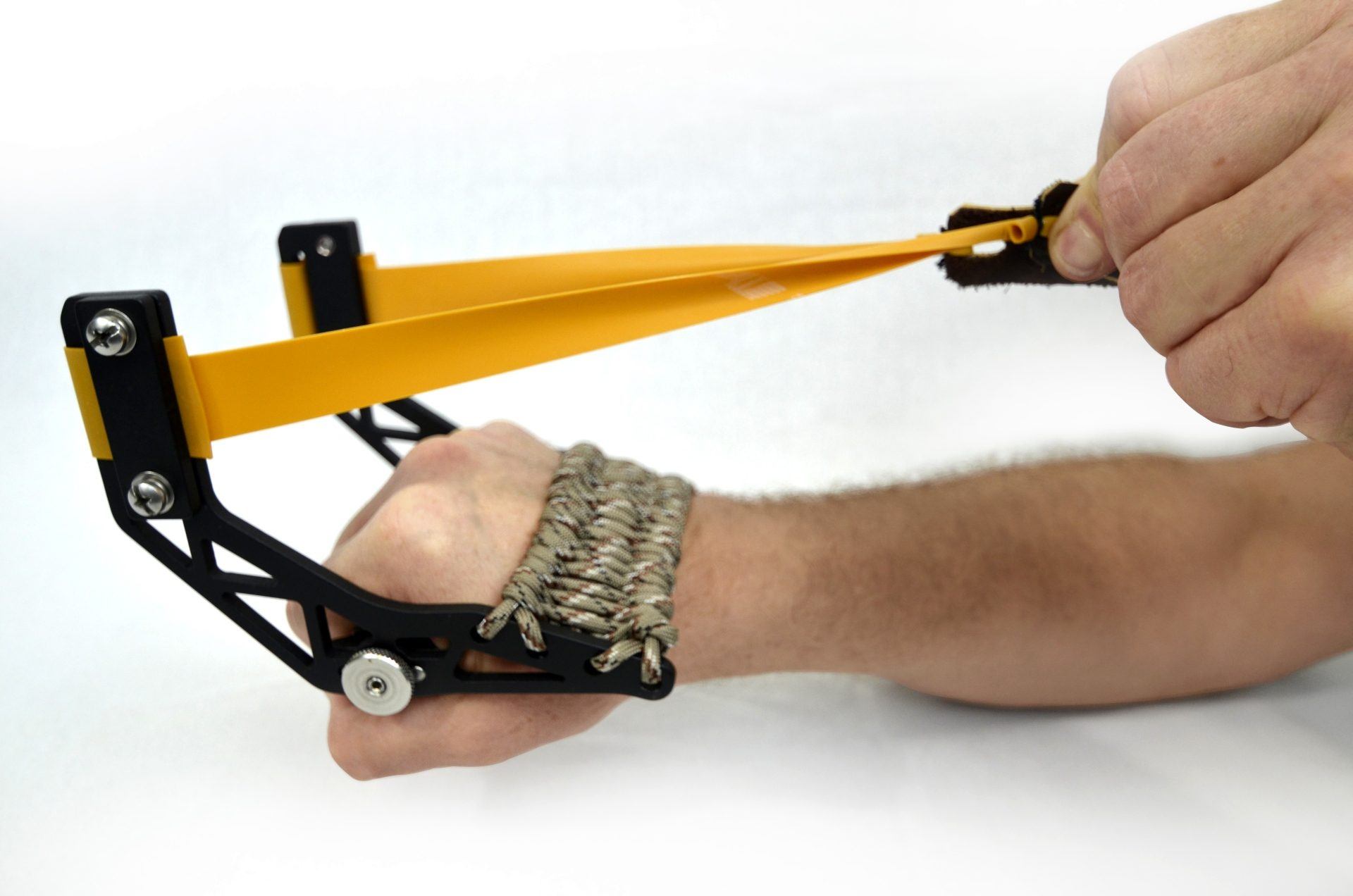
What type of energy is in this picture?
a)
Kinetic
b)
Potential
c)
Chemical
d)
Sound
40.
When plants convert the sun's energy into food, which type of energy is it?
a)
kinetic
b)
chemical
c)
thermal
d)
radiant
41.

What kind of energy is represented in this picture?
a)
Thermal
b)
Potential
c)
Nuclear
d)
Mechanical
42.

A battery converts what type of energy to another?
a)
sound to kinetic
b)
light to heat
c)
mechanical to electrical
d)
chemical to electrical
43.
Work is:
a)
A transfer of energy by a force to move and object
b)
Something you get paid for
c)
Something you take home
d)
Makes you sweat
44.
What machine changes electrical energy into light and sound energy?
a)
battery
b)
lightbulb
c)
alarm clock
d)
apple
45.
On a roller coaster, where is maximum potential energy?
a)
At the bottom of a big hill
b)
When going around a corner
c)
When going upside down
d)
At the top of a big hill
46.
____________ is the ability to cause change.
a)
Energy
b)
Force
c)
Friction
d)
Motion
47.
Energy due to motion is ____________ energy.
a)
Potential
b)
Energy
c)
Kinetic
d)
Friction
48.
__________ is stored energy.
a)
Potential
b)
Kinetic
c)
None of the above
d)
All of the above
49.
Gravity is ...
a)
to use force to cause something to move closer
b)
a force that pulls objects toward the center of the earth
c)
a push or pull that causes an object to move, stop or change direction
50.
When you stretch a rubber band, you are storing __________ energy.
a)
kinetic
b)
potential
c)
none of the above
d)
all of the above
51.

which point has the most potential energy
a)
G
b)
f
c)
b
d)
a
52.
Which is the best example that something has kinetic energy?
a)
a. a car parked on a steep hill
b)
b. a tennis ball rolling across the court
c)
c. a picture hanging on the wall
d)
d. a piece of coal before it's burned
53.

What kind of energy does this device use?
a)
Chemical
b)
Electrical
c)
Thermal
d)
Chemical
54.

What type of energy transformation happens in this object?
a)
Radiant to Electric
b)
Electric to Thermal
c)
Potential to Kinetic
d)
Kinetic to Potential
55.
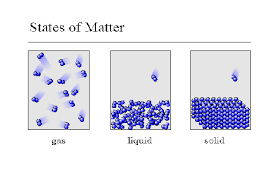
At higher temperatures
a)
particles in an object have less energy
b)
particles in an object move faster
c)
a gas contracts
56.
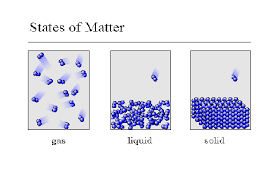
A gas
a)
has a definite shape but no definite volume
b)
has a definite volume but no definite shape
c)
has fast-moving particles
57.
Which state of matter has tightly packed molecules?
a)
solid
b)
liquid
c)
gas
58.
What is happening when my ice cream changes from a solid to a liquid?
a)
freezing
b)
melting
c)
burning
d)
evaporation
59.
Define a liquid.
a)
Indefinite shape, indefinite volume
b)
Definite shape, definite volume
c)
Found in stars
d)
Definite volume, indefinite shape
60.
Particles of a liquid
a)
are tightly packed together and stay in a fixed position.
b)
have no viscosity.
c)
decrease in volume with increasing temperature.
d)
are free to move around one another but still touch.
61.
What is a example of a abiotic factor?
a)
Panda
b)
Turtle
c)
Butterfly
d)
weather
62.
What is the definition of Abiotic factors?
a)
Alive organisms or things
b)
Dead things or organisms
c)
panda
d)
insect
63.
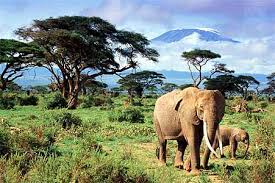
What are the biotic factors in this image?
a)
sunlight, elephants, and grasses
b)
sunlight, water, and air
c)
elephants, plants, trees
64.
Which of the following best describes a community?
a)
sharks, groupers, anemones and shrimp on a coral reef
b)
decorator crabs on the seafloor
c)
loggerhead sea turtles in Atlantic
d)
prairie grassland in Wyoming
65.
Which of the following is a population?
a)
hawks, barred owls, and eagles on NC coast
b)
mountain stream
c)
all the frogs in a pond
d)
blue-tailed skinks (lizards) around a barn
66.
Which one is NOT an example of a decomposer?
a)
mushroom
b)
leaves
c)
mold
d)
worm
67.
Examples of a producer
a)
frog
b)
algae
c)
worm
d)
mouse
68.
Example of a consumer
a)
worm
b)
bacteria
c)
mushroom
d)
hawk
69.
Example of a decomposer
a)
fungus
b)
mouse
c)
plants
d)
frogs
70.
Frogs are considered...
a)
consumers
b)
decomposers
c)
producers
71.

What is a herbivore?
a)
an animal that gets energy from eating other animals
b)
an organism that gets energy from eating only plants
c)
an animal that gets energy by eating both plants and other animals
d)
an animal that eats only herbs
72.

An organism that gets energy from eating other organisms is a ______________
a)
producer
b)
consumer
c)
decomposer
d)
prey
73.

A connection of food chains with many food energy paths in an ecosystem is a ____________
a)
ecosystem
b)
food web
c)
environment
d)
population
74.

An animal that is hunted and eaten for food is a
a)
predator
b)
prey
c)
population
75.

What is a carnivore?
a)
an animal that gets energy by eating other animals
b)
An animal that gets energy by eating only plants
c)
an animal that gets energy by eating both plants and animals
d)
an animal that makes its own energy through photosynthesis
76.

An animal that gets energy from eating both plants and animals is a
a)
herbivore
b)
carnivore
c)
omnivore
d)
autotroph
77.

The shrew provides energy for the _______?
a)
cricket
b)
grasshopper
c)
frog
d)
snake
78.

Which of the following is a herbivore?
a)
cricket
b)
frog
c)
hawk
d)
shrew
79.

Where do all life forms get their energy?
a)
Earth's Core
b)
Water
c)
Plants
d)
The Sun
80.
The arrows in a food chain or web represents what?
a)
They point to the organism that is being eaten.
b)
It shows how sunlight flows within an ecosystem.
c)
They show what direction the energy is flowing between organisms.
d)
They represent how water is transferred within a habitat.
81.

What is this called?
a)
Food Web
b)
Food Chain
c)
Abiotic Factors
82.
If a frog is the prey, what could be the predator?
a)
Grass
b)
Insect
c)
Snake
d)
Snail
83.
In which step of Design Process do you compare the various ideas and select the best approach
a)
Ask
b)
Imagine
c)
Plan
d)
Improve
84.
Which step of the Design Process involves communicating the results of your tests
a)
Ask
b)
Imagine
c)
Improve
d)
Share Results
85.
If your initial design doesn't fully solve theproblem or meet the challenge, you must go back and revise your plan. This is part of which step in the Design Process?
a)
Create
b)
Improve
c)
Ask
d)
Imagine
86.
What is the step in the Design Process where you identify a problem or need that exists?
a)
Ask
b)
Imagine
c)
Plan
d)
Create
87.
A small group of people start sharing ideas. Some ideas may seem silly, but all suggestions are written down for further consideration. This activity is part of which step of the Design Process
a)
Ask
b)
Imagine
c)
Plan
d)
Create
88.
During which step of the Design Process do you experiment with the prototype under controlled conditions and collect /record data
a)
Test and Evaluate
b)
Imagine
c)
Improve
d)
Share Results
89.
The only way to know if a design will work in real-world conditions is to build a model, or prototype, based on the plan. This is part of which step in the Design Process?
a)
Plan
b)
Imagine
c)
Create
d)
Improve
90.
It is important to sketch detailed drawings/blueprints and ask for feedback. This happens during which step of the Design Process?
a)
Plan
b)
Create
c)
Improve
d)
Share Results
91.
The engineering process begins
a)
when you brainstorm new ideas
b)
creating an advertisment
c)
identifying the need or solution to a problem
92.
Which word best describes a constraint?
a)
option
b)
opportunity
c)
restriction
93.
A prototype is a model that
a)
functions like the final solution would
b)
is made of the same materials as the final product
c)
is made after the final product is made
94.
A team of engineers is asked to design a scooter for less than $30. They decide that they will only use recycled materials. Which of the following is the team’s constraint?
a)
designed to appeal to kids
b)
made out of recycled materials
c)
cost less than $20 to produce
95.
In order to develop ideas for a basketball shoe, a design team visits three different shoe stores. What part of the design process is this?
a)
create a model
b)
research and generate ideas
c)
select an approach
96.

What is this tool called?
a)
Beaker
b)
Flask
c)
Graduated Cylinder
d)
Measuring Cup
97.
The base unit of metric length.
a)
Meter
b)
Liter
c)
Kilogram
d)
milligram
98.
The correct abbreviation for milliliter is..
a)
ML
b)
Ml
c)
mL
d)
ml
99.
How many cm's is in a meter?
a)
1000
b)
10
c)
100
d)
1
100.

The width of a kernel of corn would be about...
a)
4 cm
b)
4 mm
c)
4 m
101.
The appropriate abbreviation of centimeter is..
a)
cm
b)
Cm
c)
cM
d)
CM
102.
The abbreviation for gram is...
a)
G
b)
gg
c)
g
103.
m stands for....
a)
millimeter
b)
meter
c)
centimeter
d)
Liter
104.

What is the length of the eraser?
a)
3 cm
b)
2 cm
c)
5 cm
d)
7 cm
105.

Which metric unit would be used to measure the weight of a peanut?
a)
kilogram
b)
gram
c)
ounce
d)
millilter
106.

The metric unit of measurement for length is the:
a)
gram
b)
liter
c)
meter
d)
cm
107.

What is the volume of liquid in this graduated cylinder?
a)
40.0 mL
b)
40.3 mL
c)
43.0 mL
d)
44.0 mL
108.

At which point should your eyes be when you read a graduated cylinder? (Hint: see the letter next to the eye)
a)
A
b)
B
c)
C
109.

Using your senses to gather information.
a)
hypothesis
b)
observation
c)
seeing
d)
guessing
110.

The best measure for distance from this classroom to the lunchroom would be....
a)
centimeters
b)
millimeters
c)
meters
d)
Kilometers
111.

Always read a graduated cylinder at the _____________ of the meniscus.
a)
top
b)
middle
c)
bottom
112.
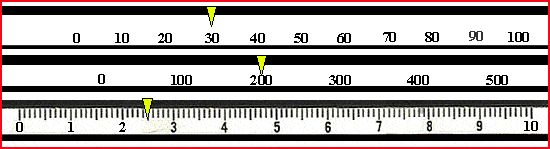
What is the mass on the triple beam balance?
a)
232.5 g
b)
237.0 g
c)
750.0 g
113.

What tool is used to measure the volume of an irregular solid?
a)
triple beam balance
b)
beaker
c)
graduated cylinder
d)
spring scale
114.
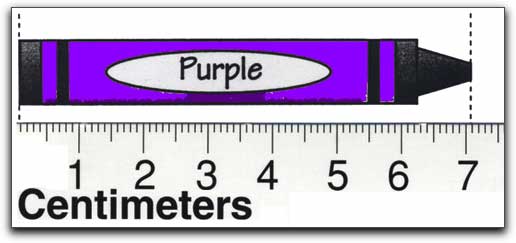
What is the length of this crayon to the nearest tenth of a centimeter?
a)
7 cm
b)
7.1
c)
7.0 cm
d)
7.1 cm
115.
You should never ______ chemicals in the lab.
a)
taste
b)
touch
c)
smell
d)
all of the above
116.
If you are not sure what to do during a lab activity:
a)
guess
b)
change lab partners
c)
ask a teacher
d)
just sit quietly and do nothing
117.
Keeping your work area neat and clean is important because:
a)
My teacher is a neat-freak
b)
I won't lose my supplies in the clutter.
c)
It keeps the room from looking messy.
d)
It helps prevent accidents.
118.
Disrupting other students in the laboratory with horseplay in the lab is:
a)
helpful.
b)
allowed
c)
dangerous.
d)
the quickest way to do a job.
119.
What is the CORRECT procedure for students to follow if a chemical is spilled?
a)
Stand back and advise the teacher of the spill.
b)
Run madly out of the room.
c)
Splash large amounts of water onto the spill.
d)
Immediately ask to go to the restroom.
120.
Helping to clean up the lab or classroom is the job of
a)
old students.
b)
transfer students.
c)
each and every student.
d)
only the teacher.
121.
When in the lab you should wear...
a)
open-toed shoes.
b)
sandals.
c)
closed-toes shoes.
d)
no shoes.
122.
Which of the following IS considered safety equipment in our classroom?
a)
Eyewash Station
b)
Emergency Shower
c)
Fire Extinguisher
d)
All of the Above.
123.
You should report accidents to the teacher __.
a)
after the class is over
b)
immediately
c)
the following day
d)
never
124.
Labs are individual activities and you should ignore your group members or be the only one working.
a)
True
b)
False
125.
When should you look over the experiment instructions?
a)
After starting the lab
b)
When your teacher tells you to
c)
Before starting the lab
d)
It doesn't really matter. Instructions are silly!
126.
Bob and Lizzy are working in the lab. They are goofing off and break a glass test tube. Which rule did the break?
a)
Know the location of the safety equipment.
b)
Do not eat or drink in the lab.
c)
Read instructions.
d)
No playing around!
100 %

