wayground logo

Free Printable Worksheets

Font size

S
M
L
XL
Worksheets

Investigations 3 and 4 Review!

Total questions: 78

Worksheet time: 2hrs 7mins
Name
Class
Date
1.
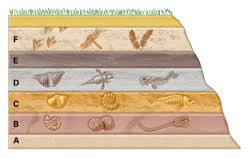
Which rock layer contains the newest fossils?
a)
F
b)
E
c)
B
d)
C
2.
An organism that no longer exists on Earth is called
a)
Decayed
b)
Evolved
c)
Extinct
d)
Preserved
3.
According to the law of superposition, the oldest fossils are found 
a)
At the top of the rock layers
b)
Near the bottom of the rock layers
c)
In the middle of the rock layers
d)
Somewhat near the surface
4.
The best index fossils have which two traits?
a)
widespread geographically, long lifespan
b)
widespread geographically, short lifespan
c)
specific place, long lifespan
d)
specific place, short lifespan
5.
Index fossils help determine relative age through correlating rock layers.
a)
True
b)
False
6.
The Law of Superposition helps scientists to determine what?
a)
The absolute age of rock layers
b)
The age of fossils
c)
The relative age of rock layers
d)
the super powers of rocks
7.
According to the law of superposition, which layer is the youngest?
a)
A
b)
B
c)
C
8.
Which rock layer in the diagram seems to be the oldest?
a)
F
b)
E
c)
B
d)
A
9.
Which rock layer most likely contains fossils of the most recently evolved organisms?
a)
1
b)
2
c)
3
d)
4
10.
How old do Paleontologists believe the Earth is?
a)
2015 years old
b)
3.6 billion years old
c)
4.6 billion years old
d)
4.6 million years old
11.
To be considered an index fossil, it had to have lived for a relatively short period of time.
a)
True
b)
False
12.
In rock layers, jellyfish fossils are found lower than trilobite fossils, and trilobite fossils are found lower than ammonite fossils. What can be determined from this information?
a)
Trilobites existed before jellyfish and ammonites.
b)
Jellyfish existed before trilobites and ammonites. 
c)
Ammonites existed before trilobites and jellyfish.
d)
Jellyfish, trilobites, and ammonites lived together.
13.
These fossils are distinguishable from other fossils because they were scattered over a large region, very common, and lived during a short span of geologic time
a)
trace
b)
index
c)
permineralized
d)
mold and cast
14.
Fossils of fish are found under land where cows now live. What does this tell you?
a)
the fish were dropped their by flying birds
b)
this land was once under the ocean
c)
farmers fed the fish to the cows
d)
fish used to live on land
15.
In which kind of rock do we usually find a fossil?
a)
sedimentary  rock
b)
rock candy
c)
hard rock
16.
Which of the following events happens FIRST?
a)
Slowly, minerals in the water replace the bone.
b)
Sediment covers the bone.
c)
An animal dies.
d)
The bone is no longer a bone, but a rock copy.
17.

Four outcrops of rock are examined in different locations of a state. The rock types and the fossils they contain are illustrated in the adjacent diagram. Which fossil would be the best choice to use as an index fossil for these rocks?

a)

Fossil 1

b)

Fossil 2

c)

Fossil 3

d)

None of these could be considered index fossils

18.
Rock layers can be most closely correlated if they both contain the same...
a)
Shapes
b)
Elements
c)
Fossils
d)
Types of Rocks
19.
Scientists chose where units of geologic time began and ended based on major changes in life forms at certain times.
a)
True
b)
False
20.
If a fossil appears in a rock layer and then disappears in the next, what is the most likely reason.
a)
The entire population of the organism was frozen in suspended animation and will appear again in a more recent rock layer.
b)
The species became extinct and will not appear again.
c)
The species became extinct but will be resurrected in Jurassic World.
d)
The entire species was abducted by aliens.
21.
The ___ parts of organisms are more likely to become fossils.
a)
hard
b)
soft
c)
outer
d)
inner
22.

Trilobite fossils are found in Cambrian rocks but not in Triassic rocks. Which statement best explains why trilobite fossils are missing from Triassic rocks?

a)

trilobites went extinct before the Triassic

b)

fossils did not form during the Triassic

c)

volcanoes and earthquakes destroyed only trilobite fossils during the Triassic

d)

trilobite fossils just haven’t been found yet

23.
The Geologic Time Scale is a record of what?
a)
old geologists
b)
sweet geology music
c)
the known history of rocks and fossils
d)
a list of every living thing ever
24.
Relative dating of rock layers tells us that the deeper we dig, _______.
a)
the younger the rocks get
b)
the smellier the rocks get
c)
the harder the rocks get
d)
the older the rocks get
25.

Which of the following will most likely NOT fossilize?

a)

Teeth

b)

Spine

c)

Skin

26.

To determine the AGE of the Earth, scientists most likely study which of the following?

a)

Water Samples

b)

Air Samples

c)

Rock Layers

d)

Soil samples

27.
A scientist who studies fossils is called a what?
a)
Fossilologist
b)
Rock Hound
c)
Archeologist
d)
Paleontologist
28.
Paleozoic, Mesozoic & Cenozoic are all
a)
Epochs
b)
Eras
c)
Periods
d)
Eons
29.
Which period are we currently in?
a)
Quaternary
b)
Holocene
c)
Jurassic
d)
Tertiary
30.
Cambrian, Ordovician, Silurian, Devonian, Mississippian, Pennsylvanian, Permian, Triassic, Jurassic, Cretaceous, Tertiary, Quaternary all belong to:
a)
Periods
b)
Eons
c)
Epochs
d)
Eras
31.
Modern mammals was during this era:
a)
Cenozoic
b)
Mesozoic
c)
Paleozoic
32.
A record of the geologic events and life forms in Earth's history.
a)
index fossil
b)
half-life
c)
radioactive dating
d)
geologic time scale
33.
How are Sedimentary Rocks formed?
a)
Cooling and Hardening
b)
Heat and Pressure
c)
Compacting and Cementing
d)
Melting
34.
Which type of rock would most likely form in a swamp? 
a)
Shale
b)
Sandstone
c)
Limestone
35.
Which type of rock would most likely form in a mudflat? 
a)
Shale
b)
Sandstone
c)
Limestone
36.
Which type of rock would most likely form in a sand dune? 
a)
Shale
b)
Sandstone
c)
Limestone
37.
Which type of rock would most likely form on the coast of a beach? 
a)
sandstone
b)
shale
c)
limestone
38.
Which type of rock would most likely form on the ocean floor? 
a)
Shale 
b)
Sandstone
c)
Limestone
39.
True or false: Older rock layers are found at the top of a rock column, because they are higher up.
a)
True
b)
False
40.
The theory that states that rock layers at the bottom of a rock column are the oldest is:
a)
Uniformitarianism
b)
Principle of superposition
c)
Principle of original horizontality
d)
Principle of stratification
41.
The theory that states that geological processes from the past happen in the same way today is:
a)
Uniformitarianism
b)
Principle of superposition
c)
Principle of original horizontality
d)
Principle of stratification
42.
_______________ is a sedimentary rock composed of clay or silt. 
a)
Sandstone
b)
Limestone
c)
Shale
43.
________________________ is a sedimentary rock composed of sand particles stuck together
a)
Sandstone
b)
Limestone
c)
Shale
44.
______________ is a sedimentary rock composed mainly of calcite.
a)
Limestone
b)
Sandstone
c)
Shale
45.
_________ is the deposition of cement in the spaces between particles of sediment:
a)
sedimentary rock
b)
cementation
c)
lithification 
d)
compaction
46.
__________ decreasing the volume of accumulated sediments by using pressure to decrease the size and number of the spaces between the particles:
a)
compaction
b)
cementation
c)
stratification
d)
sedimentary rock
47.
_____________ is a large low area where sediments have been deposited:
a)
basin
b)
container
c)
calcite 
d)
layer
48.
Which process, compaction or cementation, is most likely to produce SHALE? 
a)
compaction
b)
cementation
49.
Which process, compaction or cementation, is likely to produce SANDSTONE?
a)
compaction
b)
cementation
50.
What is sediment?
a)
the process of rocks being broken down and carried away
b)
bits of rock, sand, and silt caused by the weathering of rocks
c)
the top layer of the soil
d)
decaying plant or animal material 
51.
Scientists who study fossils are called
a)
Geologists
b)
Paleontologists
c)
Fossil Scientists
d)
Meteorologists
52.
Which layer is oldest?
a)
A
b)
W
c)
G
d)
Z
53.
In which kind of rock do we usually find a fossil?
a)
sedimentary  rock
b)
rock candy
c)
hard rock
54.
How old do Paleontologists believe the Earth is?
a)
2015 years old
b)
3.6 billion years old
c)
4.6 billion years old
d)
4.6 million years old
55.
According to the law of superposition, which layer is the youngest?
a)
A
b)
B
c)
C
56.
What is a fossil?
a)
the remains or physical evidence of an organism preserved by geologic processes
b)
fossils can be preserved in rock, amber, asphalt, or ice
c)
any naturally preserved evidence of animal activity
d)
fossil of an organism that lived during a relatively short period of time
57.
Fossilized tracks or other evidence of activity of an organism.
a)
trail 
b)
trace 
c)
index
d)
absolute 
58.
Which of the following would NOT help an organism become fossilized?
a)
shell 
b)
skeleton 
c)
buried quickly with sediment 
d)
soft body parts 
59.
Which statement is true about the fossil record?
a)
It is a record of all living things
b)
It shows how our climate has remained the same over time
c)
It provides evidence for history of life on Earth
d)
It does not support the theory of evolution
60.
An organism that no longer exists on Earth is called
a)
Decayed
b)
Evolved
c)
Extinct
d)
Preserved
61.
What is the correct order of the rock layers from oldest to youngest?
a)
B, C, D, E, A
b)
A, B, C, D, E
c)
E, D, C, B, A
d)
B, C, D, A, E
62.
What is the correct order of the rock layers from oldest to youngest?
a)
F, E, C, B, A, D
b)
A, B, C, D, E, F
c)
F, E, D, C, B, A
d)
D, F, E, C, B, A
63.
Fossils are usually found in 
a)
igneous rock
b)
extrusions
c)
intrusions
d)
sedimentary rock
64.
Which of the following is NOT an example of a fossil?
a)
a petrified dinosaur bone
b)
a footprint captured in mud
c)
a seashell found on the beach
d)
an insect stuck in amber
65.
Which of the following is NOT something you could learn from a fossil?
a)
The size of the animal
b)
What the animal ate
c)
The color of the animal
d)
Where the animal lived
66.
In order for a fossil to form, which of the following events must happen FIRST?
a)
Slowly, minerals in the water replace the bone.
b)
Sediment covers the bone.
c)
An animal dies.
d)
The bone is no longer a bone, but a rock copy.
67.
Why don't we know what many ancient plants looked like
a)
They had too many soft parts.
b)
They were all eaten by dinosaurs.
c)
There weren't ancient plants.
d)
They had too many hard parts.
68.
Where can the oldest layer be found?
a)
The top layer
b)
The middle layer
c)
They are all the same age
d)
The bottom layer
69.
How are fossils created?
a)
Traces of organisms get turned into stone.
b)
Dead organisms are quickly buried for millions of years.
c)
Animals get trapped.
d)
All of the above
70.
Which fossil layer is the youngest
a)
A. Layer A
b)
B. Layer B
c)
C. Layer C
d)
D. Layer D
71.
Which layer formed first?
a)
Rock Layer W
b)
Rock Layer X
c)
Rock Layer Y
d)
Rock Layer Z
72.

A theory that says geologic processes observed in the past are the same as those observed today. (The processes that are shaping Earth today, are the same processes that shaped Earth in the past and will shape Earth in the future.)

a)

Cementation

b)

Compaction

c)

Uniformitarianism

d)

Precipitate

73.

The process in which pressure from other layers is applied to sediment and squeezes out water from between particles

a)

Cement

b)

Compaction

c)

Cementation

d)

Precipitate

74.

Substance deposited in solid form from a solution

a)

Ooze

b)

Cement

c)

Compaction

d)

Precipitate

75.

Tiny shells from microscopic organisms (plankton), that form the soft watery mud at the bottom of a lake or sea

a)

Ooze

b)

Cement

c)

Cementation

d)

Precipitate

76.

The process in which cement is deposited in the spaces between particles of sediment

a)

Ooze

b)

Cement

c)

Cementation

d)

Precipitate

77.

Material that holds particles together to make stone.

a)

Ooze

b)

Cement

c)

Cementation

d)

Precipitate

78.
Mounds of wind-deposited sand in deserts and on shorelines are
a)
sea arches
b)
sea stacks
c)
dunes
d)
cliffs