wayground logo

Free Printable Worksheets

Font size

S
M
L
XL
Worksheets

Environmental Science - 1st 9 Weeks Review

Total questions: 93

Worksheet time: 3625secs

Name
Class
Date
1.
What is the Nitrogen Cycle?
a)
The process where nitrogen passes from air to soil to organisms and back to air or soil
b)
The process where nitrogen is distributed to us
c)
The process where Nitrogen is made to help plants and animals
2.
What is the Water Cycle?
a)
The water cycle is where clouds make precipitation
b)
The process of moving water between Earth's surface and the atmosphere
c)
All the water on Earth turning into precipitation
3.
What is the Carbon Cycle?
a)
The process where carbon goes through many forms and moves through the environment
b)
The process where carbon is being released
c)
The process where carbon is made
4.

Compare carnivores and herbivores.

a)

Carnivores eat grass, herbivores eat meat

b)

Carnivores eat meat, herbivores eat plants

c)

Carnivores eat people, herbivores don't

d)

The both eat meat and plants.

5.
The __________ Revolution was characterized by a shift from human and animal power to fossil fuels (coal and oil)
a)
Agricultural
b)
Industrial
c)
Tragedy of the Commons
6.
True or False: We need the Nitrogen cycle, Carbon cycle, and Water Cycle to survive.
a)
True
b)
False 
7.
What is an ecosystem?
a)
Food chains connected to each other.
b)
A community of  organisms and their physical environment
c)
A system where there are things that move.
8.
Which is a decomposer?
a)
Mushrooms
b)
Insects
c)
Trees
d)
Vultures
9.
The _____ was not a direct result of the Industrial Revolution.
a)
overhunting of large mammals
b)
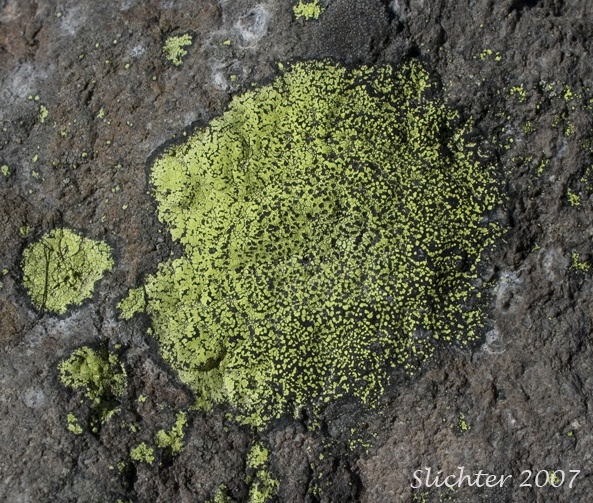
shift in the use of fossil fuels
c)
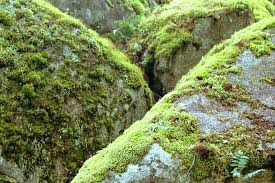
improved quality of life
d)
growth of cities
10.
All of these fields of study contribute to environmental science except
a)
linguistics.
b)
biology and earth sciences
c)
social sciences
d)
physics and chemistry
11.
Which of this is considered to be part of the environment?
a)
Deer
b)
Grass
c)
Water
d)
All of these
12.
Which of these is not an example of a commons?
a)
Federal Parks
b)
The ocean
c)
Privately owned farms
d)
Highways
13.
Which of the following organisms are producers? 
a)
consumers and phytoplankton
b)
plants and consumers
c)
plants and phytoplankton
d)
phytoplankton and chlorophyll
14.
When a resource like timber is used as fast as or slower than it regrows it is being used ____.
a)
nonrenewably
b)
unsustainably
c)
sustainably
d)
synthetically
15.
What is an ecosystem?
a)
Food chains connected to each other.
b)
A community of  organisms and their physical environment
c)
A system where there are things that move.
16.
how do decomposers get their energy?
a)
it makes its own food 
b)
breaks down other organisms 
c)
eating other organisms 
17.
how do consumers get their energy?
a)
eating other organisms
b)
breaking down dead organisms
c)
makes its own food
18.
Human activities alter the water cycle by... 
a)
Withdrawing large amounts of freshwater
b)
Clearing vegetation and eroding soils
c)
Polluting surface and underground water
d)
All of the choices 
19.
Which of the following natural resources are nonrenewable?
a)
Water
b)
Animals
c)
Natural gas
d)
Wind
20.
Fossil fuels are nonrenewable because...
a)
they are used to produce heat
b)
they take a long time to form
c)
they can be found underground
21.
What does conserving resources mean?
a)
Use as much of the resources as you can
b)
Only use the resources at school
c)
Protecting the resource so it does not run out
22.
A resource that is not easily replaced...
a)
Renewable
b)
Nonrenewable
23.
Any useful material that is found in nature:
a)
Natural Resource
b)
Human Resource
c)
Plants
24.
What is sustainability? 
a)
to maintain an ecological balance in our planet.
b)
no to use the natural resources
c)
the use of ocean resources only
d)
the use of scientific tecnology to save the planet
25.
What is a natural resource?  
a)
a. A natural resource is anything.
b)
 b. A natural resource is a small house in the woods.
c)
c. A natural resource is something that is alive
d)
d. A natural resource is something that comes from nature that people use. 
26.
This happened about 10,000 years ago when humans began living in villages and started farming.
a)
Agricultural Revolution
b)
Industrial Revolution
c)
Anthropocentric
d)
Ecocentrism
27.
This began in the early 1700s, was driven by fossil fuels and technological advances.
a)
antrhopocentric
b)
regulatory laws
c)
Agricultural Revolution
d)
Industrial Revolution
28.
Which of the following describes the total amount of land, water, resources, and waste an individual or population is responsible for?
a)
raw materials
b)
ecological footprint
c)
sustainable growth
d)
environmental ethics
29.

What is an example of a renewable resource?

a)

water

b)

oil

c)

coal

d)

fossil fuel

30.
What does sustainability mean? 
a)
Avoiding the depletion of natural resources in order to maintain ecological balance.
b)
using only fossil fuels
c)
using only non-renewable resources
31.
Compared with their counterparts in developed countries, individuals in developing nations typically have a
a)
shorter life span.
b)
higher standard of living.
c)
larger ecological footprint.
d)
greater dependence on fossil fuels.
32.
Environmental Science is a study of which types of interactions between humans and the environment.  
a)
how humans use natural resources
b)
how human beings relate to the nonliving environment
c)
how human actions alter the environment
d)
all of these 
33.
Why is the world's loss of biodiversity a source of concern?
a)
Humans depend on other organisms for food and oxygen.
b)
Species extinction have been rare throughout history.
c)
Loss of biodiversity is not a concern because extinctions are common.
d)
both (a) and (b).
34.
Most of today's environmental problems began during witch period(s) in human history?
a)
hunter-gatherer period
b)
agricultural revoltuion
c)
industrial revolution
d)
both (a) and (c)
35.
Characterized by high population growth rate, extreme poverty
a)
developed country
b)
developing country
c)
hunter-gather period
d)
agricultural revolution
36.
Describes conflicts associated with sharing resources
a)
developed country
b)
developing country
c)
industrial revolution
d)
"The Tragedy of the Commons"
37.

An ecological footprint is

a)

Roughly a men's size 8

b)

A big footprint in the mud

c)

the amount of land and water needed to supply an individual or a population with renewable resources and to absorb and recycle the wastes and pollution these resources produce

d)

is when people continually waste, deplete, and degrade much of Earth’s natural capital.

38.

The majority of the atmosphere is made of which gas?

a)

Nitrogen

b)

Oxygen

c)

Carbon dioxide

d)

Water Vapor

39.

More- Developed Countries are....

a)

industrialized with high average income

b)

industrialized with low average income

c)

have high poverty rates

d)

have low ecological footprints

40.

Less-Developed Counties are...

a)

industrialized with low average income

b)

are less economically developed and have a less average income

c)

US and Canada

d)

Most European countries

41.
This is an example of....
a)
Abiotic factor
b)
Biotic factor
c)
Community
d)
Population
42.
Which of the following mean " members of the same species that live in the same place at the same time"?
a)
Ecosystem
b)
Community
c)
Organism
d)
Population
43.
Which of the following terms means "an inherited trait that increases an organism's chance of survival and reproduction in a certain environment"?
a)
Adaptation
b)
Artificial Selection
c)
Resistance
d)
Evolution
44.
The image represents ....
a)
A community
b)
A population
c)
An ecosystem
d)
Biotic factors only
45.
Which of the following terms means "selective breeding of organisms by humans for desirable characteristics"?
a)
Artificial Selection
b)
Adaptation
c)
Natural Selection
d)
Habitat
46.
Which of the following would be an example of an abiotic factor?
a)
A dead leaf on the ground
b)
A fallen tree in the forest
c)
The egg of a bird
d)
A pencil used for writing
47.
Which of the following means "an individual living thing"?
a)
Organism
b)
Species
c)
Population
d)
Abiotic factor
48.
Which of the following terms means "gradual changes in characteristics of a population from one generation to the next"?
a)
Adaptation
b)
Natural Selection
c)
Artificial Selection
d)
Evolution
49.
Which of the following terms means "the process by which individuals that have favorable variations and are better adapted to their environment survive and reproduce more successfully than less well adapted individuals"?
a)
Evolution
b)
Natural Selection
c)
Artificial Selection
d)
Adaptation
50.
Which of the following terms means "a group of various species that live in the same place and interact with each other"?
a)
Community
b)
Habitat
c)
Ecosystem
d)
Population
51.
Which of the following terms means "a group of organisms that are closely related and that can mate to produce fertile offspring"?
a)
Population
b)
Species
c)
Organism
d)
Population
52.
All of the organisms living in an area together with their physical environment.
a)
community
b)
ecosystem
c)
habitat
d)
population
53.
The nonliving parts of the ecosystem.
a)
biotic
b)
abiotic
c)
habitat
d)
niche
54.
The living  and once living parts of the ecosystem.
a)
biotic
b)
abiotic
c)
habitat
d)
niche
55.
An individual living thing.
a)
niche
b)
habitat
c)
species
d)
organism
56.
A group of organisms that can mate to produce fertile offspring.
a)
organism
b)
species
c)
habitat
d)
niche
57.
All the members of the same species that live in the same place at the same time.
a)
organism
b)
community
c)
population
d)
habitat
58.
A group of various species that live in the same place and interact with each other.
a)
niche
b)
habitat
c)
species
d)
community
59.
The place an organism lives.
a)
habitat
b)
niche
c)
population
d)
species
60.
The process whereby organisms better adapted to their environment tend to survive and produce more offspring. The theory of its action was first fully expounded by Charles Darwin and is now believed to be the main process that brings about evolution.
a)
evolution
b)
artificial selection
c)
natural selection
d)
resistance
61.
A process that results in heritable changes in a population spread over many generations.
a)
natural selection
b)
evolution
c)
artificial selection
d)
habitat
62.
The intentional reproduction of individuals in a population that have desirable traits. 
a)
artificial selection
b)
species
c)
natural selection
d)
community
63.
A natural resource that is naturally formed much more slowly than we use it is called __________
a)
renewable
b)
nonrenewable
c)
ecological
d)
stustainable
64.
Which of the following is an example of a renewable natural resource?
a)
crude oil
b)
coal
c)
wave energy
d)
copper
65.
Which of the following is an example of a nonrenewable natural resource?
a)
wind energy
b)
sunlight
c)
natural gas
d)
geothermal energy
66.
An organism that produces its own food supply from inorganic compounds is called a(an)
a)
heterotroph
b)
consumer
c)
detritivore
d)
autotroph
67.
What is the original source of almost all energy in most ecosystems?
a)
carbohydrates
b)
sunlight
c)
water
d)
carbon
68.
What is the term for each step in the transfer of energy and matter within a biological community?
a)
energy path
b)
food web
c)
trophic level
d)
food pyramid
69.
Autotrophs make up the _______ level in all ecosystems.
a)
First
b)
Second
c)
Third
d)
Fourth
70.
What does a food web represent?
a)
All connections of energy flow throughout all organisms in a habitat.
b)
The specific ways that mutualism is carried out.
c)
A single pathway or energy flow between organisms. 
d)
How carnivores get their food. 
71.
The image provided is an example of a(n):
a)
Producer
b)
Autotroph
c)
Consumer
d)
Insect
72.
The amount of energy that usually transfers from one trophic level to the next...
a)
10%
b)
20%
c)
80%
d)
50%
73.
The nonliving aspects of an ecosystem.
a)
Abiotic factors
b)
Biotic factors
74.
The living portions of the ecosystem.
a)
Biotic factors
b)
Abiotic factors
75.
Water temperature would be an example of ...
a)
A biotic factor
b)
An abiotic factor
76.
A collection of organisms that belong to different populations but all live in the same area and interact with one another.
a)
Population
b)
Ecosystem
c)
Community
d)
Ecosphere
77.
A collection of organisms that make up a community as well as all of the nonliving aspects of the environment.
a)
Population
b)
Community
c)
Habitat
d)
Ecosystem
78.
Organisms that can capture energy from inorganic, nonliving sources.
a)
Producers
b)
Consumers
c)
Detritivores
d)
Carnivores
79.
Organisms that feed on both living producers and other consumers.
a)
Carnivores
b)
Omnivores
c)
Herbivores
d)
Detritivores
80.
If we took away the natural predator of the deer in this field what could be the long term outcome?
a)
increase of deer, decrease of producers
b)
increase of deer, increase of insects
c)
increase of deer, increase of predators
d)
increase of deer, decrease of herbivores
81.
Which level of the pyramid contains the most amount of energy?
a)
Tertiary consumer
b)
secondary consumer
c)
Primary consumer
d)
Producer
82.
Where an organism lives
a)
habitat
b)
niche 
c)
heterotrogh
d)
biosphere
83.
True or false: As populations grow, the tragedy of the commons will become more of a problem.
a)
True
b)
False
84.
Which of the following types of organisms perform photosynthesis?
a)
herbivore
b)
Primary producer
c)
carnivore
d)
detritvore
85.
What is the goal of the pioneer species in Primary Succession?
a)
To kill the dead materials after a disaster
b)
To rebuild soil
c)
To feed Johnny
d)
To put fresh oxygen into the air
86.
What is the name given to lichen or algae after a primary succession?
a)
pioneer species
b)
volunteer species
c)
founder species
d)
conqueror species
87.
What are examples of pioneer species in a primary succession?
a)
Bushes and Shrubs
b)
Oak trees
c)
Mossess and Lichens 
d)
A rose Bush
88.
the process by which a new community forms where no community lived before 
a)
resource
b)
invasive (non- native) species
c)
primary succession
d)
competition
89.
Reaches a climax community quicker because soil is already present
a)
primary succession 
b)
secondary succession
c)
both types of succession
90.
A pioneer species is...
a)
a large organism
b)
the first organisms to adapt to a new environment 
c)
The best organism 
d)
Abiotic organisms 
91.
succession that occurs in an area where soil is already present
a)
ecological succession 
b)
primary succession 
c)
secondary succession
d)
pioneer speciles
92.
a stable ecological community that has reached equilibrium
a)
ecological succession 
b)
climax community
c)
secondary succession
d)
pioneer speciles
93.
this type of succession occurs after a forest fire
a)
primary succession
b)
secondary succession
c)
both