
 Worksheets
2018 science terms
Total questions: 125
Worksheet time: 1hrs 9mins
What is the correct layer order of earth's interior from outside to inside?
crust, outer core, inner core, mantle
crust, mantle, outer core, inner core
mantle, crust, outer core, inner core
inner core, outer core, mantle, crust
Which is the best definition for MATTER?
anything that has mass and takes up space
anything that has a high density
anything that you can see
anything that you can measure
Which of the following statements summarizes how the formation of the solar system was similar to the differentiation of Earth into layers?
The densest materials moved to the outside
The densest material moved to the center
The densest materials were evenly distributed (spread out)
True of False: A landform is a natural feature on Earth's surface that is created by a constructive or destructive force
True
False
This process is responsible for breaking down rock into smaller pieces (called sediment)
Weathering
Erosion
Deposition
Sediment
Which of the following is NOT one of the factors that affects erosion?
Gradient
Oxygen
Soil Type
Water Discharge

What is the formula for speed?
speed = distance x time
speed=distance / time
speed = time / distance
speed = distance + time
What is the correct layer order of earth's interior from outside to inside?
crust, outer core, inner core, mantle
crust, mantle, outer core, inner core
mantle, crust, outer core, inner core
inner core, outer core, mantle, crust
Which layer is very thin, solid, and rigid and is the outermost layer?
Crust
Mantle
Outer core
Inner core
Which layer is very large and putty-like?
crust
mantle
outer core
inner core
Which layer is completely liquid iron and magnesium and extremely hot
crust
mantle
outer core
inner core
Which layer is completely solid iron and magnesium and is extremely hot and dense
crust
mantle
outer core
inner core
Which layer of the mantle is the top layer right below the crust/lithosphere
atmosphere
asthenosphere
middle mantle
mesosphere
Which layer of the mantle is in the middle and is solid and liquid at the same time (like oobleck)
Atmosphere
asthenosphere
middle mantle
mesosphere
Which layer of the mantle is the lower part of the mantle right above the outer core
atmosphere
asthenosphere
middle mantle
mesosphere
Why is the outer core completely liquid?
Because of the intense pressure
Because of the intense hot temperatures
Why is the inner core completely solid even though it is very hot?
Because of the intense pressure
Because of the intense hot temperatures
How do we know the inner core is the most dense?
Because it is at the bottom
Because it is at the top
Because it is in the middle
Order the layers of earth from MOST dense to LEAST dense
inner core, outer core, mantle, crust
crust, mantle, outer core, inner core
mantle, outer core, crust, inner core
outer core, crust, mantle, inner core
Earth formed in a swirling disk of matter surrounding the sun. As particles in the disk collided and stuck together, they grew larger and some eventually became planets. What force was responsible for the collisions between these particles
gravity
radioactive decay
seismic waves
solar radiation
What are the two sources of heat (thermal energy) in Earth's interior when it was FIRST being created?
collisions and the sun
the sun and gravity
collisions and gravity
the sun and radioactive decay
What is the process called when the Earth is separated into different layers because of the different densities?
density
seperation
radioactive decay
differentiation
What is it called when unstable elements break down and release large amounts of energy in the form of heat which warms the interior of the earth?
Radioactive Decay
Collisions
Gravity
Differentiation
What cause the interior of Earth to separate into layers?
variations in heating by the sun due to earth's tilt
a decrease in the rate of rotation of earth
the gravity pulling on materials of different densities
collisions with meteors or comets
What happens to the density and temperature within Earth's interior as depth increases?
Density decreases and temperature decreases
Density increases and temperature increases
density decreases and temperature increases
density increases and temperature decreases
The amount of matter (or stuff) in an object
Mass
Volume
Density
None of these
The amount of space an object takes up
Mass
Volume
Density
None of these
The amount of mass in a certain volume. How compact something is.
Mass
Volume
Density
None of these
More dense object ___________,
Less dense objects ___________.
float, sink
sink, float
float, float
sink, sink

Which object is the most dense and why?
lamp oil because it is at the top
water because it is in the middle
honey because it is at the bottom
What makes an item have a larger density?
more compact
less compact

Which object has a bigger VOLUME!
Blue Block
Red Block
They have the same volume

Which object has a larger MASS?
Blue Block
Red Block
They have the same mass

Which block has a higher DENSITY? (Which is more compact?)
Blue Block
Red Block
They have the same density
What is the formula for density
D = V / M
D = M x V
D = M+ V
D = M / V
What is the density of an object that has a mass of 10 grams and a volume of 2 mL?
12 g/mL
5 g/mL
8 g/mL
0.2 g/mL
Why do diet coke and regular coke have different densities?
Because they are made out of the same materials
Because they are made out of different materials
Because they weigh different amounts
Why does a tiny gold necklace have the same density as a large gold brick?
Because they are made out of the same materials
Because they are made out of different materials
Because they weigh the same amount
All of the following are different ways landforms can be created EXCEPT
Wind
Water
Ice
Oxygen

A sand dune is created by
Wind
Water
Ice

A sand dune is formed by...
Erosion
Deposition

A sand dune is formed by a ____________________ force
constructive
destructive

A river canyon is formed by...
Wind
Water
Ice

A river canyon is formed by...
Erosion
Deposition

A river canyon is formed by a ________________ force
constructive
destructive

Glacial Till is when glacier drop off sediment as it moves across the land. Glacial till is formed by...
Wind
Water
Ice

Glacial Till is when glaciers drop off sediment as it moves across the land. Glacial till is formed by...
erosion
deposition

Glacial Till is when glacier drop off sediment as it moves across the land. Glacial till is formed by a _________________ process
constructive
destructive

A delta is when sediment gets dropped off at the mouth of a river flowing into a bigger body of water. A delta is formed by...
wind
water
ice

A delta is when sediment gets dropped off at the mouth of a river flowing into a bigger body of water. A delta is formed by...
erosion
deposition

A delta is when sediment gets dropped off at the mouth of a river flowing into a bigger body of water. A delta is formed by a _______________process
constructive
destructive

A rock pedestal is formed when ________________ breaks away at the bottom of a large rock
Wind
Water
Ice

A rock pedestal is formed by...
erosion
deposition

A rock pedestal is formed by a ______________ force
constructive
destructive
This process is responsible for moving the sediment from one place to another
Weathering
Erosion
Deposition
Sediment
This process is responsible for dropping sediment off and piling up new sediment
Weathering
Erosion
Deposition
Sediments
This is another term for tiny broken up pieces of rock
Weathering
Erosion
Deposition
Sediment
Which of the following statements is correct about the hydrosphere and the lithosphere
The hydrosphere is all of the land and the lithosphere is all of the water on earth
The hydrosphere is all of the water and the lithosphere is all of the land on earth
The hydrosphere does not include rain but does include all other water on earth and the lithosphere is all of the land on earth
none of the above
Which is the best definition for a constructive forces (process)
to destroy
to break down
to wash away
to build up
Which is the best definition of destructive forces
To build up
To construct
To destroy
To create
True of False:
Forces can only be either constructive or destructive...they can't be both
True
False
Which of the following is an example of a constructive force (ONLY)
Delta
Tsunami
Earthquake
Volcano
Which of the following is a destructive force (only)
Deltas
Earthquakes
Landslides
Volcanos
Which of the following is both constructive and destructive
Sand dunes
Hurricanes
Volcanos
Deposition
Weathering is a _____________________ force
constructive
destructive
both constructive and destructive
Erosion is a ______________ process
constructive
destructive
both constructive and destructive
Deposition is a ___________________ process
constructive
destructive
both constructive and destructive
What is gradient?
The amount of water rushing down a slope
The steepness of a slope
The temperature of the the water
The amount of vegetation in the soil
What is runoff?
water rushing off the soil and not eroding away
Water eroding a lot of the soil
a lot of erosion
What is a meander?
A straight stream
A steep mountain
An s-shaped curve in a stream
a delta at the bottom of a mountain

Where does erosion take place on a meandering stream?
A
B
both
Where does deposition take place on a meandering stream?
A
B
both

why does erosion happen on the outside curve and deposition happen on the inside curve?
It is going fast on the inside and dropping off sediment
It is going slower on the inside and wearing soil away
It is going slower on the inside and dropping sediment off
It is going fast on the outside and dropping sediment off
How can you increase the amount of erosion on a stream table?
Increase the gradient
Increase the temperature
decrease the amount of water
How does vegetation help prevent erosion
because water can't soak into the soil
because wind can't get to the soil
because vegetation is healthy
because the roots hold the soil in place
REVIEW: Which statement is correct?
Weathering breaks/ Erosion drops/ Deposition moves
Weathering drops/ Erosion breaks/ Deposition moves
Weathering breaks/ Erosion Moves/ Deposition drops
Weathering moves/ Erosion breaks/ Deposition drops
Why is Tommy so awesome
because he is cool
because he is smart
all of the above
what do you measure height on a topographical map in?
Feet
Meters
Miles
Kilometers
Anything your little heart desires in
when did the earth form
4 billion years ago
5 billion years ago
4.6 million years ago
4.6 billion years ago
A long long long long long long long long long long long long long long long long long long long long long long long long long long long long long long long long long long long long long long long long long long long long long long long long long long long long long long long long long long long long long long long long long time ago
Why do we live on the crust
because we want to
Because
Because the interior is too hot
Because Fortnite is on the crust
Who was Alfred Wegener
The scientist who discovered the earth was made out of layers
The scientist who discovered the earth was round
The scientist who discovered Earth's continents were once combined, but eventually separated
The scientist who discovered the laws of motion
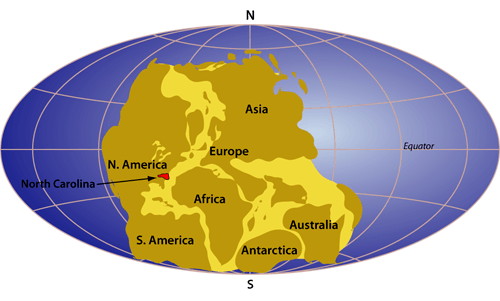
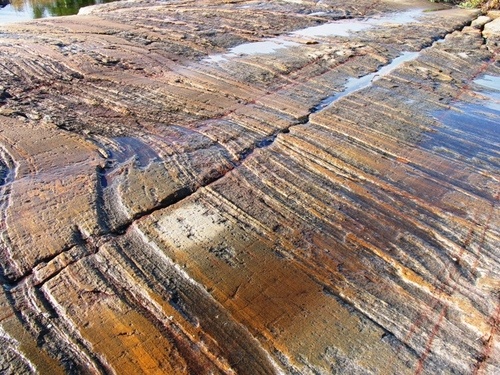
Fossils of tropical plants have been discovered in Antarctica. How could tropical plants have formed in Antarctica?
At one time, earth's entire surface was a tropical rain forest
At one time, Antarctica was located closer to the equator
The rotation of earth increased causing cooling temperatures
Catastrophic volcanic eruptions melted the ice and exposed the soil to sunlight
During the early 1900s, Alfred Wegener first proposed the theory of continental drift. Which of the following pieces of evidence did Wegener use to support this theory?
The location of volcanoes around the Pacific Ocean basin
Mountain building on the continental margins
The similarity of plant fossils on different continents
Faulting of geologic formations caused by earthquakes

The symbols on this map indicate where fossils have been found. Each symbol indicates a different type of fossil. What do the locations of the fossils suggest?
Similar fossils are NEVER found on different continents
The continents locations have remained constant throughout time
Each continent has completely unique plant and animal life
The continents were once connected to each other
why do earthquakes happen when they are not on the edge of the plate
Bc Fortnite had an update
The city blew a fuse
Plates still influence it
Surface waves
Sea-floor spreading begins at the
Deep ocean trench
Mid-ocean ridge
Continent's edge
As the magma comes out of the mid-ocean ridge, it ______________ and _______________ .
cools
warms
shrinks
solidifies
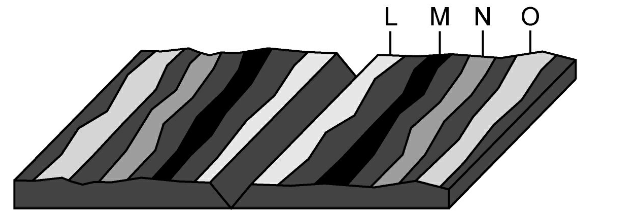
What is the Mid ocean ridge?
a continental mountain range
a valley system in the middle of the ocean
an underwater mountain range
the middle of the ocean

Where would a mid-ocean ridge be found?
R
M
C
All of the above
Where would a mid-ocean ridge be found?
R
M
C
All of the above

Where does subduction occur?
M
R
G
C
What happens when Subduction occurs?
Plates go under other rock and melt into magma
Plates go above other rock and cool into rock
Parts of the crust fall into space
None of these
study of reversal of magnetic polarity
seafloor spreading
paleomagnetism
lithosphere
Continental Drift
What are plate tectonics?
Where two plates meet
All of the continents drifting
Earth broken up into pieces that move around
Where would the youngest rock be found?
L
M
N
O
Why does the bottom of the ocean floor looked striped?
Because earth's magnetic field stays the same, so the magma hardens in the same direction over time
Because earth's magnetic field switches, so the magma hardens in opposite directions over time
Because earth flips upside down every 200,000 years
How often do earth's magnetic poles switch?
every 100,000 years
every 200,000 years
every 300,000 years
every 400,000 years
What are the three pieces of evidence that support the theory of plate tectonics. Select all that apply.
Similarity in fossils
Paleomagnetism
Coal deposits and glacier scars
Seafloor Spreading
earthquake and volcano data

What does this pattern of earthquakes around the world indicate?
seafloor spreading
Plate boundaries
hot spots
edges of the ocean

notice the mid-ocean ridge that is located beneath ireland. Since seafloor spreading happens along a mid-ocean ridge, which location has the YOUNGEST rock?
A
B
C
D
What are the two types of seismic waves waves
P
Q
R
S

Which is the location of the epicenter?
A
B
neither
Which is the location of the focus?
A
B
neither
Select all that are true about P waves
Primary
Shear
Secondary
Compression
Travels through solids and liquids
Select all that are true about S waves
Compression
Shear (side to side)
Secondary
Arrive FIRST
Travels through solids ONLY
Why can't S -waves travel into the outer core
Because the outer core is very dense
Because the outer core is solid
Because the outer core is liquid
Because the outer core is very hot
Why does a P-wave bend (refract) when it reaches the outer core?
Because it gets faster as it starts to go through the liquid
Because it gets slower as it starts to go through the liquid
What is reflection?
When S-waves bounce back when they reach the outer core
When S-waves bend when they reach the outer core
When P-waves bend when they reach the outer core
What is refraction?
When S-waves bounce back when they reach the outer core
When S-waves bend when they reach the outer core
When P-waves bend when they reach the outer core

The diagram and graph below show how seismic waves travel Earth's interior. What happens when the P waves enter the outer core
reflection, suggesting that the outer core is made up of the same material as the mantle
refraction, suggesting that the outer core is made up of the same material as the mantle
reflection, suggesting that the outer core is made up of a different material than the mantle
refraction, suggesting that the outer core is made up of a different material than the mantle

By looking at the graph, what can you infer about the material between 3000 and 5000 km?
The material is solid
The material is liquid
The material is iron
The material is rock

