
 Worksheets
Quarter 1 Review
Total questions: 62
Worksheet time: 59mins
Name
Class
Date
1.
A possible explanation to a problem that has not yet been tested.
a)
data
b)
theory
c)
hypothesis
d)
fact
2.
This variable in an experiment is the one being deliberately changed by the scientist.
a)
dependent variable
b)
independent variable
c)
data
d)
control group
3.
Should experiments be repeated over and over to see if the results are the same each time?
a)
yes
b)
no
4.
There are two types of data. Which type of data involves numbers that are obtained by counting or measuring?
a)
quantitative
b)
qualitative
5.
The summary at the end of an experiment that explains the results.
a)
conclusion
b)
procedures
c)
materials
d)
responding variable
6.
There are two types of data. Which type of data involves descriptions/photographs/illustrations that cannot be counted or measured?
a)
qualitative
b)
quantitative
7.
A series of steps used by scientists to solve a problem or answer a question.
a)
scientific method
b)
recipe
c)
data collection
d)
metric system
8.
In a controlled experiment, how many independent variables can be worked with at a time?
a)
one
b)
none
c)
two or more
d)
how ever many makes sense.
9.
A list of the steps anyone could follow to conduct an experiment.
a)
obervations
b)
question/problem
c)
materials
d)
procedures
10.
Two types of data scientists collect are...
a)
hypothesis and theory
b)
qualitative and quantitative
c)
myths and fables
d)
metric and standard measurements
11.
Measuring the number of times a person breathes after exercise involves ____ data.
a)
quantitative
b)
qualitative
12.
Jane Goodall video recorded chimpanzees hunting pigs, this type of data is called ___
a)
qualitative
b)
quantitative
c)
field study
d)
observation
13.
Mr. S. sets up an experiment to see how the mass of a ball affects the distance it rolls off a ramp. Identify the independent variable.
a)
distance traveled by the ball
b)
height of the ramp
c)
mass of the ball
d)
weight of the ball
14.
Mr. S. sets up an experiment to see how the mass of a ball affects the distance it rolls off a ramp. Identify the dependent variable.
a)
height of the ramp
b)
distance traveled by the ball
c)
mass of the ball
d)
weight of the ball
15.
A student is planning an experiment to find out how the height from which he drops a ball affects how high the ball bounces. The dependent variable is the _____.
a)
Diameter of the ball
b)
Force acting on the ball
c)
Height that the ball bounces
d)
Height from which the ball is dropped
16.
When experimenting with the growth of a plant, a scientist uses three (of the same type of) plants, two different fertilizers, equal light, and equal water. What type of variable is the fertilizer?
a)
Dependent
b)
Independent
c)
Control
d)
Compound
17.
An experiment is performed on plants to see how different liquids affect plant growth. Each plant in the experiment is given a different liquid; water, apple juice, or milk. Each plant has the same amount of soil, sunlight, and listens to the same music. In this investigation, what is the dependent variable?
a)
Type of plant
b)
Water, apple juice, milk
c)
Plant growth
d)
Color of the plant's leaves
18.
Qualitative data relies on numbers.
a)
False
b)
True
19.
Science is a continually ongoing process.
a)
True
b)
False
20.
If I study for my scientific method quiz, then I will have a better test score. What is the dependent variable?
a)
Scientific Method
b)
Studying
c)
Independent variable
d)
Test score
21.
What is a hypothesis?
a)
A hypothesis is the right answer to an experiment.
b)
A hypothesis is the wrong answer to an experiment.
c)
A hypothesis is an educated guess.
d)
I don't know.
22.
Which is NOT a step in the scientific method?
a)
Make observation
b)
Form a theory
c)
Collect data
d)
Form a hypothesis
23.
What step does every scientific experiment begin with?
a)
hypothesis
b)
question/problem
c)
procedures
d)
conclusion
24.
This part of the experiment serves as a basis of comparison; the one variable being tested has been omitted.
a)
experimental group
b)
control group
c)
data
d)
variables
25.
Why do we want to test only one independent variable at a time?
a)
Because it is hard to setup a data table with more than one variable
b)
To better identify what is causing the changes
c)
It is what has always been done
d)
It's easier to perform the experiment
26.
True or False: Your hypothesis can never be wrong.
a)
True
b)
False
27.
Should experiments be repeated over and over to see if the results are the same each time?
a)
yes
b)
no
28.
The summary at the end of an experiment that explains the results.
a)
conclusion
b)
procedures
c)
materials
d)
responding variable
29.
1 meter = _______ cm
a)
1
b)
1,000
c)
100
d)
400
30.

What would you use to measure the liquid in a coffee cup?
a)
liter
b)
mililiter
c)
gallon
31.
gram and kilogram measures
a)
capacity
b)
length
c)
time
d)
mass
32.
What is the abbreviation for milliliters?
a)
ML
b)
Ml
c)
mL
d)
ml
33.
1,000 g = _______ kg
a)
1
b)
100
c)
0.1
d)
100,000
34.

What is the appropriate unit of measurement for the amount of water in a lake?
a)
L
b)
mL
c)
cm
d)
m
35.

What is the appropriate unit of measurement for the height of an apple?
a)
L
b)
cm
c)
m
d)
mm
36.

What is the length of the screw?
a)
5cm
b)
6cm
c)
5mm
d)
6m
37.
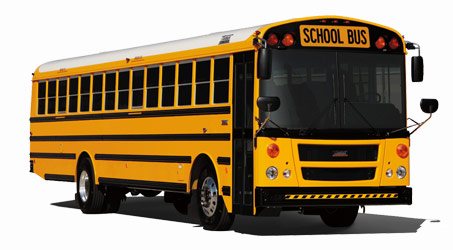
I would measure this bus in
a)
centimeters
b)
milimeters
c)
kilometers
d)
meters
38.

What does the volume of liquid measure in this cylinder?
a)
15 liters
b)
10 meters
c)
15 mililiters
d)
25 mililiters
39.
Which is the smallest measurement of mass?
a)
gram
b)
miligram
c)
kilogram
40.

The thickness of a penny is about
a)
1 milimeter
b)
2 grams
c)
1 centimeter
d)
2 mililiters
41.

According to the graph, what speed was recorded most frequently?
a)
50 miles per hour
b)
55 miles per hour
c)
80 miles per hour
d)
25 miles per hour
42.

What type of graph is this?
a)
line graph
b)
bar graph
c)
circle graph
43.

What type of graph is this?
a)
line graph
b)
bar graph
c)
circle graph
44.

a)
line graph
b)
bar graph
c)
circle graph
45.

What is the independent variable?
a)
atomic number
b)
electron volts
c)
first ionization energy
d)
Jim Askew's Graph
46.

What is the dependent variable?
a)
nicest fruit
b)
number of people
c)
types of fruit
47.
Which type of graph is usually just a comparison of numbers?
a)
line graph
b)
bar graph
c)
circle graph
48.
Which is the graph most often used in science as it compares only two variables?
a)
line graph
b)
bar graph
c)
circle graph
49.
When COLLECTING data in an experiment you will need a
a)
Data table
b)
Bar chart
c)
Line graph
50.

What is the title of the graph?
a)
Number of people
b)
Character
c)
Favorite Cartoon Characters
d)
Sponge Bob
51.

What do the numbers in the vertical axis of this graph represent?
a)
Hours in a day
b)
Days of the week
c)
Types of appliances
d)
Amount of electricity used
52.

What is the first step in the Design Process?
a)
Identify the Problem
b)
Construct a Prototype
c)
Develop Possible Solutions
d)
Optimize
53.

A small group of people start sharing ideas. Some ideas may seem silly, but all suggestions are written down for further consideration. This activity is part of which step of the Design Process?
a)
Choose the Best Solution
b)
Brainstorm Design Solutions
c)
Research
d)
Communicate Results
54.

During which step of the Design Process do you experiment with the prototype under controlled conditions and collect /record data?
a)
Test and Evaluate
b)
Construct Prototype
c)
Optimize
d)
Analyze Results
55.

Which word best describes a constraint?
a)
option
b)
opportunity
c)
limitation
d)
goal
56.

A prototype is a model that
a)
functions like the final solution would
b)
is made of the same materials as the final product
c)
is made after the final product is made
d)
has to be 3D
57.

A team of engineers is asked to design a scooter that will be able to hold 150 pounds without breaking for less than $30. They decide that they will only use recycled materials. Which of the following is the team’s constraint?
a)
designed to appeal to kids
b)
made out of recycled materials
c)
must hold 150 pounds
d)
they do not have a scooter that does this
58.
If your initial design doesn't fully solve the problem or meet the challenge, you must go back and revise your design. This is part of which step in the Design Process?
a)
Construct a Prototype
b)
Redesign
c)
Identify the Need
d)
Develop Possible Solutions
59.
During which step of the Design Process do you experiment with the prototype under controlled conditions and collect /record data
a)
Test and Evaluate
b)
Select the Most Promising Solution
c)
Construct a Prototype
d)
Share Results
60.
When finding the solution to an engineering problem, there is/are usually
a)
only one possible correct solution
b)
a very limited number of possible correct solutions
c)
many possible correct solutions
61.
In the design world, limitations are known as:
a)
Constraints
b)
Criteria
c)
Iterations
d)
Data
62.
It is important when brainstorming to:
a)
Limit your ideas to what is "real"
b)
Come up with as many ideas as possible
c)
Gravitate to a few ideas
d)
Keep it brief in time
100 %

