wayground logo

Free Printable Worksheets

NEW

Font size

S
M
L
XL
Worksheets

Virtual Biology - Quarter 2 Final PRETEST

Total questions: 60

Worksheet time: 55mins

Name
Class
Date
1.
How many elements are in C6H12O6?
a)
1
b)
2
c)
3
d)
4
2.

In CHNOPS, what does the C stand for?

a)

Calcium

b)

Carbon

c)

Cesium

d)

Cobalt

3.
This type of organic molecule holds genetic/hereditary information
a)
Nucleic Acids
b)
Carbohydrates
c)
Proteins
d)
Lipids
4.
What are the building blocks of proteins?
a)
Glucose
b)
Amino Acids
c)
Nucleotides
d)
Fatty Acids
5.
Which polymer group is used as STORED energy?
a)
carbohydrate
b)
lipid
c)
protein
6.
Glucose (sugar) is an example of a
a)
Carbohydrate
b)
Lipid
c)
Protein
d)
Nucleic Acid
7.
Waxes, oils and fats are examples of
a)
Carbohydrates
b)
Lipids
c)
Proteins
d)
Nucleic Acids
8.
Examples of nucleic acids?
a)
DNA and RNA
b)
carbohydrates
c)
potatoes
d)
meats
9.
Enzymes are...
a)
nucleic acids
b)
proteins
c)
lipids
d)
carbohydrates
10.
What is the function of an enzyme?
a)
enzymes break themselves into small pieces
b)
enzymes slow down chemical reactions
c)
enzymes speed up chemical reactions
d)
enzymes combine products to form reactants 
11.

"gets energy by making its own food"

a)

autrotrophic

b)

heterotrophic

c)

unicellular

d)

multicellular

12.
Autotroph or heterotroph?
a)
Autotroph
b)
Heterotroph
13.

What structures distinguish a plant cell from an animal cell?

a)

Plant cells have cell walls and ribosomes.

b)

Plant cells have cell walls and chloroplasts.

c)

Plant cells have chloroplasts and ribosomes.

d)

Plant cells have chloroplasts and mitochondria.

14.
The ___ is the basic unit of sturucture and function of organisms
a)
atom
b)
cell
c)
matter
d)
all other answers are correct
15.
Robert Hooke, Anton van Leeuwenhoek, Theodor Schwann, Rudolf Virchow, and Matthias Schliden were all responsible for what theory?
a)
The Theory of Gravity
b)
The Theory of Relativity
c)
The Cell Theory
d)
The Theory of Continental Drift
16.
 Which of the following is NOT one of the main components of the cell theory?
a)
cells must contain DNA
b)
all living things are made of cells
c)
cells can only come from other cells
d)
cells are the basic unit of life
17.
How does a cell maintain homeostasis?
a)
Regulates what enters and leaves the cell
b)
Flexibility
c)
Protective barrier
d)
Structure and support
18.
The cell membrane is selectively permeable, which means...
a)
All materials can enter and leave the cell
b)
Certain things can enter while others cannot
c)
The cell manually sorts through all materials
d)
Only certain cells can interact with the cell.
19.
Controlling what goes into or out of the cell without energy is called
a)
active transport
b)
endocytosis
c)
passive transport
d)
exocytosis
20.
Passive transport requires no
a)
concentration gradients
b)
osmosis
c)
motion
d)
energy
21.
Which is true about active transport?
a)
It requires energy
b)
it does not require energy
c)
It moves substances down the concentration gradient
d)
it moves material from high to low concentration
22.
What organelle is called the "powerhouse" of a cell?

a)
Endoplasmic Reticulum
b)
Nucleus
c)
Mitochondria
d)
Nucleolus
23.
What is the function of the vacuole?
a)
Sac that stores water, nutrients, and waste products
b)
Sac filled with digestive chemicals
c)
Jelly-like substance within the plasma membrane
d)
stack of membranes that packages chemicals
24.
Where does photosynthesis occur?
a)
mitochondria
b)
stomata
c)
xylem
d)
chloroplast
25.

I make proteins for the cell. What am I?

a)

ribosome

b)

mitochondria

c)

chloroplast

d)

lysosome

26.
What can only be found in plant cells?
a)
Cell membrane
b)
Vacuole
c)
Chloroplast
d)
Mitochondrion
27.
I am a protein packaging and shipping machine! Who am I?
a)
vacuole
b)
ribosome
c)
mitochondrion
d)
golgi apparatus
28.
Which organelle controls what substances come into and out of the cell?
a)
Golgi Bodies
b)
Chloroplasts
c)
Endoplasmic Reticulum (E.R.)
d)
Cell Membrane
29.

Has passageways that carry proteins and other materials from one part of the cell to another

a)

Endoplasmic Reticulum (ER)

b)

Cell Membrane

c)

Lysososomes

d)

Ribosomes

30.
What is the fluid inside a cell called? 
a)
Endoplasimic Reticulum
b)
Orange Juice
c)
Water
d)
Cytoplasm
31.
Which organism is made up of cells that have both a cell membrane and a cell wall?
a)
desert mouse
b)
human 
c)
maple tree
d)
zebra
32.

The _____________ holds the DNA, and controls the functions of eukaryotic cells.

a)

Nucleus

b)

Nuclear Membrane

c)

Mitochondria

d)

Chloroplast

33.

What can only be found in plant cells?

a)

Cell membrane

b)

Vacuole

c)

Chloroplast

d)

Mitochondria

34.
What is the difference between rough and smooth ER?
a)
There is no difference.
b)
Plants have rough ER, animals have smooth ER.
c)
What type of injuries the Doctors treat.
d)
Rough has ribosomes, smooth does not.
35.
What three things do plants need?
a)
Water, air, and sunlight.
b)
Water, soil, and sunlight.
c)
Water, soil, and air.
d)
Love, family, and Cheetos.
36.
What does a plant release into the air?
a)
Plants release carbon dioxide into the air.
b)
Plants release sugar into the air.
c)
Plants release oxygen into the air.
d)
Plants release bacon into the air.
37.
The energy released from sugar was once energy from what?
a)
The energy from sugar was once energy from water.
b)
The energy from sugar was once energy from the air.
c)
The energy from sugar was once energy from the sun.
d)
The energy from sugar was once energy from an iPad battery.
38.
What are the products of photosynthesis?
a)
water and carbon dioxide
b)
oxygen and glucose
c)
oxygen and carbon dioxide
d)
oxygen and water
39.
Which of the following is the correct equation for PHOTOSYNTHESIS?
a)
CO+ light + H2O --> O+ Sugar
b)
CO+ sugar + H2O --> O+ light
c)
O2 + light + H2O --> CO+ Sugar
d)
CO+ O2 + H2O --> Light+ Sugar
40.
Movement of particles from high to low concentration. 
a)
Passive Transport
b)
Active Transport
41.
a)
Passive Transport
b)
Active Transport
42.
Uses ATP (energy)
a)
Passive Transport
b)
Active Transport
43.
What process occurs when WATER diffuses across a membrane?
a)
endocytosis
b)
mitosis
c)
osmosis
d)
nuclear fission 
44.
When particles move from areas of high concentration to areas less concentrated, this has taken place.
a)
diffusion
b)
mitosis
c)
endocytosis
d)
photosynthesis
45.

What does selectively-permeable mean?

a)

Allow certain things to enter and leave the cell

b)

Nothing gets through

c)

The cell lets only large substances through
46.
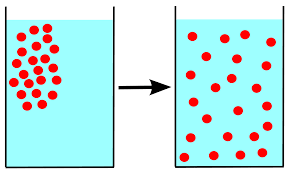
The picture below is an example of _________________.
a)
osmosis
b)
isotonic
c)
diffusion
d)
active transport
47.
Osmosis is the movement of _____ across a membrane.
a)
food
b)
energy
c)
oxygen
d)
water
48.
Cells spend 90% of their time in this stage of the cell cycle. This is the reason you would see most cells in this stage if viewed under a microscope.
a)
Prophase
b)
Metaphase
c)
Anaphase
d)
Interphase
49.
The cytoplasm is divided between the cells splitting the cell into two. Name that Stage!
a)
Cytokinesis
b)
Interphase
c)
Prophase
d)
Metaphase
50.
The chromosomes start to line up in the middle of the cell.
a)
Prophase
b)
Metaphase
c)
Anaphase
d)
Telophase
51.
What do the cells look like at the end of mitosis?
a)
different from original cell
b)
similar to the original cell
c)
identical to the original cell
d)
none of these
52.
a)
Anaphase
b)
Cytokinesis
c)
Telophase
d)
Metaphase
53.
a)
Cytokinesis
b)
Interphase
c)
Anaphase
d)
Metaphase
54.
a)
Anaphase
b)
Cytonkinesis
c)
Interphase
d)
Prophase
55.
a)
Cytokinesis
b)
Anaphase
c)
Telophase
d)
Prophase
56.

PMAT helps us remember the correct order of the phases of Mitosis. Which of the following has the phases of Mitosis in the correct Order

a)

Interphase, Mitosis, Cytokinesis

b)

Prophase, Metaphase, Anaphase, Prophase

c)

Anaphase, Telophase, Prophase, Telophase

d)

Prophase, Metaphase, Anaphase, Telophase

57.

Which of the following is the correct order of the Cell Cycle?

a)

Interphase, Mitosis, Cytokinesis

b)

Mitosis, Cytokinesis, Mitosis, Interphase

c)

Prophase, Metaphase, Anaphase, Telophase

d)

Interphase, Prohase, Cytokinesis

58.

What is the purpose of Mitosis?

a)

Growth of an organism and Repair of damaged tissue

b)

To help the body get rid of extra cells

c)

To increase the amount of classwork you have to do

d)

To get rid of the nucleus

59.
In which phase does the cell spend most of it's life?
a)
Interphase
b)
Nuclear Division
c)
Telophase
d)
Mitosis
60.
In mitosis, the two resulting cells are
a)
different from the starting cell and identical to each other.
b)
different from the starting cell and different from each other.
c)
identical to the starting cell and different from each other.
d)
identical to the starting cell and identical to each other.