wayground logo

Free Printable Worksheets

Font size

S
M
L
XL
Worksheets

REVIEW SO FAR (Semester 1)

Total questions: 116

Worksheet time: 1hrs 20mins

Name
Class
Date
1.

How was the Grand Canyon formed?

a)

Chemical weathering

b)

Erosion due to wind

c)

Erosion due to water

d)

Physical weathering

2.

Weathering involves the

a)

formation of rocks and minerals at Earth's crust

b)

movement of rock fragments at Earth's surface

c)

physical and chemical breakdown of rocks.

d)

transport of rocks and minerals through wind.

3.

Acid rain is an example of

a)

physical weathering

b)

chemical weathering

4.

Ice wedging is an example of

a)

Chemical weathering

b)

Mechanical weathering

5.

The development of soils in extremely dry climates...

a)

develops more slowly than soils in humid areas.

b)

develops more rapidly than soils in humid areas.

6.

Under which conditions is the thickest soil is most likely to form?

a)

in a warm, wet climate

b)

in a warm, dry climate

c)

in a cold, wet climate

d)

in a cold, dry climate

7.

Kelly and her sister made a sand castle at the beach. Kelly slowly poured water on top of the sand castle. Some of the sand ran down the side of the castle with the water. What type of phenomenon did Kelly demonstrate?

a)

Weathering by wind

b)

Weathering by water

c)

Erosion by water

d)

Erosion by wind

8.

Weak acid produced by plants slowly dissolve rock that surround roots

a)

Physical weathering

b)

Chemical weathering

9.

How will an increase in wind speed affect soil erosion?

a)

Soil erosion will increase.

b)

Soil erosion will decrease.

c)

Soil erosion will remain the same.

d)

Soil erosion will completely stop.

10.

Mark's family vacations at the same beach every year. Mark has noticed that the beach area is getting smaller. What is happening to the beach?

a)

Mechanical weathering is taking place.

b)

Tourist are taking home too much sand.

c)

Erosion is taking place and the sand is being moved to a new location.

11.

How does erosion compare to physical weathering?

a)

Weathering breaks down materials, and erosion carries them from place to place.

b)

Erosion breaks down materials, and weathering carries them from place to place

c)

Both move materials from place to place.

d)

Both break down materials.

12.

A landslide is an example of

a)

weathering and sedimentation.

b)

weathering and compacting.

c)

erosion and compacting

d)

erosion and weathering

13.

Which soil horizon is at the bottom?

a)

Topsoil

b)

bedrock

c)

Humus

d)

Subsoil

14.

Which layer of soil contains living organisms?

a)

subsoil

b)

"c" horizon

c)

topsoil

d)

bedrock

15.

Which area would have more fertile soil?

a)

The side of a rocky mountain.

b)

The middle of a pine forest in Georgia.

c)

An area where deforestation has occured.

d)

On a beach

16.

Which process most likely caused barrier island to form?

a)

sudden erosion of a sandbar

b)

deposition of sand over time

c)

wearing down of seashells

d)

effects of a hurricane

17.

Which activity will most likely increase soil fertility?

a)

Worms are removed from the soil.

b)

A tree is cut for lumber

c)

Plastic is buried in the ground.

d)

A tree dies and decays.

18.

How are sand dunes formed?

a)

High waves

b)

sand being dropped off by birds

c)

sand being dropped off by wind

d)

sand being moved by man

19.

Which part of topsoil contains decayed plant and animal matter?

a)

clay

b)

humus

c)

sand

d)

dirt

20.

Which of the following is a result of deforestation?

a)

increase in wildfires

b)

decreased carbon dioxide levels

c)

increase in wildlife habitat

d)

increased soil erosion

21.

Which landform is created through deposition at a mount of a river?

a)

sand spit

b)

delta

c)

barrier island

d)

sand bar

22.

A very dark colored soil sample is taken from the Okefenokee Swamp. What is most likely the majority of the composition of the soil?

a)

rocks and minerals

b)

decomposed organic matter

c)

sand and stones

d)

dust and weathered rocks

23.

What most likely caused this rock formation?

a)

erosion by waves over many years

b)

wind erosion over many years

c)

the rock was chipped away by animals

d)

high temperatures that melted the rock

24.

John trips over a crack in the sidewalk. He noticed that the sidewalk had several other cracks and weeds growing in them too. This is an example of what type of weathering?

a)

chemical

b)

physical

25.

Which type of river will have the most erosion?

a)

a slow river

b)

a curvy river

c)

a fast moving river with a large amount of water

d)

a fast moving river that is slowed down by a dam.

26.

True or False.

Rocks weather faster when a large surface area is exposed.

a)

true

b)

false

27.
The process by which water, ice, wind or gravity moves weathered rock and soil from one place to another.
a)
weathering
b)
erosion
c)
deposition
d)
dumptruck
28.
This type of weathering occurs when rock is physically broken down into smaller pieces of rock.
a)
mechanical weathering
b)
chemical weathering
c)
erosion weathering
d)
deposition
29.
This type of weathering occurs when rocks weaken then break down due to chemical changes in the composition of the rock.
a)
mechanical weathering
b)
chemical weathering
c)
erosion weathering
d)
deposition
30.
These rocks were made smooth by wind blowing smaller rock particles across their surface.  This is an example of:
a)
ice wedging
b)
chemical weathering
c)
acid rain
d)
abrasion
31.
How might a weathered mountain appear different than an unweathered mountain?
a)
Weathered mountain would be taller.
b)
Weathered mountain would be rounder and less jagged.
c)
Weathered mountain would be more jagged and less rounded.
d)
Weathered mountain would have no trees.
32.
The process when soil or rock are left or placed in a new location.
a)
Erosion
b)
Weathering
c)
Mass movement
d)
Deposition
33.
At the beach which agent of erosion affects the coast?
a)
Wind
b)
Water
c)
Animals
d)
Gravity
34.
What is sediment?
a)
the process of rocks being broken down and carried away
b)
bits of rock, sand, and silt caused by the weathering of rocks
c)
the top layer of the soil
d)
decaying plant or animal material 
35.
What is the term that describes what happens when rocks containing iron become discolored?
a)
weathering
b)
abrasion
c)
oxidation
d)
erosion
36.
What is an example of a alternative energy resource?
a)
hydroelectric
b)
oil
c)
coal
d)
fossil fuel
37.
__________ is an energy resource that WILL NOT run out in the next several hundred years.
a)
Renewable Energy Resource
b)
Natural Gas
c)
Forever Fuels
d)
Coal
38.
__________ is an energy resource that WILL run out in the next several hundred years.
a)
Biomass
b)
Nonrenewable Energy Resource
c)
Wind Energy
d)
Forever Fuels
39.
Why are fossil fuels considered nonrenewable resources if they are still forming beneath the surface today?
a)
They are being formed as a type of methane which we cannot use.
b)
They are being formed too far beneath the surface.
c)
The fossil fuels are being broken down by a natural process.
d)
We are depleting the fossil fuels much faster than they can form.
40.
What percentage of our energy use comes from fossil fuels?
a)
25%
b)
45%
c)
61%
d)
86%
41.
Energy that uses heat that comes from within the Earth is called what?
a)
Geophysical
b)
Geography
c)
Geothermal
d)
Geographic
42.
Energy source used to replace fossil fuels.
a)
alternative
b)
renewable
c)
nonrenewable
d)
recyclable
43.
Fossil fuels are classified as nonrenewable because they.......
a)
require expensive equipment
b)
take millions of years to replace
c)
can be found all over 
d)
provide all the energy we use
44.
Wind, geothermal, and solar energy are all what type of energy resources?
a)
cheap
b)
potential
c)
renewable
d)
chemical 
45.
Based on the data collected, which source of alternative energy is most efficient?
a)
Coal
b)
Wind
c)
Natural gas
d)
Solar
46.
Which alternative energy source does this information describe?
a)
Hydroelectricity
b)
Solar energy
c)
Biofuels
d)
Wind
47.
Which of the following are renewable resources?
a)
coal, oil, biofuel
b)
trees, animals, water
c)
coal, oil, petroleum
d)
oxygen, soil, fossil fuels
48.
Hydroelectric power produces electricity using.....
a)
Wind
b)
Sunlight
c)
Moving water
d)
Dung
49.
 Energy from the sun is known as......... 
a)
hydroelectric energy
b)
geothermal energy
c)
solar energy
d)
wind energy
50.
Fossil fuels are renewable resources. True or False?
a)
True
b)
False
51.
A farmer decides that he is going to produce his own energy on the farm by using a type of renewable energy. The renewable energy could come from--
a)
setting up wind turbines
b)
having a coal furnace
c)
using natural gas
d)
burning oil
52.
What is energy from living organisms also known as?
a)
fossil fuels
b)
biomass
c)
geothermal
d)
oil
53.
How can carpooling or walking help conserve nonrenewable resources?
a)
It is less expensive than driving alone.
b)
We would build more bicycles.
c)
We would use less gas and oil which means less fossil fuels.
d)
We would cause less pollution.
54.
How could you conserve a renewable resource?
a)
Drive electric cars so you won't use gasoline.
b)
Melt aluminum cans to make new ones.
c)
Make diamonds in a lab instead of mining them.
d)
Cut down fewer trees by recycling paper.
55.
What is a main disadvantage to fossil fuels?
a)
Produce too much energy.
b)
Causes wind.
c)
Emits greenhouse gases.
d)
Causes heat.
56.
What are energy sources used to replace fossil fuels also known as?
a)
alternative energy sources
b)
renewable energy sources
c)
nonrenewable energy sources
d)
recyclable energy sources
57.
Which statements describe global warming? 
a)
Global warming can be decreased through deforestation.
b)
Global warming results from the buildup of nutrients in runoff
c)
Global warming is likely increased by humans
d)
Global warming is enhanced by nonnative species
58.
Which statement best explains how deforestation affects organisms?
a)
It increases the amount of carbon dioxide in the air, enhancing global warming
b)
It reduces the amount of carbon dioxide in the air, enhancing global warming
c)
It reduces the amount of carbon dioxide in the air, enhancing ozone layer destruction
d)
It increases the amount of carbon dioxide in the air, enhancing ozone layer destruction
59.
Which of the following means of transportation uses a renewable resource for its energy source?
a)
solar powered car
b)
coal powered steam train
c)
natural gas car
d)
gasoline truck
60.
How do fossil fuels affect the environment?
a)
They are expensive
b)
They leave fossils at earth's surface
c)
They cause air pollution when burned
d)
They bond sediment.
61.
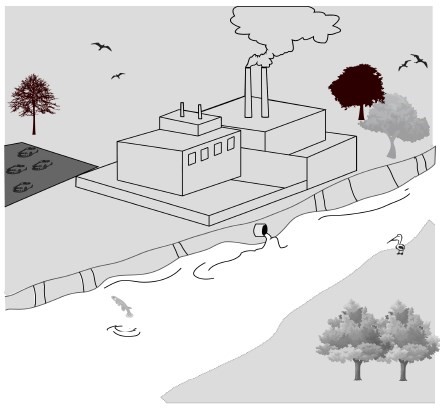
A way the factory could help conserve the river water as a natural resource would be to.....
a)
filter the water before dumping into the river
b)
remove all of the animals from the area for their protection
c)
set up nets down river to remove contaminated fish
d)
post signs of "No swimming in the river"
62.
If the factory in this diagram was NOT practicing good environmental conservation, what effect would be produced?
a)
air and water pollution
b)
good fishing for recreation
c)
plentiful animals in the river
d)
purified drinking water
63.
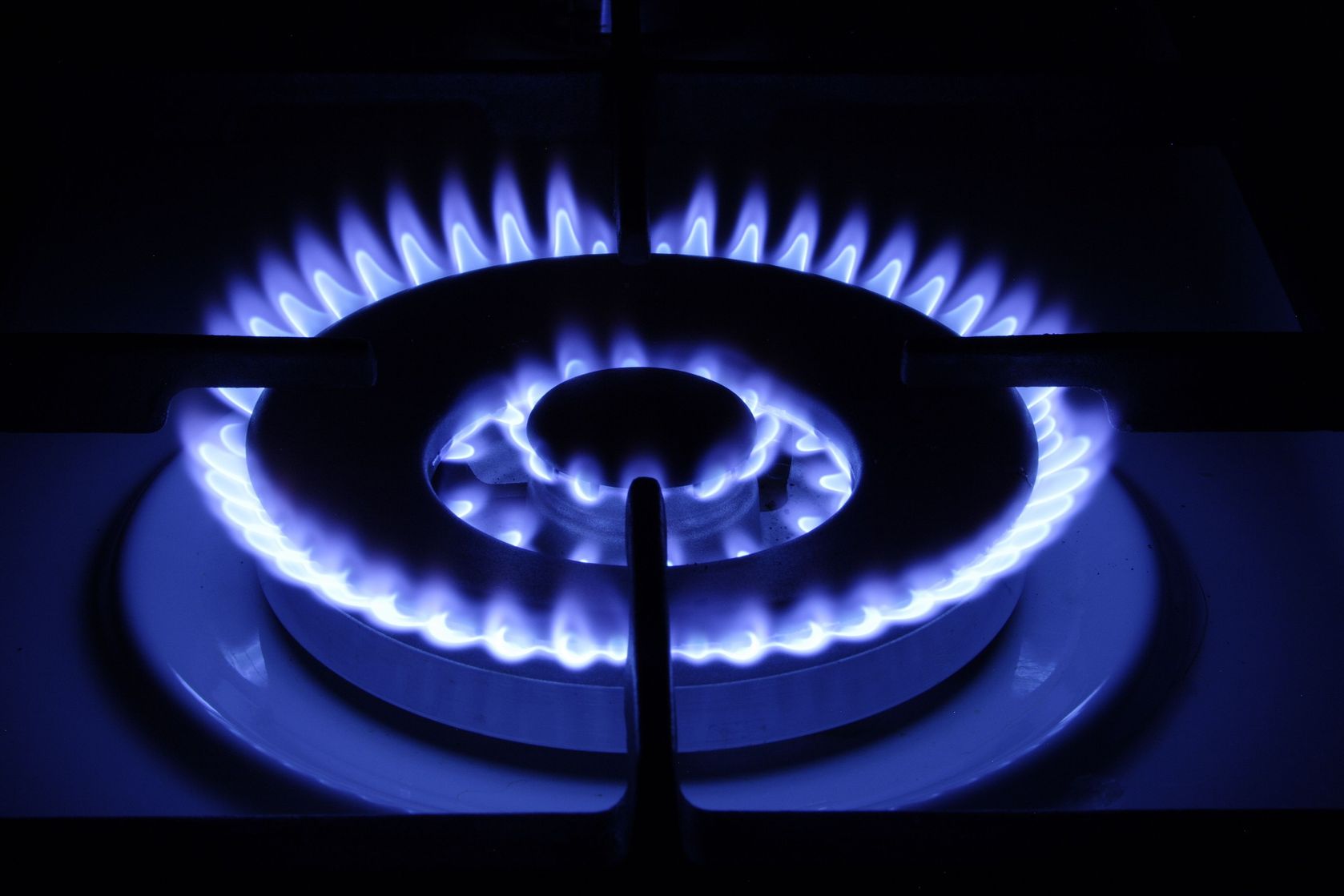
This picture shows which type of alternative energy?
a)
Wind
b)
Solar
c)
Hydroelectric
d)
Geothermal
64.
What do renewable and non-renewable resources have in common? 
a)
They both produce pollution in the environment
b)
They both are energy sources that come from the sun
c)
They both are useful to humans
d)
They both need to be collected from inside the Earth
65.
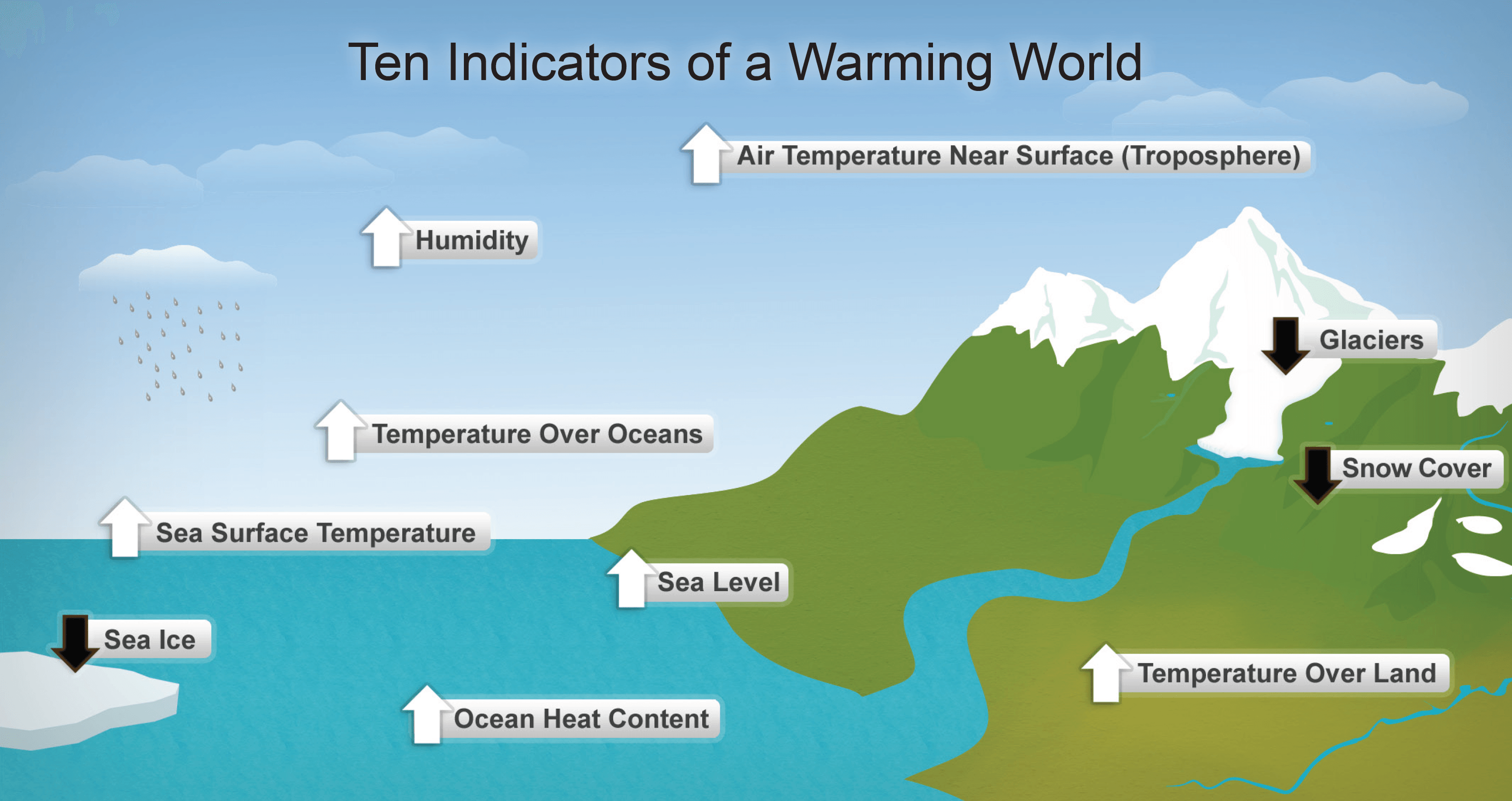
The following graph tells us what?
a)
Sea Levels are decreasing.
b)
Sea Levels are rising.
66.
The main human activity that releases greenhouse gases is
a)
using bottled water
b)
burning fossil fuels
c)
texting on cellphones
d)
eating meat
67.
The greenhouse gas having the greatest role in human-caused global warming is
a)
methane
b)
carbon dioxide
c)
CFCs (chlorofluorocarbons)
d)
ozone
68.
Human activity is adding additional greenhouse gases to the amount that are in the atmosphere naturally
a)
True
b)
False
69.
_____ uses dams to turn flowing water into electricity.
a)
hydropower
b)
tidal power
c)
biomass
d)
nuclear
70.
Which is NOT an example of Biomass?
a)
wood
b)
crops
c)
wind
d)
animal and yard waste
71.
Which energy source is non-renewable?
a)
biomass
b)
nuclear
c)
hydropower
d)
tidal power
72.
What is one type of biomass energy?
a)
Plastic
b)
Sun
c)
Wood
73.
What is biomass energy?
a)
any organic matter that can be used as an energy source
b)
radiant energy emitted by the sun
c)
is the heat from the Earth
d)
is a form of solar energy
74.
Geothermal
a)
Renewable
b)
Nonrenewable
75.
Which of these is a practice that sustains or conserves natural resources?
a)
leaving the TV on all day
b)
filling the bathtub to the top
c)
recycling cans
d)
burning newspapers
76.

Which of the following resources WILL eventually run out?

a)

natural resources

b)

renewable resources

c)

nonrenewable resources

77.
A mineral's resistance to being scratched is called?
a)
streak
b)
luster
c)
hardness
d)
heft
78.
Although cement, brick, steel, and glass all come from substances found in Earth’s crust, they are not classified as minerals because  
a)
They are organic
b)
They are not naturally occurring 
c)
They are too hard
d)
They have many uses
79.
The ratio of an objects mass to its volume is called
a)
Fluorescence
b)
Streak
c)
Ore
d)
Density
80.
Dull, silky, waxy, pearly, and earthy are terms that best describe which property of minerals?
a)
luster
b)
color
c)
streak
d)
cleavage
81.
What does inorganic mean?
a)
Something that is living
b)
Something that is dead, but was once living
c)
Something that was never living
d)
Something that was once dead and is now alive
82.
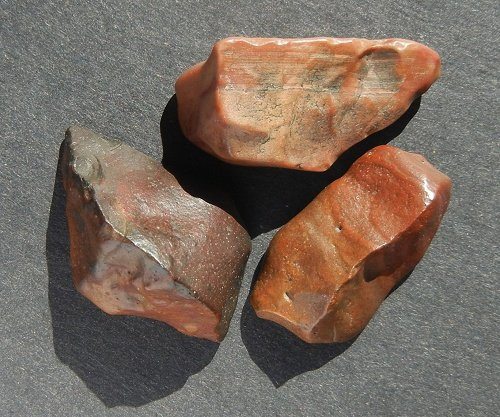
A mineral breaks into pieces like the one shown in the picture. How would you describe this mineral's breakage?
a)
Fracture
b)
Cleavage
c)
Glassy
d)
Waxy
83.
Which minerals would all scratch apatite?
a)
diamond, topaz, quartz
b)
quartz, calcite, gypsum
c)
fluorite, talc, calcite
d)
diamond, fluorite, corundum
84.
What is the relationship between a rock and a mineral?
a)
Rocks are made up of minerals.
b)
Minerals are made up of rocks.
c)
Rocks are on the Earth's surface. Minerals are found underground.
d)
Rocks and minerals are different names for the same thing.
85.
A scientist made an object in a lab that has a crystal structure and was solid. Why is the object not considered a mineral?
a)
It is a solid
b)
It is man-made
c)
It is inorganic
d)
It has a crystalline structure
86.
Why is coal not considered a mineral?
a)
It is not a solid
b)
It is man-made
c)
It is not inorganic
d)
It is made of carbon
87.
A student found a substance that he thought was a mineral. The substance fell out of the container and the liquid spilled all over the floor. Why is the substance not a mineral?
a)
It is not a mineral because it is man-made
b)
It is not a minerals because it is a liquid
c)
It is not a minerals because it is organic
d)
It is not a mineral because it is solid
88.
A naturally formed, inorganic solid with a crystalline structure is known as what? 
a)
A Rock
b)
A Mineral
c)
A Non-Silicate Mineral
d)
A Foliated Metamorphic Rock
89.
Geologists in search of diamonds are often tricked by quartz because they have similar colors, luster, and textures. If they were to scratch the mineral on a tile and observe the color of its powder, they could determine if the mineral was really diamond. What property would they be testing for?
a)
Hardness
b)
Fracture
c)
Crystal Structure
d)
Streak
90.
What is the softest mineral known as?
a)
diamond
b)
talc
c)
graphite
d)
Corundum
91.
What does a 1 on the Mohs Hardness scale mean?
a)
The mineral is really hard
b)
The mineral is softer than glass
c)
The mineral is harder than a penny
d)
The mineral is softer than a fingernail
92.
The most obvious, but also least useful property when identifying minerals is?
a)
Streak
b)
Luster
c)
Cleavage
d)
Color
93.
How do minerals form?
a)
cooling of magma
b)
heat and pressure
c)
evaporation of liquids
d)
all of these
94.
How do you determine the density of a mineral?
a)
Calculate: D=M/V
b)
Calculate: D=V/M
c)
Calculate: D=M x V
d)
Calculate: D= V x M
95.
What property describes when a mineral breaks in an uneven, rough, or jagged way?
a)
Luster
b)
Cleavage
c)
Hardness
d)
Fracture
96.
Rocks and minerals are considered to be solids. What does solid mean?
a)
Having a definite shape and indefinite volume
b)
Having an indefinite shape and indefinite volume
c)
Having an indefinite shape and definite volume
d)
Having a definite shape and definite volume
97.
What mineral is used for the lead in pencils?
a)
Graphite
b)
Galena
c)
Magnetite
d)
Quartz
98.
What will happen if an igneous rock is put under an extreme amount of heat and pressure?
a)
it will melt into lava
b)
it will weather and erode
c)
it will become a metamorphic rock
d)
it will become a sedimentary 
99.
Which type of rock formation process would be most like stacking crackers and cheese and squishing them together?
a)
Igneous Rock
b)
Metamorphic Rock
c)
Sedimentary Rock
d)
Nonfoliated Metamorphic Rock
100.
Wind blowing sediment through the air is an example of what?
a)
Weathering
b)
Erosion
c)
Deposition
d)
Compaction
101.
List the following processes needed to make a sedimentary rock in order from first to last:
a)
weathering, erosion, cementation, deposition, compaction
b)
weathering, erosion, deposition, compaction, cementation 
c)
deposition, compaction, weathering, erosion, cementation
d)
cementation, compaction, deposition, weathering, erosion
102.
What type of rock formation process would be most like a piece of candy that has melted, cooled and re-hardened?
a)
Igneous Rock
b)
Metamorphic Rock
c)
Sedimentary Rock
d)
Clastic Rock
103.
What is the process by which igneous rocks are formed?
a)
heat and pressure
b)
melting and cooling
c)
compaction and cementation
d)
weathering and erosion
104.
The process of sediments "settling" out of wind or water is known as what?
a)
erosion
b)
deposition
c)
compaction
d)
cementation
105.
What can be found in a sedimentary rock?
a)
rock fragments and sand
b)
minerals and shell
c)
fossils
d)
all of these choices
106.
Which of the words below describe mud, sand, and tiny bits of rocks that cement together to form a type of rock?
a)
concrete
b)
magma
c)
metamorphs
d)
sediments
107.
Which type of rock forms from extreme heat and pressure?
a)
Igneous
b)
Sedimentary
c)
Organic
d)
Metamorphic
108.
A metamorphic rock changes into an igneous rock by what two processes?
a)
Melting and cooling
b)
Extreme heat and pressure
c)
Compaction and cementation
d)
Weathering and erosion
109.
What is the MAIN way rocks are classified?
a)
Their color and shapes
b)
How they form
c)
Mineral bands
d)
Where they form
110.
True/False: Igneous rocks can only turn into metamorphic rocks.
a)
True
b)
False
111.
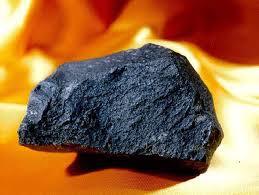
This rock was found near the mouth of a volcano. What type of rock is this?
a)
Sedimentary
b)
Igneous
c)
Metamorphic
112.
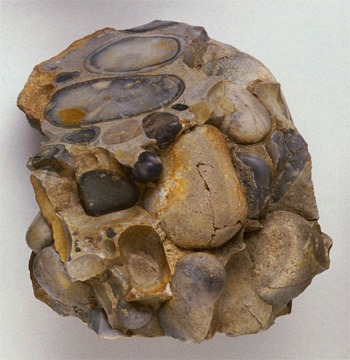
This rock was formed by smaller pieces of rock that settled at the bottom of a lake millions of years ago. What type of rock is this?
a)
Sedimentary
b)
Igneous
c)
Metamorphic
113.
This rock is made from tiny pieces of other rocks that settled to the bottom of a valley millions of years ago. What type of rock is this?
a)
Sedimentary
b)
Igneous
c)
Metamorphic
114.
This rock cooled on the outside of a volcano and contained air bubbles when it was forming. What type of rock is this?
a)
Sedimentary
b)
Igneous
c)
Metamorphic
115.
Each rock type can follow only one pathway of the rock cycle.
a)
True
b)
False
116.
This rock was formed by lots of fossils that settled on top of each other over time. What type of rock is this?
a)
Sedimentary
b)
Igneous
c)
Metamorphic