wayground logo

Free Printable Worksheets

NEW

Font size

S
M
L
XL
Worksheets

Year 10 Bio exam revision! Good luck!

Total questions: 80

Worksheet time: 1hrs 7mins

Name
Class
Date
1.
a)
Anaphase
b)
Cytokinesis
c)
Telophase
d)
Metaphase
2.

The process by which the nuclear material is divided equally between two new cells

a)

mitosis

b)

cancer

c)

spindle

d)

centromere

3.
How many chromosomes do humans have?
a)
46
b)
21
c)
10
4.
Fruit fly body cells have 8 chromosomes. After mitosis, you would expect a resulting fruit fly daughter cell to have -
a)
16 chromosomes.
b)
46 chromosomes.
c)
8 chromosomes.
d)
4 chromosomes.
5.
Structure (b) is a ____.
a)
chromosome
b)
chromatid
c)
centromere
6.
Structure (a) is a ____.
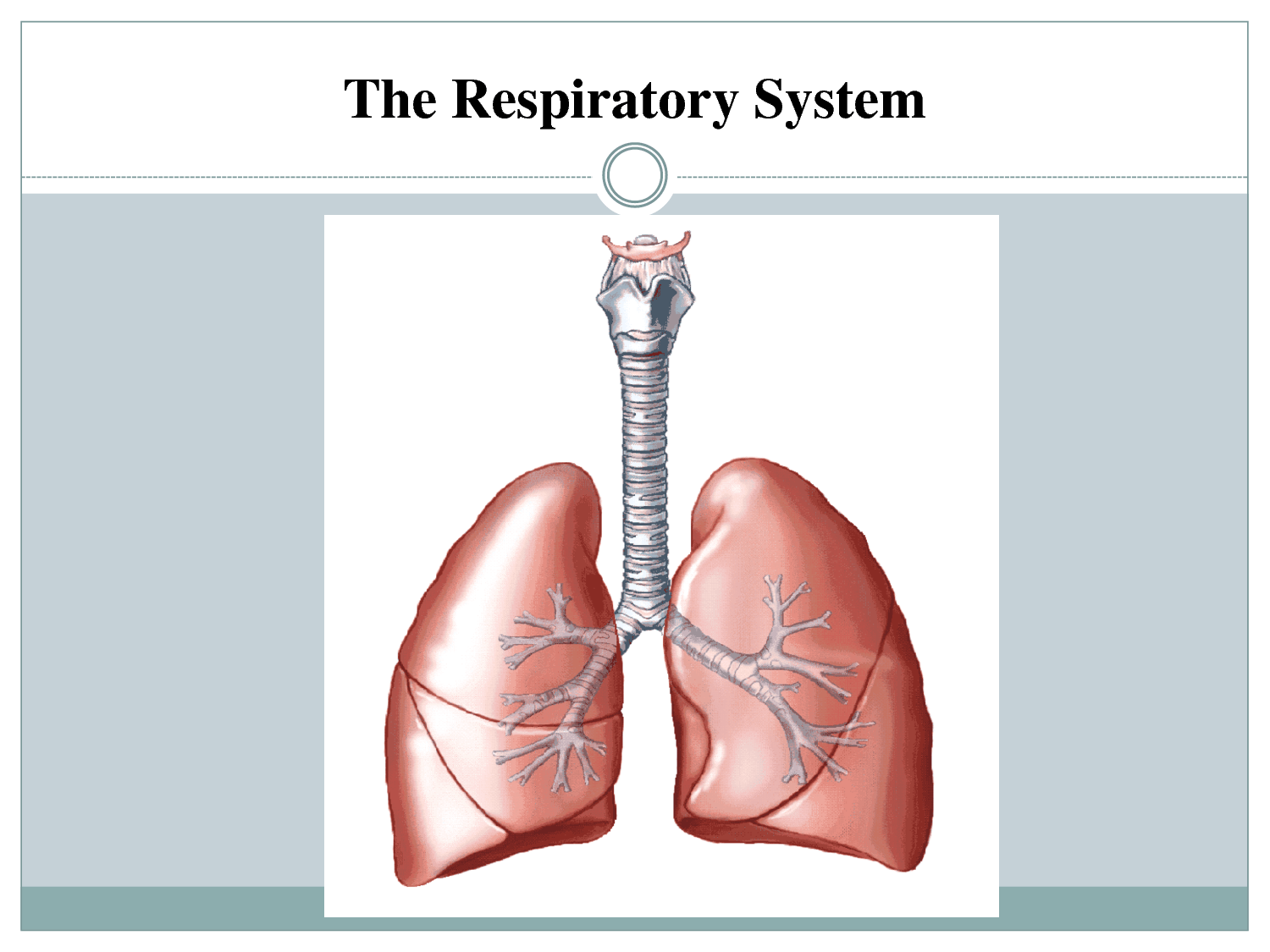
a)
chromosome
b)
chromatid
c)
centromere
7.
Name the previous phase.
a)
Prophase
b)
Metaphase
c)
Anaphase
d)
Telophase
8.
Meiosis produces cells with a haploid or diploid number of chromosomes?
a)
Haploid
b)
Diploid
9.

a distinct sequence of nucleotides forming part of a chromosome, a ____ codes for a particular trait

a)

Gene

b)

Chromosome

c)

Pedigree

10.

a tool that geneticists use to map out the inheritance of traits. It shows the presence or absence of a trait in an individual’s family tree

a)

Pedigree

b)

Gene

c)

Allele

11.

a process that occurs before the chromosomes separate and move into separate cells, this is when a small segment of one chromosome exchanges places with the corresponding segment on the other chromosome

a)

crossing over

b)

crossing under

c)

crossing through

12.
For stem height, TT would represent which type of trait? 
a)
dominant 
b)
recessive
13.
Stem height, a physical trait we see is an example of a ___________
a)
genotype
b)
phenotype
14.
A chart showing all possible allele combinations for a particular genetic cross: 
a)
Punnett square
b)
genotype
c)
traits
d)
phenotype
15.
Two different alleles for a trait: 
a)
heterozygous
b)
homozygous
16.
Which of the following is a HOMOZYGOUS RECESSIVE genotype?
a)
GG
b)
Gg
c)
gg
17.
Which of the following is a HETEROZYGOUS genotype?
a)
GG
b)
Gg
c)
gg
18.
What type of inheritance do two alleles have if their traits blend together? 
a)
Incomplete Dominance
b)
Co-Dominance
c)
Mendelian Inheritance
d)
Homozygous Inheritance
19.
A calico cat shows both the traits for orange fur and black fur. What kind of allele expression is this?
a)
Incomplete Dominance
b)
Co dominance
c)
Independent assortment
d)
Recessive inheritance
20.
A breed of chicken shows codominance for feather color. One allele codes for black feathers, another codes for white feathers. The feathers of heterozygous chickens of this breed will be:
a)
all black
b)
all white
c)
all gray
d)
speckled black and white
21.
In chickens, feather color is codominant.  If a black chicken BB is mated with one that is black and white (BW) what are the chances of having a chicken that is black and white?
a)
50%
b)
0%
c)
25%
d)
100%
22.
In some carnations, flower color exhibits codominance.  Identify the correct genotypes for red, white, and speckled carnations.
a)
Red = RR, white = rr, speckled = Rr
b)
Red = RR, white = WW, speckled = rw
c)
Red = RR, white = ww, Speckled = Rw
d)
Red = RR, white = WW, speckled = RW
23.
A plant shows incomplete dominance in size. A tall plant (TT) is crossed with a medium plant (TS). What fraction of plants will also be tall?
a)
100 %
b)
75%
c)
50%
d)
25%
24.
How are Incomplete Dominance and Co Dominance different than a normal Mendelian cross?
a)
There is no difference
b)
The heterozygous genotype has a unique phenotype
c)
There is no heterozygous genotype
d)
There is only one phenotype regardless of genotype.
25.
What does a filled in square represent?
a)
Not affected Female
b)
Not affected Male
c)
Affected Male
d)
Affected Female
26.
How many generations are shown in this pedigree?
a)
1
b)
2
c)
3
d)
4
27.
How many people in this pedigree have the trait?
a)
2
b)
3
c)
4
d)
6
28.
Mutations are a source of _______________. 
a)
Variation 
b)
Disease
c)
Polypeptide 
29.
Any change in the sequence of DNA is...
a)
transgenic shift
b)
Single Genotype
c)
Monohybrid Trait
d)
Mutation
30.

What is not a reason for mutation?

a)

UV radiation

b)

DNA deletion

c)

Asexual reproduction

d)

DNA misread

31.

In preparation for an electrophoresis procedure, enzymes are added to DNA in order to

a)

convert the DNA into gel

b)

cut the DNA into fragments

c)

change the color of the DNA

d)

produce longer sections of DNA

32.

Gel electrophoresis is used to separate DNA fragments on the basis of which property?

a)

size

b)

color

c)

functions

d)

chromosomes

33.
Which DNA fragment bands move faster and farther in a gel electrophoresis? 
a)
there is no way to tell 
b)
the largest ones
c)
the smallest ones
d)
none of these
34.

Which suspect should be charged with the crime?

a)

Suspect 1

b)

Suspect 2

c)

Suspect 3

d)

None of these suspects

35.
Which male is the father of this child?
a)
Male 1
b)
Male 2
c)
Neither could be the father
d)
Either could be the father
36.
The gradual change in species over time is...
a)
Evolution
b)
Nucleotide 
c)
Adaptation
d)
Natural Selection
37.
Darwin referred to this as survival of the fittest. Over time, it results in changes in the inherited characteristics of a population because organisms with adaptations that make them fit for their environment will survive and reproduce better than those without favorable traits.
a)
Natural Selection
b)
Genetic Variation
c)
Survival of the Fittest
38.
Genetic differences between organisms of the same species
a)
Variation
b)
Adaptation
c)
Behavior
d)
Environment
39.

study of similarities and differences in the structures of organisms

a)

paleontologist

b)

permineralization

c)

comparative anatomy

40.

parts of an organism or similar in structure

a)

homologous structure

b)

comparative anatomy

c)

embryology

d)

adaptation

41.

the science of the development of embryos from fertilization to birth

a)

embryology

b)

comparative anatomy

42.
Which organelle performs PHOTOSYNTHESIS?
a)
Chloroplast
b)
Mitochondria
43.
Which of the following is the correct equation for PHOTOSYNTHESIS?
a)
CO+ light + H2O --> O+ Sugar
b)
CO+ sugar + H2O --> O+ light
c)
O2 + light + H2O --> CO+ Sugar
d)
CO+ O2 + H2O --> Light+ Sugar
44.
What process occurs when light energy is captured in autotrophs and converted into sugar?
a)
Photosynthesis
b)
Cellular Respiration
45.
Plants need ________ for photosynthesis
a)
oxygen
b)
soil
c)
carbon dioxide
d)
sugar
46.
What are the products of photosynthesis?
a)
water and carbon dioxide
b)
oxygen and glucose
c)
oxygen and carbon dioxide
d)
oxygen and water
47.
Cellular respiration takes place in the
a)
nucleus
b)
cytoplasm
c)
ribosomes
d)
mitochondria
48.
In which way are photosynthesis and cellular respiration different?
a)
Cellular respiration stores ATP, while photosynthesis releases ATP.
b)
Cellular respiration produces oxygen, while photosynthesis uses oxygen.
c)
Photosynthesis releases energy, while cellular respiration stores energy.
d)
Photosynthesis used carbon dioxide, while cellular respiration produces carbon dioxide.
49.
What is the correct equation for cellular respiration?
a)
6O2 + C6H12O6 -> 6CO2 + 6H2O + Energy
b)
6O2 + C6H12O6 + Energy -> 6CO2 + 6H2O
c)
6CO2 + 6H2O -> 6O2 + C6H12O6 + Energy
d)
6CO2 + 6H2O + Energy -> 6O2 + C6H12O6
50.
What is an adaptation?
a)
A feature that helps a plant grow.
b)
A feature that helps a living thing survive.
c)
A feature that helps a living thing walk.
d)
A feature that that helps only animals survive. 
51.

A nice smell is an adaptation that __________________.

a)

helps the plant keep water inside the leaves.

b)

pokes animals that try to eat the plant.

c)

attracts pollinators to the plant.

d)

helps flowers grow faster.

52.
Why might some plants that grow on the shady rain forest floor have large leaves?
a)
to stay safe from predators
b)
to attract different animals
c)
to survive harsh winters with heavy snowfall
d)
to take in as much sunlight as possible
53.

Mangrove roots take in oxygen and store it for the trees use when submerged.

a)

adaptation

b)

not an adaptation

54.
Label the Neuron-What does the letter "A" represent?
a)
Axon
b)
Dendrite
c)
Axon Terminal
d)
Cell Body
55.
Label the Neuron-What does the letter "D" represent?
a)
Dendrite
b)
Axon
c)
Myelin Sheath
d)
Node of Ranvier
56.
Label the Neuron-What does the letter "B" represent?
a)
Myelin Sheath
b)
Schwann Cell
c)
Cell Body
d)
Nucleus
57.
Label the Neuron-What does the letter "C" represent?
a)
Cell Body
b)
Dendrite
c)
Axon Terminal
d)
Myelin Sheath
58.
What is another name for a nerve cell?
a)
Muscle Fiber
b)
Connective Tissue
c)
Impulse
d)
Neuron
59.
Which neurons act to connect a sensory neuron to a motor neuron? 
a)
interneuron
b)
afferent 
c)
efferent
d)
motor
60.
What is the central nervous system (CNS) made up of?
a)
brain & spinal cord
b)
sensory neurons
c)
motor neurons
d)
sensory receptors
61.
Part of the nervous system made of the nerves that are not part of the brain or spinal cord.
a)
central nervous system
b)
peripheral nervous system
62.
What is the main function of the respiratory system?
a)
to provide oxygen and remove carbon dioxide from the body
b)
to bring oxygen to the body
c)
to break down food and absorb nutrients
d)
to remove oxygen from the body and deliver carbon dioxide
63.
What are the main organs of gas exchange in the respiratory system?
a)
diapragm
b)
lungs
c)
trachea
d)
bronchi
64.
When you breathe, your lungs take in ___ and remove ___. 
a)
air/oxygen
b)
oxygen/carbon dioxide 
c)
carbon dioxide/waste 
d)
waste/air 
65.
What is the function of the bronchi?
a)
Transport air from nose to lungs
b)
Transport air from trachea to lungs
c)
Transport air from lungs to alveoli
d)
Transport air from alveoli to blood
66.

Arteries carry oxygen rich blood away from the heart.

a)

True

b)

False

67.

Veins carry oxygen poor blood back to the heart.

a)

False

b)

True

68.

How does the heart work?

a)

It pumps blood first to the lungs, back to the heart and then around the rest of the body.

b)

It pumps blood first to the rest of the body, back to the lungs and then to the heart.

c)

It pumps blood around the rest of the body, back to the heart and then to the lungs,

69.
______________ are the smallest blood vessels.
a)
Arteries
b)
Veins
c)
Capillaries
70.
The circulatory system works with the ___________ system to provide our body with oxygen.
a)
respiratory
b)
digestive
c)
muscular
d)
skeletal
71.

The immune system

a)

Helps the body to defend against infectious organisms and other invaders

b)

enables us to cope with and process our emotions

c)

Helps us to digest food

d)

Helps people to sense their surroundings

72.

The bodies immune system has

a)

3 lines of defense

b)

2 lines of defense

c)

1 line of defense

73.

Which of the following help to make up the 1st line of defense?

a)

white blood cells, histamine

b)

t cells, b cells antibodies

c)

skin, hair, chemical secretions such as mucus, saliva and tears

d)

Skin, histamine

74.

The second line of defense helps to

a)

prevent pathogens from entering body

b)

fight all types pathogens once they have entered the body

c)

fight off specific pathogens, remember pathogens that have previously invaded,

75.

The third line of defense helps to

a)

prevent pathogens from entering body

b)

fight all types pathogens once they have entered the body

c)

fight off specific pathogens, and remember pathogens that have previously invaded

76.
The purpose of the endocrine system is to
a)
maintain homeostasis by reacting quickly to stimuli
b)
produce substances that protect the body from bacteria 
c)
maintain metabolism, growth and development in homeostasis 
d)
transport molecules throughout the body
77.
Endocrine glands produce __________ which maintain the body in homeostasis
a)
oils
b)
neurotransmitters 
c)
tears
d)
hormones
78.
targets bone and muscle to promote growth and development
a)
growth hormone
b)
prolactin
c)
oxytocin
d)
ADH (antidiuretic hormone)
79.
What does the stomach do?
a)
Nothing
b)
Adds digestive juices to the food
c)
Goes out to the rectum
d)
Barley any of these
80.
Number 7 in the diagram represents the:
a)
Small intestine
b)
Liver
c)
Large intestine
d)
Gall Bladder