wayground logo

Free Printable Worksheets

Font size

S
M
L
XL
Worksheets

Plate Tectonics Review

Total questions: 64

Worksheet time: 40mins

Name
Class
Date
1.
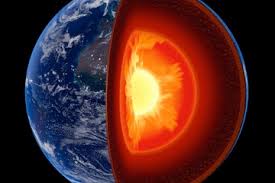
Which of these two layers is a solid?
a)
innercore
b)
Outercore
2.
What is the top layer of the Earth's surface called? 
a)
Mantle
b)
Innercore
c)
Outercore
d)
Crust
3.
A dense ball of solid iron and nickel.
a)
crust
b)
inner core
c)
mantle 
d)
outer core
4.
What is the rigid layer of the Earth's surface made up of the  crust and upper mantle called?
a)
asthenosphere
b)
lithosphere
c)
mesosphere
d)
continental crust
5.

Temperature, density, and pressure _____________________ as you go deeper into the earth.

a)

increases

b)

decreases

c)

goes up and down depending on the layer

d)

stays the same

6.
Which layer of Earth is characterized by rock that is plastic, or soft enough to flow?
a)
asthenosphere
b)
crust
c)
lithosphere
d)
inner core
7.
This layer of Earth is the thickest part
a)
crust
b)
outer core
c)
mantle
d)
inner core
8.
Which of the following occurs because of convection currents?
a)
Tectonic plates on the crust move.
b)
The mantle increases in size.
c)
Pressure in the crust increases.
d)
Pressure in the crust decreases.
9.
Scientists think that convection currents that move the plates flow in Earth's
a)
Continental crust
b)
Oceanic crust
c)
Asthenosphere
d)
Lithosphere
10.
As you travel from the inner core to the crust, how would temperature, pressure and density of the material change?
a)
The would all increase
b)
The would all decrease.
c)
They would stay the same.  
d)
Temperature would decrease, but pressure and density would increase. 
11.
Where does the heat come from that drives this convection current in the mantle? 
a)
The sun
b)
The crust
c)
the mantle
d)
the core
12.
What does the theory of continental drift state?
a)
The continents were once joined in a super-continent and have moved over time
b)
Continents are stationary and do not move
c)
The Earth is broken into lithospheric plates that move due to convection currents
d)
none of the above
13.
Name the boundary
a)
convergent boundary
b)
divergent boundary
c)
transform boundary
d)
sergent boundary
14.
Name the boundary
a)
convergent boundary
b)
divergent boundary
c)
transform boundary
d)
sergent boundary
15.
Name the boundary
a)
convergent boundary
b)
divergent boundary
c)
transform boundary
d)
sergent boundary
16.
During sea floor spreading, molten material rises up from the mantle...
a)
along the continents
b)
at the mid ocean ridges
c)
deep ocean trenches
d)
at north and south poles
17.
Which of the following is where one plate slides under another plate?
a)
submarine zone
b)
divergence zone
c)
subduction zone
d)
lower zone
18.
Associated with transform boundaries.
a)
Volcanoes
b)
mountains
c)
trenches
d)
earthquakes
19.

This land formation occurs when divergent boundaries occur on continents.

a)

mid ocean ridge

b)

deep ocean trench

c)

pacific hot spot

d)

rift valley

20.
Oceanic crust is
a)
Younger and less dense than continental crust
b)
Thinner, younger and more dense than continental crust
c)
Older, thicker and less dense that continental crust
d)
Bigger and younger than continental crust
21.
The tectonic plates float on the 
a)
lithosphere
b)
lower mantle
c)
outer core
d)
asthenosphere
22.

The thinest and least dense layer

a)

crust

b)

inner core

c)

mantle

d)

outer core

23.
Supporting Evidence: fossils, continent shape, landforms
a)
Continental Drift
b)
Seafloor Spreading
c)
Plate Tectonics
24.

Sonar discovery of Mid-Atlantic Ridge; rock samples showing older rocks the farther that you get from the mid ocean ridge

a)

Continental Drift

b)

Seafloor Spreading

c)

Plate Tectonics

25.

The process for new oceanic lithosphere forming at mid ocean ridges

a)

Continental Drift

b)

Seafloor Spreading

c)

Plate Tectonics

d)

Pangaea

26.
Volcanoes are most often formed at this boundary.
a)
Divergent
b)
Convergent
c)
Normal
d)
Transform
27.
The Mid-Atlantic Ridge is formed at this boundary.
a)
Divergent
b)
Convergent
c)
Normal
d)
Transform
28.
Continental crust is more dense than oceanic crust.
a)
True
b)
False
29.
A fossil's location in the Earth's strata can help us know if it is older or younger than other fossils found in the strata.
a)
True
b)
False
30.

Which color of the rocks layer is the NEWEST layer?

a)

Green

b)

Brown

c)

White

d)

Light Gray

31.

Which type of rock are fossils found?

a)

Metamorphic

b)

Sedimentary

c)

Igneous

32.

What happen to earth surface over time? Use the image to help answer

a)

It changed from water to dry land; fish fossils to mammal fossils

b)

It changed from dry land to water; mammal fossils to fish fossils

33.

T or F. Wegener hypothesized that different fossils were found in different locations. This allows us to believe that the earth was once together.

a)

True

b)

False; similar fossils

34.

The continents and the different tectonics plates all fit together like a giant......

a)

boundary

b)

fossil

c)

puzzle

35.

When two tectonic plates meet. It is called a ….

a)

plate

b)

convergent

c)

boundary

36.

The Earth's surface has changed over the past 200 millions of years. What are some evidence used to support this claim?

a)

Glaciers in Africa; Tropical Plant found in Antarctica

b)

Glaciers in Antarctica; Tropical Plants found in Africa

c)

The Earth has been the same climate as it is today

37.

What landform is created at a subduction zone?

a)

mountains

b)

mid-ocean ridges

c)

new sea-floor

d)

volcanoes

38.

Continental crust colliding with another continental crust?

a)

volcano

b)

mid-ocean ridge

c)

mountains

39.

Oceanic crust colliding with an Continental Crust

a)

Mountain

b)

Subduction Zones

c)

Mid-Ocean Ridge

d)

Oceanic crust colliding with an Continental Crust

40.

An oceanic crust pushing away from another oceanic crust allowing MAGMA to rise and harden...

a)

Mountain Range

b)

Mid-Ocean Ridge

c)

Volcano

41.

Newer Ocean Crust is found near or away from the mid-ocean ridge?

a)

away

b)

near

c)

all over the seafloor

42.
Tectonic plates consist of
a)
continental crust.
b)
oceanic crust. 
c)
both continental and oceanic crust.
d)
mesophere. 
43.
What is the area where two tectonic plates meet called?
a)
a collision
b)
a mid-ocean ridge
c)
a boundary
d)
a rift zone
44.
What happens at mid-ocean ridges?
a)
strike-slip faults
b)
magnetic reversal
c)
sea-floor spreading
d)
earthquakes.
45.
Earthquakes produce
a)
seismographs. 
b)
maps. 
c)
seismic waves. 
d)
volcanoes. 
46.
Which liquid is the least dense?
a)
oil
b)
water
c)
syrup 
d)
plastic bottle
47.
Plate movement is caused by _____
a)
The rotation of the Earth
b)
Ocean tides
c)
Convection current in the mantle
d)
The moon's gravity
48.
Which is subducted in an ocean-continental convergent boundary?
a)
continental plate
b)
oceanic plate
49.
Which of the following is the softer moving area of the mantle that contains convection current?
a)
asthenosphere
b)
lithosphere
c)
outer core
d)
oceanic crust
50.
This area contains over 70 percent of volcanoes and 90 percent of earthquakes in the world.
a)
North American plate
b)
Ring of Fire
c)
Fiery rings
d)
African plate
51.
The presence of the same ________ on several continents supports the idea of continental drift.
a)
rocks
b)
fossils
c)
both fossils and rocks
d)
neither fossils nor rocks
52.
Matching ________ on different continents are evidence for continental drift.
a)
weather systems
b)
river systems
c)
rock structures
d)
wind systems
53.
Many scientists think hot plastic-like rock in the mantle is forced upward toward the surface, cools, and sinks.  This process is called a(n) _________.
a)
earthquake
b)
convergent boundary
c)
volcano
d)
convection current
54.
What is the correct order (starting from the surface) of Earth’s layers?
a)
mantle, outer core, inner core, crust
b)
crust, mantle, outer core, inner core
c)
outer core, inner core, crust, mantle
d)
crust, outer core, inner core, mantle
55.
_________ currents carry heat from the hot inner core to the cooler outer mantle and back again.
a)
River
b)
Radiation
c)
Convection
d)
Conduction
56.
The San Andreas Fault in California is an example of a ________.
a)
divergent boundary
b)
convergent boundary
c)
transform fault
d)
subduction zone
57.
Which type of plate boundary occurs at B?
a)
convergent
b)
divergent
c)
transform
d)
country
58.
Which type of plate boundary is shown at A?
a)
transform boundary
b)
convergent boundary
c)
divergent boundary
d)
fractured boundary
59.
A divergent boundary occurs when plates ....
a)
Pull apart
b)
Come together
c)
Slide past each other
d)
subducting
60.
Where can the oldest layer be found?
a)
The top layer
b)
The middle layer
c)
They are all the same age
d)
The bottom layer
61.
How are Sedimentary Rocks formed?
a)
Cooling and Hardening
b)
Heat and Pressure
c)
Compacting and Cementing
d)
Melting
62.
Which layer formed first?
a)
Rock Layer W
b)
Rock Layer X
c)
Rock Layer Y
d)
Rock Layer Z
63.

Magma sinks down because it .

a)

warm up and less dense

b)

cool down and denser

64.

Magma rise up because it .

a)

warms up and less dense

b)

cools down and denser