wayground logo

Free Printable Worksheets

Font size

S
M
L
XL
Worksheets

Semester 1 Exam Chemistry

Total questions: 149

Worksheet time: 3hrs 48mins

Name
Class
Date
1.
The smallest unit of an element that still has the properties of that element is?
a)
a substance
b)
a mixture
c)
a compound
d)
an atom
2.
A mixture that appears to be evenly mixed throughout:
a)
an atom
b)
a compound
c)
a homogeneous mixture
d)
a heterogeneous mixture
3.
 mixture that does NOT appear to be evenly mixed throughout:
a)
an atom
b)
a compound
c)
a homogeneous mixture
d)
a heterogeneous mixture
4.
Freezing Juice?
a)
Physical Change
b)
Chemical Change
5.
Exploding Fireworks?
a)
Physical Change 
b)
Chemical Change 
6.
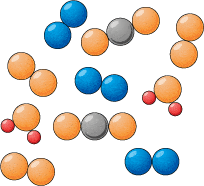
Which type of mixture is this? 
a)
Element only
b)
compounds only
c)
elements and compounds
7.
This picture represents which of the following?
a)
element
b)
compound
c)
mixture
8.
This picture represents which of the following?
a)
element
b)
compound
c)
mixture
9.
Wood burning is an example of _______
a)
physical intensive property
b)
physical extensive property
c)
chemical change
d)
Physical change
10.
Which of the following is a physical change?
a)
corrosion
b)
tarnishing
c)
rotting
d)
cutting
11.
The blue numbers in the image below are called ___________.
a)
compounds
b)
coefficients
c)
subscripts
d)
chemical formulas
12.
At higher temperatures
a)
particles in an object have less energy
b)
particles in an object move faster
c)
a gas contracts
13.
Which has a greater distance between particles?
a)
Solid
b)
Liquid
14.
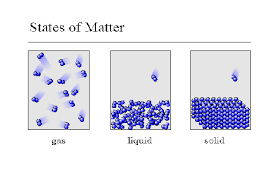
This picture represents: 
a)
Element
b)
Compound
c)
Mixture of Elements
d)
Mixture of Compounds
15.
A magnet was placed near a pile that contained both iron and sulfur. The magnet was moved gradually closer to the pile. As it neared the pile, the magnet started attracting small pieces of iron from the pile. 
Which of these statements best describes the contents of the pile?
a)
It is a heterogeneous mixture of iron and sulfur that can be separated by magnetism.
b)
It is a solution of iron and sulfur that can be separated by magnetism.
c)
 It is a compound of iron and sulfur that can be separated by magnetism.
d)
It is a suspension of sulfur in iron that can be separated by magnetism.
16.
What does this picture represent? 
a)
solid
b)
liquid
c)
gas
d)
plasma
17.
What does this picture represent? 
a)
solid
b)
liquid 
c)
gas
d)
plasma
18.
Intensive property is dependent on the amount of a substance. 
a)
True
b)
False
19.
Freezing point is an example of extensive property.
a)
True
b)
False
20.
A substance that contains only one type of atom is a(n)
a)
compound
b)
element
c)
heterogeneous mixture
d)
homogeneous mixture
21.
Which of the following is NOT considered a pure substance?
a)
Atoms
b)
Elements
c)
Compounds
d)
Mixtures
22.
True or False:  Mixtures are a combination of two or more substances that can be either physically or chemically combined.
a)
True
b)
False
23.
Which of the following represents an element?
a)
H2O
b)
H2
c)
NaCl
d)
CO2
24.
Which of the following is NOT a compound?
a)
HCl
b)
Cl
c)
NaCl
d)
CaCO3
25.
Salt has a chemical formula of NaCl.  Salt is a?
a)
Element
b)
Compound
c)
Mixture
d)
None of these
26.
Mixtures are separated through _______ changes.
a)
Physical
b)
Chemical
c)
Heterogeneous
d)
Homogeneous
27.
What is H2SOmade up of?
a)
2 Hydrogen, 1 Sulfur, 4 Oxygen
b)
1 Hydrogen, 2 Sulfur, 4 Oxygen
c)
2 Hydrogen, 4 Sodium
d)
1 Hydrogen, 2 Sodium
28.
A compound can be _______.
a)
separated through physical means
b)
separated through chemical means
c)
separated through physical or chemical means
d)
Can never be separated
29.
Are there any compounds on the periodic table?
a)
Yes, there are many.
b)
No, there are only elements.
30.
This picture represents which of the following?
a)
An element
b)
A compound
c)
A mixture
31.

Which of these is not an example of a compound?

a)

CH4

b)

N2

c)

C6H12O6

d)

H2O

32.
Which of these is a mixture?
a)
Uncooked chocolate chips and cookie dough blended together with a spoon.
b)
Distilled water
c)
A nugget of gold
d)
A molecule of Oxygen
33.
Two or more different elements chemically combined:
a)
an atom
b)
a compound
c)
a mixture
d)
a pure substance
34.
Which of the following would be an example of a chemical formula:
a)
C6H12O6
b)
F= ma
c)
2 H2 + O2 → 2 H2O
d)
6.02 x 10 23
35.
Two or more of the same OR different elements chemically combined together
a)
An element
b)
A compound
c)
A molecule
d)
A mixture
36.
What CANNOT be broken down into other or simpler substances?
a)
Elements
b)
Compounds
c)
Mixtures
d)
Solutions
37.
How many elements are present in the compound Na2CO3
a)
3
b)
4
c)
5
d)
6
38.
The rose is red. This is an example of a 
a)
physical extensive property
b)
Chemical property
c)
physical intensive property
d)
physical change
39.
Which of the following is a chemical property of milk?
a)
it is white
b)
it has density of 1.035 kg/L
c)
it has turns sour if left out of the refridgerator
d)
it is soluble in water
40.

Which classification of matter is also called a solution?

a)

Heterogeneous Mixture

b)

Homogeneous Mixture

c)

Pure substance

d)

Compound

41.
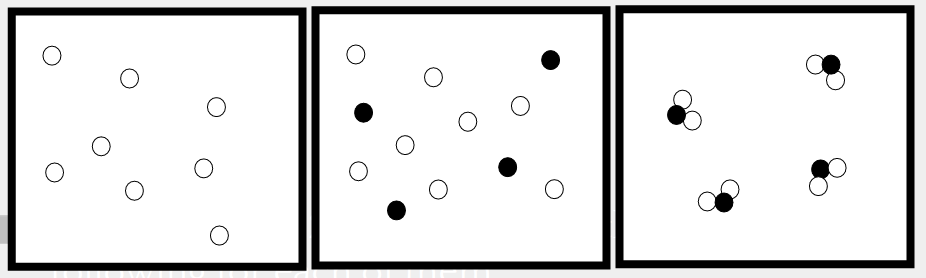
Which one of these pictures represents a mixture? 
a)
1
b)
2
c)
3
d)
1, 2 and 3
42.
This picture represents: 
a)
Element
b)
Compound
c)
Mixture of Elements
d)
Mixture of Elements and Compounds
43.
This picture represents: 
a)
Element, gas
b)
Compound, gas
c)
Mixture of Elements, gas
d)
Mixture of Compounds, gas
44.
This picture represents: 
a)
pure substance, element, solid
b)
pure substance, compound, solid
c)
Mixture, homogeneous, solid
d)
Mixture, homogeneous, liquid
45.
Of these mixtures, which one is a solution?
a)
A
b)
B
c)
C
d)
D
46.
Which statement describes the two figures?
a)
Both 1 and 2 are mixtures
b)
Both 1 and 2 are substances
c)
1 is a mixture and 2 is a substance
d)
1 is a substance and 2 is a mixture
47.
All chemical properties are intensive properties.
a)
True
b)
False
48.
Which one of the following physical properties could be used to determine the identity of an unknown substance?
a)
mass
b)
volume
c)
density
d)
temperature after heating for 5 mins
49.
The basic unit of matter is
a)
a mixture
b)
a substance
c)
an atom
d)
a compound
50.

A block has a mass of 54g and a volume of 20cm3. What is the density of the block?

a)

74 g/cm3

b)

1080 g/cm3

c)

34 g/cm3

d)

2.7 g/cm3

51.
A can of Coke will sink in a bowl of water.  A can of Diet Coke will float in a bowl of water.  What does this tell you about the density of the Diet Coke?
a)
it is bigger than 1
b)
it is smaller than 1
c)
it is equal to 1
d)
it is equal to -1
52.
The following liquids are poured together in a beaker: alcohol (density=0.79), corn syrup (density=1.38), water (density=1.0), and cooking oil (density=0.93).  Which of these liquids will sink to the bottom of the beaker?
a)
alcohol
b)
corn syrup
c)
water
d)
cooking oil
53.

Will an object with a density of 1.05 g/cm3 float or sink when placed in water?

a)

float

b)

sink

54.
A scientist has four different liquids and pours them all into a bottle.  The silver liquid sinks to the bottom, the red liquid settles on top of the silver one, and the pink liquid stays at the surface. Which liquid has the smallest density?
a)
the pink liquid
b)
the silver liquid
c)
the red liquid
d)
the water
55.
What is the density of water?
a)
0 g/ml
b)
1 g/ml
c)
10 g/ml
d)
100 g/ml
56.
What is the volume of Object X?
a)
10.0 cm3
b)
15.0 cm3
c)
20.0 cm3
d)
25.0 cm3
57.
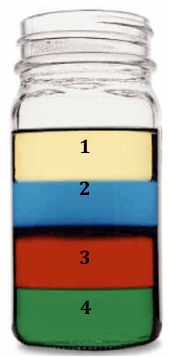
Put the liquids in order from most dense to least dense?
a)
4, 3, 2, 1
b)
1, 2, 3, 4
c)
3, 4, 2, 1, 
d)
4, 3, 1, 2
58.
Which box has a higher density?  
a)
Box A
b)
Box B
c)
cannot be determined
d)
they are the same
59.
What is the formula for density?
a)
density = mass x volume
b)
density = mass / volume
c)
density = mass + volume
d)
density = mass - volume
60.
In general what is the most dense form of matter?
a)
solid
b)
liquid
c)
gas
d)
plasmas
61.
Define the term "mass".
a)
Mass/Volume
b)
Anything that has mass and takes up space 
c)
The amount of space an object occupies.
d)
The amount of matter in an object.
62.
Volume is ...
a)
Mass/Volume
b)
The amount of matter in an object.
c)
The amount of space an object occupies.
d)
Anything that has mass and occupies space.
63.
Density is...
a)
the amount of mass in an object
b)
the amount of space an object takes up
c)
the amount of mass in a given space
d)
the weight of an object
64.
Which property of matter is determined by dividing its mass by its volume?
a)
elasticity
b)
buoyancy
c)
density
d)
viscosity
65.
Calculate the density of the cube.
a)
3 g/cm3
b)
4 g/cm3
c)
2 g/cm3
d)
5 g/cm3
66.

A diagram is provided. What is the volume of the block of metal?

a)

15 cm3

b)

50 cm3

c)

150 cm3

67.
Which substance is the least dense? **Use the key 
a)
A
b)
B
c)
C
68.
What is the mass if the volume of the object is 75 cm3 and the density is 1.56 g/cm3 
a)
117 grams
b)
48.077 grams
c)
0.0208 grams
d)
76.56 grams
69.
A mechanical pencil has the density of 3.000 g/cm3.  The volume of the pencil is 15.8 cubic centimeters.  What is the mass of the pencil?
a)
47.4 g
b)
50 g
c)
0.190  g
d)
5.27 g
70.
What is the volume of 150 grams of lead if it has a density of 11.3 g/cm3?
a)
13.3 g
b)
13.3 cm3
c)
.075 g
d)
1695 cm3
71.
Flammable materials, like alcohol, should never be dispensed or used near
a)
an open door
b)
an open flame
c)
another student
d)
 a sink
72.
If a laboratory fire erupts, immediately
a)
notify your instructor
b)
 run for the fire extinguisher
c)
throw water on the fire
d)
 open the windows
73.
 After completing an experiment, all chemical wastes should be
a)
taken home
b)
dumped in the sink
c)
disposed of according to your instructor’s directions
d)
left at your lab station for the next class
74.
You are heating a substance in a test tube. Always point the open end of the tube 
a)
away from all people
b)
toward another classmate
c)
toward your lab partner
d)
toward yourself
75.
You are heating a piece of glass and now want to pick it up. You should 
a)
pour cold water on it
b)
use tongs
c)
pick up the end that looks cooler
d)
use a rag or paper towels
76.
 Personal eyeglasses provide as much protection as
a)
none of these answers
b)
splashproof chemical goggles
c)
safety glasses
d)
a face shield
77.
Long hair in the laboratory must be 
a)
tied back or kept entirely out of the way with a hair band, hairpins, or other confining device
b)
always neatly groomed
c)
held away from the experiment with one hand
d)
cut short
78.
In a laboratory, the following should not be worn. 
a)
all of the answers
b)
dangling jewelry
c)
sandals
d)
loose clothing
79.
 Horseplay or practical jokes in the laboratory are 
a)
okay if you are working alone
b)
not dangerous
c)
okay
d)
always against the rules
80.
If an acid is splashed on your skin, wash at once with 
a)
weak base
b)
soap
c)
plenty of water
d)
oil
81.
Hot glass looks the same as cold glass.
a)
True
b)
False
82.
What is measured with a graduated cylinder?
a)
Passage of time
b)
Distance from one thing to another
c)
Weight of an object
d)
Volume of liquid
83.
What is this?
a)
Measuring tube
b)
Test tube
c)
Graduated Cylinder
d)
Pipette
84.
What is used to protect your eyes from chemicals, broken glass, and fire?
a)
Fire blanket
b)
Eye wash
c)
Goggles
d)
Flask
85.
What is used to hold test tubes?
a)
Test tube rack
b)
Magnifying glass
c)
Petri dish
d)
Funnel
86.

Name the tool

a)

crucible tongs

b)

beaker tongs

c)

forceps

d)

tweezers

87.
The _________________ is used to simply hold or approximately measure a liquid.
a)
scale
b)
test tube
c)
beaker
d)
thermometer
88.
This piece of equipment is used to mix liquids together.
a)
glass stirring rod
b)
scalpel
c)
probe
d)
test tube
89.
Identify the equipment shown here:
a)
graduated cylinder
b)
Erlenmeyer flask
c)
beaker
d)
volumetric flask
90.
Identify the equipment shown here:
a)
ring stand
b)
iron ring
c)
utility clamp
d)
test tube holder
test tube holder
91.
Identify the equipment shown here:
a)
test tube clamp
b)
iron ring
c)
utility clamp
d)
test tube holder
92.
Identify the equipment shown here:
a)
wire gauze
b)
flame spreader
c)
sieve
d)
mesh
93.
Identify the equipment shown here:
a)
test tube holder
b)
iron rod
c)
iron ring
d)
ring stand
94.
Identify the equipment shown here:
a)
beaker
b)
Erlenmeyer flask
c)
Florence flask
d)
volumetric flask
95.
Identify the equipment shown here:
a)
striker
b)
test tube holder
c)
flame snuffer
d)
utility clamp
96.
Name this item. 
a)
Telescope
b)
Thermometer
c)
Eye Wash
d)
Pipette Pump
97.
Name this item
a)
Balance
b)
pH Meter
c)
Digital Thermometer
d)
Spectrometer
98.
Name this item 
a)
Ring stand 
b)
Graduated cylinder 
c)
Evaporating dish 
d)
Watch glass
99.
Name this item
a)
weighing boat 
b)
funnel 
c)
wash bottle 
d)
Erlenmeyer flask 
100.
Name the lab equipment.
a)
Ring Stand
b)
Flask
c)
Beaker
d)
Bunsen Burner
101.
It is used to measure mass.
a)
test tube
b)
meter stick
c)
beaker tongs
d)
triple beam balance
102.
It is used to hold a flask, a beaker, on a stand.
a)
test tube brush
b)
spring scale
c)
ring clamp
d)
graduated cylinder
103.
It is used for transferring a small amount of liquid.
a)
pipette
b)
beaker
c)
funnel
d)
wire gauze
104.
It used for measuring temperature
a)
balance
b)
thermometer
c)
graduated cylinder
d)
bunsen burner
105.
Identify the following lab equipment:
a)
hot plate
b)
electronic balance
c)
bunsen burner
d)
scales
106.
You have accidentally broken a test tube and spilled a chemical on the table. Which of the following best explains what you should do?
a)
Quickly dispose of the glass, wipe up the spill with the nearest cloth, and hope nobody notices.
b)
Throw the glass into the nearest trash bin and let the spill air-dry.
c)
Use water and paper towels to clean up the spill; place the broken test tube in the disposal container specified for sharp objects.
d)
Caution your lab partners to avoid the area while you inform the teacher of the small accident.
107.
This objects helps to pour and guide materials into a container.
a)
funnel
b)
metric ruler
c)
test tube
d)
beaker
108.
This variable in an experiment is the one being changed by the scientist. 
a)
dependent variable
b)
independent variable
c)
data
d)
control group
109.
The summary at the end of an experiment that explains the results. 
a)
conclusion
b)
procedures
c)
materials
d)
responding variable
110.
An experiment is performed on plants to see how different liquids affect plant growth. Each plant in the experiment is given a different liquid; water, apple juice, or milk. Each plant has the same amount of soil, sunlight, and listens to the same music. In this investigation, the independent variable is ...
a)
The type of plant
b)
The amount of sunlight
c)
The type of music
d)
The type of liquid
111.
If you increase the amount of spinach you eat, then you will increase the iron in your blood. 
What's the dependent variable?
a)
increase the amount of iron in your blood
b)
spinach you eat
112.
If I ride my bike to school instead of walking, then I will get to school faster. What is the dependent variable?
a)
True
b)
How fast you get to school
c)
Riding a bike or walking
d)
False
113.
Will a construction paper air plane fly faster than an airplane made from notebook paper? Choose the best hypothesis.
a)
If I make a paper airplane from notebook paper, then it will fly faster than construction paper.
b)
Yes.
c)
No.
d)
I think the construction paper air plane will fly faster.
114.

If I listen to Dr. Douglas' instructions, then I will have less accidents in the lab. What is the independent variable?

a)

Yes

b)

Maybe

c)

Listening or not listening to instructions

d)

Likelihood of having an accident in lab

115.
If I read this question carefully, then I will answer it correctly. What is the independent variable?
a)
I hope so
b)
Yes
c)
Reading or not reading carefully
d)
Likelihood of a correct answer
116.
Before beginning an experiment you must first make a ____.
a)
Hypothesis
b)
Conclusion
c)
Plan
d)
Experiment
117.
Explaining the color of a chemical would be what kind of observation?
a)
Qualitative 
b)
Quanitative
118.
What is the part of the experiment that is left alone or “natural", and is used to compare back to?
a)
Independent Variable
b)
Dependent Variable
c)
Control Group
d)
Experimental Group 
119.
You will want your experiment to have ____ independent variable(s) in it for the experiment to be valid.
a)
1
b)
2
c)
3
d)
4
120.
What is a factor that the experimenter has full control over and changes to see what happens?
a)
Dependent Variable
b)
Independent Variable
c)
Control group 
d)
Hypothesis
121.
What is a factor that changes because of what the experimenter does?
a)
Dependent Variable
b)
Independent Variable
c)
Control Group
d)
Hypothesis
122.
Nick wanted to see how high an ice cube would float in different temperatures of water. Identify the DEPENDENT variable
-Amount of water
-Height of Ice cube
-Temperature the ice cube was at its highest height
-Temperature of the water
-Size of the ice cube
a)
Amount of water 
b)
Height of Ice cube
c)
Temperature the ice cube was at its highest height 
d)
Size of the ice cube
123.
Mario studied how far room temperature water would spurt out of a plastic milk carton when 3mm holes were punched at different heights from the bottom of the container. Identify the DEPENDENT variable
-3mm holes
-Distant water traveled out of carton
-Different heights of the holes in the container
-Ice water from Iceland
a)
3mm holes
b)
Distant water traveled out of carton
c)
Different heights of the holes in the container 
d)
Ice water from Iceland
124.
What skill is a scientist using when she listens to the sounds that an elephant makes?
a)
drawing conclusions
b)
making observations
c)
interpreting data
d)
making a hypothesis
125.
A scientist hypothesizes the the temperature at which an alligator's egg is incubated will determine whether the alligator will be male or female. The dependent variable is
a)
the size of the baby alligators
b)
the gender of the baby alligators
c)
the incubator
d)
the temperature
126.
A scientist hypothesizes the the temperature at which an alligator's egg is incubated will determine whether the alligator will be male or female. The independent variable is
a)
the male alligators
b)
the incubator
c)
the gender of the alligator
d)
the temperature
127.
When you decide whether or not the data supports the original hypothesis, you are
a)
drawing conclusions
b)
forming a hypothesis
c)
asking questions
d)
making observations
128.
In this graph, what is the independent variable? 
a)
Population
b)
Day
c)
Species 5
129.
In this graph, what is the dependent variable? 
a)
Walla Walla Island
b)
Time
c)
Number of Deer
130.
A hypothesis is simply a prediction that has not yet been _.
a)
proven or disproven
b)
made into a theory
c)
results calculated
d)
written about
131.
What step does every scientific experiment begin with?
a)
hypothesis
b)
question/problem
c)
procedures
d)
conclusion
132.
Which statement is an inference about this picture?
a)
The van is tan.
b)
The  van ran into KFC. 
c)
The driver was hungry. 
d)
Red and white are part of the KFC building. 
133.
A possible explanation to a problem that has not yet been tested. 
a)
data
b)
theory
c)
hypothesis
d)
fact
134.
What is being measured or the result/effect of this experiment?
a)
how fast the water boils
b)
amount of water
c)
temperature of stove
135.

Ryan grew up watching his grandmother place teabags around her rose bushes in the spring. She claimed it made her rose bushes produce more flowers. Now Ryan has decided to test this hypothesis in his science fair project.


Which of the following is the most valid way for Ryan to set up this experiment?

a)

Have two groups of roses - one with fertilizer and one without. Give both groups equal amounts of water, teabags, and sunlight, and count how many roses are produced by each group.

b)

Have two groups of roses - one with tea bags and one without teabags. Keep water, sunlight, and fertilizer equal between the two groups and count how many roses are produced by each group.

c)

Have three groups of roses – one with fertilizer but no teabags, one with teabags but no fertilizer, and one with neither teabags or fertilizer. Give both groups equal amounts of water and sunlight.

d)

Have just one group of roses, and place tea bags around them. Give them water and sunlight, and count how many roses are produced.
136.
What instrument should be used if the lab directions ask you to measure to the nearest milliliter? 
a)
graduated cylinder
b)
triple beam balance
c)
Erlenmeyer flask
d)
meter stick
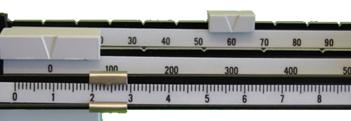
137.

Read this instrument to the correct number of significant digits and include the appropriate unit.

a)

62 g

b)

62.41 grams

c)

63 grams

d)

62.4 g

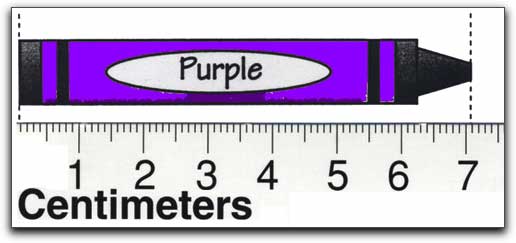
138.

Read this scientific tool to the correct number of significant digits with the correct units.

a)

7.10 mm

b)

7.0 cm

c)

7.10 cm

d)

71 cm

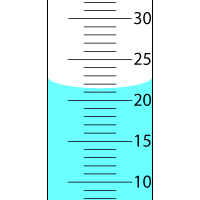
139.

Read this graduated cylinder to the correct number of significant digits

a)

21.5

b)

22.5

c)

20

d)

21

140.
What units should be used with the reading on this scientific tool?
a)
Milliliter
b)
Liter
c)
centimeter
d)
gram
141.
The curve of the liquid
a)
Mass
b)
Meniscus
c)
Density
d)
Weight
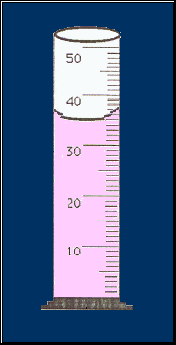
142.
What is the correct volume reading for this graduated cylinder?
a)
6.6 mL
b)
6.60 mL
c)
66.0 mL
d)
7.40 mL
143.
What type of mixture is this?
a)
homogenous mixture
b)
chemical
c)
heterogeneous mixture 
d)
solid mix
144.
An instant ice pack getting cold when the chemicals are able to touch.
a)
Chemical Change
b)
Physical Change
145.
This picture represents...
a)
An element
b)
A compound
c)
A mixture of elements
d)
A mixture of elements and compounds
146.
If you cut a wooden block in half, each half would have 
a)
Half the density of the original piece
b)
 Twice the density of the original piece 
c)
The same density as the original piece
d)
No density at all 
147.
Which digit in this following number is to the TENTHS place? 
a)
5
b)
4
c)
2
d)
1
148.

Which of these is not an example of a molecule?

a)

N2

b)

C

c)

C6H12O6

d)

H2O

149.

Mercury is a metal that is liquid at room temperature and has a density of 13.5 g/cm3. Which of these metals would sink below the mercury if dropped into a container of mercury?

a)

gold (density=19.3 g/cm3)

b)

lead (density=11.4 g/cm3)

c)

iron (density=7.9g/cm3)

d)

aluminum (density=2.7g/cm3)