wayground logo

Free Printable Worksheets

Font size

S
M
L
XL
Worksheets

12/12 U2L1 Energy U2L2 Minerals

Total questions: 125

Worksheet time: 3hrs 34mins

Name
Class
Date
1.
Which of the following must be true for a substance to be considered a mineral?
a)
It must be organic
b)
It must be glassy
c)
It must be a gem
d)
It must be naturally occurring
2.
If a mineral can scratch topaz what is it's hardness range?
a)
8 - 10
b)
7 - 1
c)
8
d)
unknown
3.
Which property of minerals does the photo represent?
a)
fracture
b)
streak
c)
habit
d)
cleavage
4.
Which mineral property is being shown here?
a)
luster
b)
hardness
c)
cleavage
d)
streak
5.
____________ is determined by scratching a mineral with other minerals.
a)
fracture
b)
hardness
c)
streak
d)
abrasion factor
6.
The tendency for a mineral to split along specific planes of weakness to form, smooth flat surfaces is called...
a)
Cleavage
b)
Fracture
c)
Crystallization
d)
Habit
7.
What is the scale that is used to indicate hardness of a mineral?
a)
Red Scale
b)
Moh's scale
c)
Einstein's Scale
d)
Fracture Scale
8.
______ is the way a mineral reflects light.
a)
Luster
b)
Streak
c)
Hardness
d)
Color
9.
The following image shows what mineral property?
a)
Hardness
b)
Streak
c)
Cleavage
d)
None of the above
10.
A naturally formed, inorganic solid with a crystalline structure 
a)
density
b)
streak
c)
mineral
d)
non silicate mineral
11.
What is the hardest mineral on Earth?
a)
talc
b)
diamond
c)
ruby
d)
topaz
12.
the way minerals reflect light
a)
Streak
b)
Luster
c)
Hardness
d)
Cleavage
13.
what is the softest mineral?
a)
diamond
b)
talc
c)
graphite
d)
Corundum
14.
Magnetite would be the only mineral that could be identified using this property or test? 
a)
Taste
b)
Touch
c)
Reaction to acid
d)
Magnetism 
15.
I'm a scientist that studies the Earth rocks and minerals. They use different tests or properties to identify minerals.  What scientist have you been during this unit? 
a)
Geographer
b)
Gemologist
c)
Geologist
d)
Germologist 
16.
Which is NOT a property used for identifying minerals?
a)
Streak
b)
Hardness
c)
Texture
d)
Density
17.
How do you test the hardness of a mineral? 
a)
Throw it against a wall
b)
Step on it
c)
Scratch Test
d)
Kick it until it breaks
18.
How do you test the streak of a mineral? 
a)
By scraping some of the mineral onto a streak plate.
b)
Look for streaks on the mineral.
c)
Google it. 
d)
You don't. 
19.

A mineral breaks into pieces like are shown in the picture. How would you describe its breakage?

a)

Fracture

b)

Cleavage

c)

Glassy

d)

Waxy

20.
Characteristics that can be observed or measured.
a)
physical properties
b)
density
c)
luster
d)
breakage
21.
Amount of matter in a given space.
a)
breakage
b)
hardness
c)
cleavage
d)
density
22.
Outside appearance of a mineral.
a)
streak
b)
hardness
c)
color
d)
breakage
23.
Moh’s scale of hardness ranks minerals from 1 which is the _______________ to 10 which is the ________________.
a)
softest, hardest
b)
hardest, softest
24.
Streak is more reliable in identifying a mineral than color. ( True  or  False )
a)
True
b)
False
25.
Which mineral property is being tested in the diagram below?
a)
Streak
b)
Cleavage
c)
Breakage
d)
Luster
26.
... shown here?
a)
luster
b)
hardness
c)
cleavage
d)
streak
27.

What physical property of minerals is considered the least reliable in identifying minerals?

a)

Color

b)

Streak

c)

Hardness

d)

Specific gravity

28.

What property of minerals determines the TRUE color of a mineral?

a)

Color

b)

Streak

c)

Hardness

d)

Specific gravity

29.

Which of the following does NOT describe a mineral?

a)

Naturally occuring

b)

Has definite composition

c)

Organic

d)

Has crystal lattice

30.

A reading eyeglass is made up of some kind of mineral. How will you describe the transparency of the reading eyeglass?

a)

Transparent

b)

Transluscent

c)

Opaque

d)

None of the above

31.

What class of minerals is considered as the largest and most abundant group?

a)

Sulphate class

b)

Silicate class

c)

Sulphide class

d)

Oxide class

32.

Which among the classes of minerals contains phosphorous and is considered an important biological mineral found in the teeth and bones of many animals?

a)

Native elements

b)

Sulphide class

c)

Phosphate class

d)

Sulphate class

33.

Which class of minerals contains metals and intermetallic elements such as gold silver and copper?

a)

Silicate class

b)

Sulphate class

c)

Native elements

d)

Carbonate class

34.
By definition, a mineral has which of the following characteristic(s)?
a)
definite chemical composition
b)
crystal structure
c)
naturally occuring
d)
all of the above
35.

a Student sorted mineral samples into two groups: Dull and Shiny. Which of the following properties did the student use to sort the mineral samples into groups?

a)

Mass

b)

Color

c)

Luster

d)

Streak

36.

If a penny is scratching the surface of the mineral calcite, what physical property of the calcite is being tested

a)

Hardness

b)

Melting Point

c)

Reaction to acid

d)

Streak

37.

It can be measured by using mass and volume of a mineral.

a)

streak

b)

cleavage

c)

density

d)

fracture

38.

A mineral breaks easily along flat surfaces.

a)

cleavage

b)

fracture

c)

luster

d)

density

39.

Structure based on number and angle of faces.

a)

crystal

b)

cleavage

c)

fracture

d)

streak

40.
A mineral breaks into pieces like are shown in the picture. How would you describe its breakage?
a)
cleavage
b)
fracture
c)
glassy
d)
waxy
41.
Inorganic means not made of living things.
a)
True
b)
False
42.
Why is coal not a mineral?
a)
It is not living (inorganic)
b)
It has plant life in it (organic)
43.

The repeating pattern of a mineral's particles forms a solid

a)

crystal

b)

fracture

c)

cleavage

d)

mineral

44.

Select the two answer choices that are NOT characteristics of all minerals.

a)

organic

b)

rock structure

c)

solid

d)

naturally occuring

45.

A substance formed when two or more elements combine and lose their distinct properties is a

a)

compound

b)

luster

c)

denstiy

d)

crystal

46.

Which mineral would scratch calcite but not scratch apatite?

a)

fluorite

b)

gypsum

c)

talc

d)

topaz

47.
Which minerals would all scratch apatite?
a)
diamond, topaz, quartz
b)
quartz, calcite, gypsum
c)
fluorite, talc, calcite
d)
diamond, fluorite, corundum
48.

____ is calculated by dividing the mass of an object by its volume.

a)

Color

b)

Luster

c)

Density

d)

Cleavage and Fracture

49.

How would you describe fracture?

a)

the property of splitting evenly along flat surfaces

b)

how a mineral breaks apart when it does not split evenly, jagged

c)

a ranking of minerals from softest to hardest

50.

A student finds an unknown mineral in his backyard. The unknown mineral is harder than hornblende, and it has a white color. According to the table, what mineral did the student most likely find?

a)

calcite

b)

garnet

c)

hornblende

d)

quartz

51.
Dull, silky, waxy, pearly, and earthy are terms that best describe which property of minerals?
a)
luster
b)
color
c)
streak
d)
cleavage
52.
What mineral is used for pencils?
a)
Graphite
b)
Galena
c)
Magnetite
d)
Quartz
53.
What mineral is salt?
a)
quartz
b)
sulfur
c)
halite
d)
calcite
54.

Which samples are most likely to be the same mineral?

a)

1 and 2 only

b)

1 and 3 only

c)

2 and 3 only

d)

1, 2, and 3

55.

Why should you test several properties when identifying minerals?

a)

increases hardness

b)

eliminates human error

c)

only 1 test is necessary

d)

2 different minerals can share several of the same properties

56.
The mineral used in pencils is called corundum.
a)
True
b)
False
57.

Minerals are made up of one or more ____________________.

a)

structures

b)

elements

c)

rocks

58.

A mineral may have different colors because it may have ____.

a)

trace elements

b)

crystals

c)

gems

d)

silicate

59.
What kind of heat transfer happens when the sun is heating your body?
a)
Conduction
b)
Radiation
c)
Convection
d)
Density
60.
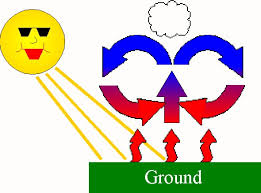
Warm air rises and the cool air sinks demonstrates this type of heat transfer. 
a)
conduction
b)
convection
c)
radiation
d)
Insolation 
61.
Warm air is __________ dense than cold air and rises creating convection currents.
a)
more
b)
less
62.
Johnny accidentally grabbed the handle of the hot pot.
a)
conduction
b)
convection
c)
radiation
63.
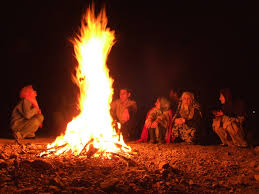
A group of friends gather around a fire to stay warm.
a)
conduction
b)
convection
c)
radiation
64.
Transfer of thermal energy through "space"
a)
conduction
b)
convection
c)
radiation
65.
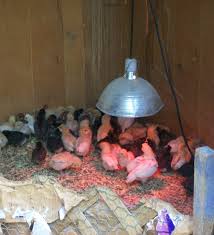
The baby chickens are kept warm from the heat lamps demonstrates this type of heat transfer. 
a)
conduction
b)
convection
c)
radiation
66.
Heat would best be transferred by conduction between
a)
a candle and the air.
b)
an oven and a glass dish.
c)
a stove and a copper pot.
d)
water and a wooden spoon
67.
Carole owns a two story house with a heating and cooling unit on each floor. In the winter she mostly uses the downstairs unit because the volume of warm air __________ and __________ warming the whole house through __________.
a)
expands, rises, convection
b)
expands, sinks, conduction
c)
contracts, rises, conversion
d)
contracts, sinks, contraption
68.
A toaster toasting bread is an example of 
a)
condensation
b)
conductio
c)
convection
d)
radiation
69.
What happens when ice cubes melt in a glass?
a)
Heat travels from the ice to the warmer water.
b)
No energy is transferred.
c)
Heat is transferred from the warmer water to the ice cubes.
d)
The water warms up due to the humidity
70.
Hot coffee is stirred with a spoon; the spoon gets hot due to
a)
conduction
b)
convection
c)
radiation
71.
A chair is several feet from a fireplace. The side of the chair facing the fireplace gets warm due to
a)
conduction
b)
convection
c)
radiation
72.
"Lava lamps" contain colored liquids. These liquids form globs that rise to the top due to
a)
conduction
b)
convection
c)
radiation
73.
Some cook pans have cooper on the bottom to heat evenly.
Copper transfers heat to the pan by
a)
conduction
b)
convection
c)
radiation
74.
The metal skewer gets so hot that you drop your marshmallow into the campfire because of
a)
conduction
b)
convection
c)
radiation
75.
A house burns down. The vinyl siding of the house next door warps due to
a)
conduction
b)
convection
c)
radiation
76.
A huge rock at the state park gets hot during the day. The rock was warmed from the Sun by
a)
conduction
b)
convection
c)
radiation
77.
You lay on the same hot rock at night and keep warm from the rock by
a)
conduction
b)
convection
c)
radiation
78.
Weather systems in the Earth's atmosphere are due to
a)
conduction
b)
convection
c)
radiation
79.
What unit do you use to measure Thermal Energy?
a)
J/Kg ºC
b)
Kg
c)
ºC
d)
J
80.
What would be the effect on the particles if more heat is supplied to the system?
a)
They would slow down
b)
They would stop moving
c)
They would speed up
d)
There would be no effect
81.
Heat is a flow of energy caused by
a)
specific heat
b)
density differences in solids
c)
temperature differences
d)
thermal expansion
82.
There are four cups of hot cocoa. The cup sizes are shown. The temperature of the cocoa in each cup is 25 degrees celsius. Which cup has the MOST thermal energy?
a)
Large cup (Trenta)
b)
Small cup (Tall)
c)
Venti
d)
All three are the same temperature so they have same thermal energy
83.
How does heat flow?
a)
Always from cold to warm
b)
Always from warm to cold
c)
Both warm to cold & cold to warm
d)
It depends on the temperature
84.
True or false: as you move along the spectrum, left to right, the wavelengths decrease in size (get smaller)
a)
true
b)
false
85.
Select the correct order of waves on the EMS 
a)
Radio, Micro, Infra, Visible, Ultra, X-ray, Gamma
b)
Gamma, X-ray, Ultra, Vis, Infra, Micro, Radio
c)
Vis, Micro, Infra, Ultra, X-ray, Gamma, Radio
d)
Micro, Radio, Vis, Infra, Ultra, X-ray, Gamma
86.
Which has the LONGEST wavelength and, therefore, the lowest frequency/energy
a)
Gamma Rays
b)
Radio Waves
c)
Visible Light
d)
Infrared rays
87.
Which has the SHORTEST wavelength and, therefore, the highest frequency/most energy
a)
Radio waves
b)
Ultraviolet Rays
c)
Gamma Rays
d)
X-rays
88.
Which section of the spectrum is the ONLY one we can see?
a)
X-rays
b)
Visible Light
c)
Gamma Rays
d)
Ultraviolet Rays
89.
Sea breeze is a type of global wind.
a)
True
b)
False
90.
In which direction do prevailing westerlies flow?
a)
from east to west
b)
from west to east
c)
from north to south
d)
from south to north
91.
Which types of winds cause weather in North Carolina?
a)
polar easterlies
b)
prevailing westerlies
c)
polar westerlies
d)
prevailing easterlies
92.
Global winds over the United States blow in which direction?
a)
east to west
b)
north to south
c)
south to west
d)
west to east
93.
What causes wind?
a)
differences in pressure
b)
conduction currents
c)
density
d)
tropical currents
94.
This type of wind helped blow trader's ships from Europe to the Americas. It blows winds from EAST to WEST. 
a)
Polar Easterlies
b)
Trade Winds
c)
Prevailing Westerlies
d)
Horse Latitudes
95.
This type of wind comes from the POLES. It blows from east to west and brings freezing weather. 
a)
Prevailing Westerlies
b)
Polar Easterlies
c)
Polar Westerlies
d)
Horse Latitudes
96.
What season occurs in the Southern Hemisphere in August?
a)
Summer
b)
Winter
c)
Spring
d)
Fall
97.

Prevailing winds

a)

are strong destructive winds

b)

are global wind located at mid-latitude, mostly blows in one direction

c)

are global wind located at mid-latitude, mostly blows in many directions

d)

are cold wind located at high-latitude, mostly blows up north
98.
Deep Ocean currents are a result of
a)
Global Wind Patterns
b)
Earth's Rotation
c)
Density
d)
All of the above
99.
The Gulf stream carries _____________ water from the east coast of The United States to the West coast of Europe.
a)
Cold
b)
Warm 
c)
Freezing
d)
Fresh
100.
Which of these two layers is a solid?
a)
innercore
b)
Outercore
101.
What is the top layer of the Earth's surface called? 
a)
Mantle
b)
Innercore
c)
Outercore
d)
Crust
102.
A dense ball of solid iron and nickel.
a)
crust
b)
inner core
c)
mantle 
d)
outer core
103.
How many layers of the Earth's CORE are there?
a)
one
b)
two
c)
three
d)
four
104.
Is the outer core a liquid or solid?
a)
liquid
b)
solid
105.
Temperature _____________________ as you go deeper into the earth.
a)
increases
b)
decreases
c)
goes up and down depending on the layer
d)
stays the same
106.
Pressure ______________________ as you go deeper into the Earth
a)
increases
b)
decreases 
c)
goes up or down depending on the layer
d)
stays the same
107.
What is the primary source of energy for the Earth?
a)
Coal
b)
Wind power
c)
Natural gas
d)
The sun
108.
About 30% of the sun's incoming energy never reaches Earth because it is....
a)
absorbed by the ocean
b)
trapped by the gravitational pull between the moon and the Earth 
c)
reflected back into space
d)
destroyed by the ozone layer
109.
How would Earth be different without greenhouse gases in its atmosphere?
a)
More heat from solar radiation would escape into space
b)
More solar radiation would be reflected back into space
c)
More solar radiation would penetrate Earth's crust and mantle
d)
More heat from solar radiation would be stored in Earth's core
110.
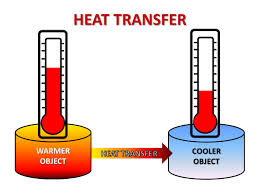
Heat transfers from an area of ____temperature to an area of ___ temperature.
a)
high to low
b)
low to high
c)
high to high
d)
It can travel high to low and low to high. 
111.

The balance of energy that is absorbed, reflected, and emitted by Earth is called what?

a)

Albedo

b)

Energy Budget

c)

Fission

d)

Fusion

112.
The ozone layer protects us from
a)
UV rays
b)
CFCs
c)
Increased atmospheric heat
d)
Decreased atmospheric heat
113.

How much of the Sun's Energy is absorbed by land and oceans?

a)

20%

b)

7%

c)

47%

d)

64%

114.
What has the highest albedo?
a)
the oceans
b)
 glacial ice
c)
the ground
d)
roads
115.
Albedo can best be described as...
a)
the temperature at the equator
b)
the amount of solar radiation absorbed
c)
the amount of solar radiation reflected
d)
the air pressure during El Nino
116.
Melting ice caps will cause the poles to have a ____________ albedo.
a)
higher
b)
lower
c)
same
117.
Which would you expect to have the highest albedo?
a)
dirt
b)
sand
c)
ice
d)
water
118.
Currently, about 10% of Earth is covered with ice year-round. If this ice melts, what could happen to Earth’s temperature?
a)
Increase
b)
Decrease
c)
Remain the Same
d)
Not enough information 
119.
Which type of surface would have the highest albedo effect?
a)
Forest
b)
Snow
c)
Water
d)
Rock
120.

Which has a lower albedo, an asphalt parking lot or a snow-covered field?

a)

Asphalt parking lot

b)

Snow-covered field

c)

They have the same albedo

d)

More information is needed to answer this question

121.

If you want to keep your house cool all year, should you design the house roof to have a high or a low albedo?

a)

High

b)

Low

122.

Rank the following from low albedo to high albedo.

(1) Ocean

(2) Sand

(3) Ice

(4) Asphalt

a)

1, 2, 3, 4

b)

3, 2, 4, 1

c)

4, 3, 2, 1

d)

4, 1, 2, 3

123.
_______is a measure of the reflective characteristics of the Earth's surface.
a)
Albedo Effect
b)
Greenhouse Effect
c)
Proxy
d)
CFC
124.
Which would you expect to have the highest albedo?
a)
dirt
b)
sand
c)
ice
d)
water
125.
Melting ice caps will cause the poles to have a ____________ albedo.
a)
higher
b)
lower
c)
same