Wayground logo

Free Printable Worksheets

Font size

S
M
L
XL
Worksheets

DPM Review

Total questions: 96

Worksheet time: 2hrs 48mins

Name
Class
Date
1.
The positively charged particle in the center of an atom is called the ___.
a)
proton
b)
electron
c)
neutron
d)
quark
2.
The electron has a ___.
a)
negative charge
b)
neutral charge
c)
positive charge
d)
static charge
3.
Where is most of the mass of an atom located?
a)
In the nucleus
b)
Electron cloud
c)
In the electron
d)
Evenly spread throughout the atom
4.
Which statement correctly describes the relative masses of subatomic particles?
a)
Protons and neutrons have almost equal masses, and electrons have a much smaller mass.
b)
Neutrons and electrons have almost equal masses, and protons have a much larger mass.
c)
Protons, neutrons, and electrons all have roughly the same masses.
d)
Electrons and protons have the same masses, and neutrons have no mass.
5.
Which electrical charge does a neutron have?
a)
neutral
b)
alternating between positive and negative
c)
negative
d)
positive
6.
Which two types of atomic particles carry an electrical charge?
a)
protons and electrons
b)
quarks and neutrons
c)
neutrons and electrons
d)
protons and neutrons
7.
What is the correct ordering of these small parts of matter, from the smallest to the largest?
a)
electron < proton < atom
b)
electron < atom < proton
c)
atom < electron < proton
d)
proton < atom < electron
8.
The atom has an overall ___.
a)
neutral charge
b)
negative charge
c)
positive charge
d)
static charge
9.
The atomic number of an element that has 6 protons and 8 neutrons is ___.
a)
6
b)
2
c)
8
d)
14
10.
What distinguishes each element from all others, and gives it unique physical and chemical properties?
a)
The number of protons
b)
The number of neutrons
c)
The electron configuration
d)
The element's universal origin
11.
Fluorine is atomic number 9, and has a mass of 19. How many electrons would it have?
a)
9
b)
6
c)
19
d)
10
12.

UP and DOWN columns on the periodic table are

a)

groups

b)

periods

13.

SIDE TO SIDE rows on the periodic table are

a)

groups

b)

periods

14.

Which two elements have properties in common?

a)

Nitrogen and Phosphorous

b)

Oxygen and Nitrogen

c)

Sulfur and Nitrogen

15.
The atomic number tells you what?
a)
number of electrons
b)
number of protons
c)
number of neutrons
d)
both electrons and protons in an atom.
16.
In the diagram given, what happens as we move to the left?
a)
Stars Get Larger
b)
Stars get Colder
c)
Stars get Hotter
d)
Stars get Brighter
17.
Which color of star is the coolest?
a)
Yellow Star
b)
Red Star
c)
Orange Star
d)
Blue Star
18.
As a whole, Giants are considered hotter than White Dwarfs.
a)
True
b)
False
19.
What type of galaxy is shown in this image?
a)
Spiral
b)
Elliptical
c)
Irregular
d)
Irrational
20.
What are the the 3 types of galaxies?
a)
Spiral, Regular, and Elliptical 
b)
Spiral, Irregular, and Elliptical 
c)
 Milky Way, Elliptical, and Spiral 
d)
Milky Way, Elliptical, and Irregular 
21.
Stars are formed in a cloud of gas and dust called a - 
a)
nebula
b)
black hole
c)
white dwarf
d)
Super Giant
22.
What type of galaxy is depicted in this image?
a)
spiral
b)
elliptical
c)
irregular
d)
quasar
23.
What type of galaxy is this?
a)
spiral
b)
elliptical
c)
irregular
d)
quasar
24.
Blue stars are the _____________.
a)
hottest
b)
coolest
c)
smallest
25.
What is the best title for this picture?
a)
Birth of a Star
b)
Birth of a Universe
c)
Life Cycle of a Star
d)
Big Bang Theory
26.
Look at the H-R diagram. Which star is
sort of cool, dim (not too much light), and red?
a)
Betelguse
b)
Sirius B
c)
Procyon B
d)
Barnard's star
27.
 Which one shows the correct location of the Sun in the Milky Way galaxy?
a)
A
b)
B
c)
C
d)
none of the above
28.
Which fact about the SUN is FALSE?
a)
The sun is a medium sized star.
b)
The sun is near the center of a disc-shaped galaxy of stars.
c)
The sun is thousands of times closer to the Earth than any other star.
d)
The sun is about 2/3 of the way out from the middle of the Milky Way.
29.
Which is an example of a Main Sequence star?
a)
Betelgeuse
b)
our Sun
c)
Sirius B
d)
Polaris
30.
Which category is our Sun located in?
a)
White Dwarfs
b)
Supergiants
c)
Main Sequence
d)
Giants
31.
What is found on the x axis of an H-R diagram?
a)
Luminosity
(or brightness)
b)
Temperature
c)
Star Size
d)
Distance
32.

What is found on the y axis of an H-R diagram?

a)

Luminosity

(or brightness)

b)

Temperature

c)

Star Size

d)

Distance

33.
Which spectral class does our star, the sun, belong to?
a)
M
b)
K
c)
G
d)
F
34.
How is Star A and Sirius B different as far as temperature?
a)
Star A is colder than star B and more dim
b)
Star A is hotter than star B and more dim
c)
Star A is colder than star B and more bright
d)
Star A is hotter than star B and more bright
35.
A stars life cycle is dependent on its - 
a)
distance from Earth
b)
mass
c)
temperature
d)
brightness
36.

Why is the Sun apparently the brightest star?

a)

The Sun has the brightest magnitude

b)

The Sun has a low luminosity

c)

The Sun is closest to Earth

d)

The Sun is absolutely the brightest

37.

Order the components of the universe from smallest to largest.

a)

nebula-star-galaxy-universe

b)

universe-star-galaxy-nebula

c)

galaxy-nebula-star-universe

d)

star-galaxy-nebula-universe

38.

Most stars burn

a)

Hydrogen

b)

Oxygen

c)

Helium

39.

Our sun is currently a ______________________ then will become a _________________________ and lastly a _______________________.

a)

main sequence, red giant, super giant

b)

main sequence, red dwarf, white dwarf

c)

main sequence, red giant, white dwarf

d)

main sequence, red giant, red dwarf

40.

Based on Hubble's observations, the universe is

a)

moving at the same speed

b)

going to explode

c)

still expanding

d)

not changing

41.
What is an example of a wave with a long wavelength and low frequency?
a)
Gamma rays
b)
Infrared
c)
Radio
d)
Visible light
42.

What is the correct order of the visible light spectrum starting with the longer wavelength?

a)

Red, yellow, orange, blue, violet, indigo

b)

Violet, indigo, blue, green, yellow, orange, red

c)

Green, yellow, blue, indigo, red, orange

d)

Red, orange, yellow, green, blue, indigo, violet

43.

What is an example of a wave with a short wavelength, high frequency, and high energy?

a)

Xray

b)

Microwave

c)

Visible light

d)

Infrared

44.
What gases are in the unknown mixture?
a)
Gas B & Gas D
b)
Gas C & Gas B
c)
Gas A & Gas D
d)
Gas D & Gas C
45.

Frequency is..

a)

The distance of a wave from crest to crest.

b)

The shifting of waves away from Earth.

c)

The number of waves passing in 1 second time.

46.
The Big Bang Theory states..
a)
Stars exploded to create the universe.
b)
Several galaxies burned and ran out fuel that resulted in the universe.
c)
The universe came from a single point , then exploded all matter  that formed the universe. 
d)
Some of the universe was formed from an explosion and formed galaxies. 
47.

The movement of emitted light of gases TOWARDS Earth is..

a)

blue shift

b)

light year

c)

red shift

d)

no shift

48.
How can we see the orange star in the Astros logo?
a)
Orange is shifted in our eyes and then reflected. 
b)
Orange is the star is absorbed and all other colors are reflected into our eyes. 
c)
The frequency of orange is reflected into our eyes. 
d)
Orange is reflected into our eyes and all other colors are absorbed. 
49.
Wavelengths are measured from ...
a)
the crest of one wave to the trough of another. 
b)
the frequencies of one wave to another. 
c)
the middle of one wave to another. 
d)
the crest of one wave to the crest of another. 
50.

If objects in space are red shifting they are..

a)

moving at a constant speed

b)

moving away from us

c)

not moving

d)

moving towards us

51.

The star is ________________ shifted?

a)

Red

b)

Blue

c)

Green

d)

Yellow

52.

Which of the following correctly compares the two waves?

a)

Wave A has half the amplitude of Wave B.

b)

Wave A has twice the amplitude of Wave B.

c)

Wave A has a lower frequency and longer wavelength than wave B.

d)

Wave A has a higher frequency and shorter wavelength than wave B.

53.
Which season is taking place in the Southern Hemisphere in Position 1?
a)
Winter
b)
Spring
c)
Summer
d)
Fall
54.
Which season is taking place in the Northern Hemisphere in Position 2?
a)
Winter
b)
Spring
c)
Summer
d)
Fall
55.
Which season is taking place in the Northern Hemisphere in Position 3?
a)
Winter
b)
Spring
c)
Summer
d)
Fall
56.
Which season is taking place in the Southern Hemisphere in Position 4?
a)
Winter
b)
Spring
c)
Summer
d)
Fall
57.
What would seasons be like if Earth's axis were straight up and down?
a)
Seasons would be the same.
b)
Seasons would be more extreme.
c)
There would be no seasons.
58.
If Earth rotated slower, we would have...
a)
shorter days.
b)
longer days.
c)
shorter years.
d)
longer years.
59.
Where on Earth can you experience entire days of darkness?
a)
The equator
b)
The poles
c)
The Tropic of Cancer
d)
The Tropic of Capricorn
60.
The Northern Hemisphere gets __________ sunlight in the winter, which leads to _________ temperatures.
a)
less direct, hotter
b)
less direct, colder
c)
more direct, hotter
d)
more direct, colder
61.
Why is the Equator warmest?
a)
Because it is closest to the sun.
b)
Because it receives the most direct sunlight
c)
Because no clouds form here.
d)
Because it is far from the sun
62.
The term equinox means....
a)
equal amount of day light and equal amount of night
b)
Equal amount of winter and summer
c)
Equal amounts of hot dogs for everyone
d)
The longest day of the year
63.
If its ____ in the Northern hemisphere, then its fall in the Southern hemisphere. 
a)
spring
b)
summer
c)
fall
d)
winter
64.

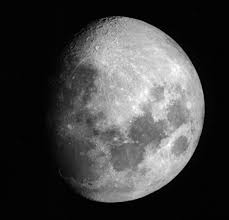
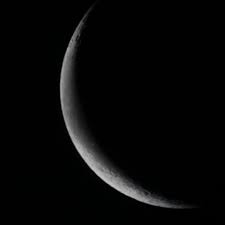
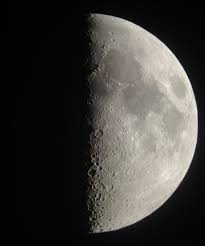
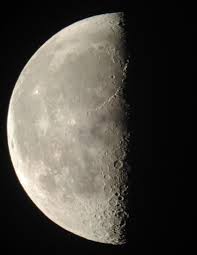
Name the moon phase

a)

waning crescent

b)

waxing crescent

c)

waning gibbous

d)

waxing gibbous

65.
Name the moon phase
a)
waning crescent
b)
waxing crescent
c)
waning gibbous
d)
waxing gibbous
66.
Name the moon phase
a)
waning crescent
b)
waxing crescent
c)
waning gibbous
d)
waxing gibbous
67.

Name the moon phase

a)

waning crescent

b)

waxing crescent

c)

waning gibbous

d)

waxing gibbous

68.
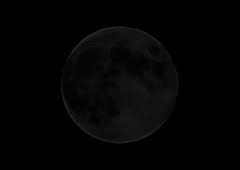
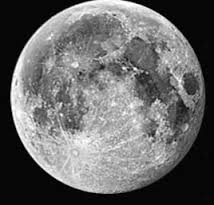
Name the moon phase
a)
First Quarter
b)
Last Quarter
c)
New Moon
d)
Full Moon
69.
Name the moon phase
a)
First Quarter
b)
Last Quarter
c)
New Moon
d)
Full Moon
70.
Name the moon phase
a)
First Quarter
b)
Last Quarter
c)
New Moon
d)
Full Moon
71.

Name the moon phase

a)

First Quarter

b)

Third Quarter

c)

New Moon

d)

Full Moon

72.

Which of the following pictures shows the phase of the moon that is missing from the drawing?

a)
b)
c)
d)
73.

Which of the following best represents how the Moon would appear as seen from Earth?

a)
b)
c)
d)
74.

What moon phase would be seen from earth at position 4? (look closely at the numbers)

a)

new moon

b)

waxing gibbous

c)

waning gibbous

d)

third quarter

75.

How long does it take to get from position A to position E?

a)

1 week

b)

2 weeks

c)

3 weeks

d)

4 weeks

76.

If a full moon happened on March 3, the next new moon appear?

a)

March 10

b)

March 17

c)

March 24

d)

March 31

77.

What phase comes AFTER this phase?

a)

1st quarter

b)

full moon

c)

3rd quarter

d)

new moon

78.

About how long does it take the moon to complete one orbit around Earth?

a)

1 day

b)

1 week

c)

1 year

d)

1 month

79.
How many low tides and high tides happen in a day?
a)
1 low tide, 1 high tide
b)
4 low tides, 4 high tides
c)
3 low tides, 3 high tides
d)
2 low tides, 2 high tides
80.
What is a difference between spring and neap tides?
a)
Spring tides occur when the earth and sun are IN LINE with the new or full moon. 
b)
Spring tides occur when moon in 3rd or 1st quarter phases
c)
Spring tides are LOWER than neap tides
d)
Spring tides occur in Spring and neap tides can occur in any season
81.
The diagram below shows the alignment of the sun, the moon, and Earth. In which locations are neap tides taking place?
a)
1 and 2
b)
1 and 3
c)
2 and 4
d)
3 and 4
82.
In a high pressure systems
a)
there are few clouds because the air in moving downward
b)
there are many clouds because the air is very humid
c)
there are few clouds because the air is moving outward
d)
there are many clouds because the air is moving upward
83.

When a cold front is approaching, what happens?

a)

warm air is pushing under cold air causing humid weather and lower temperatures

b)

warm air is pushing under cold air causing humid weather and higher temperatures

c)

warm air rises, cools, and causes rain and thunderstorms

d)

cold air is pushed over warm air causing rain and thunderstorms

84.
If an air mass is rising, it must be
a)
cold and less dense
b)
cold and more dense
c)
warm and more dense
d)
warm and less dense
85.
If an air mass is sinking, it must be
a)
cold and less dense
b)
cold and more dense
c)
warm and more dense
d)
warm and less dense
86.
This is the symbol for which type of front?
a)
cold front
b)
warm front
c)
stationary front
d)
occluded front
87.
This is the symbol for which type of front?
a)
cold front
b)
warm front
c)
occluded front
d)
stationary front
88.
What does this symbol on a weather map indicate? 
a)
High pressure system
b)
Low pressure system
c)
Cold front
d)
Warm front
89.
What does this symbol on a weather map indicate? 
a)
High pressure system
b)
Low pressure system
c)
Cold Front
d)
Warm Front
90.
Which system results in rainy or stormy weather?
a)
high pressure
b)
low pressure
c)
hurricane
d)
weather system
91.
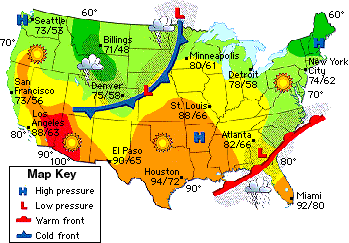
Which front is located near San Diego?
a)
cold front
b)
warm front
c)
occluded front
d)
stationary front
92.
Which type of front is near Seattle?
a)
cold front
b)
warm front
c)
occluded front
d)
stationary front
93.
A low pressure system is located over Georgia. What type of weather will they have?
a)
clear, sunny skies
b)
cloudy and rainy
94.
Which of the following are needed for hurricanes to happen?
a)
warm, moist air and ocean water
b)
dry air
c)
cold air
d)
sunshine
95.

What makes a hurricane lose energy?

a)

Land

b)

Increased low pressure

c)

Meteorologists

d)

Superman flying the other direction

96.
What kind of weather is usually associated with a high pressure system?
a)
Sunny weather
b)
Precipitation (rain, snow, etc.)