wayground logo

Free Printable Worksheets

Font size

S
M
L
XL
Worksheets

Chemistry Unit Review

Total questions: 160

Worksheet time: 2hrs 16mins

Name
Class
Date
1.
What is an ion?
a)
A Charged Atom
b)
A Large Atom
c)
A Small Atom
d)
A Cute Atom
2.
Cations are...
a)
Positive
b)
Negative
c)
Neutral
d)
Purring
3.
Anions are...
a)
Positive
b)
Negative
c)
Neutral
d)
Crying
4.

An atom becomes _________ when it gains electrons.

a)

Positive

b)

Negative

c)

Neutral

d)

Invisible

5.

An atom becomes _______ when it loses electrons.

a)

Positive

b)

Negative

c)

Neutral

d)

Invisible

6.
Nonmetals are
a)
usually cations
b)
likely to lose electrons
c)
usually negative ions
d)
all of these
7.
Why are ions formed?
a)
To make our lives difficult
b)
Because atoms want 8 valence electrons
c)
Because atoms have the same number of protons and electrons
d)
Because atoms gained neutrons
8.
What is the charge on a Hydrogen ion?
a)
+1
b)
1
c)
2
9.
What is the charge on an Aluminium ion?
a)
3
b)
+3
c)
+2
d)
+1
10.
Magnesium bromide is an ionic compound with the chemical formula MgBr₂.  What does the "2" tell you?
a)
There are 2 bromide ions for every magnesium ion
b)
Bromide has a 2- charge
c)
Bromide has a 2+ charge
d)
There are 2 magnesium ions to every bromide ion
11.
Elements in Group 1 lose one electron to form ions with a _________________ charge.
a)
1+
b)
2+
c)
0
d)
1-
12.
Ionic bonds form between metals and ____.
a)
metalloids
b)
metals
c)
nonmetals
13.
What is the formula for lithium oxide?
a)
LiO
b)
LiO2
c)
Li2O
d)
Li2O3
14.
How do the following two elements bond together?
K1+  S2- 
a)
KS
b)
K8S
c)
K6S3
d)
K2S
15.
How do the following two elements bond together?
Al3+  O2-         
a)
AlO
b)
Al2O3
c)
Al3O6
d)
Al3O2
16.
When an ionic compound is formed, its charge is 
a)
negative
b)
neutral (no charge)
c)
positive
17.
What is the correct formula for the compound, lithium oxide?
a)
LiO
b)
Li2O
c)
LiO2
d)
Li2O2
18.
What would be the proper chemical formula for combining Al3+ and Cl- :
a)
AlCl3
b)
Al3Cl
c)
AlCl
d)
Al3Cl3
19.
Name the following ionic compound: Cs2S
a)
cesium sulfide
b)
cesium sulfate
c)
cesium II sulfate
d)
cesium II sulfide
20.
Zinc Fluoride
a)
ZnF2
b)
ZnF
c)
Zn2F
d)
Zn2F4
21.
Na2S
a)
Sodium Sulfide
b)
Sodium Sulfate
c)
Sodium Sulfite
d)
Disodium Sulfide
22.
if METALS are more likely to LOSE electrons, they will form ...
a)
anions
b)
neutral atoms
c)
positive ions
d)
negative ions
23.
Group 2 and Group 17
a)
Will form Ionic Bond
b)
Will NOT form Ionic Bond
24.
If my charge becomes 2+ what does that say about me?
a)
I am stealing 2 electrons
b)
I am losing 2 electrons
c)
I am in period 2
d)
I have an atomic # of 2
25.
If I gain electrons I become
a)
Positive because I've added to my atom
b)
negative because I've added electrons
c)
same because i'm balanced
d)
equal because now I have electrons
26.
When metals bond with non-metals they form what type of bonds
a)
covalent
b)
ionic
c)
cooperative
d)
lewis
27.
How do the following two elements bond together?
Na1+  F1-         
a)
NaF
b)
NaF3
c)
Na3F
d)
Na1F2
28.
PbS2
a)
lead sulfide
b)
lead sulfur
c)
lead II sulfide
d)
lead IV sulfide
29.
AgF
a)
silver fluoride
b)
silver fluorine
c)
monosilver monofluoride
d)
silver monofluorine
30.
Fe2O3
a)
iron oxide
b)
iron oxygen
c)
iron II oxide
d)
iron III oxide
31.
Nonmetals tend to 
a)
gain electrons
b)
lose electrons
32.
When two atoms share electrons, a chemical bond is formed.  This type of bond is called:
a)
covalent bond
b)
ionic bond
c)
crystal bond
d)
polyatomic bond
33.
PBr5
a)
Phosphorus Bromide
b)
Phosphorus Pentabromide
c)
Pentaphosphorus bromide
d)
Phosphorus Bromine
34.
carbon monoxide
a)
CO
b)
CO2
c)
C2O
d)
COH
35.
BrO3
a)
bromine oxide
b)
monobromine trioxide
c)
bromine trioxide
d)
bromine (III) oxide
36.
Which of these is covalent?
a)
NaCl
b)
Pb(NO3)2
c)
CO2
d)
AlCl3
37.
Disulfur trioxide
a)
S3O2
b)
SO
c)
S2O3
d)
S2O
38.
Phosphorous trichloride
a)
PCl3
b)
P3Cl
c)
P3Cl3
d)
PCL
39.
Which of the following is helium (He)?
a)
Metal
b)
Nonmetal
c)
Metalloid
40.
Which of the following is Lithium (Li)?
a)
Metal
b)
Nonmetal
c)
Metalloid
41.
A covalent bond is a bond between a _____ and a ______
a)
metal, nonmetal
b)
metal, metal
c)
nonmetal, nonmetal
42.
A covalent bond is formed when two atoms ____ electrons
a)
share
b)
lose
c)
transfer
d)
gain
43.
Which two elements is in the compound NaCl?
a)
Carbon and Nitrogen
b)
Sodium and Chlorine
c)
Sodium and Carbon
d)
Nitrogen and Chlorine
44.
NH4Cl is ionic because
a)
NH4 is an anion
b)
NH4 is an cation
c)
N, H, and Cl are all non metals
d)
N is a metal
45.
Hydrocarbons are main source of
a)
petrol
b)
diesel
c)
kerosene
d)
all of them
46.
Crude oil is a complex mixture of
a)
alkanes
b)
cycloalkanes
c)
aromatic comounds
d)
all of them
47.
A long chain made up of small repeating units is a
a)
polymer
b)
isomer
c)
isotope
d)
allortrope
48.
Hydrocarbons contain
a)
carbon
b)
hydrogen
c)
both a and b
d)
oxygen
49.
How many carbon atoms are in methane?
a)
1
b)
2
c)
3
d)
4
50.
How many carbon atoms are in propane
a)
1
b)
2
c)
3
d)
4
51.
How many hydrogen atoms are in butane
a)
4
b)
6
c)
8
d)
10
52.
What is the suffix for single bonded hydrocarbons?
a)
-yne
b)
-ene
c)
-ane
d)
-one
53.
Alkanes are known as saturated hydrocarbons because they contain only carbon-hydrogen single bonds.
a)
True
b)
False
54.
The definition: Two or more atoms bonded together, representing the smallest unit of a chemical compound that can take part in a chemical reaction, best matches
a)
molecule
b)
atom
c)
mixture
d)
element
55.
The definition: an expression which states the number and type of atoms present in a molecule of a substance, best describes 
a)
chemical formula
b)
chemical symbol
c)
chemical equation
d)
group or family
56.
In Cl2, the 2 is known as
a)
the subscript.
b)
the coefficient.
c)
the molecular mass.
d)
the number of protons.
57.
N2, Cl2, and O2 are all 
a)
diatomic molecules.
b)
ionic bonds.
c)
of equal mass.
d)
solids.
58.
Oxygen is commonly found as 
a)
a solid-O
b)
a gas-O2
c)
unknown
59.
Diatomic molecules are __________ found in nature as their single element: I, O, N, H, Br, Cl, or H.
a)
often
b)
never
c)
sometimes
d)
always
60.
Which of the following tells you that a chemical change may have occurred?
a)
Change Shape
b)
Melting
c)
Vaporizing
d)
Change in color
61.
What happens in ALL chemical changes?
a)
Change in state of matter
b)
A new substance is formed
c)
Bubbles are produced
d)
An explosion
62.
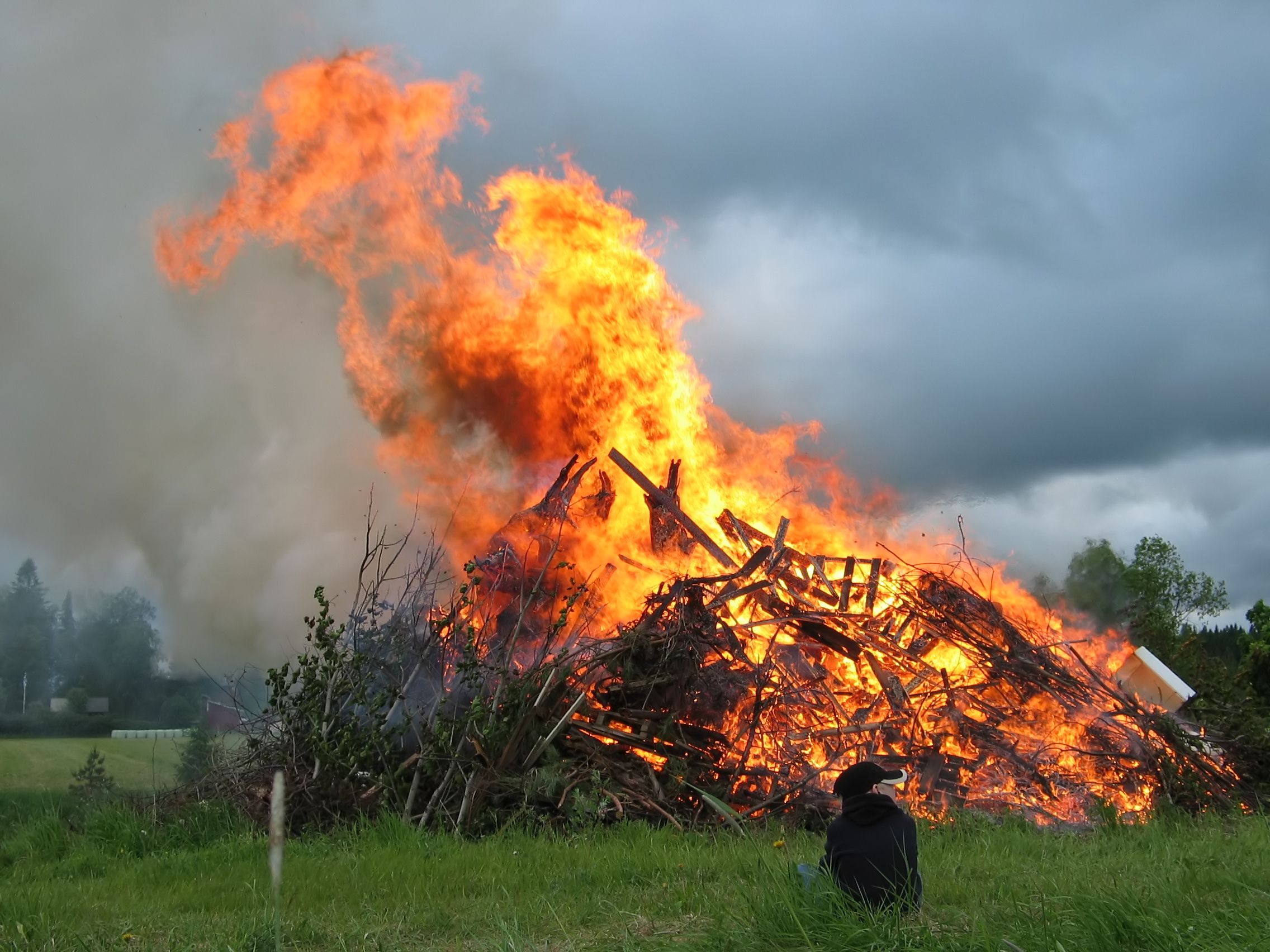
Is wood burning a physical or chemical change?
a)
Physical 
b)
Chemical
63.
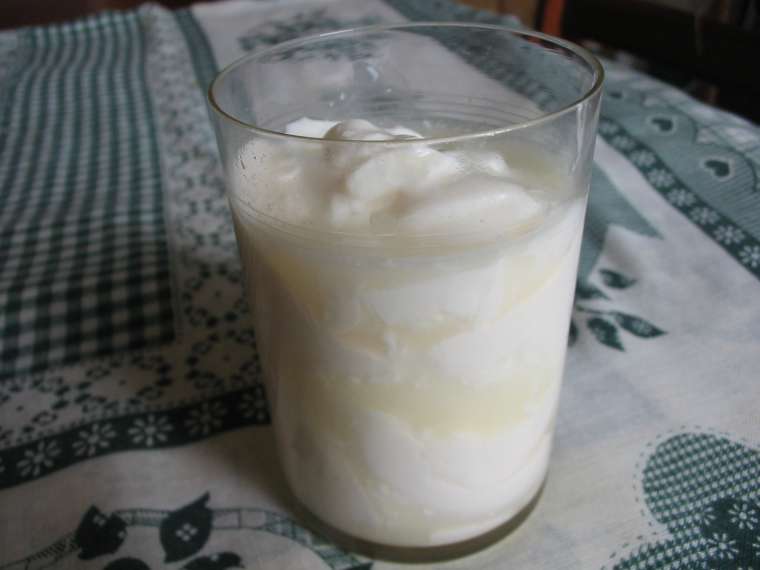
Is milk going sour a physical or chemical change?
a)
Physical 
b)
Chemical
64.
Is Gatorade powder dissolving in water physical or chemical change?
a)
Physical 
b)
Chemical
65.
Is mold growing on cheese a physical or chemical change?
a)
Physical 
b)
Chemical
66.
Is making orange juice a physical or chemical change?
a)
Physical 
b)
Chemical
67.
Is sharpening a pencil a physical or chemical change?
a)
Physical 
b)
Chemical
68.
Is copper tarnishing a physical or chemical change?
a)
Physical 
b)
Chemical
69.
Dissolving sugar in water is an example of a 
a)
physical change
b)
chemical change
70.
Which is a physical change?
a)
melting ice
b)
burning wood
c)
rotting food
d)
rusting iron
71.

What tells you how many molecules are present?

a)

reactant

b)

product

c)

subscript

d)

coefficient

72.
The substances listed on the left side of a chemical equation are the
a)
Products
b)
Coefficients
c)
Precipitates
d)
Reactants
73.

What are the products of the chemical reaction pictured?

a)

CH4 and CO2

b)

CH4 and O2

c)

CO2 and H2O

d)

O2 and H2O

74.
What is the left part of a chemical equation called?
H2 + O → H2O
a)
Reactants
b)
Products 
c)
Yields 
d)
Chemical Equation 
75.

How many products are in A + B ---> C

a)

1

b)

2

c)

3

d)

4

76.
Consider the chemical equation CH4 + 2 O2 → CO2 + 2 H2O. In this equation, CH4 is a
a)
product
b)
reactant
c)
displacement
77.

Which are the reactants in the following reaction?

2Mg + O2 ---> 2MgO

a)

2MgO

b)

2Mg +O

c)

2Mg + O2

78.

How many reactants are there: ABC --> AC + B

a)

3

b)

1

c)

2

79.
The smallest particle OF an element
a)
Atom
b)
Molecule
c)
Electron
d)
Neutron
80.
The smallest particle OF a compound
a)
Atom
b)
Molecule
c)
Electron
d)
Neutron
81.
Fill in the blank:
The law of conservation of mass states that matter cannot be created nor __________________.
a)
destroyed
b)
rearranged
c)
transferred
d)
changed
82.
In a closed system, a chemical reaction takes place.  The mass of the reactants in the beginning of the reaction is 25g.  What does the mass have to be in the end of the reaction in order to follow the law of conservation of mass?
a)
25g
b)
You can't tell with the given information.
c)
30g
d)
15g
83.
The following chemical reaction occurs:
2S + 3O2 -> 2SO3
How many atoms of oxygen are there in the reactant?
a)
2 atoms of oxygen
b)
3 atoms of oxygen
c)
6 atoms of oxygen
d)
1 atom of oxygen
84.
There are two reactants in a chemical equation, and one product.  The mass of the product is 30g.  The mass of the first reactant is 17g.  What must the mass of the second reactant be, if the equation is to follow the law of conservation of mass?
a)
47g
b)
13g
c)
23g 
d)
You cant tell with the given information
85.
In a reaction A + B ----> C,  reactant A has 5g and product  C has 9g. How many grams does reactant B should have? 
a)
4g
b)
5g
c)
9g
d)
14g
86.
Is this equation balanced?
a)
yes
b)
no
c)
Not enough information
87.
Ca + O2 --> CaO
What coefficient goes in front of CaO?
a)
1
b)
2
c)
3
d)
4
88.

How many IRON atoms are in this chemical formula?

a)

4 iron atoms

b)

2 iron atoms

c)

8 iron atoms

d)

3 iron atoms

89.
Which is the correct formula for:
 three hydrogen (H)
one sulfur (S)
four oxygen (O)
a)
H3SO4
b)
HSO4
c)
H4S3O
d)
H2O
90.
Number of C's in 2Na₂CO₃
a)
1
b)
2
c)
3
d)
5
91.
The number of Na's in Na₂CO₃
a)
1
b)
2
c)
3
d)
6
92.
How many Elements are in the compound C2H8O ?
a)
2
b)
1
c)
3
d)
0
93.
How many total atoms are in the compound C2H8O ?
a)
11
b)
2
c)
8
d)
1
94.
How many Aluminum are in Al2O3?
a)
3
b)
2
c)
5
95.
How many Magnesium are in 10MgCl2?
a)
10
b)
5
c)
20
96.
How many elements are in C6H12O6?
a)
1
b)
2
c)
3
d)
4
97.
How many atoms of Oxygen are in this compound?
a)
1
b)
2
c)
3
d)
4
98.
Which of the following word pairs correctly completes the sentence below?
_______ are corrosive substances characterized as having a strong smell, a sour taste, and a _______.
a)
Acids; pH less than 7
b)
Acids; pH greater than 7
c)
Bases; pH greater than 7
d)
Bases; pH less than 7
99.
The esophagus is the tube that connects the mouth to the stomach. Heartburn occurs when some of the stomach juices flow backwards up the esophagus. To help relieve heartburn, a person should take medicine that is
a)
neutral
b)
basic
c)

acidic or basic.
d)
acidic
100.
If an acid is combined with a base of equal strength, the result will most likely be
a)
a neutral solution.
b)
a stronger acid.
c)
impossible to tell without testing the pH.
d)
a stronger base
101.
Which of the following is a base?
a)
orange juice
b)
water
c)
vinegar
d)
dishwashing detergent
102.
 Which of the following is an acid?
a)
shampoo
b)
baking soda
c)
orange juice
d)
water
103.
The pH of a solution is tested, and it is found to be a basic solution. Of the following choices, what could the pH have been?
a)
3
b)
9
c)
7
d)
5
104.
Human blood has a pH between 7.35 and 7.45. Which of the following best describes human blood?
a)
strongly acidic
b)
slightly acidic
c)
strongly basic
d)
slightly basic
105.
What would be considered the weakest base? 
a)
8
b)
14
c)
7.8
d)
11.6
106.
Pure water has a pH of 7. Pure water _______.
a)
is a base
b)
is a neutral substance
c)
could be either an acid or a base
d)
is an acid
107.
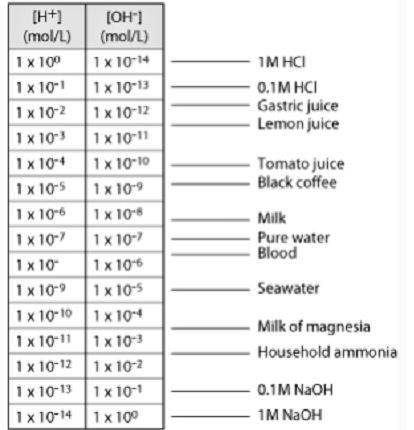
What is the approximate pH of seawater?
a)
2
b)
5
c)
7
d)
9
108.
Which food is the most acidic?
a)
bananas
b)
lemon juice
c)
orange juice
109.
What is another name for a base?
a)
Acid
b)
Alkaline
c)
pH
110.
What safety symbol is this?
a)
Flammable 
b)
Oxidizing Agent
c)
No Open Flame
d)
Explosion
111.
What safety Symbol is this?
a)
Flamable
b)
Oxidizing Agent
c)
No Open Flame
d)
Explosion
112.
The following symbol is for ...
a)
Biohazardous materials
b)
Compressed gas
c)
Oxidizing material
d)
Dangerously reactive material
113.
The following symbol is for ...
a)
oxidizing material
b)
flammable material
c)
materials causing other toxic effects
d)
corrosive material
114.
The following symbol is for ...
a)
Materials causing immediate and serious toxic effects
b)
oxidizing material
c)
corrosive material
d)
materials causing other toxic effects
115.
The following symbol would be found on household products that are poisonous.
a)
True
b)
False
116.
This HHPS symbol is used on _____________________ materials.
a)
flammable
b)
explosive
c)
poisonous
d)
corrosive
117.
The following WHMIS symbol is put onto ______________________ material.
a)
flammable
b)
dangerously reactive
c)
oxidizing
d)
poisonous
118.
The following WHMIS symbol is put on ___________ ______________ material
a)
poisonous & infectious
b)
biohazardous infectious
c)
dangerously reactive
d)
flammable & combustable
119.
The following WHMIS symbol is put onto ______________________ material.
a)
flammable
b)
dangerously reactive
c)
oxidizing
d)
poisonous
120.
The following WHMIS symbol represents ...
a)
corrosive material
b)
biohazardous infectious materal
c)
flammable & combustable material
d)
dangerously reactive material
121.
Oxidizing materials can be stored next to flammable & combustible materials safely.
a)
True
b)
False
122.
Identify the Safety Symbol
a)
Goggles
b)
Sun glasses
c)
Drinking Glasses
d)
Eye Glasses
123.
What is this safety symbol?
a)
Radioactivity
b)
Biological
c)
Irritant
d)
Toxic
124.
What does this symbol mean 
a)
fire safety 
b)
eye protection safety 
c)
animal safety 
d)
extreme temperatures 
125.
a)
Emergency Eye wash Station
b)
Safety Shower
c)
Eye positive sprinkler system
d)
Electric 
126.
A student sniffed some bleach to see if it had a strong smell.  
a)
Safe
b)
Unsafe
127.
Which of the following should NOT be worn during a laboratory activity?
a)
loose clothing
b)
dangling jewelry
c)
sandals
d)
all of the above
128.

What does WHMIS stand for?

a)

Workplace Hazardous Matter Information System

b)

Workplace Harmful Materials Information System

c)

Workplace Hazardous Materials Information System

d)

WHMIS does not stand for anything

129.

What does SDS stand for?

a)

Safety Data Sheet

b)

Safety Dangers Sheet

c)

Safety Data System

d)

SDS doesn't stand for anything

130.

What is the symbol for Oxidizing Material?

a)
b)
c)
d)
131.
What is a benefit of health and safety training?
a)
Increases employee productivity
b)
Builds a healthier workforce
c)
Enhances workers' commitment
d)
All of the above
132.

All fire extinguishers should be serviced annually.

a)

True

b)

False

133.
which countries require companies to keep MSDS
a)
Canada
b)
Germany
c)
United States 
d)
all of the above 
134.
You should never ________ around chemicals in the work area.
a)
Eat 
b)
Drink
c)
Smoke
d)
All of the above
135.

When working with toxic chemicals, you should do which of the following?

a)

work in a poorly-ventilated area

b)

wear protective gloves and safety glasses/goggles

c)

use unlabeled products

d)

Store chemicals on the highest shelves

136.
_____________ is the lowest level of potential harm.
a)
Danger
b)
Warning
c)
Caution
d)
Death
137.
____________ is the highest level of potential harm.
a)
Danger
b)
Warning
c)
Caution
d)
None of the above
138.
When is horseplay allowed in the lab?
a)
NEVER
b)
Sometimes
c)
On Fun Friday
d)
When the teacher is doing it
139.
The rate of a chemical reaction is NOT affected by which of the following:
a)
temperature
b)
concentration
c)
particle size (surface area)
d)
All of these affect reaction rates
140.
The rate of a reaction increases as temperature__________________.
a)
Decreases
b)
Increases
c)
Stays the Same
141.
Products will form faster if____________
a)
the particle size of the reactants are larger.
b)
temperature is decreased.
c)
concentration of the reactants are increased.
d)
the reaction is not stirred.
142.
A ______________ is a substance that increases the rate of a reaction without being used up during the reaction. 
a)
catalyst
b)
product
c)
reactant
d)
solute
143.
Catalysts permit reactions to proceed along a ___________energy path.
a)
lower
b)
higher
144.
The ___________ the surface area of the reactants, the faster the reaction rate.
a)
larger 
b)
smaller
145.
Increasing the temperature will increase the kinetic energy of particles, therefore increasing the collisions between particles.
a)
false
b)
true
146.
Usually lowering the temperature will slow down a reaction.
a)
false
b)
true
147.
Increasing the concentration of the reactants will slow down the reaction.
a)
false 
b)
true
148.
A catalyst increases the efficiency of collisions between reactants.
a)
true
b)
false
149.
You observe bubbles after adding metal to a solution. Do you assume a chemical reaction took place?
a)
Yes
b)
No
150.

What does a catalyst do to the overall enthalpy of a reaction?

a)

Increases it

b)

Decreases it

c)

Does not change it

151.
Products will form faster if____________
a)
the particle size of the reactants are larger.
b)
temperature is decreased.
c)
concentration of the reactants are increased.
d)
the reaction is not stirred.
152.
Smaller particle size allows for a _________ surface area to be exposed for the reaction.
a)
larger
b)
smaller
153.
The ___________ the surface area of the reactants, the faster the reaction rate.
a)
larger 
b)
smaller
154.
Increasing the temperature will increase the kinetic energy of particles, therefore increasing the collisions between particles.
a)
false
b)
true
155.
Usually lowering the temperature will slow down a reaction.
a)
false
b)
true
156.

In a chemical reaction, how quickly or slowly reactants turn

into products is called the

a)

Catalyst

b)

Reaction Rate

c)

Concentration

d)

Temperature

157.

_______ refers to how much solute is dissolved in

a solution.

a)

Surface Area

b)

Catalyst

c)

Temperature

d)

Concentration

158.

________ is the measure of how much area of an

object is exposed.

a)

Surface Area

b)

Catalyst

c)

Temperature

d)

Concentration

159.

Adding ______ will increase the rate of reaction because

this causes the particles of the reactants to move more quickly, resulting in more

collisions and more _________.

a)

Heat / Energy

b)

Higher Concentrations / Explosions

c)

Catalysts / Casualties

d)

Reactants / Products

160.

Pick the TWO (2) options that will INCREASE the rate of a reaction.

a)

Reducing Heat

b)

Adding Catalyst

c)

Adding Heat

d)

Removing Catalyst