
 Worksheets
NS: Unit One Test Review
Total questions: 130
Worksheet time: 2hrs 22mins

The core of Earth is probably composed of
silicate minerals.
aluminum oxides.
iron and nickel.
calcium magnesium sulfate.
Earth's layer with the most brittle behavior is the
mantle.
crust.
inner core.
outer core.

The outer core
has a plastic-like flow.
spins, which produces Earth's magnetic field.
is solid as a rock.
transmits S-waves.

The lithosphere rides on top of the asthenosphere. Lithospheric movement causes
earthquakes, volcanic activity, and mountain building activity.
the subduction of continental crust under oceanic crust.
hot-spot activity as found in Hawaii.
widespread destruction.
The lithosphere includes
continental and oceanic crust.
the crust and the upper part of the mantle.
part of the mantle and the crust.
all of the above
The inner core is solid because
it is composed of iron and nickel.
the surrounding outer layers act as a blanket to insulate the core.
pressure from the weight of the surrounding layers prevents the inner core from melting.
None of these, for the inner core is not solid, but liquid.
The mantle is composed of
iron and nickel.
iron, magnesium, silicon
half liquid and half rocky material.
solid rock.
The lithosphere floats atop the
mantle.
crust.
asthenosphere.
mohorovicic.
Isostasy is
the positioning of the crust in response to the buoyant force and gravity.
the buoyant force exerted on the mantle by oceanic crust.
the buoyant force exerted on the mantle by continental crust.
the force of gravity acting on the crust.
Continental crust is very buoyant compared with oceanic crust because continental crust is
predominantly composed of basaltic rock that contains many air bubbles from successive lava flows.
predominantly composed of granitic rocks, whereas oceanic crust is composed of basaltic rocks.
thinner than the oceanic crust, forming a thin upper skin on the oceanic crust below.
very young and fresh.
The two most abundant elements in Earth's crust are
silicates and carbonates.
silicon and oxygen.
oxygen and aluminum.
quartz and feldspar.
Based on its abundance in Earth's crust, most rocks contain a mineral composed of the elements oxygen and
carbon.
silicon.
iron.
sulfur.
Color is not a reliable means for mineral identification because
minerals come in a variety of colors
minerals can weather and change color.
a mineral's powdered color is different than its solid color.
minerals are always the same color
Magma that solidifies before reaching Earth's surface is called
intrusive igneous rock.
plutonic rock.
a pluton.
all of the above
Magma that solidifies before reaching Earth's surface is called
intrusive igneous rock.
plutonic rock.
a pluton.
all of the above
The two most common igneous rocks are basalt and granite. Basalt is commonly found ________ and granite is found ________.
on the ocean floor; on the continents
on both the ocean floor and continental land; only on the continents
on the continents; on the ocean floor
on the ocean floor; on both the ocean floor and on continental land
The majority of surface rocks are
extrusive.
sedimentary.
intrusive.
metamorphic.
The property many metamorphic rocks exhibit by flat or elongated mineral grains in parallel layers is called
schist.
cleavage.
foliation.
lithification.
Metamorphism caused by the close proximity of a magma source is called
contact metamorphism.
dynamic metamorphism.
regional metamorphism.
none of the above
Rocks altered by heat and pressure beneath Earth's surface are
intrusive igneous rocks.
extrusive sedimentary rocks.
metamorphic rocks.
igneous rocks.
A sedimentary rock can turn into an igneous rock by
compaction and cementation.
compaction.
melting and cooling.
weathering and lithification.
Rocks are grouped into three classes depending on how the rock was
formed.
located.
discovered.
shaped.

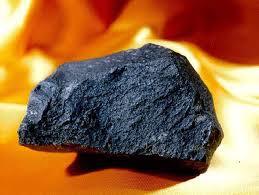
This rock was found near the mouth of a volcano. What type of rock is this?
Sedimentary
Igneous
Metamorphic
Oceanic
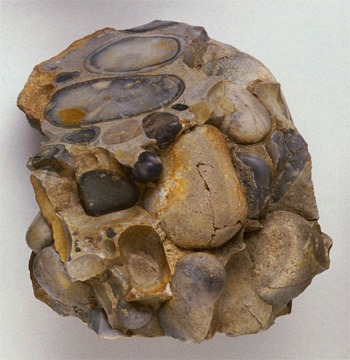
This rock was formed by smaller pieces of rock that settled at the bottom of a lake millions of years ago. What type of rock is this?
Sedimentary
Igneous
Metamorphic
Oceanic

This rock started as lava that cooled and then was heated and put under pressure over time. What type of rock is this?
Sedimentary
Igneous
Metamorphic
Oceanic

This rock started as molten magma. What type of rock is this?
Sedimentary
Igneous
Metamorphic
Oceanic

This rock is made from tiny pieces of other rocks that settled to the bottom of a valley millions of years ago. What type of rock is this?
Sedimentary
Igneous
Metamorphic
Oceanic

This rock was molten magma that slowly cooled under the ground. What type of rock is this?
Sedimentar
Igneous
Metamorphic
Oceanic

This rock cooled on the outside of a volcano and contained air bubbles when it was forming. What type of rock is this?
Sedimentary
Igneous
Metamorphic
Oceanic

After lots of time, pressure, and heat, you get this kind of rock. What type of rock is this?
Sedimentary
Igneous
Metamorphic
Oceanic


This rock was formed by lots of fossils that settled on top of each other over time. What type of rock is this?
Sedimentary
Igneous
Metamorphic
Oceanic


What conclusions can you draw from this graph?
The deer population went down over time.
The deer population went up over time.
The dear population went up quickly, then down, but then stayed the same.
There are less dear because of hunters
You want to make a graph for an experiment you did about plant growth over a two week period of time. What type of graph would you use?
bar graph
line graph
pictograph
pie chart


What information is NOT shown in this diagram of the solar system?
the names of planets
the order of the planets
the path the planets travel in their orbit
the distance between the planets

What information could you get from this graph?
how much water is on Earth
the percentage of the earth that is covered in water
how land is available on earth
how tall the highest mountain is

How many more average daily calories are needed by a 17 year old male than by a 17 year old female?
300
500
2700
3000

What is the difference between the number of frogs in the pond when the rainfall was 5cm and when the rainfall was 20cm?
20
40
50
60
How many kilograms of calcium are there in 173 pounds of calcium? (1 pound = 454 grams; 1 kg = 1000 g)
1.10 kg
78.5 kg
110 kg
78500 kg

In which eon were dinosaurs present?
Phanerazoic
Proterozoic
Archean
Hadean
In which era do we currently live?
Jurassic
Paleozoic
Mesozoic
Cenozoic

How old are the oldest known fossils on Earth?
4.8 Billion Years
655 Million Years
20 000 Years
3.7 Billion Years
Earth has always been a solid mass of rock
True
False

In which state of Australia are the Stromatolites of Shark Bay?
New South Wales
Northern Territory
Western Australia
South Australia
You can tell that the oldest rocks are at the bottom of an undisturbed rock sequence by using the principle of uniformitarianism
uniformitarianism
original horizontality
superposition
cross-cutting relationships
In an undistrubed rock sequence, the youngest rock layer is located
at the bottom of the sequence
at the top of the sequence
below the sedimentary rock layer
below the unconformity

The earth is ______________of years old
Hundreds
Millions
Billions
Trillions

What era did the formation of the earth occur?
Paleozoic
Precambrian
Cenozoic
Cambrian

How old do Paleontologists believe the Earth is?
2019 years old
3.6 billion years old
4.6 billion years old
4.6 million years old

What type of event usually marks the end of an Era
A Mass Extinction
A Quinceanera
An earthquake
A Volcanic Eruption

What era did trilobites, fishes, and other marine organisms dominate?
Precambrian
Paleozoic
Mesozoic
Cenozoic

Scientists chose where units of geologic time began and ended based on the appearance or disappearance of life.
true
false
What are the two types of crust?
Continental and Landforms
Oceanic and Mountains
Mountains and Landforms
Oceanic and Continental
This layer contains most of Earth's mass. (NOTE: This does not mean it is the most dense!)
Inner Core
Mantle
Outer Core
Crust

Which compositional layer is represented by the yellow layer?
inner core
outer core
mantle
crust



