
 Worksheets
Genetics and DNA
Total questions: 84
Worksheet time: 3hrs 30mins
Name
Class
Date
1.
The passing of traits from parent to offspring
a)
Heredity
b)
Genetics
c)
Hybrid
d)
Probability
2.
Who was the father of genetics
a)
Sagan
b)
Issac Newton
c)
Gregor Mendel
d)
C.jenkins
3.
The study of heredity and the variation of inherited characteristics
a)
gene
b)
genetics
c)
meiosis
d)
hybrid
4.
which is heterozygous ?
a)
Tt
b)
TT
5.
the genetic makeup of an organism
a)
heterozygous
b)
punnet square
c)
genotype
6.
A homozygous dominant dog with brown fur is crossed with a heterozygous dog with brown fur. What are the percentages of the possible genotypes?
a)
100% BB
b)
75% BB and 25%Bb
c)
50 % BB and 50% Bb
d)
50% Bb and 50% bb
7.

Genotype refers to the ...
a)
physical expression of the genes
b)
the possible combination of alleles in a gene
c)
whether an allele is dominant or recessive
d)
how an organism will appear
8.

Squidward has light blue skin, and his genotype for this trait is Bb. Would Squidward be considered a purebred or hybrid for light blue skin?
a)
Purebred
b)
Hybrid
9.

An offspring will receive how many alleles from each parent to determine a specific trait?
a)
one
b)
two
c)
three
d)
five
10.
Which of the following is a phenotype?
a)
BB
b)
Bb
c)
bb
d)
Blue eyes
11.
What is a phenotype
a)
The genetic make up (code)
b)
The physical trait
12.
having two different genes for a trait (sometimes called hybrid).
a)
protein
b)
homozygous
c)
heterozygous
d)
genotype
13.
Magda is a tall, 11 year old drummer. She has a scar on her right cheek. She is good at swimming. Which of her traits did Magda most likely inherit?
a)
height
b)
the scar
c)
ability to swim
d)
ability to play drums
14.
Two brown eyed parents (Bb) have a baby. What is the chance the baby is blue eyed?
a)
0 %
b)
25%
c)
50%
d)
75%
15.
An allele whose trait only shows up when no dominant allele is present.
a)
hidden allele
b)
dominant allele
c)
recessive allele
d)
present allele
16.
Two heterozygous (Tt) tall pea plants are crossed. Which describes their offspring?
a)
50% tall and 50% short
b)
75%tall and 25% short
c)
100%short
17.
Which answer best describes codominant alleles?
a)
Both are equally dominant
b)
Both are equally recessive
c)
Neither are dominant or recessive
18.
the condensed form of DNA is called________________
a)
an allele
b)
a gene
c)
a chromosome
d)
a phenotype
19.
Where, in the eukaryotic cell, is DNA located?
a)
ribosomes
b)
nucleus
c)
E.R.
d)
cytoplasm
20.
A human usually has _____ total chromosomes.
a)
6
b)
22
c)
4
d)
46
21.

This type of inheritance pattern shows BOTH traits in possible offspring
a)
complete dominance
b)
incomplete dominance
c)
co-dominance
d)
dominant pattern
22.
What determines gender in humans?
a)
the X and Y chromosome
b)
chromosome 21
c)
codominance
d)
epistasis
23.
when one allele is not completely dominant over the other - blending of two traits
a)
Codominance
b)
Complete dominance
c)
incomplete dominance
d)
none of these
24.

This is an example of ___________.
a)
Incomplete Dominance
b)
Codominance
25.

When different traits are crossed and both are expressed in an organism
a)
Co-Dominance
b)
Gene expression
c)
Intermediate Inheritance
d)
Incomplete Dominance
26.

This shows...
a)
Incomplete dominance
b)
Codominance
c)
Sex linked traits
d)
Dominant inheritance
27.

This is an example of ___________?
a)
Incomplete dominance
b)
Co-Dominance
28.

this image is an example of
a)
codominance
b)
dominance
c)
incomplete dominance
29.

A calico cat shows both the traits for orange fur and black fur. What kind of allele expression is this?
a)
Incomplete Dominance
b)
Co dominance
c)
Independent assortment
d)
Recessive inheritance
30.

What goes in box 3
a)
Aabb
b)
AABB
c)
AAbb
d)
aaBb
31.

This image is an example of a _____________ cross.
a)
Monohybrid
b)
Dihybrid
c)
Purebred
d)
Pure Breeding
32.
The cells produced via meiosis are called:
a)
sex cells
b)
somatic cells
c)
body cells
d)
skin cells
33.
Unlike mitosis, meiosis in male mammals results in the formation of
a)
one haploid gamete
b)
three diploid gametes
c)
four diploid gametes
d)
four haploid gametes
34.
If the Diploid number of Carrots is 18, the haploid number is
a)
18
b)
9
c)
27
d)
36
35.
If a body cell in a butterfly contains 24 chromosomes, a butterfly egg would contain
a)
3
b)
6
c)
12
d)
24
36.
The chromosomes that pair up during meiosis, are called __________ chromosomes.
a)
homozygous
b)
asexual
c)
homologous
d)
genes
37.

Identify the phase.
a)
Metaphase I
b)
Metaphase II
c)
Prophase I
d)
Anaphase II
38.
How many daughter cells are produced from meiosis ?
a)
10
b)
6
c)
4
d)
2
39.

When an area of a chromatid is exchanged with the matching area on a chromatid of its homologous chromosome, _________________ occurs
a)
crossing over
b)
mutagenesis
c)
hybridization
d)
fertilization
40.
products of meiosis are genetically
a)
different
b)
identical
41.

This picture shows which process?
a)
mitosis
b)
meiosis
c)
the cell cycle
42.
Which of the following is NOT a gamete (sex cell)?
a)
egg
b)
sperm
c)
skin cell
d)
all of the above are gametes
43.

Meiosis makes sperm and egg cells. In humans, sperm and egg cells each have _____ chromosomes. Therefore a fertilized human egg cell (sperm and egg cell combined) would create a cell with _____ chromosomes.
a)
23, 46
b)
46, 23
c)
2, 4
d)
50, 100
44.
What are the nucleotides made of?
a)
Sugar, Phosphate, nitrogen base
b)
Phosphate, Adenine, nitrogen base
c)
Thymine, Adenine, Cytomine
d)
Phosphate, Nitrogen, Adenine
45.

Which of the following best describes a DNA molecule?
a)
double helix
b)
contains ribose
c)
made of amino acids
d)
contains Uracil
46.
Adenine bonds with ______________.
a)
Guanine
b)
Thymine
c)
Cytosine
d)
Adenine
47.
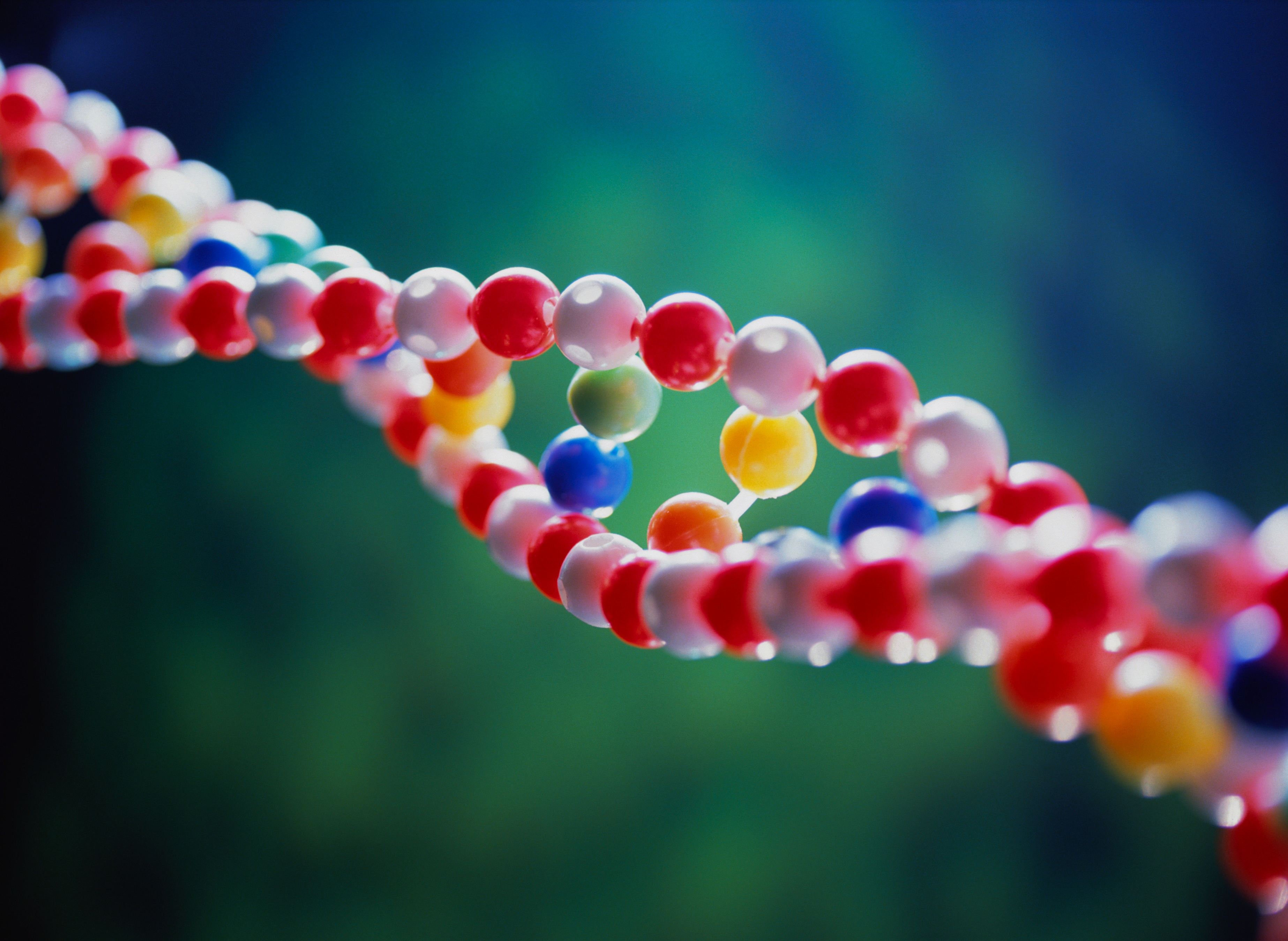
Why is DNA important?
a)
it is very small and very complicated
b)
it's in everything
c)
it serves as the blueprint for traits of all living things
d)
because we eat it every day for energy
48.
What are the 4 nitrogen bases?
a)
adenine, thymine, cytoplasm, and guanine
b)
adenine, thymine cytosine, and guanine
c)
adenine, thymine, cytosine, and gylcerol
d)
adenine, thymine, cytosine, and glucose
49.
Which 2 molecules forms the sides (backbone) of the DNA ladder?
a)
deoxyribose and adenine
b)
deoxyribose and a hydrogen bond
c)
sugar and the nucleus
d)
deoxyribose (sugar) and phosphate
50.
Which organelle is DNA usually found in?
a)
cell membrane
b)
vacuole
c)
chloroplast
d)
nucleus
51.
Which sequence of DNA bases would pair with this partial strand
ATG TGA CAG
ATG TGA CAG
a)
ATG TGA CAG
b)
TAC ACT GTC
c)
GTA AGT GAC
d)
CAT TCA CTG
52.
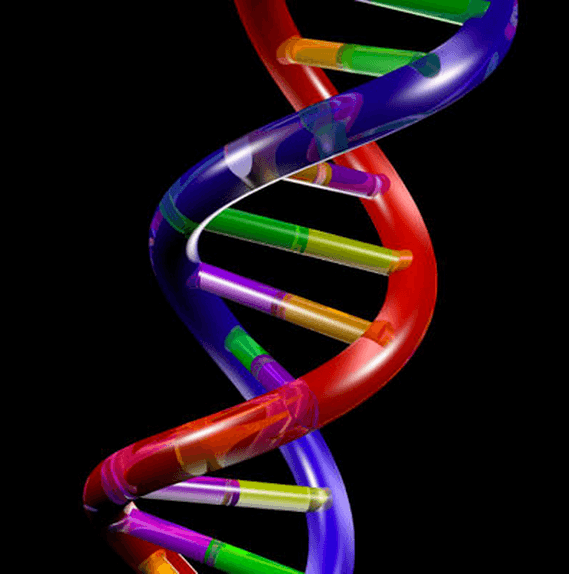
What determines the code, or information, of a DNA molecule?
a)
the shape (structure) of the nitrogen bases
b)
the order (sequence) of the nitrogen bases
c)
the color of the nitrogen bases
d)
the frequency (number) of nitrogen bases
53.
Which shows the correct complementary base pairing for DNA?
a)
C-A, T-G
b)
A-G, C-T
c)
C-G, U-A
d)
T-A, G-C
54.
What does DNA stand for?
a)
Deoxyribonucleic acid
b)
Denitrogenous acid
c)
Deribonucleic acid
d)
Diribonucleic acid
55.
What is Transcription?
a)
The making of tRNA from a DNA segment.
b)
The making of an rRNA strand from a DNA segment.
c)
The making of an mRNA strand from a DNA segment.
d)
IDK. I just want the semester to be over...
56.

Using the codon identify the amino acid sequence:
AUG-CCA-GUA-GGG-UAA
AUG-CCA-GUA-GGG-UAA
a)
MET-HIS-ALA-GLY-STOP
b)
MET-PRO-GLY-VAL-STOP
c)
MET-PRO-VAL-GLY-STOP
d)
MET-THR-SER-ASP-STOP
57.
Which RNA bases would pair with TACGAA in transcription?
a)
AUGCUU
b)
ATGCTT
c)
GCATCC
d)
GCAUCC
58.
Which of the following molecules is created during TRANSCRIPTION?
a)
Protein
b)
DNA
c)
mRNA
d)
tRNA
59.
Codons contain ______ bases
a)
1
b)
3
c)
6
d)
9
60.
Which process is used to copy DNA in the nucleus?
a)
replication
b)
transcription
c)
translation
61.
Which process is used to make mRNA from the DNA in the nucleus?
a)
transcription
b)
translation
c)
replication
62.
Where does transcription take place?
a)
nucleus
b)
cytoplasm
c)
ribosome
63.
When does DNA replication happen?
a)
Before Mitosis begins
b)
During prophase
c)
During metaphase
d)
During anaphase
64.

What process is being shown here?
a)
Replication
b)
Translation
c)
Transcription
65.
what does mRNA do?
a)
carry info from genes to ribosomes
b)
carry amino acids to ribosomes
c)
help with RNA splicing
d)
make up ribosomes
66.
True or false: RNA is double-stranded.
a)
true
b)
false
c)
it depends on the type
67.
Which of these bases does not exist in RNA?
a)
C
b)
T
c)
U
d)
A
68.

DNA codes for...
a)
cholesterol
b)
proteins
c)
fatty acids
d)
a sandwich
69.

Which process is happening in this picture?
a)
Transcription
b)
Translation
c)
Replication
70.
How many amino acids are coded for by this sequence of nucleotides:
ATG GGA ACT CCA
ATG GGA ACT CCA
a)
4
b)
2
c)
6
d)
12
71.
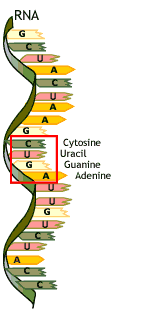
In RNA, Uracil pairs with ______.
a)
cytosine
b)
adenine
c)
guanine
d)
thymine
72.
The process to go from mRNA to a protein is called ____
a)
transcription
b)
rRNA
c)
replication
d)
translation
73.
The process to go from DNA to mRNA is _______
a)
translation
b)
transcription
c)
replication
74.
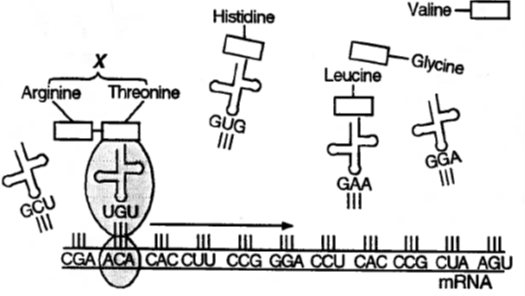
What process is going on in this photo?
a)
Transcription
b)
Translation
c)
Replication
d)
All the above
75.
Which component of DNA determines the traits of an organism?
a)
Nitrogen Bases
b)
Sugar-Phosphate Backbone
c)
Hydrogen bonds
76.
What is the location in the cell for translation?
a)
nucleus
b)
mitochondria
c)
ribosome
d)
chloroplast
77.
Does the order of amino acids in a protein matter?
a)
YES!
b)
NO!
78.

The mRNA leaves the ________ to find the ribosome to make proteins.
a)
cell
b)
nucleotide
c)
nucleus
79.
Who does a mutation effect?
a)
individuals
b)
only parents
c)
a person's children
d)
only children
80.
A mutation is defined as:
a)
A change in the cell's structure
b)
Anything that changes in an embryo
c)
Any change in the physical features of a human
d)
A change in the DNA sequence
81.
An insertion or deletion can also be described as a:
a)
Point mutation
b)
Selective Breeding
c)
Frameshift mutation
d)
Natural Selection
82.
ATTTGAGCC- Original
ATTGAGCC - Mutated
The example above is an example of a
ATTGAGCC - Mutated
The example above is an example of a
a)
Insertion- Frameshift
b)
Deletion- Substitution
c)
Deletion -Frameshift
d)
All of the above
83.
Normal-
GAG-CTC-GAC-AGA
Mutant
GAG CTC-CAC-AGA
GAG-CTC-GAC-AGA
Mutant
GAG CTC-CAC-AGA
a)
no mutation
b)
substitution
c)
insertion
d)
deletion
84.

Are all Mutations bad?
a)
Aye
b)
No
c)
Fit ye on about?
100 %

