wayground logo

Free Printable Worksheets

Font size

S
M
L
XL
Worksheets

Phys Science Chapter 2 REVIEW

Total questions: 153

Worksheet time: 2hrs 40mins

Name
Class
Date
1.

What is a pure substance made of 2 or more elements chemically combined in a specific ratio (Ex. Water)?

a)

Element

b)

Compound

c)

Mixture

d)

Solution

2.

What is a type of mixture in which different parts can easily be seen (Ex. Vegetable soup)?

a)

Heterogenous mixture

b)

Homogeneous mixture

c)

Solution

d)

Colloid

3.

What is a well-mixed mixture containing a solvent and at least one solute that has the same properties throughout (Ex. Sugar water)?

a)

Heterogenous mixture

b)

Colloid

c)

Suspension

d)

Solution

4.

What is a type of mixture that is evenly mixed so you cannot see the parts and it looks all the same (Ex. Paint)

a)

Element

b)

Compound

c)

Heterogenous mixture

d)

Homogenerous mixture

5.

What is a pure substance that cannot be broken down into any other substances by chemical or physical means (Ex. Oxygen)?

a)

Element

b)

Compound

c)

Colloid

d)

Suspension

6.

What is a mixture in which particles can be seen seen and settle out over time (Ex. Muddy water)?

a)

Solution

b)

Suspension

c)

Colloid

d)

Element

7.

What is a mixture containing small, undissolved particles that do not settle out over time (Ex. Fog)?

a)

Solution

b)

Suspension

c)

Colloid

d)

Compound

8.

A base is a compound that makes hydroxide ions (OH-) when dissolved in water.

a)

True

b)

False

9.

Red litmus paper turns blue in the presence of an acid.

a)

True

b)

False

10.

pH is the measure of how strong or weak an acid is.

a)

True

b)

False

11.

Low pH means that there is a high concentration of hydrogen ions.

a)

True

b)

False

12.

A compound that changes color when it contacts an acid or a base (can be used to show the presence of an acid or a base) is called __________.

a)

Solute

b)

Solvent

c)

Indicator

d)

Salt

13.

Which of the following values is very acidic on the pH scale?

a)

0

b)

6

c)

9

d)

14

14.

Which of the following values is neutral on the pH scale?

a)

0

b)

3

c)

7

d)

14

15.

Water and salt are mixed together. Hot water, coffee and sugar are mixed together. Which substance is the solvent in both?

a)

Water

b)

Coffee

c)

salt

d)

Sugar

16.
What is a substance that is dissolved in another substance? 
a)
solution
b)
solute
c)
solvent
d)
compound
17.
Which of the following is a method of separating solutions?
a)
hand seperation
b)
filtering
c)
screening
d)
evaporation 
18.
If you spilled nails in a sandbox, what separation tool/method could you use to clean out the sandbox so it would be safe for children to play in?
a)
Filter
b)
Screen
c)
Magnet
d)
Evaporation
19.
The smallest unit of an element that still has the properties of that element is?
a)
a substance
b)
a mixture
c)
a compound
d)
an atom
20.

Which of these is a (pure) substance?

a)

bread

b)

table salt

c)

garden soil

d)

sea water

21.
Which of these is an example of a molecule?
a)
a small nugget of pure gold
b)
the smallest grain of salt in a salt shaker
c)
 a small drop of sugar water
d)
two oxygen atoms joined to a carbon atom
22.
Which of these is a mixture?
a)
Uncooked chocolate chips and cookie dough blended together with a spoon.
b)
Distilled water
c)
A nugget of gold
d)
A molecule of Oxygen
23.
Two or more elements chemically combined:
a)
an atom
b)
a compound
c)
a mixture
d)
a pure substance
24.
A mixture that appears to be evenly mixed throughout:
a)
an atom
b)
a compound
c)
a homogeneous mixture
d)
a heterogeneous mixture
25.
 mixture that does NOT appear to be evenly mixed throughout:
a)
an atom
b)
a compound
c)
a homogeneous mixture
d)
a heterogeneous mixture
26.
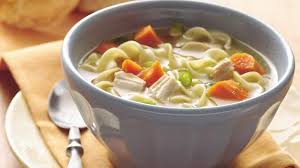
Chicken noodle soup
a)
heterogeneous mixture
b)
homogeneous mixture
27.
Milk
a)
Heterogeneous mixture
b)
Homogeneous mixture
28.
Soil
a)
Heterogeneous
b)
Homogeneous
29.
Which one has more than one type of atom in it
a)
Element
b)
Compound 
30.

which one only has ONE TYPE of atom In it.

a)

Element

b)

Compound

c)

Mixture

31.

which one can be found on the periodic table

a)

Compound

b)

Element

c)

Solution

d)

Molecule

32.
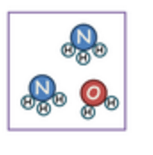
This picture represents: 
a)
Element
b)
Compound
c)
Mixture of Elements
d)
Mixture of Compounds
33.
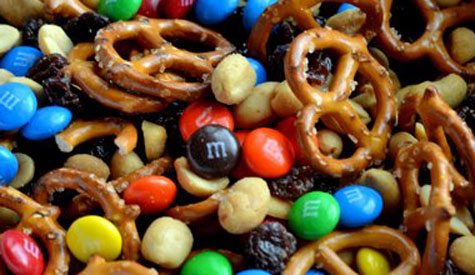
What type of mixture is this?
a)
solution
b)
chemical mixture
c)
mechanical mixture 
d)
party mix
34.
This picture represents: 
a)
Element
b)
Compound
c)
Mixture of Elements
d)
Mixture of Compounds
35.
Table salt is an example of a.....
a)
element
b)
compound
c)
solution
d)
mechanical mixture
36.
Kool-Aid is a/an
a)
solution
b)
Element
c)
mechanical mixture
d)
Kool 'lit' juice
37.
Ashelyn wonders how she can collect only metals in the junkyard so she can recycle them. What separation method can she apply to achieve this?
a)
Magnetism
b)
Picking
c)
Dissolving in hot liquid
d)
Filtering
38.
Filtration can separate a mixture because,,,
a)
the parts of the mixture have different density so they separate.
b)
some parts of the mixture are small enough to pass through the small holes in the filter paper and some don't.
c)
some of the particles in the mixture are attracted to the filter paper so it stays behind.
d)
some parts of the mixture boil faster than others so they evaporate first.
39.
Which of the following is not a compound?
a)
vinegar
b)
sugar
c)
salt 
d)
carbon dioxide
40.
Fruit salad is what kind of substance?
a)
heterogeneous mixture
b)
solution
c)
suspension
d)
homogeneous mixture
41.
This picture represents: 
a)
Element
b)
Compound
c)
Mixture of Elements
d)
Mixture of Compounds
42.
This picture represents: 
a)
Element
b)
Compound
c)
Mixture of Elements
d)
Mixture of Compounds
43.
A combination that can be separated by physical processes is a .....
a)
Pure Substance
b)
Glucose
c)
Element
d)
Mixture
44.
Are made from a combination of 2 or more elements...
a)
Molecules
b)
Pure Substances
c)
Compounds
d)
Elements
45.
A mixture that is NOT evenly distributed is called ....
a)
Compounded
b)
Homogenous
c)
Heterogenous
d)
Salty
46.
What form of matter has a definite shape?
a)
Solid
b)
Liquid
c)
Gas
d)
Square
47.
What can causes ice to transform from a solid to a liquid?
a)
The air.
b)
The cold.
c)
Shape
d)
Heat
48.
This state of matter does not have a definite size or shape.
a)
Gas
b)
Liquid
c)
Solid
d)
Milk
49.
Which is not a property of matter?
a)
Shape
b)
Mass
c)
Liquid
d)
Volume
50.
When you see steam, fog or clouds, which state of matter is it?
a)
solid
b)
liquid
c)
gas
51.
What is an example of gas?
a)
crayons
b)
paper
c)
soda
d)
air
52.
What is an example of a solid?
a)
wind
b)
water
c)
rock
d)
juice
53.
Orange juice is an example of a ....
a)
solid
b)
liquid
c)
gas
54.
Which state of matter has particles that are tightly packed?
a)
liquid
b)
gas
c)
solid
55.
a type of matter that can be found on earth as a solid, liquid, and gas
a)
gold
b)
water
c)
oxygen
d)
rock
56.
A description of objects that can be measured and observed.
a)
gas
b)
mustangs
c)
physical properties
d)
melting point
57.
If you saw a glass of water and later the water was gone what happened to the water? Remember that your in the science lab.
a)
Ms. Klenk was very thirsty and drank the water.
b)
evaporation
c)
precipitation
d)
solubility
58.
Example for Physical Property
a)
Taste
b)
explodes
59.
A physical property can be observed with your
a)
Eyes
b)
Ears
c)
Tastes
d)
All of the above
60.
Cutting an orange is a physical change.
a)
True
b)
False
61.
An example of a physical property is 
a)
flammability
b)
acidic
c)
color
d)
ability to rust
62.
What causes a change in the state of matter?
a)
physical properties
b)
chemical energy
c)
temperature
63.
Which change can occur when  you add heat energy to water?
a)
The water can change from a liquid to a solid
b)
The water can change from a gas to a liquid
c)
The water can change from a liquid to a gas
d)
The water can change from a solid to a liquid
64.
Changing the way matter looks without changing it into NEW matter is a:
a)
Chemical change
b)
Physical change
c)
Energy change
d)
BOTH a chemical and a physical change
65.
Which term means "the ability to cause change?"
a)
Matter
b)
Heat
c)
Energy
d)
physical change
66.
Which of the following could be a characteristic that changes in matter during a PHYSICAL CHANGE?
a)
Size
b)
State
c)
Texture
d)
All of the above
67.
Chopping wood is an example of a:
a)
Physical change
b)
Chemical change
68.
Water freezing to ice is an example of a:
a)
Physical change
b)
Chemical change
69.
Burning wood to ash is an example of a:
a)
Physical change
b)
Chemical change
70.
Smashing a piece of candy into smaller pieces is an example of a:
a)
Physical change
b)
Chemical change
71.
A physical change does not need energy to occur.
a)
True
b)
False
72.
Adding HEAT to matter causes its particles to:
a)
move faster and farther apart
b)
Move slower and farther apart
c)
Move faster and closer together
d)
Move slower and closer together
73.
What is an example of a Chemical change?
a)
Ripped paper 
b)
boiled egg
c)
cracked egg
d)
sugar in water
74.
Which is a physical change?
a)
burning match 
b)
vinegar in baking soda 
c)
melting butter
d)
cooking an egg
75.
Which is a Chemical property?
a)
Thermal Conductivity 
b)
Density
c)
Malleability 
d)
Flammability 
76.
Which of the following is a chemical property of water?
a)
Reacts with pure sodium.
b)
Boils at 100 oC.
c)
Dissolves sugar easily. 
d)
Has a density of 1 gm/mL
77.
What kind of properties can only be observed when a substance changes into a different substance?
a)
physical properties
b)
chemical properties
c)
liquid properties
d)
real properties
78.
Which type of property is the ability to conduct electricity?
a)
physical property
b)
chemical property
79.
Which of the following properties is a physical property?
a)
magnetism
b)
reactivity with oxygen
c)
flammability
d)
non-reactive
80.
Which of the following is a sign that a chemical reaction has occurred?
a)
change in shape
b)
melting
c)
formation of a gas
d)
dissolving
81.
What characteristic defines all chemical changes?
a)
There is a change of state.
b)
Electricity is produced.
c)
A new material is formed.
d)
Bubbles are produced. 
82.
Define a Chemical Property
a)
A property which depends on the objects size or matter.
b)
A property of matter not involving in its manifestation a chemical change
c)
A property or behavior of a substance which undergoes a chemical change or reaction.
d)
A property which makes the object smell or taste different.
83.
Define a Physical Property
a)
A property of matter not involving in its manifestation a chemical change
b)
A property in which stops a chemical reaction from occuring.
c)
A property or behavior of a substance which undergoes a chemical change or reaction.
d)
A property which makes the object smell or taste different.
84.
Which of the following is a Chemical Property?
a)
Radicallity
b)
Color
c)
Boiling Point
d)
Reactivity
85.
Which of the following is a Physical Property?
a)
Combustion
b)
Electronegativity
c)
Color
d)
PH Level
86.
Is being able to melt physical or chemical
a)
physical
b)
chemical
c)
duck
ductile
d)
malleable
87.
Is making a cake physical or chemical
a)
physical
b)
chemical
c)
ducktile
d)
maluable
88.
Is burning wood a chemical or physical change?
a)
chemical
b)
physical
89.
Is hammering wood together to build a house a chemical or physical change?
a)
chemical
b)
physical
90.
Is bleaching your hair a physical or chemical change?
a)
physical
b)
chemical
91.
A change in the size, shape, or state of matter.
a)
chemical change
b)
physical change
c)
chemical reaction
d)
electron change
92.
Which of the following is NOT an example of a physical change?
a)
crumpled paper
b)
pencil sharpening
c)
shrunken clothing
d)
sour milk
93.
Photosynthesis is an example of a
a)
physical change
b)
chemical change
94.
Which of the following does the discoloration of a coin  describe?
a)
Chemical Change
b)
Physical Change
c)
None of the above
d)
Both
95.
Which of the following is NOT a physical property?
a)
breaking a window
b)
color
c)
denisty
d)
freezing point
96.
Is "mold growing on cheese" a chemical or physical change?
a)
Chemical change
b)
Physical change
97.
Is "sugar dissolves in water" a chemical or physical change?
a)
Chemical change
b)
Physical change
98.
Changing the Shape, State, or Size of an object is a...
a)
Physical Change
b)
Chemical Change
c)
Chemical Property
99.
Green bananas turning yellow on their own as they ripen.
a)
Chemical Change
b)
Physical Change
100.
An instant ice pack getting cold when the chemicals are able to touch.
a)
Chemical Change
b)
Physical Change
101.
Is Ductility a physical or chemical property?
a)
Physical
b)
Chemical
c)
None
d)
No such thing
102.
Is Ductility a physical or chemical property?
a)
Physical
b)
Chemical
c)
None
d)
No such thing
103.
Blue Color
a)
Physical Property
b)
Chemical Property
104.
Density
a)
Physical Property
b)
Chemical Property
105.
Flammability (burns)
a)
Physical Property
b)
Chemical Property
106.
Solubility (dissolves)
a)
Physical Proeprty
b)
Chemical Property
107.
Reacts with acid
a)
Physical Property
b)
Chemical Property
108.
Supports combustion
a)
Physical Property
b)
Chemical Property
109.
Sour taste
a)
Physical Property
b)
Chemical Property
110.
Melting point
a)
Physical Property
b)
Chemical Property
111.
Reacts with water
a)
Physical Property
b)
Chemical Property
112.
Hardness
a)
Physical Property
b)
Chemical Property
113.
A student removes a loaf of bread hot from the oven. The student cuts a slice off the loaf and spreads butter on it. 
a)
Physical Change
b)
Chemical Change
114.
Your friend decides to toast a piece of bread, but leaves it in the toaster too long. The bread is black and the kitchen if full of smoke. 
a)
Physical Change
b)
Chemical Change
115.
You forgot to dry the bread knife when you washed it and reddish brown spots appeared on it. 
a)
Physical Change
b)
Chemical Change
116.
You blow dry your wet hair. 
a)
Physical Change
b)
Chemical Change
117.
In baking biscuits and other quick breads, the baking powder reacts to release carbon dioxide bubbles. The carbon dioxide bubbles cause the dough to rise. 
a)
Physical Change
b)
Chemical Change
118.
You take out your best silver spoons and notice that they are very dull and have some black spots. 
a)
Physical Change
b)
Chemical Change
119.
A straight piece of wire is coiled to form a spring. 
a)
Physical Change
b)
Chemical Change
120.
Food color is dropped into water to give it color. 
a)
Physical Change
b)
Chemical Change
121.
In a fireworks show, the fireworks explode giving off heat and light. 
a)
Physical Change
b)
Chemical Change
122.
Chewing food to break it down into smaller particles represents a _________ change, but the changing of starch into sugars by enzymes in the digestive system represents a ___________change. 
a)
Chemical then Physical 
b)
Physical then Chemical
c)
Both Physical
d)
Both Chemical
123.
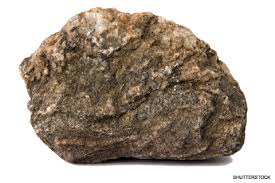
What is the volume of the rock? The water level is displaced from 20 mL to 23 mL with the rock.
a)
3 mL
b)
23 mL
c)
20 mL
d)
43 mL
124.
What is the formula for calculating density?
a)
Mass ∗ Volume
b)
Volume ∗ Mass
c)
Mass ÷ Volume
d)
Volume ÷ Mass
125.
If you had a sealed bottle of water, how would the mass of the water bottle change after a 5 day period?
a)
Mass would increase. 
b)
Mass would stay the same. 
c)
Mass would decrease. 
d)
None of the above.
126.
Which statement is true?
a)
Oil is the most dense substance.
b)
Corn syrup is less dense than water.
c)
Oil is less dense than water.
d)
Oil and corn syrup have the same density but different masses.
127.
In which state does matter completely fill its closed container?
a)
Gas
b)
Liquid
c)
Solid
d)
Ice
128.
Which state of matter has a fixed shape and volume and it's molecules move very slowly?
a)
Liquid
b)
Gas
c)
Solid
d)
Plasma
129.
When a gas turns into a liquid, it is called ___________________.
a)
Condensation
b)
Evaporation
c)
Melting
d)
Freezing
130.
The volume of water in a beaker was 215 mL. After 5 days, the volume of the water was 200 mL. What best explains the change in volume?
a)
Some of the water absorbed the air. 
b)
Some of the water evaporated and escaped into the air as water vapor.
c)
Some of the water disappeared.
d)
Some of the water was released due to condensation.
131.
a)

Atom

b)

Temperature

c)

Energy

132.
a)

Solid

b)

Liquid

c)

Gas

133.
a)

Liquid

b)

Solid

c)

Gas

134.
are YOU MATTER
a)
yes
b)
NOOOOOOOO
135.
melting butter is an example of 
a)
physical change
b)
chemical change
136.

All the objects have two properties in common:

a)

Mass

b)

Volume

c)

Both

137.
Freezing
a)
Solid to gas
b)
Liquid to solid
c)
Gas to solid
d)
Liquid to gas
138.
Boiling
a)
liquid to gas
b)
gas to solid
c)
gas to liquid
d)
solid to liquid
139.

Which state of matter has tightly packed molecules?

a)

solid

b)

liquid

c)

gas

d)

plasma

140.
What are elements? 
a)
Nitrogen
b)
Oxygen
c)
Matter made of one type of atom
d)
Matter made of many types of atoms. 
141.
What is the charge of an electron?
a)
Positive
b)
Negative 
c)
Neutral 
142.
What is the charge of a Proton?
a)
Positive 
b)
Negative 
c)
Neutral
143.
What is the atomic number of Carbon? 
a)
6
b)
12.0107
c)
C
d)
Carbon
144.
What is the smallest unit of matter? 
a)
Element 
b)
Atom
c)
Molecule 
d)
Compound 
145.
Which one is NOT a compound? 
a)
H2O
b)
CO2
c)
NaCl
d)
Ne
146.
What is an Atom? 
a)
Microscopic particles that make up matter 
b)
Microscopic Protons 
c)
Microscopic Neutrons 
d)
Microscopic Nucleus 
147.
Compounds are composed of the type of particles in this picture. What are they?
a)
Rust
b)
Atoms
c)
Mixtures
d)
Molecules
148.
This model represents a 
a)
solid
b)
liquid
c)
gas
149.
The substance that does the dissolving.
a)
solute
b)
solution
c)
solvent
d)
chemical change
150.
When a substance totally breaks down and separates in another substance.
a)
matter
b)
solute
c)
solution
d)
dissolve
151.
The "stuff" all things are made of.
a)
solute
b)
solvent
c)
matter
d)
physical property
152.
In order to change a solid to a liquid, which process is used?
a)
melting
b)
freezing
c)
evaporation
d)
sublimation
153.
Which of the following would be an example of a chemical change?
a)
melting
b)
boiling
c)
rusting
d)
cracking