wayground logo

Free Printable Worksheets

NEW

Font size

S
M
L
XL
Worksheets

Cellular Reproduction Review

Total questions: 60

Worksheet time: 2hrs 31mins

Name
Class
Date
1.
All Offspring of Asexual reproduction are identical
a)
True
b)
False
2.

Bacteria reproduce asexually by a process called

a)

replication

b)

meiosis

c)

mitosis

d)

binary fission

3.
In binary fission how does the DNA of the daughter cells compare to the DNA of the parent cell? 
a)
It is only half of the amount of DNA found in the parent.
b)
It is identical.
c)
It is a mix of the parent's DNA.
d)
It has some similarities and some differences.
4.

The cells separate (cytokinesis) into two identical daughter cells

a)

Step 1

b)

Step 2

c)

Step 3

d)

Step 4

e)

Step 5

5.
a)
Anaphase
b)
Cytokinesis
c)
Telophase
d)
Metaphase
6.
a)
Cytokinesis
b)
Interphase
c)
Anaphase
d)
Metaphase
7.
a)
Anaphase
b)
Cytonkinesis
c)
Interphase
d)
Prophase
8.
a)
Cytokinesis
b)
Anaphase
c)
Telophase
d)
Prophase
9.
The phase in mitosis where chromosomes move away and are pulled apart by spindles to opposite sides of the cell.
a)
prophase
b)
anaphase
c)
metaphase
d)
telephase
10.
Chromosomes condense from long stands into rod like structures. 
a)
Prophase
b)
Interphase
11.

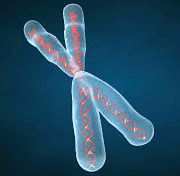
In the following structure, the circled item is a

a)

chromosome

b)

chromatid

c)

centromere

d)

chromatin

12.
The cells produced via meiosis are called:
a)
sex cells
b)
somatic cells
c)
body cells
d)
skin cells
13.
If the Diploid number of Carrots is 18, the haploid number is
a)
18
b)
9
c)
27
d)
36
14.
Identify the phase.
a)
Metaphase I
b)
Metaphase II
c)
Prophase I
d)
Anaphase II
15.
How many daughter cells are produced from meiosis ?
a)
10
b)
6
c)
4
d)
2
16.
Diploid Cells are represented by
a)
2n
b)
n
c)
4n
d)
1/2 n
17.
Goes through P.M.A.T two rounds 
a)
Mitosis
b)
Meiosis
c)
Osmosis
d)
Transcription
18.
A male shark has 40 chromosomes in each of its sex cells. How many would be present in its body cells?
a)
20
b)
40
c)
80
d)
160
19.
During what phase of the cell cycle is DNA replicated?
a)
G1 phase
b)
S phase
c)
G2 phase
d)
M phase
20.
Put the following stages of mitosis in order: anaphase, prophase, metaphase, and telophase. 
a)
prophase, metaphase, telophase, anaphase
b)
prophase, anaphase, metaphase, telophase
c)
prophase, metaphase, anaphase, telophase
d)
prophase, telophase, metaphase, anaphase
21.
prokaryotic cells are divided by which process?
a)
binary fission
b)
both
c)
mitosis
d)
none
22.
This process has four steps:
1. parent cell
2. DNA duplication
3. cells divide
4. daughter cells
a)
binary fission
b)
both
c)
mitosis
d)
none
23.
Environmental conditions are stable and non-changing.
Which type of cell division has an advantage?
a)
sexual reproduction
b)
asexual reproduction
c)
binary fission
d)
fragmentation
24.
Environmental conditions are unstable and changing a lot.
Which type of cell division has an advantage?
a)
sexual reproduction
b)
asexual reproduction
c)
binary fission
d)
fragmentation
25.

What can be said about the offspring in sexual reproduction?

a)

They are identical to their parents.

b)

They get genes from both parents.

c)

They get genes from their parent.

d)

They have the exact same genetic information as their parents.

26.

One of the main differences between the two types of reproduction is asexual involves one parent and sexual involves two parents

a)

True

b)

False

27.
In prophase of Mitosis, DNA will condense into...
a)
Centromeres
b)
Chromosomes
c)
Nuclei
d)
Spindle fibers
28.
What is the next phase of mitosis?
a)
Prophase
b)
Metaphase
c)
Anaphase
d)
Telophase
29.
Why is sexual reproduction better than asexual reproduction?
a)
It gives an advantage to organisms to be different than the rest, if the environment changes.
b)
It is better for all organisms to be the same.
c)
It happens faster.
d)
It helps skin cells divide faster to heal wounds.
30.
The process on the left is:
The process on the right is:
a)
Left: meiosis
Right: meiosis
b)
Left: meiosis
Right: cloning
c)
Left: mitosis
Right: meiosis
d)
Left: mitosis
Right: mitosis
31.
The ___________ holds the replicated sister chromatids together.
a)
centriole
b)
chromosomes
c)
centromere
d)
cycles
32.
The cell spends most of it's life in ________________.
a)
mitosis
b)
cytokinesis
c)
Interphase
d)
None of the above
33.
In the G1 stage of the cell cycle, the cell
a)
Grows
b)
Matures
c)
Carries on normal activities
d)
All of the above
34.
In the S stage of interphase_______________
a)
the cell grows
b)
the nucleus divides
c)
the cell membrane divides
d)
the DNA is replicated
35.
When a plant cell goes through cell division,  _____________.
a)
the 2 new nuclei are separated by the cell membrane pinching off.
b)
4 new cells are formed
c)
a cell plate forms, dividing the 2 new nuclei
d)
None of the above
36.
When an animal cell goes through cytokinesis,__________
a)
a cell plate forms dividing the 2 new nuclei.
b)
the cell membrane pinches off the 2 new cells.
c)
4 new cells are formed.
d)
None of the above
37.
What three phases make up the cell cycle?
a)
Binary Fission, Vegetative Propagation, Fragmentation
b)
G1, S, G2
c)
Interphase, Mitosis, Cytokinesis
d)
Prophase, Metaphase, Telophase
38.

May occur in all body cells

a)

mitosis

b)

meiosis

39.

occurs only in reproductive cells

a)

mitosis

b)

meiosis

40.

used for growth and repair

a)

mitosis

b)

meiosis

41.
What phase is shown here?
a)
Anaphase I
b)
Prophase I
c)
Metaphase II
d)
 Metaphase I
42.
During what stage does the G1, S and G2 phases happen?
a)
Interphase
b)
M phase
c)
Mitosis
d)
Cytokinesis
43.
Why would it be important to replicate DNA before a cell divides in mitosis or meiosis?
a)
In order for genetic information to be transferred into daughter cells.
b)
In order for the cell to be able to increase in size.
c)
In order for the DNA to be contained in the nucleus.
d)
In order for the cell to re-order the DNA sequencing in the new cells.
44.
What are some of the facts about asexual reproduction?
a)
Takes only one mate to reproduce and takes a longer time to reproduce
b)
Takes a shorter amount of time to reproduce and it takes two mates to reproduce
c)
Reproduces diverse offspring and takes a longer time to reproduce
d)
Takes only one mate to reproduce and takes a shorter time to reproduce
45.
What are some of the facts about sexual reproduction?
a)
Takes two mates to reproduce and takes a longer time to reproduce
b)
Takes one mate to reproduce and takes a shorter amount of time to reproduce
c)
Takes two mates to reproduce and takes a shorter amount of time to reproduce
d)
Takes one mate to reproduce and takes a shorter amount of time to reproduce
46.
What is an advantage of sexual reproduction?
a)
Allows genetic variation
b)
Only needs one parent
c)
Happens very quickly
d)
Offspring are exact copies of parent
47.
What is one disadvantage of sexual reproduction?
a)
Only one parent needed
b)
Off spring are exact copies of parents
c)
Happens very quickly
d)
Needs two parents
48.
Sexual reproduction requires _____ parents and asexual reproduction requires ___ parents
a)
1,1
b)
2,2
c)
2,1
d)
1,2 
49.
Interphase is when a cell is growing, replicating its DNA, and carrying out cell processes. Which of these is correct regarding its occurence?
a)
It occurs once before mitosis and once before meiosis.
b)
It occurs once before mitosis and twice before meiosis.
c)
It occurs once before mitosis and does not occur before meiosis.
d)
It does not occur before mitosis and occurs once before meiosis.
50.
In mitosis, the two resulting cells are
a)
different from the starting cell and identical to each other.
b)
different from the starting cell and different from each other.
c)
identical to the starting cell and different from each other.
d)
identical to the starting cell and identical to each other.
51.
Meiosis produces different types of cells than mitosis. If there was a "meiosis club," all of these cells could be included EXCEPT
(Which cell type is not produced in meiosis?)
a)
gametes
b)
body cells
c)
sperm cells
d)
egg cells
52.
In meiosis, crossing over occurs in prophase 1. What is the significance of this event?
a)
This process ensures that chromosomes are evenly divided into daughter cells.
b)
This process can lead to genetic variation in daughter cells.
c)
This process can create gaps in the chromosome DNA for RNA to bind.
d)
This process allows for spindles to connect to the chromosomes in order to pull chromosomes apart.
53.
Mitosis is useful for the creation of new cells which is important for all of the following EXCEPT
a)
organism growth.
b)
repair of damage.
c)
replacement of worn out cells.
d)
generation of gametes.
54.
Have you ever heard of a skin graft? Skin cells can be harvested from one area and be grown in order to help burn victims or other skin injuries. Which process would result in the development of more skin cells in this treatment? 
a)
Mitosis
b)
Meiosis
c)
Crossing Over
d)
Interphase
55.
In meiosis, the four resulting cells are 
a)
identical to the starting cell and different from each other.
b)
different from the starting cell and different from each other. 
c)
identical to the starting cell and identical to each other.
d)
different from the starting cell and identical to each other.
56.
The haploid number of human chromosomes is
a)
11
b)
12
c)
23
d)
46
57.
The diploid number of human chromosomes is
a)
23
b)
46
c)
92
58.
A dog has 78 chromosomes in its body cells.  What is the diploid number?
a)
78
b)
39
c)
1
d)
100
59.
A Goat has 60 chromosomes in its body cells.  What is the haploid number?
a)
60
b)
30
c)
100
d)
120
60.
What happens in Meiosis that causes the cells produced to be unique?
a)
Metaphase 2
b)
Interphase
c)
Splitting of Cytoplasm
d)
Crossing Over