wayground logo

Free Printable Worksheets

Font size

S
M
L
XL
Worksheets

Genetics #5

Total questions: 150

Worksheet time: 3hrs 44mins

Name
Class
Date
1.

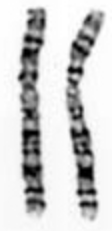
This is an example of

a)

restriction endonuclease

b)

virus receptors

c)

gene therapy

d)

reverse transcriptase

2.

How is most insulin made today?

a)

It isn't made up. It comes from a natural source

b)

We modify a bacteria and make insulin

c)

We can't find insulin outside our body

d)

None of them

3.

It is the transfer of genetic material for the purpose of treating human disease.

a)

chemotherapy

b)

gene therapy

c)

gene transfer

d)

gene editing

4.

What type of disease is caused by mutation in the genetic material or DNA

a)

Cloning Disease

b)

Mutant disease

c)

Genetic disease

d)

All of the Above

5.

In genetic engineering a/an "_____" gene is introduced into the patient to replace an "_____" disease causing gene.

a)

normal - abnormal

b)

good - bad

c)

abnormal - normal

d)

bad - good

6.
Gene therapy is the attempt to
a)
fuse cells taken from different species.
b)
treat disease by changing a patient's DNA.
c)
determine a baby's sex before birth.
d)
provide genes to people who have none.
7.
Process of adding or changing DNA to alter genes within an individual’s cells to treat disease. 
a)
stem cell research
b)
cloning
c)
gene therapy
d)
selective breeding
8.

how can one fix a genetic disorder by gene therapy

a)

You can take out or change a section of DNA on a chromosome

b)

split the chromosomes

c)

add enzymes to the DNA

d)

add buffers to the DNA which causes the chromosomes to regenerate

9.
vectors 
a)
plasmid or virus that contains or carries modified genetic material 
b)
They can be used to represent any quantity that has magnitude, has direction
c)
displacement 
d)
velocity 
10.

When did scientist start reserching genes?

a)

in the 1980s

b)

in the 1970s

c)

in the 1950s

d)

in the 1990s

11.

They have counted how many chromosomes a human has.

a)

yes

b)

no

c)

not mentioned

12.

How many chromosomes do humans usually have?

a)

twenty-three

b)

four

c)

forty-six

d)

hundreds

13.

What's the name of the DNA model ?

a)

genome

b)

two-strand molecule

c)

helios

d)

double helix

14.

What is a genome?

a)

molecular structure

b)

DNA

c)

genes

d)

a complete set of chromosomes

15.
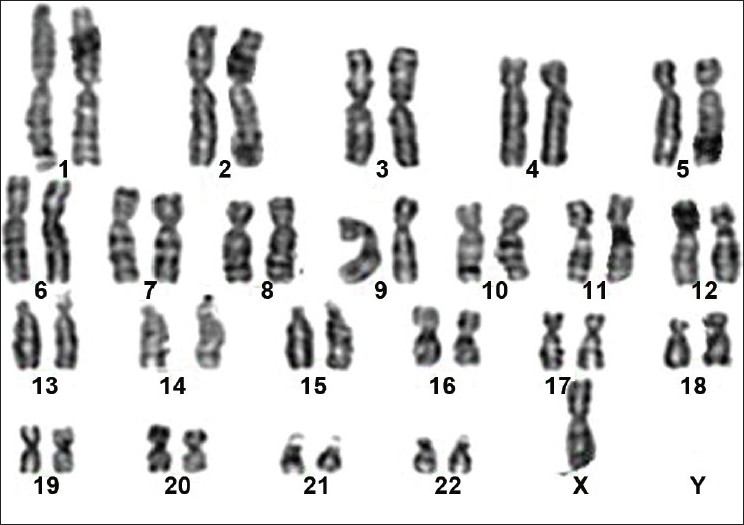
What is the gender of the individual whose karyotype is seen in the image?
a)
Male
b)
Female
16.
The doctors use karyotypes to examine the chromosomes. A karyotype is a picture of all the chromosomes in a cell.
a)
True
b)
False
17.
What would indicate a normal human male?
a)
XX
b)
X
c)
XY
d)
XXY
18.
What is the gender of the individual whose karyotype is seen in the image?
a)
Male
b)
Female
19.
A sperm contains
a)
Both an X and a Y chromosome
b)
Two X chromosomes
c)
An X OR a Y chromosome
d)
only a Y chromosome
20.
A pair of identical chromosomes shown in a karyotype, one inherited from mom, and one inherited from dad are called
a)
sister chromotids
b)
centromeres
c)
homologous chromosomes
d)
autosomes
21.
A normal human has ___ pairs of autosomes and ___ pair(s) of sex chromosomes.
a)
23,1
b)
22,1
c)
1, 22
d)
1, 23
22.
The X and Y chromosomes are known as the ___ chromosomes.
a)
sex
b)
autosome
c)
biological
d)
genetic
23.
Females have ____ and males have _____ chromosomes.
a)
XX, XY
b)
XY, XX
c)
XX, XX
d)
XY, XY
24.
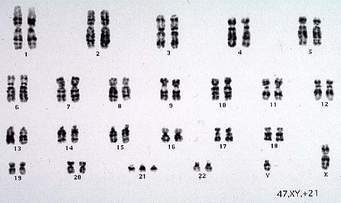
a)
This karyotype shows Trisomy 21
b)
This karyotype has no abnormality
c)
This karyotype is missing a sex chromosome (monosomy x)
d)
This karyotype is from a gamete
25.
Based on the Karyotype shown, at which chromosome pair can we identify a genetic disorder? 
a)
Chromosome pair 5
b)
sex chromosomes
c)
Chromosome pair 21
d)
There are no chromosomal disorders
26.
Which statement is NOT true about Karyotypes
a)
Chromosomes (pairs 1-22) are arranged by size
b)
Sex chromosomes are found at the end
c)
A normal karyotype has 46 chromosomes or 23 pairs
d)
Having missing or extra chromosomes does not indicate a disorder
27.
What is the chromosomal condition of the individual whose karyotype is seen in the image?
a)
Monosomy X (Turner's Syndrome)
b)
Trisomy 21 (Down's Syndrome)
c)
Trisomy 13 (Patau Syndrome)
d)
Trisomy 18 (Edwards's Syndrome)
28.
What is the chromosomal condition of the individual whose karyotype is seen in the image?
a)
Trisomy 21 (Down's Syndrome)
b)
Trisomy 13 (Patau Syndrome)
c)
Trisomy 18 (Edward's Syndrome)
d)
XXY Sex Chromosomes (Klinefelter's Syndrome)
29.
Photograph of chromosomes grouped in ordered pairs
a)
pedigree
b)
Punnett Square
c)
Venn Diagram
d)
Karyotype
30.

Based on the karyotype, what is the sex of this baby?

a)

Male

b)

Female

31.
Is this Karyotype human?
a)
Yes
b)
No
c)
Impossible to Determine
32.

A mother can provide cells of her offspring for karyotype testing through the process of _____________________.

a)

amniocensthesis

b)

white blood cells

c)

skin cells

d)

cheek cells

33.

In humans, we have _______ pairs of chromosomes.

a)

21

b)

22

c)

23

d)

46

34.

The 23rd pair of chromosomes, in humans, are ____________. These code for gender.

a)

sex chromosomes

b)

autosomes

c)

ribosomes

d)

somatics

35.
The image shown is that of a...
a)
Chromosome
b)
Pedigree
c)
Punnet Square
d)
Karyotype 
36.
Which of these CAN NOT be predicted by looking at a Karyotype?
a)
Gender
b)
Species of the Organism
c)
Possible Genetic Disorder
d)
All can be predicted with a Karyotype
37.

The gender of this Karyotype shown?

a)

Male

b)

Female

38.
When there is an MISSING chromosome a geneticist would use the term...
a)
Monosomy
b)
Trisomy
c)
Quadruplegia
d)
Chromosomal Deletion
39.
When there is an EXTRA chromosome a geneticist would use the term...
a)
Monosomy
b)
Trisomy
c)
Quadruplegia
d)
Chromosomal Deletion
40.
How many TOTAL SEX chromosomes are present in this karyotype?
a)
22
b)
44
c)
3
d)
2
41.
What's wrong???
a)
Trisomy
b)
Monosomy
c)
Nothing is Wrong, it looks normal.
42.
What's wrong???
a)
Trisomy
b)
Monosomy
c)
Nothing is Wrong, it looks normal.
43.
The likely cause of genetic disorders is...
a)
Nondisjunction
b)
Overfertilization
c)
Uncontrolled Meiosis
d)
Translocation
44.
Which of the following would be considered a Gamete cell?
a)
Egg Cell
b)
Sperm Cell
c)
Both of these
d)
None of these
45.
What does DNA stand for?
a)
Deoxyribonucleic Acid
b)
Deoxyribose Enzymes
c)
Deoxyribose Messenger 
d)
Retro deoxyribose Acis
46.
Which of the following traits is not inherited?
a)
Fur color
b)
Feathers
c)
Hair color
d)
A suntan
47.
How many chromosomes do you get from each parent?
a)
22
b)
23
c)
44
d)
46
48.
Where are genes located?
a)
On the chromosome, in the nucleus
b)
On the nucleus inside the chromosome
c)
on the ribosome in the mitochondria
d)
on the moon
49.
 which is heterozygous ?  
a)
Tt
b)
TT
50.
Which is homozygous ?
a)
Zz
b)
SS
51.
the genetic makeup of an organism
a)
heterozygous
b)
punnet square
c)
genotype
52.
what predicts the outcome
a)
genetic engineering
b)
punnet square
c)
probability
53.
A dog gives birth to 5 puppies. What percentage of the chromosomes does each puppy share with the mother?
a)
25%
b)
50%
c)
75%
d)
100%
54.
Which of the following cell types is formed by meiosis?
a)
muscle cells
b)
skin cells
c)
sperm cells
d)
blood cells
55.
An organism's appearance is known as its
a)
heredity
b)
phenotype
c)
genotype
d)
pedigree
56.
A trait that is only found on "X" sex chromosomes.
a)
X-Linked
b)
Y-Linked
c)
ABO Linked
d)
Mutagen
57.
Two traits are blended or create a "new" trait
a)
complete dominance
b)
incomplete dominance
c)
codominance
58.
Both traits show up in the offspring
a)
complete dominance
b)
incomplete dominance
c)
codominance
59.
A pink poodle mates with a purple poodle. The offspring is pink and purple plaid.
a)
complete dominance
b)
incomplete dominance
c)
codominance
60.
A red pony is crossed with a purple pony. The offspring is purple with red spots.
a)
complete dominance
b)
incomplete dominance
c)
codominance
61.
What is the diploid number in human cells?
a)
2
b)
23
c)
46
d)
92
62.
The image shows the pattern of inheritance for colorblindness.  From this diagram we can tell that colorblindness is
a)
a codominant trait
b)
a sex-linked trait
c)
carried on the Y chromosome
d)
is associated with a dominant allele
63.
What chromosome is affected by Down's Syndrome?
a)
23
b)
18
c)
13
d)
21
64.

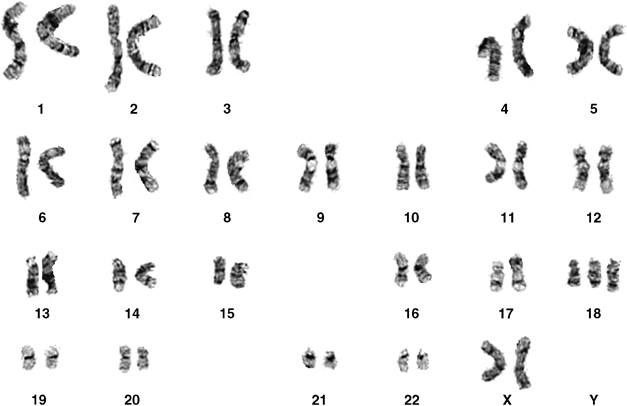
Why is this human karyotype considered 'ABNORMAL'?

a)

Because there SHOULD be TWO "Y" chromosomes as well.

b)

Because there are TOO many sex chromosomes.

c)

Because the karyotype is missing an entire pair of chromosomes.

d)

Nothing is actually abnormal!

65.
Looking at this pedigree, how many family members have the disease?
a)
4
b)
7
c)
All
d)
None
66.
T/F The father determines the gender of the offspring.
a)
True
b)
False
67.
A goat has 20 chromosomes in their somatic cells.  How many are in their egg cells?
a)
10
b)
5
c)
40
d)
20
68.
What happens in mitosis?
a)
create a haploid cell
b)
Create a gamete
c)
Create an identical cell
d)
make an egg
69.
Exchanging parts of homologous chromosomes would define:
a)
Mitosis
b)
Anaphase
c)
Crossing Over
d)
Fertilization
70.
Why do we need meiosis?
a)
To double the number of chromosomes going into sex cells
b)
To halve the number of chromosomes going into sex cells
c)
To triple the number of chromosomes going into sex cells
d)
To not change the number of chromosomes going into sex cells
71.
Structure (b) is pointing to a 
a)
chromatid
b)
chromosome
c)
centromere
d)
DNA
72.
These structures pull the spindle fibers and attached chromosomes to opposite ends of the cell.
a)
Spindle fiber
b)
Centriole
c)
Nucleus
d)
Centromere
73.

What are the three parts of interphase in order?

a)

G1, G2, S

b)

S, G1, G2

c)

G1, S, G2

d)

G2, S, G1

74.

What pulls chromatids to opposite sides of the cell during Anaphase?

a)

Spindle Fibers

b)

Centromeres

c)

Chromosomes

d)

Neucleus

75.

In which phase do these happen: chromosomes line up in the middle of the cell, and spindle Fibers attach to the centromeres of the chromosomes

a)

Metaphase

b)

Prophase

c)

Interphase

d)

Anaphase

e)

Telophase

76.

Which of these describe Anaphase?

a)

Centromeres split, chromatids separate and get pulled to opposite ends of the cell, and cell stretches

b)

Spindle Fibers attach to centromere, and they line up in the middle

c)

The nuckeus breaks down, and chromosomes form

77.

What does the cell cycle result in?

a)

Two identical cells

b)

Three identical cells

c)

Two unidential cells

d)

Four cells

78.

Which of the following describes a "mutation?"

a)

A mistake in DNA

b)

A section of DNA

c)

A bundle of DNA

d)

A type of DNA found in bacteria

79.

TRUE / FALSE: Mutations are often spontaneous--nothing in particular causes them, they just happen.

a)

TRUE

b)

FALSE

80.

SELECT ALL THAT APPLY: Which of the following result in mutations?

a)

UV Light (sunlight)

b)

X-Rays

c)

Smoking

d)

Radiation / Chemical Exposure

e)

Bacterial Infections

81.

Mutations change...

a)

Proteins

b)

Lipids

c)

Carbohydrates

d)

Organelles

82.

TRUE / FALSE: Mutations can change your phenotype (the way you look).

a)

TRUE

b)

FALSE

83.

Variation is...

a)

Differences between people

b)

The number of proteins in your body

c)

The types of nucleic acids in your cells

d)

The makeup of carbohydrates throughout your body

84.

SELECT ALL THAT APPLY: Which types of cells will cause mutations to be inherited?

a)

Gametes

b)

Sperm Cells

c)

Egg Cells

d)

Blood Cells

e)

Body Cells

85.

Which of the following describes a substitution mutation?

a)

A base is switched for another

b)

A base is added

c)

A base is removed

d)

A stop codon is accidentally added, so the protein is much shorter than it should be

86.

Which of the following describes a insertion mutation?

a)

A base is switched for another

b)

A base is added

c)

A base is removed

d)

A stop codon is accidentally added, so the protein is much shorter than it should be

87.

Which of the following describes a deletion mutation?

a)

A base is switched for another

b)

A base is added

c)

A base is removed

d)

A stop codon is accidentally added, so the protein is much shorter than it should be

88.

Original: ATGCACGGT

Mutated: ATCCACGGT

Which type of mutation is shown above?

a)

Substitution

b)

Insertion

c)

Deletion

89.

Original: ATGCACGG

Mutated: ATGCCGGT

Which type of mutation is shown above?

a)

Substitution

b)

Insertion

c)

Deletion

90.

What is a Mutagen?

a)

Radiations causing mutations

b)

Replication errors causing mutations

c)

Birth defects from mutation

d)

Anything that causes a mutation

91.

What is a Mutation?

a)

A birth defect

b)

When you have intellectual or physical disabilities caused by missing parts of your genome

c)

Inheritable changes in genetic info

d)

a mutant

92.
Which of the following is known as Royal disease
a)
sickle cell anemia
b)
Haemophilia
c)
Alzheimer's disease
d)
colour blindness
93.
X linked recessive traits affect mostly
a)
males
b)
females
c)
both equally
d)
none of the above
94.
Cystic fibrosis is an autosomal recessive genetic disorder. If one parent of a child is a carrier, has one copy of the faulty cystic fibrosis gene (Cc), and the other parent is not a carrier (genotype = CC) what is the % chance of the child having the disease?
a)
0
b)
25
c)
50
d)
100
95.

What type of disorder is sickle cell anemia

a)

Autosomal dominant

b)

Autosomal recessive

c)

X-linked dominant

d)

X-linked recessive

96.

Which of the following conditions results in extra fingers and /or toes?

a)

cystic fibrosis

b)

sickle cell anemia

c)

Polydactyly

d)

Huntington's

97.

On a karyotype, a female with Turner Syndrome is indicated by which set of sex chromosomes?

a)

XYY

b)

XXY

c)

XXX

d)

X

98.

What genetic disorder causes the body to produce unusually thick mucus in the lungs and intestines?

a)

Cystic Fibrosis

b)

Sickle Cell

c)

Down Syndrome

d)

Hemophilia

99.
What type of blood is the universal donor?
a)
AB+
b)
AB-
c)
O+
d)
O-
100.
What type(s) of blood can a person with B- blood RECEIVE?
a)
B-, B+, AB-, AB+
b)
B- and O-
c)
B-, B+, O-, O+
d)
B- and AB-
101.
Momma is AO and Dad is BB - what blood types are possible?
a)
A, B, and AB
b)
AB and A
c)
AB and B
d)
Just B
102.

The main goal of the Human Genome Project (HGP) was to:

a)

Identify the unique parts of each person's DNA.

b)

Identify genes responsible for human diseases.

c)

Identify genes responsible for human behavior.

d)

Determine the entire sequence of human DNA.

103.

What is DNA sequencing?

a)

The total of genes carried by an individual or cellCoding genes in order to identify single nucleotide

b)

polymorphisms

c)

Deciphering the functions of various parts of the human genome

d)

The process of identifying the order of the bases in DNA

104.
Gene therapy is the attempt to
a)
fuse cells taken from different species.
b)
treat disease by changing a patient's DNA.
c)
determine a baby's sex before birth.
d)
provide genes to people who have none.
105.
Which best describes the impact that the Human Genome Project has has on society?
a)
It has helped scientists determine that certain genes can cause diseases 
b)
It has led to discrimination against genetically flawed individuals
c)
It has led to the appearance of new diseases
d)
It has cost society billions of dollars without any major benefits
106.
What is the purpose of gel electrophoresis?
a)
helps cut DNA
b)
count the genes in DNA
c)
separates DNA based on size
d)
allows for an exact replicated organism
107.
Which two bat species are most closely related?
a)
 Bat 1 and Bat 2
b)
Bat 1 and Bat 3
c)
Bat 2 and Bat 3
d)
There’s no way to tell
108.
Based on these results whose blood was found in the blood stain at the crime scene?
a)
Bob
b)
Sue
c)
John
d)
Lisa
109.
Which suspect is linked to the crime scene by this DNA analysis
a)
Suspect A
b)
Suspect C
c)
Suspect D
d)
Suspect B
110.
Shannon does not know who her father is.  There are three possibilities:  Jack, Daniel and Bill.  Who is the father?
a)
Jack
b)
Daniel
c)
Bill
111.
Which DNA fragment bands move faster and farther in a gel electrophoresis? 
a)
there is no way to tell 
b)
the largest ones
c)
the smallest ones
d)
none of these
112.
Restriction Enzyme A reads AGTC and cuts between G and T.  Cut the following DNA:
ACTCAGTCCTCTAAGCCAGTCCTCAAAAGTC
How many fragments are there?
a)
1
b)
2
c)
3
d)
4
113.
What is the purpose of gel electrophoresis?
a)
helps cut DNA
b)
count the genes in DNA
c)
separates DNA based on size
d)
allows for an exact replicated organism
114.

What’s another name for trisomy 21?

a)

Down syndrome

b)

ADHD

c)

T2

d)

sickle cell

115.
a)
This karyotype shows Trisomy 21
b)
This karyotype has no abnormality
c)
This karyotype is missing a sex chromosome (monosomy x)
d)
This karyotype is from a gamete
116.
What is the chromosomal condition of the individual whose karyotype is seen in the image?
a)
Monosomy X (Turner's Syndrome)
b)
Trisomy 21 (Down's Syndrome)
c)
Trisomy 13 (Patau Syndrome)
d)
Trisomy 18 (Edwards's Syndrome)
117.
Trisomy 21 means you have what?
a)
Three copies of chromosome 21
b)
Twenty one copies of chromosome 3
c)
Three omies and 21 means
d)
Two copies of chromosome 21
118.
What is shown here?
a)
DNA Microarrays
b)
Virus Scans
c)
Recombinant DNA
d)
DNA Fingerprints
119.
a)
This karyotype shows Trisomy 21
b)
This karyotype has no abnormality
c)
This karyotype is missing a sex chromosome (monosomy x)
d)
This karyotype is from a gamete
120.
Which statement is NOT true about Karyotypes
a)
Chromosomes (pairs 1-22) are arranged by size
b)
Sex chromosomes are found at the end
c)
A normal karyotype has 46 chromosomes or 23 pairs
d)
Having missing or extra chromosomes does not indicate a disorder
121.
Nondisjunction can result in 
a)
trisomy conditions
b)
monosomy conditions
c)
additional sex chromosomes
d)
all of these
122.
Which phase?
a)
Prophase
b)
Metaphase
c)
Anaphase
d)
Telophase
123.

Which of the following best define the term ‘Genetic Modification Organism’ (GMO)?

a)

GMO is an organism that had its DNA artificially altered.

b)

GMO is an organism that had its DNA artificially altered by the addition of genes from the DNA of unrelated species.

c)

GMO is an organism that had its DNA artificially altered by the mutation process to its DNA.

124.
A _____ is an organism with identical DNA to the original.
a)
transgenic
b)
clone
c)
recombinant
d)
plasmid
125.
Restriction Enzymes are . . . 
a)
proteins
b)
DNA
c)
fats
d)
carbohydrates
126.
Restriction Enzymes . . . 
a)
cut DNA at precise locations
b)
help bacteria to pick up DNA
c)
move DNA through a gel
d)
copy DNA
127.
Which sequence of DNA bases would pair with this partial strand
ATG TGA CAG
a)
ATG TGA CAG
b)
TAC ACT GTC
c)
GTA AGT GAC
d)
CAT TCA CTG
128.
In a molecule of double-stranded DNA, the amount of Adenine present is always equal to the amount of
a)
cytosine
b)
guanine
c)
thymine
d)
uracil
129.
Why is DNA important?
a)
it is very small and very complicated
b)
it's in everything
c)
it serves as the blueprint for traits of all living things
d)
because we eat it every day for energy
130.
What determines the code, or information, of a DNA molecule?
a)
the shape (structure) of the nitrogen bases
b)
the order (sequence) of the nitrogen bases
c)
the color of the nitrogen bases
d)
the frequency (number) of nitrogen bases
131.

As DNA fragments move through during gel electrophoresis, their varying lengths propel them through an agarose gel at different speeds

a)

True

b)

False

132.
What is the purpose of gel electrophoresis?
a)
helps cut DNA
b)
count the genes in DNA
c)
separates DNA based on size
d)
allows for an exact replicated organism
133.
Restriction Enzymes come from . . . 
a)
viruses
b)
bacteria
c)
goats
d)
spiders
134.
Why do bacteria have restriction enzymes?
a)
To prevent being infected by viruses
b)
To help DNA get into the cell
c)
To be able to grow in an incubator
d)
They don't - viruses have restriction enzymes
135.
ATTTGAGCC- Original
ATTGAGCC - Mutated
The example above is an example of a 
a)
Insertion- Frameshift
b)
Deletion- Substitution
c)
Deletion -Frameshift
d)
All of the above
136.
What mutation has occurred here? 
T-G-A-C-C-A
T-G-A-G-C-A
a)
Substitution
b)
Deletion
c)
Insertion
d)
Frameshift 
137.

A factor in the environment that can cause a mutation

a)

mRNA

b)

tRNA

c)

Protein

d)

Mutagen

138.

This laboratory procedure is known as

a)

CLONING

b)

gel electrophoresis

c)

chromatography

d)

use of a dichotomous key

139.

The parents of a new baby believe they brought the wrong child home from the hospital. Gel electrophoresis was performed using DNA samples from the parents and the child. A section of the gel

electrophoresis results is shown below. Which conclusion is valid based on the gel electrophoresis results?

a)

They have the correct child, because her genetic information is identical to that of the father.


b)

They have the wrong child, because her genetic information does not match that of either parent.

c)

They have the correct child, because her genetic information came from both parents.


d)

They have the wrong child, because her genetic information matches only that of the mother.

140.

A student performed a gel electrophoresis experiment. The results are represented in the diagram

below. Compared to the fragments at the top of the gel, the fragments at the lower end are

a)

larger, and move slower

b)

larger, and move faster

c)

smaller, and move faster

d)

smaller, and move slower

141.

. Which process is illustrated in the diagram below?

a)

chromatography

b)

direct harvesting

c)

meiosis

d)

genetic engineering

142.

The tendency of certain alleles to be inherited together is called _____.

a)

Linkage

b)

Attachment

c)

Crossing over

d)

None of the above

143.

The genes for red hair and light skin are usually inherited together, meaning they are linked, and close together on the same ____________.

a)

Gene

b)

Chromosome

c)

pedigree

d)

none of the above

144.
The red and blue pair of chromosomes in the bottom row are
a)
genetically identical
b)
carrying the same  genes, but different alleles
c)
carrying completely different genes
d)
carrying the same genes and the same alleles
145.
In snapdragons, Tallness (T) is dominant to dwarfness (t). In a cross between two plants that are homozygous for the recessive allele, the percent of offspring expected to exhibit tallness is
a)
 25%
b)
 75%
c)
100%
d)
0%
146.
Linked genes are
a)
located on different chromosomes of the same size and shape
b)
located on the same chromosome
c)
rarely inherited together
147.
Linked genes are
a)
re located near each other on the same chromosome.
b)
violate the law of independent assortment.
c)
segregate together during meiosis.
d)
All of the above.
e)
None of the above
148.

A person with red hair and blue eyes shows

a)

red hair and blue eyes, duh

b)

gene linkage

c)

genetis mutations

d)

non-specific mutation

149.
The purpose of selective breeding is to 
a)
Get bigger animals
b)
get smaller animals
c)
create animals with desirable traits
d)
create animals with bad traits
150.

Inbreeding

a)

increases the frequency of recessive genes in the offspring

b)

decreases the frequency of recessive genes in the offspring

c)

increases the frequency of dominat genes in a population

d)

decreases the frequency of dominat genes in a population