wayground logo

Free Printable Worksheets

Font size

S
M
L
XL
Worksheets

MID TERM TIME

Total questions: 96

Worksheet time: 1hrs 17mins

Name
Class
Date
1.

Each year 1.2 trillion gallons of untreated sewage, storm water, and industrial waste are dumped into U.S. waters.

a)

True

b)

False

2.

Algal blooms choke out other plants and decrease the amount of oxygen available for living organisms.

a)

True

b)

False

3.
The water and human wastes that are washed down sinks, showers, and toilets are called __________________.
a)
the water cycle
b)
sewage
c)
thermal pollution
d)
point pollution sources
4.
Water pollution that comes from many sources is considered...
a)
point source pollution
b)
nonpoint source pollution
c)
thermal pollution
d)
ocean pollution
5.
Water pollution that comes from a single source is considered...
a)
point source pollution
b)
nonpoint source pollution
c)
thermal pollution
d)
ocean pollution
6.

Water Pollution is when water bodies are contaminated, pollutants are directly discharged into them, and aren't given the proper treatment.

a)

True

b)

False

7.

Polluted water cannot cause infectious disease in humans.

a)

True

b)

False

8.
Everything an organism does and when and where it does it
a)
Niche
b)
Competition
c)
Habitat
d)
Generalist
9.
When multiple organisms seek to use the same LIMITED resource is called...
a)
Extinction
b)
Competition
10.
One organism depends on another for nourishment
a)
Predation
b)
Parasitism
c)
Herbivory
11.
One species hunts, captures, kills, and consumes another species
a)
Predation
b)
Parasitism
c)
Herbivory
12.
An animal feeds on a plant
a)
Predation
b)
Parasitism
c)
Herbivory
13.
In Parasitism the host is...
a)
harmed but not usually killed
b)
Killed
14.
_______ occurs when two or more species benefit each other.
a)
Commensalism
b)
Mutualism
15.
______ is a relationship in which 1 species benefits and the other is unaffected.
a)
Commensalism
b)
Mutualism
16.
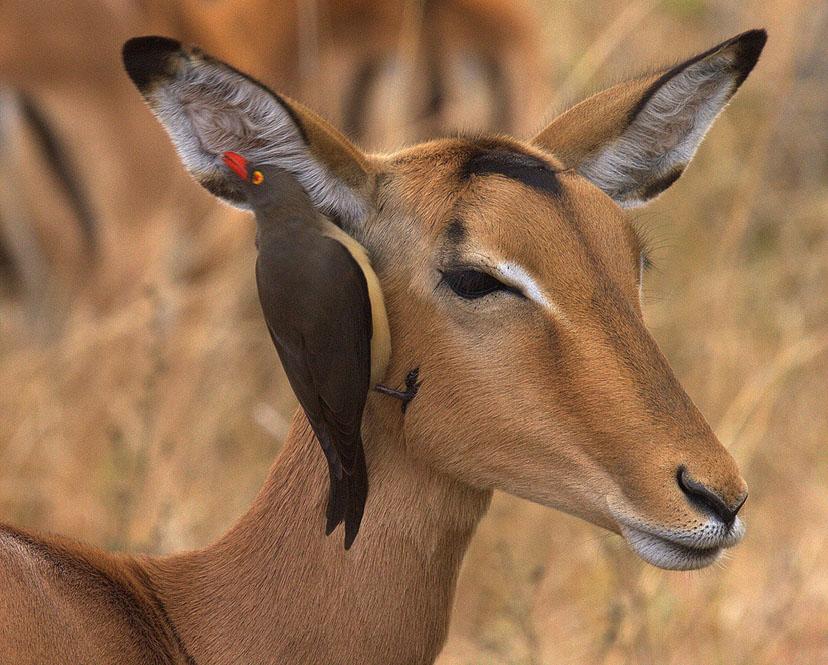
Red-billed oxpeckers are birds that often feed on parasites that infest impala.  This is an example of _______.
a)
commensalism
b)
mutualism
c)
neutralism
d)
competition
17.
A relationship between two organisms in which both organisms benefit. 
a)
Mutualism 
b)
Competition
c)
Parasitsm 
d)
Commensalism 
18.
An organism's _________ is defined as the environment in which it lives.
a)
habitat
b)
niche
c)
social structure
d)
ecosystem
19.
The term for the role an organism has in the community.
a)
niche
b)
habitat
c)
tolerances
d)
competition
20.
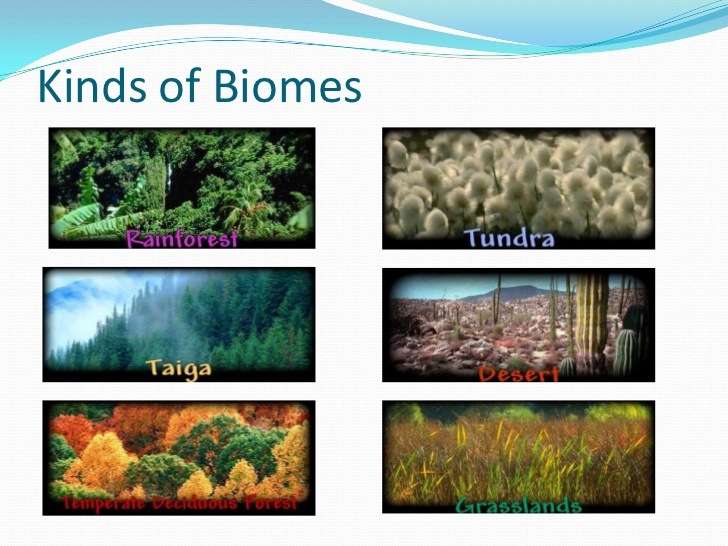
A large ecosystem is called a ______
a)
Ecosystem
b)
Habitat
c)
Biome
d)
Niche
21.
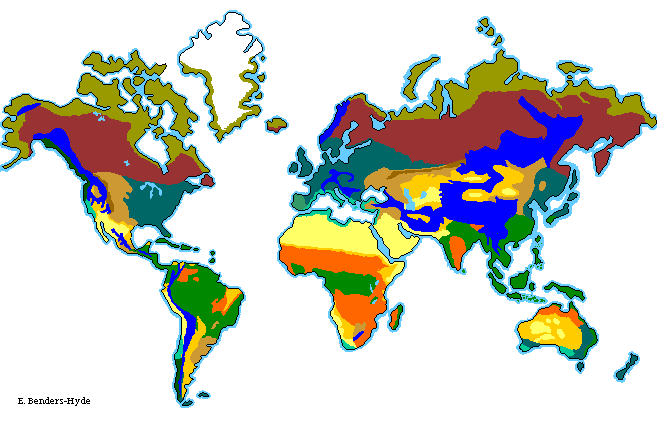
What is the main factor that separates the biomes?
a)
Land
b)
Water
c)
Climate
d)
Longitude
22.
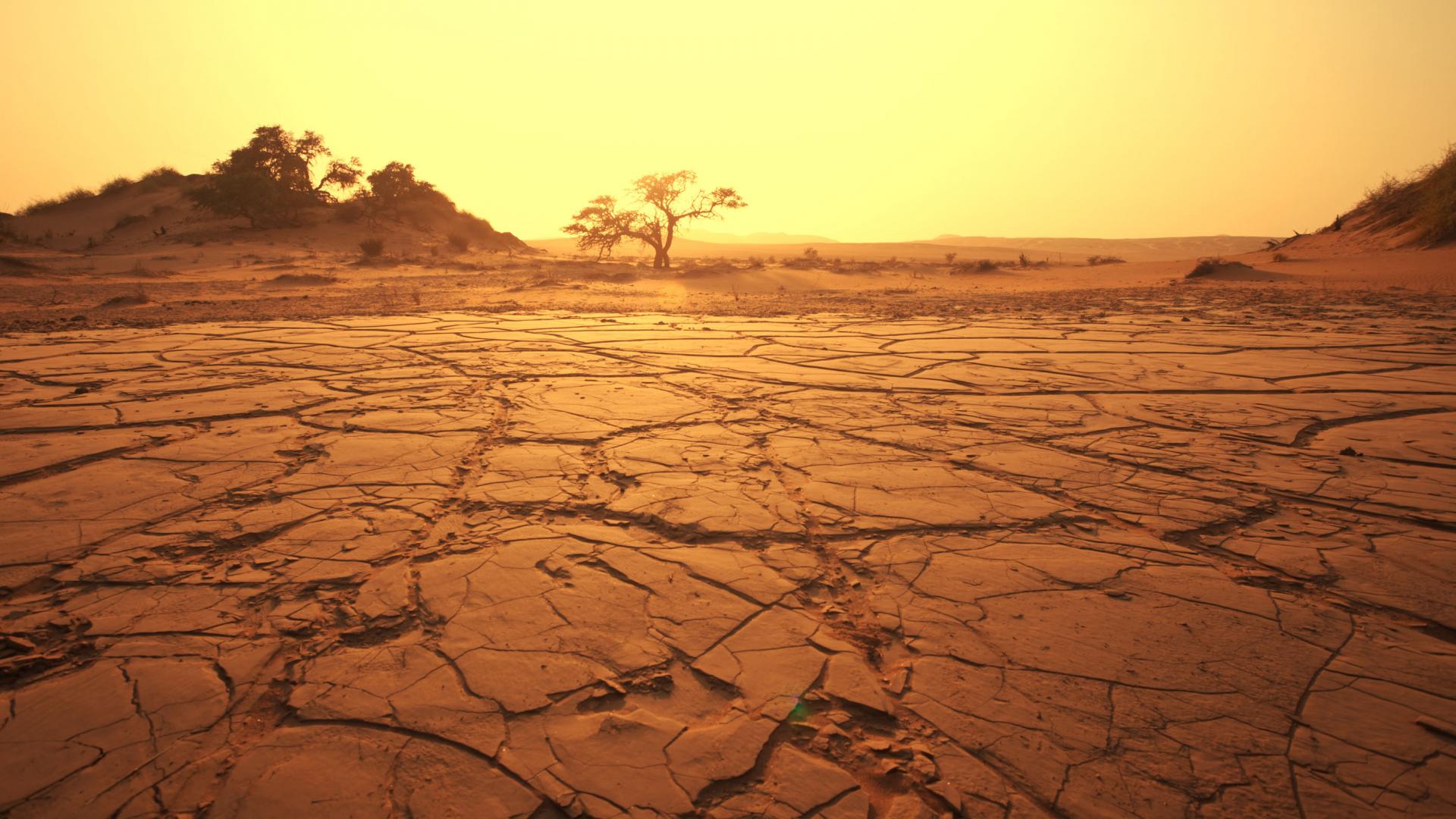
Which biome is the driest?
a)
Desert
b)
Tundra
c)
Taiga
d)
Rainforest
23.
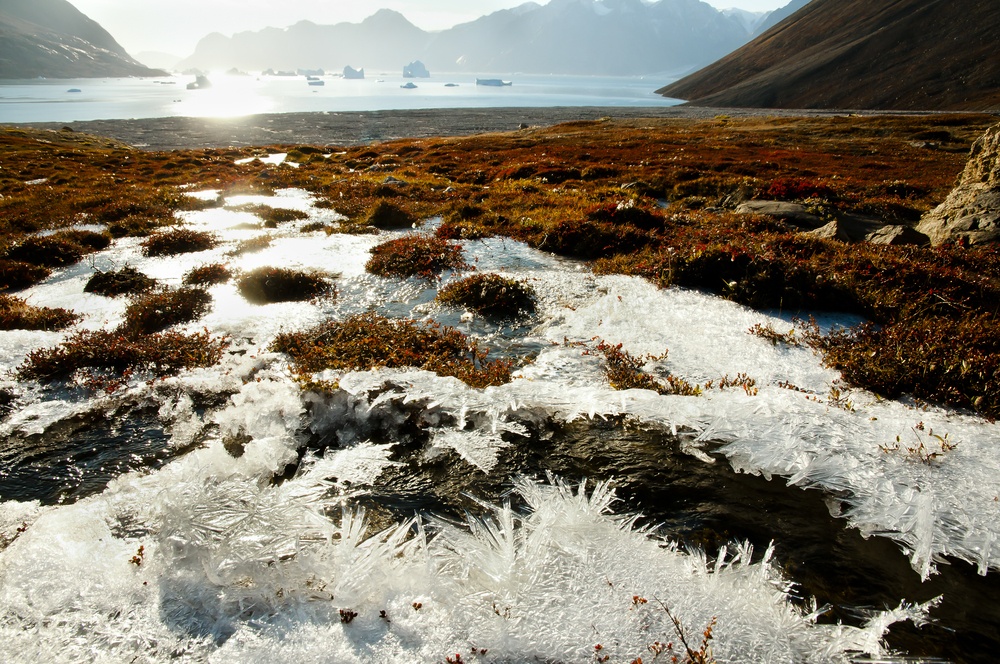
Which Biome has permafrost?
a)
Temperate Forest
b)
Rainforest
c)
Taiga
d)
Tundra
24.
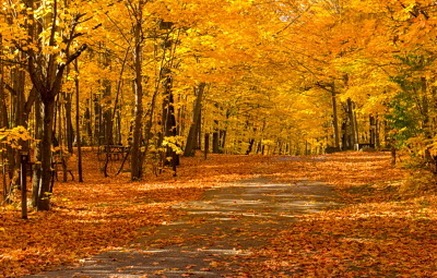
Which biome has deciduous trees (which lose their leaves)?
a)
Temperate Forest
b)
Rainforest
c)
Grasslands
d)
Taiga
25.
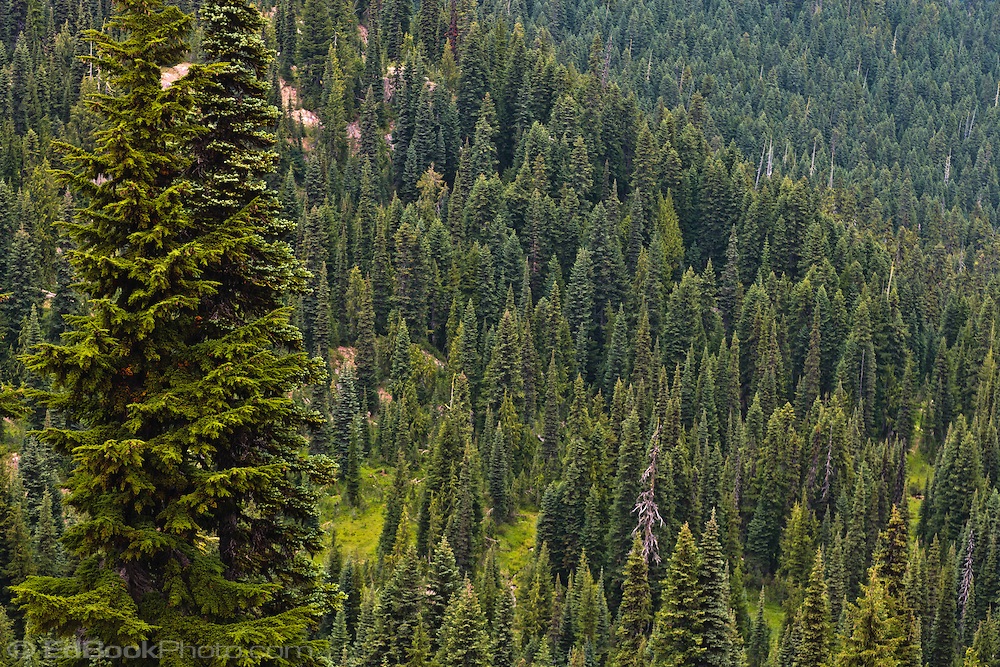
Which biome has coniferous trees (which don't lose their leaves)?
a)
Taiga
b)
Temperate Forest
c)
Tundra
d)
Grasslands
26.
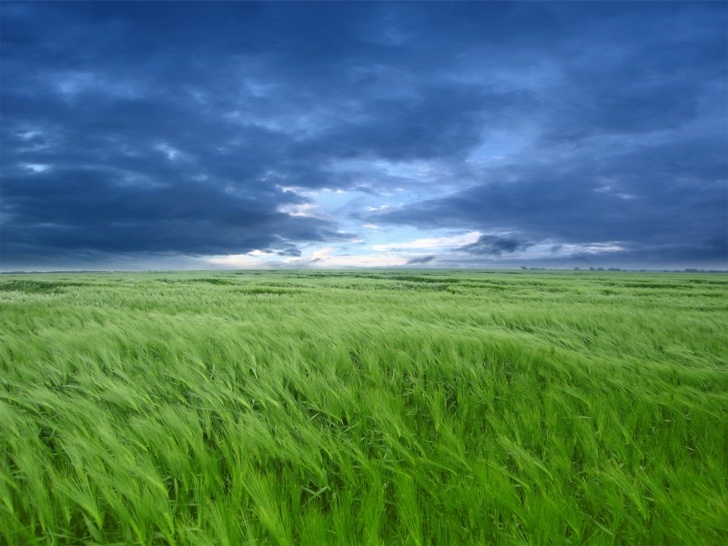
Which biome has wide-open fields of grass?
a)
Taiga
b)
Grasslands
c)
Temperate Forest
d)
Rainforest
27.
Which biome has the most variety of plants and animals?
a)
Temperate Forest
b)
Rainforest
c)
Tundra
d)
Grasslands
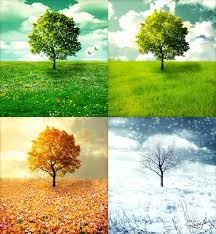
28.
Which biome has 4 seasons?
a)
Taiga
b)
Tundra
c)
Grasslands
d)
Temperate Forest
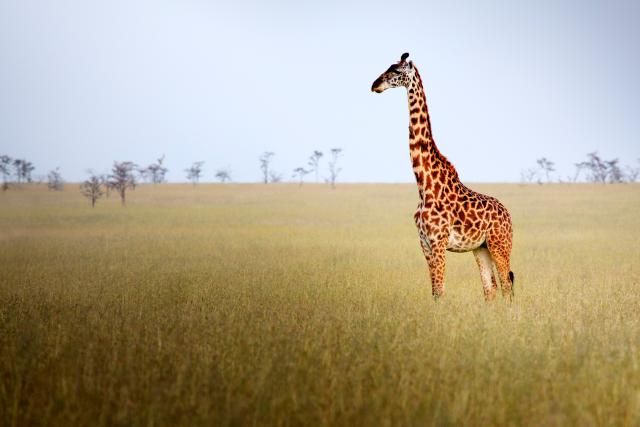
29.
Which biome is home to lions, zebras, wildebeests, giraffes, and elephants?
a)
Grasslands
b)
Tundra
c)
Rainforest
d)
Temperate Forest
30.
Which biome is home to cacti, scorpions, coyotes, kangaroo rats, and lizards?
a)
Desert
b)
Grasslands
c)
Temperate Forest
d)
Taiga
31.
Which biome produces over 50% of the world's oxygen?
a)
Rainforest
b)
Temperate Forest
c)
Grasslands
d)
Taiga
32.
Which biome is home to jaguars, anacondas, leopards, gorillas, and poisonous tree frogs?
a)
Grasslands
b)
Temperate Forest
c)
Rainforest
d)
Tundra
33.
What are areas where freshwater meets saltwater called?
a)
wetlands
b)
estuaries
c)
coastal byways
d)
intertidal zones
34.
Which is NOT a freshwater ecosystem?
a)
stream
b)
lake
c)
ocean
d)
river
35.
What are coral reefs?
a)
rock
b)
deposits of bones of dead fish
c)
plants
d)
outside skeletons of tiny, soft-bodied animals
36.
Which of the following is NOT a freshwater ecosystem?
a)
lake
b)
pond
c)
estuary
d)
stream
37.
On the coral reef ecosystem, which factor is abiotic?
a)
algae
b)
rocks
c)
sea horses
d)
sponges
38.
How do people use water from freshwater ecosystems?
a)
drinking
b)
bathing
c)
crop irrigation
d)
all of the above
39.
Runoff fertilizer and livestock waste from farms can add to the ____ of a pond?
a)
nutrients
b)
oxygen
c)
pollution
d)
biotic factors
40.
Aquatic ecosystem that has a thin layer of water covering soil that is wet most of the time is called ____.
a)
wetland
b)
estuary
c)
lake
d)
puddle
41.
The algae and microscopic organisms on the surface of lakes and ponds get their food 
a)
by photosynthesis
b)
by eating
c)
through their gills
d)
through their stomata
42.
This includes several types of ecosystems, including continental shelves and intertidal zones.
a)
coral reefs
b)
tropical oceans
c)
open oceans
d)
coastal oceans
43.

A bacterium, virus or parasitic worm that causes disease.

a)

aquifer

b)

nonpoint-source pollution

c)

pathogen

d)

biomagnification

44.

An artificial lake created by building a dam is called a ...

a)

recharge zone

b)

aquifer

c)

watershed

d)

reservoir

45.

Large cities get water for households and industries from which one of the following?

a)

Desalinizing salt water

b)

Pumps connected to springs

c)

Rivers or lakes

d)

Deep wells

46.

Sewage sludge is ...

a)

..not hazardous

b)

inexpensive to dispose of for cities and towns

c)

the small amount of residue left after waste water is treated and released into rivers

d)

solid matter that clogs storm drains

47.

The process by which nutrients increase in a lake while oxygen levels decrease

a)

Artificial eutrophication

b)

Recharge zone

c)

Biomagnification

d)

Point-source pollution

48.

An underwater rock formation that holds water is a(n)...

a)

watershed

b)

reservoir

c)

aquifer

d)

dam

49.

During the water treatment process, what is the purpose of adding chlorine to the water?

a)

to remove large debris

b)

to form flocs

c)

to kill or limit bacterial growth

d)

to remove unwanted gases

50.

A process by which increasing amounts of toxins are stored in the bodies of organisms as toxins move up the food chain

a)

Artificial eutrophication

b)

Pathogen

c)

Watershed

d)

Biomagnification

51.

An area of land that is drained by a river

a)

Delta

b)

Watershed

c)

Reservoir

d)

Aquifer

52.

Which of the following is a source of nonpoint-source pollution?

a)

Unlined landfill

b)

Polluted waste-water from a chemical plant

c)

Leaking oil tanker

d)

Runoff from agricultural feedlots

53.

Three percent of the world's water resources are found as

a)

fresh water

b)

salt water

c)

icecaps and glaciers

d)

groundwater

54.

An area of land through which water percolates and is stored as groundwater is a(n)

a)

Aquifer

b)

Watershed

c)

Recharge zone

d)

Reservoir

55.
What is the difference between biotic and abiotic?
a)
Biotic are non-living things
b)
Abiotic are living organisms
c)
Biotic is life,
Abiotic is non-living
d)
Biotic is non-living, Abiotic is living
56.
What does biodiversity mean?
a)
Only one species in an area.
b)
The different amount of species in an area
c)
All abiotic life
d)
Nitrogen fixation
57.
The illegal capture or killing of an organism, often for money, is called...
a)
poaching
b)
harvesting
c)
fragementation
d)
extinction
58.
All living and nonliving things in an environment and the many ways they interact are called ______
a)
ecosystem
b)
community
59.
What is a vertabrate?
a)
An animal that has a spinal cord or backbone
b)
An animal that has lungs
c)
A human that can play Soccer
d)
An animal that has bones
60.

The _______ includes all of the living things on Earth, including the land, sea and air.

a)

biosphere

b)

biomes

c)

desert

d)

rain forest

61.

_______ are the effects of people and their actions on the biosphere.

a)

Human impacts

b)

Biosphere

c)

Biomes

d)

Kingdoms

62.

A ______ is a lush tropical region that receives lots of rainfall and supports a wide range of life.

a)

kingdom

b)

biomes

c)

desert

d)

rain forest

63.

A change in the biosphere can affect the atmosphere.

a)

True

b)

False

64.

The first organisms to settle a new area

a)

Pioneer Species

b)

Primary Consumer

c)

Secondary Consumer

d)

Tertiary Consumer

65.

The process of turning Nitrogen gas into ammonia

a)

Nitrogen Fixation

b)

Ammonification

c)

Denitrification

d)

Nitrification

66.

The process of nitrogen converting to ammonia during the decomposition of dead organisms.

a)

Nitrogen Fixation

b)

Ammonification

c)

Denitrification

d)

Nitrification

67.

A food ________ is much more complicated, yet more realistic than a food ________.

a)

chain, web

b)

web, chain

c)

cycle, flow

d)

truck, festival

68.

What is the original energy source?

a)

Sun

b)

Plant

c)

Grasshopper

d)

Spider

69.

When organisms die, they are consumed by scavengers and broken down by ____________.

a)

Decomposers

b)

Consumers

c)

Producers

70.

Covers most of the Earth's surface

a)

Energy Pyramid

b)

Aquatic Biome

c)

Succession

d)

Climax Community

71.
The atmosphere includes
a)
rocks
b)
air
c)
plants
d)
atoms
72.
The hydrosphere includes
a)
water
b)
ice
c)
dogs
d)
lava
73.
The biosphere includes
a)
living things
b)
rocks
c)
ice
d)
boiling water
74.
An earthquake would most affect the
a)
atmosphere
b)
cryosphere
c)
atmosphere
d)
geosphere
75.
Fire would most affect the
a)
geosphere
b)
atmosphere
c)
cryosphere
d)
hydroshpere
76.

Most of the mass in Earth's atmosphere is found:

a)

In the exosphere.

b)

In the stratosphere.

c)

In the thermosphere.

d)

In the troposphere.

77.
Which of the choices below is one of the primary gases found in the atmosphere?
a)
Oxygen
b)
Argon
c)
Carbon Dioxide
d)
Helium
78.

How much of the planet is covered by water?

a)

20%

b)

50%

c)

70%

d)

90%

79.

What do we call FRESH water that lies beneath the Earth's surface?

a)

groundwater

b)

lake

c)

river

d)

spring

80.

What do we call massive pieces of slow moving ice?

a)

Ice Shelf

b)

Ice Floe

c)

Glaciers

d)

None of the Above

81.

Of the earth's water how much of it is considered SALT water?

a)

80%

b)

97%

c)

3%

d)

30%

82.

How much of the earth's water is considered FRESH water?

a)

90%

b)

97%

c)

3%

d)

30%

83.

Most of the earth's FRESH water is contained where?

a)

Lakes

b)

Rivers

c)

Glaciers

d)

Oceans

84.

Which layer of our atmosphere protects us from the sun's harmful rays?

a)

Tropospheres

b)

Exosphere

c)

Mesosphere

d)

Stratosphere

85.

Which is the highest layer of our atmosphere

a)

troposphere

b)

stratosphere

c)

mesosphere

d)

exosphere

86.

What is one example of how humans impact global warming??

a)

Burning coal increase the level of carbon dioxide

b)

Plowing and increasing the level of rain water on farms

c)

Heat from factories increases the average global temperature

d)

Using copper increases the speed in electric currents

87.
We live in the __________________layer, a level of the atmosphere.
a)
Troposphere
b)
Stratosphere
c)
Mesosphere
d)
Exosphere
88.
What absorbs ultraviolet rays in the atmosphere?
a)
troposphere
b)
stratosphere
c)
ozone layer
d)
greenhouse gases
89.
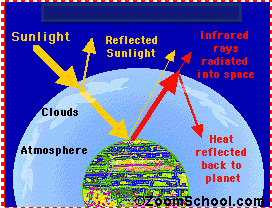
What does this diagram illustrate?
a)
Ozone Layer
b)
The Greenhouse Effect
c)
Ultraviolet Radiation
d)
Layers of the atmosphere
90.
The coldest layer.
a)
troposphere
b)
thermosphere
c)
exosphere
d)
mesosphere
91.
The hottest layer.
a)
troposphere
b)
thermosphere
c)
exosphere
d)
mesosphere
92.

What are the two most common gases in the atmosphere?

a)

Nitrogen and oxygen

b)

Oxygen and carbon dioxide

c)

Carbon Dioxide and methane

d)

Nitrogen and carbon dioxide

93.
What does the earth's atmosphere do?
a)
help to regulate the temperature on Earth
b)
Help UV rays to reach the Earth's surface
c)
Creates meteors in the sky
d)
Keep ocean waters cold
94.
Without the Greenhouse Effect the Earth would be
a)
warm 
b)
cold
c)
dead
95.
What gas from the list below is a cause for global warming?
a)
Urethane
b)
Oxygen
c)
Carbon Dioxide
96.
Where you will find the ozone layer.
a)
stratosphere
b)
thermosphere
c)
exosphere
d)
mesosphere