Wayground logo

Free Printable Worksheets

Font size

S
M
L
XL
Worksheets

Osmosis (+Units 1-3 Review)

Total questions: 86

Worksheet time: 2hrs 59mins
Name
Class
Date
1.
What is diffusion?
a)
when molecules move 
b)
when molecules move from a high concentration to a low.
c)
no movement 
d)
molecules move everywhere
2.
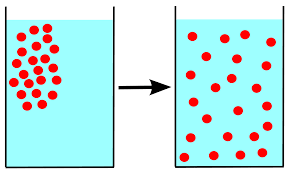
The picture below is an example of _________________.
a)
osmosis
b)
isotonic
c)
diffusion
d)
active transport
3.
Osmosis is the movement of _____ across a membrane.
a)
food
b)
energy
c)
oxygen
d)
water
4.
Permeable means
a)
things can pass through
b)
the concentration levels are different
c)
it is permanent
d)
things are stuck
5.
The diffusion of water through a semi-permeable membrane is called?
a)
Osmosis
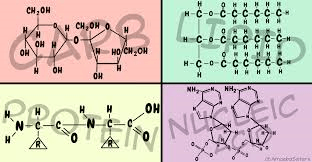
b)
Cell wall
c)
Diffusion
d)
Respiration
6.
Where is there a low concentration of perfume?
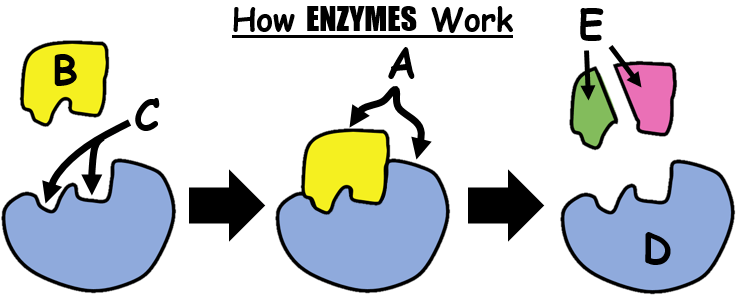
a)
in the bottle
b)
on the hand
c)
in the room
d)
in the top
7.
What is the definition of  Selective Permeability?
a)
The movement of materials across the cell membrane that requires NO ENERGY from the cell.
b)
The movement of materials through (or across) the cell membrane
c)
The ability of the cell membrane to allow some things to pass through while preventing other things from passing through.
d)
The movement of molecules from an area of high concentration to a area of low concentration 
8.

What does a cell need to transport particles by active transport?

a)

Sun

b)

Glucose

c)

ATP

d)

Channels

9.

When both inside and outside of a cell have the same amount of water the cell is in

a)

Osmosis

b)

Diffusion

c)

Equilibrium

10.

A person would never have pure water put into their veins in a hospital because their cells would...

a)

Shrink

b)

Expand

11.

A person should not drink salty water because their cells would

a)

shrink

b)

expand

12.
Passive transport requires no
a)
concentration gradients
b)
osmosis
c)
motion
d)
energy
13.
The movement of molecules against a concentration gradient
a)
simple diffusion
b)
facilitated diffusion
c)
active transport
d)
osmosis
14.
The picture is an example of...
a)
active tranport
b)
passive transport
c)
diffusion
d)
osmosis
15.
_______ regulates what enters and leaves a cell.  
a)
Cell Membrane
b)
Nucleus
c)
Mitochondria
d)
Cytoplasm
16.
Equilibrium?
a)
a large  amount of substance on  side of the cell and a small amount on the other side
b)
a small  amount of substance on  side of the cell and a large amount on the otherside
c)
equal amount of substance on either side of the membrane  
d)
no particles on either side of the a cell membrane
17.
What is the definition of Osmosis?
a)
the movement of WATER molecules across the cell membrane.
b)
the state where molecules are equally concentrated (balanced) on both sides of the cell membrane.
c)
the process that brings LARGE particles INTO the cell through the cell membrane
d)
he movement of molecules across the cell membrane that REQUIRES ENERGY output from the cell
18.
What is the definition of Equilibrium?
a)
the process that brings LARGE particles INTO the cell through the cell membrane
b)
The movement of molecules from an area of high concentration (where the molecules are more crowded together) to a area of low concentration (where molecules are more spread apart)
c)
the state where molecules are equally concentrated (balanced) on both sides of the cell membrane.
d)
the movement of WATER molecules across the cell membrane.
19.

What will happen when salt is poured onto a fresh eggplant?

a)

Water will move out of the eggplant cells and the cells will shrink.

b)

Water will move out of the eggplant cells and the cells will swell.

c)

Water will move into the eggplant cells and the cells will swell.

20.

What will happen if an egg is placed in pure water for 48 hours?

a)

The egg will gain water and swell.

b)

Water will move in and out of the cell equally, and the cell with neither shrink nor swell.

c)

The egg will lose water and shrink.

21.
Which example(s) of cell transport does not require chemical energy
a)
Drops of blue food coloring are placed in water and spread throughout the water, turning it blue.
b)
A potato slice is placed in water and water molecules from outside the potato move into the potato cells.
c)
Both Answers
d)
 Neither answers
22.
An animal cell placed in a hypertonic (salty) solution will
a)
Shrink
b)
Swell
c)
Stay the same
23.
How many diamond molecules need to move to reach equilibrium?
a)
A net of 2 molecules move inside the cell.
b)
A net of 2 molecules move outside the cell.
c)
There is no net movement because the molecules are at equilibrium.
d)
The molecules do not move.
24.
Which way will the water molecules move during osmosis?
a)
Out of the cell, so the cell shrinks.
b)
Out of the cell, so the cell swells.
c)
Into the cell, so the cell shrinks.
d)
Into the cell, so the cell swells.
25.
During diffusion
a)
substances (things) moves from high to low concentration
b)
water moves when energy is used
c)
large or oddly shaped molecules move across a cell membrane
d)
water moves from high to low concentration
26.
In a solution, salt is considered the _______.
a)
solvent
b)
solute
c)
solution
27.
 If a cell containing 5% salt is placed into a glass of water with 20% salt, the water is _______ compared to the cell.
a)
hypertonic-
b)
hypotonic
c)
isotonic
28.
 If the volume of a cell increases when it is placed in a solution, that solution is said to be __________ to the cell
a)
 hypertonic
b)
subatomic
c)
 isotonic
d)
 hypotonic 
29.
The cell below is in a _________ solution.
a)
Hypotonic
b)
Hypertonic
c)
Isotonic
30.
The cell below is in a _____________ solution.
a)
Hypertonic
b)
Hypotonic
c)
Isotonic
31.

Which cell is placed into a hypotonic solution?

a)

A

b)

B

c)

C

32.
Which of the following is the smallest unit of life that can carry out all life functions?
a)
the mitochondria
b)
the vacuoles
c)
the nucleus
d)
the cell
33.
Which structures are found in every living cell?
a)
cell membrane and cytoplasm
b)
chloroplasts and mitochondria
c)
a cell wall and nucleus
d)
chloroplasts and cell wall
34.
What is the function of the cell nucleus found in both plant and animal cells?
a)
to produce energy
b)
to control cell activity
c)
to remove waste products
d)
to allow molecules to enter the cell
35.
What is one basic function of the vacuoles?
a)
circulating oxygen
b)
producing food
c)
controlling cell processes
d)
storing water
36.
Chloroplasts in plant cells allow the plant to perform a function that animal cells cannot do.  What is the main function of the chloroplasts found in plant cells?
a)
to absorb light energy and manufacture food
b)
to remove waste materials by active transport
c)
to manufacture chemical energy from food
d)
to control the shape of the cell
37.

All cells need energy to function. Which cell organelle is responsible for releasing energy in the cell?

a)

chloroplasts

b)

mitochondria

c)

nucleus

d)

vacuoles

38.
What is the function of a cell wall?
a)
to protect and support the cell
b)
to perform different functions in each cell
c)
to prevent water from passing through it
d)
to prevent oxygen from entering the cell
39.
In what part of the plant cell does the process of photosynthesis take place?
a)
nucleus
b)
mitochondria
c)
chloroplasts
d)
vacuoles
40.
Cells with a nucleus and membrane-bound organelles are called ____________________.
a)
prokaryotes
b)
eukaryotes
c)
bacteria
d)
protists
41.
A gel-like fluid in which many different organelles are found.
a)
cell membrane
b)
nucleus
c)
organelle
d)
cytoplasm
42.
The network of passageways carries materials from one part of the cell to another.
a)
endoplasmic reticulum
b)
golgi bodies
c)
vacuole
d)
cell
43.
This organelle receives materials from the endoplasmic reticulum and sends them to other parts of the cell.
a)
ribosomes
b)
mitchondria
c)
cytoplasm
d)
golgi bodies
44.
A tiny cell structure that carries out a specific function within a cell.
a)
organelle
b)
cell
c)
nucleus
d)
ribosomes
45.
These small structures function as factories to produce proteins.
a)
mitochondria
b)
golgi body
c)
endoplasmic reticulum
d)
ribosomes
46.
What is on the same level of organization as the brain?
a)
stomach
b)
nervous system
c)
protein molecule
d)
flower
47.
If you look under the microscope as a piece of muscle TISSUE, you will see...
a)
cells working together
b)
chloroplasts
c)
an organ system
d)
plant cells
48.
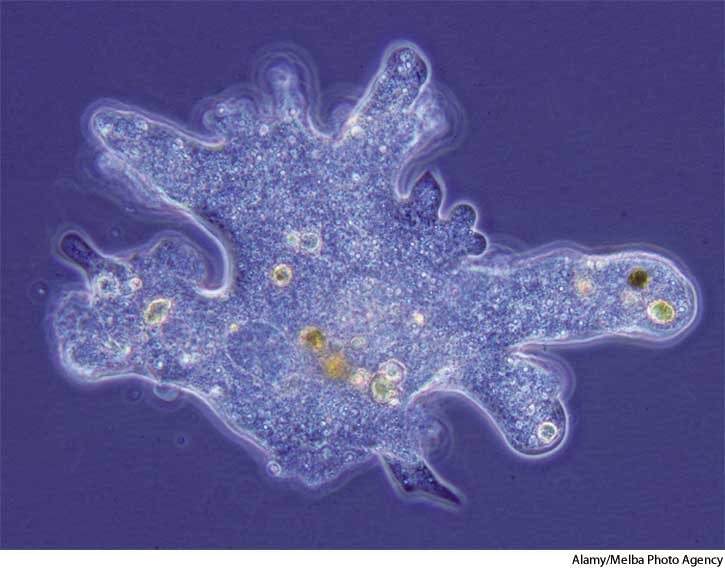
An Amoeba is a unicellular, animal-like protist that lives in ponds and streams. According to cell theory, where did this cell come from?
a)
another pre-existing amoeba cell.
b)
energy from sun that allowed the protist to reproduce.
c)
a multicellular organism.
d)
the nonliving environment.
49.
What tool do you use to view the cells?
a)
metric ruler
b)
centrifuge
c)
microscope
d)
telescope
50.
Rocks are not living because
a)
they never move
b)
they aren't needed for humans
c)
they are not made of cells
d)
they don't break down
51.
An organism made of one cell is called
a)
unicellular organism
b)
multicellular organism
52.
How are unicellular organisms different from multicellular organisms? 
a)
There are no differences.
b)
They are made of many cells. 
c)
They are only classified as prokaryotes.
d)
They are made of only one cell. 
53.

What type of biomolecule are enzymes?

a)

Carbohydrate

b)

Lipid

c)

Nucleic Acid

d)

Protein

54.
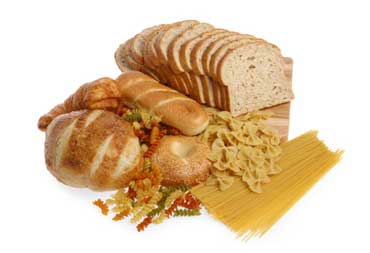
Which biomolecule is found in pasta and bread?
a)
Lipid
b)
Protein
c)
Nucleic Acid
d)
Carbohydrate
55.
Which biomolecule is found in fats, oils, and waxes and is a source of long-term energy? 
a)
Proteins
b)
Nucleic Acid
c)
Lipids
d)
Carbohydrate
56.
What is the function of a nucleic acid?
a)
Stores genetic information
b)
Stores energy
c)
Quick source of energy
d)
Builds structures
57.
Carbon, Hydrogen, Oxygen and Nitrogen are elements in what biomolecule?
a)
Carbohydrate
b)
Lipid
c)
Protein
d)
Nucleic acid
58.
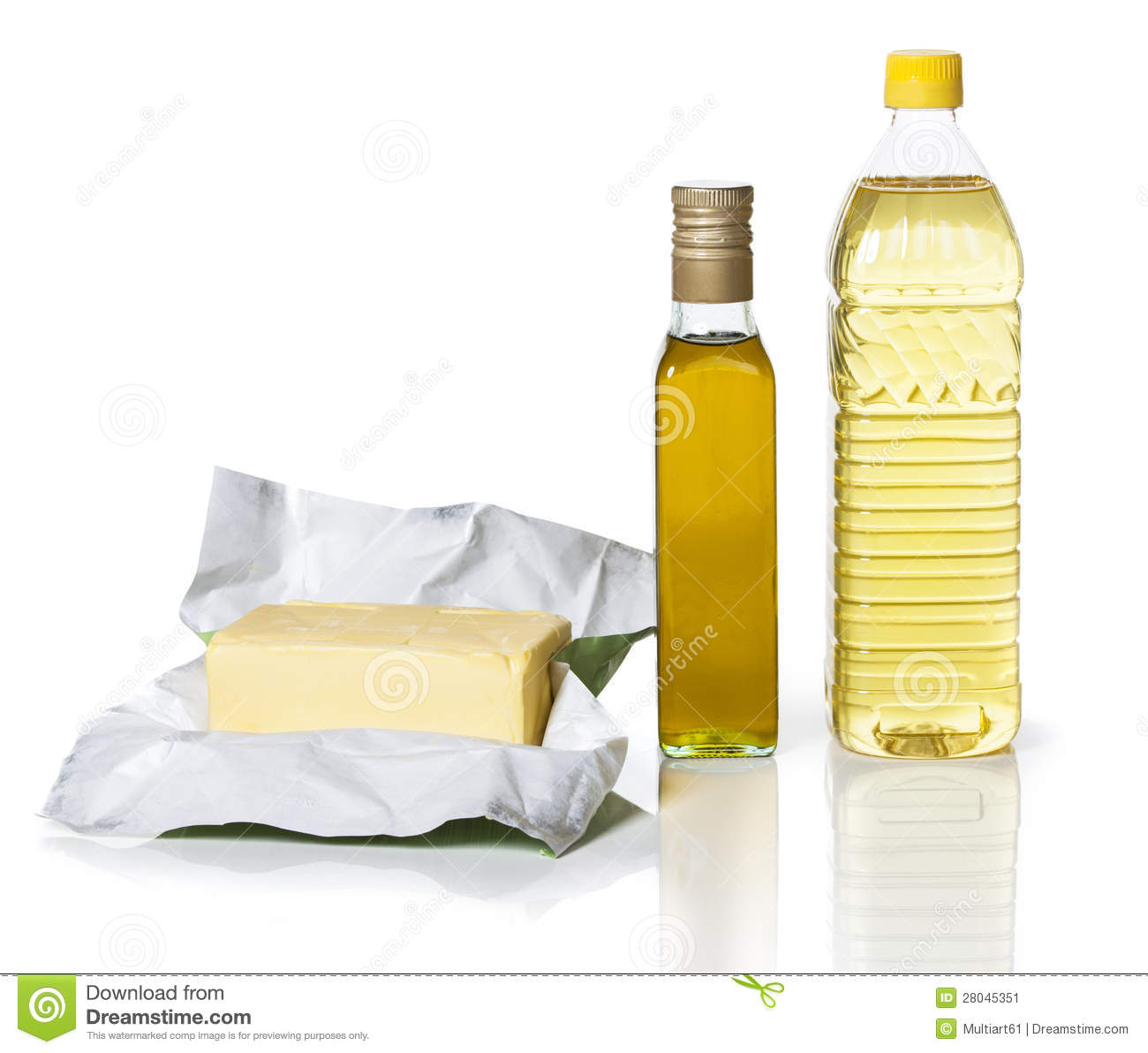
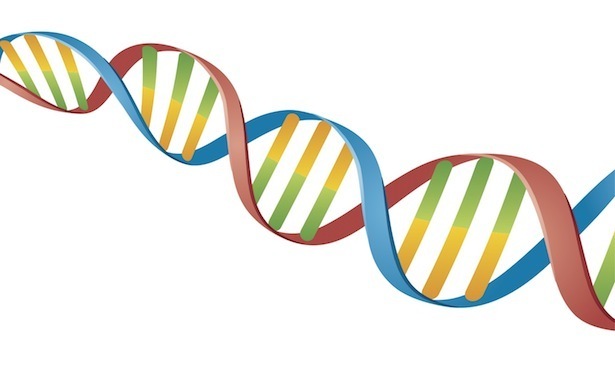
Which biomolecule is this a picture of?
a)
Protein
b)
Nucleic Acid
c)
Lipid
d)
Carbohydrate
59.

Which biomolecule is made of nucleotides and contains your DNA?

a)

Carbohydrate

b)

Lipids

c)

Protein

d)

Nucleic Acid

60.
Which biomolecule is responsible for insulation and energy storage?
a)
Protein
b)
Nucleic Acid
c)
Lipid
d)
Carbohydrate
61.

Which biomolecule includes sugars and starches?

a)

Lipids

b)

Proteins

c)

Carbohydrates

d)

Nucleic Acid

62.
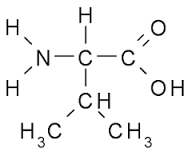
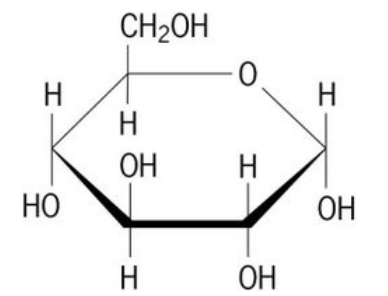
What type of molecule is this?
a)
Nucleic acid
b)
Protein
c)
Carbohydrate
d)
Lipid
63.
What elements are common to all 4 biomolecules?
a)
Carbon, hydrogen, nitrogen
b)
Carbon, Nitrogen, Phosphorus
c)
Carbon, Hydrogen, Oxygen
d)
Carbon, Hydrogen, Phosphorus
64.
A monomer is ...
a)
a single atom
b)
a building block for polymers
c)
a single element
d)
is an inorganic molecule
65.
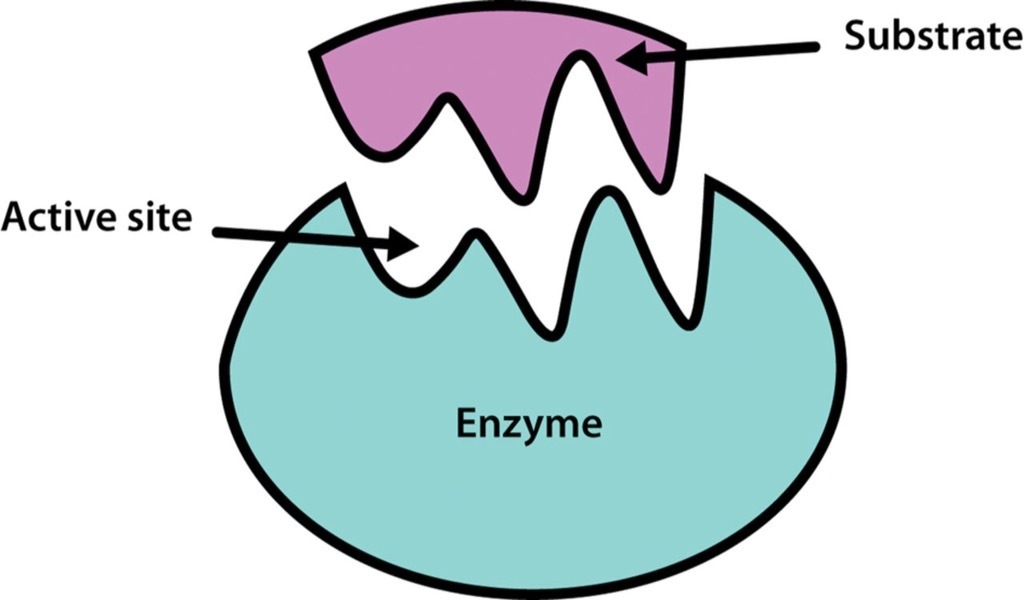
What is the purpose  of an enzyme?
a)
give permission for the reaction
b)
raise activation energy
c)
speed up reactions
d)
control how many reactions occur
66.

Letter D is the...

a)

active site

b)

enzyme

c)

substrate

d)

products

67.
Which of the following shows biological systems from least to most complex?
a)
Cells, tissue, organ, organ system
b)
Tissue, cells, organ, organ system
c)
Organ system, cells, organism, tissue
d)
Organ system, organ, tissue
68.
Which of the following is the best description of an organ system?
a)
The human heart and lungs
b)
A group of similar cells working together to complete a specific task
c)
The structure of an organ
d)
A group of organs working together to complete a specific task
69.
Why are there so many different types of cells in multicellular organisms?
a)
Humans are relatively big
b)
Humans are heterotrophs
c)
Cells in multicellular organisms are specialized to complete different tasks or functions within the organism
d)
Cells in multicellular organisms are similar and complete only the same tasks or functions within the organism
70.
What is the source of energy for photosynthesis?
a)
carbohydrates-chemical
b)
sunlight-radiant
c)
heat-thermal
d)
television-electrical
71.
What are the reactants (what's needed) for photosynthesis?
a)
glucose and oxygen
b)
light, water, and carbon dioxide
72.
What gas is released by plants during photosynthesis?
a)
sulfur
b)
carbon dioxide
c)
oxygen
d)
hydrogen
73.
What is the purpose of photosynthesis?
a)
make glucose
b)
make ATP
c)
make light
d)
release carbon dioxide
74.
What are the products (what's made) during photosynthesis?
a)
glucose and oxygen
b)
water, light, and carbon dioxide
75.
What is the gas we breath out that plants use for photosynthesis?
a)
sulfur
b)
carbon dioxide
c)
oxygen
d)
hydrogen
76.

How is photosynthesis related to cellular respiration?

a)

What's produced (made) by one is needed (the reactants) for the other

b)

They both produce the same products

c)

They both have the same reactants (need the same things)

d)

These 2 processes have nothing in common

77.

______________ produces the most ATP.

a)

photosynthesis

b)

aerobic respiration

c)

anaerobic respiration

78.
Which of the following is the correct equation for PHOTOSYNTHESIS?
a)
6CO2 + 6H2O --> 6O2 + C6H12O6
b)
6CO2 + C6H12O6 + 6H2O --> O2 
c)
6O2 + 6H2O --> 6CO2 + C6H12O6
d)
C6H12O6 + 6O2 ---> 6H2O + 6CO2 
79.
What is one of the reactants of cellular respiration?
a)
energy
b)
glucose
c)
carbon dioxide
d)
water
80.

Which organelle does cellular respiration?

a)

nucleus

b)

cytoplasm

c)

mitochondria

d)

vacuoles

81.
What is the correct equation for cellular respiration?
a)
6O2 + C6H12O6 -> 6CO2 + 6H2O + Energy
b)
6O2 + C6H12O6 + Energy -> 6CO2 + 6H2O
c)
6CO2 + 6H2O -> 6O2 + C6H12O6 + Energy
d)
6CO2 + 6H2O + Energy -> 6O2 + C6H12O6
82.
What is cellular respiration?
a)
the breakdown of glucose  to release ATP
b)
the breakdown of glucose to release NADH
c)
the breakdown of glucose to release FADH
d)
the breakdown of glucose to release carbon
83.
This means that oxygen is not needed
a)
anaerobic 
b)
aerobic
84.
This means that oxygen is needed
a)
anaerobic 
b)
aerobic
85.
This is referred to as the energy currency of the cell
a)
ADP
b)
ATP
c)
Mitochondria
d)
Nucleus
86.

Water always moves from __________ to __________ solutions.

a)

hypertonic to hypotonic

b)

hypotonic to hypertonic

c)

isotonic to hypertonic

d)

hypotonic to isotonic