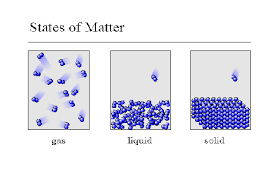
wayground logo

Free Printable Worksheets

Font size

S
M
L
XL
Worksheets

Unit 4 Test: Chemical Interactions and Geoscience Processes

Total questions: 137

Worksheet time: 2hrs 21mins

Name
Class
Date
1.

What is MATTER?

a)

Anything that has MASS

b)

Anything that takes up SPACE

c)

Anything that has MASS and takes up SPACE

d)

Anything that DOES NOT have mass or take up space

2.

Particles are always moving.

a)

True

b)

False

3.

All particles in a PURE SUBSTANCE are _________________

a)

the same

b)

different

4.

All matter is made up of tiny _______________

a)

energy

b)

particles (atoms and molecules)

c)

bits

d)

antimatter

5.

These have a FIXED volume, but NOT a fixed shape, taking the shape of their container.

a)

Solid

b)

Liquid

c)

Gas

6.

In which state of matter will there be the LARGEST space between molecules?

a)

Solid

b)

Liquid

c)

Gas

7.
Which is a quality that only gasses display
a)
Spread out to fill all available space
b)
Take the shape of their container
c)
Can't be compressed
d)
All of these
8.

If particles are locked in place the substance is in a phase we call _____.

a)

solid

b)

liquid

c)

gas

9.

If particles are not locked in place and can slide past each other the substance is in a phase we call ____.

a)

solid

b)

liquid

c)

gas

10.

If particles are not held in contact and fly off into space the substance is in a phase we call ____.

a)

solid

b)

liquid

c)

gas

11.

Reducing the distance between particles by force is called _____.

a)

resistance

b)

volume

c)

pressure

d)

compression

12.
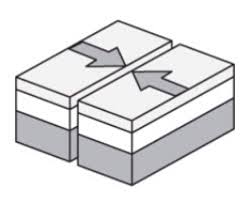
What is represented in this image?
a)
Diffusion
b)
Thermal Expansion
c)
Compression
d)
Dissolving
13.

Has a definite size but no definite shape

a)

solid

b)

liquid

c)

gas

14.

has a definite size and shape

a)

solid

b)

liquid

c)

gas

15.

has no definite size or shape

a)

solid

b)

liquid

c)

gas

16.

takes the shape and size of any container

a)

solid

b)

liquid

c)

gas

17.

things take this form when they freeze

a)

solid

b)

liquid

c)

gas

18.

takes the shape of the container but not the size

a)

solid

b)

liquid

c)

gas

19.

solids take this state when they melt

a)

solid

b)

liquid

c)

gas

20.

what phase of matter does this arrangement of particles represent?

a)

solid

b)

liquid

c)

gas

21.

what phase of matter does this arrangement of particles represent?

a)

solid

b)

liquid

c)

gas

22.

what phase of matter does this arrangement of particles represent?

a)

solid

b)

liquid

c)

gas

23.

How many elements are in H20?

a)

1

b)

3

c)

2

24.

How can the elements are in a molecule be determined?

a)

Count letters

b)

Count capitals

c)

Shorten the element

25.

In an element, the first letter is always capitalized.

a)

True

b)

False

26.
You trap particles inside a syringe then push the plunger down.
a)
There are the same amount of air particles in each syringe.
b)
There are more particles in the compressed syringe. 
c)
There are fewer particles in the compressed syringe.
d)
The particles in the compressed syringe get smaller.
27.
You trap particles inside a syringe then pull the plunger up.
a)
There are an equal number of particles in each syringe.
b)
There are more particles in the second syringe.
c)
There are fewer particles in the second syringe.
d)
The particles in the second syringe are expanded.
28.
What is between air particles?
a)
Particles of oxygen
b)
Particles of nitrogen
c)
Nothing
d)
Other elements
29.
The smallest piece of anything that still has the properties of that thing is called
a)
an element.
b)
a particle.
c)
a substance.
d)
a gas.
30.
What happened to the blue cube when the syringe was compressed?
a)
The cube became larger.
b)
The cube became smaller.
c)
The size of the cube did not change.
31.
You compress a closed syringe system and then let it go. Why does the plunger return to its original position?
a)
More air particles rush into the syringe and push the plunger up.
b)
The air particles outside the syringe pull the plunger up.
c)
The air particles inside the syringe push the plunger up.
d)
The air inside tried to get out.
32.
At higher temperatures
a)
particles in an object have less energy
b)
particles in an object move faster
c)
a gas contracts
33.
As temperature decreases, the particles collide more, move faster, and density decreases. 
a)
true
b)
false
34.
Which box has a higher density?  
a)
Box A
b)
Box B
c)
cannot be determined
d)
they are the same
35.
As particles are exposed to warmer temperatures they __________
a)
speed up
b)
slow down
c)
stay the same
d)
vibrate
36.
As particles are exposed to colder temperatures they _____
a)
speed up
b)
slow down
c)
stay the same
d)
become ions
37.
An inflated balloon is placed in a refrigerator. Which statement describes the movement of the gas particles in the balloon?
a)
The particles move more slowly and become closer together.
b)
The particles move more slowly and become further apart.
c)
The particles move faster and become closer together.
d)
The particles move faster and become further apart. 
38.
The states, or phases of matter are...
a)
proton, neutron and electron
b)
solid, liquid and gas
c)
on and off
d)
a mystery
39.
Which direction will the heat flow while this person holds a hot cup of tea?
a)
from the cup to her hand
b)
from her hand to the cup
c)
no heat is transferred
40.
Heat transfers from an area of ____temperature to an area of ___ temperature.
a)
high to low
b)
low to high
c)
high to high
41.
The faster molecules move, 
a)
the higher the temperature
b)
the less temperature
c)
the same temperature
d)
I don't know
42.
The slower molecules move, 
a)
the higher the temperature
b)
the less temperature
c)
the same temperature
d)
I don't know
43.
This is a measure of the average kinetic energy of the particles in an object.
a)
temperature
b)
thermal expansion
c)
electricity
d)
sound
44.

The faster a particle moves,

a)

the more kinetic energy it has

b)

the less kinetic energy it has

c)

the kinetic energy is always constant

45.

The faster a particle moves,

a)

the colder it is

b)

the hotter it is

c)

it's temperature does not change

46.

The movement of energy from one location to another is called

a)

Heat of fusion

b)

Energy transfer

c)

Equilibrium

d)

Temperature

47.

A condition in which a system is experiencing no net change, i.e. no change in temperature, is called

a)

Heat of fusion

b)

Energy transfer

c)

Equilibrium

d)

Temperature

48.
You should never ______ chemicals in the lab. 
a)
taste
b)
touch
c)
smell
d)
all of the above
49.
If you are not sure what to do during a lab activity:
a)
guess
b)
change lab partners
c)
ask a teacher
d)
just sit quietly and do nothing
50.
What is the CORRECT procedure for students to follow if a chemical is spilled?
a)
Stand back and advise the teacher of the spill.
b)
Run madly out of the room.
c)
Splash large amounts of water onto the spill.
d)
Immediately ask to go to the restroom.
51.
Helping to clean up the lab or classroom is the job of
a)
old students.
b)
transfer students.
c)
each and every student.
d)
only the teacher.
52.
You should report accidents to the teacher __.
a)
after the class is over
b)
immediately 
c)
the following day
d)
never
53.
Labs are individual activities and you should ignore your group members or be the only one working. 
a)
True
b)
False
54.
Bob and Lizzy are working in the lab.  They are goofing off and break a glass test tube.   Which rule did the break?
a)
Know the location of the safety equipment. 
b)
Do not eat or drink in the lab. 
c)
Read instructions. 
d)
No playing around!
55.
 Horseplay or practical jokes in the laboratory are 
a)
okay if you are working alone
b)
not dangerous
c)
okay
d)
always against the rules
56.
All chemicals in the lab are to be considered dangerous
a)
True
b)
False
57.
Work areas should be kept clean and tidy
a)
True
b)
False
58.
When is it OK to eat or drink at the lab tables?
a)
Always
b)
During group work, but not during lab activities
c)
Never
d)
During lab activities
59.
Which of the following is safe laboratory procedure?
a)
Taste unknown chemicals.
b)
Wear safety goggles when instructed to do so.
c)
Continue an experiment when you are unsure of the procedure.
d)
Mix all chemicals at the lab 
60.
The care of the lab equipment is ____.
a)
the responsibility of your lab partner.
b)
the responsibility of your teacher. 
c)
your responsibility.
d)
the responsibility of the custodian. 
61.
Blue Color: Chemical or Physical Property
a)
Chemical Property
b)
Physical Property
62.
Density: Chemical or Physical Property
a)
Chemical Property
b)
Physical Property
63.
Flammability (burns): Chemical or Physical Property
a)
Chemical Property
b)
Physical Property
64.
Solubility (dissolves): Chemical or Physical Property
a)
Chemical Property
b)
Physical Property
65.
Melting Point: Chemical or Physical Property
a)
Chemical Property
b)
Physical Property
66.
Odor: Chemical or Physical Property
a)
Chemical Property
b)
Physical Property
67.
what is the definition of chemical change?
a)
any change that results in the formation of new chemical substances. 
b)
changing clothes
c)
matter cannot be created or destroyed, only change form
d)
changes affecting the form of a chemical substance, but not its chemical composition.
68.
which one is the definition of chemical property?
a)
a property or characteristic of a substance that is observed during a reaction where the chemical composition of a substance is changed
b)
any change that results in the formation of new chemical substances
c)
combustibility
69.
what is the definition of physical change?
a)
any change that results in the formation of new chemical substances. 
b)
rusting
c)
changes affecting the form of a chemical substance, but not its chemical composition.
d)
any property that is measurable, whose value describes a state of a physical system
70.
what is burning?
a)
physical change
b)
physical property
c)
chemical change
d)
chemical property
71.

glass breaking

a)

chemical

b)

physical

72.

a bike rusting

a)

chemical

b)

physical

73.

separating sand from gravel?

a)

physical

b)

chemical

74.
Burning a marshmallow over a campfire
a)
Physical
b)
Chemical
75.
Melting a popsicle
a)
Physical
b)
Chemical
76.
Boiling some tea
a)
Physical 
b)
Chemical
77.
Freezing Food...
a)
Physical
b)
Chemical
78.
Mercury is more toxic if you touch it than aluminum
a)
Physical
b)
Chemical
79.
You cut a piece of wood into smaller sized pieces
a)
Physical
b)
Chemical
80.
Paper is easier to set on fire than a rock...
a)
Physical
b)
Chemical
81.

Density is a characteristic property. Volume is not. Why?

a)

Characteristic properties are not measurable.

b)

Characteristic properties are affected by gravity.

c)

Characteristic properties do not depend on sample size.

82.

Which of the following is a characteristic property?

a)

Melting Point

b)

Mass

c)

Volume

d)

Shape

83.

Which of the following is a characteristic property?

a)

Texture

b)

Boiling Point

c)

Volume

d)

Taste

84.

Something special about characteristic properties it that they...

a)

can be different for the same pure substance.

b)

are always the same for each pure substance.

c)

all are measured by numbers.

d)

are not measured by numbers.

85.

If two substances have the same mass...

a)

we need more information to determine if they are the same substance.

b)

they are the same substance.

c)

they are not the same substance.

86.

If two substances have different volumes...

a)

they are the same substance.

b)

they are not the same substance.

c)

volume is a non characteristic property, it can't be used to determine if substances are the same.

87.
True or False:  The density of a specific type of material never changes.  
a)
True
b)
False
88.
A claim is ______________________________.
a)
a kind of shellfish often used in chowder. 
b)
a fact.
c)
a statement or conclusion that answers the original question or problem
d)
a bad thing to make about something.
89.
Evidence is ___________________
a)
A statement or conclusion that answers a question
b)
Scientific data that supports the claim
c)
A justification that connects the claim to the evidence
d)
Not vital when using an argument
90.
Reasoning is __________________.
a)
A statement of conclusion that answers the original question/problem
b)
Scientific data that supports the claim
c)
A justification that connects the evidence to the claim
d)
Empirical Evidence
91.
Which of the following is NOT a claim?
a)
California is the best state in the USA.
b)
Twinkies taste better than other snack cakes because of their texture, their creamy filling, and their golden appearance.
c)
The school year began on August 18 and will end on June 4
d)
Christmas is the best holiday of the year.
92.
Air is matter. We found that the weight of the ball increases by .5lbs each time we pumped more air into it. This shows that air has weight, one of the characteristics of matter.
Which sentence is the claim?
a)
Air is matter.
b)
We found that the weight of the ball increases by .5lbs each time we pumped more air into it.
c)
This shows that air has weight, one of the characteristics of matter.
93.
Air is matter. We found that the weight of the ball increases by .5lbs each time we pumped more air into it. This shows that air has weight, one of the characteristics of matter.
Which sentence is the evidence?
a)
Air is matter.
b)
We found that the weight of the ball increases by .5lbs each time we pumped more air into it.
c)
This shows that air has weight, one of the characteristics of matter.
94.
Air is matter. We found that the weight of the ball increases by .5lbs each time we pumped more air into it. This shows that air has weight, one of the characteristics of matter.
Which sentence is the reasoning?
a)
Air is matter.
b)
We found that the weight of the ball increases by .5lbs each time we pumped more air into it
c)
This shows that air has weight, one of the characteristics of matter.
95.

In our experiment, the blocks had the following masses: 20 g., 30 g., 44 g., 123 g and 142 g. The time for the blocks to fall took between 1.5 and 1.8 seconds. No, mass does not affect how quickly an object falls. Since the blocks had different masses but took about the same time to fall, I know that mass does not affect how quickly something falls.

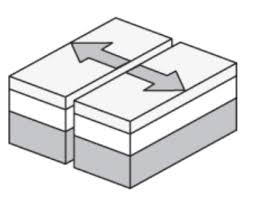
What is the claim?

a)

In our experiment, the blocks had the following masses: 20 g., 30 g., 44 g., 123 g and 142 g. The time for the blocks to fall took between 1.5 and 1.8 seconds.

b)

No, mass does not affect how quickly an object falls.

c)

Since the blocks had different masses but took about the same time to fall, I know that mass does not affect how quickly something falls.

96.

In our experiment, the blocks had the following masses: 20 g., 30 g., 44 g., 123 g and 142 g. The time for the blocks to fall took between 1.5 and 1.8 seconds. No, mass does not affect how quickly an object falls. Since the blocks had different masses but took about the same time to fall, I know that mass does not affect how quickly something falls.
What is the evidence?

a)

In our experiment, the blocks had the following masses: 20 g., 30 g., 44 g., 123 g and 142 g. The time for the blocks to fall took between 1.5 and 1.8 seconds.

b)

No, mass does not affect how quickly an object falls.

c)

Since the blocks had different masses but took about the same time to fall, I know that mass does not affect how quickly something falls.

97.

In our experiment, the blocks had the following masses: 20 g., 30 g., 44 g., 123 g and 142 g. The time for the blocks to fall took between 1.5 and 1.8 seconds. No, mass does not affect how quickly an object falls. Since the blocks had different masses but took about the same time to fall, I know that mass does not affect how quickly something falls.

What is the Reasoning?

a)

In our experiment, the blocks had the following masses: 20 g., 30 g., 44 g., 123 g and 142 g. The time for the blocks to fall took between 1.5 and 1.8 seconds.

b)

No, mass does not affect how quickly an object falls.

c)

Since the blocks had different masses but took about the same time to fall, I know that mass does not affect how quickly something falls.

98.
Which of these layers is ALL solid iron and nickle?
a)
inner core
b)
outer core
c)
lithosphere
d)
mesosphere
99.
Which of the following occurs because of convection currents?
a)
Tectonic plates on the crust move.
b)
The mantle increases in size.
c)
Pressure in the crust increases.
d)
Pressure in the crust decreases.
100.
The mantle of Earth is made partly of magma. When magma rises and sinks, this is called ______________. 
a)
a conduction current
b)
a hot spot
c)
a volcanic eruption
d)
a convection current
101.
What would happen to the convection currents if the heat from the inner core disappeared? 
a)
They would stop. 
b)
They would change directions. 
c)
It would not change. 
d)
They would speed up. 
102.
Where does the heat come from that drives this convection current in the mantle? 
a)
The sun
b)
The crust
c)
the mantle
d)
the core
103.
The area around the pacific plate where boundaries form is called...
a)
death ring
b)
fire zone
c)
ring of fire
d)
zone of fire
104.
Which is true about hotter material in the mantle?
a)
more dense, sinks
b)
less dense, sinks
c)
less dense, rises
d)
more dense, rises
105.
Which of the following is where one plate slides under another plate?
a)
submarine zone
b)
divergence zone
c)
subduction zone
d)
lower zone
106.
Associated with transform boundaries.
a)
Volcanoes
b)
mountains
c)
trenches
d)
earthquakes
107.
Name the boundary
a)
convergent boundary
b)
divergent boundary
c)
transform boundary
d)
sergent boundary
108.
Name the boundary
a)
convergent boundary
b)
divergent boundary
c)
transform boundary
d)
sergent boundary
109.
Name the boundary
a)
convergent boundary
b)
divergent boundary
c)
transform boundary
d)
sergent boundary
110.
This layer of Earth is the thickest part
a)
crust
b)
outer core
c)
mantle
d)
inner core
111.
Which layer of the Earth is liquid iron?
a)
Crust
b)
Mantle
c)
Outer Core
d)
Inner Core
112.
The presence of the same ________ on several continents supports the idea of continental drift.
a)
rocks
b)
fossils
c)
both fossils and rocks
d)
neither fossils nor rocks
113.
A lack of evidence for continental drift prevented many scientists from believing a single supercontinent called _________ existed.
a)
Glossopteris
b)
Pangaea
c)
Gondwanaland
d)
Mesosaurus
114.
The theory of _______ states that Earth’s crust and upper mantle are broken into sections that are in constant, slow motion.
a)
plate tectonics
b)
continental drift
c)
seafloor spreading
d)
divergent boundaries
115.
Matching ________ on different continents are evidence for continental drift.
a)
weather systems
b)
river systems
c)
rock structures
d)
wind systems
116.
Many scientists think hot plastic-like rock in the mantle is forced upward toward the surface, cools, and sinks.  This process is called a(n) _________.
a)
earthquake
b)
convergent boundary
c)
volcano
d)
convection current
117.
The _________ is the thinnest layer of Earth.
a)
outer core
b)
inner core
c)
mantle
d)
crust
118.
_______ are formed when two continental plates collide.
a)
Mountain ranges
b)
Transform faults
c)
Rift valleys
d)
Volcanoes
119.
The theory of continental drift was first proposed by __________.
a)
Thomas Edison
b)
Alfred Wegener
c)
Benjamin Franklin
d)
Harry Hess
120.
What is the correct order (starting from the surface) of Earth’s layers?
a)
mantle, outer core, inner core, crust
b)
crust, mantle, outer core, inner core
c)
outer core, inner core, crust, mantle
d)
crust, outer core, inner core, mantle
121.
The _______ is the thickest layer of the Earth at 1800 miles thick.  This layer contains most of the mass of the Earth.
a)
crust
b)
mantle
c)
outer core
d)
inner core
122.
The _________ is so hot that the metals in it are all in the liquid state.
a)
crust
b)
mantle
c)
outer core
d)
inner core
123.
_________ currents carry heat from the hot inner core to the cooler outer mantle and back again.
a)
River
b)
Radiation
c)
Convection
d)
Conduction
124.
Plates move apart at _________ boundaries.
a)
volcanic
b)
divergent
c)
convergent
d)
transform
125.
What technology did scientists use in the mid-1900s to map the mid-ocean ridge?
a)
sonar
b)
submarines
c)
satellites
d)
deep-sea diving
126.
Which type of rock results from melting and cooling of magma?
a)
Igneous
b)
Metamorphic
c)
Sedimentary
d)
Extrusive
127.
Which type of rock forms from extreme heat and pressure?
a)
Igneous
b)
Sedimentary
c)
Organic
d)
Metamorphic
128.
A metamorphic rock changes into an igneous rock by what two processes?
a)
Melting and cooling
b)
Extreme heat and pressure
c)
Compaction and cementation
d)
Weathering and erosion
129.
Wind, water, and ice breaking down rock is called
a)
Erosion
b)
Deposition
c)
Compaction
d)
Weathering
130.
True/False: Igneous rocks can only turn into metamorphic rocks.
a)
True
b)
False
131.
What is the MAIN way rocks are classified?
a)
Their color and shapes
b)
How they form
c)
Mineral bands
d)
Where they form
132.
When sediments are pressed together tightly, this is called ____________.
a)
Compaction
b)
Cementation
c)
Weathering
d)
Erosion
133.
This rock was found near the mouth of a volcano. What type of rock is this?
a)
Sedimentary
b)
Igneous
c)
Metamorphic
134.
This rock was formed by smaller pieces of rock that settled at the bottom of a lake millions of years ago. What type of rock is this?
a)
Sedimentary
b)
Igneous
c)
Metamorphic
135.
This rock was molten magma that slowly cooled under the ground. What type of rock is this?
a)
Sedimentar
b)
Igneous
c)
Metamorphic
136.
What are the 3 major types of rocks?
a)
Igneous, Metamorphic, Sedimentary
b)
Metamorphic, Igneous, Cementation
c)
Brown, Red, Gray
d)
Streak, Hardness, Breakage
137.
Each rock type can follow only one pathway of the rock cycle.
a)
True
b)
False