wayground logo

Free Printable Worksheets

Font size

S
M
L
XL
Worksheets

Biology STAAR Review

Total questions: 150

Worksheet time: 3hrs 44mins

Name
Class
Date
1.

Can you graduate in Texas WITHOUT passing the Biology STAAR exam?

a)

yes

b)

NO

2.

How many hours is the Biology STAAR exam?

a)

1

b)

2

c)

4

d)

3

3.
How do viruses reproduce?
a)
They copy their own genetic material inside a protein coat.
b)
They kill a cell and reproduce inside it.
c)
They invade a living cell and use the cell's functions to replicate their genetic material.
d)
They do not reproduce because they are not technically living things.
4.
What is the capsid of a virus?
a)
the disease it causes
b)
the receptors to which it binds
c)
the genetic material
d)
its protein coat
5.
Which cell part is present in eukaryotic cells, but not in prokaryotic cells?
a)
cell membrane
b)
cell wall
c)
cytoplasm
d)
nucleus
6.
Which of the following is a possible result of a disruption in the cell cycle?
a)
cancer
b)
photosynthesis
c)
cellular respiration
d)
protein synthesis
7.
Which organic macromolecules are composed of chains of amino acids that join to form the structural components of organisms?
a)
carbohydrates
b)
nucleic acids
c)
proteins
d)
lipids
8.
This cell is undergoing mitosis.  What stage of mitosis is shown?
a)
prophase
b)
metaphase
c)
anaphase
d)
telophase
9.
The ability to taste a bitter chemical called PTC is a dominant trait in humans.  The Punnett square below shows a cross between two parents who are heterozygous for the ability to taste this chemical.  What is the probability, expressed as a percentage, that these parents will produce an offspring who is homozygous recessive for the tasting trait?
a)
0%
b)
25%
c)
50%
d)
75%
10.
Which of these substances stores and transmits the information that specifies the traits of an organism?
a)
DNA
b)
RNA
c)
enzymes
d)
carbohydrates
11.
A strand of DNA with the sequence A-C-T-T-G serves as a template to form a strand of mRNA with the sequence U-G-A-A-C.  During which process would this happen?
a)
replication
b)
transcription
c)
translation
d)
meiosis
12.
The diagram summarizes two stages in the production of the specialized cells used for sexual reproduction.
What happens in the stage labeled "process 2"?
a)
The chromosomes cross over.
b)
Th chromosomes number is reduced by half.
c)
The chromosomes move to opposite end of the cell.
d)
Four identical gametes form.
13.
Proteins are formed in the cytoplasm of cell using genetic instructions from DNA, which is located in the cells nucleus.  Which of the following best explains how the genetic information gets to the site of protein synthesis?
a)
DNA is divided during mitosis, and one strand travels outside the nucleus to bind with RNA and form a protein
b)
DNA is copied to make mRNA. The mRNA leaves the nucleus and goes to the ribosomes, where the information is used to guide protein synthesis.
c)
Genetic information travels from DNA in the nucleus along a strand of mRNA that is connected to ribosomes in the cytoplasm where proteins are made.
d)
The genetic code is transferred to ribosomes on tRNA molecules, which can pass through the nuclear membrane.
14.
The diagram shows the base sequence of a strand of DNA.
From left to right, what is the sequence of the complementary strand of DNA in this molecule?
a)
T G A A C
b)
A C T  T G
c)
T G U U C
d)
U C T T G
15.
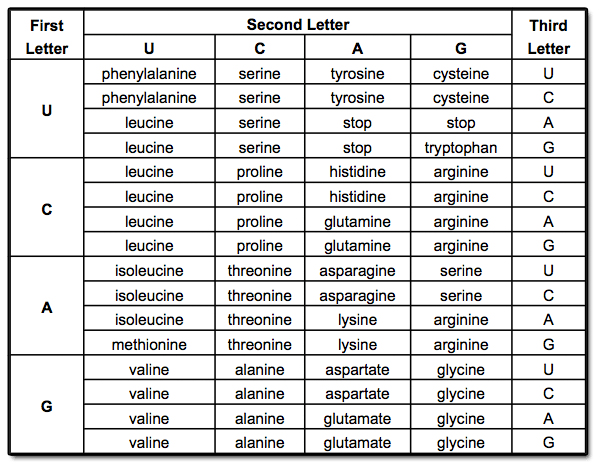
The table shows several DNA codons and their corresponding amino acids.
If a sequence of DNA reads AGTGGGTCT, for what sequence of amino acids does it code?
a)
arginine-glycine-serine
b)
serine-arginine-arginine
c)
serine-arginine-glycine
d)
serine-glycine-serine
16.
The legs of crocodiles and mice have similar bone structures and develop in a similar way.  What type of structures are the leg bones?
a)
homologous structures
b)
analogous structures
c)
fossilized structures
d)
vestigial structures
17.
The standardized system for naming organism is known as binomial nomenclature.  What two pieces of information are used to name and identify organisms using this system?
a)
genus and species
b)
class and genus
c)
class and species
d)
domain and kingdom
18.

Which is true of prokaryotic and eukaryotic cells?

a)

Prokaryotic cells are larger than eukaryotic cells.

b)

Eukaryotic cells do not have nuclei, and prokaryotic cells do have nuclei.

c)

Prokaryotic cells lack membrane-bound organelles, and eukaryotic cells contain membrane-bound organelles.

d)

Eukaryotic cells are simpler than prokaryotic cells.

19.
Name the phase
a)
metaphase
b)
Anaphase
c)
Telophase
d)
Prophase
20.
DNA is replicated during the ______ phase of the cell cycle.
a)
G1
b)
Synthesis
c)
G2
d)
G0
21.
DNA molecule segment is : TTACGCAAG
The mutated DNA segment is TTCGCAAG. This is an example of ___ mutation.
a)
Substitution
b)
Deletion
c)
Insertion
d)
Inversion
22.
Cattle egrets forage (feed) in fields among cattle. The egret gets easy access to flying insects stirred up by the cattle, and the cattle don't care if they are there or not.
a)
mutualism
b)
commensalism
c)
competition
d)
parasitism
23.
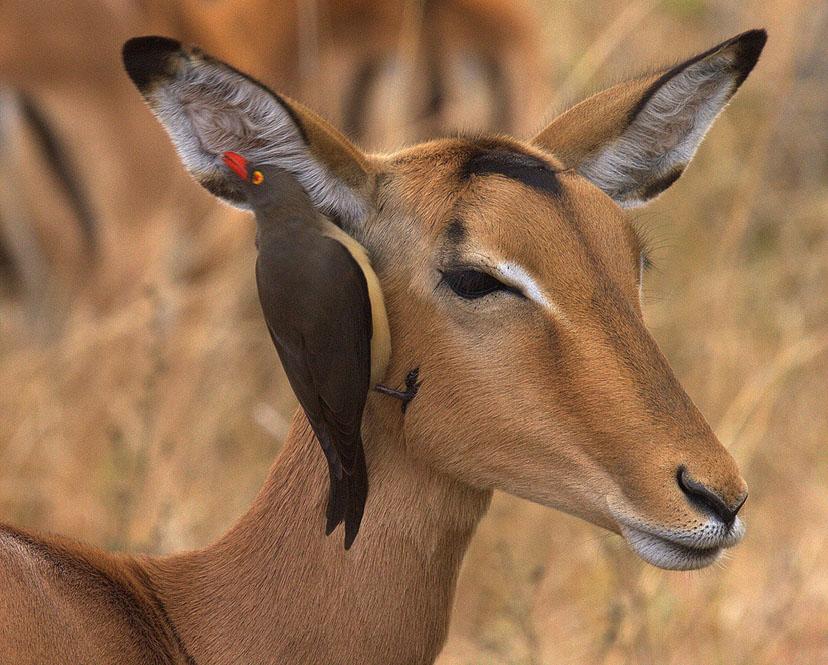
Red-billed oxpeckers are birds that often feed on parasites that infest impala.  This is an example of _______.
a)
commensalism
b)
mutualism
c)
neutralism
d)
competition
24.
The reactants of photosynthesis are
a)
sugar and water.
b)
sugar and oxygen.
c)
carbon dioxide and water.
d)
carbon dioxide and oxygen.
25.
What occurs after a disturbance that leaves soil intact?
a)
primary succession
b)
secondary succession
c)
pioneer species
d)
climax community
26.
How can you tell that Zebra Mussles are an invasive species from the graph shown?
a)
The population of rotifers goes up after zebra mussels they are introduced.
b)
The population of rotifers goes down after zebra mussels are introduced.
c)
The population of rotifers stays about the same after zebra mussels are introduced.
d)
The population of zebra mussels goes down after they are introduced.
27.

What are the offspring's possible phenotypes?

Brown fur is dominant. White fur is recessive.

One parent is homozygous for brown fur as the other is heterozygous.

a)

100% White fur

b)

50% Brown fur 50% White fur

c)

100% Brown fur

d)

75% Brow fur 25% White fur

28.
Cross Two Homozygous plants
(
RRYY x rryy)
R = round seeds, r  = wrinkled seeds Y = yellow seeds, y = green seeds
What percent will have Round and Yellow seeds? 
a)
0%
b)
25%
c)
50%
d)
100%
29.

How do enzymes speed up chemical reaction?

a)

Increasing activation energy

b)

Decreasing activation energy

c)

Increasing deactivation energy

d)

Decreasing deactivation energy

30.
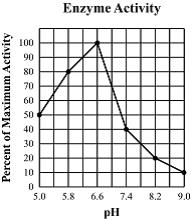
Which of the following conclusions can be drawn from this graph?
a)
The optimum pH of the enzyme is 6.6.
b)
The optimum pH of the enzyme is 5.8
c)
The enzyme’s activity increases as pH increases 5.0 to 9.0
d)
The enzyme’s activity is greater around pH of 8.0 .
31.

Influenza infects a cell and causes it to lyse immediately. What do they use the appendages on the outside of this picture for?

a)

Attachment

b)

Poison host

c)

Replicate dna

d)

Create a nucleus

32.

This diagram is demonstrating

a)

Mutation

b)

Non-random mating

c)

Gene Flow

d)

Genetic Drift

e)

Natural Selection

33.
Crossing over helps promote 
a)
male genotype
b)
genetic variation
c)
DNA replication
d)
mitosis
34.

What amino acid is represented by the codon UAA?

a)

Phenylalanine

b)

Tyrosine

c)

Isoleucine

d)

Stop codon

35.
What process is going on in this photo? 
a)
Transcription 
b)
Translation 
c)
Replication 
d)
All the above 
36.

Which component of DNA determines the traits of an organism?

a)

Nitrogen Bases

b)

Phosphate

c)

Hydrogen bonds

d)

Deoxyribose Sugar

37.
Which of the following are monomers of proteins?
a)
monosaccharides
b)
nucleotides
c)
amino acids
d)
fatty acids
38.
a cell organelle composed of RNA and protein; the site of protein synthesis
a)
nucleotide
b)
protein
c)
ribosome
d)
RNA
39.
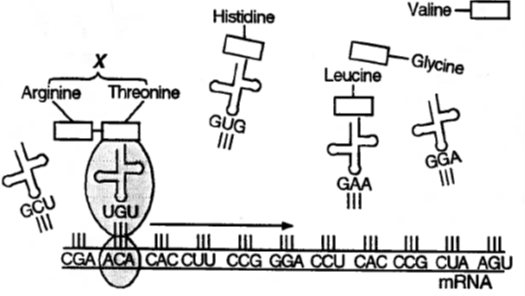
What process is occurring in the diagram?
a)
DNA replication
b)
Transcription
c)
Translation
d)
Protein synthesis
40.

What amino acid is represented by the codon TAC?

a)

Phenylalanine

b)

Tyrosine

c)

Methionine

d)

Isoleucine

41.
Which sequence of DNA bases would pair with this partial strand
ATG TGA CAG
a)
ATG TGA CAG
b)
TAC ACT GTC
c)
GTA AGT GAC
d)
CAT TCA CTG
42.

What determines the code, or information, of a DNA molecule?

a)

the shape (structure) of the nitrogen bases

b)

the order of the nitrogen bases

c)

the color of the nitrogen bases

d)

the frequency (number) of nitrogen bases
43.

What determines the code, or information, of a DNA molecule?

a)

the shape (structure) of the nitrogen bases

b)

the order of the nitrogen bases

c)

the color of the nitrogen bases

d)

the frequency (number) of nitrogen bases

44.
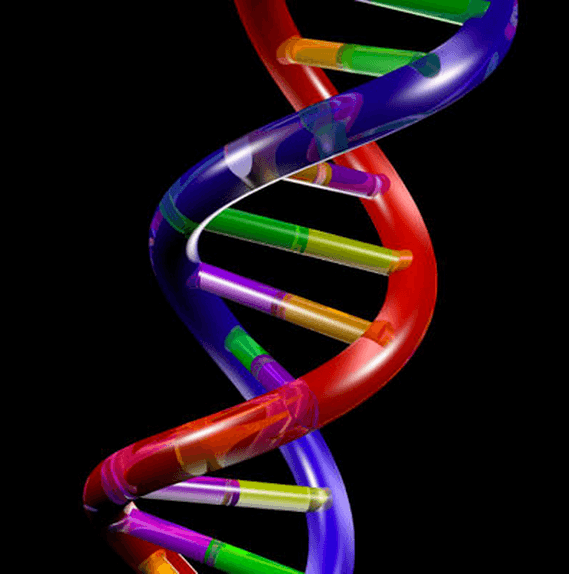
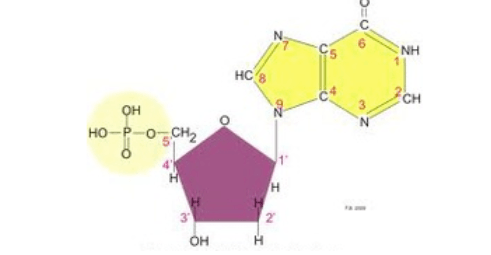
Which biomolecule is this a picture of?
a)
Protein
b)
Nucleic Acid
c)
Lipid
d)
Carbohydrate
45.

When levels go above or below a set point a hormone is released to return the body to set point. When the body is restored to set point no more hormone is released. This is an example of...

a)

a positive feedback loop

b)

a negative feedback loop

c)

a neutral feedback loop

d)

not maintaining homeostasis

46.
Endocrine glands produce __________ which maintain the body in homeostasis
a)
oils
b)
neurotransmitters 
c)
tears
d)
hormones
47.

The major organ of the integumentary system is

a)

Skin

b)

Heart

c)

Hormones

d)

Lungs

48.
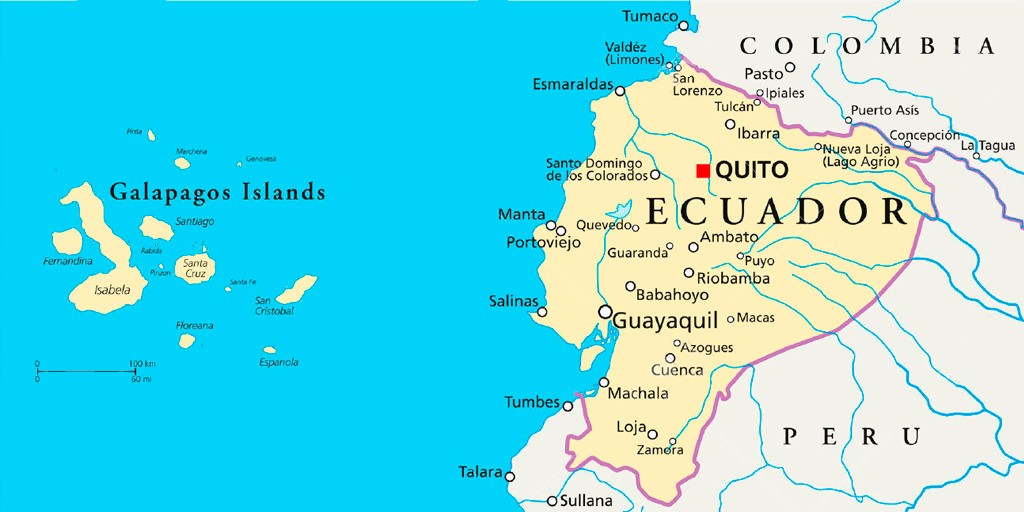
The Galapagos Islands, a small group of islands off the coast of Ecuador, is home to reptiles such as the giant tortoise and the iguana. The eastern islands are much older than the islands to the west.  Which statement about the origin of these reptiles is best supported by this information?
a)
The ancestor of each species came from different continents at different times.
b)
The common ancestors of the reptiles probably came from Equador.
c)
The common ancestor of each species evolved in Peru and came to the islands at the same time.
49.
The picture shows the members of the Camelidae family. The physical features and the geographical origin of these animals provide evidence that - 
a)
they live in the same type of environment.
b)
have slowly evolved to become herbivores.
c)
have a common ancestor.
d)
exchanged DNA in the past.
50.
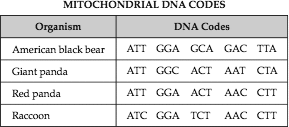
What conclusions can be made based on this table shown?
a)
the American black bear and the giant panda are most closely related
b)
the giant panda and the red panda are most closely related
c)
the red panda and the racoon are the most closely related
51.
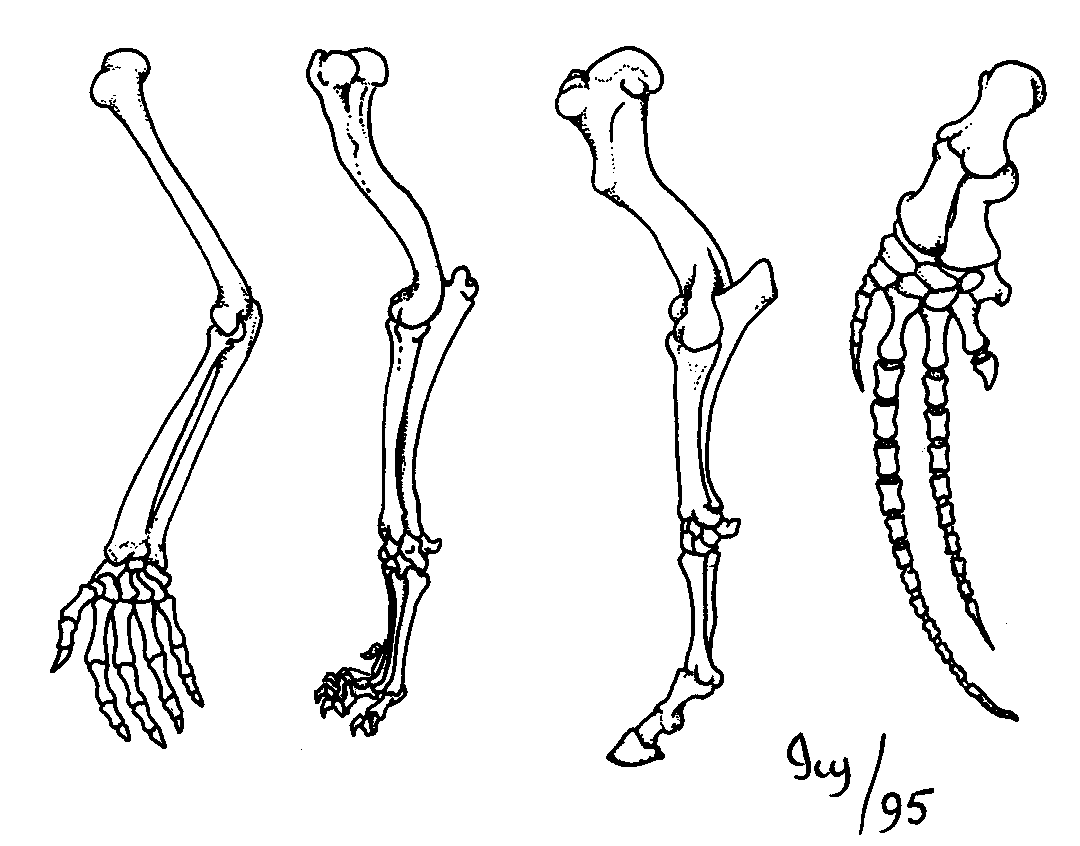
Scientists compare the limbs of organisms to look for evidence of common ancestry. These limbs provide evidence of common ancestry because they -
a)
perform the same function
b)
are the same size
c)
have the same basic structure
d)
are parts of the same animal
52.
Knowledge of which of the following would provide the best evidence regarding the evolutionary relationships of the species shown in the diagram?
a)
Neck Lengths
b)
Feeding patterns
c)
DNA sequences
d)
Common Predators
53.
The more similar the stages of embryonic development, the more likely that organisms share ____________
a)
a common ancestor.
b)
embryos.
c)
eggs.
d)
embryology.
54.
Structures with the same parts have different functions; suggests that organisms share a common ancestry
a)
vestigial structures
b)
homologous structures
c)
adaptive radiation
d)
fossil
55.
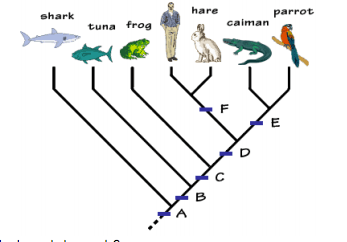
On the cladogram, which organism is the closest relative of the human?
a)
Frog
b)
Hare
c)
Caiman
d)
Parrot
56.
Guppies are small fish that live in freshwater.  Most guppy species reproduce sexually, but some reproduce asexually.  There are two lakes in a particular region.  One lake contains a species of guppy that reproduces asexually.  The other lake contains a species of guppy that reproduces sexually.  A scientist studying these lakes predicts that the sexually reproducing guppies would survive better that the asexually reproducing guppies if a fungus was introduced in both lakes.  Which statement supports this hypothesis?
a)
The sexually reproducing guppies are identical to one another.
b)
The sexually reproducing guppies have a variation of inherited characteristics.
c)
The sexually reproducing guppies require only one individual for reproduction.
d)
The sexually reproducing guppies are carriers of recessive genes.
57.

A gene from organism A can be put into organism B and work because

a)

all organisms share the genetic code

b)

they have the exact same genome

c)

they lack a nucleus

d)

the eyes of texas are upon us

58.
Which phrase best describes cancer?
a)
absence of cyclins
b)
multiple gene mutations
c)
uncontrolled cell growth
d)
precesnce of genetic defects
59.
In what way is the DNA of a nerve cell different from the DNA of a muscle cell?
a)
The DNA is the same but each cell contains different genes
b)
The DNA is the same but different genes are turned on and turned off in each cell
c)
The DNA is different, but the same genes are turned on and off in each cell
d)
The DNA is different, but each cell contains the same genes
60.
Which of these is responsible for the different morphologies of these cells?
a)
Metabolism
b)
Replication
c)
Gene Expression
d)
None of these account for the different morphologies
61.

In turtles, the temperature of eggs during a certain period in their development is the deciding factor in determining the gender of the offspring. In the case of the European pond turtle, an incubation temperature of 23 degrees celcius results in all male baby turtles, while an incubation temperature of 30 degrees celcius results in all female baby turtles. What is a likely reason for such gender development in turtles?

a)

a change in temperature results in the mutation of a gene in the developing embryo

b)

a change in temperature causes a variation during cell division of the developing embryo

c)

a change in temperature causes a change in the expression of the genes determining sex

d)

a change in temperature reverses the expression of the dominant and recessive alleles

62.
Which organisms are closely related? 
a)
American badger and leopard
b)
coyote and gray wolf
c)
european otter and leopard
d)
coyote and american badger
63.

What is the importance of a standardized taxonomic system to the scientific community?

a)

To have many different common names for one species.

b)

To organize species' cells, tissues, organs, and organ systems

c)

To have a universal scientific naming system

d)

To analyze species genetic information

64.

Which of the following organisms are most closely related?

a)

organisms that share a domain

b)

organisms that share a family

c)

organisms that share a genus

d)

organisms that share a kingdom

65.

Which is the best prediction regarding the current classification system?

a)

The system may change as new information and organisms are discovered.

b)

Scientists will become bored with the current system and develop a new one.

c)

Over time, organisms will become extinct, so classification will become simpler.

d)

The system is set in stone and most likely will not change.

66.
I have cell walls
I am an autotroph
I am multicellular
What am I?
a)
Plant
b)
Animal
c)
Eubacteria
d)
Unicorn
67.
I have no cell walls
I am eukaryotic
I reproduce sexually
I am multicellular
What kingdom do I belong to?
a)
Plantae
b)
Animalia
c)
Protista
d)
Fungi
68.
I can be either a heterotroph or an autotroph-
I can be either multicellular or unicellular-
I can have cell walls or not-
The only thing for sure about me is that I have a nucleus in my cells...
I am Kingdom ____________ .
a)
Plantae
b)
Protista
c)
Animalia
d)
of Oz
69.
The mouse in this food web would be considered a:
a)
Primary Consumer
b)
Producer
c)
Tertiary Consumer
d)
Secondary Consumer
70.
Which of the following would be the most likely effect, if there were a sudden increase in the cricket population?
a)
There would be a decrease in the small bird population.
b)
There would be a decrease in the grass/flowers population.
c)
There would be a decrease in the mice population.
d)
There would be an increase in the grass/flowers population.
71.
If there is 1000 Kcal available in the producers in trophic level 1, how much energy is available in the herbivores in trophic level 2?
a)
10 Kcal
b)
1 Kcal
c)
100 Kcal
d)
1000 Kcal
72.
Which sequence correctly shoes the levels of increasing organisation of the human body?
a)
cell-tissue-organ-organ system-organism
b)
organism-organ system-organs-tissues-cells
c)
cells-organs-tissues-organ system-organism
d)
organism-cell-tissue-organs-organ system
73.
If you see cardinals, blue jays and owls in your back yard, this is an example of a 
a)
community
b)
population
c)
ecosystem
d)
species
74.
What are the 7 levels of classification, listed in order from most specific to least specific?
a)
a.  Kingdom, phylum, order, class, family, genus, species 
b)
Kingdom, phylum, class, order, family, genus, species 
c)
Species, genus, family, order, class, phylum, kingdom
d)
Species, genus, order, class, family, phylum, kingdom 
75.
Instructions found in the cells of an organism determine the characteristics or traits that the organism will have. This is an example of what life characteristic?
a)
Living things that reproduce
b)
Living things that obtain energy
c)
Living things that contain DNA
d)
Living things that contain cells
76.
Which part of the leaf allows gases to enter and exit the cell?
a)
mesophyll
b)
stomata
c)
cuticle 
d)
guard cells
77.
Thigmotropism is a plant's response to what stimuli?
a)
light
b)
touch
c)
water
d)
gravity
78.
Vascular Tissue that carries water and dissolved minerals  from the roots of a plant to its leaves
a)
Xylem
b)
Phloem
c)
Stem
d)
Stomata
79.
Small openings in the underside of a leave through which oxygen and carbon dioxide can enter and leave the plant
a)
Cuticle
b)
Stomata
c)
Phloem
d)
Xylem
80.
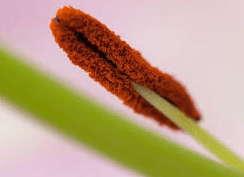
The part of the flower on which the pollen grains land.
a)
pistil
b)
stamen
c)
style
d)
stigma
81.
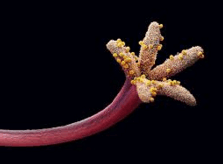
The part of a flower that produces the male reproductive cells.
a)
anther
b)
style
c)
stigma
d)
filament
82.

What condition absolutely must be present in a population before evolution can act upon it?

a)

more females than males

b)

a source of new alleles

c)

genetic variation

d)

a harsh environment

83.

What condition absolutely must be present in a population before evolution can act upon it?

a)

more females than males

b)

a source of new alleles

c)

genetic variation

d)

a harsh environment

84.

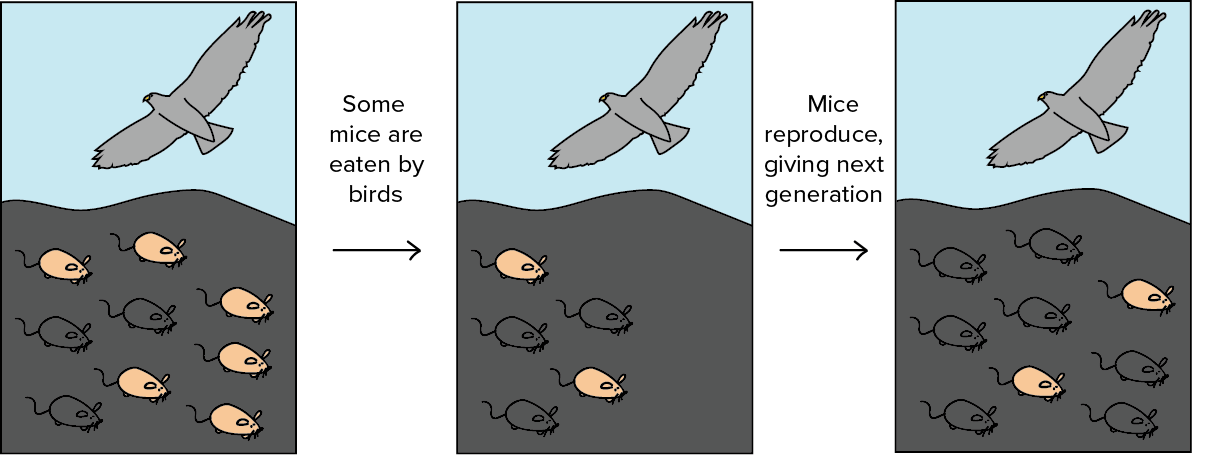
Why is the mouse population changing over time?

a)

The light fur mice can reproduce more successfully than the dark fur mice

b)

The hawks eat more dark fur mice than light mice because they hunt by smell

c)

The hawks eat more light fur mice than dark fur mice because they can see the light fur mice more easily

d)

The hawks eat more dark fur mice than light mice because they can see the dark fur mice more easily

85.
Mutations are important because they bring about
a)
death of the organism in which they develop
b)
genetic variation needed for a population to evolve
c)
benefits for the individual, not for the population
d)
Hardey-Weinberg equilibrium within a population
86.
Which best describes the role of mutations in natural selection?
a)
Mutations help an organism to better survive in their environment
b)
An organism may acquire a helpful mutation by interacting with the environment
c)
A mutation may result in an adaptive trait that makes an organism more likely to survive and reproduce
d)
Organisms with certain traits are more likely to win competitions for mutations
87.
Which best describes the role of mutations in natural selection?
a)
Mutations help an organism to better survive in their environment
b)
An organism may acquire a helpful mutation by interacting with the environment
c)
A mutation may result in an adaptive trait that makes an organism more likely to survive and reproduce
d)
Organisms with certain traits are more likely to win competitions for mutations
88.
Which best describes the role of mutations in natural selection?
a)
Mutations help an organism to better survive in their environment
b)
An organism may acquire a helpful mutation by interacting with the environment
c)
A mutation may result in an adaptive trait that makes an organism more likely to survive and reproduce
d)
Organisms with certain traits are more likely to win competitions for mutations
89.
Which organic macromolecules are composed of chains of amino acids that join to form the structural components of organisms?
a)
carbohydrates
b)
nucleic acids
c)
proteins
d)
lipids
90.
Which is the only structure you would expect to see when examining a prokaryotic cell with a compound microscope?
a)
nucleus
b)
chloroplast
c)
cell membrane
d)
mitochondria
91.

The ability to maintain a stable internal environment is called ________________.

a)

Metabolism

b)

Mitosis

c)

Heterozygous

d)

Homeostasis

92.
What is one way that a lysogenic infection differs from a lytic infection?
a)
A lysogenic virus does not act on bacteria as a lytic virus does.
b)
A lysogenic virus can remain in the host DNA for a longer period without becoming active.
c)
A lysogenic virus contains RNA instead of DNA.
d)
A lysogenic virus directs the production of new viruses right away.
93.
Which of the following is a possible result of a disruption in the cell cycle?
a)
cancer
b)
photosynthesis
c)
cellular respiration
d)
protein synthesis
94.

Cell have several mechanisms for regulating their internal environments. Which of these mechanisms involved in maintaining homeostasis requires energy?

a)

osmosis

b)

diffusion

c)

active transport

d)

passive transport

95.
Which of the following is the only characteristic shared by living cells and viruses?
a)
the presence of carbohydrates
b)
the ability to reproduce
c)
the presence of the nucleic acid
d)
a cell membrane
96.
This diagram shows the cell cycle.

Which of the following activities occur in the S phase?
a)
Replication of the DNA
b)
Growth of the cell
c)
Formation of the mitotic spindle
d)
Breakdown of the nuclear membrane
97.
Meiosis is the process by which gametes are produced. In which of the following human organs would meiosis occur?
a)
Liver
b)
Stomach
c)
Testis
d)
Lungs
98.
Which of the following macromolecules are a prominent part of animal tissues that function in insulation, helping animals conserve heat?
a)
Carbohydrates
b)
Lipids
c)
Proteins
d)
Nucleic acids
99.
a)

Prophase

b)

Anaphase

c)

Telophase

d)

Interphase

100.
The diffusion of water through a semi-permeable membrane is called?
a)
Osmosis
b)
Cell wall
c)
Diffusion
d)
Respiration
101.
An animal cell placed in a hypertonic (salty) solution will
a)
Shrink
b)
Swell
c)
Stay the same
102.
Which process is used to make mRNA from the DNA in the nucleus?
a)
transcription
b)
translation
c)
replication 
103.
Which RNA bases would pair with TACGAA in transcription
a)
AUGCUU
b)
ATGCTT
c)
GCATCC
d)
GCAUCC
104.
Where does transcription take place?
a)
nucleus
b)
cytoplasm
c)
ribosome
105.
How many amino acids are coded for by this sequence of nucleotides:
ATG GGA ACT CCA
a)
4
b)
2
c)
6
d)
12
106.
What is occurring in this picture?
a)
Translation
b)
Replication
c)
Translocation
d)
Transcription
107.
Which species’ DNA is most similar to the DNA of the toothed whale? 
a)
Hippopotamus 
b)
Baleen Whale
c)
Grazing Mammals
d)
Camels
108.
The white feathers of a snowy owl allow it to blend in with its environment during the winter months (snow). This is an example of ________________
a)
Species
b)
Environmental Change
c)
Adaptation
d)
Variation
109.
Cattle egrets forage (feed) in fields among cattle. The egret gets easy access to flying insects stirred up by the cattle, and the cattle don't care if they are there or not.
a)
mutualism
b)
commensalism
c)
competition
d)
parasitism
110.
Cattle egrets forage (feed) in fields among cattle. The egret gets easy access to flying insects stirred up by the cattle, and the cattle don't care if they are there or not.
a)
mutualism
b)
commensalism
c)
competition
d)
parasitism
111.
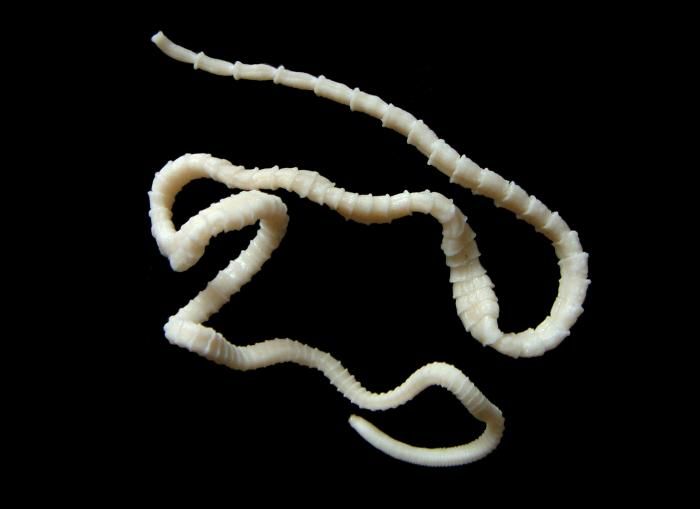
A tapeworm and a cat have this type of relationship.
a)
mutualism
b)
parasitism
c)
commensalism
d)
competition
112.
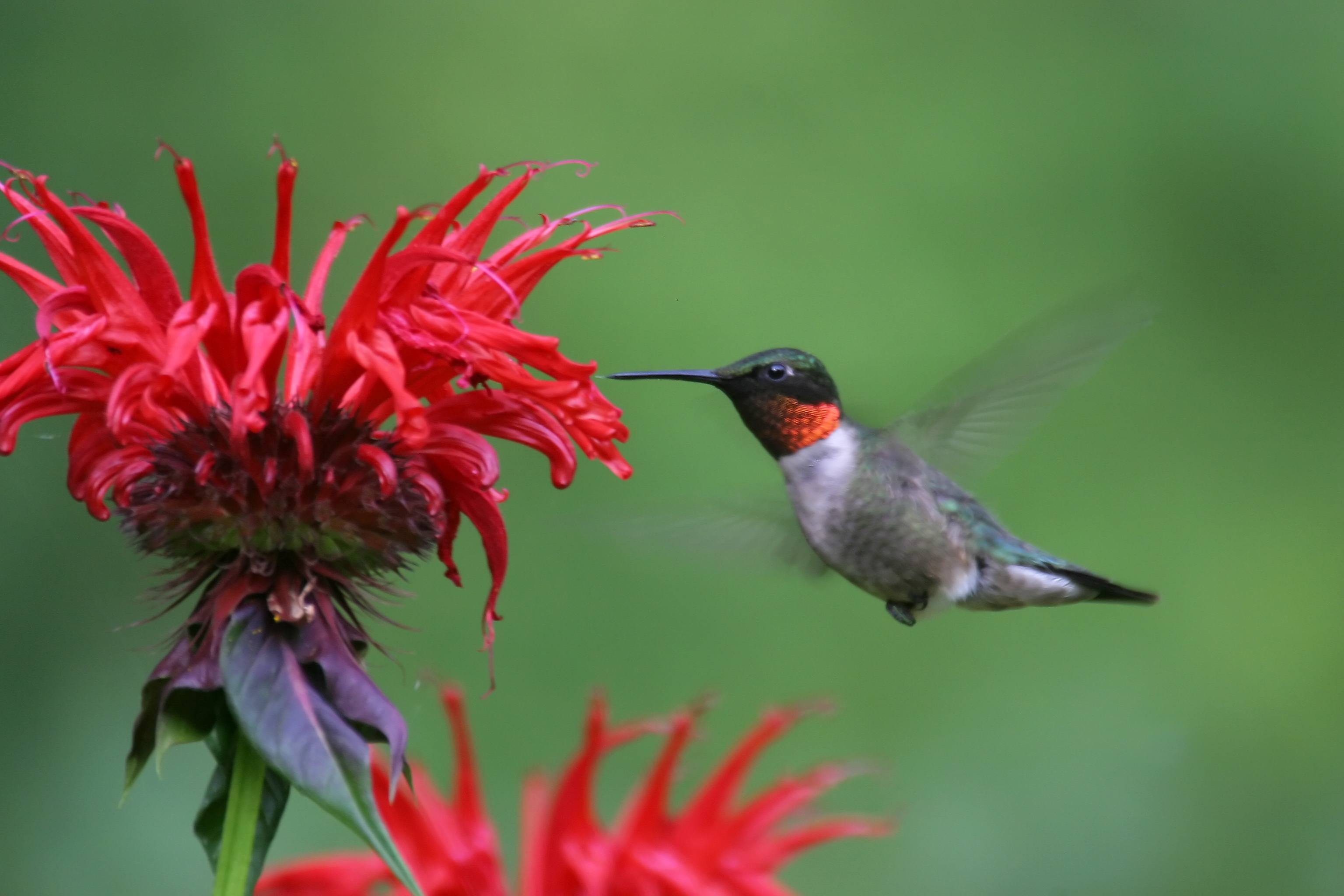
What type of symbiosis?  Hummingbirds feed on nectar from flowers.  The flowers are pollinated by hummingbirds as they move from flower to flower.
a)
commensalism
b)
mutualism
c)
parasitism
d)
predation
113.
Which type of cell has no nucleus?
a)
Eukaryote
b)
Prokaryote
c)
Animal
d)
Plant
114.
Which type of cell?
a)
Prokaryote
b)
Eukaryote
115.
Which type of cell?
a)
Prokaryote
b)
Eukaryote
c)
Mixed
116.
Has ribosomes
a)
Prokaryote
b)
Eukaryote
c)
both
d)
nihn
117.
A photograph of a virus is shown.  The projections on the surface of the virus allow the virus to -
a)
move inside a host cell
b)
attach to a host cell
c)
control the host cell's DNA
d)
signal other viruses to infect the host cell
118.
Having a standard taxonomic system benefits the scientific community by allowing scientists from all over the world to do which of the following?
a)
Have a common system for the classification of locations containing fossils
b)
Use a similar system to classify the impact of removing species from ecosystems
c)
 Have a common understanding in the classification of organisms
d)
Understand how other scientists classify predator–prey relationships
119.
Which of these statements best explains the process of energy conversion that takes place in the mitochondria?
a)
Energy is required for carbon dioxide molecules to form six-carbon sugar molecules.
b)
Water molecules and radiant energy are necessary for anaerobic respiration to take place.
c)
Oxygen molecules release energy in the form of heat during combustion reactions.
d)
The energy in the bonds of glucose molecules is transferred to the phosphate bonds in ATP.
120.
Leaves are part of a plant’s shoot system. The xylem tissue in leaves transports —
a)
the bacteria needed for nitrogen fixation in root nodules
b)
the wax required to coat the surface of actively growing tissue
c)
 the water and minerals that are absorbed by the roots
d)
the oxygen that regulates the rate of carbohydrate production
121.
Some organisms have genes that improve their ability to survive and reproduce. If the genes also help their offspring survive and reproduce, then which of the following will most likely increase?
a)
The frequency of the genes in one individual
b)
The frequency of the genes in the population
c)
The number of genes in one chromosome
d)
The number of genes in the species
122.
The overgrowth of algae poses a major problem for coral reefs. Intensive fishing is one factor that contributes to algae overgrowth because it does which of the following?
a)
Allows more sunlight to be available to algae
b)
 Inhibits the spread of pathogens in algae colonies
c)
 Reduces the number of organisms that feed on algae
d)
Increases the competition between different algae species
123.
Enzymes are proteins that help increase the rate of chemical reactions inside cells. These proteins are composed of many simpler molecules called amino acids. Which of the following suggests that the shape of an enzyme determines the enzyme’s function?
a)
Enzymes are specific to a substrate
b)
 Enzymes can operate in a wide range of conditions.
c)
Enzymes are activated by neighboring molecules.
d)
Enzymes can be found in all life-forms.
124.
Which of the following correctly describes how a diagram of cellular respiration would differ from a diagram of photosynthesis?
a)
The cellular-respiration diagram would show electromagnetic waves as the final product.
b)
The cellular-respiration diagram would show glucose as the main source of energy.
c)
The cellular-respiration diagram would show energy stored in large protein molecules.
d)
The cellular-respiration diagram would show water as the main source of chemical energy.
125.
Which of the following are missing from the food web shown above?
a)
producers
b)
decomposers
c)
omnivores
d)
carnivores
126.
The concept of gene flow is demonstrated when a cow is driven off from its herd, joins another herd, and reproduces. When the cow contributes to the gene pool of the new herd, which of these most likely increases?
a)
natural selection
b)
genetic variation
c)
environmental fitness
d)
reproductive mutations
127.
 Proteins and polysaccharides are polymers. These polymers are formed by dehydration synthesis. Which statement correctly identifies a difference in the structure of proteins and polysaccharides?
a)
 Only polysaccharides are comprised of repeating units of cytosine, adenine, guanine, and thymine.
b)
Only proteins are formed from amino acids joined by peptide bonds.
c)
Only polysaccharides can be folded and twisted to very specific shapes. 
d)
Only proteins can be large molecules with thousands of subunits.
128.
Both euglena and cyanobacteria are photosynthetic unicellular organisms found in pond water. The feature that distinguishes euglena from cyanobacteria is the —
a)
ability to maintain homeostasis
b)
presence of ribosomes
c)
ability to reproduce
d)
 presence of a nuclear membrane
129.
Crossing-over between nonsister chromatids during meiosis is significant in heredity. This process most likely leads to an increase in which of the following?
a)
The expression of dominant traits
b)
Number of gametes
c)
The occurrence of polyploidy
d)
Genetic variation
130.
Arthropods are joint-legged animals. Spiders, crabs, pill bugs, centipedes, and millipedes are examples of the many types of arthropods. Which of these arthropods are most closely related?
a)
Arthropods of the same family
b)
Arthropods of the same class
c)
Arthropods of the same genus
d)
Arthropods of the same species
131.
Which cellular process takes place in the ribosomes that are bound to the endoplasmic reticulum?
a)
The breakdown of waste material
b)
The conversion of radiant energy to glucose
c)
 The synthesis of new proteins
d)
The replication of nucleic acids
132.
Characteristics such as a widow’s peak or attached earlobes are determined by the genetic code. Which components of DNA are referred to as the genetic code?
a)
Phosphate groups
b)
Nitrogenous bases
c)
 Deoxyribose sugars
d)
Hydrogen bonds
133.
Plant hormones serve as chemical messengers between cells and tissues. Auxin is a plant hormone that causes the cells on the shady side of a plant shoot to elongate. The response enabled by auxin is known as —
a)
geotropism
b)
thigmotropism
c)
phototropism
d)
photosynthesis
134.
Which of these must occur during S phase of the cell cycle so that two daughter cells can be produced during M phase?
a)
 The DNA must be replicated.
b)
The chromosomes must be joined.
c)
The cytoplasm must be separated.
d)
 The cell membrane must be expanded.
135.
A student is studying the ecology of a playa lake, which forms after a rainfall in a dry lake bed. The table lists the organisms that the student observed.
Which level of biological organization has the student described in the table?
a)
 Biosphere
b)
Organelle
c)
Ecosystem
d)
Community
136.
A student sets up a compost bin outdoors. Inside the bin microorganisms convert the student’s vegetable and paper scraps into rich fertilizer. Which of the following best describes the role that these microorganisms play in natural habitats?
a)
The microorganisms help balance the numbers of producers and consumers.
b)
 The microorganisms help keep nutrients cycling through the ecosystem.
c)
 The microorganisms turn solar energy into sugars.
d)
The microorganisms function as autotrophs.
137.

The cladogram shows the evolution of land plants as indicated by fossil records.

Which discovery would challenge the validity of this cladogram?

a)

A large aquatic vascular plant about 200 million years old

b)

A species of algae that has existed for less than one million years

c)

A moss species that has existed for less than 380 million years

d)

A fossil of a fern more than 425 million years old

138.

Scientists estimate that there are more than 20,000 species of ants. The species range in size from 1 mm long to 38 mm long and live in most environments. The diets of ants range from flowers and seeds to fluids from their own larvae. Ants have been able to successfully inhabit so many different environments because their populations have been able to --

a)

hybridize with other species of insects

b)

adapt to a variety of habitats and food sources

c)

fill niches usually occupied by mammals

d)

occupy habitats that have no other life-forms

139.

Two populations of mice living in the same forest are separated by a large water-filled ditch. After a rainstorm, flooding brings several mice from one population to the other population. When the mice from the first population reproduce with members of the second population, which of the following will likely occur?

a)

All of the offspring will die as a result of reproductive mutations.

b)

The offspring will be forced to leave the second population.

c)

The offspring will be genetically identical to their parent from the first population.

d)

The offspring in the second population will have greater genetic variety.

140.

The picture shows bean-shaped glands called nodes. The clusters of cells in the nodes include macrophages that break down viruses and other potentially harmful materials. Nodes also contain cells that produce protein particles capable of capturing harmful materials that flow in tissue fluid through the nodes. Different parts of the body are drained by nodes in different regions of the body.


Which body systems are directly responsible for regulating these nodes and protecting the body from harmful materials in tissue fluid?

a)

Immune and lymphatic systems

b)

Digestive and nervous systems

c)

Endocrine and digestive systems

d)

Circulatory and nervous systems

141.

Organisms are classified today using the Linnaean system, and the following table shows the taxonomic classification of two marine organisms living along the Pacific Coast.


Taxonomic classification is important to marine biologists because it provides a way to -

a)

prove that marine evolution occurs

b)

discover and name every marine organism on Earth

c)

designate Latin as the universal language of marine biology

d)

identify marine organisms and find evolutionary relationships between them

142.

When a person is suddenly cut by a sharp object, a nervous impulse is sent along a sensory neuron to the spinal cord. The impulse is immediately transmitted through motor neurons to produce a response. Which of the following correctly identifies and describes this response?

a)

It is a conditioned response that occurs only to prevent injury.

b)

It is a learned response that does not occur in infants and small children.

c)

It is a reflex response that causes various muscles to contract in order to move away from the object.

d)

It is a voluntary response that is initiated only after the impulse has been carried to the relevant area in the brain.

143.

A student conducted an investigation to study phototropism in grasses. The only difference between the control group and the experimental group was the light conditions. The control group was provided full light, while the experimental group was shaded on one side. The diagrams show the average heights and positions of blades of grass in the investigation. (View Image)


Which statement best explains why the grass tips of the experimental group bent toward the light?

a)

Water evaporated faster on the side of the plant having full light.

b)

Light sensors in the grass tips simulated a hormone in the shoot system.

c)

The xylem in the roots system absorbed more nutrients from the shaded side.

d)

The side facing the light has greater chance of absorbing carbon dioxide from the atmosphere.

144.

Part of an important cellular process involving a DNA strand is modeled in the image. (View image)


What is the purpose of this cellular process?

a)

Preserving genetic information for future generations

b)

Deleting the information in the sequence produced from the DNA template

c)

Transcribing information in the DNA sequence for use by the cell

d)

Producing more nucleotides for the DNA sequence

145.

The energy pyramid shows the energy made available by producers. (View Image)


Base on the energy flow between trophic levels in an energy pyramid, how much energy would be expected to be found at the secondary consumer level in this pyramid?

a)

100 joules

b)

500 joules

c)

1,000 joules

d)

50 joules

146.

Nitrogenous bases are located on both strands of the DNA double helix. What is the significance of the nitrogenous bases?

a)

The number of adenines and cytosines determines the type of RNA that will be produced.

b)

The order of nitrogenous bases determines the order of amino acids in the proteins synthesized.

c)

The amount of thymine and guanine in the DNA molecules determines the length of the genes.

d)

The type of hydrogen bonding between the nitrogenous bases determines which amino acid will be added to the peptide chain.

147.

Oncogenes are mutated forms of genes. Oncogenes can transform a cell into a tumor cell. Some tumor cells are benign, while others are malignant. How does the presence of an oncogene lead to the formation of a tumor?

a)

ATP Production is inhibited.

b)

Cell division is unregulated.

c)

Somatic cell growth is inhibited.

d)

Antibody Activity is unregulated.

148.

Some students used vinegar to dissolve away the shells of three eggs and used the eggs as models of human red blood cells. The students observed the changes in the eggs when they were placed in different solutions. (View Image)


Which statement best describes the role of the cell membrane in this model?

a)

The cell membrane is an impermeable barrier that prevents water from entering the cell.

b)

The cell membrane allows solutes to enter the cell, which causes the cell to shrink.

c)

The cell membrane allows water to enter and leave the cell.

d)

The cell membrane removes solutes from the environment.

149.

Viruses can be transmitted through air, water, food, insect bites, and direct skin contact. Once a virus gains entry to the body, it invades a host cell in order to --

a)

deactivate the host cell's defences

b)

synthesize antibodies for defence

c)

metabolize host proteins and grow

d)

access cellular processes for replication

150.

The diagram shows cells in different phases of mitosis. A student is trying to find a cell in a particular phase of mitosis. The student is looking for evidence that spindle fibers are separating the chromosomes to ensure that each new nucleus has one copy of each chromosome. (View Image)


Which cell is in the phase of mitosis that the student is searching for?

a)

Cell 1

b)

Cell 2

c)

Cell 3

d)

Cell 4