wayground logo

Free Printable Worksheets

Font size

S
M
L
XL
Worksheets

Anatomy and Pig dissection

Total questions: 116

Worksheet time: 1hrs 6mins

Name
Class
Date
1.
What system are all of these pointing to?
a)
circulatory
b)
digestive
c)
respiratory
d)
not all same system
2.
What is 3 pointing to?
a)
lung
b)
esophagus
c)
stomach
d)
liver
3.
4 is pointing to a muscle named
a)
liver
b)
diaphragm
c)
stomach
d)
lung
4.
2 is pointing to
a)
uterus
b)
testes
c)
small intestine
d)
ureter
5.
3 is pointing to
a)
kidney
b)
ovary
c)
urinary bladder
d)
gall bladder
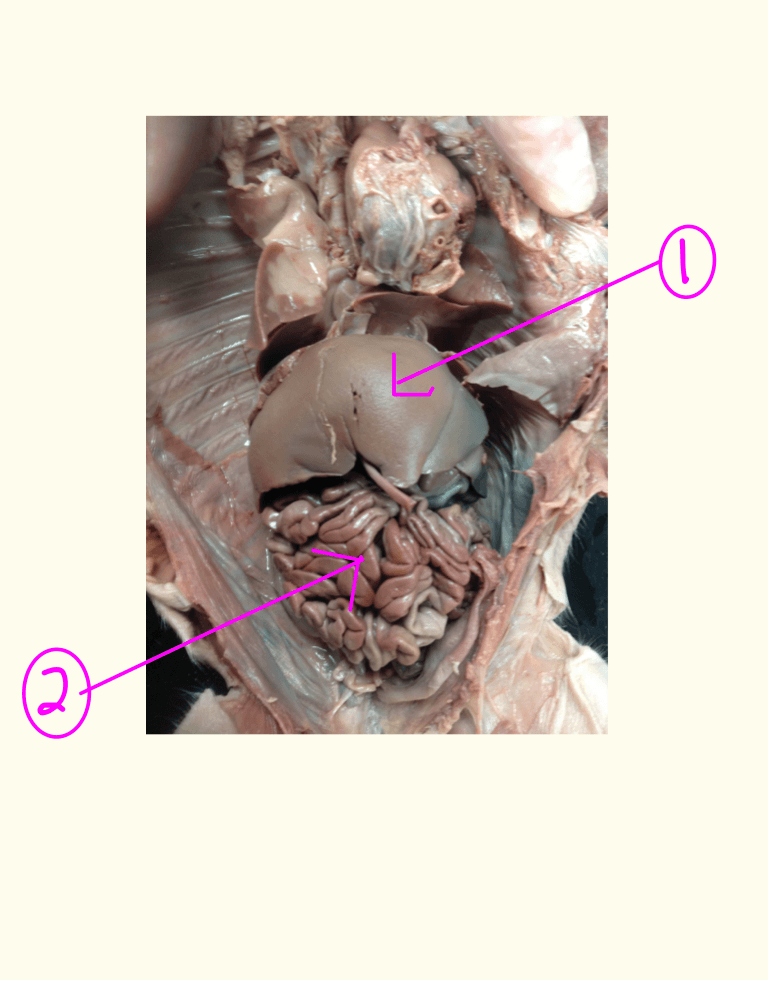
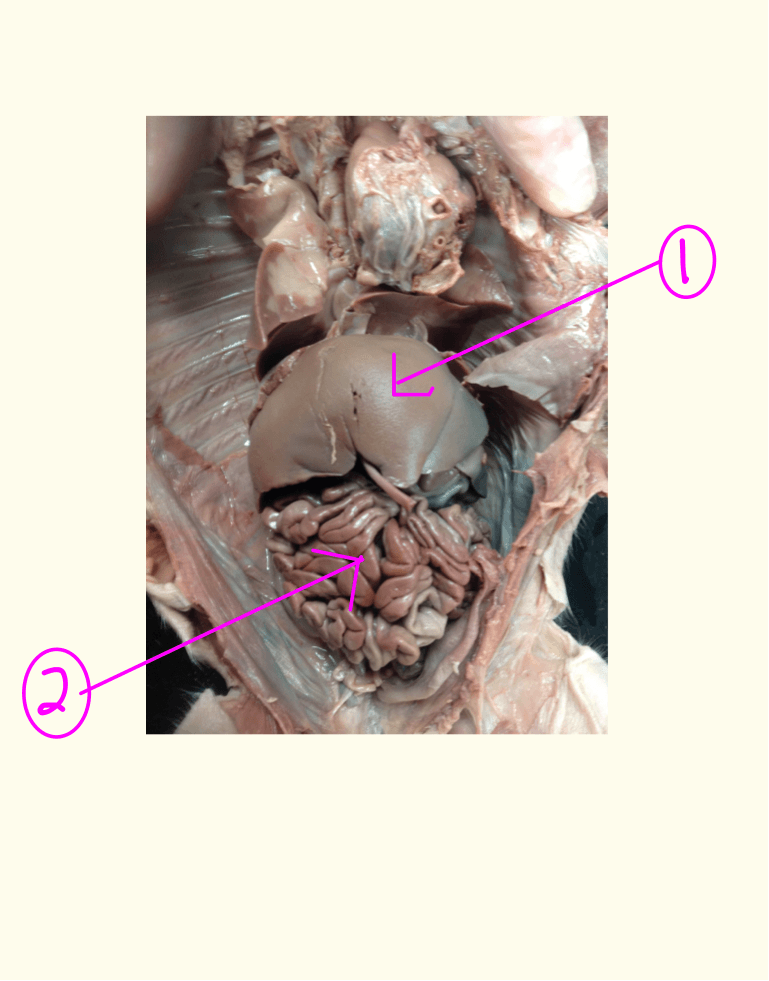
6.
1 is the
a)
urinary bladder
b)
liver
c)
stomach
d)
lungs
7.
2 is pointing to the
a)
small intestine
b)
large intestine
c)
stomach
d)
ureter
8.
The system being labeled here is the
a)
digestive
b)
respiratory
c)
reproductive
d)
excretory
9.
1 is part of which system?
a)
urinary
b)
reproductive
c)
digestive
d)
more than one of these
10.

What is A?

a)

trachea

b)

esophagus

c)

larynx (voice box)

d)

lungs

11.

Name the structure labeled X.

a)

External nares

b)

Masseter

c)

Hard palate

d)

Soft palate

12.

Name the structure labeled X.

a)

Diaphragm

b)

Small Intestines

c)

Liver

d)

Heart

13.

Name the structure labeled X.

a)

Diaphragm

b)

Small Intestines

c)

Liver

d)

Heart

14.

Name the structure labeled X. (Probe is threaded through it)

a)

Diaphragm

b)

Small Intestines

c)

Liver

d)

Heart

15.

Name the structure in the circle.

a)

Epiglottis

b)

Trachea

c)

Esophagus

d)

Stomach

16.

Name the structure labeled X.

a)

Epiglottis

b)

Trachea

c)

Esophagus

d)

Stomach

17.

Name the structure labeled X.

a)

Epiglottis

b)

Trachea

c)

Esophagus

d)

Stomach

18.

Name the structure labeled X.

a)

Epiglottis

b)

Trachea

c)

Esophagus

d)

Stomach

19.

Name the structure labeled X.

a)

Kidney

b)

Urethra

c)

Small intestine

d)

Large intestine

20.

Name the structure labeled X.

a)

Kidney

b)

Urethra

c)

Urinary bladder

d)

Large intestine

21.

Name the structure labeled X.

a)

Kidney

b)

Urethra

c)

Small intestine

d)

Large intestine

22.

Name the structure labeled X.

a)

Spleen

b)

Lungs

c)

Large Intestine

d)

Kidney

23.

Name the structure labeled X.

a)

Spleen

b)

Lungs

c)

Large Intestine

d)

Kidney

24.

Name the structure labeled X.

a)

Spleen

b)

Lungs

c)

Large Intestine

d)

Kidney

25.

Name the structure labeled X.

a)

Spleen

b)

Lungs

c)

Large Intestine

d)

Kidney

26.

Name the structure labeled X.

a)

Gall bladder

b)

Bronchi

c)

Mesentary

d)

Kidney

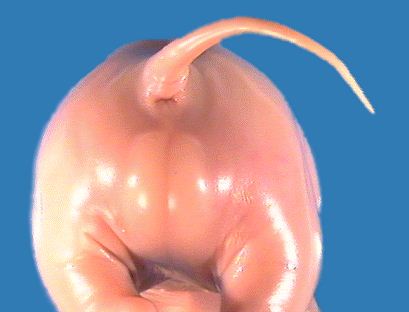
27.
Is this pig male or female?
a)
male
b)
female
c)
Cannot tell from this picture
28.
Is this fetal pig male or female?
a)
male
b)
female
c)
you can't tell by looking at the picture
d)
I just don't know
29.
This organ stores and concentrates bile.
a)
Small intestine
b)
Gall bladder 
30.
What is structure D?
a)
tongue
b)
external nares
c)
hard palate
d)
soft palate
31.

How many chambers in a pig heart?

a)

1

b)

2

c)

3

d)

4

32.

Is this pig male or female?

a)

Male

b)

Female

c)

Cannot tell from the image

33.
This organ is also known as the windpipe, promoting air flow and connecting the larynx to the lungs.
a)
Epiglottis
b)
Trachea 
34.
What opening does the epiglottis cover?
a)
nasopharynx
b)
esophagus
c)
glottis/trachea
d)
rectum
35.

Which digestive organ absorbs nutrients into the bloodstream?

a)

Stomach

b)

Small intestine

c)

Large intestine

d)

Liver

36.

Which digestive organ absorbs water from digested food?

a)

Large intestine

b)

Small intestine

c)

Stomach

d)

Liver

37.

This term is used to describe the chest of a mammal or another organism.

a)

Abdomen (abdominal cavity)

b)

Thorax (thoracic cavity)

c)

Ventral

d)

Anterior

38.

This term is used to describe the stomach region of an organism.

a)

Abdomen (abdominal cavity)

b)

Thorax (thoracic cavity)

c)

Dorsal

d)

Anterior

39.

What is the main function of the villi in the small intestine?

a)

To break down food molecules

b)

To provide oxygen to the organism

c)

To quickly absorb nutrients from food molecules

d)

To make enzymes

40.

the endocrine system produces hormones and controls

a)

growth

b)

metabolism

c)

development

d)

all answer choices are correct

41.

The body system that coordinates the body's response to changes internally and externally is

a)

The immune system

b)

The circulatory system

c)

The respiratory system

d)

The nervous system

42.

Deoxygenated blood goes through which chamber?

a)

right atrium

b)

left atrium

c)

right ventricle

d)

left ventricle

43.

The liver is responsible for making

a)

blood

b)

sperm

c)

bile

d)

insulin

44.

Which body system prevents the internal parts of the body from drying out

a)

skeletal system

b)

integumentary system

c)

circulatory system

d)

reproductive system

45.

Which body system transports nutrients, gases, wastes, and hormones

a)

respiratory system

b)

circulatory system

c)

integumentary system

d)

skeletal system

46.

How is air filtered, warmed and moistened?

a)

Through the lungs

b)

Through the diaphragm

c)

Through the nose and mouth

d)

Through the esophagus

47.

What part of the digestive system extracts water from digested food

a)

small intestine

b)

large intestine

c)

gall bladder

d)

esophagus

48.

What is the purpose of the epiglottis?

a)

to transport nutrients

b)

to keep food from entering your trachea

c)

to make new red blood cells

d)

to protect your body from infection

49.

the endocrine system uses glands to secrete

a)

bile

b)

hormones

c)

urine

d)

blood

50.

Your reflexes are mostly controlled by which two body systems

a)

nervous and muscular

b)

integumentary and endocrine

c)

respiratory and circulatory

d)

reproductive and circulatory

51.

Vertebrates use which two body systems to hop, jump ,and run?

a)

Reproductive and endocrine

b)

Muscular and skeletal

c)

Integumentary and Circulatory

d)

Respiratory and Reproductive

52.

What type of vessel carries blood away from the heart

a)

artery

b)

vein

c)

capillary

d)

none of these

53.

What type of vessel carries blood to the heart?

a)

artery

b)

vein

c)

capillary

d)

none of these

54.

Blood from the LEFT atrium flows into the....

a)

Right atrium

b)

Aorta

c)

Left ventricle

d)

Superior Vena Cava

55.

Blood from the RIGHT ventricle flows to the ...

a)

pulmonary artery and then to the lungs

b)

to the aorta and out to the body

c)

to the RIGHT atrium

56.

Which side of the heart contains DE-OXYGENATED blood?

a)

Left Side

b)

Right Side

c)

Superior

d)

Inferior

57.

Why are the artery walls thicker than vein walls?

a)

arteries hold more blood than veins

b)

arteries are more likely to get disease than veins

c)

arteries are made of different material than veins

d)

arteries have to withstand a higher blood pressure than veins

58.

Which valve prevents blood from flowing back into the left ventricle?

a)

bicuspid valve

b)

tricuspid valve

c)

pulmonary semilunar valve

d)

aortic semilunar valve

59.
What is structure C?  The main function of this organ is digestion and most absorption of nutrients occurs here.
a)
liver
b)
spleen
c)
large intestine
d)
small intestine
60.
What is structure D?  The main function of this structure is reabsorption of water.
a)
liver
b)
spleen
c)
large intestine
d)
small intestine
61.
What is C?  This structure contains the appendix.
a)
small intestines
b)
large intestines
c)
duodenum
d)
cecum
62.
What is E?  This structure performs most digestion and most nutrients are absorbed from this structure into the blood stream.  
a)
Spleen
b)
Small Intestines
c)
Large Intestines
d)
Pancreas
63.
Identify the structure at the end of the arrow.  This structure stores bile and secretes it into the digestive tract.
a)
gallbladder
b)
spleen
c)
stomach
d)
pancreas
64.
Identify the structure the white pin is in.   This structure aids in the movement of food into the digestive tract.
a)
Soft Palate
b)
Hard Palate
c)
Tongue
d)
Epiglottis
65.
Identify the structure the blue pin is in.
a)
Soft Palate
b)
Hard Palate
c)
Tongue
d)
Epiglottis
66.

Plays large role in the immune system and produces and destroys red blood cells.

a)

kidney

b)

liver

c)

gallbladder

d)

spleen

67.

The red organ is the ___

a)

stomach

b)

small intestine

c)

large intestine

d)

liver

68.
What is the last part of the large intestine called?
a)
pancreas
b)
esophagus
c)
appendix
d)
rectum
69.

What is B? It connects the kidneys to the bladder.

a)

ureter

b)

colon

c)

vas deferens

d)

spleen

70.

Identify the organ. It filters your blood removing waste and creating urine.

a)

Aortic arch (aorta)

b)

Kidney

c)

Small Intestine

d)

Spleen

71.
Identify this pig structure?     
a)
thymus gland
b)
liver
c)
lung
d)
diaphragm
72.

What is structure A? This structure produces bile and detoxifies the blood. It is the largest internal organ in your body.

a)

liver

b)

spleen

c)

large intestine

d)

small intestine

73.
Which structure, shown in the image, separates the abdominal and thoracic cavities and is involved in breathing?
a)
lungs
b)
mediastinum
c)
diaphragm
d)
spleen
74.

A flexible cord like structure in mammals that connects the placenta to the fetus during gestation. It carries nutrients to the fetus and wastes to the mother.

a)

Ureters

b)

Duodenum

c)

Larynx

d)

Umbilical Chord

75.
What is structure A?
a)
tongue
b)
external nares
c)
hard palate
d)
soft palate
76.
Identify the structure indicated by the arrow.  This structure assists in the breakdown of old red blood cells.
a)
gallbladder
b)
pancreas
c)
spleen
d)
stomach
77.
What is C?  This structure contains the appendix.
a)
small intestines
b)
large intestines
c)
duodenum
d)
cecum
78.
Upper division of torso, includes the rib cage, heart and lungs
a)
Thorax
b)
Abdomen
c)
Anus
d)
Dorsal
79.
Lower division of torso, includes digestive, urinary, reproductive organs
a)
Thorax
b)
Abdomen
c)
Pinna
d)
Anus
80.
Exit for solid waste from the body
a)
Umbilical Cord
b)
Anus
c)
Rectum
d)
Penis
81.
Supplies fetus with nutrients from the mother during gestation
a)
Rectum
b)
Anus
c)
Umbilical Cord
d)
Stomach
82.
Ridged areas separates the oral cavity from the nasal cavity
a)
Hard Palate
b)
Soft Palate
c)
Tongue
d)
Snout
83.
Muscular area that aids in swallowing
a)
Hard Palate
b)
Soft Palate
c)
Nares
d)
Esophagus
84.
Common passageway for air and food
a)
Soft Palate
b)
Pharynx
c)
Esophagus
d)
Nasopharynx
85.
Transports air inhaled through the nares to the trachea
a)
Pharynx
b)
Nasopharynx
c)
Esophagus
d)
Nares
86.
Tube that transports food from the mouth to the stomach
a)
Esophagus
b)
Pharynx
c)
Nasopharynx
d)
Epiglottis
87.
Flap that covers glottis while swallowing
a)
Epiglottis
b)
Glottis
c)
Esophagus
d)
Pharynx
88.
Sac that stores/mechanically and chemically digests food
a)
Small Intestines
b)
Large Intestines
c)
Stomach
d)
Crop
89.
Sac at junction of small & large intestine; digests plant material
a)
Ileum
b)
Caecum
c)
Mesentery
d)
Pancreas
90.
Pumps blood throughout the body
a)
Lungs
b)
Liver
c)
Heart
d)
Spleen
91.
Structure responsible for gas exchange
a)
Liver
b)
Lung
c)
Trachea
d)
Kidney
92.
Muscle that contracts and relaxes to cause inhalation/exhalation
a)
Lung
b)
Diaphragm
c)
Trachea
d)
Mesentery
93.
Voice box, contains vocal cords used in making sound
a)
Trachea
b)
Larynx
c)
Pharyns
d)
Nasopharynx
94.
Tube that carries liquid waste from kidneys to the bladder
a)
Bladder
b)
Ureters
c)
Aviducts
d)
Ovaries
95.
Stores liquid waste until it is ready to be released from the body
a)
Kidney
b)
Bladder
c)
Stomach
d)
Rectum
96.
Make sperm
a)
Ovaries
b)
Ureters
c)
Testes
d)
Oviducts
97.
Makes eggs
a)
Testes
b)
Ovaries
c)
Oviducts
d)
Ureters
98.
Houses and protects fertilized eggs during gestation 
a)
Ovaries
b)
Testes
c)
Uterus Body
d)
Vagina
99.
Identify this pig structure?     
a)
phayrnx
b)
larynx
c)
epiglottis
d)
trachea
100.

The probe is touching the

a)

larynx

b)

thyroid

c)

thymus

d)

trachea

101.

The probe is touching the

a)

thymus

b)

thyroid

c)

larynx

d)

trachea

102.

Name the structure indicated by "D".

a)

lungs

b)

thymus

c)

diaphragm

d)

Cardiac Sphincter

103.
3 is pointing to
a)
kidney
b)
ovary
c)
urinary bladder
d)
gall bladder
104.
Which structure is B?
a)
vas deferens
b)
testicle
c)
epididymis
d)
urethra
105.
Which structure is C?
a)
vas deferens
b)
testicle
c)
epididymis
d)
urethra
106.
What is structure A?
a)
ovary
b)
fallopian tube
c)
urethra
d)
urinary bladder
107.

What is structure B?

a)

ovary

b)

fallopian tube (horns of uterus)

c)

urethra

d)

urinary bladder

108.
What is structure C?
a)
ovary
b)
fallopian tube
c)
urethra
d)
urinary bladder
109.
A
a)
Right Atrium
b)
Right Ventricle
c)
Left Ventricle
d)
Left Atrium 
110.
G
a)
Right Atrium
b)
Right Ventricle
c)
Left Ventricle
d)
Left Atrium 
111.
E
a)
Vagina
b)
Urethra
c)
Bladder
d)
Ovaries
112.
B
a)
Right Atrium
b)
Right Ventricle
c)
Left Ventricle
d)
Left Atrium 
113.
What are the only arteries that carry deoxygenated blood
a)
coronary arteries
b)
vena cava
c)
aortic arteries
d)
pulmonary arteries
114.
The circulation loop that includes the lungs is the ____ loop
a)
cardiac
b)
systemic
c)
coronary
d)
pulmonary
115.
small arteries
a)
venules
b)
arterioles
c)
capillaries
d)
pulmonaries
116.

Name the structure labeled X.

a)

Kidney

b)

Urethra

c)

Small intestine

d)

Cecum