wayground logo

Free Printable Worksheets

Font size

S
M
L
XL
Worksheets

2019 Aquatics Final Review

Total questions: 112

Worksheet time: 56mins

Name
Class
Date
1.

This is the worlds most aggressive fish.

a)

Piranah

b)

African tiger fish

2.

The biggest anglerfish in this picture is a________.

a)

male

b)

female

3.

Fish use__________ to breathe.

a)

lungs

b)

gills

c)

fins

4.

Fish use _________ to move with.

a)

fins

b)

gills

5.

Fish are the only vertebrates with no ___________.

a)

eyes

b)

lungs

c)

limbs ending in digits.

6.

There are a few species of fish that can be found in ______________.

a)

volcanoes

b)

deserts and cave waterfalls.

7.

The largest species of fish is the ______________.

a)

great white shark.

b)

blue fin tuna.

c)

whale shark.

8.

This parasitic fish is the _________________.

a)

hagfish.

b)

candiru catfish.

c)

lamprey.

9.

What are the 2 uses of bird feathers?

a)

flight and warmth

b)

fighting and warmth

10.

What physical feature helps determine the diet of the bird?

a)

feet

b)

beak

11.

Why do birds eat more than reptiles or amphibians

a)

Birds have a higher metabolism

b)

Reptiles are lazy

12.

What single characteristic is specific to only Aves?

a)

claws

b)

feathers

13.

Which class of chordates produces a hard calcium shell to house their embryos?

a)

Amphibians

b)

Aves

14.

A birds nearly hollow bones help it to

a)

defend against predators

b)

to be light enough for flying

15.

Which class has organisms are endotherms?

a)

Amphibians

b)

Reptiles

c)

Aves

16.

feathers that give a bird its color and a smooth surface for flying

a)

contour

b)

down

17.

provides insulation for a bird

a)

down

b)

flight feathers

18.

What bird is this?

a)

Brown pelican

b)

kiwii

19.

Which of the following is a characteristic that all mammals share?

a)

they all have a pouch

b)

they give their young milk

20.

Which of the following is a structure that mammals share that enables them to feed their young?

a)

diphyodont

b)

mammary glands

21.

The largest mammalian order is

a)

Chiroptera

b)

Rodents

22.

This lion skull shows the order Carnivora unique teeth :

a)

carnassial

b)

canines

23.

Is this salt water crocodile in the order Carnivora?

a)

Yes

b)

No

24.

The piranha is a member of the Carnivora order.

a)

True

b)

False

25.

This killer whale is in the order Carnivora.

a)

True

b)

False

26.
What is the gas filled sac the controls buoyancy 
a)
bladder 
b)
swim bladder
c)
urinary bladder
d)
mesentry 
27.
is a flexible lightweight material made of cells surrounded by tough fibers of protein 
a)
bone
b)
muscle
c)
cartilage
d)
Intestine
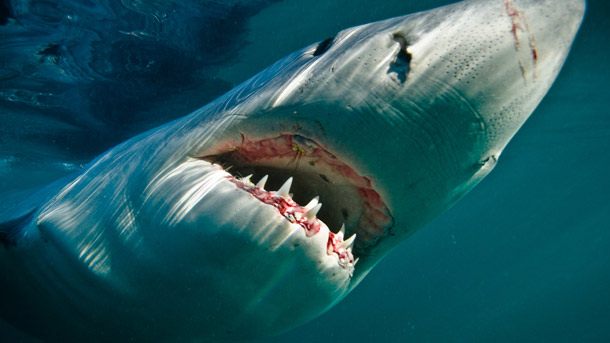
28.
What fin is showing on this shark?
a)
dorsal
b)
pectoral
c)
caudal
29.
The flap of tissue covering a fish's gills:
a)
Operculum
b)
Caudal fin
c)
Dorsal fin
d)
Lateral line
30.
What are the electroreceptors in the head of sharks, skates, and rays capable of detecting week electrical signals produced by muscular activity in other creatures?
a)
Operculum
b)
Chondrichthyes
c)
Echolocation
d)
Ampullae of Lorenzini
31.

Amphibians live in water in the _________ part of their life stage.

a)

herpetology

b)

pupae

c)

larva

d)

amniotic

32.

___________ means both land and water.

a)

Icthyology

b)

Amphibious

c)

Larval

d)

Permeable

33.

This term means amphibians are measurement of their ecosystems health :__________________________.

a)

ectothermic

b)

permeable

c)

fossorial

d)

indicator species.

34.

The 'canary in a coal mine' saying reflects amphibians

a)

a) ability to live in caves.

b)

b) acting as an early warning system in a ecosystem.

c)

c) being first animals dying or sickening in a ecosystem endangered by toxins or pollution thus giving a cue to the danger.

d)

both 'b' and 'c'

35.

This is the worlds smallest turtle species!

a)

Spotted padloper tortosie

b)

Leatherback

c)

Galapagos tortosie

36.

This is the longest snake species at 32 feet.

a)

Burmese python

b)

Rock python

c)

Reticulated python

d)

female green anaconda

37.

This is the heaviest snake species, can weigh up to 850 lbs!

a)

yellow anaconda

b)

reticulated python

c)

green anaconda, female

d)

boomslang

38.

Turtles were around at the same time as dinosaurs.

a)

True

b)

False

39.

This 5th type of reptile has only 2 species, found only in New Zealand and has a light sensing "third eye' on top of its head.

a)

green iguana

b)

tuatara

c)

tegu

d)

alligator lizard

40.
?
a)
Stella sea lion
b)
elephant seal
c)
leopard seal
d)
CA sea lion
41.
?
a)
sea lion
b)
spotted seal
c)
harp seal
d)
leopard seal
42.
?
a)
sea otter
b)
river otter
c)
clawless otter
d)
giant otter
43.

What seal is this?

a)

sea lion

b)

leopard seal

c)

bAIKAL

44.
ALL mollusks are what symmetry?
a)
Radial
b)
None 
c)
Bilateral
d)

asymetrical

45.
What are gastropods?
a)
clams, squids, mussels
b)
sea lilies, sea stars, sea urchins
c)
snails, sea shells, nudibranchs
d)
centipeds, milipedes
46.
What type of skeleton do Gastropods have?
a)
Exoskeleton
b)
Bilateral
c)
Endoskeleton
d)
No skelton
47.
Cephalopods live where?
a)
Sand
b)
Salt water
c)
Fresh water
d)
Salt and fresh water
48.
What does the word cephalopod mean?
a)
spiny skin
b)
soft body
c)
head-foot
d)
jointed legs
49.
What does the word echinoderm mean?
a)
spiny skin
b)
many legged
c)
soft body
d)
head-foot
50.
Where do Arthropods live?
a)
Everywhere on Earth
b)
Ocean
c)
Grass
d)
Lake 
51.
Arthropods have what kind of skeleton?
a)
exoskeleton ( molt in order to grow)
b)
Hydrostatic
c)
Endoskeleton
d)
Soft tissue
52.
Crustaceans live where?
a)

Fresh water, salt water and even in wet ground areas

b)

marine only

c)
Grass
d)
Fresh water only
53.
Crustacean species include:
a)
crabs, lobsters, crawfish, barnacles, roly polies
b)
spiders, ticks, mites, scorpions
c)
slugs, snails, sea shells, squid, octopus
d)
sea stars, sea urchins
54.
Echinoderms live where?
a)

marine environments

b)
fresh water
c)
everywhere
d)
under decaying logs and mosit ground
55.
Symmerty of echinoderms?
a)
radial
b)
bilateral
c)
asymmetrical
d)
none
56.
The most intelligent of all invertebrates?
a)
sea stars
b)
ants
c)
octopus
d)
fish
57.
A very deadly species of sea shell:
a)
cone snails
b)
queen conch
c)
flamingo tongued snail 
d)
cuttlefish
58.
Deadliest octopus:
a)
giant octopus
b)
blue ringed octopus
c)
2 spotted octopus
d)
brown octopus
59.
Only land species of crustacean:
a)
rolly-polly ( pill bug)
b)
edible snail
c)
emperor scorpion 
d)
horse fly
60.

How an organism's body is arranged is known as...

a)

symmetry

b)

geometry

c)

shadows

d)

trigonometry

61.

when an organisms body is arranged in a circle

a)

asymmetrical

b)

bilateral

c)

radial

d)

ludacrisacal

62.

how do sponges get their food?

a)

use sharp teeth and claws

b)

filter feed through pores

c)

photosynthesis

d)

use stealthiness and extreme speed

63.

Where would you find a sessile organism?

a)

Swimming through the sea

b)

Drifting on ocean currents

c)

Anchored to a rock

d)

Walking across the seafloor

64.

The Latin name "cnidaria" refers to what feature?

a)

Tentacles

b)

Stinging cells

c)

Lack of mobility

d)

Radial symmetry

65.

What is the name of the algae that inhabit the coral?

a)

green algae

b)

euglenoids

c)

zooxanthellae

66.
Microscopic zooanthellae are photosynthetic algae that
a)
live in coral tissue and make food
b)
prey on cnidarians
c)
live in the stomachs of jellyfish and help them digest
d)
help cnidarians camoflague themselves
67.
What form is this organism? (Image 1)
a)
Polyp
b)
Medusa
68.
What kingdom do jellyfish belong to?
a)
Cnidaria
b)
Animalia 
c)
Scyphozoa
d)
Porifera
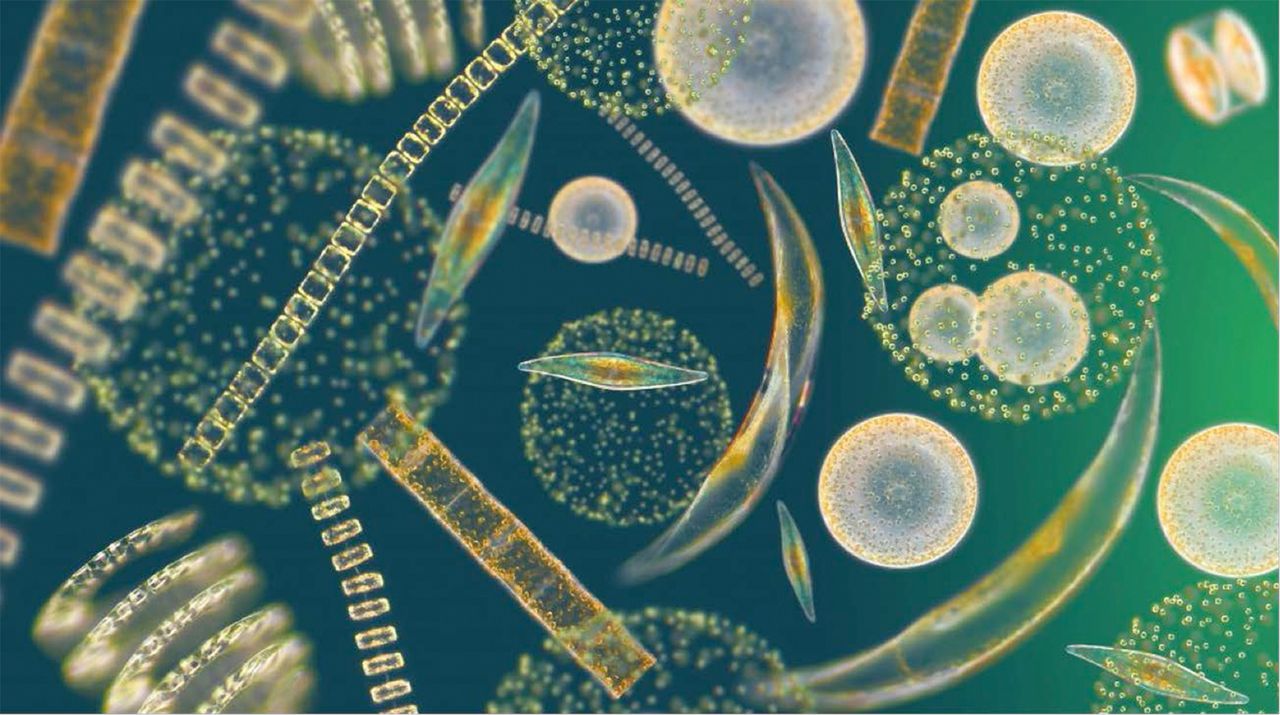
69.

This silica (glass) bodied plankton is a

a)

amoeba

b)

flatworm

c)

diatom

d)

nekton

70.
Plankton that uses photosynthesis:
a)
Phytoplankton
b)
Zooplankton
71.
The larvae of crabs and krill belong to which group of plankton?
a)
Phytoplankton
b)
Meroplankton
c)
Holoplankton
d)
None of the above
72.
Identify this seaweed. (image b)
a)
Sea Grass
b)
Sea Lettuce
c)
Irish Moss
d)
Sargassum
73.
Which term refers to the entire body of the seaweed?
a)
blade
b)
thallus
c)
pneumatocyst
d)
stipe
74.
What is the leaf-like flattened portion of the seaweed?
a)
holdfast
b)
thallus
c)
blade
d)
stipe
75.
Which part of the seaweed acts as a root-like structure that attaches the seaweed to a hard surface?
a)
stipe
b)
holdfast
c)
blade
d)
thallus
76.
The immature stage of an organism
a)
Larva
b)
Nekton
c)
Benthic
d)
Sessile
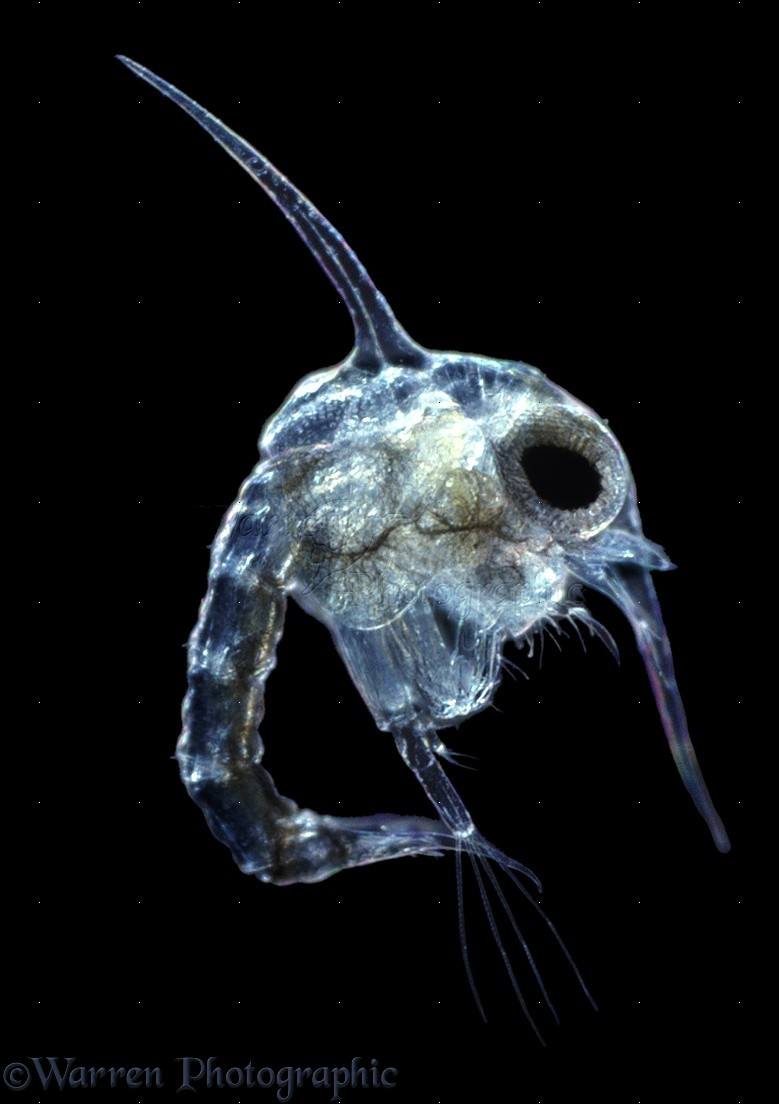
77.
This is a larva of
a)
a lobster
b)
a sea slug
c)
a starfish
d)
a sea urchin
78.
This is a larva of
a)
a lobster
b)
a sea slug
c)
a starfish
d)
a sea urchin
79.
Largest of the algae. The_______ grows to up to _______.
a)
bull kelp, 6'
b)
sea lettuce, 100'
c)
giant kelp, 300'
d)
Japanese kelp, 6'
80.
The copepod eats other plankton its entire life and stays plankton, thus it is termed__________.
a)
nekton
b)
holoplankton
c)
meroplankton
81.
Humans belong to the Class ____ because we are warm-blooded, have hair, and give birth to live young.
a)
Aves
b)
Mammalia
c)
Reptilia
d)
Amphibia
82.
Species is always
a)
Capitalized
b)
lower case
83.
Animals that have no backbone are called ______________.
a)
Invertebrates
b)
Vertebrates
c)
Exoskeleton
d)
Endoskeleton
84.
Which organisms belong in the same kingdom as a wolf?
a)
Mushrooms and lichens
b)
Algae and amoeba
c)
Dandelion and daisy
d)
lady bug and sea jelly
85.
A goldfish's scientific name is Carassius auratus.  What would a scientist in Germany call a goldfish?
a)
Goldfisch
b)
Carassius auratus
c)
Schnell fishy
d)
How should I know, I don't speak German
86.
What would help you determine if an organism is in kingdom Animalia?
a)
Chloroplasts
b)
Unicellular
c)
Heterotroph
d)
Prokaryote
87.
This order has carnassial teeth.
a)
Insectivora
b)
Chirpotera
c)
Carnivora
d)
Reptilia
88.
The Nile crocodile is in the order carnivora.
a)
True
b)
False
89.
Worms have what type of symmetry?
a)
Radial
b)
Bilateral
c)
Asymmetrical
90.
Which is more complex
a)
Cnidarian
b)
Sponge
c)
Worm
91.
Which part of the Mollusk body is specialized for burrowing, feeding, and movement?
a)
trochophores
b)
visceral mass
c)
mantle
d)
foot
92.
Which class of Mollusks include clams, oysters, and mussels?
a)
Gastropods
b)
Bivalves
c)
Cephalopods
93.
Which class of Mollusks include squid, cuttlefish and octopus?
a)
Gastropods
b)
Bivalves
c)
Caphalopods
94.
Which class of Mollusks includes snails, slugs, or nudibranches?
a)
Cephalapods
b)
Bivalves
c)
Gastropods
95.
Which class of Mollusks include organisms that have camera-like eyes similar to humans?
a)
Gastropods
b)
Bivalves
c)
Cephalopods
96.
Which class of Mollusks is the only class with some terrestrial species?
a)
Gastropods
b)
Bivalves
c)
Cephalopods
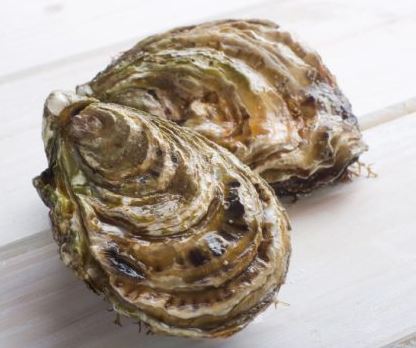
97.
Which group of Mollusks does the picture belong to?
a)
Gastropod
b)
Bivalve
c)
Cephalopod
98.
What is the meaning of Cephalopods?
a)
Stomach-foot
b)
Head-footed
c)
Two-shelled
d)
Soft-bodied
99.
Sponges are animals because they
a)
eat other things
b)
are made up of only one cell
c)
can regenerate
d)
have both male and female parts
100.
What are the organelles inside the stinging cells that inject paralyzing toxins into their prey?
a)
pinacocytes
b)
cnidocil
c)
choanocytes
d)
nematocysts
101.
Octopuses, squid, and cuttlefish can change colors to match their environment. 
a)
True
b)
False
102.
What is the meaning of Gastropod?
a)
Soft-bodied
b)
Stomach foot
c)
Head-footed
d)
Two-shelled
103.
What is the meaning of Bivalve?
a)
Two-shelled
b)
Head-footed
c)
Soft-bodied
d)
Stomach footed
104.

This is a

a)

flamingo tongue cone snail

b)

abalone

c)

clam

105.

This is a

a)

blue dragon nudibranch

b)

man o war

c)

blue sponge

106.

?

a)

leopard cone snail

b)

spotted whelk

c)

flamingo tongue cone snail

107.
What two characteristics do all Arthropods have?
a)
two legs per body segment
b)
jointed legs and a cephalothorax
c)
three body segments and metamorphosis
d)
jointed legs and segmented bodies
108.
Lobster, shrimp, and crabs are examples of what group of Arthropods?
a)
Chilopoda
b)
Diplopoda
c)
Crustaceans
d)
Arachnida
109.
?
a)
Myriapoda
b)
Insecta
c)
Arachnida
d)
Crustacea
110.
The removing and replacing of old exoskeleton is called
a)
metamorphosis
b)
replacement
c)
molting
d)
exoing
111.

What has 388,000 species?

a)

Beetles

b)

mammals

112.

The exoskeleton of coral, bi valves, and most other hard shelled invertebrates are made of what?

a)

Calcium C

b)

Calcium Carbonate CaCO3

c)

Chitin

d)

Carbon Ca