Wayground logo

Free Printable Worksheets

Font size

S
M
L
XL
Worksheets

Spring Final Exam - Practice Test

Total questions: 80

Worksheet time: 55mins

Name
Class
Date
1.
This organelle acts like a gatekeeper, allowing some materials to pass through it, but not others. 
a)
Cytoplasm
b)
Cell Membrane
c)
Mitochondria
d)
Vacuole
2.
What structure is in plant cells but not animal cells?
a)
Cell Membrane
b)
Mitochondria
c)
Cell Wall
d)
Vacuole
3.
This organelle is a gel-like fluid that takes up most of the space inside the cell. 
a)
Cytoplasm
b)
Cell Membrane
c)
Vacuole
d)
Golgi Body
4.
Where is the genetic material found in the cell? 
a)
Nucleolus
b)
Cytoplasm
c)
Nucleus
d)
Chloroplast
5.
What distinguishes a eukaryotic cell from a prokaryotic cell is the presence of 
a)
A cell wall
b)
A nucleus
c)
DNA
d)
Ribosomes
6.
Which one of the following is not part of the cell theory?
a)
all living things are made of cells
b)
cells are the basic units of structure and function of living things
c)
new cells are produced from existing cells
d)
cells never die
7.
What structure is responsible for making proteins?
a)
Nucleus
b)
Mitochondria
c)
Golgi Apparatus
d)
Ribosome
8.
This organelle moves materials throughout the cell. 
a)
Endoplasmic Reticulum
b)
Ribosomes
c)
FedEx
d)
Golgi Complex
9.
Which organelle packages up waste to be eliminated?
a)
Golgi Complex
b)
ribosomes
c)
nucleus
d)
Endoplasmic Reticulum
10.
breaks down food to release energy
a)
nucleus
b)
lysosomes
c)
mitochondria
d)
vacuole
11.

Plants need ________ to conduct photosynthesis

a)

Oxygen

b)

Soil

c)

Carbon dioxide

d)

Sugar

12.
Which organelle in the plant cell performs photosynthesis?
a)
Chloroplast
b)
Mitochondria
c)
Nucleus
d)
Cytoplasm
13.
What are the products of photosynthesis (what is made)?
a)
Glucose and Chlorophyll
b)
Glucose and Oxygen
c)
Water and Light
d)
Carbon dioxide and Water
14.
What is the source of energy for photosynthesis?
a)
Carbohydrates (chemical energy)
b)
Light (radiant energy)
c)
Heat (thermal energy)
d)
Wind (kinetic energy)
15.
What process occurs when light energy is captured in autotrophs and converted into sugar?
a)
Photosynthesis
b)
Cellular Respiration
16.
What is the pigment in chloroplasts that performs photosynthesis?
a)
Chlorosynthesis
b)
Chlorophyll
c)
ADP
d)
Electron Transport
17.
Where does cellular respiration occur?
a)
Nucleus
b)
Mitochondria
c)
Vacuole
d)
Chloroplast
18.
What is one of the reactants of cellular respiration?
a)
energy
b)
glucose
c)
carbon dioxide
d)
water
19.
What is cellular respiration?
a)
the breakdown of glucose  to release ATP
b)
the breakdown of glucose to release NADH
c)
the breakdown of glucose to release FADH
d)
the breakdown of glucose to release carbon
20.

The release in energy from the sugar that are in plant and animal cells is called...

a)

photosynthesis

b)

transpiration

c)

cellular respiration

d)

transition

21.

What happens during prophase?

a)

Chromosomes condense

b)

Chromosomes line up in the middle of the cell

c)

Sister chromatids separate and move to opposite sides

d)

Chromosomes unwind

22.

What happens during metaphase?

a)

Chromosomes condense

b)

Chromosomes line up in the middle of the cell

c)

Sister chromatids separate and move to opposite sides

d)

Chromosomes unwind

23.

What happens during anaphase?

a)

Chromosomes condense

b)

Chromosomes line up in the middle of the cell

c)

Sister chromatids separate and move to opposite sides

d)

Chromosomes unwind

24.

What happens during anaphase?

a)

Chromosomes condense

b)

Chromosomes line up in the middle of the cell

c)

Sister chromatids separate and move to opposite sides

d)

Chromosomes unwind

25.

Which phase of mitosis is being shown?

a)

Prophase

b)

Metaphase

c)

Anaphase

d)

Telophase

e)

Cytokinesis

26.

Which phase of mitosis is being shown?

a)

Prophase

b)

Metaphase

c)

Anaphase

d)

Telophase

e)

Cytokinesis

27.
The first stage of the cell cycle during which the cell matures and prepares to divide and copies its DNA; The stage the cell stays in the most
a)
interphase
b)
prophase
c)
metaphase
d)
anaphase
28.
Put the stages of mitosis in the correct order.
a)
prophase - metaphase - anaphase - telophase
b)
metaphase - anaphase - prophase - telophase
c)
anaphase - prophase - telophase - metaphase
d)
telophase - metaphase - prophase - anaphase
29.
Which of the following describes the purpose of the mitosis cell cycle?
a)
To make more of the same cells.
b)
For growth and repair.
c)
To prevent the cell from becoming too large.
d)
All of the above.
30.

The process by which the nucleus material is divided equally between two new cells

a)

mitosis

b)

cancer

c)

spindle

d)

centromere

31.

The sequence of growth and division of a cell. Includes interphase, mitosis, and cytokinesis

a)

cell cycle

b)

mitosis

c)

anaphase

d)

cancer

32.
Which of the following best describes a DNA molecule?
a)
double helix
b)
contains ribose
c)
made of amino acids
d)
contains uracil
33.
Which sequence of complementary DNA bases would pair with this partial strand
ATG TGA CAG?
a)
ATG TGA CAG
b)
TAC ACT GTC
c)
GTA AGT GAC
d)
CAT TCA CTG
34.
What determines the code, or information, of a DNA molecule?
a)
the shape (structure) of the nitrogen bases
b)
the order (sequence) of the nitrogen bases
c)
the color of the nitrogen bases
d)
the frequency (number) of nitrogen bases
35.
Which 2 molecules form the sides (backbone) of the DNA ladder?
a)
deoxyribose sugar and adenine
b)
deoxyribose sugar and a hydrogen bond
c)
deoxyribose sugar and the nucleus
d)
deoxyribose sugar and phosphate
36.
What are the three components of a nucleotide?
a)
sugar, hydrogen, nitrogen base
b)
sugar, oxygen, nitrogen base
c)
sugar, phosphate, nitrogen base
d)
sugar, phosphate, protein
37.
What are the four nitrogen bases?
a)
adenine, thymine, guanine, cytosine
b)
adenine, lysine, prolene, guanine
c)
arganine, cytosine, lysine, purine
d)
lysine, cytosine, lucine, guanine
38.
What kind of information does DNA carry?
a)
genetic
b)
nuclear
c)
cell structure
d)
it doesn't carry any info
39.
DNA makes a copy of itself in a process called ________________________________?
a)
translation
b)
replication
c)
translation
d)
division
40.
What does DNA stand for?
a)
Deoxyribonucleic acid
b)
Denitrogenous acid
c)
Deribonucleic acid
d)
Diribonucleic acid
41.
What type of "square" helps us solve genetic problems?
a)
carpenter square
b)
Mendel square
c)
Punnett square
d)
genetic square
42.
TT,tt,PP,pp,SS,ss are examples of alleles that are?
a)
homozygous
b)
heterozygous
c)
different
d)
homologous 
43.
The exact genetic makeup of an organism, such as RR, Tt, PP is its?
a)
phenotype
b)
dominance
c)
genotype
d)
trait
44.
Y for yellow body is dominant over y for blue body.  What alleles would produce yellow bodies?
a)
YY,yy
b)
Yy,yy
c)
YY only
d)
YY,Yy
45.
If "T" is the allele for tall and "t" is the allele for short, then Tt would produce?
a)
tall
b)
short
c)
medium
d)
not enough info
46.
What is a phenotype
a)
The genetic make up (code)
b)
The physical trait
47.
having two of the same genes for the trait (sometimes called purebred).
a)
homozygous
b)
hetrozygous
c)
protein
d)
chromosome
48.
having two different genes for a trait (sometimes called hybrid).
a)
protein
b)
homozygous
c)
heterozygous
d)
genotype
49.
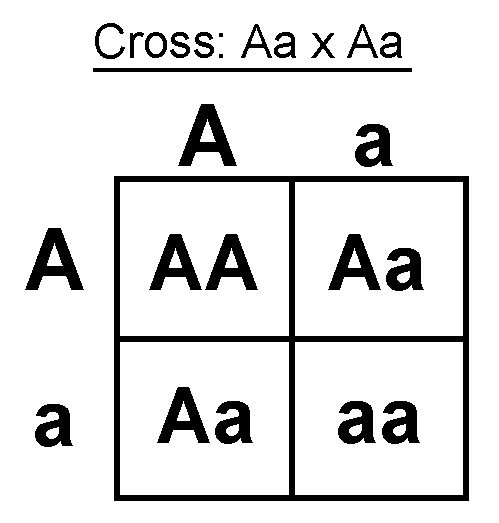
G = green, g = yellow
The genotype for a yellow plant is...
a)
GG
b)
Gg
c)
gg
d)
all of the choices result in yellow
50.
Incomplete dominance means that the traits are
a)
expressed equally
b)
dominant
c)
recessive
d)
blended
51.
An allele whose trait only shows up when no dominant allele is present.
a)
hidden allele
b)
dominant allele
c)
recessive allele
d)
present allele
52.
What is the phenotype of the offspring? (A-Brown hair; a-blond hair) 
a)
50 % Brown Hair and 50% Blond Hair 
b)
25 % Brown Hair and 75% Blond Hair 
c)
75 % Brown Hair and 25% Blond Hair 
d)
0% Brown Hair and 100% Blond Hair 
53.
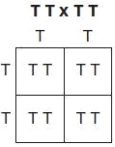
What ratio of the offspring from the cross shown will be homozygous recessive for the  trait of tallness? 
a)
0 in 4
b)
1 in 4
c)
2 in 4
d)
4 in 4
54.
In a flowering plant species, red flower color (R) is dominant over white flower color (r). What is the genotype of any red-flowering plant resulting from this species?
a)
rr
b)
R
c)
RR
d)
RR or Rr
55.
What is the probability of heterozygous offspring?
a)
25%
b)
50%
c)
0%
d)
100%
56.
What allele combination should go in the missing box?
a)
AA
b)
Aa
c)
aa
d)
none of these
57.

If a heterozygous parent and a homozygous recessive parent mate, what percentage of their offspring will be dominant?

a)

25%

b)

50%

c)

75%

d)

100%

58.
Two brown eyed parents (Bb) have a baby. What is the chance the baby is blue eyed?
a)
0 %
b)
25%
c)
50%
d)
75%
59.

Which of the following genotypes is homozygous recessive?

a)

Tt

b)

tt

c)

TT

d)

tT

60.
Which is a function of the roots?
a)
absorb sunlight
b)
start photosynthesis
c)
pull nutrients from the soil
d)
turn gray when they get old
61.
Which is a function of the stem?
a)
to be green
b)
to support the plant
c)
to absorb nutrients from the soil
d)
to talk about science, technology, engineering, and math
62.
Which is a function of the leaves?
a)
to provide shade
b)
to attract pollinators
c)
to make food through photosynthesis
d)
to absorb nutrients
63.
Which is a function of the flower?
a)
attract pollinators and produce seeds for reproduction
b)
to make food through photosynthesis
c)
to be pretty
d)
to absorb nutrients from the soil
64.
What is plant germination?
a)
a place where plants get sick
b)
planting a seed
c)
When  a seed grows into a plant
d)
the way a plant makes food
65.

The _________ helps hold the plant up and carries water and nutrients to the rest of the plant from the roots.

a)

leaves

b)

roots

c)

stem

d)

seed

66.
Which conducting tissue transports and helps circulate water and dissolved minerals from the roots to the leaves of a plant? 
a)
xylem
b)
phloem 
67.
Which part of the flower contains the egg cells?
a)
Ovules
b)
Stamen
c)
Penduncle
d)
Sepal 
68.
Tell whether it is monocot or dicot.
 
a)
Monocot
b)
Dicot
69.
Tell whether it is monocot or dicot.
a)
Monocot
b)
Dicot
70.
Tell whether it is monocot or dicot.
a)
Monocot
b)
Dicot
71.
Embryonic leaf of a seed.
a)
Stomata
b)
Xylem
c)
Cotyledon
d)
Sepal
72.
The male reproductive part of the flower.
a)
Stamen
b)
Pistil
73.
The female reproductive part of the flower.
a)
Stamen
b)
Pistil
74.
Invertebrates are animals
a)
with a backbone
b)
without a backbone
75.
This group has feathers/
a)
fish
b)
reptile
c)
bird
d)
mammal
76.
This group feeds milk to its young.
a)
birds
b)
mammals
c)
fish
d)
reptile
77.

Dragonflies, stink bugs, and lady bugs are __________.

a)

crustaceans

b)

arthropods

c)

annelids

d)

echinoderms

78.
Arthropods have an outer covering called a(n)_________
a)
endoskeleton
b)
bones
c)
exoskeleton
d)
armor
79.
What are vertebrates?
a)
Animals with a backbone
b)
Animals without a backbone
80.
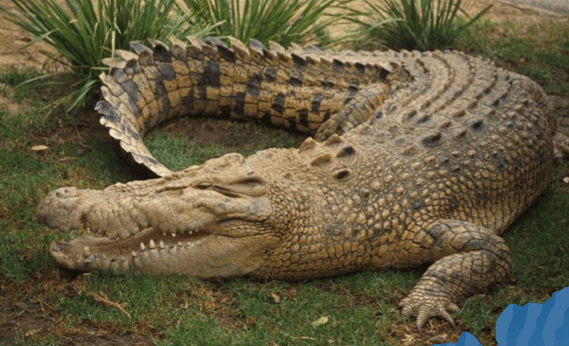
I am covered in dry scales and I lay eggs.  What am I?
a)
Mammal
b)
Fish
c)
Amphibian
d)
Reptile