wayground logo

Free Printable Worksheets

Font size

S
M
L
XL
Worksheets

2018-2019 Biology Final Review

Total questions: 154

Worksheet time: 3hrs 4mins

Name
Class
Date
1.
B=brown eyes
b= blue eyes
What is true about two brothers that have brown eyes?
One has genotype BB the other Bb.
a)
they have same phenotype and genotype
b)
they have different genotypes and phenotypes
c)
they have same phenotype but different genotypes
d)
they have same genotype but different phenotypes
2.
W=white hair
w= non-white hair
If you cross a horse with WW and a horse with ww what fraction of the offspring would be expected to have white hair?
a)
none
b)
3/4
c)
1/2
d)
all
3.
Pea plants can have green or yellow seeds. In a pea plant that is heterozygous for seed color, the allele for yellow seeds masks the effects of the allele of green seeds. Which of the following terms best describes the allele for yellow seeds?
a)
codominant
b)
recessive
c)
dominant
d)
sex-linked
4.
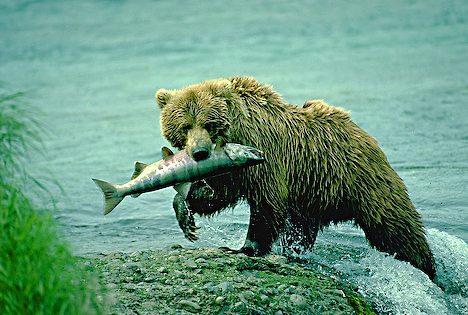
In mussels, the allele for brown coloring (B) is dominant, and the allele for blue coloring(b) is recessive. For which parental genotypes are 100% of the offspring expected to be blue?
a)
BbxBb
b)
bbxbb
c)
BBxbb
d)
BBxBB
5.
In guinea pigs, the alleles for black hair(B) is dominant to the allele for brown hair(b). Two black-haired guinea pigs are crossed. One of the pigs is homozygous for black hair and one is heterozygous. What percentage of their offspring are expected to have black hair?
a)
25%
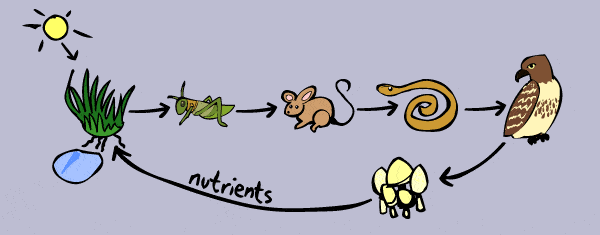
b)
50%
c)
75%
d)
100%
6.
The genotype of an organism describes the
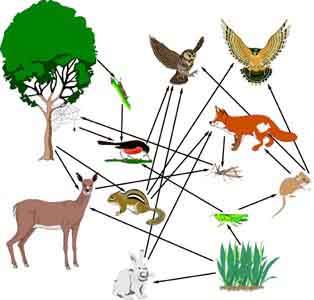
a)
codons that make up the genes
b)
number of gene's on the chromosmes
c)
genetic make-up of a trait
d)
type of chromosomes in the nucleus
7.
Two heterozygous (Tt)tall pea plants are crossed. Which describes their offspring?
a)
50% tall and 50% short
b)
75%tall and 25% short
c)
100%short
8.

A segment of DNA that codes for a trait

a)

gene

b)

allele

c)

chromosome

d)

chromatid

9.

A version or variation of a gene

a)

trait

b)

gene

c)

allele

d)

DNA

10.

The alleles that an organism has

a)

genotype

b)

phenotype

c)

chromosome

d)

recessive

11.

The observable expression of a trait

a)

phenotype

b)

genotype

c)

chromosome

d)

allele

12.
What does the prefix hetero- in heterozygous mean?
a)
same
b)
different
c)
dating
d)
human
13.
Which of the following is homozygous dominant?
a)
Jj
b)
Rr
c)
MM
d)
ee
14.
What does the prefix hetero- in heterozygous mean?
a)
same
b)
different
c)
dating
d)
human
15.
The physical appearance of a trait is known as the-
a)
genotype
b)
phenotype
c)
characteristics
d)
intelligence
16.
Both parents in this Punnet square
a)
are homozygous dominant
b)
are homozygous recessive
c)
are heterozygous
d)
have blue eyes
17.
What is the genotypic ratio here
a)
TT = 25% Tt= 50% tt=25%
b)
all tall
c)
TT= 75% tt = 25%
d)
Tt = 100%
18.
A Punnet Square will 
a)
tell you exactly what your offspring will look like
b)
increase the chance you pass on recessive traits
c)
predict genotypes and phenotypes in offspring
d)
have no purpose but for Taylor to give us extra assignments
19.
What type of inheritance do two alleles have if their traits blend together? 
a)
Incomplete Dominance
b)
Co-Dominance
20.
A calico cat shows both the traits for orange fur and black fur. What kind of allele expression is this?
a)
Incomplete Dominance
b)
Co dominance
21.
This type of inheritance pattern is a MIXTURE of both traits.
a)
incomplete dominance
b)
co-dominance
c)
complete dominance
22.
Which type of inheritance causes both traits to be expressed equally in the heterozygote?
a)
Complete Dominance
b)
Incomplete Dominance
c)
Co-Dominance
d)
Sex-linked
23.
The haploid number of human chromosomes is
a)
11
b)
12
c)
23
d)
46
24.
The diploid number of human chromosomes is
a)
23
b)
46
c)
92
25.
Human eggs and sperm are _____, and each has ____ chromosomes.
a)
diploid, 23
b)
diploid, 46
c)
haploid, 23
d)
haploid, 46
26.

The 2 female sex chromosomes are ___.

a)

XY

b)

XX

27.

The 2 male sex chromsomes are _____.

a)

XY

b)

XX

28.
What is the mode of inheritance shown here?
a)
Autosomal Dominant
b)
Autosomal Recessive
c)
Sex Linked Recessive
29.
What is the mode of inheritance shown here?
a)
Autosomal Recessive
b)
Autosomal Dominant
c)
Sex Linked
30.
Identify the stage of mitosis.
a)
interphase
b)
prophase
c)
metaphase
d)
anaphase
31.
Identify the stage of mitosis.
a)
interphase
b)
prophase
c)
anaphase
d)
cytokinesis
32.
Identify the stage of mitosis. 
a)
interphase
b)
prophase
c)
anaphase
d)
cytokinesis
33.
Identify the stage.
a)
interphase
b)
metaphase
c)
anaphase
d)
telophase
34.

Which statement reflects a way in which asexual reproduction is beneficial? Select all that apply.

a)

It results in genetic variation.

b)

It requires a lot of time and energy.

c)

Organisms can reproduce without a mate.

d)

It is a much quicker process.

35.
What is an advantage of sexual reproduction?
a)
Allows genetic variation
b)
Only needs one parent
c)
Happens very quickly
d)
Offspring are exact copies of parent
36.
Unlike mitosis, meiosis in male mammals results in the formation of
a)
one haploid gamete
b)
three diploid gametes
c)
four diploid gametes
d)
four haploid gametes
37.
What causes genetic variation in meiosis?
a)
chromosomes lining up
b)
crossing over of chromosomes
c)
separation of chromosomes
d)
chromosomes pulling apart
38.
A mode of reproduction in which an organism arises from two organisms and inherits half of its DNA from each parent
a)
Sexual Reproduction
b)
Asexual Reproduction
c)
Cloning
d)
Fragmentation
39.
A mode of reproduction by which an organism arises from a single organism and inherit the identical genes of that parent
a)
Asexual Reproduction
b)
Sexual Reproduction
c)
Genetic Variation
d)
Alleles
40.
The first cell that results from fertilization (fertilized egg)
a)
Zygote
b)
Gamete
c)
Germ Cell
d)
Haploid Cell
41.

What type of evidence is represented in the picture above:

a)

Fossils

b)

Vestigial Structures

c)

DNA

d)

Homologous Structures

42.

What type of evidence is shown in the image above?

a)

Fossils

b)

Vestigial structures

c)

Homologous Structures

d)

DNA

43.

What type of evidence is shown in this picture?

a)

Fossils

b)

Homologous Structures

c)

Vestigial Structures

d)

DNA

44.

What type of evidence are shown in the picture above?

a)

Fossils

b)

Embryology

c)

Homologous Structures

d)

Vestigial Structures

45.
The similarities of the bones in the diagram provide evidence that---
a)
The organisms shown lived in the same natural envionrment
b)
The organisms shown may have developed from a common ancestor
c)
The organisms shown have the same genetic diseases
d)
All vertebrate species have identical forelimbs
46.

The process by which two populations of the same species become so different that they can no longer interbreed.

a)

natural selection

b)

artificial selection

c)

speciation

d)

fossilization

47.

The study of where organisms live and how they got there is called ___________________________.

a)

ecology

b)

biogeography

c)

entomology

d)

chemistry

48.
Genetic variation can arise from a random change in the DNA of a gene.  The change is called a(n)
a)
mutation
b)
gene flow
c)
gene pool
d)
allele
49.
what gave Charles Darwin the idea of evolution?
a)
google
b)
wikipedia
c)
mans attempt to destroy mankind
d)
finches in the Galapagos island
50.

A grizzly bear survives because he is well-adapted to his environment. When he reproduces he passes on those traits to his offspring. this process is called

a)

Natural Selection

b)

Selective Breeding

c)

Random mutations

d)

Variations in a species

51.
To adjust to a changing environment
a)
Mutation
b)
Adapt
52.
Genetic differences between organisms of the same species
a)
Variation
b)
Adaptation
c)
Behavior
d)
Environment
53.

Are plants and animal carcasses always fossilized?

a)

Yes

b)

No

54.
According to the law of superposition, which layer is the youngest?
a)
A
b)
B
c)
C
55.
Which layer formed first?
a)
Rock Layer W
b)
Rock Layer X
c)
Rock Layer Y
d)
Rock Layer Z
56.
What is a species? 
a)
A group of organisms that can mate with each other and produce fertile offspring. 
b)
A group of organisms that can mate and produce offspring even if those offspring are infertile.
c)
A group of organisms that genetically are very different from each other. 
d)
Indivual organisms that live in the same environment. 
57.

The emergence of new rivers or streams is a type of ____________ isolation.

a)

Temporal

b)

Mechanical

c)

Behavioral

d)

Geographic

58.

There are two main ways that speciation happens naturally. Both processes create new species by reproductively isolating populations of the same species from each other. What are these two types of isolation?

a)

geographical and behavioral

b)

geographical and complex

c)

behavioral and complex

d)

locational and geographical

59.
The Aztecs and Maya Tribes of Mexico where some of the first humans to slowly change wild corn to the corn we know today. What process did these tribes use?
a)
Natural Selection
b)
Artificial Selection "Selective Breeding"
c)
Mitosis
d)
Cell Membrane
60.
A German Shepard would probably not survive in the wild because...
a)
the dog is mixed.
b)
the dog is a product of artificial selection and not adapted for the wild.
c)
the dog is dumb.
d)
the dog is a product of natural selection and can survive in the wild.
61.

According to most scientists, what is the ultimate cause of most mass extinctions?

a)

overhunting

b)

evolution of new species to replace old ones

c)

major change in environment

d)

asteroid impact

62.
Scientist think the Earth is ___ years old.
a)
4,500
b)
45,000
c)
4.5 million
d)
4.5 billion
63.
The snake is a predator to what prey in this food chain?
a)
frog
b)
grass
c)
grasshopper
d)
hawk
64.
Which of the following is NOT needed for a producer to make its own food?
a)
sunlight
b)
water
c)
carbon dioxide
d)
oxygen
65.
An apple tree is a
a)
producer
b)
consumer
c)
decomposer
66.
A hawk is an example of a
a)
consumer
b)
producer
c)
decomposer
67.
A mushroom is a 
a)
producer
b)
consumer
c)
decomposer
68.
A carrot is an example of a 
a)
producer
b)
consumer
c)
decomposer
69.
A dragonfly is a 
a)
producer
b)
consumer 
c)
decomposer
70.
The process of using sunlight, carbon dioxide, and water to make sugar and oxygen is called _________?
a)
chlorophyll
b)
evaporation
c)
photosynthesis
d)
transportation
71.
Which of the following would have the greatest impact on the food web if it were removed?
a)
rabbit
b)
oak tree
c)
chipmunk
d)
deer
72.
Which terms best describe heterotrophs?
a)
Plants; producers
b)
Animals; producers
c)
Plants; consumers
d)
Animals; consumers
73.
Which terms best describe autotrophs?
a)
Plants; producers
b)
Animals; producers
c)
Plants; consumers
d)
Animals; consumers
74.
From where do autotrophs obtain their energy?
a)
The sun
b)
Other organisms
75.
What is another name to describe an autotroph?
a)
Consumer
b)
Producer
76.
Which type of organisms are typically plants?
a)
Autotrophs
b)
Heterotrophs
77.
Organisms that cannot make their own food and must obtain energy from external sources are called
a)
autotrophs
b)
heterotrophs
c)
thylakoids
d)
plants
78.
What does a food chain represent?
a)
How all living organisms within a habitat are connected.
b)
All of the things that a particular animal eats.
c)
How plants create their own food.
d)
A single path of energy transfer within a habitat.
79.
What does a food web represent?
a)
All connections of energy flow throughout all organisms in a habitat.
b)
The specific ways that mutualism is carried out.
c)
A single pathway or energy flow between organisms. 
d)
How carnivores get their food. 
80.
What process occurs when light energy is captured in autotrophs and converted into sugar?
a)
Photosynthesis
b)
Cellular Respiration
81.
What is the ultimate ORIGINAL source of energy for living things
a)
Sugar
b)
Sun
c)
Moon
d)
Carbon Dioxide
82.
What are the products of photosynthesis?
a)
water and carbon dioxide
b)
oxygen and glucose
c)
oxygen and carbon dioxide
d)
oxygen and water
83.
Plants need ________ for photosynthesis
a)
oxygen
b)
soil
c)
carbon dioxide
d)
sugar
84.
What is photosynthesis?
a)
The process in which humans eat their food
b)
When a photographer takes a photo.
c)
To get your pictures from the photo lab.
d)
The process in which plants make their food.
85.
Leaves look green because.....
a)
they eat their vegetables
b)
to blend into their environment
c)
they contain a molecule named chlorophyll
d)
they are sick
86.
Which organelle from the plant cell is primarily responsible for converting sunlight to energy?
a)
Mitochonria
b)
Nucleus
c)
Vacuole
d)
Chloroplast
87.
What process is the diagram representing?
a)
Photosynthesis
b)
Soil development
c)
Plant reproduction
d)
Nitrogen Cycle
Nitrogen cycle
88.
What is the chemical equation for cellular respiration?
a)
Glucose + Oxygen -> Carbon dioxide + Water + Energy
b)
Oxygen + Carbon dioxide + Energy  -> Glucose + Water
c)
Carbon dioxide + Glucose -> Oxygen + Water + Energy
d)
Water + Carbon dioxide + Energy -> Oxygen + Glucose
89.
What is the equation for photosynthesis
a)
Water + Carbon dioxide + Energy -> Oxygen + Glucose
b)
Carbon dioxide + Glucose -> Oxygen + Water + Energy
c)
Oxygen + Carbon dioxide + Energy  -> Glucose + Water
d)
Glucose + Oxygen -> Carbon dioxide + Water + Energy
90.
What type of respiration requires oxygen?
a)
Aerobic
b)
Anaerobic
91.
What type of respiration does not require oxygen?
a)
Aerobic
b)
Anaerobic
92.
Temperature, light, air, water, and soil are all  _____  parts of the environment
a)
alive
b)
biotic 
c)
abiotic
d)
living
93.
Is a deer an abiotic or biotic factor? 
a)
abiotic
b)
biotic
94.
Is a fern an abiotic or biotic factor? 
a)
abiotic
b)
biotic
95.
Many science words can be easily broken down to find their true meaning.  Look at the PREFIX below and match it to its meaning.
BIO
a)
Home
b)
Life
c)
Not
d)
Without
96.

Biotic can be defined as

a)

the living parts of an environment

b)

non-living parts of an environment

c)

rocks and water

d)

snakes and water

97.

Is this picture abiotic or biotic?

a)

Abiotic

b)

Biotic

98.

The ecological role an organism performs in their specific environment is considered the organism's...

a)

Habitat

b)

Population

c)

Biome

d)

Niche

99.
Barnacles create home sites by attaching themselves to whales.  The whale is unaffected.  
a)
commensalism
b)
mutualism
c)
predation
d)
laziness
100.
Which of the following shows the symbiotic relationship between the Rodent and the Bird?  
a)
Mutualism
b)
Predation
c)
Competition
d)
Commensalism
101.
Remoras attach themselves to a shark's body. They then travel with the shak and feed on the left over scraps from the shark's meals.
a)
commensalism
b)
mutualism
c)
predation
d)
competition
102.
A cuckoo may lay its eggs in a warbler's nest.  The cuckoo's young will displace (or move) the warbler's young and will be raised by the warbler.  
a)
Parasitism
b)
Commensalism
c)
Predation
d)
Competition
103.
Hermit Crabs live in shells made and then abandoned by snails.  
a)
Commensalism
b)
Mutualism
c)
Competition
d)
Parasitism
104.
Mistletoe extracts water and nutrients from the spruce tree to the trees detriment.  
a)
Parasitism
b)
Mutualism
c)
Commensalism
d)
Predation
105.
The flea feeds on a mouse's blood to the mouse's detriment (or harm).  
a)
Predation
b)
Parasitism
c)
Commensalism
d)
Mutualism
106.
Oxpeckers feed on the ticks found on a Rhinoceros.  
a)
Mutualism
b)
Predation
c)
Competition
d)
Parasitism
107.
Two male elephants are fighting over a cute little elephant at the watering hole.  
a)
Commensalism
b)
Competition
c)
Predation
d)
Mutualism
108.
Two male Giraffes are fighting over the last green leaf of a tree that is dying.  
a)
Competition
b)
Mutualsim
c)
Predation
d)
Commensalism
109.
True or false: symbiosis is interaction between two different organisms living in close physical association
a)
True
b)
False
110.

An algal bloom is the rapid growth of a population of

a)

fungi

b)

protozoans

c)

algae

111.

What might cause red tides?

a)

increase in nutrients in the water.

b)

increase in oxygen in the water.

c)

decrease in plant life in the water.

112.

In general, algal blooms occur when

a)

toxins accumulate in shellfish.

b)

nutrients decrease in the water.

c)

nutrients increase in the water.

113.
TRUE or FALSE?
All of the carbon in existence is continually recycled in the carbon cycle.
a)
True
b)
False
114.
If the plant population decreased, the amount of carbon would _________.
a)
Stay the same
b)
Increase
c)
Decrease
115.
carbon dioxide is a gas produced  by ________ and used by __________
a)
plants and animals 
b)
carbon and photosynthesis
c)
animals and plants 
d)
photosynthesis
116.

Which describes the relationship between plants and animals in the carbon cycle?

a)

Plants produce and release oxygen that animals need

b)

Plants produce and release carbon dioxide that animals need

c)

Animals produce and release oxygen that plants need

d)

Animals produce oxygen that plants turn into carbon dioxide

117.

Which gas do plants release, that humans depend on for survival?

a)

Water

b)

Carbon Dioxide

c)

Oxygen

d)

Sugar

118.
What is the greenhouse effect?
a)
The warming of a planet due to trapped radiation.
b)
The cooling of Earth due to air pollution.
c)
The heating of a solid, such as a rock.
119.
This is an image demonstrating...
a)
Tornado Formation
b)
The Greenhouse Effect
c)
Hurricane Formation
120.
Humans have the ability to cause temperature change.
a)
True
b)
False
121.
 Which of the following activities contributes the most to carbon emissions globally?
a)
Deforestation
b)
Agriculture
c)
Burning fossil fuels
d)
Respiration
122.
Which of the following are greenhouse gases?
a)
Carbon dioxide
b)
Methane
c)
Water vapor
d)
All answers are correct
123.
What happens to the temperature if more greenhouse gases are released into the atmosphere?
a)
Temperature goes up
b)
Temperature goes down
124.
Man made carbon dioxide comes from the burning of fossil fuels.  An example of a fossil fuel is
a)
wood
b)
oil
c)
shale
125.
The process of burning fuel to drive a car or operate a factory is called 
a)
photosynthesis
b)
combustion
c)
respiration
126.
Very slight increases in the acidity of seawater __________  marine organisms that make shells.
a)
doesn't bother
b)
has no effect on 
c)
is unhealthy and stresses
127.

The significance of the human's impact on our Planet is dependent on the scale, proportion, and quantity at which it occurs. Rapid change on a global scale is the recipe for?

a)

Lasagne

b)

Evolution

c)

Mass Extinction

d)

Homeostasis

128.
What gamete possibilities could come from this parent's genotype?
a)
AB, AB, aB, aB
b)
Ab, AB, Ab, ab
c)
Ab, Ab, Ab, Ab
d)
AB, aB, ab, aB
129.

What goes in box 3

a)

Aabb

b)

AABB

c)

AAbb

d)

aaBb

130.
What genotype is missing from this Punnett Square?
a)
RrYy
b)
RRYY
c)
rryy
d)
RrYY
131.
What proportion of the offspring in Figure 11-4 would be expected to have white, smooth hair?
a)
9/16
b)
3/16
c)
4/16
d)
1/16
132.
Polar bears have compact ears, a small tail, and thick fur to keep themselves warm. Are these examples of physical (structural) or behavioural adaptations?
a)
Physical
b)
Behavioural
133.
An example of a behavioral adaptation is
a)
The long neck of a giraffe
b)
Penguins huddling together for warmth
c)
A camel's hump used to store water
d)
A polar bear's white fur used for camouflage
134.
An example of a physical adaptation is...
a)
a turtle hiding inside its shell
b)
The spikes on a porcupine fish
c)
a rabbit burrowing underground
d)
a viper biting when threatened
135.
In the energy pyramid here, which organisms have the most energy available?
a)
Producers
b)
Carnivores
c)
Herbivores
d)
Top Predator
136.
In the energy pyramid below, which organism has the least amount of energy available?
a)
Producers
b)
Herbivores
c)
Carnivores
d)
Top Predator
137.
If there is 1000 Kcal available in the producers in trophic level 1, how much energy is available in the herbivores in trophic level 2?
a)
10 Kcal
b)
1 Kcal
c)
100 Kcal
d)
1000 Kcal
138.
Which level will contain plants?
a)
A
b)
B
c)
C
d)
D
139.

In this Food Web Pyramid, which type of consumer gets only 10% of the energy stored in plants?

a)

Primary Consumer

b)

Secondary Consumer

c)

Tertiary Consumer

d)

Quaternary Consumers

140.
Which of these energy roles is always located at the bottom of an energy pyramid?
a)
Producer
b)
1st Level Consumer
c)
2nd Level Consumer
d)
3rd Level Consumer
141.

What type of ecological pyramid is never inverted?

a)

ecological pyramid

b)

energy pyramid

c)

numbers pyramid

d)

biomass pyramid

142.

Which of the following would result in an inverted biomass pyramid?

a)

A grassland ecosystem with a small number of herbivores

b)

A lush rainforest with hundreds of herbivores

c)

A marine ecosystem with more zooplankton than phytoplankton

d)

A swamp ecosystem with hundreds of frogs

143.

What does a biomass pyramid compare?

a)

the amount of biomass at each trophic level

b)

the amount of energy available at each trophic level

c)

the amount of biomass consumed at each trophic level

d)

the amount of individuals at each trophic level

144.

Why are energy pyramids never inverted?

a)

because energy is always lost from one trophic level to the next

b)

because energy is always gained from one trophic level to the next

c)

because energy cannot be measured as it transfers from one trophic level to the next

d)

because it just never is

145.

Which RNA carries the message?

a)

mRNA

b)

rRNA

c)

tRNA

146.
How would the DNA sequence GCTATA be transcribed to mRNA?
a)
GCUAUA
b)
CGATAT
c)
CGAUAU
d)
GCUTUT
147.

Transcribe the following DNA sequence:


AAT TAG GGC TCG

a)

AAT TAG GGC TCG

b)

TTA ATC CCG AGC

c)

UUA AUC CCG AGC

d)

TTU UTC CCG UGC

148.
What is Transcription?
a)
The making of tRNA from a DNA segment.
b)
The making of an rRNA strand from a DNA segment.
c)
The making of an mRNA strand from a DNA segment.
d)
IDK. I just want the semester to be over...
149.

Where are proteins made?

a)

ER

b)

nucleus

c)

cytoplasm

d)

mitochondria

150.
What is the difference between DNA and RNA in terms of bases?
a)
RNA contains uracil in place of thymine
b)
RNA contains uracil in place of adenine
c)
RNA contains uracil in place of guanine
d)
RNA contains uracil in place of  cytosine
151.
Which RNA bases would pair with TACGAA in transcription
a)
AUGCUU
b)
ATGCTT
c)
GCATCC
d)
GCAUCC
152.
What is a Codon?
a)
4 base pairs that transfer to amino acids
b)
3 base pairs that transfer to amino acids
c)
3 base pairs that transfer to DNA
d)
3 base pairs that transfer to mRNA
153.
Which amino acid is made from the RNA codon UUA?
a)
Phenylalanine
b)
Leucine
c)
Serine
d)
Tyrosine
154.
Which amino acid is made from the RNA codon GUA?
a)
Phenylalanine
b)
Leucine
c)
Serine
d)
Valine