Wayground logo

Free Printable Worksheets

Font size

S
M
L
XL
Worksheets

Cells & Heredity Final

Total questions: 114

Worksheet time: 3hrs 31mins
Name
Class
Date
1.
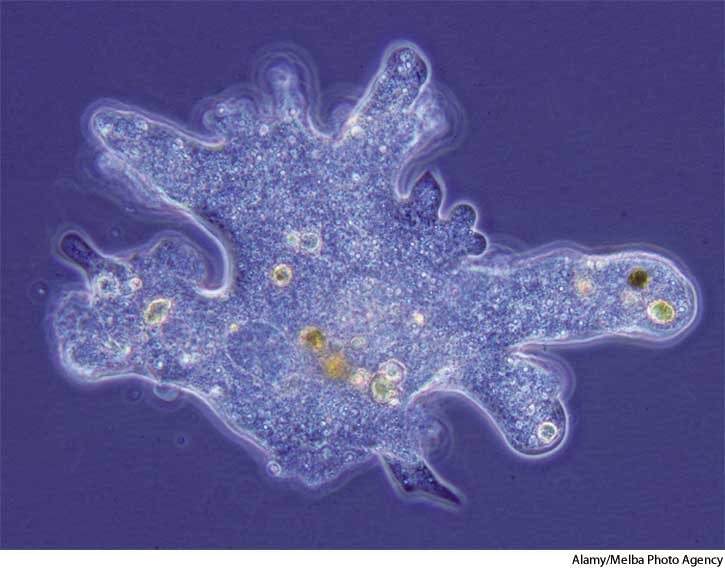
An Amoeba is a unicellular, animal-like protist that lives in ponds and streams. According to cell theory, where did this cell come from?
a)
another pre-existing amoeba cell.
b)
energy from sun that allowed the protist to reproduce.
c)
a multicellular organism.
d)
the nonliving environment.
2.

What is found in both plant and animal cells but is much larger in plant cells because it helps to provide structure and support?

a)

Nucleus

b)

Mitochondrion

c)

Chloroplast

d)

Vacuole

3.

Cell organelles work together to maintain

a)

homeostasis

b)

eukarya

c)

prokarya

d)

organisms

4.

What is the main difference between prokaryotic and eukaryotic cells?

a)

Prokaryotic cells are found only in multicellular organisms

b)

Eukaryotic cells are found only in unicellular organisms

c)

Eukaryotic cells have a nucleus and prokaryotic cells do not

d)

Prokaryotic cells have DNA and eukaryotic cells do not

5.

What are the three parts of the cell theory?

a)

All cells come from pre-existing cells.

b)

Cells are the basic unit of structure and organization in all living things.

c)

Cells are the basic unit of structure and organization in all matter.

d)

All organisms are made of one or more cell.s

6.

Why is a cell membrane important to both plant and animal cells?

a)

It stores food and water.

b)

It controls the activities of the cell.

c)

It uses energy from the Sun to perform photosynthesis.

d)

It provides a barrier between the cell and its environment.
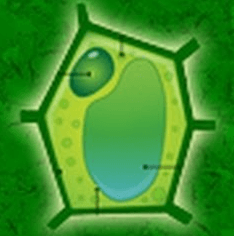
7.
The main function of chloroplasts is:
a)
To control what enters and leaves the cell.
b)
To break down food to release energy for the cell.
c)
To control all activities of the cell.
d)
To produce food for the cell using the sun's energy.
8.
What organelle is NOT found in animal cells?
a)
chloroplast
b)
cell membrane
c)
nucleus
d)
mitochondria
9.
A rigid layer that lies outside the cell's  membrane is...
a)
Cytoplasm
b)
Cell membrane
c)
Cell Wall
d)
Flagella
10.
surrounds the cell; regulates what enters/leaves cell: holds the cell together
a)
vacuole
b)
cell wall
c)
cell membrane
d)
lysosome
11.
Organs and tissues that perform the same function is called _____________?
a)
cells
b)
tissues 
c)
organ system
d)
organs
12.
A group of tissues that perform a similar function is called_____. (Examples include the heart, lungs or stomach)
a)
cells
b)
tissues
c)
organs
d)
organ system
13.
What is the correct ordering of life from smallest to largest?
a)
Organism, organ, organ system, tissue, atom, molecule cell, organelles 
b)
organism, organ system, organ, tissue, cell, organelle, molecule, atom
c)
atom, molecule, organelle, cell, tissue, organ, organ system, organism
d)
All choices are correct
14.
This picture represents which of the following?
a)
element
b)
compound
c)
mixture
15.
This picture represents which of the following?
a)
element
b)
compound
c)
mixture
16.
What is the tiniest particle in the entire universe?
a)
cells
b)
gases
c)
atoms
d)
liquids
17.
What is the term for combining 2 or more atoms together?
a)
atoms
b)
elements
c)
molecules
d)
compounds
18.
What is the term for combining 2 or more DIFFERENT atoms together?
a)
atoms
b)
elements
c)
molecules
d)
compounds
19.
Are these molecules also compounds?
a)
YES
b)
NO
20.

What molecule is this

a)

nucleic Acid

b)

protein

c)

carbohydrate

d)

lipid

21.
Which macromolecule is this?
a)
carbohydrate
b)
lipid
c)
protein
d)
nucleic acid
22.

Which type of cell is this?

a)

Prokaryote

b)

Eukaryote

23.
What type of cell has a nucleus? 
a)
eukaryotic
b)
prokaryotic 
24.

Which do BOTH prokaryotes and eukaryotes contain?

a)

nucleus

b)

mitochondria

c)

ribosomes

d)

cell wall

25.

Prokaryotic cells do not have…….

a)

membrane bound organelles

b)

cell membrane

c)

DNA or RNA

d)

life

26.
This is a picture of:
a)
Prokaryote
b)
Eukaryote
27.
A ribosome can be best described as...
a)
a protein factory
b)
a trash collector
c)
the powerhouse of the cell
d)
the brain of the cell
28.

What is the purpose of the mitochondria?

a)

The mitochondria makes glucose and releases oxygen.

b)

The mitochondria breaks down glucose to make ATP.

c)

The mitochondria will produce proteins.

d)

The mitochondria will absorb light energy.

29.
Cellular respiration takes place in the
a)
nucleus
b)
cytoplasm
c)
ribosomes
d)
mitochondria
30.

Letter E

a)

mitochondrion

b)

chloroplast

c)

golgi complex

d)

ribosomes

31.
What supports and protects a plant cell?
a)
cell membrane
b)
chloroplast
c)
cell wall
d)
nucleus
32.
What transports substances (proteins) through the cell?
a)
endoplasmic reticulum
b)
golgi complex
c)
ribosomes
d)
mitichondrion
33.
What changes food (glucose) into energy?
a)
nucleus
b)
cell wall
c)
golgi complex
d)
mitochondrion
34.
What are tiny organelles that convert glucose into ATP?
a)
Ribosomes
b)
Vesicles
c)
Cytoskeleton
d)
Mitochondria
35.
I am only found in a plant cell. What am I?
a)
cell wall
b)
mitochondria
c)
cytoplasm
d)
chloroplast
36.
The process in which energy from the sun is used by plants to make sugar molecules
a)
cellular respiration
b)
photosynthesis
c)
symbiosis
d)
consumers
37.
What is the term for a group of similar cells working together?
a)
organ
b)
mitochondria
c)
tissue
d)
organism
38.
Many cells in our body are specialized. What is meant by the term specialized?
a)
The cells all look the same and have the same job.
b)
The cells have a special structure and have different jobs.
39.
Homeostasis
a)
allows for a wildly fluctuating internal environment
b)
is impossible in vertebrates
c)
is the maintenance of a relatively stable internal environment and often incorporates a form of feedback regulation
d)
is the maintenance of a relatively stable external environment and often incorporates a form of feedback regulation
40.
Which diagram represents an organ?
a)
#1
b)
#2
c)
#3
d)
#4
41.
The picture  is an example of _________________.
a)
isotonic
b)
diffusion
c)
osmosis
d)
active transport
42.
Diffusion is the movement of molecules from an area of _____ concentration to an ______ concentration
a)
High, low
b)
Low, high
c)
Low, low,
d)
High, high
43.
In this image, the cell is using which type of molecular transport?
a)
Osmosis
b)
Diffusion 
c)
Endocytosis
d)
Exocytosis 
44.
This picture represents what type of cell transport?
a)
endocytosis
b)
exocytosis
c)
osmosis
d)
passive transport
45.
This picture represents which type of cellular transport?
a)
passive transport
b)
endocytosis
c)
exocytosis
d)
osmosis
46.

Which of the following equation explains cellular respiration?

a)

sugar+water -> salt+sunlight

b)

sugar+oxygen -> water+carbon dioxide+energy

c)

water+carbon dioxide+sunlight -> sugar+oxygen

d)

Sugar+energy -> water+carbon dioxide+oxygen

47.

What is the correct equation for cellular respiration?

a)

O2 + C6H12O6 → CO2 + H2O + Energy

b)

Energy O2 + C6H12O6 → CO2 + H2O

c)

CO2 + H2O → O2 + C6H12O6 + Energy

d)

CO2 + H2O + Energy → O2 + C6H12O6

48.

Which of the following is the correct equation for PHOTOSYNTHESIS?

a)

Energy + CO2 + H2O → O2 + C6H12O6

b)

Energy + CO2 + C6H12O6 + H2O → O2

c)

O2 +H2O → CO2 +C6H12O6 + Energy

d)

Energy + C6H12O6 + O2 → H2O + CO2

49.

What are the reactants in the equation for cellular respiration?

a)

oxygen and lactic acid

b)

carbon dioxide and water

c)

glucose and oxygen

d)

water and glucose

50.

Where will the water go?

a)

Into the cell

b)

Out of the cell

c)

Equally in & out - it's isotonic

d)

There is no water

51.
Osmosis is the movement of _____ across a membrane.
a)
food
b)
energy
c)
oxygen
d)
water
52.
During osmosis
a)
water moves from high to low concentration
b)
large or oddly shaped molecules move across a cell membrane
c)
water moves when energy is used
d)
proteins are built
53.

If the dots represent sugar which is more concentrated

a)

Inside the cell

b)

Outside the cell

c)

Neither they are equal (equilibrium)

54.
What phase of mitosis is shown in the picture?
a)
Prophase
b)
Anaphase
c)
Telophase
d)
Metaphase
55.
Chromatid pairs line up in the middle of the cell.
a)
Metaphase
b)
Telophase
c)
Anaphase
d)
Interphase
56.
What phase of mitosis is shown in the picture?
a)
Prophase
b)
Anaphase
c)
Telophase
d)
Metaphase
57.
A new organism is produced from one parent organism.
a)
Sexual Reproduction
b)
Asexual Reproduction
58.
Mitosis is a type of ________________ reproduction.
a)
Sexual
b)
Asexual
59.
What phase of mitosis is shown in the picture?
a)
Prophase
b)
Anaphase
c)
Telophase
d)
Metaphase
60.
Chromatid pairs separate and move to opposite ends of the cell
a)
Metaphase
b)
Telophase
c)
Interphase
d)
Anaphase
61.
What phase of mitosis is shown in the picture?
a)
Prophase
b)
Anaphase
c)
Telophase
d)
Metaphase
62.
How many chromosomes does a human cell have?
a)
42
b)
46
c)
24
d)
64
63.
Which of the following lists, in order, the phases of mitosis?
a)
interphase, metaphase, anaphase, telophase
b)
prophase, metaphase, anaphase, telophase
c)
prophase, metaphase, anaphase, interphase
d)
prophase, anaphase, metaphase, telophase
64.
How many daughter cells are produced in mitosis?
a)
1
b)
2
c)
4
d)
6
65.
During which phase of the cell cycle does the cell spend the most time?
a)
Mitosis
b)
Cytokinesis
c)
Interphase
66.
What is shown in the picture?
a)
Mitosis
b)
Interphase
c)
Cytokinesis
67.
What happens in cytokinesis?
a)
The cell fully splits into two cells
b)
The cell digests its extra DNA
c)
The cell prepares for mitosis
d)
There are eight important checkpoints there
68.
Fruit fly body cells have 8 chromosomes. After mitosis, you would expect a resulting fruit fly daughter cell to have -
a)
16 chromosomes.
b)
46 chromosomes.
c)
8 chromosomes.
d)
4 chromosomes.
69.
In mitosis, the two resulting cells are
a)
different from the starting cell and identical to each other.
b)
different from the starting cell and different from each other.
c)
identical to the starting cell and different from each other.
d)
identical to the starting cell and identical to each other.
70.

Bacteria reproduce asexually by a process called

a)

replication

b)

meiosis

c)

mitosis

d)

binary fission

71.
Which process and type of resulting cells are represented?
a)
mitosis, gametes
b)
mitosis, body cells
c)
meiosis, gametes
d)
meiosis, body cells
72.
Which of the following cell types is formed by meiosis?
a)
muscle cells
b)
skin cells
c)
sperm cells
d)
blood cells
73.
Which cellular process is shown?
a)
meiosis
b)
endocytosis
c)
mitosis
d)
phagocytosis
74.
Which statement correctly describes meiosis?
a)
cells divide only once
b)
meiosis does not occur in reproductive cells
c)
the cells produced at the end of meiosis are genetically identical to the parent cell
d)
The cells produced at the end of meiosis contain half the number of chromosomes as the parent cell
75.
If an intestinal cell in a butterfly contains 24 chromosomes, a butterfly egg would contain
a)
3
b)
6
c)
12
d)
24
76.
What is one advantage of sexual reproduction?
a)
offspring are identical to parents
b)
offspring are resistant to viruses
c)
offspring are born live, rather than from eggs
d)
offspring inherit a wider variety of genetic information
77.
A male shark has 40 chromosomes in each of its sex cells. How many would be present in its body cells?
a)
20
b)
40
c)
80
d)
160
78.
In which type of cells will mitosis occur?
a)
egg cells
b)
sperm cells
c)
jail cells
d)
Body cells except the sperm and egg cells
79.
How many daughter cells are produced from meiosis ?
a)
10
b)
6
c)
4
d)
2
80.
Why do we need meiosis?
a)
To double the number of chromosomes going into sex cells
b)
To halve the number of chromosomes going into sex cells
c)
To triple the number of chromosomes going into sex cells
d)
To not change the number of chromosomes going into sex cells
81.
Name that process
a)
Mitosis
b)
Meiosis
c)
Mutation
d)
Cell Cycle
82.

During which phase of the cell cycle does DNA Replication occur?

a)

Interphase

b)

Prophase

c)

Metaphase

d)

Telophase

83.
In Meiosis if the parent cells has 40 chromosomes, then how many will the daughter cells have 
a)
40
b)
10
c)
20
d)
18
84.
Why is DNA important?
a)
it is very small and very complicated
b)
it's in everything
c)
it serves as the blueprint for traits of all living things
d)
because we eat it every day for energy
85.
What is a Gene?
a)
A segment of RNA that encodes for a protein
b)
A chromosome
c)
A segment of DNA that encodes for a protein
d)
Your genome
86.
If you are a boy, what percent of your genes did you get from your dad?
a)
25%
b)
50%
c)
75%
d)
100%
87.

Bundled up, organized DNA is called a

a)

gene

b)

trait

c)

chromosome

d)

nucleotide

88.

Which series is arranged in order from LARGEST to smallest in size?

a)

gene, chromosome, nucleus, cell, DNA, nucleotide

b)

cell, nucleus, chromosome, DNA, gene, nucleotide

c)

nucleotide, chromosome, cell, DNA, nucleus

d)

cell, DNA, gene, nucleotide, nucleus, chromosome

89.

Juan's dog, Luna, was hit by a car. Fortunately, she lived and is healthy! But she is now missing a leg. Having only three legs is a(n)

a)

inherited trait.

b)

learned behavior.

c)

instinct.

d)

acquired trait.

90.

Which example below is an inherited trait?

a)

tying your shoes

b)

reading a book

c)

the shape of someone's mouth

d)

the language someone speaks

91.
The passing of traits from parents to offspring
a)
heredity
b)
genetics
c)
trait
d)
alleles
92.
This trait always shows up in an organism when the allele is present
a)
dominant allele
b)
codominance
c)
probability
d)
recessive allele
93.
The factors that control a trait
a)
genetics
b)
trait
c)
gene
d)
alleles
94.
This trait is hidden whenever the dominant allele is present
a)
dominant allele
b)
codominance
c)
recessive allele
d)
Punnett Square
95.
An organism's physical appearance or visible traits
a)
fertilization
b)
genotype
c)
phenotype
d)
homozygous
96.
An organism's genetic makeup, or allele combination
a)
fertilization
b)
genotype
c)
phenotype
d)
heterozygous
97.
What is NOT an inherited trait of humans?
a)
Favorite type of music
b)
Freckles
c)
Hair color
d)
Height
98.
A unit of genetic material that determines a trait
a)
Carrier
b)
DNA
c)
chromosome
d)
Gene
99.
A characteristic that an organism can pass on to its offspring through its genes
a)
protein
b)
trait
c)
DNA
d)
gene
100.
T - tall and t = short
In the punnett square below, what belongs in the missing square
a)
tt
b)
Tt
c)
Bb
d)
TT
101.

Complete Dominance B = brown fur, b = white fur

In the punnett square, what is the probability for white fur?

a)

0%

b)

25%

c)

50%

d)

75%

102.
Which of the following is a phenotype?
a)
Aa
b)
black hair
c)
heterozygous genes
d)
mutated DNA
103.
This image shows a...
a)
Punnett Square
b)
Phenotype
c)
Genotype
d)
Dominant allele
104.
What is the yellow seed genotype?
a)
aa
b)
Aa
c)
AA
d)
AA or Aa
105.
What is the dominant trait?
a)
yellow pea seeds
b)
green pea seeds
c)
there is no dominant seed
d)
Jolly green giant
106.
What genotype would go in box 2?
a)
BB
b)
Bb
c)
bb
107.

What genotype would go in box 4?

a)

BB

b)

Bb

c)

bb

108.
Which of the following is homozygous recessive?
a)
Tt
b)
tt
c)
TT
d)
T
109.
Which of the following is homozygous dominant?
a)
Jj
b)
Rr
c)
MM
d)
ee
110.
Purple (P) is dominant to the white (p).
According to the Punnett Square, what is the probability of an offspring being purple?
a)
25%
b)
0%
c)
100%
d)
50%
111.
What is the probability of heterozygous offspring?
a)
25%
b)
50%
c)
0%
d)
100%
112.

Which process and type of resulting cells are represented?

a)

mitosis, sex cells

b)

mitosis, body cells

c)

meiosis, sex cells

d)

meiosis, body cells

113.

What macromolecule is shown in the picture?

a)

carbohydrate

b)

Protien

c)

Lipid

d)

Nucleci Acid

114.

What macromolecule is pictured?

a)

carbohydrate

b)

lipid

c)

protien

d)

nucleic acid