Wayground logo

Free Printable Worksheets

Font size

S
M
L
XL
Worksheets

Animal Review

Total questions: 124

Worksheet time: 2hrs 44mins

Name
Class
Date
1.
_____ are animals with backbones 
a)
Invertebrates
b)
Vertebrates
2.
Some of the most common vertebrates are _____, birds, reptiles, and fish. 
a)
spiders
b)
squid
c)
mammals
d)
starfish
3.
Invertebrates don't have internal skeletons made of bone. 
a)
True
b)
False
4.
Invertebrates may have fluid-filled skeletons like jellyfish and worms. 
a)
True
b)
False
5.
Reptiles, amphibians, _____, fish, and insects are examples of cold blooded animals.
a)
birds
b)
spiders
c)
cats
d)
dogs
6.
Reptiles, amphibians, _____, fish, and insects are examples of cold blooded animals.
a)
birds
b)
spiders
c)
cats
d)
dogs
7.
_____ adaptions are body parts of body coverings that help animals survive.
a)
Behavioral
b)
Structural 
8.
Lizards who play dead so they are not attacked is an example of a behavior adaptation. 
a)
True
b)
False
9.
Camouflage is an example of a structural adaptation. 
a)
True
b)
False
10.
_____ is an adaptation that fools other animals with sounds, behaviors, or colors. 
a)
camouflage
b)
mimicry
c)
perch
d)
internal
11.
Humans have a skeleton that's strong enough to help stand up straight, yet _____ so we can move. 
a)
internal
b)
flexible
c)
perch
d)
bending
12.
_____ is an adaptation that fools other animals with sounds, behaviors, or colors. 
a)
camouflage
b)
mimicry
c)
perch
d)
internal
13.
Hard outer coverings that protect the bodies of some animals without backbones are called _____. 
a)
invertebrates
b)
internal
c)
vertebrates
d)
exoskeletons
14.
_____ are animals that hunt and eat smaller, more helpless animals. 
a)
Prey
b)
Predators
c)
Invertebrates
d)
Mammals
15.
Warm-blooded animals that feed their young with milk, have backbones, and are covered with hair are called _____.
a)
amphibians
b)
reptiles
c)
mammals
d)
squid
16.
Invertebrates don't have _____ skeletons made of bones. 
a)
internal
b)
external
c)
vertebrates
d)
outer 
17.
Birds have claws and muscles that are designed to lock and hold on to a _____, even when they are sleeping. 
a)
flexible
b)
internal
c)
perch
d)
burrow
18.
_____ means to dig a hole.
a)
Internal
b)
Perch
c)
Burrowing
d)
Flexible
19.
Which statement best describes mimicry?
a)
Hawk moth caterpillars can act like snakes. 
b)
Polar bears have white fur to hid themselves in the snow.
c)
Grasshoppers blend into rocks or leaves.
d)
Chameleons can change their color.
20.
Which of the following is an example of a structural adaptation?
a)
Birds fly south for the winter.
b)
Lizards play dead when enemies approach.
c)
Giraffes have long necks to reach leaves in tall trees.
d)
Squirrels store nuts for the winter. 
21.
Which of the following is an example of a structural adaptation?
a)
Birds fly south for the winter.
b)
Lizards play dead when enemies approach.
c)
Giraffes have long necks to reach leaves in tall trees.
d)
Squirrels store nuts for the winter. 
22.
You have learned that warm blooded animals are ____. 
a)
can't get wet. 
b)
are always sick.
c)
are mammals and birds.
23.

These animal depend on their environment for their body temperature

a)

cold blooded

b)

warm blooded

c)

mammals and birds

d)

fish, amphibians and reptiles

24.

These animals regulate their own body temperature; their blood uses energy to maintain a constant temp

a)

cold blooded

b)

warm blooded

c)

mammals and birds

d)

fish, amphibians and reptiles

25.

lays eggs

a)

birds

b)

amphibians

c)

reptiles

d)

mammals

e)

fish

26.

has body hair and gives live birth

a)

birds

b)

amphibians

c)

reptiles

d)

mammals

e)

fish

27.

uses gills in water and lungs on land

a)

birds

b)

amphibians

c)

reptiles

d)

mammals

e)

fish

28.

breathes with gills throughout their lives, cold blooded

a)

birds

b)

amphibians

c)

reptiles

d)

mammals

e)

fish

29.

cold blooded, breathes with lungs, has dry skin covered in scales and most lay eggs

a)

birds

b)

amphibians

c)

reptiles

d)

mammals

e)

fish

30.

frogs, salamanders, newts, toads

a)

birds

b)

amphibians

c)

reptiles

d)

mammals

e)

fish

31.

dinosaurs, snakes, turtles, alligators

a)

birds

b)

amphibians

c)

reptiles

d)

mammals

e)

fish

32.

jelly fish, hydra, coral, sea anemone

a)

cnidarian

b)

annelid

c)

mollusk

d)

arthropod

e)

echinoderm

33.

sand dollars, sea urchins, star fish,

a)

cnidarian

b)

annelid

c)

mollusk

d)

arthropod

e)

echinoderm

34.

squid, snails, oysters, clams, mussels

a)

cnidarian

b)

annelid

c)

mollusk

d)

arthropod

e)

echinoderm

35.

lobsters, crabs, ladybugs, spiders, butterflies

a)

cnidarian

b)

annelid

c)

mollusk

d)

arthropod

e)

echinoderm

36.

invertebrates with soft bodies, some have 1 or 2 shells

a)

cnidarian

b)

annelid

c)

mollusk

d)

arthropod

e)

echinoderm

37.

segmented worms

a)

cnidarian

b)

annelid

c)

mollusk

d)

arthropod

e)

echinoderm

38.

these invertebrates have radial symmetry and stinging cells, and tentacles and a hollow body cavity

a)

cnidarian

b)

annelid

c)

mollusk

d)

arthropod

e)

echinoderm

39.

these invertebrates have jointed appendages, 3 body segments and an exoskeleton

a)

cnidarian

b)

annelid

c)

mollusk

d)

arthropod

e)

echinoderm

40.

these invertebrates have spiny skin, a complex water vascular system and radial symmetry; many have tube feet

a)

cnidarian

b)

annelid

c)

mollusk

d)

arthropod

e)

echinoderm

41.

which phylum?

a)

cnidarian

b)

annelid

c)

mollusk

d)

arthropod

e)

echinoderm

42.

which phylum?

a)

cnidarian

b)

annelid

c)

mollusk

d)

arthropod

e)

echinoderm

43.

which phylum?

a)

cnidarian

b)

annelid

c)

mollusk

d)

arthropod

e)

echinoderm

44.

which phylum?

a)

cnidarian

b)

annelid

c)

mollusk

d)

arthropod

e)

echinoderm

45.

which phylum?

a)

cnidarian

b)

annelid

c)

mollusk

d)

arthropod

e)

echinoderm

46.

warm blooded, breathes with lungs, has wings and lays hard shelled eggs

a)

birds

b)

amphibians

c)

reptiles

d)

mammals

e)

fish

47.

all animals are:

a)

multicellular

b)

unicellular

c)

autotrophic

d)

heterotrophic

48.
Which animal belongs in the reptile kingdom?
a)
dog
b)
snake
c)
toad
d)
horse
49.
Bees belong to which kingdom?
a)
Trees
b)
Rodents
c)
Mammals
d)
Insects
50.
Which kingdom has live babies and is warm blooded?
a)
Mammals
b)
Reptiles
c)
Insects
d)
Amphibians
51.
Animals can make their own foods
a)
True
b)
False
52.
Spiders, shrimp, and snails are examples of 
a)
vertebrates
b)
invertebrates
53.
Spiders, shrimp, and snails are examples of 
a)
vertebrates
b)
invertebrates
54.
Animals that live on both land and in water are:
a)
mammals
b)
insects
c)
amphibians
d)
fish
55.
Vertebrates don't have a backbone
a)
True
b)
False
56.
Octopus is...
a)
Vertebrate
b)
Invertebrate
57.
Animals that have hair or fur are...
a)
Mammals
b)
Birds
c)
Fishes
d)
Reptiles 
58.
What symmetry do all insects have?
a)
Radial
b)
Asymmetry
c)
Bilateral 
59.
Choose the characteristics that animals must possess in the Animal Kingdom.
a)
multicellular
b)
eukaryotic and multicellular
c)
eukaryotic, multicellular, heterotroph
d)
eukaryotic, multicellular, autotroph
60.
The smallest part of an animal’s body is the _________.
a)
Cell
b)
Organ
c)
Tissue
d)
Organ System
61.
All vertebrates have
a)
4 legs
b)
wings
c)
lungs
d)
a backbone
62.
Animals are
a)
all unicellular
b)
all multicellular
c)
mostly unicellular
d)
mostly multicellular
63.
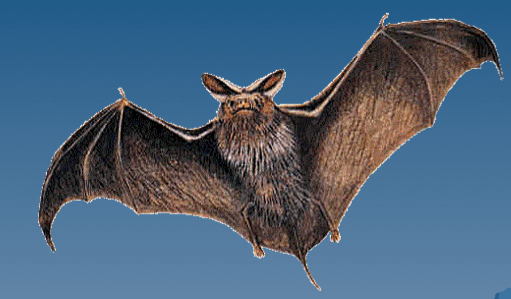
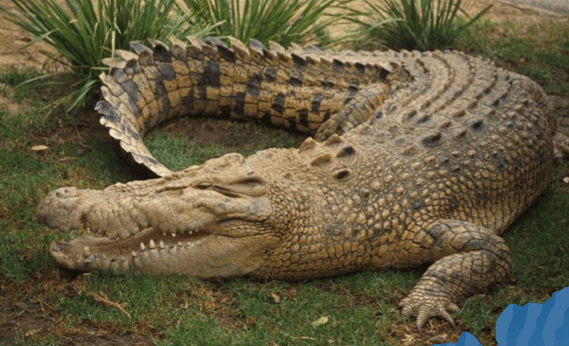
Which kingdom does this animal belong to?
a)
mammals
b)
birds
c)
amphibians
d)
reptiles
64.

Invertebrates don't have internal skeletons made of bone.

a)

True

b)

False

65.

Hard outer coverings that protect the bodies of some animals without backbones are called _____.

a)

invertebrates

b)

internal

c)

vertebrates

d)

exoskeletons

66.
_____ are animals that hunt and eat smaller, more helpless animals. 
a)
Prey
b)
Predators
c)
Invertebrates
d)
Mammals
67.
Warm-blooded animals that feed their young with milk, have backbones, and are covered with hair are called _____.
a)
amphibians
b)
reptiles
c)
mammals
d)
squid
68.
These animals are ectothermic.  Some have gills, some have lungs.  What are they?
a)
Amphibians
b)
Reptiles
c)
Mammals
69.

Between 95% of all animals on earth can be classified as _____.

a)

invertebrates

b)

vertebrates

c)

reptiles

d)

mammals

70.
My body is warm, I have fur, feed my young on milk, and have live births.  What am I?
a)
Reptile
b)
Bird
c)
Mammal
d)
Fish
71.
I am covered in dry scales and I lay eggs.  What am I?
a)
Mammal
b)
Fish
c)
Amphibian
d)
Reptile
72.

Echinoderms

a)

Vertebrate

b)

Invertebrate

73.

Segmented Worms

a)

Vertebrate

b)

Invertebrate

74.

Mammals

a)

Vertebrate

b)

Invertebrate

75.

Fish

a)

Vertebrate

b)

Invertebrate

76.
What am I?
a)
endotherm
b)
ectotherm
77.
What am I?
a)
endotherm
b)
ectotherm
78.
What am I?
a)
endotherm
b)
ectotherm
79.
What am I?
a)
endotherm
b)
ectotherm
80.

Has to eat more often to maintain constant body temperature.

a)

endotherm

b)

ectotherm

81.

Sweats and pants to keep cool.

a)

endotherm

b)

ectotherm

82.

Shivers to keep warm.

a)

endotherm

b)

ectotherm

83.

Has to find heat to get warm and shade to keep cool.

a)

endotherm

b)

ectotherm

84.
Slows down and hibernates when its cold.
a)
endotherm
b)
ectotherm
85.
Body temperature changes with the environment.
a)
endotherm
b)
ectotherm
86.

Born with gills, develops lungs, cold blooded

a)

Mammals

b)

Amphibians

c)

Mollusks

d)

Birds

87.

The most basic of all the animals, lives in water

a)

Mollusks

b)

Birds

c)

Arthropods

d)

Sponges

88.

Warm blooded, lays eggs with hard shells, has feathers

a)

Birds

b)

Fish

c)

Mammals

d)

Reptiles

89.

Have soft bodies, some have shells, uses a muscular foot to move

a)

Cnidarians

b)

Segmented Worms

c)

Mollusks

d)

Amphibians

90.

Give birth to their young, produce milk to feed their young, have hair or fur, warm blooded

a)

Mammals

b)

Arthropods

c)

Birds

d)

Echinoderms

91.

Largest group of invertebrates, have exoskeletons, and jointed legs

a)

Reptiles

b)

Amphibians

c)

Arthropods

d)

Echinoderms

92.

Have lungs, cold blooded, lay leathery eggs, some have scales

a)

Reptiles

b)

Amphibians

c)

Sponges

d)

Arthropods

93.

Live in water and have bodies like sacks

a)

Sponges

b)

Cnidarians

c)

Reptiles

d)

Mollusks

94.

Have gills, cold blooded, most have scales

a)

Sponges

b)

Amphibians

c)

Birds

d)

Fish

95.

Have soft, long bodies that are divided into sections

a)

Arthropods

b)

Segmented Worms

c)

Cnidarians

d)

Mollusks

96.

Have circular/radial symmetry

a)

Mollusks

b)

Echinoderms

c)

Sponges

d)

Segmented Worms

97.

Cnidarians

a)

Vertebrate

b)

Invertebrate

98.

Amphibians

a)

Vertebrate

b)

Invertebrate

99.

Reptiles

a)

Vertebrate

b)

Invertebrate

100.

Birds

a)

Vertebrate

b)

Invertebrate

101.

Fish

a)

Vertebrate

b)

Invertebrate

102.

Sponges

a)

Vertebrate

b)

Invertebrate

103.

Mollusks

a)

Vertebrate

b)

Invertebrate

104.

Segmented Worms

a)

Vertebrate

b)

Invertebrate

105.

Arthropods

a)

Vertebrate

b)

Invertebrate

106.

What does the term vertebrate mean?

a)

complex animal

b)

no backbone

c)

has a backbone

d)

simple animal

107.

What does the term invertebrate mean?

a)

complex animal

b)

no backbone

c)

has a backbone

d)

simple animal

108.
Dragonflies, stink bugs, and lady bugs are __________.
a)
insects
b)
arthropods
c)
animals
d)
all of these
109.
Which classes of animals are endothermic?
a)
Mammals and birds
b)
mammals and amphibians
c)
birds and worms
d)
reptiles and fish
110.
Most animals ________.
a)
are invertebrates
b)
are arthropods
c)
have jointed legs
d)
all of these
111.
I am spiny, have a water vascular system with tube feet, radial symmetry, and am called a brittle star.
a)
Mullosk
b)
Arthropod
c)
Echinoderm
d)
Cnidarian
112.
Sponges use pores to 
a)
move from place to place.
b)
filter food from the water.
c)
defend themselves.
113.
These animals are ectothermic.  Some have gills, some have lungs.  What are they?
a)
Amphibians
b)
Reptiles
c)
Mammals
114.
Between 90-95% of all animals on earth can be classified as _____.
a)
invertebrates
b)
vertebrates
c)
reptiles
d)
mammals
115.
Which class of animals have scales and lay eggs?
a)
Birds 
b)
Amphibians
c)
Reptiles
d)
Mammals
116.
Which of the following fish has a swim bladder?
a)
Shark
b)
Lamprey
c)
Trout
d)
Skate
117.
Which is an example of a cartilaginous fish?
a)
Trout
b)
Bass
c)
Shark
d)
Goldfish
118.
Which of the following is a characteristic of an amphibian?
a)
They give live births and feed their young with milk.
b)
They live on land and have fur.  
c)
They have feathers and breathe with lungs. 
d)
They have two stages to their life cycle. 
119.
My body is warm, I have fur, feed my young on milk, and have live births.  What am I?
a)
Reptile
b)
Bird
c)
Mammal
d)
Fish
120.
The period of inactivity during a hot, dry summer is called..
a)
Hibernation
b)
Migration
c)
Estivation
121.
Which is the following is an adaptation that helps a bird fly?
a)
Lightweight bones
b)
Down feathers
c)
Webbed Feet
d)
Large Beaks
122.
Lungs and moist skin are characteristics of..
a)
Amphibians
b)
Fish
c)
Mammals
123.
The changes in this diagram are best described as..
a)
Complete metamorphosis
b)
Incomplete metamorphosis
c)
Evolution
124.
Which is NOT a characteristics of animals?
a)
Have to obtain their food from outside sources. 
b)
Have cells with a nucleus. 
c)
Are made of at least one or more cells. 
d)
Have either radial or bilateral symmetry.