
 Worksheets
HONORS Semester One Final Exam 2021
Total questions: 128
Worksheet time: 1hrs 26mins

How do heterotrophs get the energy they need to survive?
photosynthesis
eating other organisms
decomposing dead materials
chemosynthesis
Atoms become more _________ when they bond together.
Stable
Unstable
Which element is at the center of the four main molecules that make up living things?
Carbon
Oxygen
Nitrogen
Phosphorous
Large molecules are called:
Monomers
Polymers
Carbohydrates
Fats
Which picture is a monomer?


Which type of reaction will join monomers together (creating a polymer)?
dehydration synthesis
hydrolysis
Which does only eukaryotic cells contain?
nucleus
DNA
cell membrane
ribosomes
Check all of the monomer - polymer pairings that are correct
monosaccharide - polysaccharide
amino acid - nucleic acid
glycerol & fatty acid - lipid
nucleotide - nucleic acid

The function of the cell membrane is....
to regulate what enters and leaves the cell.
fight bacteria and viruses that enter the cell.
provide rigid support and protection to the cell.
make sure each cell can move
What type of molecule has the easist time passing through the cell membrane?
small molecules like water and oxygen
large molecules like glucose
small charged molecules like Na+
How do the particles move in diffusion?
From a region of low concentration to a region of high concentration
From a region of high concentration to a region of low concentration
From a region of low concentration to a region of low concentration
From a region of high concentration to a region of high concentration
What kind of energy do cells use to do their work?
ADP
ATP
Oxygen
Lactic Acid
What is cellular respiration?
the breakdown of glucose to release ATP
the breakdown of glucose to release oxygen
the breakdown of glucose to release ADP
the breakdown of glucose to release carbon
What is the equation for aerobic respiration?
glucose + O2 --> H2O + CO2 + 2ATP
glucose + O2 --> H2O + CO2 + 36ATP
glucose --> H2O + CO2 + 2ATP
glucose + O2 --> CO2 + 36ATP
What are the two types of anaerobic respiration?
aerobic respiration and ATP desnythase
aerobic respiration & alcoholic respiration
aerobic respiration and lactic acid fermentation
lactic acid fermentation & alcoholic fermentation
Which equation shows the reaction for the type of anaerobic respiration that happens in human cells?
carbon dioxide + water --> glucose + oxygen
glucose + Oxygen --> lactic acid + ATP
glucose + oxygen --> carbon dioxide + water + ATP
glucose --> lactic acid + ATP

Which of the following structures is where cellular respiration occurs in the cell?
nucleus
cytoplasm
mitochondria
vacuoles

What molecule is shown in this picture? How much energy does it have?
ADP - no energy
ATP - a lot of energy
ADP - a lot of energy
ATP - no energy
What is the equation for alcoholic fermentation?
glucose + O2 --> alcohol + 2ATP
glucose + O2 --> alcohol + CO2 + 2ATP
glucose --> alcohol + CO2 + 2ATP
glucose + O2 --> alcohol + 2ATP


Look at the diagram. Which gas would most likely be found in the bubbles?
oxygen
nitrogen
ozone
carbon dioxide
What does the light independent reactions make that is used by the light dependent reactions?
ATP and O2
NADPH, ATP, and O2
O2
NADP+ and ADP
Which step in photosynthesis creates glucose?
chlorophyll
light independent reactions
light dependent reactions
glycolysis
How is O2 made during photosynthesis?
energy from the sun splits apart H2O molecules
energy from the sun splits apart CO2 molecules
NADPH and ATP are used to split apart CO2 molecules
NADPH and ATP are used to fuse O2 molecules
What do we call the holes that through which CO2 and O2 enter/exit a leaf?
stomata
mesophyll
guard cells
chloroplast
What happens to the glucose after it is made during photosynthesis? (Check all that are correct)
Glucose can be sent to the mitochondria of the plant cell where it is used to make ATP
Glucose can be sent to other parts of the plant that don't do photosynthesis (like the roots) and used to make ATP
Glucose can be linked together (creating starch) and stored up to be used later
Glucose can be broken apart and used to make other important molecules like proteins and lipids
Air moves into the body in this order:
Mouth/nose - trachea - bronchioles - bronchi - alveoli-capillaries
True
False
What gas moves out of the alveoli and into the surrounding capillaries?
carbon dioxide
oxygen
glucose
waste
Imagine a capillary that runs through your skin. What will move out of the capillary and into your skin cells?
just oxygen
just carbon dioxide
carbon dioxide and waste
oxygen and glucose
What is the function of the respiratory system?
to carry oxygen and glucose to all the cells of the body
to bring oxygen into the body from the atmosphere, and release carbon dioxide into the atmosphere
to break down food into monomers like glucose for cellular respiration
to bring carbon dioxide into the body from the atmosphere, and release oxygen into the atmosphere
What is the function of the circulatory system?
to bring oxygen and nutrients to cells, and to remove carbon dioxide and waste from cells
to break down food into monomers so that it can be used for cellular respiration
to bring carbon dioxide and waste to cells, and to remove oxygen and nutrients from cells
to bring oxygen into the body from the atmosphere, and to release carbon dioxide into the atmosphere
What is the name of the strong muscle that contracts, pulling air into the lungs?
Bronchi
Alveoli
Heart
Diaphragm

Where are alveoli found?
In the lungs, at the end of a bronchiole
In the arteries, exchanging glucose and waste
In the heart, preventing blood from flowing the wrong way
In your nose, filtering out dust and other particles
What is the aim of the digestion?
Obtain matter and energy
Obtain nutrients from food and break it down into small molecules, which are then absorbed
Break down food into inorganic nutrients
Obtain nutrients form food and transport it to the cells
Where are the nutrients that eat absorbed into the blood?
Oesophagus
Stomach
Small intestine
Large intestine
Digestive tract
Which of the following is an example of positive feedback?
Regulation of Body Temperature
Regulation of proper Blood Pressure
Childbirth
Regulation of Blood Sugar Levels
Homeostasis
allows for a wildly fluctuating internal environment
is impossible in humans
is the maintenance of a relatively stable internal environment and often incorporates a form of feedback regulation
is the maintenance of a relatively stable external environment
The group of organisms that use the process of homeostasis includes
mammals, only
animals, only
plants and animals
all living things
Which two systems work together to maintain homeostasis while transporting oxygen throughout the body and removing carbon dioxide?
circulatory and respiratory
respiratory and excretory
circulatory and digestive
respiratory and digestive
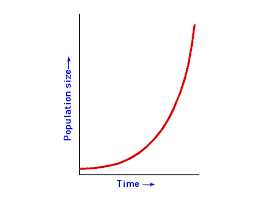

What pattern of population growth is pictured?
exponential
logistic
predator-prey
invasive
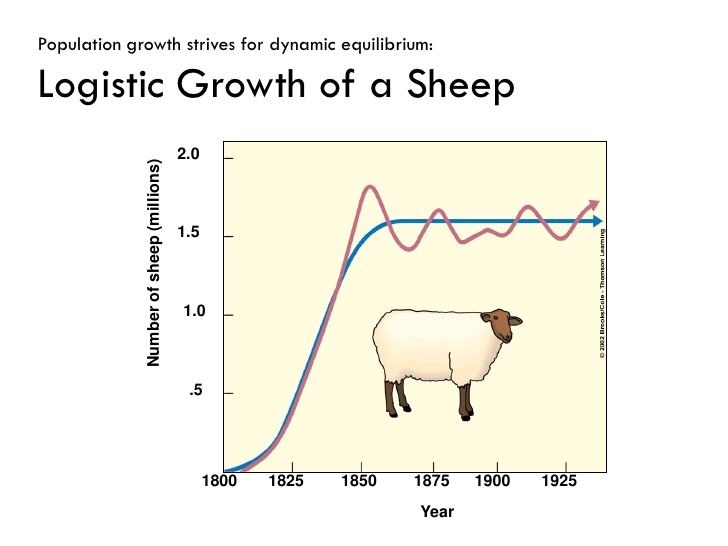

What are limiting factors?
Anything that keeps a population from continuing to grow exponentially
Factors that help populations grow larger
Factors that increase the birth date of a population
Factors that increase the amount of immigration in a population
Weather related events (frost, hurricanes, wildfires, earthquakes) are all examples of:
density dependent limiting factors
density independent limiting factors
Shortages of food, space, water, and nesting sites are all examples of:
density dependent limiting factors
density independent limiting factors
The numbers of predators and prey in an ecosystem tend to rise and fall. Which population always rises first?
prey
predators

Which line represents the prey species?
red line
blue line
At the start of the year, there are 20 eagles. Over the course of the year, 4 eagles are born and 2 die. What is the growth rate of this population?
2
0.50
0.20
0.10
The growth rate is 0.22 for a population of snakes. If the snake population starts out with 300 snakes, how many new snakes will be added to the population in one year?
7 snakes
66 snakes
660 snakes
1,363 snakes
The growth rate is 0.08 for a population of turtles. If the population starts out with 150 turtles, how many total turtles will be in the population after one year goes by?
12 turtles
138 turtles
162 turtles
1,875 turtles
What type of population growth is depicted in this graph?
exponential growth model
logistic growth model
performance curve

A species that plays a critical role in the health, maintenance, growth, or definition of an ecosystem.
keystone
invasive
engineer
predator
Grizzly bears in Alaska wade into rivers to catch, kill, and eat the salmon (fish) that swim there. What type of relationship is this?
Commensalism
Mutualism
Parasitism
Predation
High biodiversity makes the food web more complex and better able to support the most species, even if some populations decrease.
True
False
High biodiversity makes it more likely that the ecosystem will be able to keep functioning after a disturbance, such as disease or natural disaster.
True
False
High biodiversity makes an ecosystem more sustainable because the food web is stronger and organisms perform a wider variety of functions.
True
False
What do we call organisms that make their own food?
producers
consumers
heterotrophs
abiotic
What do we call organisms that have to take in food to get energy?
consumers
producers
autotrophs
plants
What is another word that means the same thing as consumer?
autotroph
heterotroph
producer
plant
What do we call an organism that eats a producer?
carnivore
secondary consumer
autotroph
primary consumer

What is this diagram called?
energy pyramid
food web
food chain
circle of death

What words would accurately describe the grass in this food chain?
autotroph & producer
heterotroph & consumer
autotroph & consumer
primary consumer & producer

What trophic level is the hawk in?
1st
2nd
3rd
4th

What trophic level is the butterfly in?
1st
2nd
3rd
4th
What do we call organisms that break down dead materials outside their bodies and absorb the nutrients from the broken down material?
producers
carnivores
detrivores
decomposers
Which trophic level would have the highest concentration of a harmful chemical like mercury or microplastics?
1st trophic level
2nd trophic level
3rd trophic level
4th trophic level
What happens to 90% of the energy eaten by the organisms in a trophic level? Check all that apply
It can be used to do cellular respiration and create ATP
It can be converted into heat
It can be excreted out through feces
It can be put into the soil by decomposers
Which trophic level will have the least biomass (weigh the least) compared to all the other trophic levels? Remember we are talking ALL the organisms in that trophic level, not an individual organism.)
1st trophic level
2nd trophic level
3rd trophic level
4th trophic level
On average, what percentage of taken in by one trophic level is available to be passed on to the next trophic level?
10%
20%
50%
90%

How much energy would be available to the snakes in the 4th trophic level?
10,000 kcal
1,000 kcal
100 kcal
10 kcal
How do carbon emissions lead to global warming?
By trapping the sun's heat in the atmosphere.
By causing very hot volcanic eruptions.
Rocks become richer in carbon as time goes by.
By increasing the amount of carbon in the earth's crust
True or False. The nitrogen in the atmosphere is in the right form for living things to use.
True
False
What converts nitrogen gas into a usable form for plants and animals?
bacteria
rain
fungi
car exhaust
How do animals get the nitrogen they need?
From the air they breathe
From the water they drink
From the food they eat
From the sun
All of the following are advantages to animals living in groups EXCEPT one of these.
living in groups provides the animals with protection
living in groups provides animals with mates and companionship
living in groups allows animals to hunt together to find food
living in groups lets animals match color
What is one disadvantage to animals living in groups?
the animals can spread a sickness very quickly
the animals live together forever
the animals can find friends
the animals will help protect one another
Where does the carbon in the glucose made during photosynthesis come from?
oxygen
water
fats
carbon dioxide
What molecule speeds up the rate of chemical reactions?
lipids
enzymes
substrates
products
Which of the following correctly puts the words in order from smallest to largest?
tissue - atom - molecule - cell - organ - organ system - organism
cell - atom - molecule - tissue - organ - organ system - organism
atom - molecule - cell - tissue - organ - organ system - organism
atom - molecule - cell - tissue - organ system - organ - organism
how do changes in pH or temperature affect enzymes?
the increase the speed of the reaction
they denature the enzymes and they will stop working
they stabilize the enzymes
they improve the enzymes
Which hormone is produced when the blood glucose concentration is above normal?
insulin
glucagon
both insulin and glucagon
neither insulin nor glucagon
Which hormone is produced when the blood glucose concentration is below normal?
insulin
glucagon
both insulin and glucagon
neither insulin nor glucagon
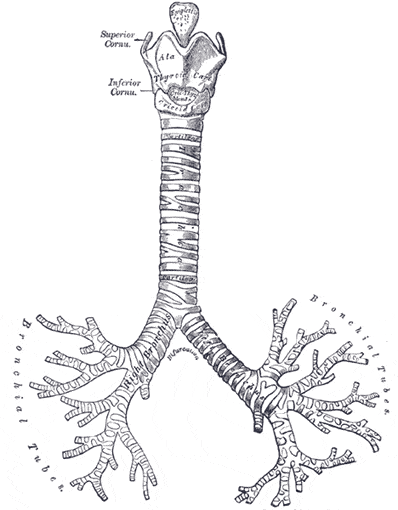
The _____ divides into two main sections or branches from the Trachea.
Alveoli
Epiglottis
Bronchi
Which chambers of the heart push blood out?
Atria
Ventricles
Capillaries
Alveoli
Where do arteries carry blood?
Toward the mouth and nose
Toward the heart
Away from the heart
Away from the mouth and nose

What is the arrow pointing to on the heart?
right atria
right ventricle
left atria
left ventricle


Part of the digestive system that food is stored and partially digested before it enters the small intestine
stomach
large intestine
liver
rectum
Which organ releases digestive enzymes into the small intestine?
pancreas
small intestine
esophagus
salivary glands
Which organ stores and releases bile?
liver
gallbladder
pancreas
Which of the following is NOT recycled on Earth?
Carbon
Water
Nitrogen
Energy

Which way will the green CO2 molecules move?
into the cell
out of the cell
equally into and out of the cell
it is impossible to predict

Structure 17 is the
pancreas
liver
stomach
gall bladder
Structure 20 is the
pancreas
stomach
large intestine
small intestine

What is labeled at E?
bronchi
trachea
pharynx
none of the above


What is a substance called if it speeds up a chemical reaction? (choose 2 answers)
denature
enzyme
catalyst
substrate
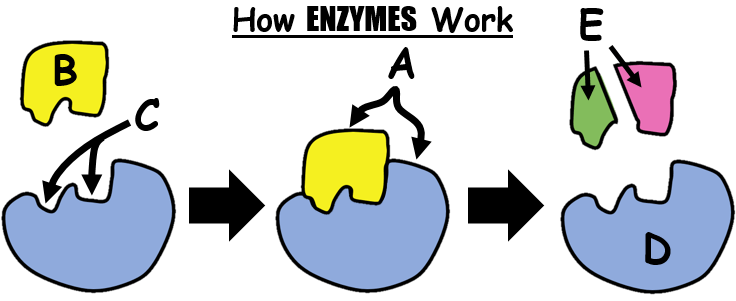
What happens when enzymes are heated to a high temperature?
The enzymes die.
The shapes of the enzyme are denatured (changed).
The enzymes' amino acid sequence changes.
The enzymes remain the same
What do letters B and C represent?
B = carbon dioxide; C = oxygen gas
B = light ; C = carbon dioxide
B = carbon dioxide; C = glucose
B=water; C = oxygen gas

What are these structures?
chloroplasts
thylakoid membranes
stroma
plant cells


When two or more individuals or population attempt to obtain a single resource
Competitive Exclusion
Environmental Interactions
Ecosystem
Limited Resources

