Wayground logo

Free Printable Worksheets

Font size

S
M
L
XL
Worksheets

7th Grade Year in Review

Total questions: 116

Worksheet time: 2hrs 31mins

Name
Class
Date
1.

Living things are made up of units called

a)

DNA

b)

Cells

c)

Homeostasis

d)

Seeds

2.

If an organism is made entirely of one cell it is called...

a)

Multicellular

b)

Prokaryotic

c)

Unicellular

d)

Eukaryotic

3.

Reproduction that only involves one parent and all offspring are identical; for example, binary fission of bacteria or amoebas.

a)

Asexual

b)

Sexual

c)

Division

d)

Addition

4.

Living things are based on a universal genetic

code. What molecule is responsible for that code?

a)

RNA

b)

Lipid

c)

Protein

d)

DNA

5.

The combination of chemical reactions through

which an organism builds up or breaks down

materials as it carries out its life processes is called ...

a)

absorption

b)

metabolism

c)

digestion

d)

consumption

6.

Maintaining a stable internal

environment is called

a)

homeostasis

b)

equilibrium

c)

balance

d)

evenness

7.
When you step out into the cold, your body shivers in order to keep its temperature at 98.6F.
a)
All living things use energy
b)
All living things contain cells
c)
All living things maintain homeostasis
d)
All living things grow
8.
Green plants produce their own food through the process of photosynthesis.
a)
All living things use energy
b)
All living things contain cells
c)
All living things maintain homeostasis
d)
All living things grow
9.
Rocks are not living because
a)
they never move
b)
they aren't needed for humans
c)
they are not made of cells
d)
they don't break down
10.
A worm turns away from light is an example of a worm
a)
reproducing
b)
doing cellular respiration
c)
having cells
d)
responding to its environment
11.
Which is the most complex of the choices below?
a)
cell
b)
tissue
c)
organ
d)
organ system
12.
What is the most basic unit of life?
a)
cell
b)
tissue
c)
organ
d)
organ system
13.
How do consumers get the energy they need to survive?
a)
photosynthesis
b)
eating other organisms
c)
decomposing dead materials
d)
chemosynthesis
14.
It is hot outside. You start sweating. In this case, the hot weather is the...
a)
stimulus
b)
response
c)
cause and effect
d)
responder
15.
In order to perform photosynthesis, producers need...
a)
WiFi
b)
oxygen
c)
sunlight
d)
to eat other organisms
16.
Which choice shows the levels of organization in order from LARGEST to smallest.
a)
organism, organ system, organ, tissue, cell
b)
cell, tissue, organ, organ system, organism
c)
organism, cell, organ system, tissue, organ
d)
cell, cell, cell, cell, cell
17.
Most single-celled organisms...
a)
reproduce asexually
b)
reproduce sexually
c)
have complex tissues
d)
can be seen without a microscope
18.
When a baby kitten becomes an adult cat, this is an example of...
a)
energy metabolism
b)
growth and development
c)
response to stimuli
d)
having cells
19.
What is another word for consumer?
a)
autotroph
b)
heterotroph
c)
producer
d)
decomposer
20.
What is another word for producer?
a)
autotroph
b)
heterotroph
c)
consumer
d)
decomposer
21.
A baby goat looks just like its parents. This is because of the concept of...
a)
homeostasis
b)
heredity
c)
energy metabolism
d)
cellular organization
22.
The maintenance of an organism’s internal environment is called:
a)
compensating
b)
homeostasis
c)
balancing
d)
routine
23.
What is an adaptation?
a)
A feature or behavior that helps an animal survive.
b)
The food that an animal eats.
c)
How energy moves in a food web.
d)
How animals evolve throughout time.
24.
An amoeba is a unicellular organism. Which characteristic of life is this?
a)
All living things use energy
b)
All living things contain cells
c)
All living things respond to their environment
d)
All living things grow
25.
What is the main source of energy on Earth?
a)
stars
b)
moon
c)
water
d)
sun
26.
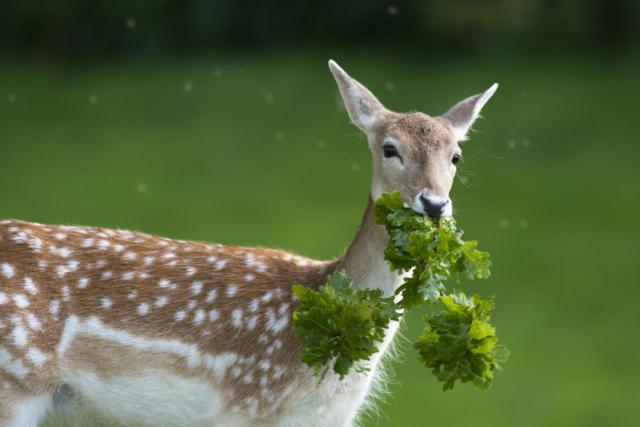
A plant using sunlight to make food to use or a deer eating leaves from a shrub are examples of
a)
universal genetic codes.
b)
organisms made of cells.
c)
responding to a stimulus.
d)
metabolism.
27.
What structure of the cell forms a frame that holds the cell up in the cytoplasm?
a)
centrioles 
b)
cell wall 
c)
flagella 
d)
cytoskeleton 
28.
What organelle of the cell produces energy?
a)
Mitochondria 
b)
Golgi Body 
c)
Vesicle 
d)
Vacuole 
29.
What is something that prokaryotic and eukaryotic cells have in common?
a)
They have a nucleus. 
b)
They are multi-cellular. 
c)
They have DNA. 
d)
They have organelles that are membrane-bound.
30.
What macromolecules help to make the cell membrane? 
a)
Proteins 
b)
Carbohydrates 
c)
Phospholipids 
d)
All of the above 
31.
All of the following statements are true about prokaryotic cells EXCEPT 
a)
No nucleus 
b)
They are simple and small 
c)
Have a cell wall 
d)
Have organelles 
32.
Which of the following is the best example of osmosis? 
a)
NA/K Pump 
b)
Water moving though the cell membrane 
c)
Kidneys 
d)
Photosynthesis 
33.
Osmosis is the movement of... 
a)
salt 
b)
sugar 
c)
water 
d)
none of these 
34.
a rigid supporting layer that surrounds the cells of plants and some other organisms
a)
cell membrane
b)
cell wall
c)
 nucleus
d)
cytoplasm
35.
In cells a large oval organelle that contains the cells genetic material in the form of DNA and controls many of the cells activities
a)
organelle
b)
ribosome
c)
cell wall
d)
nucleus
36.
an organelle in the cells of plants and some other organisms that captures energy from sunlight and changes it to an energy from that cells can use in making food
a)
vacuole
b)
chloroplasts
c)
cytoplasm
d)
mitochondria
37.
Animal cells DO NOT have ...
a)
mitochondria
b)
lysosomes
c)
vacuoles
d)
chloroplasts
38.
Where are proteins made in the cell? 
a)
Golgi body
b)
mitochondrion
c)
nucleus
d)
ribosomes
39.
Tiny cell structures that carry out specific functions within the cell...
a)
membranes
b)
nucleus
c)
organelles
d)
animalicules
40.
The two kinds of cells are prokaryotes and eukaryotes. How are they different?
a)
Prokaryotes have a nucleus.
b)
Eukaryotes have a nucleus.
c)
Prokaryotes are plant cells.
d)
All bacteria are eukaryotes.
41.
What is the process that plant and algae cells use to make food?
a)
chemosynthesis
b)
photosynthesis
c)
decomposition
d)
protein synthesis
42.
This is referred to as the energy currency of the cell
a)
ADP
b)
ATP
c)
Mitochondria
d)
Nucleus
43.
Where does cellular respiration occur?
a)
Nucleus
b)
Mitochondria
c)
Vacuole
d)
Chloroplast
44.
What is the correct equation for cellular respiration?
a)
6O2 + C6H12O6 -> 6CO2 + 6H2O + Energy
b)
6O2 + C6H12O6 + Energy -> 6CO2 + 6H2O
c)
6CO2 + 6H2O -> 6O2 + C6H12O6 + Energy
d)
6CO2 + 6H2O + Energy -> 6O2 + C6H12O6
45.
What is one of the reactants of cellular respiration?
a)
energy
b)
glucose
c)
carbon dioxide
d)
water
46.
Examples of a producer
a)
frog
b)
algae
c)
worm
d)
mouse
47.
Example of a decomposer
a)
fungus
b)
mouse
c)
plants
d)
frogs
48.
What is a herbivore?
a)
an animal that gets energy from eating other animals
b)
an organism that gets energy from eating only plants
c)
an animal that gets energy by eating both plants and other animals
d)
an animal that eats only herbs
49.
What is a carnivore?
a)
an animal that gets energy by eating other animals
b)
An animal that gets energy by eating only plants
c)
an animal that gets energy by eating both plants and animals
d)
an animal that makes its own energy through photosynthesis
50.
An animal that gets energy from eating both plants and animals is a 
a)
herbivore
b)
carnivore
c)
omnivore
d)
autotroph
51.
The shrew provides energy for the _______?
a)
cricket
b)
grasshopper
c)
frog
d)
snake
52.
All food chains begin with a ____________.
a)
primary consumer
b)
secondary consumer
c)
producers
d)
scavengers
53.
Which best describes what a food chain shows you?
a)
Energy flow through an ecosystem
b)
Food flowing through an ecosystem
c)
Consumers going into other consumers
d)
Who eats who
54.
What do the arrows show in a food chain picture?
a)
They always point to the smallest animals.
b)
They point to the animal that tastes the best.
c)
They always point to the producers.
d)
They point in the direction that energy is flowing.
55.
An animal can blend in with its surrounding by using __________________
a)
migration
b)
camouflage
c)
hibernation
d)
prey
56.
What is the study of the interactions among organisms and  between organisms and their environments called?
a)
Biology
b)
Ecology
c)
Astronomy
d)
Biosphere
57.
Which of these is an example of an autotroph?
a)
Sunflower
b)
Krill
c)
Leopard
d)
Hummingbird
58.
What percentage of energy is passed on to each tropic level?
a)
10%
b)
50%
c)
90%
d)
100%
59.
A frog eats a fly. The frog and fly are demonstrating ________.
a)
mutualism
b)
competition
c)
predator/prey
d)
parasitism
60.
Yucca flowers are pollinated by yucca moths. The moths lay their eggs in the flowers where the larvae hatch and eat some of the developing seeds. Both species benefit. 
a)
parasitism
b)
commensalism
c)
mutualism
61.
Remoras attach themselves to a shark’s body. They then travel with the shark and feed on the leftover food scraps from the shark’s meals. The relationship neither harms nor benefits the shark. 
a)
parasitism
b)
commensalism
c)
mutualism
62.
Oxpeckers feed on the ticks found on a rhinoceros. The oxpeckers get a meal and the rhinoceros is helped by the removal of the ticks.
a)
parasitism
b)
commensalism
c)
mutualism
63.
 A flea feeds on a mouse’s blood and harms the mouse.
a)
parasitism
b)
commensalism
c)
mutualism
64.
Any living things is called:
a)
organism
b)
animal
c)
cell
d)
plant
65.
A MUSHROOM is a
a)
Herbivore
b)
Carnivore
c)
Omnivore
d)
Decomposer
66.

What is a biotic factor?

a)

Any non-living component that affects the population of another organism, or the environment.

b)

Any living component that has a population.

c)

Any living component that affects the population of another country.

d)

Any living component that affects the population of another organism, or the environment.

67.

What is a biological community?

a)

An interacting group of various species in a common location.

b)

A non-interacting group of various species in a common location.

c)

An interacting group of no species in a common location.

d)

An interacting group of various species in various locations.

68.

What is a food web?

a)

A system of intraconnecting chains linked together to show the feeding relationships of organisms in an ecosystem.

b)

A system of interconnecting chains linked together to show the feeding relationships of organisms in an ecosystem.

c)

A system of interlocking chains that show a relationship between non-living things.

d)

A system on intralocking chains that show a relationship between non-living things.

69.

What is an abiotic factor?

a)

A living condition or thing, that influences or affects an ecosystem and the organisms in it.

b)

A non-living condition or thing, that does not affect an ecosystem and the organisms in it.

c)

A non-living condition or thing, that influences or affects an ecosystem and the organisms in it.

d)

A living condition or thing, that does not affect an ecosystem and the organisms in it.

70.

What does this picture show?

a)

Organism

b)

Population

c)

Community

d)

Ecosystem

71.
An animal that is EATEN by other animals is a what?
a)
predator
b)
prey
c)
herbivore
d)
scavenger
72.
An animal that HUNTS and eats other animals is called what?
a)
prey
b)
predator
c)
herbivore
d)
scavenger
73.

What is an illustration in the shape of a pyramid that shows how much energy is passed from level to another?

a)

food chain

b)

energy pyramid

c)

omnivore

d)

food web

74.
Genotype refers to the ...
a)
physical expression of the genes
b)
the possible combination of alleles in a gene
c)
whether an allele is dominant or recessive
d)
how an organism will appear
75.
An offspring will receive how many alleles from each parent to determine a specific trait?
a)
one
b)
two
c)
three
d)
five
76.
What is a phenotype
a)
The genetic make up (code)
b)
The physical trait
77.
having two of the same genes for the trait (sometimes called purebred).
a)
homozygous
b)
hetrozygous
c)
protein
d)
chromosome
78.
having two different genes for a trait (sometimes called hybrid).
a)
protein
b)
homozygous
c)
heterozygous
d)
genotype
79.
Two brown eyed parents (Bb) have a baby. What is the chance the baby is blue eyed?
a)
0 %
b)
25%
c)
50%
d)
75%
80.
An allele whose trait only shows up when no dominant allele is present.
a)
hidden allele
b)
dominant allele
c)
recessive allele
d)
present allele
81.
Snapdragon flowers come in red, pink and white.  What type of inheritance is this?
a)
Complete Dominance
b)
Incomplete Dominance
c)
Codominance
d)
Polygenic Inheritance
82.
Incomplete dominance means that the traits are
a)
expressed equally
b)
dominant
c)
recessive
d)
blended
83.
One form of a gene is called_______________
a)
a DNA
b)
a Phenotype
c)
a trait
d)
an allele
84.
Which of the following genotypes is a purebred?
a)
Bb
b)
Gg
c)
bb
d)
Dd
85.
If green is dominant over purple, then what is the genotype for this individual?
a)
Purple
b)
Green
c)
GG
d)
gg
86.
Which is the correct phenotype for this organism?
a)
BB
b)
blue
c)
green
d)
bb
87.
 Recessive alleles are-
a)
capital
b)
lowercase
c)
both
d)
neither
88.
Tt is-
a)
homozygous dominant
b)
homozygous recessive
c)
heterozygous
d)
none of these
89.
What does heterozygous mean?
a)
An organism that has the same genes for a trait (TT or tt)
b)
An organism that has different genes for a trait (Tt)
c)
When neither gene is fully dominant; offspring is a mixture of both
d)
the different forms of a trait (hair color--> brown, blonde, red
90.
What is the relationship between DNA and chromosomes?
a)
Chromosomes are made of DNA
b)
DNA is made of chromosomes
c)
DNA and chromosomes are the same thing.
d)
All of the above are correct
91.
How many pairs of chromosomes exist in each of your cells?
a)
10
b)
12
c)
23
d)
46
92.
Why are your chromosomes arranged in pairs?
a)
Scientists have no idea
b)
Because you get one from your mom and one from your dad
c)
Because pairs can divide easier
d)
Because DNA is awesome
93.
Put in order smallest to largest:
a)
Chromosome - DNA - Gene
b)
Gene - DNA - Chromosome 
c)
DNA - Gene  Chromosome
d)
Chromosome - Gene  - DNA
94.

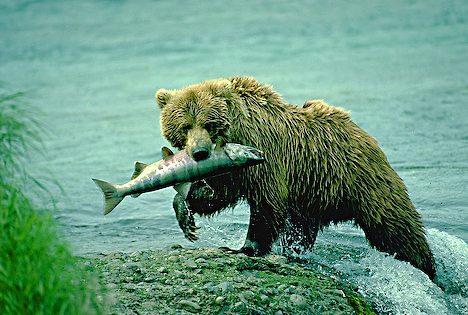
A grizzly bear survives because he is well-adapted to his environment. When he reproduces he passes on those traits to his offspring. this process is called

a)

Natural Selection

b)

Selective Breeding

c)

Random mutations

d)

Variations in a species

95.

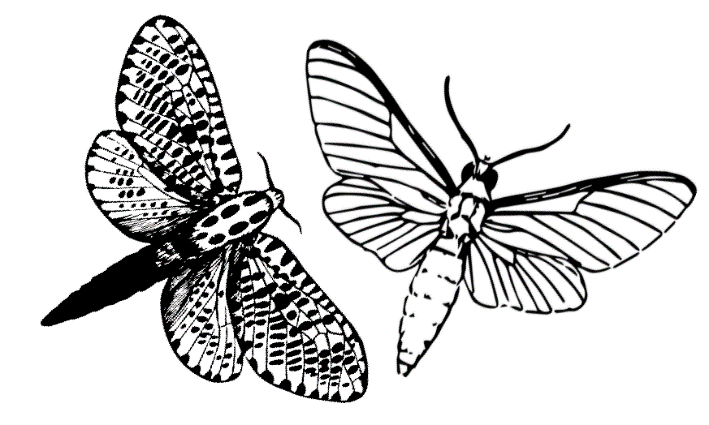
The peppered moth's color camouflaged it on the light colored tree bark. It's color was an example of a/n

a)

Variation

b)

Dominant trait

c)

Recessive trait

d)

Adaptation

96.

Why might it be helpful for a species to have a lot of variations?

a)

They can't be seen by predators

b)

If the environment changes, they might be better able to adapt

c)

It is helpful in asexual reproduction

d)

They don't recognize each other

97.

If a sick person takes an antibiotic but it doesn't kill all of the bacteria causing the sickness, what might explain this?

a)

Variations in the bacteria allowed some organisms to be less affected by the antibiotic?

b)

Bacteria cannot be killed by antibiotics

c)

You cannot cure a bacterial infection

d)

Bacteria do not cause sicknesses

98.

Changes in inherited characteristics can cause a species to change into a new one. This change over time is called?

a)

Graduation

b)

Selective Breeding

c)

Revolution

d)

Evolution

99.

The male and female black widow spider look very different. However, we know they are the same species because:

a)

They reproduce creating fertile offspring

b)

They reproduce creating infertile offspring

c)

They cannot reproduce

d)

They are not the same species

100.

A physical trait favored by an environmental change can be called an

a)

adaptation

b)

extinction

c)

possibility

d)

mutation

101.

Evolution is best defined as:

a)

the process which organisms die.

b)

the process which organisms change over time.

c)

the process which organisms that are extinct become revived.

d)

the process which non-living things fossilize.

102.

What type of evidence is represented in the picture above:

a)

Fossils

b)

Vestigial Structures

c)

DNA

d)

Homologous Structures

103.

What type of evidence is shown in the image above?

a)

Fossils

b)

Vestigial structures

c)

Homologous Structures

d)

DNA

104.

What type of evidence are shown in the picture above?

a)

Fossils

b)

Embryology

c)

Homologous Structures

d)

Vestigial Structures

105.
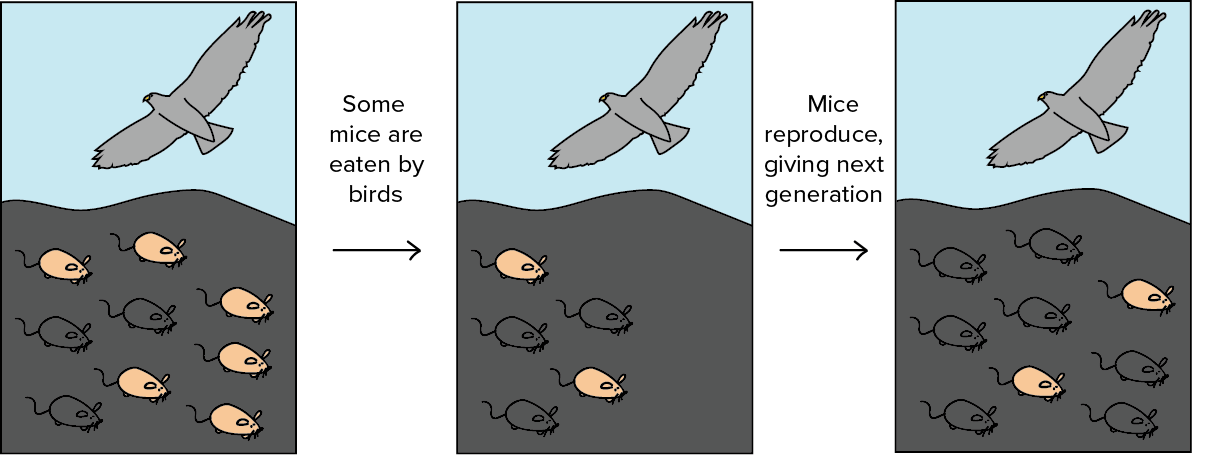
Why is the mouse population changing over time?
a)
The light mice can reproduce more successfully than the dark mice
b)
The hawks eat more dark mice than light mice because the dark mice taste better
c)
The hawks eat more light mice than dark mice because they can see the light mice more easily
d)
The hawks eat more dark mice than light mice because they can see the dark mice more easily
106.

A species is defined as:

a)

a group of organisms that are extremely different.

b)

a group of organisms that have similar characteristics and always live in the same place.

c)

a group of organisms with similar characteristics and can reproduce to make fertile offspring.

d)

any two organisms to make a hybrid.

107.
If an organism has a vestigial structure, that structure likely once had a function in a(n)
a)
close relative
b)
early ancestor
c)
unrelated organism
d)
embryological stage
108.
Mutations are important because they bring about
a)
death of the organism in which they develop
b)
genetic variation needed for a population to evolve
c)
benefits for the individual, not for the population
d)
Hardey-Weinberg equilibrium within a population
109.
A remnant or trace of an organism from the past is called a _______.
a)
Ancestor
b)
Skeleton
c)
Fossil
d)
Imprints
110.
The nervous system is composed of the ___, ___, and ___.
a)
heart, brain, kidneys
b)
lungs, liver, stomach
c)
brain, spinal cord, nerves
d)
eyes, pancreas, veins
111.
What is the function of the nervous system.
a)
provide nutrients for the body.
b)
send and recieve messages
c)
circulate oxygen to sells
d)
remove carbon dioxide from blood
112.
Primary producers are organisms that-
a)
rely on other organisms for their energy and food supply
b)
consume plant and animal remains and other dead matter
c)
use energy they take in form the environment to convert inorganic molecules into complex organic molecules
d)
obtain energy by eating only plants
113.
Commensalism is
a)
one species benefits, the other is not affected
b)
both species benefit
c)
both species are harmed
d)
one species benefit, the other is harmed
114.
Biodiversity is 
a)
the variety of species within an ecosystem
b)
a large number of the same species in an ecosystem
c)
an abundant amount of the same primary consumers 
d)
the ability to have an abundant source from the same species
115.
Water temperature would be an example of ...
a)
A biotic factor
b)
An abiotic factor
116.
Different populations living and interacting with each other in the same area
a)
Biome
b)
Ecosystem
c)
Community
d)
Niche