wayground logo

Free Printable Worksheets

Font size

S
M
L
XL
Worksheets

Biology Origins Genetics test 1a)

Total questions: 100

Worksheet time: 2hrs 42mins

Name
Class
Date
1.
Which sequence of complementary DNA bases would pair with this partial strand
ATG TGA CAG?
a)
ATG TGA CAG
b)
TAC ACT GTC
c)
GTA AGT GAC
d)
CAT TCA CTG
2.
Which of the following best describes a DNA molecule?
a)
double helix
b)
contains ribose
c)
made of amino acids
d)
contains uracil
3.
Which of the following monomers are repeatedly joined together to form a strand of DNA?
a)
amino acids
b)
nucleotides
c)
fatty acids
d)
polysaccharides
4.
In a molecule of double-stranded DNA, the amount of adenine present is always equal to the amount of _________.
a)
cytosine
b)
guanine
c)
thymine
d)
uracil
5.
What determines the code, or information, of a DNA molecule?
a)
the shape (structure) of the nitrogen bases
b)
the order (sequence) of the nitrogen bases
c)
the color of the nitrogen bases
d)
the frequency (number) of nitrogen bases
6.
Which 2 molecules form the sides (backbone) of the DNA ladder?
a)
deoxyribose sugar and adenine
b)
deoxyribose sugar and a hydrogen bond
c)
deoxyribose sugar and the nucleus
d)
deoxyribose sugar and phosphate
7.
The two strands of nitrogenous bases in DNA are joined by which type of bond?
a)
polar bonds
b)
ionic bonds
c)
covalent bonds
d)
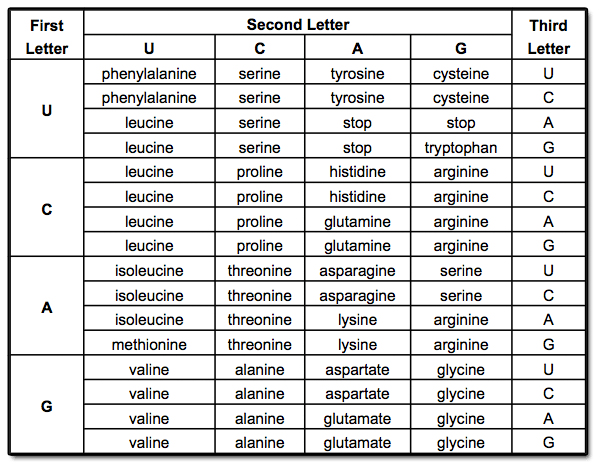
hydrogen bonds
8.

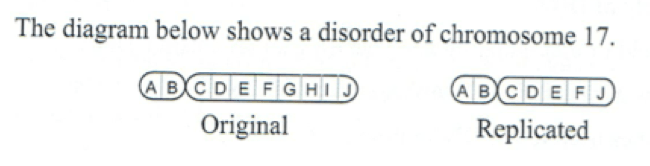
A process in which DNA has the unique ability to make an exact copy of itself.

a)

Replication

b)

Translation

c)

Transcription

d)

Protein Synthesis

9.
What are the three components of a nucleotide?
a)
sugar, hydrogen, nitrogen base
b)
sugar, oxygen, nitrogen base
c)
sugar, phosphate, nitrogen base
d)
sugar, phosphate, protein
10.
Who was given credit for determining the shape of DNA? 
a)
Avery
b)
Watson and Darwin
c)
Watson and Crick
d)
Franklin and Crick
11.
Identify #2.
a)
nitrogen base
b)
phosphate group
c)
deoxyribose sugar
d)
nucleotide
12.
What process is shown in the diagram?
a)
replication
b)
transcription
c)
mitosis
d)
translation
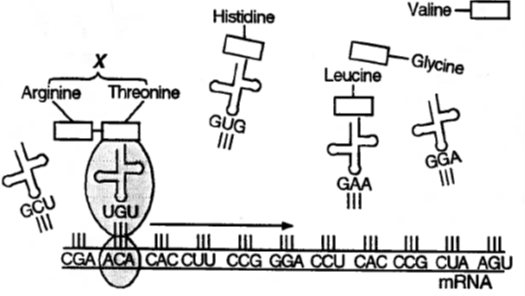
13.
X outlines a(n) ___________.
a)
amino acid
b)
nitrogen base 
c)
nucleotide
d)
nitrogen base pair
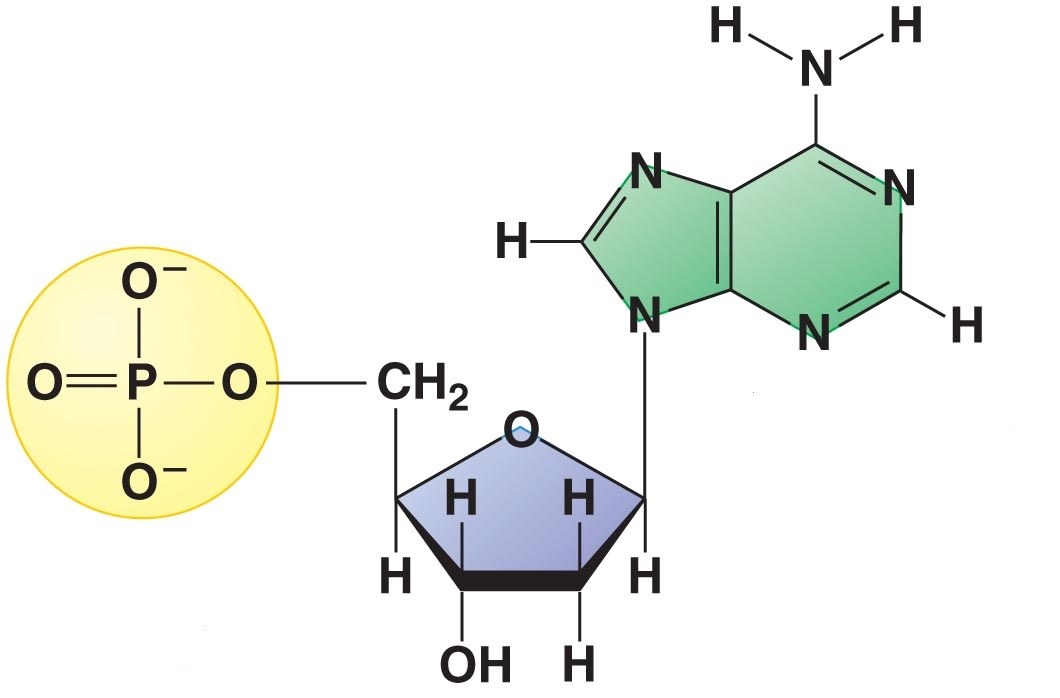
14.
The molecule pictured is a monomer of _______.
a)
RNA
b)
DNA
c)
a carbohydrate
d)
a protein
15.
Adenine bonds with ______________.
a)
Guanine
b)
Thymine
c)
Cytosine
d)
Adenine
16.
Guanine bonds with ______________.
a)
Adenine
b)
Guanine
c)
Cytosine
d)
Thymine
17.
Why is DNA important?
a)
it is very small and very complicated
b)
it's in everything
c)
it serves as the blueprint for traits of all living things
d)
because we eat it every day for energy
18.
What are the 4 nitrogen bases?
a)
adenine, thymine, cytoplasm, and guanine
b)
adenine, thymine cytosine, and guanine
c)
adenine, thymine, cytosine, and gylcerol
d)
adenine, thymine, cytosine, and glucose
19.
Which sequence of DNA bases would pair with this partial strand
ATG TGA CAG
a)
ATG TGA CAG
b)
TAC ACT GTC
c)
GTA AGT GAC
d)
CAT TCA CTG
20.
Which organelle is DNA usually found in?
a)
cell membrane
b)
vacuole
c)
chloroplast
d)
nucleus
21.
Which shows the correct complementary base pairing for DNA?
a)
C-A, T-G
b)
A-G, C-T
c)
C-G, U-A
d)
T-A, G-C
22.
What does DNA stand for?
a)
Deoxyribonucleic acid
b)
Denitrogenous acid
c)
Deribonucleic acid
d)
Diribonucleic acid
23.
Replicate the following strand of DNA: 
AATCATGGA
a)
AATCATGGA
b)
TTAGTACCT
c)
UUAGUACCU
d)
GGATAUCUA
24.

How many chromosomes do human cells have?

a)

46

b)

23

c)

2

d)

44

25.
What is a gene?
a)
A bundle (like a hot dog bun) that the DNA is packed into
b)
something inside the nucleus
c)
a piece of DNA
d)
all of your DNA
26.

Bundled up, organized DNA is called a

a)

gene

b)

trait

c)

chromosome

d)

nucleotide

27.
The building block of nucleic acids are nucleotides.  Nucleotides are composed of a sugar, a phosphate group, and a _________________ base.
a)
oxygen
b)
hydrogen
c)
nitrogen
d)
carbon
28.
The backbone of a DNA molecule is made from a ______________ and a _______________ group.
a)
lipid, carbon
b)
sugar, phosphate
c)
nitrogen, oxygen
d)
nitrogen, sulfur
29.
The sugar in DNA is ?
a)
sucrose
b)
glucose
c)
deoxyribose
d)
fructose
30.
What kind of information does DNA carry?
a)
genetic
b)
nuclear
c)
cell structure
d)
it doesn't carry any info
31.
What are the building blocks for DNA?
a)
carbohydrates
b)
nucleotides
c)
lipids
d)
proteins
32.
Which sequence of DNA bases would pair with this partial strand
ATG TGA CAG
a)
ATG TGA CAG
b)
TAC ACT GTC
c)
GTA AGT GAC
d)
CAT TCA CTG
33.
What determines the code, or information, of a DNA molecule?
a)
the shape (structure) of the nitrogen bases
b)
the order (sequence) of the nitrogen bases
c)
the color of the nitrogen bases
d)
the frequency (number) of nitrogen bases
34.
DNA is a polymer made of:
a)
Nucleotides
b)
Ribosomes
c)
Purines
d)
Pyrimidines
35.
DNA codes for...
a)
bases
b)
proteins
c)
amino acids
d)
phosphates
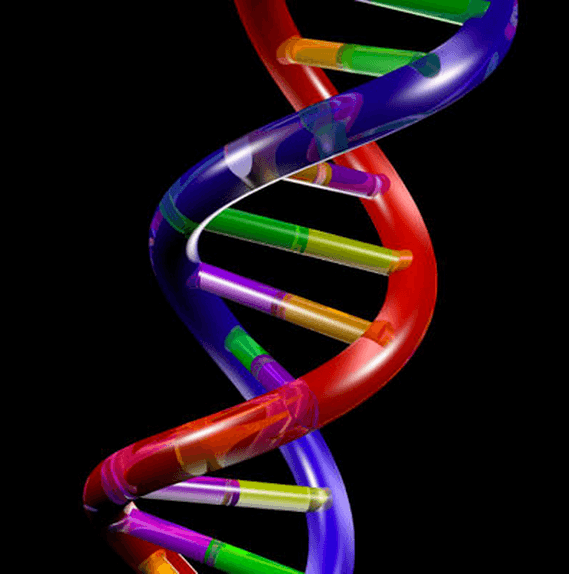
36.
Name this structure
a)
double helix
b)
nucelotide
c)
twisted ladder
d)
hydrogen bond
37.
Which series is arranged in order from largest to smallest in size?
a)
gene, chromosome, nucleus, cell, DNA, nucleotide
b)
cell, nucleus, chromosome, DNA, gene, nucleotide
c)
nucleotide, chromosome, cell, DNA, nucleus
d)
cell, DNA, gene, nucleotide, nucleus, chromosome
38.
What are the following rules called?
1 - The amount of A, T, G, and C varies from species to species.
2 - In each species, the amount of A = T and G = C.
a)
Rosalind's Rules
b)
Watson's Rules
c)
Crick's Rules
d)
Chargaff's Rules
39.
Autosomes are
a)
chromosomes found in autotrophs, only
b)
chromosomes that automatically correct all errors in the DNA
c)
chromosomes that determine traits other than sex
d)
chromosomes that determine the sex of the individual
40.
Which of these organisms has more chromosomes than humans?
a)
chimpanzees
b)
potatoes
c)
plums
d)
all of these -- the number of chromosomes does not determine complexity of the organism
41.
The number of nucleotides in a human cell is about
a)
3000
b)
300,000
c)
3 million
d)
3 billion
42.

Chromosomes are made from protein and what other molecule?

a)

Ammonia

b)

ATP

c)

DNA

d)

Carbon Dioxide

43.

How many pairs of chromosomes are in a human being?

a)

23

b)

44

c)

89

d)

72

44.

Where are chromosomes found in a cell?

a)

In the neutron of the cell.

b)

In the nucleus of the cell.

c)

In the proton of the cell.

d)

In the cell membrane of the cell.

45.

If we were to look inside a normal male bone cell, how many total chromosomes would we find?

a)

1

b)

2

c)

23

d)

46

46.
What percentage of chromosomes are handed down by a sperm cell?
a)
75%
b)
25%
c)
50%
d)
100%
47.

A _______ is a segment of DNA that codes for a specific protein or RNA molecule.

a)

gene

b)

gamete

c)

chromosome

d)

chromatid

48.

About how many genes does the human genome contain?

a)

46

b)

1 billion

c)

200-300

d)

20,000-30,000

49.

A _________ is DNA tightly coiled around proteins.

a)

gene

b)

chromosome

c)

trait

d)

mutation

50.

Chromosomes that are paired by size and content are called _______ chromosomes.

a)

homeostasis

b)

homologous

c)

matching

d)

sister

51.

The chromosomes that are not involved in determining the sex of an individual are called __________.

a)

sex chromosomes

b)

mutations

c)

autosomes

d)

homologous

52.

The 23rd pair of chromosomes that do determine the sex of an individual are called ___________.

a)

sex chromosomes

b)

autosomes

c)

homologous

d)

genes

53.

In what process is mRNA synthesized?

a)

Transcription

b)

Translation

c)

DNA Replication

d)

Mitosis

54.

Where does TRANSCRIPTION occur?

a)

Nucleus

b)

Ribosome

c)

Cytoplasm

d)

Mitochondria

55.

Why must transcription occur where DNA can be found?

a)

because DNA can't leave

b)

because ribosomes are in the nucleus

c)

because DNA polymerase is found there

d)

because helicase unzips the DNA

56.

Which of the following is a codon?

a)
b)

ATG

c)

AUG

d)

AUT

57.

How many codons equals 1 amino acid?

a)

1

b)

2

c)

3

d)

4

58.

How many nucleotides equal 1 amino acid?

a)

1

b)

2

c)

3

d)

4

59.

On which molecule can an anticodon be found?

a)

mRNA

b)

DNA

c)

tRNA

d)

rRNA

60.

A polypeptide is a sequence of ____________________ held together by a ______________ bond.

a)

amino acids; peptide

b)

fatty acids; ionic

c)

proteins; hydrogen

d)

fatty acids; covalent

61.

Which two thing are found on a molecule of tRNA?

a)

amino acids; anticodons

b)

amino acids; codons

c)

ribose sugar; proteins

d)

deoxyribose sugar; codons

62.

How do you know when to STOP translating a strand of mRNA?

a)

look for STOP on the decoder

b)

stop at the end of the strand

c)

you don't

d)

when Ms. H tells me to

63.

TRANSCRIBE this DNA sequence: TACGTTACT

a)

AUGCAAUGA

b)

ATGCAATGA

c)

AUGGATUGA

d)

TACGTTACT

64.

TRANSLATE this RNA sequence: AUGCAAUGA

a)

Met-Glu-Stop

b)

Met-His-Stop

c)

Thr-Glu-Stop

d)

Thr-Pro-Stop

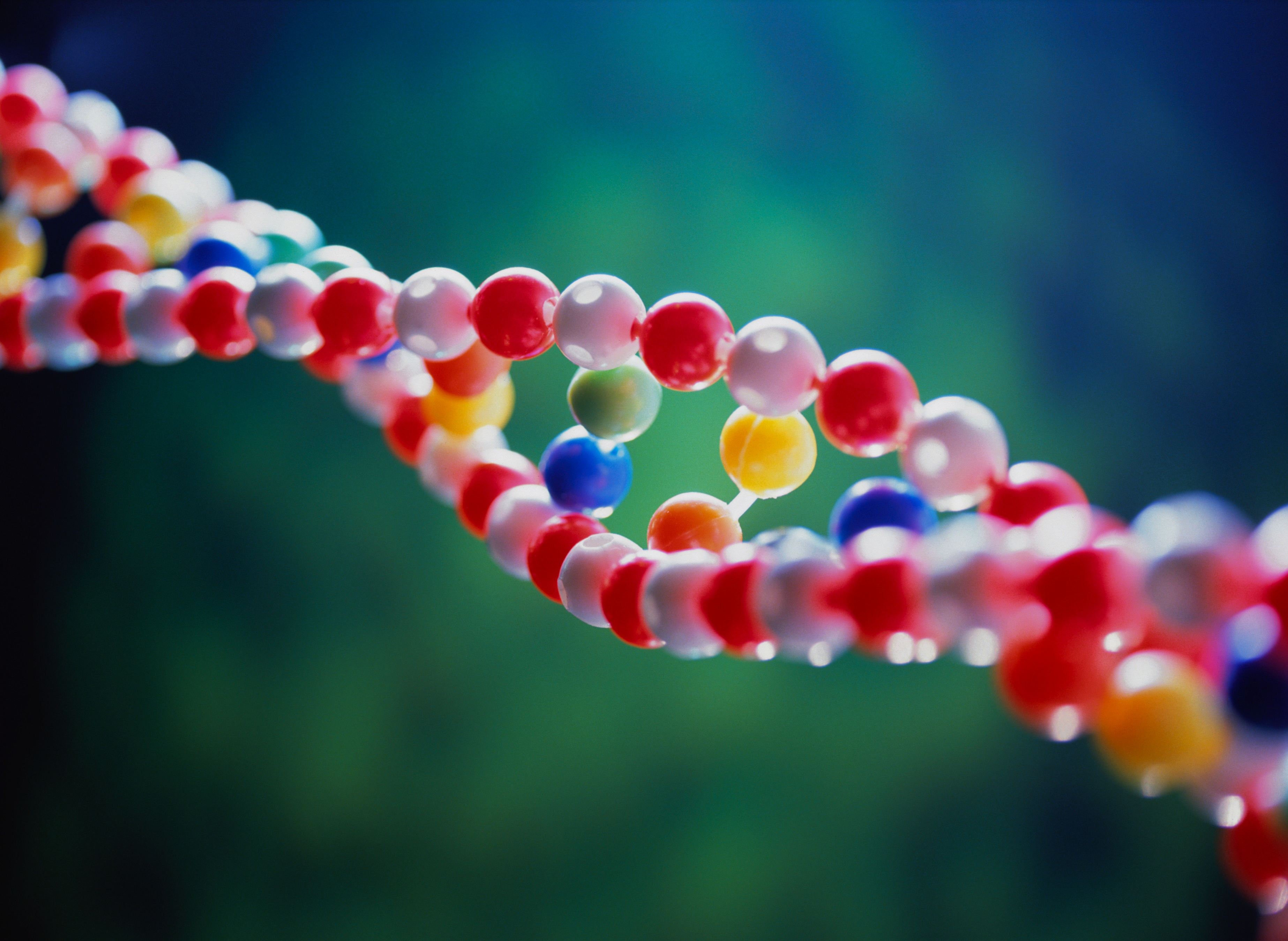
65.
What process is going on in this photo? 
a)
Transcription 
b)
Translation 
c)
Replication 
d)
All the above 
66.
Does the order of amino acids in a protein matter?
a)
YES!
b)
NO!
67.

The important enzyme related with transcription is;

a)

gyrase

b)

DNA polymerase

c)

RNA polymerase

d)

ligase

68.
The function of _____ is to transport amino acids in the cytoplasm to the ribosome.
a)
rRNA
b)
tRNA
c)
mRNA
d)
DNA
69.
The process of going from DNA to mRNA is called
a)
Transcription
b)
Translation
c)
Transportation
d)
Transient
70.
The process where mRNA is read and made into an amino acid chain.
a)
Transcription
b)
Translation
c)
Transportation
d)
Transient
71.
In proteins, the amino acid order is determined by 
a)
nitrogenous bases in RNA
b)
random placement
c)
nitrogenous bases in DNA
d)
there is no order
72.
What is the three base sequence of mRNA that codes for a single amino acid?
a)
Anticodon
b)
Codon
c)
Protein
73.

Mutations can be negative because

a)

They can cause cancer

b)

They can cause birth defects

c)

They can help an organism thrive in its environment.

d)

They can affect offspring.

74.

Mutations can benefit humans because they can:

a)

Cause illness

b)

Make an organism more suited to live in its environment.

c)

Make organisms live shorter lives

d)

Cause organisms to grow extra limbs.

75.

A mutation is defined as:

a)

A change in the cell's structure

b)

Anything that changes in an embryo

c)

Any change in the physical features of a human

d)

A change in the DNA sequence

76.
What causes mutations?
a)
Mistakes in replication or environmental substances
b)
The amino acids
c)
Passed down by genetics
d)
It's how your born
77.

A mutation can occur if a base pair is ____________, deleted, or substituted for another.

a)

modified

b)

added

c)

transferred

78.

A mutation in which only one nucleotide is altered is called a:

a)

Frameshift Mutation

b)

Deletion Mutation

c)

Point Mutation

d)

Insertion Mutation

79.

ATTTGAGCC- Original

ATTGAGCC - Mutated

The example above is an example of a

a)

Insertion

b)

Point mutation

c)

Deletion

d)

Substitution

80.

Mutations are random.

a)

True

b)

False

81.

True or false, mutations create genetic diversity?

a)

True

b)

False

82.

Identify which of the following is a genetic mutation disease..

a)

Common head cold

b)

Cystic fibrosis

c)

Heart attack

d)

Chicken pox

83.

In order for offspring to get a genetic mutation, the mutation must occur in what type of cell?

a)

Cells with no nucleus.

b)

Any body cell after birth.

c)

Cells with no cell wall or cell membrane.

d)

Cells like eggs or sperm cells that are undergoing reproduction.
84.
The process to go from DNA to mRNA is _______
a)
translation
b)
transcription
c)
replication
85.
What amino acid is represented by the codon UUA?
a)
Phenylalanine
b)
Tyrosine
c)
Leucine
d)
Stop codon
86.
original chromosome
ABC-DEF
mutated chromosome
AC-DEF
This is a _____________ mutation.
a)
frameshift
b)
point
c)
deletion
87.
Why are insertion and deletion (frameshift) mutations so harmful?
a)
They change all of the codons from the mutation on down the line, which changes the amino acid sequence
b)
They insert things that an organism doesn't need.
c)
They often delete things that organisms need.
d)
Insertion and deletions are not any more harmful than substitution mutations.
88.
In DNA, Adenine bonds with ______________.
a)
Guanine
b)
Thymine
c)
Cytosine
d)
Adenine
89.
Guanine bonds with ______________.
a)
Adenine
b)
Guanine
c)
Cytosine
d)
Thymine
90.
Any change in the sequence of DNA is...
a)
transgenic shift
b)
Single Genotype
c)
Monohybrid Trait
d)
Mutation
91.
A type of substitution in which no  amino acids change is called 
a)
Missense
b)
Nonsense
c)
Silent
d)
Deletion
92.
This type of substitution codes for a stop codon
a)
Missense
b)
Nonsense
c)
Silent
d)
Deletion
93.
A frameshift mutation would result from...
a)
a base deletion only
b)
a base substitution only
c)
either an insertion or deletion of a base
d)
a base insertion only
94.
What type of chromosomal mutation has occurred?
a)
substitution
b)
insertion
c)
deletion
d)
nondisjunction
95.

Which Karyotype displays a female with Down syndrome?

a)
b)
c)
d)
96.
The haploid number of human chromosomes is
a)
11
b)
12
c)
23
d)
46
97.
Each identical side of a chromosome is the 
a)
centromere
b)
chromatin
c)
centriole
d)
chromatid
98.
Autosomes are
a)
chromosomes found in autotrophs, only
b)
chromosomes that automatically correct all errors in the DNA
c)
chromosomes that determine traits other than sex
d)
chromosomes that determine the sex of the individual
99.
Which of these organisms has more chromosomes than humans?
a)
chimpanzees
b)
potatoes
c)
plums
d)
all of these -- the number of chromosomes does not determine complexity of the organism
100.
The number of nucleotides in a human cell is about
a)
3000
b)
300,000
c)
3 million
d)
3 billion