wayground logo

Free Printable Worksheets

Font size

S
M
L
XL
Worksheets

The nervous system

Total questions: 132

Worksheet time: 2hrs 34mins

Name
Class
Date
1.
The cerebrum is part of the nervous system.
a)
True
b)
False
2.
The cerebellum is part of the nervous system.
a)
True
b)
False
3.
The spinal cord is part of the nervous system.
a)
True
b)
False
4.
The trachea is part of the nervous system.
a)
True
b)
False
5.
The manager of the body systems. Communicates bodily functions.
a)
integumentary
b)
resperatory
c)
circulatory
d)
nervous
6.
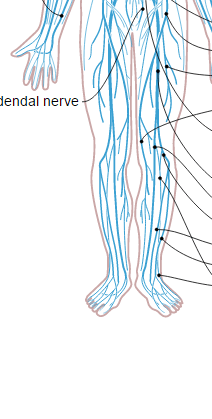
This is a picture of the 
a)
peripheral nervous sysyem
b)
central nervous system
c)
respiratory system
d)
circulatory system
7.
This is a picture of the 
a)
peripheral nervous sysyem
b)
central nervous system
c)
respiratory system
d)
circulatory system
8.
What is the function of the nervous system.
a)
provide nutrients for the body.
b)
send and recieve messages
c)
circulate oxygen to sells
d)
remove carbon dioxide from blood
9.
Which of the following describes the relationship between sensory neurons and motor neurons?
a)
Motor neurons bring a stimulus input to the brain and sensory neurons carry a movement output. 
b)
Sensory neurons tell motor neurons what to do.
c)
Sensory neurons bring a stimulius input to the spinal cord or brain and the brain or spinal cord sends a motor neuron  response.
d)
Sensory neurons do more than motor neurons
10.
Brain cells are called
a)
hemoglobin
b)
neurons
c)
brainpoppers
d)
alveoli
11.

The brain controls the body's functions.

a)

True

b)

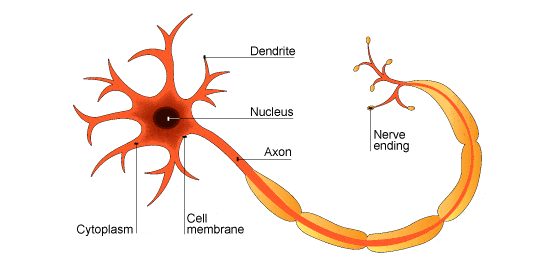
False

12.

If you are having trouble with your BALANCE and COORDINATION, which part of your brain should be checked?

a)

cerebrum

b)

cerebellum

c)

brain stem

d)

spinal cord

13.

The CENTRAL nervous system is made up of which two organs?

a)

Brain and Spinal Cord

b)

Spinal Cord and Peripheral Nerves

c)

Peripheral Nerves and Heart

d)

Heart and Lungs

14.

Select the VOLUNTARY action.

a)
b)
c)
d)
15.

Select the INVOLUNTARY action.

a)
b)
c)
d)
16.

____________ ---> ____________ ---> _______________

a)

Response, Stimulus, Interpret

b)

Interpret, Stimulus, Response

c)

Stimulus, Interpret, Response

d)

Response, Interpret, Stimulus

17.

Which color is the CEREBRUM?

a)

PINK

b)

PURPLE

c)

YELLOW

18.

Which color is the CEREBELLUM?

a)

PINK

b)

PURPLE

c)

YELLOW

19.

Which color is the BRAIN STEM?

a)

PINK

b)

PURPLE

c)

YELLOW

20.
What is the function of the nervous system.
a)
provide nutrients for the body.
b)
send and recieve messages
c)
circulate oxygen to sells
d)
remove carbon dioxide from blood
21.
What does the cerebrum control?
a)
controls thoughts and voluntary actions
b)
controls vital and involuntary actions 
c)
controls balance
d)
controls the uvula
22.
The nervous system is composed of the ___, ___, and ___.
a)
heart, brain, kidneys
b)
lungs, liver, stomach
c)
brain, spinal cord, nerves
d)
eyes, pancreas, veins
23.
Which part of the brain controls vital functions such as breathing and heart rate?
a)
Diencephalon
b)
Frontal Lobe
c)
Brain Stem
d)
Cerebellum
24.
What is the part highlighted in red?
a)
Cerebrum
b)
Cerebellum
c)
Brain Stem
d)
Diencephalon
25.
Identify the lobe of the brain that is highlighted.  
a)
frontal
b)
temporal
c)
occipital
d)
parietal
26.
Identify the lobe of the brain
a)
frontal
b)
temporal
c)
occipital
d)
parietal
27.
What is the largest area of the brain that controls everything conscious?
a)
Cerebellum
b)
Cerebrum
c)
Diencephalon
d)
Brain Stem
28.
Wrinkled part of the brain's surface where the body processes information
a)
Brain stem
b)
Cerebral Cortex
c)
Corpus Callosum
d)
Cerebellum
29.
This part is known as the "Little Brain" and is in charge of balance and coordinating movements.  
a)
Thalamus
b)
Reticular Formation
c)
Hypothalamus
d)
Cerebellum
30.
Which part of the brain controls reflexes?
a)
Cerebrum
b)
Cerebellum
c)
Brain stem
d)
Spinal cord
31.
Which systems work together when nutrients are dropped off for the cells in the brain?
a)
Circulatory, Excretory, Respiratory
b)
Circulatory, Digestive, Nervous
c)
Circulatory, Respiratory, Nervous
d)
Circulatory, Skeletal, Nervous
32.

As organisms get more complex, cells become specialized to perform specific functions in the body. What is the function for the cell shown?

a)

contract and shorten movement

b)

provide coverage and protection

c)

carry impulses around the body

d)

connects parts together

33.

The human brain is made of 100 billion neurons. Each neuron has a nucleus that contains genes. Many neurons bind together to form a nerve.

a)

tissue

b)

system

c)

organ

d)

cell

34.

Which cell relays messages from one tissue to another?

a)

Red Blood Cell-RBC

b)

White Blood Cell-WBC

c)

Neuron

d)

Tissue

35.

Neurons are primarily composed of this cell?

a)

heart

b)

skin

c)

brain

d)

skull

36.

What level of structure is represented by the diagram?

a)

organ

b)

organ system

c)

cell

d)

tissue

37.

The function of sneezing is to expel mucus containing foreign particles from the nasal cavity. A person sneezes when foreign particles pass through the nasal hair which triggers the release of chemical that activates body system causing sneezing. What body part is activated?

a)

circulatory system

b)

digestive system

c)

nervous system

d)

excretory system

38.

Humans feel hungry when their empty stomachs contract and glucose levels in their body drop. Both of the situations stimulate neurons that send messages to the brain which are interpreted as hunger. What body systems are involved in this process as described?

a)

digestive, muscular, integumentary, and respiratory

b)

digestive, excretory, integumentary, and skeletal

c)

circulatory, excretory, nervous, and skeletal

d)

circulatory, digestive, muscular, and nervous

39.

Which system is responsible for the overall control of all the internal processes that occur in the body?

a)

muscular system

b)

nervous system

c)

digestive system

d)

skeletal system

40.

The urinary bladder is a muscular organ of the excretory system that collects urine excreted by the kidney. How does the nervous system help the urinary system in excretion?

a)

it signals the urinary bladder to absorb more water from the urine.

b)

It signals the urinary system to collect waste from the different parts of the body.

c)

It signals the urinary bladder to hold and release urine at appropriate times.

d)

It signals the urinary bladder to allow more urine to flow from the ureters.

41.

The brain has 3 major sections that send and receive signals to control all the activities that keep a person functioning efficiently. Which major section controls breathing and heart beat?

a)

cerebellum

b)

cerebrum

c)

brain stem

d)

cortex

42.

Which 2 body systems interact and initiate movement?

a)

muscular and nervous system

b)

skeletal and muscular system

c)

respiratory and nervous system

d)

circulatory and nervous system

43.

The muscles in the wall of the blood vessels contract or relax to vary the blood flow. Which body system regulates the contraction and relaxation of the muscles?

a)

digestive system

b)

excretory system

c)

skeletal system

d)

nervous system

44.
The _______ send and receive messages from the brain.
a)
Nerves
b)
Spinal Cord
c)
Brain
45.
The ________ is a rope-like bundle of nerves. It is also the main pathway for information.
a)
Nerves
b)
Spinal Cord
c)
Brain
46.
The _____ controls all the other organs, and processes all the information. 
a)
Nerves
b)
Spinal Cord
c)
Brain
47.
The ________ is filled with fluid and helps you keep your equilibrium
a)
Retina
b)
Cochlea
c)
 spinal cord
d)
iris
48.
An _______ is a living thing.
a)
Organism
b)
Organ 
c)
Organ system
49.
An _______ is a body part that does a certain job.
a)
organism
b)
organ
c)
organ system
50.
A group of organs that work together is called an _________
a)
organism
b)
organ 
c)
organ system
51.

What part of the brain is number 1?

a)

Cerebrum

b)

Cerebellum

c)

Medulla

52.

Our ______ receive messages and send them to the brain. The brain sends messages to our body on how to respond.

a)

heart

b)

lungs

c)

nerves

53.

This system controls everything you do.

a)

Nervous system

b)

Olfactory system

c)

Respiratory system

d)

Endocrine system

54.

Without the nervous system, you couldn't

a)

walk

b)

breathe

c)

think

d)

all of the above

55.

The nervous system is made up of these three parts:

a)

Brain, heart, and spinal cord

b)

Brain, spinal cord, and nerves

c)

Nerves, arteries, and veins

d)

Nerves, liver, and heart

56.

What is the biggest part of the brain?

a)

Brain stem

b)

Think tank

c)

Cerebrum

d)

Cerebellum

57.

Which part of the brain helps keep your balance so you don't fall flat on your face?

a)

Cerebellum

b)

Medulla oblongata

c)

Pituitary gland

d)

Spinal cord

58.

Which part of your brain keeps you breathing?

a)

Breathe-o-meter

b)

Brain stem

c)

Pituitary gland

d)

Cerebellum

59.
The brain is the ______ ______ of the body.
a)
nervous center
b)
nueropathy
c)
control center
d)
extension
60.
The red part of the picture shows the ________ which is part of the nervous system.
a)
brain
b)
spinal cord
c)
peripheral nerves
d)
neurons
61.
The part of the brain that controls balance, coordination, and unconscious muscle activities.
a)
Cerebrum
b)
Cerebellum
c)
Brain
d)
Spinal Cord
62.
The part of the brain that controls conscious thoughts, senses, language  and memories.
a)
Cerebellum
b)
Cerebrum
c)
Dendrites
d)
Brain Stem
63.
Connected to spinal cord, controls heartbeat, breathing, blood pressure, digestion.
a)
Nerves
b)
Brain Stem
c)
Dendrites
d)
Brain
64.
What is the main function of the nervous system?
a)
clean waste from the cells
b)
absorb nutrients for energy
c)
deliver messages to the brain
65.
Which part of the body is like a highway for sending messages?
a)
Blood
b)
Spinal Cord
c)
Atrium
d)
Ventricle
66.
main organ of the nervous system. protected by the skull, and made of neurons, it is the control center for all actions, thoughts and emotions.
a)
brain
b)
electrical impulse
c)
gland
d)
heart
67.
Which of the following is a part of the nervous system?
a)
lungs
b)
the heart
c)
the spinal cord
d)
skin
68.
When you react to catch a dropped ruler your body reacts in this order:
a)
1) muscles contract 2) eyes sense ruler move 3) message sent to brain 4) message sent to the muscles
b)
1) message sent to muscles 2) muscles contract 3) message sent to brain 4) eyes sense ruler move
c)
1) eyes contract 2) muscles sent to brain 3) message sense moves 4) ruler is sent to muscles
d)
1) eyes sense ruler move 2) message sent to brain 3) message sent to muscles 4) muscles contract
69.
The system of the body that carries information to all parts of the body.
a)
Nervous system
b)
Spinal Cord
c)
Neuron
d)
Brain
70.
A bundle of nerves that runs along the back of a vertebrate within the spinal column.
a)
Dendrites
b)
Stimulus
c)
Brain Stem
d)
Spinal cord
71.
The part of the brain that controls conscious thoughts, senses, language  and memories.
a)
Cerebellum
b)
Cerebrum
c)
Dendrites
d)
Brain Stem
72.
The area of the brain most associated with coordination and balance is the:
a)
Cerebellum
b)
Hippocampus
c)
Amygdala
d)
Pons
73.
The area of the brain most associated with forming memories is the:
a)
Cerebellum
b)
Hippocampus
c)
Amygdala
d)
Pons
74.
The brain lobe controlling vision is the:
a)
Frontal
b)
Occipital
c)
Temporal
d)
Parietal
75.
Autonomic life functions such as heartbeat and breathing are centred in the:
a)
Amygdala
b)
Brain Stem
c)
Cerebellum
d)
Limbic System
76.
The part of the neuron that conducts action potentials is the:
a)
Axon
b)
Dendrite
c)
Axon Terminal
d)
Cell Body
77.
The part of the neuron that receives signals is the:
a)
Axon
b)
Dendrite
c)
Axon Terminal
d)
Cell Body
78.
The part of the neuron that transmits signals to muscles is the:
a)
Axon
b)
Dendrite
c)
Axon Terminal
d)
Cell Body
79.
The neurotransmitter most associated with rewards and motivation is:
a)
Dopamine
b)
Serotonin
c)
GABA
d)
Adrenaline
80.
The neurotransmitter most associated with learning & memory is:
a)
Dopamine
b)
Serotonin
c)
GABA
d)
Glutamate
81.
Heartbeat would be accomplished by which branch of the nervous system?
a)
Sensory
b)
Autonomic
c)
Motor
d)
Pineal
82.
The CNS is contained by a membrane and bathed in:
a)
Blood
b)
Cerebro-Spinal Fluid
c)
Lymph
d)
Cytoplasm
83.
Sensory stimuli that generate reflexes generally are processed by the brain before signals are sent to effectors.
a)
True
b)
False
84.
The nerve cell that carries impulses from a sense receptor to the brain or spinal cord is a _____________.
a)
Motor Neuron
b)
Sensory Neuron
c)
Relay Neuron
85.
The nerve cell that connects sensory and motor neurons is a _______________.
a)
Motor Neuron
b)
Sensory Neuron
c)
Interneurons 
d)
Glial cells
86.
The nerve cell that transmits impulses from the brain or spinal cord to a muscle or gland.
a)
Motor Neuron
b)
Relay Neuron
c)
Sensory Neuron
d)
Schwann cell
87.
What is the change of a cell membrane from positive to negative called?
a)
Glycolysis
b)
Action Potential
c)
Temporal Summation
d)
Electrolysis
88.
What part of the neuron carries the impulse toward the nerve cell body?
a)
Dorsal Root
b)
Dendrites
c)
Myelin Sheath
d)
Axon
89.
What part of the neuron is myelinated?
a)
Cell Body
b)
Axon
c)
Synapse
d)
Dendrite
90.
A chemical substance that transmits nerve impulses across a synapse 
a)
Neurotransmitter
b)
Axon
c)
Synapse
d)
Nerve
91.
Part of the nervous system made of the brain and spinal cord.
a)
central nervous system
b)
peripheral nervous system
92.
What are the two parts of the nervous system? 
a)
The brain and spinal cord
b)
The central nervous and peripheral nervous system 
c)
The neurons and the dendrites
d)
The cerebrum and the medulla
93.
This is the job of the nervous system.
a)
To send messages to and from the brain and spinal cord to and from the body
b)
To break down food to be used by the body
c)
To remove wastes from the body
94.
Which neurons act to connect a sensory neuron to a motor neuron? 
a)
interneuron
b)
afferent 
c)
efferent
d)
motor
95.
Which part of a neuron receives the messages
a)
Axon terminal
b)
Cell Body
c)
Dendrites
d)
Somatic Nervous Axon
96.
The gap that a message has to cross to get from one neuron to the other is called the _____
a)
synapse
b)
dendrite
c)
axon
d)
nucleus 
97.
The gap that a message has to cross to get from one neuron to the other is called the _____
a)
synapse
b)
dendrite
c)
axon
d)
nucleus 
98.
An average healthy brain weighs ____ pounds.
a)
5
b)
4
c)
2
d)
3
99.
If a neuron responds at all, it responds completely. This is known as the
a)
threshold
b)
all-or-none response
c)
neuronal pool
d)
withdrawal reflex
100.
The nervous system works together with the endocrine system to regulate and maintain what?
a)
A trusting, loving relationship
b)
Homeostasis
c)
Equality for all races
d)
Balanced hormone levels
101.
what are the two ions transported across the membrane in an action potential?
a)
O2- and K+
b)
Kand Na+
c)
Ca+2 and B+3
d)
Na+1 and Cl
102.
What is a neurotransmitter?
a)
fatty covering of the axon
b)
nerve cell
c)
chemical messenger
d)
gap between neurons
103.

The nerve cells in your body are called neurons. From the picture which part of the neuron is most likely responsible for carrying signals between the dendrite and axon terminal?

a)

soma

b)

axon

c)

Node of Ranvier

d)

Schwann cell

104.
The long, fiber like part of a neuron which the cell sends information to receiving neurons
a)
axon 
b)
dendrite
c)
axon terminal
d)
gene
105.
This releases neurotransmitters which are sent into the synaptic cleft for receptors on the dendrite to taste
a)
axon
b)
axon terminal
c)
gene
d)
neuron
106.
A network of branches coming from individual cells.  They carry information and electrical signals in the brain and nervous system
a)
axon
b)
axon terminal
c)
dendrite
d)
neuron
107.
A nerve cell that is the basic working unit of the brain and nervous system which processes and transmits information
a)
axon
b)
neuron
c)
dendrite
d)
neurotransmitter
108.
This insulating material forms a layer, around the axon of a neuron.  It enables electrical signals to travel down the axon at higher speeds.
a)
neuron
b)
myelin sheath
c)
dendrite
d)
neurotransmitter
109.
What is structure labeled C in the picture?
a)
Dendrite
b)
Axon
c)
Cell Body
d)
Axon Terminal
110.
What is structure labeled B in the picture?
a)
Dendrite
b)
Axon
c)
Cell Body
d)
Axon Terminal
111.
What is structure labeled D in the picture?
a)
Dendrite
b)
Axon
c)
Cell Body
d)
Axon Terminal
112.
Which of the following is the correct order of the direction of a message?
a)
Dendrite-Cell Body-Axon-Synapse
b)
Synapse-Cell Body-Axon-Dendrite
c)
Dendrite-Synapse-Cell Body-Axon
d)
Axon-Cell Body-Dendrite-Synapse
113.
Which structure is responsible for receiving signals?
a)
A
b)
B
c)
C
d)
D
114.

The basic activities of life occur in the

a)

mitochondria

b)

nucleus

c)

DNA

d)

cell

115.

What is classified as a one-celled organism?

a)

organelle

b)

bacteria

c)

tree

d)

lion

116.

Organelles are structures that

a)

increase cell size

b)

have specific jobs

c)

filter out unwanted materials

d)

add to cell complexity

117.

Plants are made of the same types of cells

a)

True

b)

False

118.

In a plant cell, a chloroplast helps the cell to

a)

covert light into food

b)

dispose of wates

c)

direct reproduction

d)

store important chemicals

119.

The cytoplasm stores food, water, minerals, and wastes

a)

true

b)

false

120.

All living things are made of one or more cells

a)

True

b)

Fasle

121.

A group of specialized cells first forms a (n)

a)

tissue

b)

cell

c)

system

122.

Which of the following terms best describes the lungs?

a)

organelle

b)

organ system

c)

organ

d)

tissue

123.

What is the purpose of a cell membrane?

a)

to form a boundary to allow food in and wastes out

b)

to separate organelles

c)

to link multicellular organisms

d)

to make the energy

124.

What part of the cells is the gelatin like substance that contains water and chemicals?

a)

mitochondria

b)

cell wall

c)

chloroplasts

d)

cytoplasm

125.

What is the function of the nucleus in a cell?

a)

It controls what goes in and out of the cell

b)

It is where the cell makes its own food

c)

It controls the cells activities

d)

It contains chlorophyll

126.

Which of the following structures do plant cells have but animal cells do not?

a)

nucleus

b)

cell membrane

c)

cell wall

d)

chromosomes

127.

What cell contracts and relax

a)

muscle

b)

bone

c)

nerve

d)

blood

128.

What cell is surrounded by calcium and phosphorus

a)

blood

b)

nerve

c)

bone

d)

muscle

129.

What part of the cell is letter G

a)

mitochondria

b)

cell membrane

c)

chloroplasts

d)

vacuole

130.

What part of the cell is letter D

a)

mitochondria

b)

cell membrane

c)

nucleus

d)

cytoplasm

131.

A group of organs working together form the

a)

organs

b)

tissues

c)

organ system

d)

cells

132.

Nerve cells have a shape that allows them to

a)

contract and relax

b)

quickly deliver and receive messages

c)

form a protective layer