
 Worksheets
Bonds
Total questions: 85
Worksheet time: 6hrs 58mins
Name
Class
Date
1.
Which of the following has a full valence shell?
a)
Oxygen
b)
Neon
c)
Barium
d)
Carbon
2.
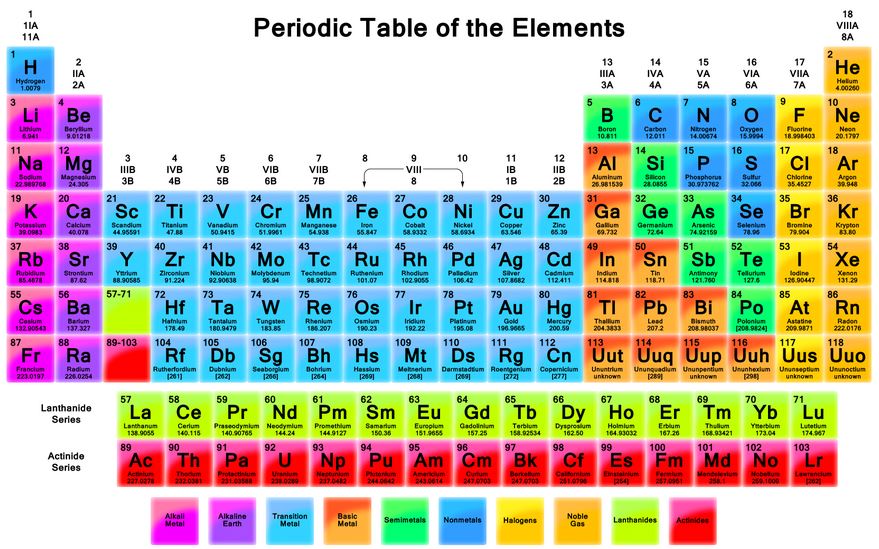
Elements on the LEFT side of the periodic table will most likely form:
a)
Positive ions
b)
Negative ions
c)
Neutral Ions
d)
None of these
3.
Which type of bond has an equal sharing of electrons?
a)
Polar Covalent
b)
Non Polar Covalent
c)
Ionic
d)
Metallic
4.
Which type of bond has an unequal sharing of electrons?
a)
Polar Covalent
b)
Non Polar Covalent
c)
Ionic
d)
Metallic
5.
Which type of bond has an equal sharing of electrons?
a)
Polar Covalent
b)
Non Polar Covalent
c)
Ionic
d)
Metallic
6.
Which type of bond has a transfer of an electron from on atom to another?
a)
Polar Covalent
b)
Non Polar Covalent
c)
Ionic
d)
Metallic
7.
All chemical bonds involve two atoms sharing electrons.
a)
True
b)
False
8.
Chemical bonds form when atoms
a)
combined nuclei
b)
give up neutrons
c)
gain protons
d)
share or transfer electrons
9.
If an atom loses two electrons what charge will it have?
a)
+ 2
b)
- 2
c)
+1
d)
-1
10.
If an atom gains one electron what charge will it have?
a)
-2
b)
-1
c)
+1
11.
Covalent compounds
a)
Share electrons
b)
transfer electrons
c)
contain a sea of electrons
d)
conduct electricity
12.
What is the number of valence electrons for Oxygen?
a)
8
b)
6
c)
2
d)
1
13.

How many valence electrons in this structure?
a)
6
b)
5
c)
4
d)
7
14.
A bond that forms when electrons are transferred is called a/an
a)
ionic bond
b)
covalent bond
c)
hydrogen bond
15.
When electrons are shared unequally a/an ___________ bond is formed
a)
ionic
b)
hydrogen
c)
polar covalent
16.
The chemical bond formed when two atoms share electrons is called a(an) IONIC bond.
a)
True
b)
False
17.
How are covalent bonds explained?
a)
When one atom takes the other atom's electron
b)
When the atom shares an electron with an another atom
c)
When the two nucleus merge
d)
When the neutrons leave the nucleus
18.
Atoms joined together by SHARING electrons are?
a)
Ionic bonds
b)
Covalent bonds
c)
Metallic Bonds
d)
James Bonds
19.
Which type of bond creates a "pool" of electrons between atoms?
a)
Ionic Bonds
b)
Covalent Bonds
c)
Metallic Bonds
d)
Saving Bonds
20.
Is Hydrogen considered a metal or a non-metal?
a)
Metal
b)
Non-metal
21.
What two types of atoms make a covalent bond?
a)
2 Nonmetals
b)
1 Nonmetal and 1 Metal
c)
2 Metals
d)
2 Noble Gases
22.
Why do atoms bond?
a)
They typically don't bond
b)
To add or take away energy levels
c)
To have a full valance shell.
d)
To have a full inner shell
23.
Ionic bonding is between a
a)
nonmetal and nonmetal
b)
metal and nonmetal
c)
metal and metal
d)
Depends on the situation
24.
Which bond does this picture best represent?
a)
Metallic bond
b)
ionic bond
c)
covalent bond
d)
James Bond
25.
Predict the bond between Mg and Cl
a)
covalent
b)
ionic
c)
metallic
d)
none of the above
26.
What is the ionic formula for a bond between Calcium and Phosphorus?
a)
Ca2P3
b)
Ca3P2
c)
Ca2P5
d)
P5Ca2
27.
Which of the following is an example of a COVALENT COMPOUND?
a)
H2S
b)
KI
c)
CaCl2
d)
MgO
28.
Which of the following is an example of an IONIC COMPOUND?
a)
NaCl
b)
H2O
c)
CO2
d)
NO
29.
Which category of elements have the property of being malleable and ductile?
a)
gases
b)
metals
c)
metalloids
d)
nonmetals
30.
Electrons that are free to move in a metal are referred to as...
a)
localized electrons
b)
delocalized electrons
c)
electrostatic electrons
d)
cations
31.
Which of the following is NOT a property of ionic compounds?
a)
They conduct electricity when molten
b)
They conduct electricity when in solution
c)
They have high boiling points
d)
They are insoluble in water
32.
In what form can an ionic compound conduct electricity?
a)
when dissolved in water
b)
as a solid
c)
as a crystal
d)
when warmed slightly
33.
Write the formula for barium + nitrogen
a)
Ba2N3
b)
Ba3N2
c)
BaN
d)
BaN3
34.
What is the formula for tin (II) nitride?
a)
Sn3N2
b)
SnN2
c)
Sn3N
d)
SnN
35.
If copper (II) and phosphate bond together, the resulting chemical formula would be:
a)
Cu2(PO4)3
b)
CuPO4
c)
Cu3(PO4)2
d)
Cu3PO4
36.

This type of model shows only the valence electrons of an element?
a)
Bohr diagram
b)
Childers model
c)
Lewis-dot diagram
d)
What is a valence electron again?
37.
Which of the following combinations would need roman numerals in the name?
a)
potassium + fluorine
b)
beryllium + oxygen
c)
boron + iodine
d)
silver + oxygen
38.

What type of bond is this? Lithium with Fluorine?
a)
ionic
b)
covalent
39.
ammonium phosphate
a)
(NH4)3PO4
b)
NPO4
c)
NH4PO4
d)
NH4(PO4)3
40.
zinc fluoride
a)
ZnF2
b)
ZnF
c)
Zn2F
d)
Zn2F4
41.
aluminum sulfite
a)
Al2(SO3)3
b)
Al2(SO4)3
c)
AlSO3
d)
Al3(SO3)2
42.
sliver phosphide
a)
Ag3P
b)
Ag3PO4
c)
Ag3PO3
d)
AgP
43.
Ca(CN)2
a)
Calcium Cyanide
b)
Calcium Dicyanide
c)
Calcium Dicarbon Dinitrogen
d)
Calcium Thiocyanate
44.
Sr(OH)2
a)
Strontium Hydroxide
b)
Strontium Hydride
c)
Strontium Dihydroxide
d)
Strontium Dioxygen Dihydride
45.
Na2S
a)
Sodium Sulfide
b)
Sodium Sulfate
c)
Sodium Sulfite
d)
Disodium Sulfide
46.
What is the formula for iron(II) carbonate?
a)
Fe2CO3
b)
FeCO3
c)
Fe2CO2
d)
FeCO4
47.
What is the formula for copper(I) sulfate?
a)
CuSO3
b)
CuSO4
c)
Cu2SO3
d)
Cu2SO4
48.
What is the formula for magnesium chloride?
a)
MgCl
b)
Mg2Cl
c)
MgCl2
d)
Mg(ClO3)2
49.
In the compound TiO2, titanium has a charge of
a)
4+
b)
2+
c)
2-
d)
4-
50.
The chemical formula for an ionic compound of potassium and oxygen is
a)
KO.
b)
K2O.
c)
K2O2.
d)
KO2.
51.
Name this compound:
NaBr
NaBr
a)
Bromide sodide
b)
Sodium bromide
c)
Sodium bromate
d)
Sodium bromite
52.
Name this compound:
Ca2CO3
Ca2CO3
a)
Calcium carbon oxide
b)
Calcium(II) carbonate
c)
Calcium carbonate
d)
Carbonate(I) calcide
53.
Name this compound:
NH4F
NH4F
a)
Ammonia fluoride
b)
Ammonium fluorite
c)
Ammonia fluorate
d)
Ammonium fluoride
54.
Name this compound:
NiPO4
NiPO4
a)
Nickel (I) phosphate
b)
Nickel (II) phosphate
c)
Nickel (IV) phosphate
d)
Nickel (III) phosphate
55.
Write the formula for copper(I) phosphide
a)
Cu3P
b)
CuP
c)
Cu1P
d)
CuP3
56.
Name this compound:
KF
KF
a)
Potassium fluoride
b)
Potassium fluorite
c)
Fluorine potasside
d)
Potassium fluorate
57.
Write the formula for vanadium (IV) carbonate
a)
V(CO3)2
b)
V4C
c)
V(CO3)4
d)
V4(CO3)
58.
The chemical formula of magnesium hydroxide is
a)
MgOH₂
b)
Mg(OH)₂
c)
Mg(OH)
d)
MgH₂
59.
What is the NAME of....
Mg3N2
Mg3N2
a)
magnesium (III) nitride
b)
magnesium (II) nitride
c)
magnesium (II) nitrogen
d)
magnesium nitride
60.
What is the NAME of....
Na2S
Na2S
a)
sodium (II) sulfide
b)
sodium sulfide
c)
disodium sulfide
d)
sodium sulfur
61.
What is the NAME of...
CrN
CrN
a)
chromium (II) nitride
b)
chromium (III) nitride
c)
chromium nitride
d)
chromium (I) nitride
62.
What is the NAME of...
PtO2
PtO2
a)
platinum (II) oxide
b)
platinum (IV) oxide
c)
platinum oxide
d)
platinum (I) oxide
63.
What is the NAME of...
FeP
FeP
a)
Iron (II) phosphide
b)
Iron phosphide
c)
Iron (III) phosphide
d)
Iron (III) phosphorus
64.
What is the FORMULA for...
calcium arsenide
calcium arsenide
a)
Ca3As2
b)
CaAs2
c)
Ca3As
d)
Ca3Ar2
65.
What is the FORMULA for....
beryllium iodide
beryllium iodide
a)
Be2I
b)
BeI
c)
BeI2
d)
BI2
66.
The name of the compound NH4F is
a)
Nitrogen hydrogen fluorine
b)
Ammonium Fluoride
c)
Ammonia Fluoride
d)
Nitrogen tetrahydride fluoride
67.
The name of Ca₃(PO₄)₂ is
a)
calcium phosphide oxide
b)
calcium phosphate
c)
tricalcium diphosphate
d)
carbon phosphate
68.
The name of Fe(OH)₂ is
a)
iron oxide
b)
iron hydroxide
c)
iron (II) hydroxide
d)
iron dihydroxide
69.
The name of Fe(OH)₂ is
a)
iron oxide
b)
iron hydroxide
c)
iron (II) hydroxide
d)
iron dihydroxide
70.
The name of Fe(OH)₂ is
a)
iron oxide
b)
iron hydroxide
c)
iron (II) hydroxide
d)
iron dihydroxide
71.
The chemical formula of sodium sulfate is
a)
S₂SO₄
b)
NaSO₂
c)
NaSO₄
d)
Na₂SO₄
72.
What is the formula for tin (II) nitride?
a)
Sn3N2
b)
SnN2
c)
Sn3N
d)
SnN
73.
What is the formula for Magnesium Carbonate?
a)
MgCO3
b)
Mg(CO3)2
c)
Mg2CO6
d)
Mg2CO3
74.
What is the chemical name for Fe(NO3)3?
a)
Iron (III) Nitrate
b)
Iron (III) Nitride
c)
Iron (II) Nitrate
d)
Iron (III) Nitride
75.
phosphorus trichloride
a)
KCl3
b)
PCl3
c)
K3Cl
d)
P3Cl
76.
silicon dioxide
a)
SO2
b)
NaO2
c)
SiO2
d)
SiO
77.
diphosphorus pentoxide
a)
P2O5
b)
PO5
c)
P5O2
d)
P2O6
78.
SiCl4
a)
silicon tetrachloride
b)
silicon quadchloride
c)
monosilicon tetrachloride
d)
silicon chloride
79.
The chemical formula of sulfur hexabromide is
a)
SBr₆
b)
S₆Br
c)
S(VI)Br
d)
S6Br
80.
The chemical formula of carbon tetrachloride is
a)
CCl
b)
C₄Cl
c)
CCl₄
d)
C(IV)Cl
81.
The chemical formula of dinitrogen textroxide is
a)
Ni₂O₄
b)
NiO
c)
N₂O₄
d)
NiO₂
82.
The name of P₄S₁₀ is
a)
phosphorous sulfide
b)
phosphorus sulfide
c)
tetraphosphorus decasulfide
d)
phosphorus (X) sulfide
83.
The chemical formula of tetraphosphorus heptaoxide is
a)
F₄O₁₀
b)
P₄O7
c)
PO
d)
P₁₀O₄
84.
The chemical formula of dinitrogen textroxide is
a)
Ni₂O₄
b)
NiO
c)
N₂O₄
d)
NiO₂
85.
What is the formula for Hexaboron Monosilicide
a)
B6Si
b)
BSi
c)
BSi6
d)
B6Si6
100 %

